

Parys House by Nadine Engelbrecht Architect: A Quiet Dialogue Between Simplicity and Landscape
Parys House blends simplicity, climate responsiveness, and personal storytelling, creating a serene concrete home deeply connected to South Africa’s landscape.


The Parys residence in South Africa, designed by Nadine Engelbrecht Architect, spans 380 m² and exemplifies contemporary elegance. Completed in 2024, the home balances open, light-filled spaces with intimate areas, integrating premium materials from Hansgrohe and Isoboard. Thoughtful design and meticulous detailing create a harmonious, modern living environment.
A House of Subtle Strength and Deep Connection
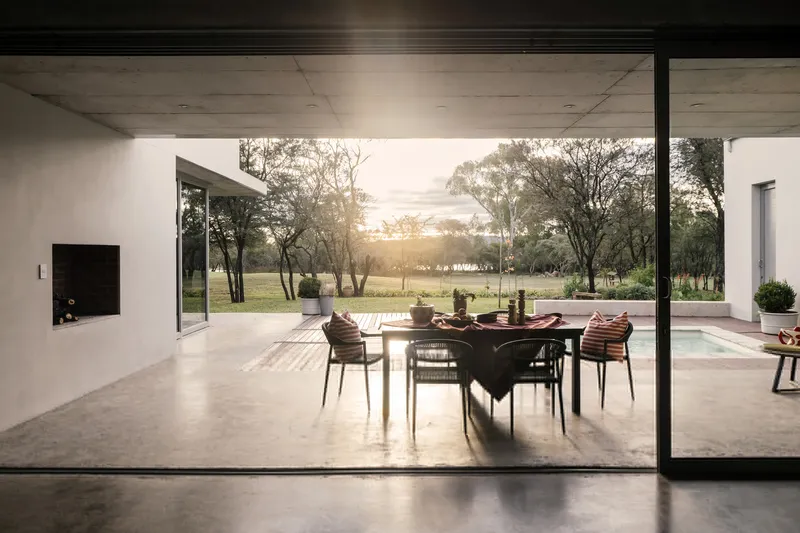
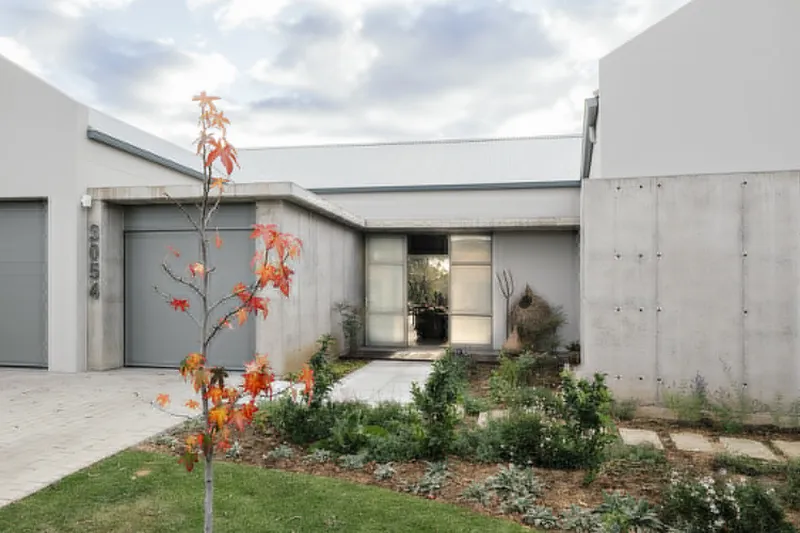
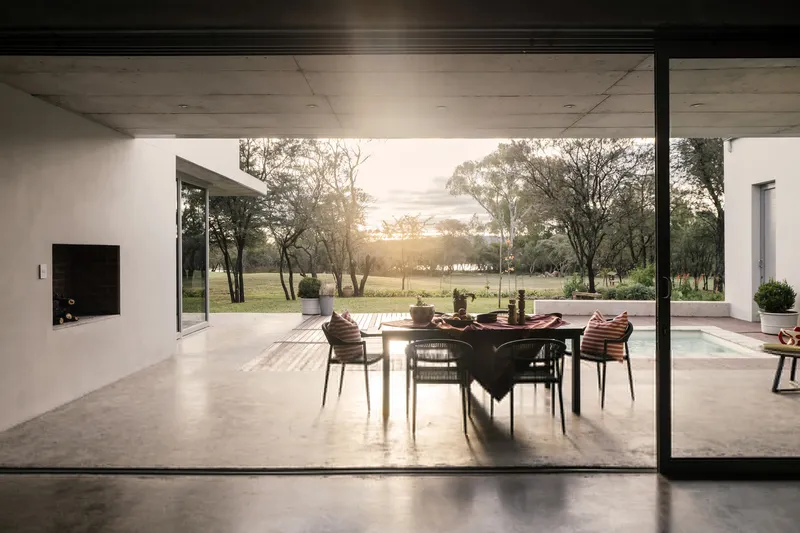
Parys House, designed by Nadine Engelbrecht Architect, is a masterful example of restraint and refinement, balancing modern simplicity, climate responsiveness, and personal meaning. Set within a restrictive estate along the Vaal River in Parys, South Africa, the residence achieves quiet distinction through clarity, proportion, and material honesty—a home that is as introspective as it is outward-looking.
Embracing Context and Constraints
Situated on a compact site bordered by neighbouring homes, the 380-square-metre dwelling faces strict estate guidelines that dictate its form and finish. Yet, rather than conforming to superficial aesthetics, Engelbrecht’s design reinterprets the contemporary farm style through restraint and authenticity.
The house opens itself to the river landscape, inviting natural light and breezes while preserving privacy. This careful balance allows the home to stand apart within its suburban context, transforming limitations into opportunities for quiet expression.
A Home Shaped by Personal Stories
The clients, a retired Free State couple, brought to the project a brief rooted in memory and lifestyle. The husband, a lifelong farmer of cattle and grain, sought a structure grounded in practicality and endurance. His wife, a painter drawn to color and texture, envisioned spaces filled with light and calmness—a canvas for both daily life and creativity.
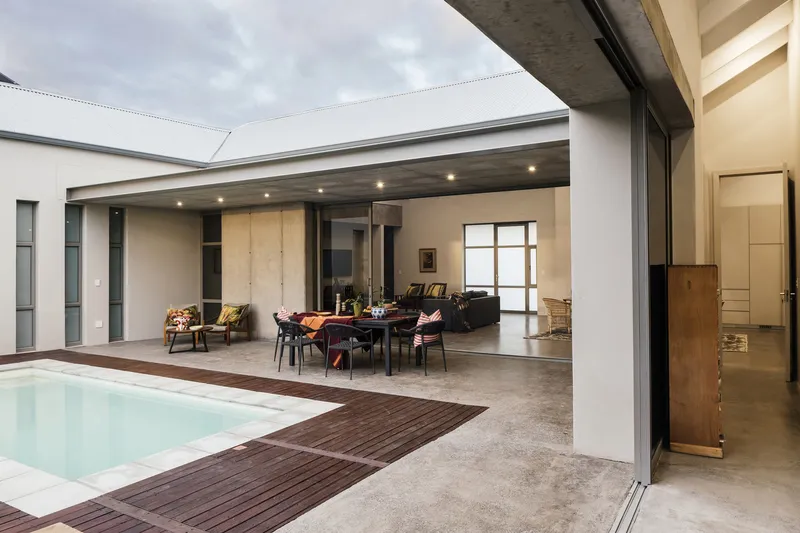
The result is a low-maintenance, adaptable home designed to evolve with its inhabitants, serving as both a tranquil retreat and a welcoming space for family gatherings.
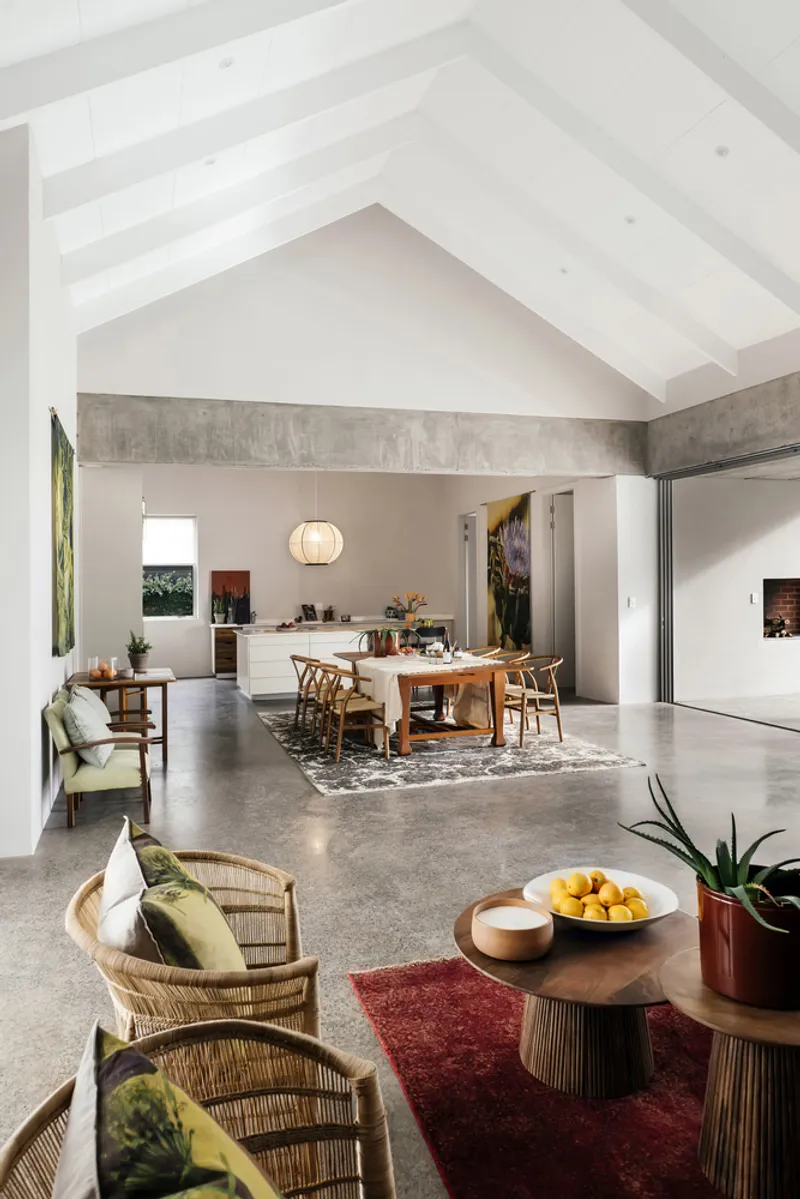
Architecture of Restraint and Raw Beauty
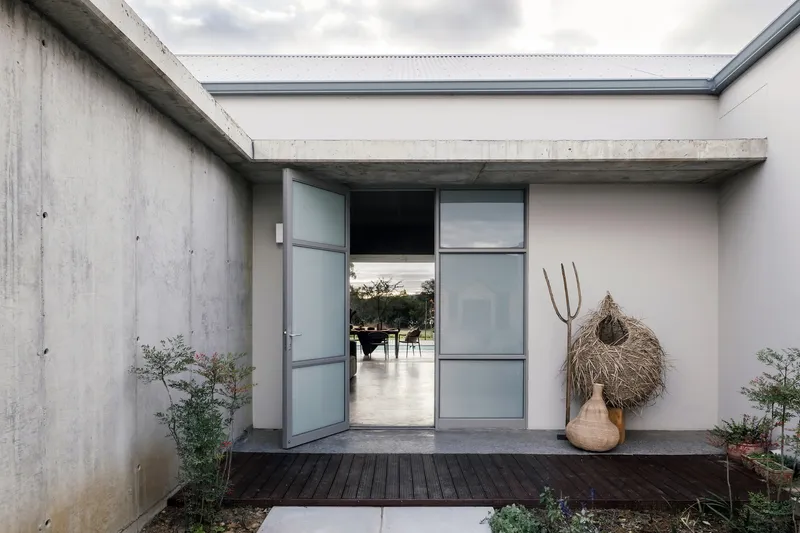
From early sketches, Engelbrecht pursued an architecture of quiet confidence. Initial ideas of stone and brick gave way to smooth plaster, exposed concrete, and raw finishes, allowing the materials to speak in their natural tones and textures.
Each design move serves a purpose. The concrete structure and deep overhangs moderate sunlight and heat, particularly during the intense South African summers. Meanwhile, steel-framed windows project outward, framing views and creating passive shading that enhances thermal comfort without compromising openness.
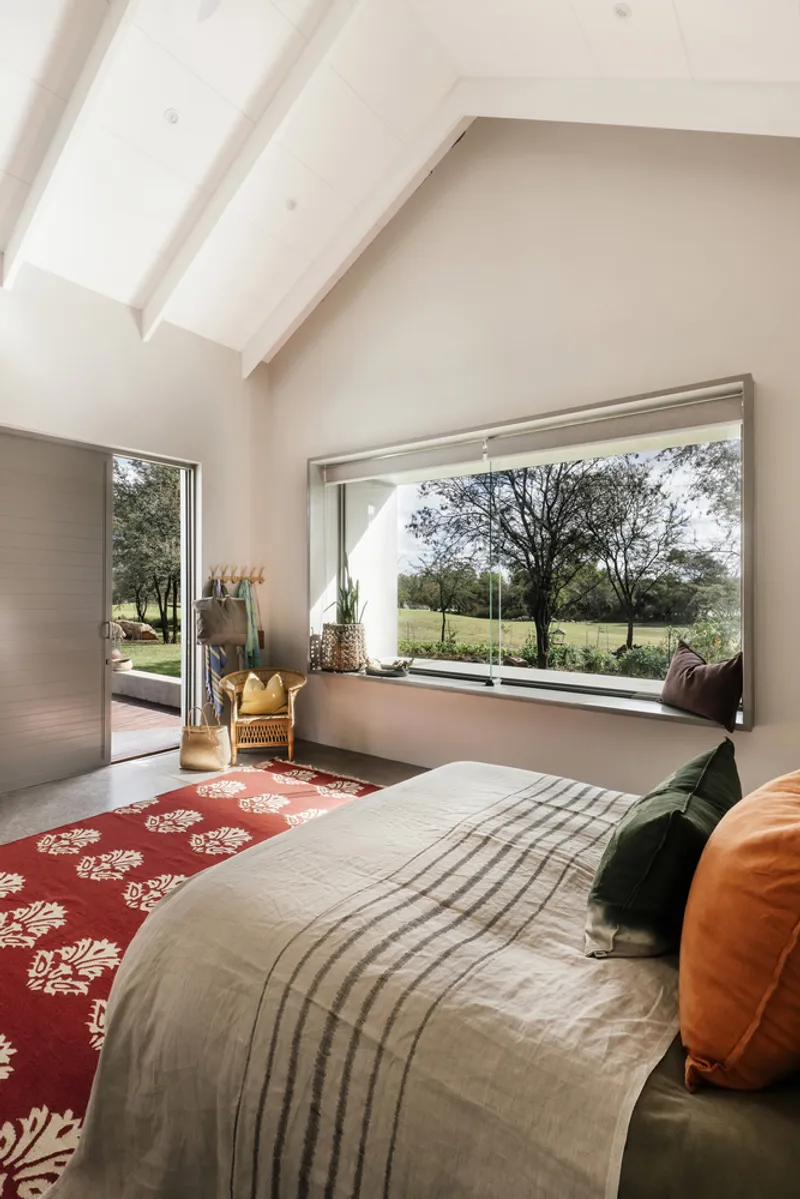
Framing the Vaal River
The house is organized along the northwest edge to capture uninterrupted views of the river. Upon entering, the visitor’s eye is drawn immediately through the living spaces toward the water—a curated visual axis that connects interior and landscape.
The living, dining, and studio areas flow effortlessly along this line, promoting both connection and retreat. The design allows the couple to live primarily on one level, ensuring long-term accessibility while maintaining a sense of generosity and lightness.
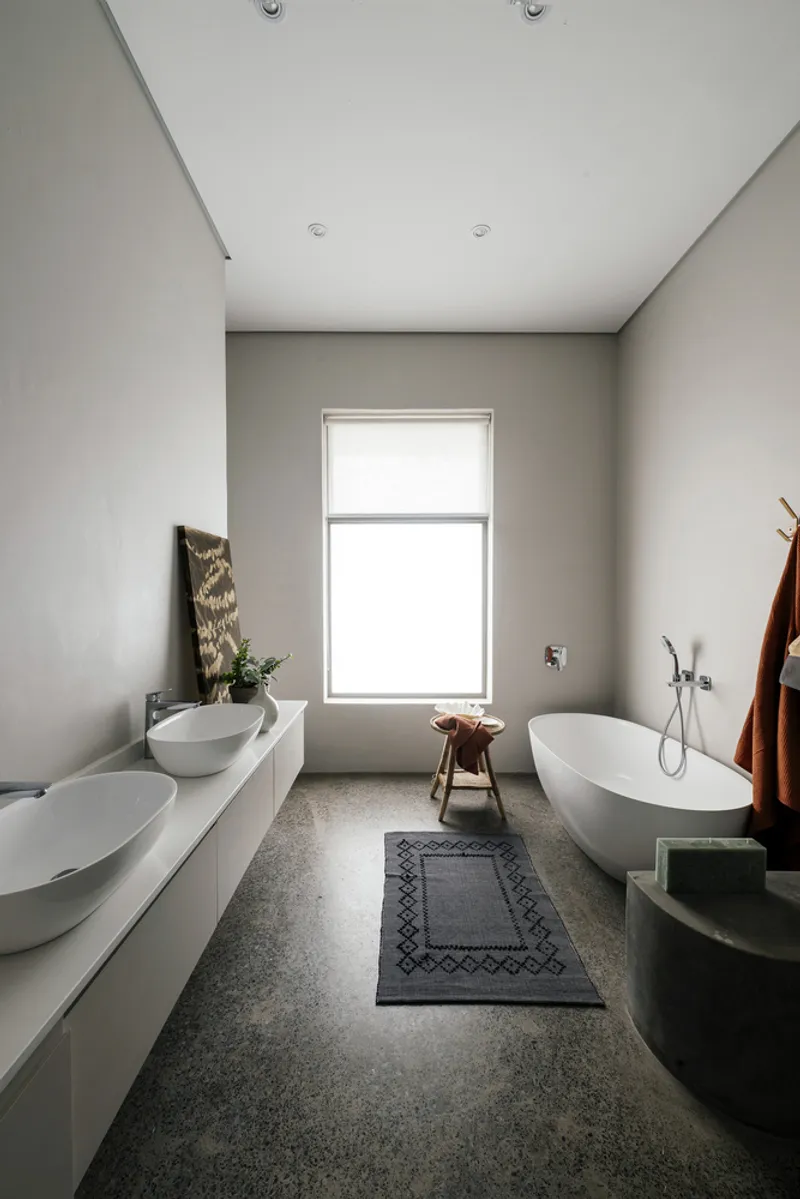
Climate, Craft, and Technical Precision
Responding to the Free State’s climatic extremes, the architecture employs deep eaves, careful orientation, and elevated detailing to mitigate heat gain and prevent flooding from rising groundwater and river surges.
This technical precision extends to the thermal and acoustic comfort of the interiors, where concrete’s mass helps stabilize temperature fluctuations while maintaining an aesthetic of grounded calm.
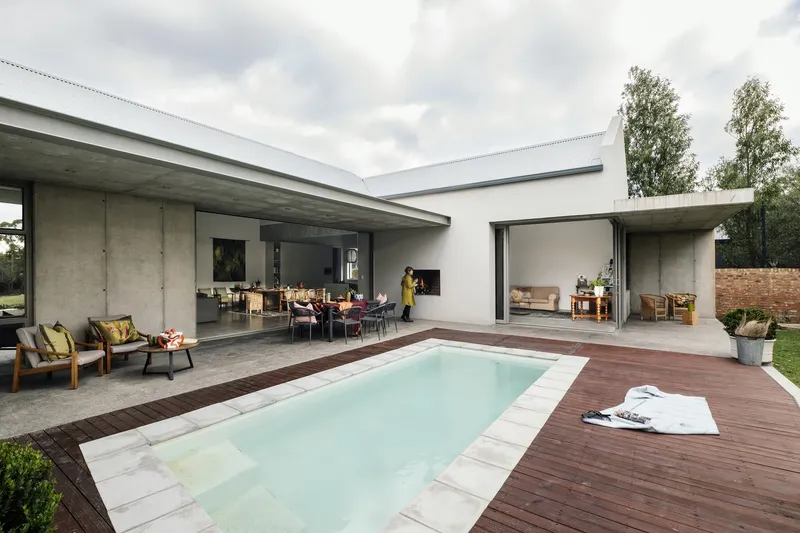
A Contemporary Farmhouse Rooted in Place
Although the estate prescribes a “modern farm” language, Engelbrecht’s interpretation is quietly radical. Parys House avoids ornament and nostalgia, opting instead for functional elegance that reflects the region’s pragmatic rural character.


Popular Articles
Popular articles from the community


Cube Design Draws an Ecological Corridor Between Two Shenzhen Hills with the Nankai Building
Beside Shenzhen's container docks, the Nankai Building pairs stacked balconies with a climbing green screen to connect two hillsides across its height.

David Ortega Stacks a Two-Story Mexico City Penthouse Around a Steel Stair and a Pergola-Shaded Roof Terrace
In Colonia Roma, a 300 m² penthouse uses oak joinery, a planted steel stair and a slatted roof pergola to make a new-build apartment feel like a house.

Jaramillo Van Sluys Arquitectura and Urbanismo Turn a Demolished Registry Lot in Quito into an Orchard Plaza
In Quito's Centro Histórico, a 2,800 m² plaza exposes the San Agustín convent wall and redraws its lost Augustinian orchard in volcanic stone.

longwave studio Reorganizes a 112 m² Tainan Apartment Around the Daily Routines of a Family and Two Cats
In Tainan, Taiwan, birch plywood, rust-red furniture and a freestanding plaster wall link arrival, storage, work and family life in one apartment.

Similar Reads
You might also enjoy these articles


Hodi-Mandai Geram
Project Function: Preservation and revitalization of the Intangible heritage and socio-spatial identity of the Hodi by Housing, Cultural Memory Center, Sacred Grove, landscape, local tourism economy


Olio Towers: A Mid-Rise for Performers That Fuses Housing, Rehearsal, and Stage
Located blocks from Houston's Theater District, this modular tower stacks living units around a central performance atrium.

Oasis: Modular Green Housing Carved into Dhaka's Urban Fabric
A shortlisted Plugin Housing entry reclaims unauthorized settlements in Dhaka with stepped concrete volumes, green roofs, and ventilation-driven design.

Black Hole: A Floating Megastructure for the Post-Physical Era
Emiliano Mazzarotto envisions a spherical, self-scaling arena where e-sports, digital hotels, and holographic stadiums replace traditional public space.

Explore Architecture Competitions
Discover active competitions in this discipline

Challenge to reimagine the Iron Throne

Photograph architecture without architects

Illustrate the lost glory of Angkor Wat - Render Challenge

Design challenge to reuse E-waste
Comments (0)
Please login or sign up to add comments
No comments yet. Be the first to comment!