
Passi dell'Arte: The Artisans' Haven on the Arno River
A bridge in Pisa blending functionality, creativity, and artisan engagement.


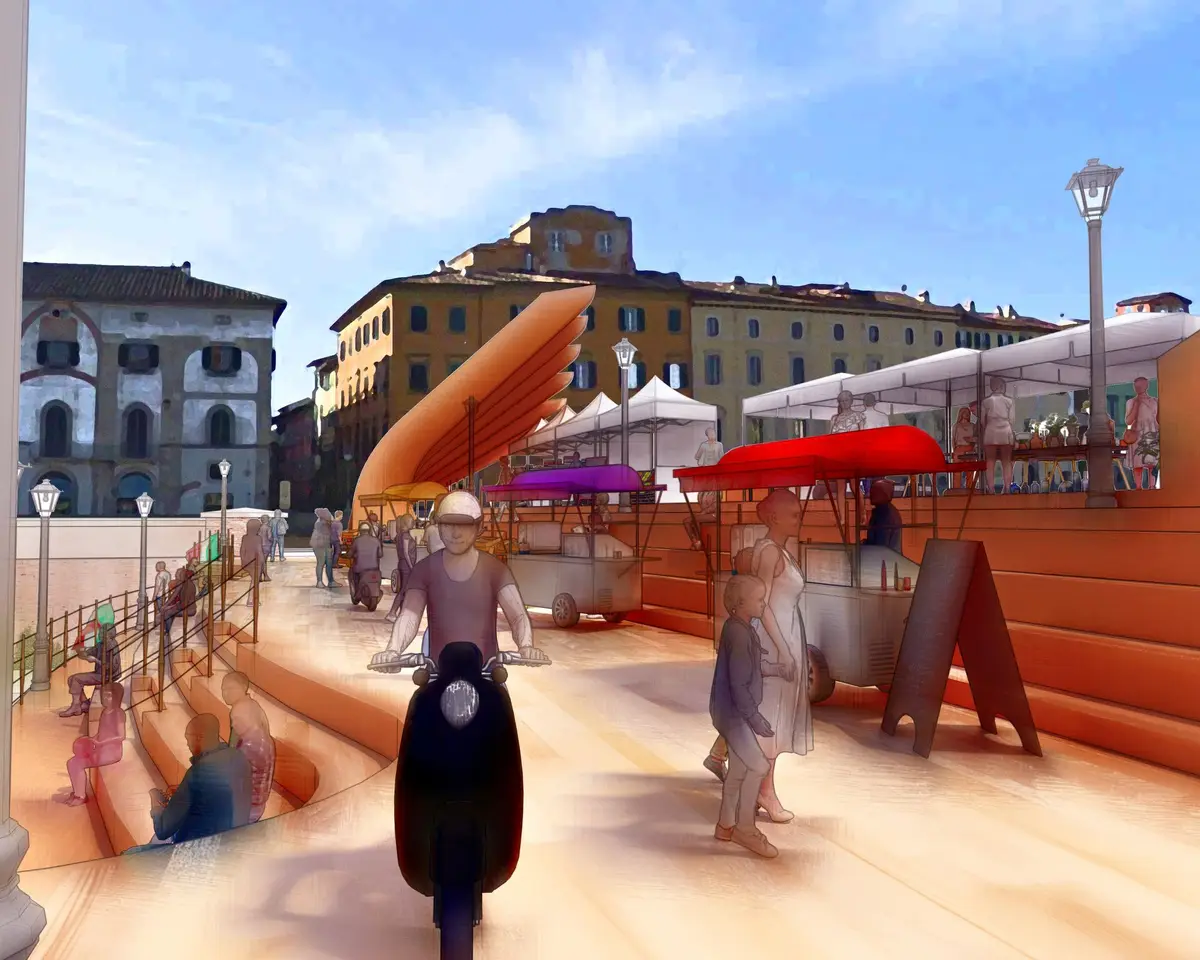
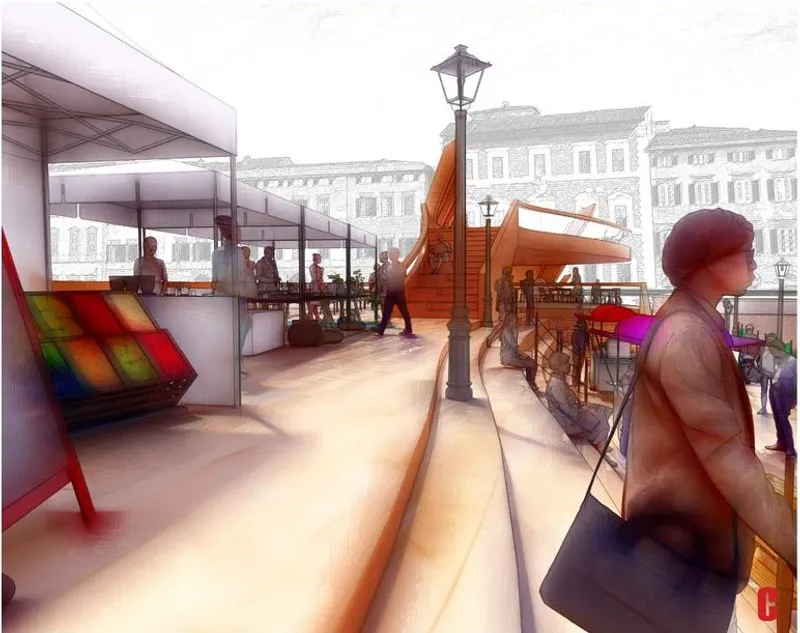
In the heart of Pisa, Italy, a transformative project named Passi dell'Arte has emerged created by Mario Chiesa. Winner entry of The Artisans Crossing competition, This artisanal pedestrian bridge seeks to transcend conventional expectations, seamlessly blending functionality and creativity. Its purpose extends beyond serving as a mere thoroughfare for pedestrians, evolving into a dynamic space where Italian artisans showcase their rich craftsmanship. Passi dell'Arte is envisioned as a living canvas, inviting both locals and visitors to engage with its unique tapestry.
A Visionary Concept
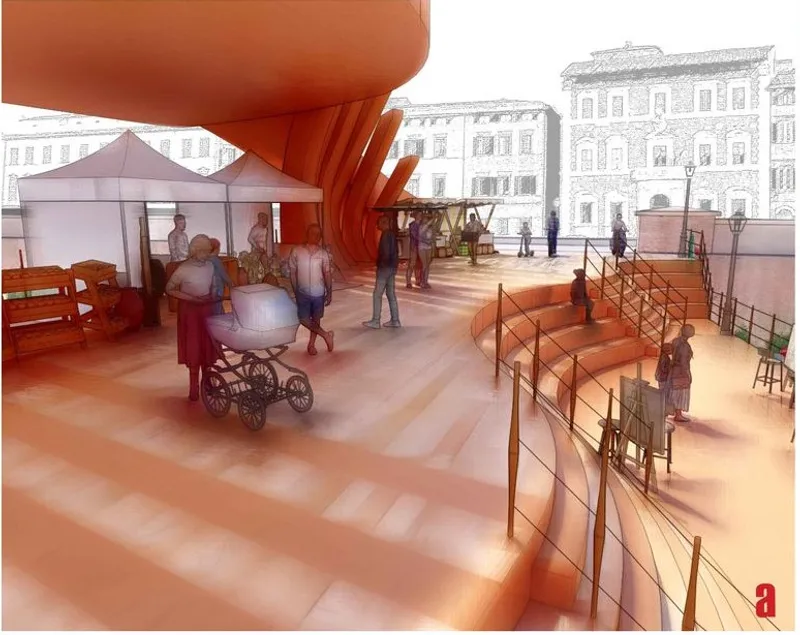
The initial spark for Passi dell'Arte was ignited by the desire to provide pedestrians with more than just a crossing point over the Arno River. The project aimed to create an immersive experience, steering away from the clamor of heavy traffic. As pedestrians traverse the bridge, they are encouraged to embrace a slower pace, fostering moments of reflection. Passi dell'Arte transcends the typical functionality of a bridge, becoming an experiential art piece that inspires and feels like a haven for artisans.
Architectural Ingenuity and Environmental Harmony
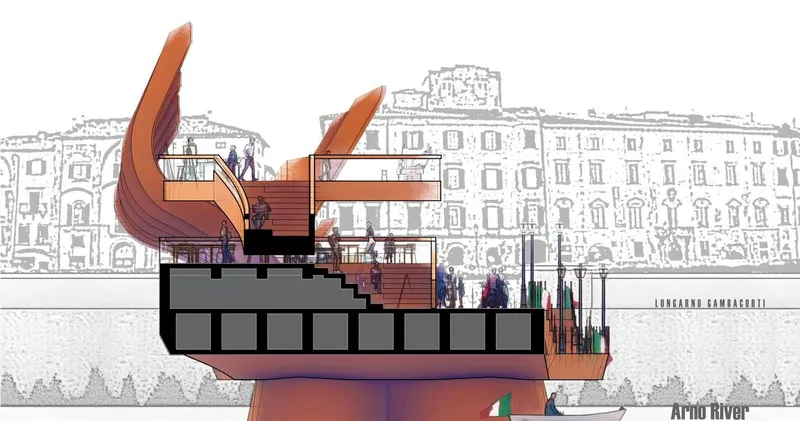
The deliberate alignment of Passi dell'Arte extends perpendicular over the Arno River, engaging precisely with the cardinal points of the compass. This not only adds an architectural flair but also ensures that crosswinds sweep along the longitudinal side of the bridge. What distinguishes Passi dell'Arte is its commitment to environmental engagement. The design incorporates a deliberate openness, inviting a profound interaction with the ever-changing weather conditions – from the warmth of the sun to the gentle caress of the wind, and even the unpredictable dance of rain. While certain areas are sheltered to protect against harsh weather, the majority remains uncovered, providing maximum exposure and an authentic connection to nature.

Iterative Design Process
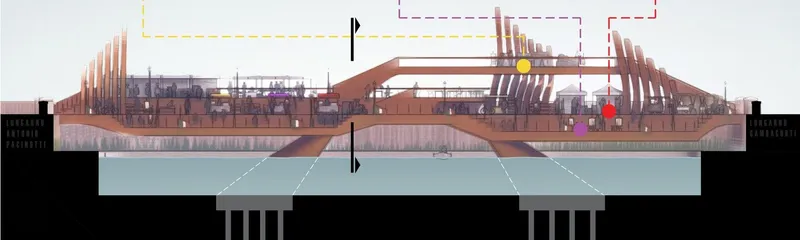
The design evolution of Passi dell'Arte involved a thorough process of iteration. Sixty initial precedents were studied, delving into existing bridges spanning the Arno River, to truly understand the local context. The project also drew inspiration from a vast array of AI-generated images derived from crafted prompts. A pivotal prompt that inspired the direction of Passi dell'Arte envisioned it as "a bridge for artisans and pedestrians that is not limited in its absolute function." This visionary concept propelled the bridge beyond a simple utility, transforming it into a powerful space for artists to set up workshops and artworks. The final iteration coalesced into a cohesive design featuring both raised and lowered decks, each offering a distinct experience for pedestrians and artisans alike.

Programmatic Elements
The intricate program of Passi dell'Arte is divided into three key areas: Retail+Workshops, Gathering+Cafe, and Pedestrian+Utility. These meticulously planned spaces maintain specific permitted areas – 55%, 20%, and 25%, respectively. Retail and Workshop areas house an array of offerings, including textiles, food markets, leather goods, ceramics, and more. Gathering and Cafes feature establishments like coffee shops, specialty tea vendors, food stands, and pop-up events. The pedestrian aspects serve as the connective tissue, merging the other programs seamlessly. With lounge areas, walking pathways, and dedicated spaces for bikes and scooters, the bridge becomes a dynamic space that engages and captivates.
Living Craftsmanship
Passi dell'Arte is not a static entity but a living craft that evolves gracefully over time. Constructed and veneered with local wood products of Italy, the bridge matures and weathers elegantly, developing a unique patina. Yet, the transformation extends beyond the physical aging of materials. Artisans, given the freedom to express themselves, leave behind traces of their craft – paint, stones, clays, and more. The wood, once pristine, gains stains and tarnishes in regions that establish the unique identity of various deck and platform areas.
As pedestrians tread upon Passi dell'Arte, they actively participate in the bridge's evolution. Armed with knives and keys, they carve into the wood, inscribing names, drawing images, and creating gouges that tell the story of the bridge's history. Far from being mere acts of vandalism, these interactions become an integral part of the bridge's narrative, transforming it into a destination where people experience the uniqueness of locals and the talents within. Even those passing below in boats contribute to the story, leaving their mark on the bridge's underside with paint, carvings, signs, and flags.

Meticulous Maintenance and Community Engagement
Despite the intentional messiness left behind by artisans and pedestrians, Passi dell'Arte is meticulously maintained. It remains a bridge that promotes engagement while embracing the implications of art and life embedded within its surface. Beyond its physical structure, Passi dell'Arte stands as a dynamic symbol of Pisa's creative spirit, weaving a richer tapestry with each passing day. It is more than a bridge; it is a testament to the enduring connection between art and life, showcasing the cultural vibrancy of Pisa and leaving an indelible mark on its urban fabric. The story of Passi dell'Arte is one that unfolds with every step, inviting all to become part of its living legacy.


Popular Articles
Popular articles from the community


Lunar Spiral: Space Architecture Shaped by the Mathematics of the Universe
Lunar Spiral reimagines space architecture through Fibonacci geometry, lunar regolith, levitating habitats, and self-sustaining Moon living.

ALGAL REALM: A Bio-Integrated Lunar Habitat Design for Life Beyond Earth
ALGAL REALM reimagines lunar habitat design with algae-powered life support, 3D-printed regolith, and vertical living for a lunar future.

Co-Life: Senior Housing Design That Reconnects Older Adults With the City
Co-Life reimagines senior housing design through healing gardens, shared streets, workshops, and a sustainable community across generations.

Play: Fragments of Their World
Familiar architecture becomes modular playground design, creating safe spaces where displaced children can learn, connect, imagine and play.

Similar Reads
You might also enjoy these articles

Day and Night Park: A Time-Based Urban Newsstand in Beijing
A temporary urban newsstand in Beijing blending travel, light, and reading through poetic colors, compact form, and community-focused design.

Modernist Patio Renovation in El Masnou, Barcelona by Oliver Segura Arquitectura + Cebrià Arquitectura
Modernist patio renovation blending tradition and innovation with a movable pool, leveled floors, and Catalan materials in El Masnou.
Alto Residencial Coop: Cooperative Housing Development in Santiago de Compostela by Carbajo Barrios Arquitectos
A linear cooperative housing complex blending white volumes and perforated metal façades, enhancing community living, natural light, privacy, and urban integration.
Vil Genis School by BPA ARCHITECTURE – Massy, France
Vil Genis School in Massy, France, features sustainable design, south-facing classrooms, community integration, accessible spaces, and modern educational architecture.

Explore Foot Bridge Competitions
Discover active competitions in this discipline

Challenge to visualize a collision of the future and past

Challenge to visualize future spaces of waste

Challenge to visualize slums of 2080

Challenge to illustrate the change you wish in architecture
Comments (0)
Please login or sign up to add comments
No comments yet. Be the first to comment!