
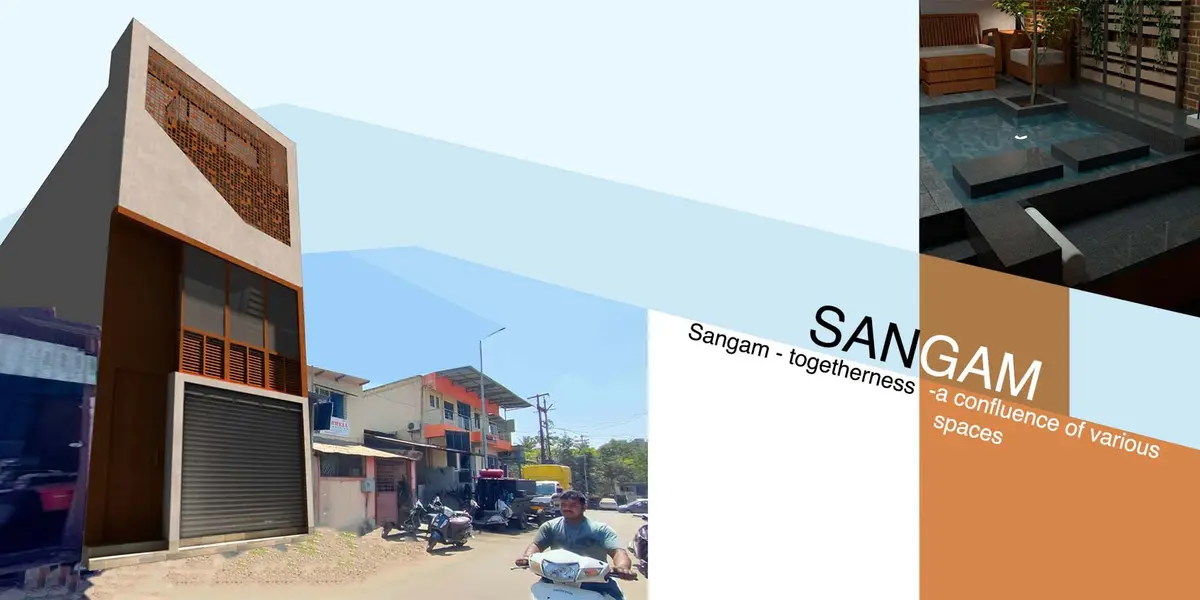
Passive Architecture Techniques in Urban Homes: A Case Study of Sangam Project in Kolhapur
This article examines the Sangam project's fusion of residential and commercial spaces through passive architectural techniques in Kolhapur.


Passive Architecture in Urban Development
The Sangam project by Samruddhi Abhijit Salokhe, Mrunali Mangesh Teli, Tejaswini More, and Sherin James exemplifies innovative solutions in urban architecture. Situated in the bustling lanes of Rajarampuri, Kolhapur, this project stands as a testament to integrating residential spaces within commercial areas without compromising comfort and sustainability.
Understanding Sangam: Confluence of Spaces
Sangam, translating to 'confluence' in English, seamlessly blends various spaces to foster a sense of togetherness. This residential project challenges conventional architectural designs by incorporating passive techniques to enhance living quality in a commercial hub.
Family-Centric Design
The heart of the Sangam project lies in its family-centric design, catering to the Salokhe family members’ diverse needs. Ajit, an entrepreneur with a car modification shop, Abhilasha, a homemaker with interests in gardening and yoga, and Soham, a school-going football enthusiast, represent the modern Indian family with varied requirements.

The Architectural Approach of Sangam
The Sangam project illustrates the application of passive architectural techniques to ensure energy efficiency, natural ventilation, and optimal use of space.
The Site and its Significance
Located in Rajarampuri, known for its vehicle workshops, the Sangam project addresses the need for serene residential spaces amidst commercial chaos. The strategic site selection promotes accessibility while providing a tranquil retreat for the family.
Light and Ventilation
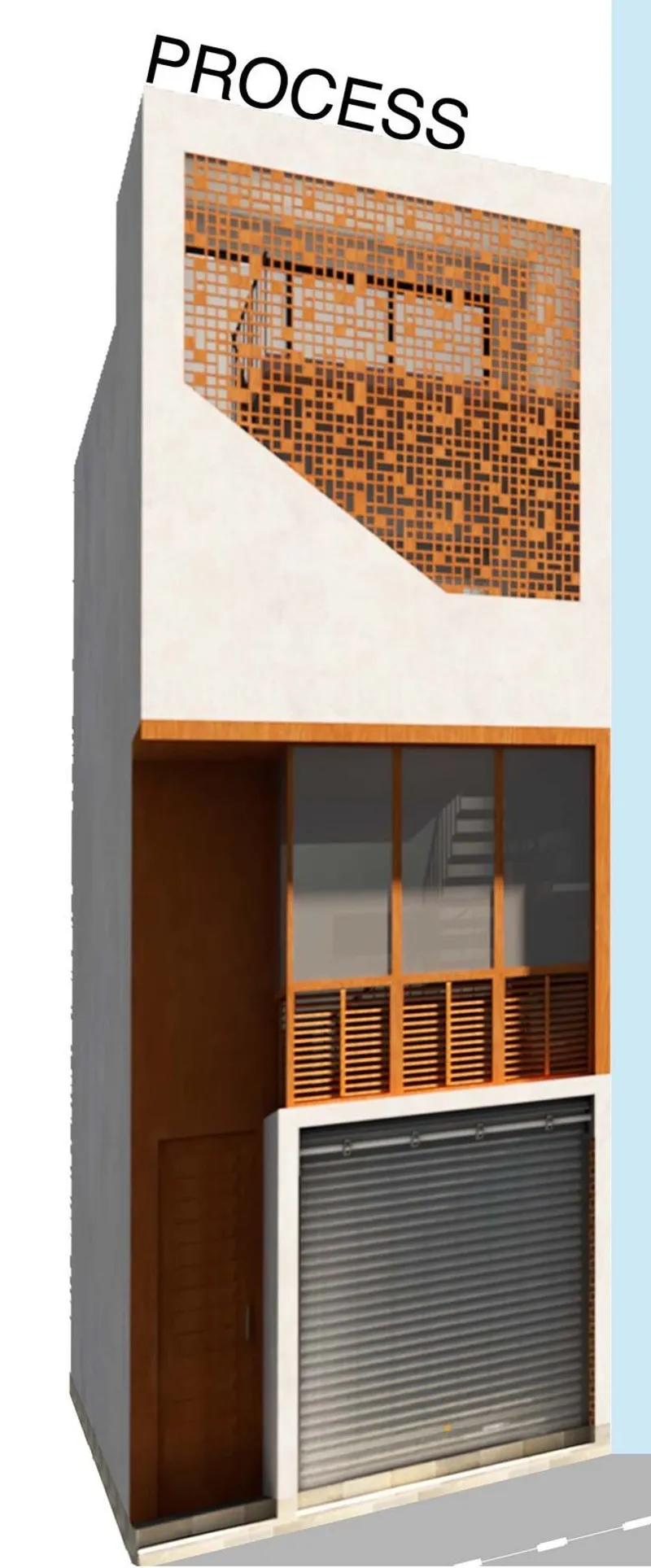
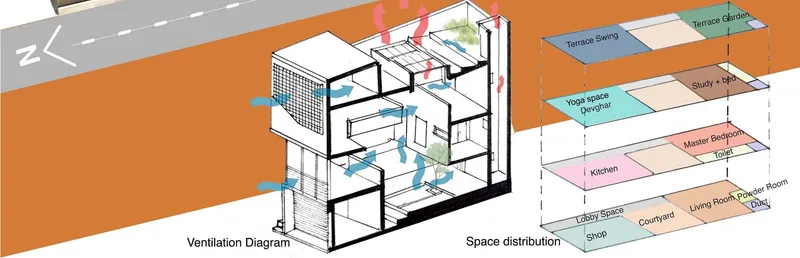
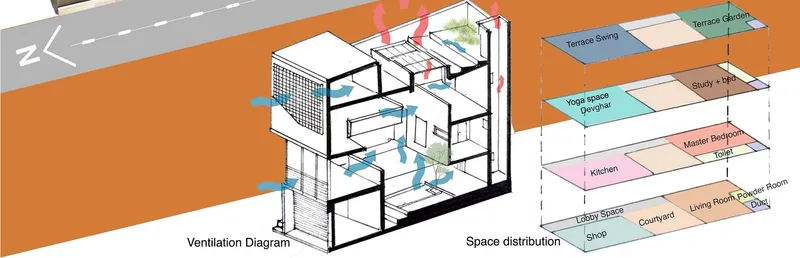
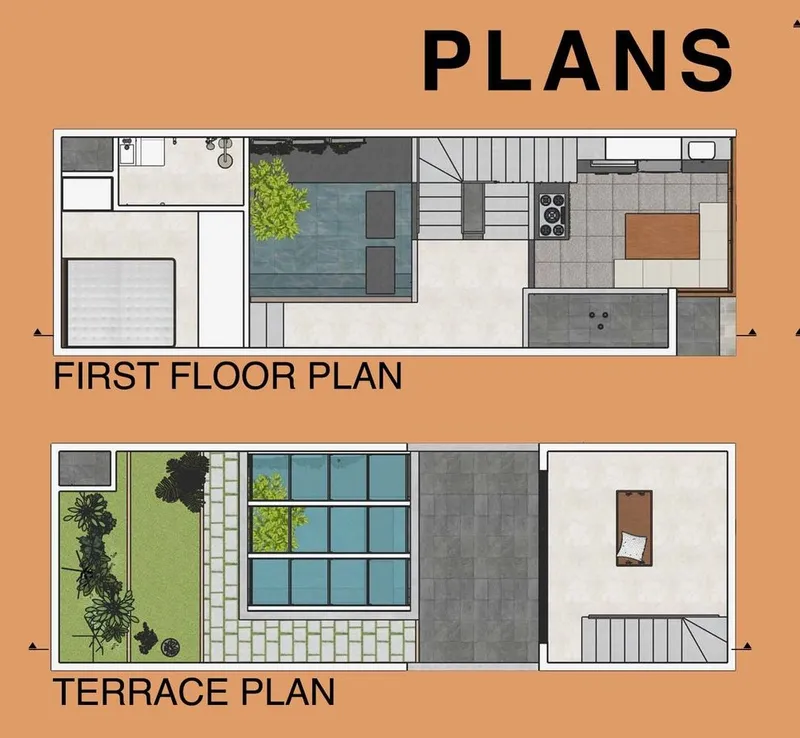
The design incorporates a void for natural light, ensuring a well-lit environment throughout the day. The Jaali (latticed screen) on the west facade facilitates cross-ventilation, maintaining a cool indoor climate.

Spatial Organization
From the creation of a water body in the courtyard to the strategic placement of the living areas, every element is designed with the intent to harmonize with nature. The terrace garden and slope design further exemplify this, promoting green living and relaxation spaces.

Material Selection and Sustainability
The use of locally sourced materials and sustainable construction practices underscore the Sangam project's commitment to environmental stewardship.
Impact of Sangam on Urban Living
Sangam redefines urban living by providing a blueprint for integrating residential units into commercial sectors. This approach not only maximizes land use but also encourages sustainable living practices in urban settings.
The Sangam project in Kolhapur serves as a beacon for future urban development projects. By adopting passive architectural techniques, it demonstrates how urban homes can achieve harmony between commercial viability and residential comfort. The Sangam project is more than just a building; it is a vision for the future of urban living.


Popular Articles
Popular articles from the community


ETEH Reworks the Shared Spaces of São Domingos School in Brazil Around Timber, Color and Hanging Plants
At São Domingos School in Brazil, 436 m² of hall, refectory and library are recast with timber joinery, a yellow and blue code and trailing greenery.


Aquadapt: An Underwater Habitat That Rewrites Its Rooms by the Hour
Curved modules ring the seabed while one shell shifts from breakfast room to cinema, farm and football pitch as residents' needs change.

Juan García Correa, John González and Claudia Rueda Sink a Circular Amphitheater into a Manizales Engineering Building
On the La Nubia campus in Manizales, Colombia, the S1 Building folds labs and offices into a hillside of ramped lawns that double as a campus route.

graciastudio Turns a Viewless Tijuana Lot Inward Around a Courtyard of Concrete, Timber and Trees
In Tijuana, Jorge Gracia's GA2 House stacks a timber-clad private floor over exposed concrete and replaces a missing view with a planted interior patio.

Similar Reads
You might also enjoy these articles

Vereda Arquitetos Renovates a 40-Square-Meter Apartment Inside Niemeyer's Copan Building
A compact unit in São Paulo's most iconic residential tower gets a material overhaul that pairs exposed concrete with bold blue Formica.

Shakur's House: Exposed Brick as an Interior Organiser in a 168 m² Mashhad Residence
Brick moves indoors in this Mashhad residence, where masonry walls, glass partitions and teal planes sequence a compact home without closing it off.

Day and Night Park: A Time-Based Urban Newsstand in Beijing
A temporary urban newsstand in Beijing blending travel, light, and reading through poetic colors, compact form, and community-focused design.

Modernist Patio Renovation in El Masnou, Barcelona by Oliver Segura Arquitectura + Cebrià Arquitectura
Modernist patio renovation blending tradition and innovation with a movable pool, leveled floors, and Catalan materials in El Masnou.

Explore Passive Architecture Competitions
Discover active competitions in this discipline

Challenge to design mud housing for contemporary communities

Challenge to reimagine the Iron Throne

Photograph architecture without architects

Illustrate the lost glory of Angkor Wat - Render Challenge
Comments (0)
Please login or sign up to add comments
No comments yet. Be the first to comment!