

Patio House by Caio Persighini Arquitetura: A Harmonious Fusion of Space and Nature
Patio House blends concrete, glass, and nature, featuring open spaces, a central patio, and seamless indoor-outdoor integration in Brazil.


A Modern Residence in Araraquara, Brazil
Designed by Caio Persighini Arquitetura, Patio House is a contemporary home that seamlessly integrates indoor and outdoor living. Located in Araraquara, Brazil, this 2,885-square-foot residence redefines spatial fluidity, leveraging the site's natural topography to enhance its architectural expression.
The Concept: A Home Defined by Open Space
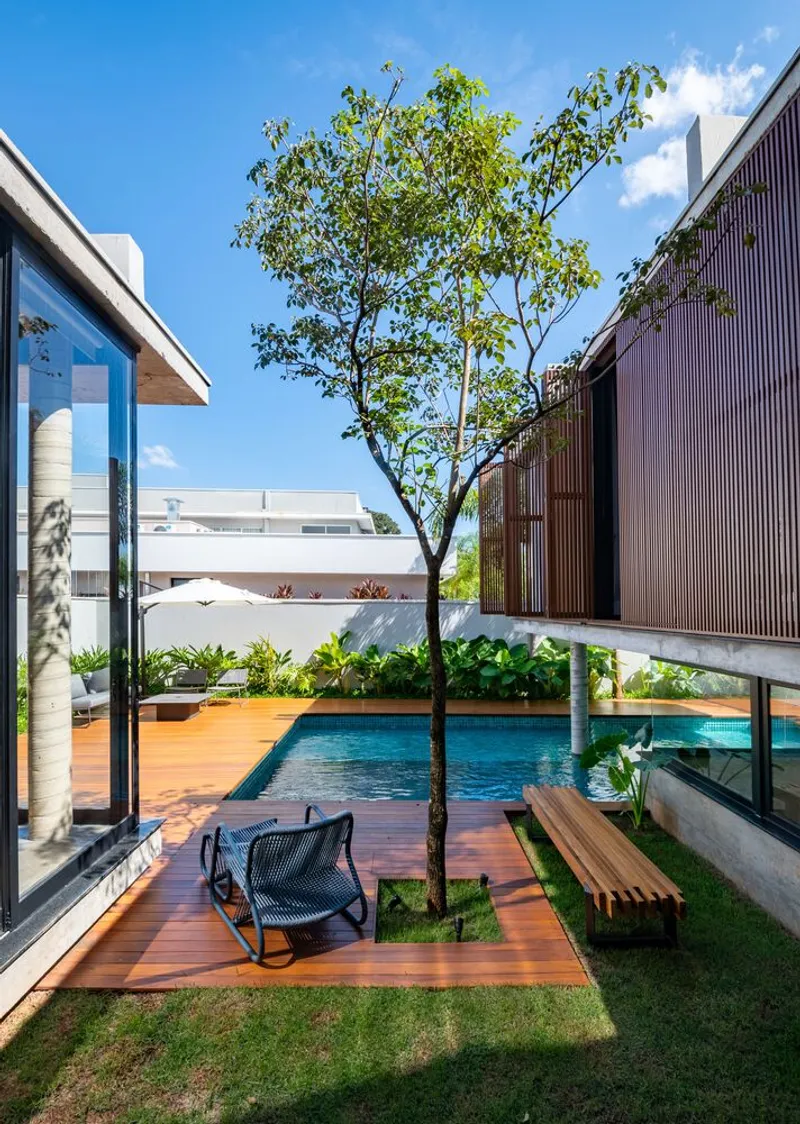
From the initial discussions, the idea of a patio-centric design was fundamental. Although a two-story home was considered, maintaining open, free-flowing spaces took priority. The patio, a core design element, ensures natural ventilation, daylight optimization, and a strong connection to nature.
The homeowners, who embraced a collaborative design process, provided creative freedom to explore innovative architectural solutions. This openness allowed the project to develop organically, resulting in a home that reflects both aesthetic and functional harmony.
Adapting to the Terrain: Multi-Level Design
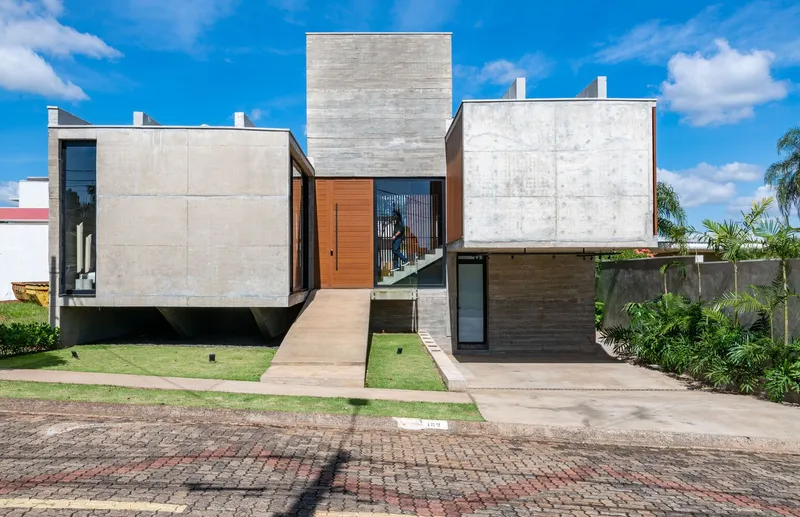
A key turning point in the project was the strategic utilization of the terrain’s gentle slope. Instead of imposing a rigid layout, the design takes advantage of the land’s natural gradient, creating three distinct levels:
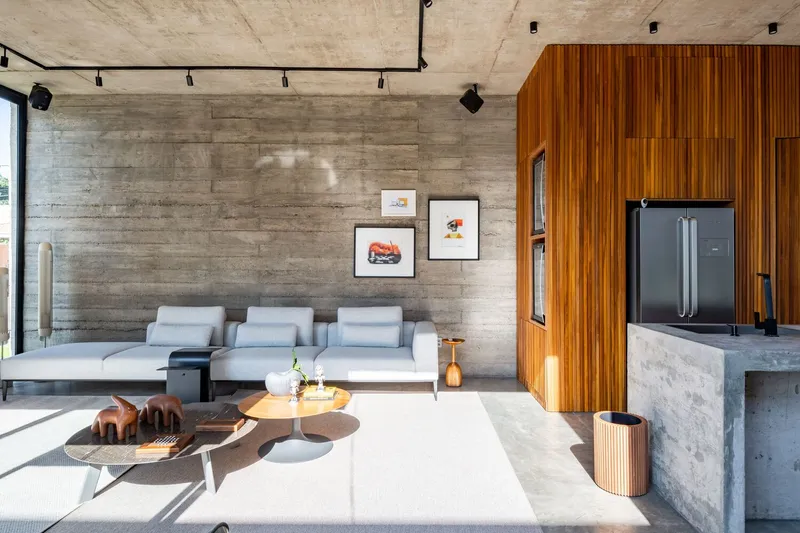
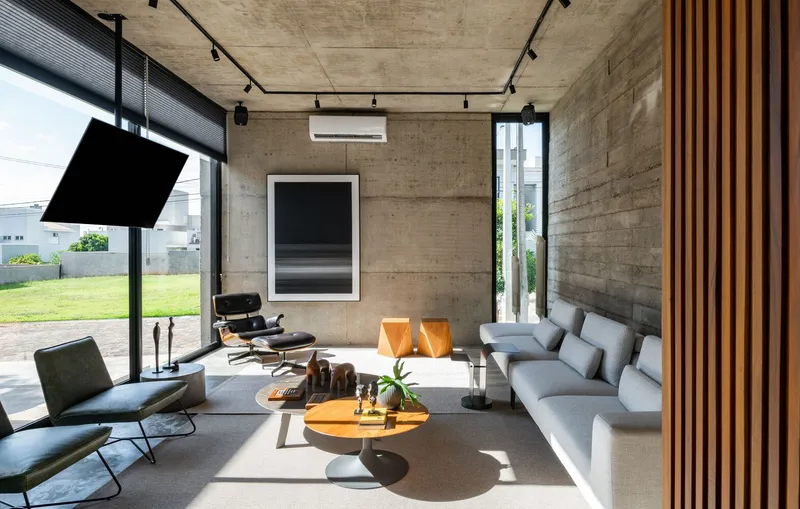
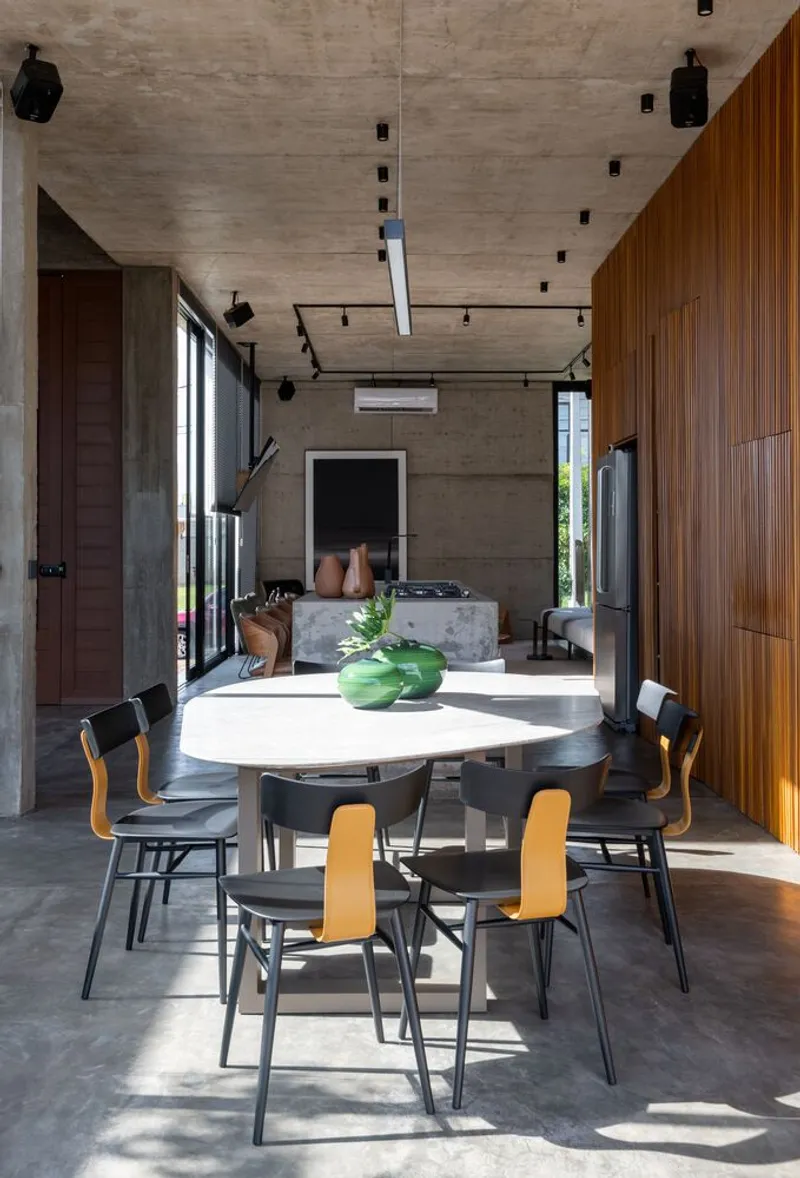
- Social Ground Floor – The heart of the home, featuring the living room, kitchen, and an integrated gourmet area.
- Semi-Basement – Housing functional spaces like the laundry room and a private brewery, a unique request from the homeowners.
- Upper Level – Dedicated to the private suites, offering privacy while maintaining visual openness to the surrounding landscape.
Materiality and Architectural Elements
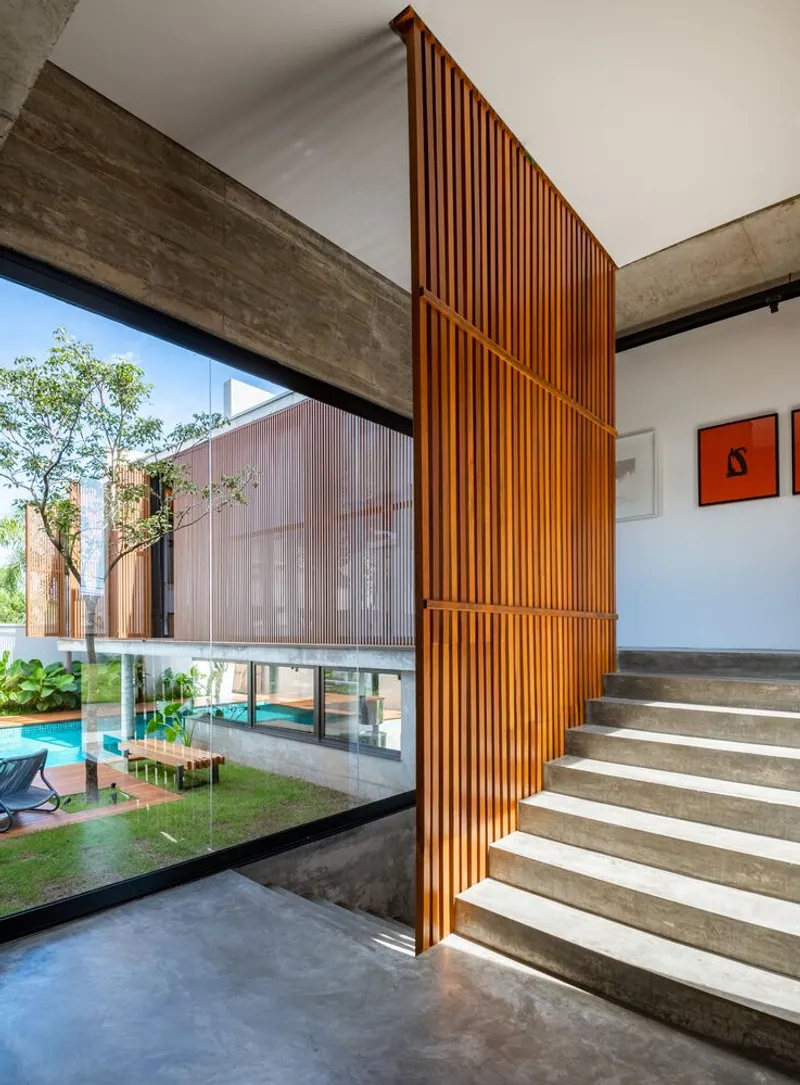
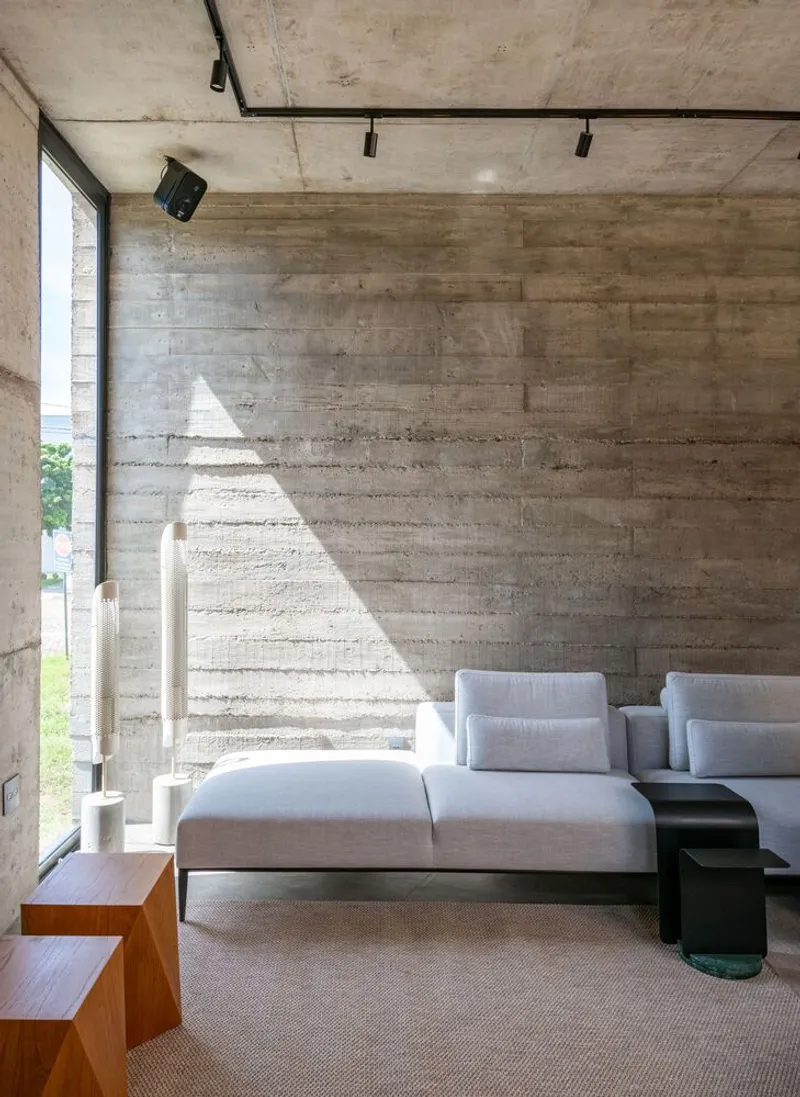
The house features cast-in-place concrete, ensuring a raw yet refined aesthetic that complements the surrounding environment. Large glass panels enhance transparency, maximizing natural light and offering uninterrupted views of the patio and garden.
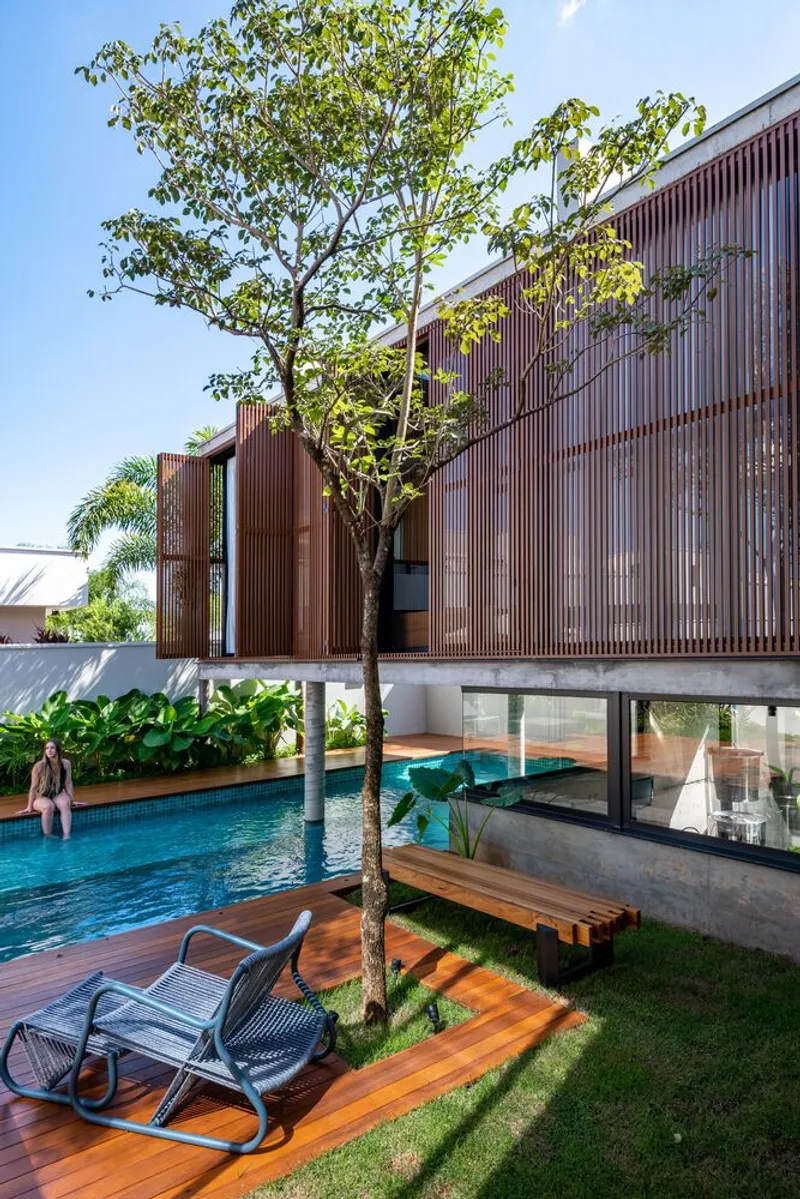
To enhance privacy without compromising views, the design incorporates brise-soleils inspired by Muxarabi, a traditional wooden lattice technique. These elements filter sunlight while providing a semi-transparent visual barrier, allowing occupants to enjoy the landscape with discretion.
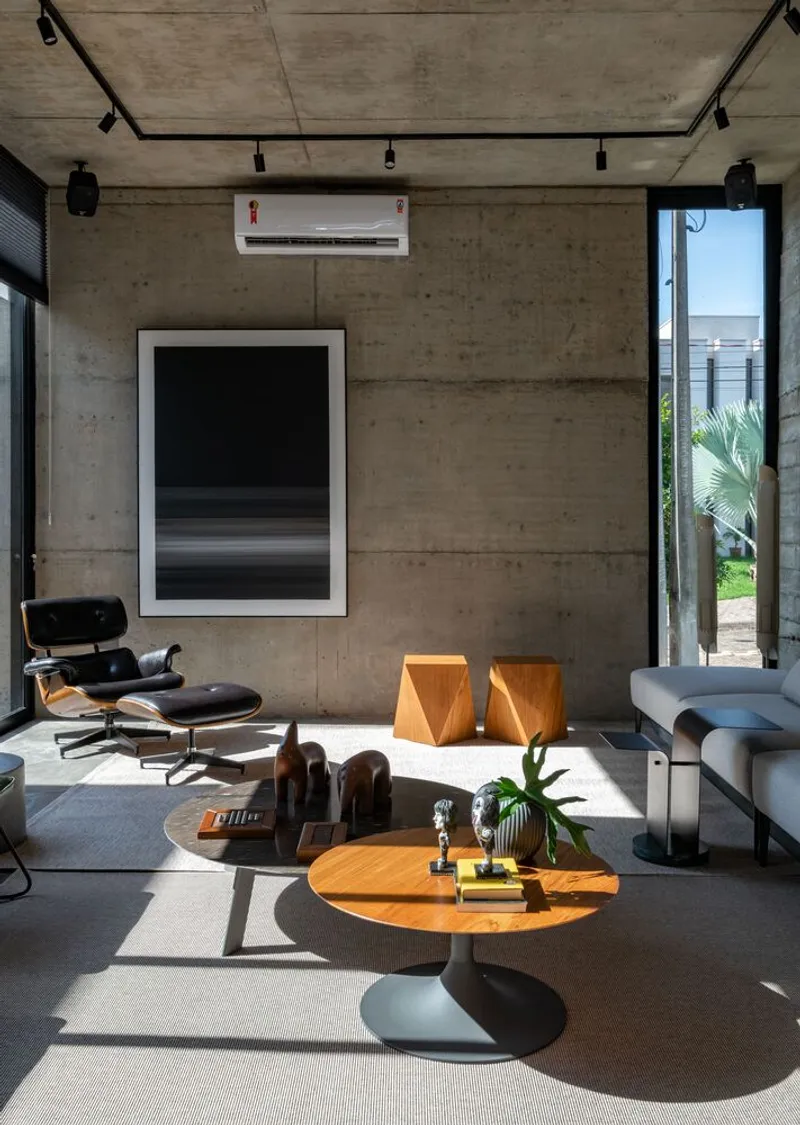
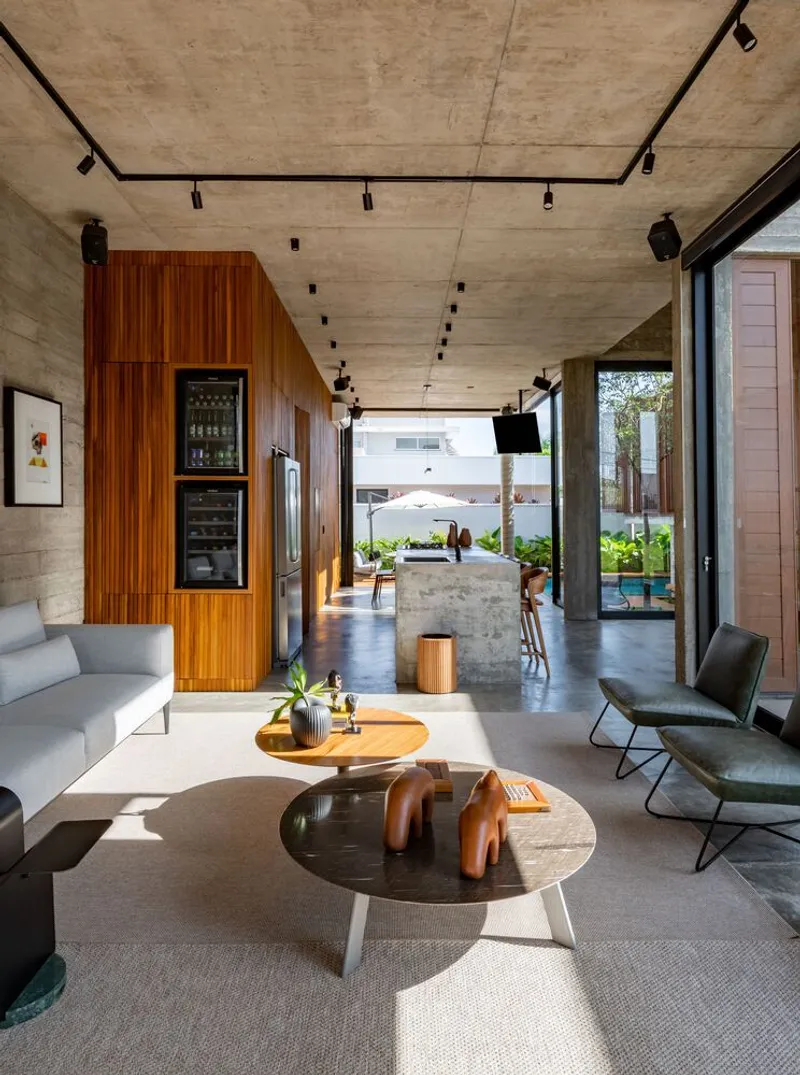
Seamless Indoor-Outdoor Connection
At the core of the home is the central patio, framed by parallel architectural volumes. The design embraces an open-plan concept, ensuring fluid movement between indoor and outdoor spaces. Key features include:
- A deck and pool area integrated with the suspended block, enhancing the home’s dynamic spatial experience.
- A white Ipê tree in the patio, acting as a natural focal point.
- A circulation flow that allows multiple movement options—ascending, descending, and moving laterally—within a compact footprint.
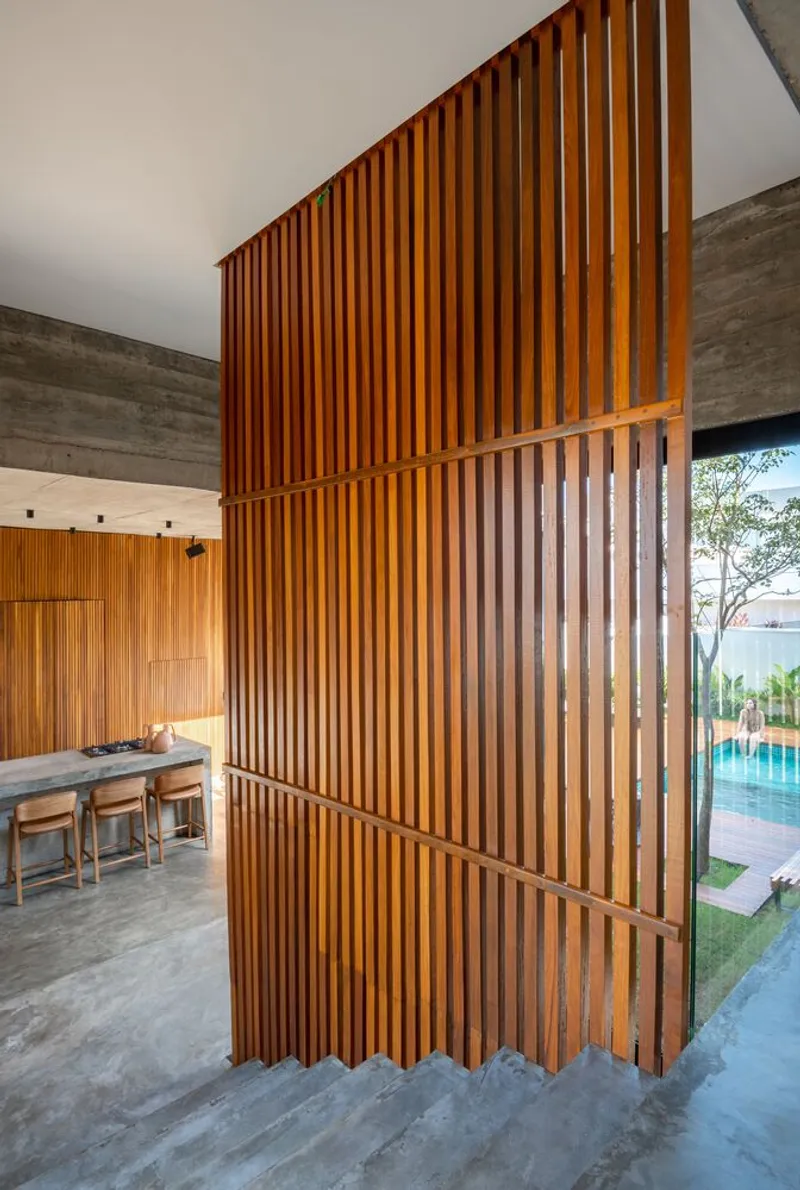
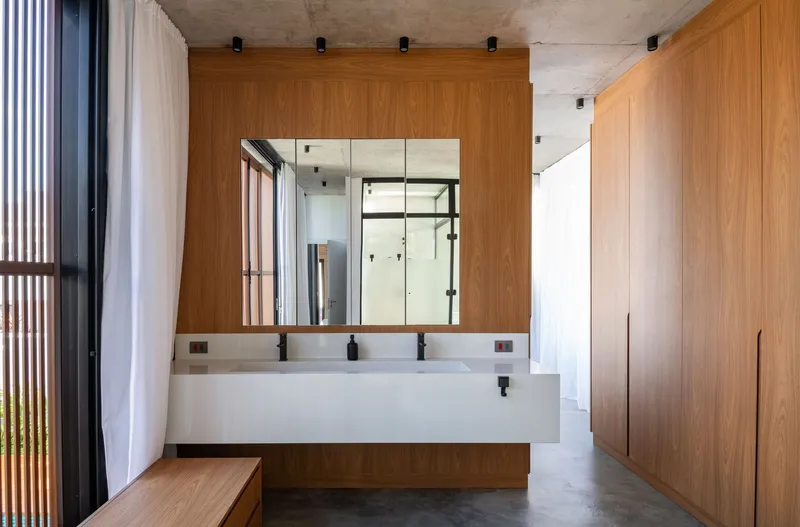
A Sensory Experience in Architecture
The design of Patio House goes beyond mere function; it creates an experiential journey for its inhabitants. Whether standing in the elevated suite with panoramic views or moving through the interconnected spaces, the home fosters a sense of calm, contemplation, and connection to nature.
By prioritizing spatial fluidity, material authenticity, and environmental integration, Caio Persighini Arquitetura has crafted a residence that is both modern and timeless, reinforcing the principle that architecture should be a dialogue between form, function, and the landscape.
All Photographs are works of Favaro Jr.


Popular Articles
Popular articles from the community


David Ortega Stacks a Two-Story Mexico City Penthouse Around a Steel Stair and a Pergola-Shaded Roof Terrace
In Colonia Roma, a 300 m² penthouse uses oak joinery, a planted steel stair and a slatted roof pergola to make a new-build apartment feel like a house.

Jaramillo Van Sluys Arquitectura and Urbanismo Turn a Demolished Registry Lot in Quito into an Orchard Plaza
In Quito's Centro Histórico, a 2,800 m² plaza exposes the San Agustín convent wall and redraws its lost Augustinian orchard in volcanic stone.

Cube Design Draws an Ecological Corridor Between Two Shenzhen Hills with the Nankai Building
Beside Shenzhen's container docks, the Nankai Building pairs stacked balconies with a climbing green screen to connect two hillsides across its height.

GROUP A Strips a 1969 Rotterdam Harbor Headquarters to Its Frame and Wraps It in Timber Louvers
In Rotterdam's M4H harbor district, Ferro Offices reuses a 1969 frame, adds one timber storey and reaches BREEAM-NL Outstanding.

Similar Reads
You might also enjoy these articles


Hodi-Mandai Geram
Project Function: Preservation and revitalization of the Intangible heritage and socio-spatial identity of the Hodi by Housing, Cultural Memory Center, Sacred Grove, landscape, local tourism economy


Olio Towers: A Mid-Rise for Performers That Fuses Housing, Rehearsal, and Stage
Located blocks from Houston's Theater District, this modular tower stacks living units around a central performance atrium.

Oasis: Modular Green Housing Carved into Dhaka's Urban Fabric
A shortlisted Plugin Housing entry reclaims unauthorized settlements in Dhaka with stepped concrete volumes, green roofs, and ventilation-driven design.

Black Hole: A Floating Megastructure for the Post-Physical Era
Emiliano Mazzarotto envisions a spherical, self-scaling arena where e-sports, digital hotels, and holographic stadiums replace traditional public space.

Explore Architecture Competitions
Discover active competitions in this discipline

Challenge to reimagine the Iron Throne

Photograph architecture without architects

Illustrate the lost glory of Angkor Wat - Render Challenge

Design challenge to reuse E-waste
Comments (0)
Please login or sign up to add comments
No comments yet. Be the first to comment!