

Paysandú Residences by bakro-mayorano: Contemporary Twin Homes in Ituzaingó, Argentina
Paysandú Residences by bakro-mayorano are mirrored contemporary homes in Ituzaingó, featuring layered facades, double-height living spaces, sunshades, and modern concrete design.


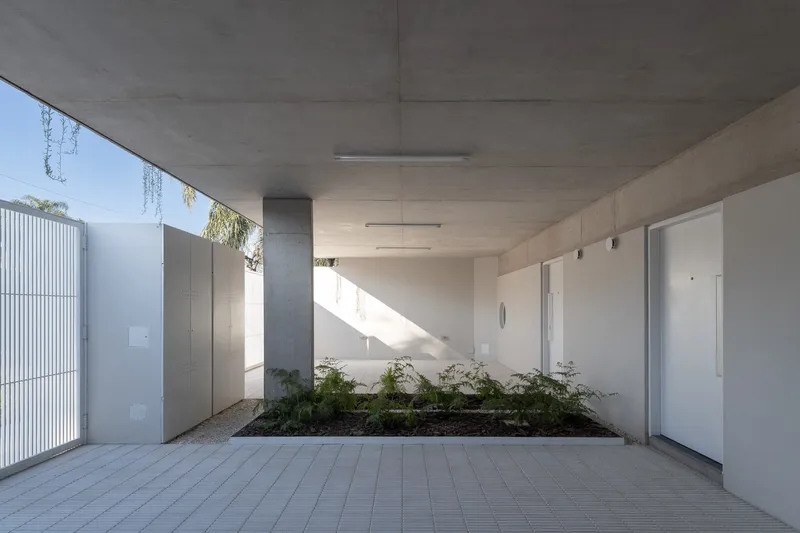
Paysandú Residences, designed by bakro-mayorano, consists of two mirrored contemporary homes situated on a compact 12x30 meter lot in a residential neighborhood of Ituzaingó. The project responds thoughtfully to its surroundings, following a clear pattern of transition from the public street to private interiors. The progression: from sidewalk to fence, flower beds, patio, and door, creates a natural flow between exterior and interior spaces.
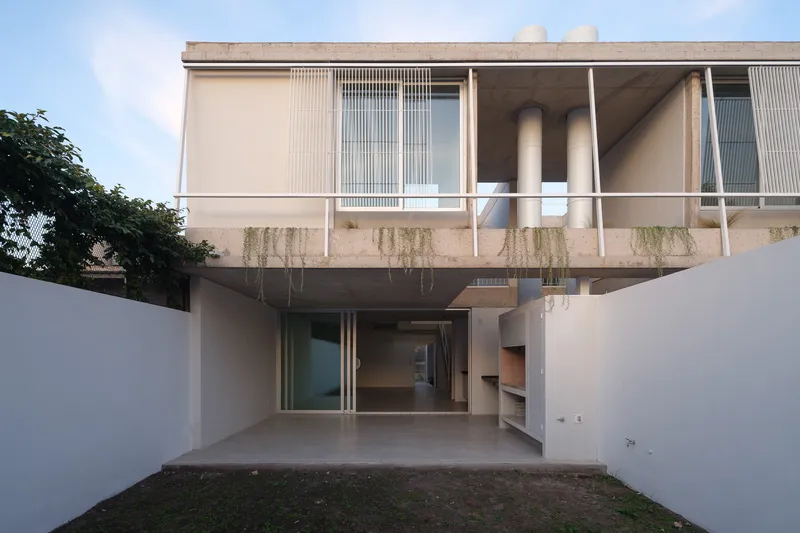
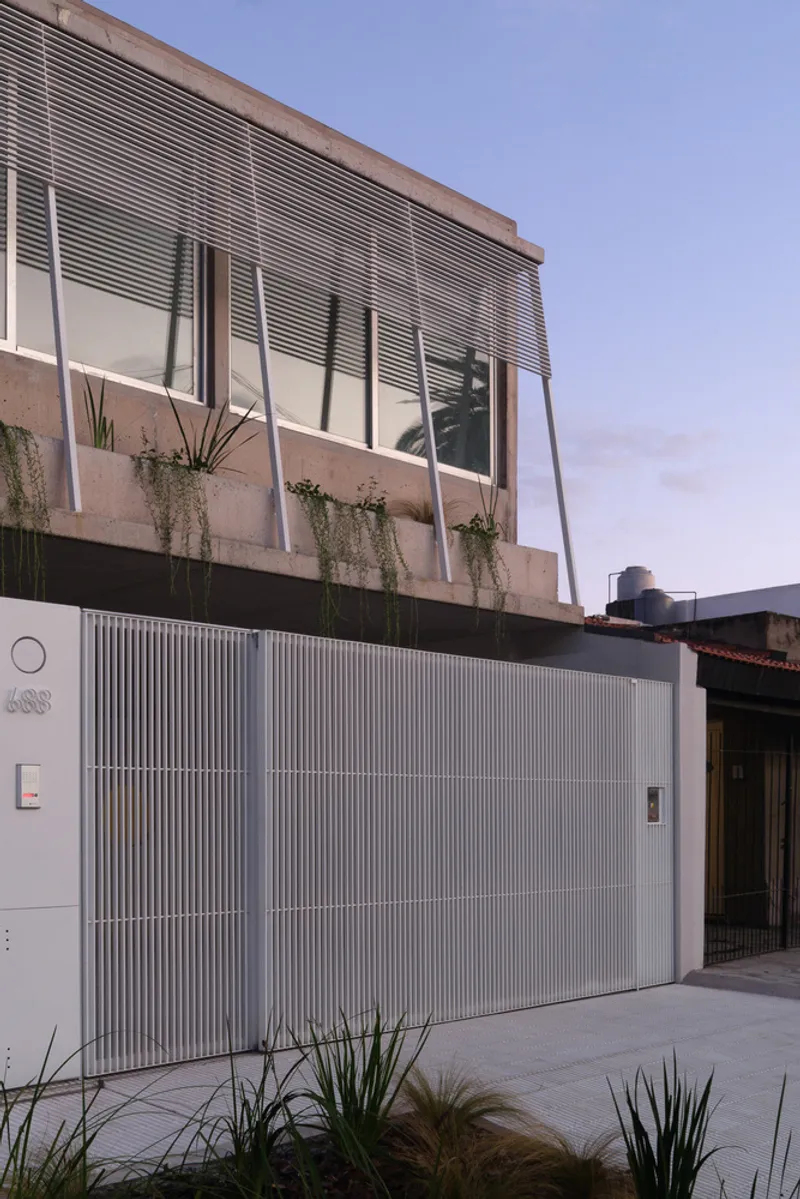
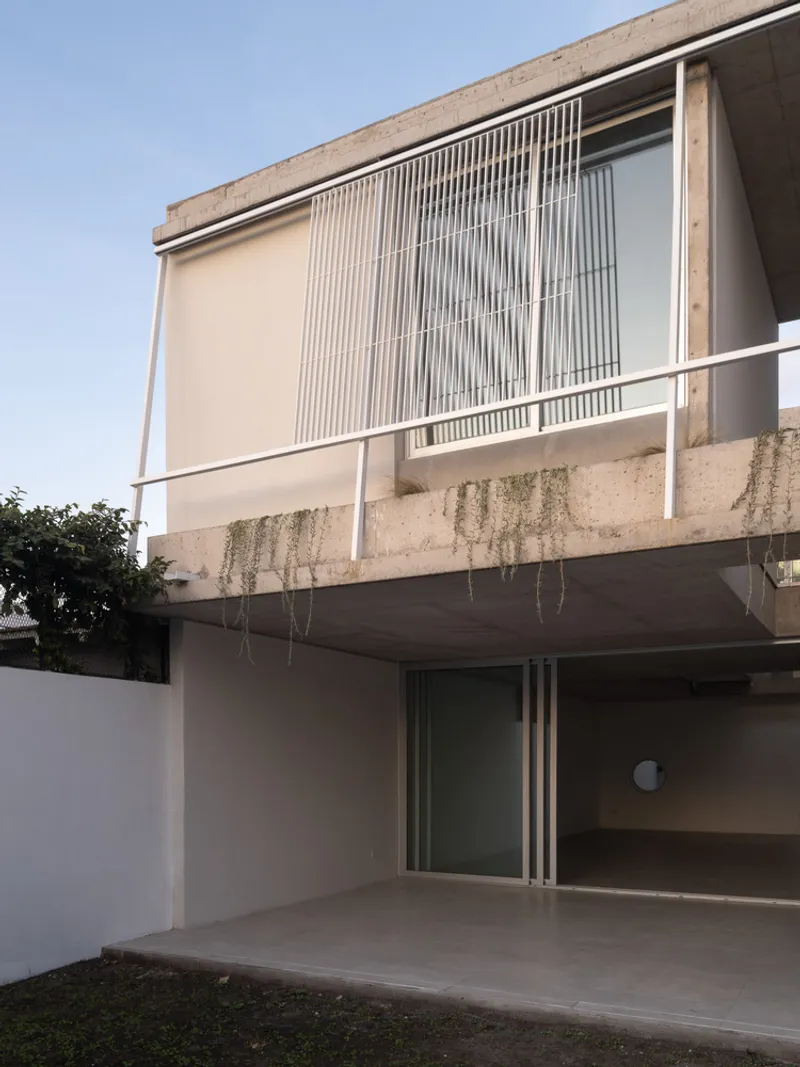
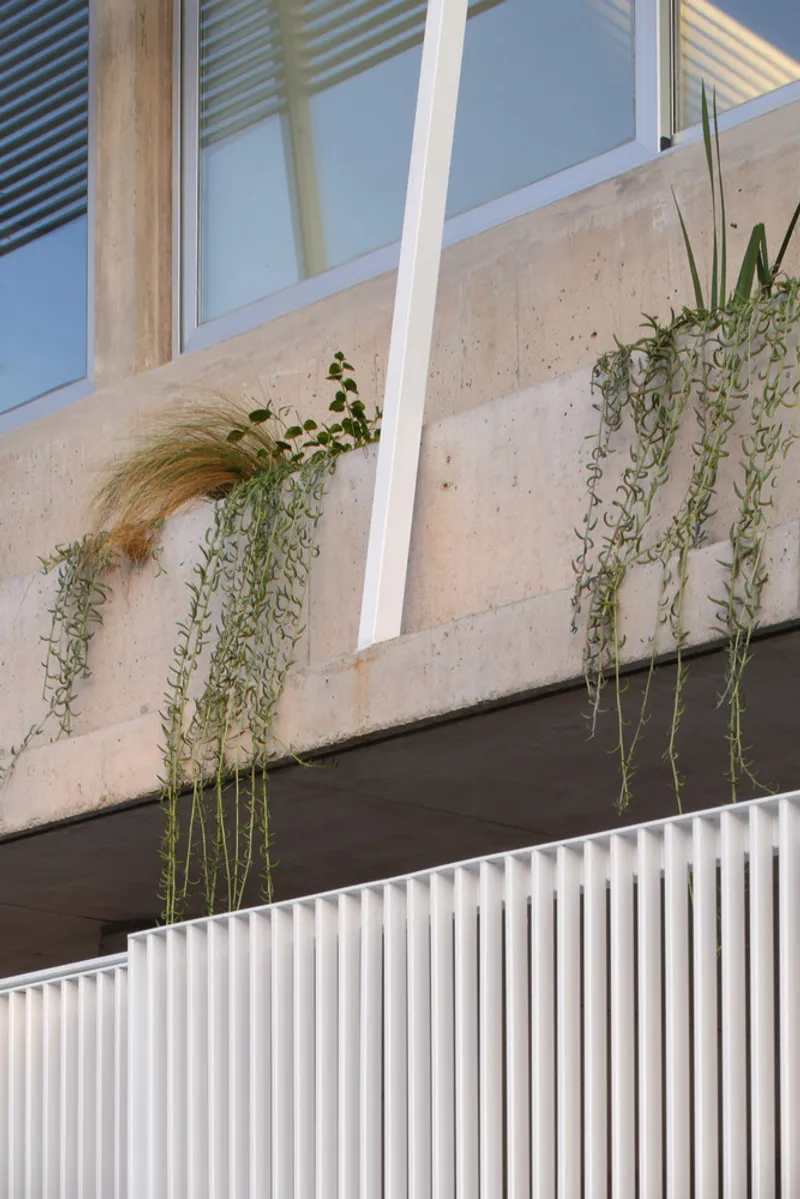
While the homes do not include a traditional front yard, the facade design captures this transitional sequence through layered architectural elements. Instead of relying on a single boundary, a succession of fences, eaves, flower beds, vegetation, sunshades, walls, and windows adds depth, visual interest, and a dynamic connection between the street and the home interior.
Spatial Organization and Interior Layout
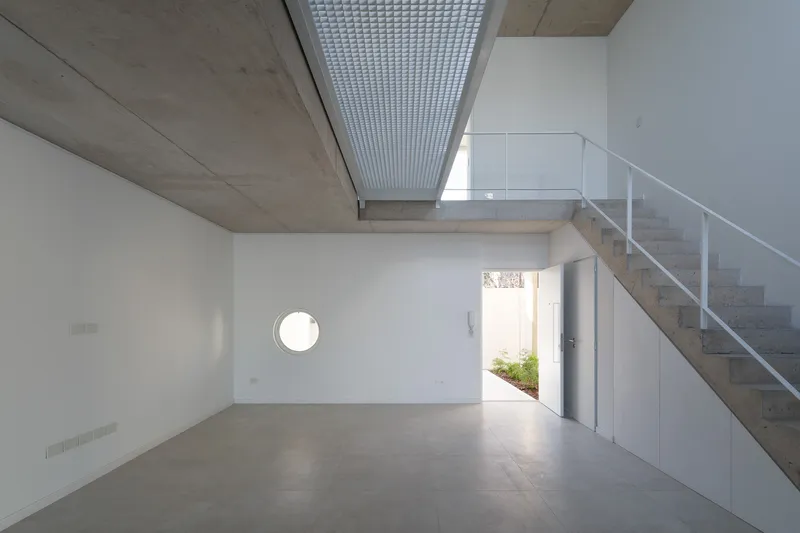
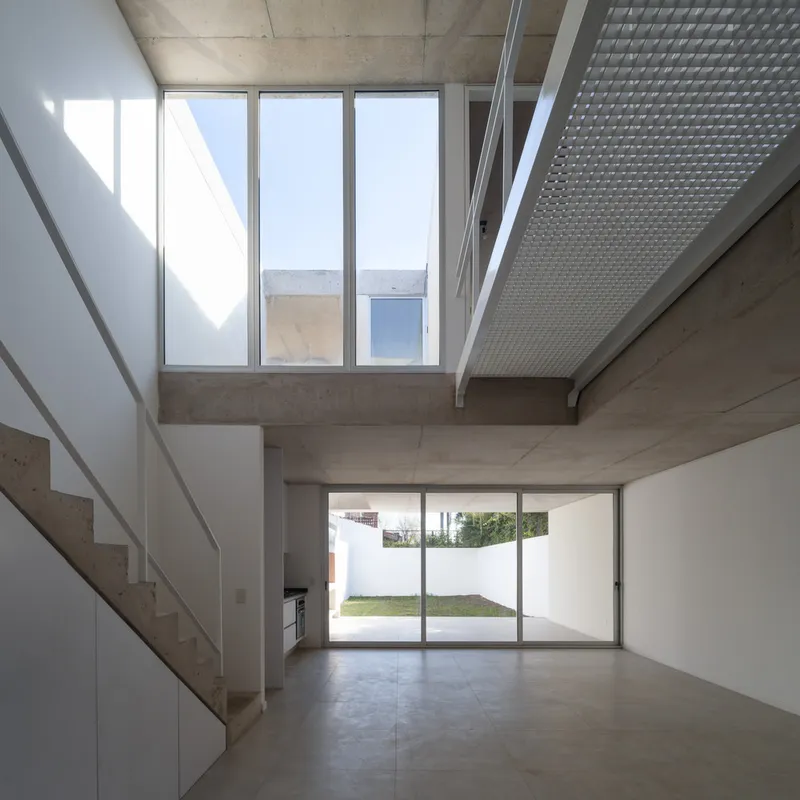
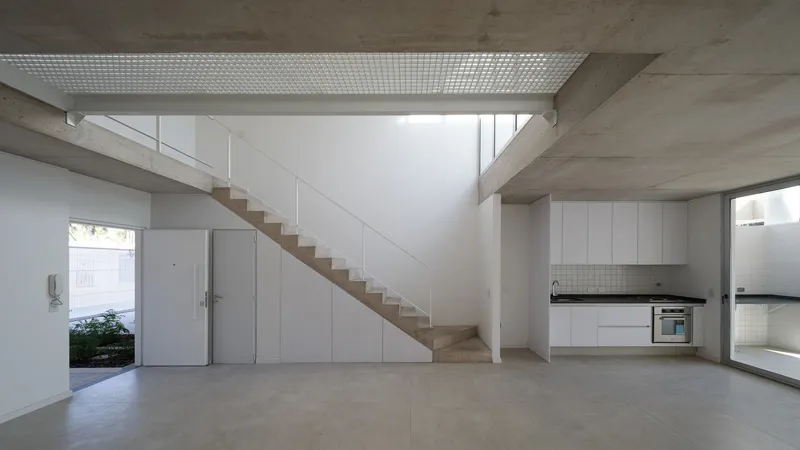
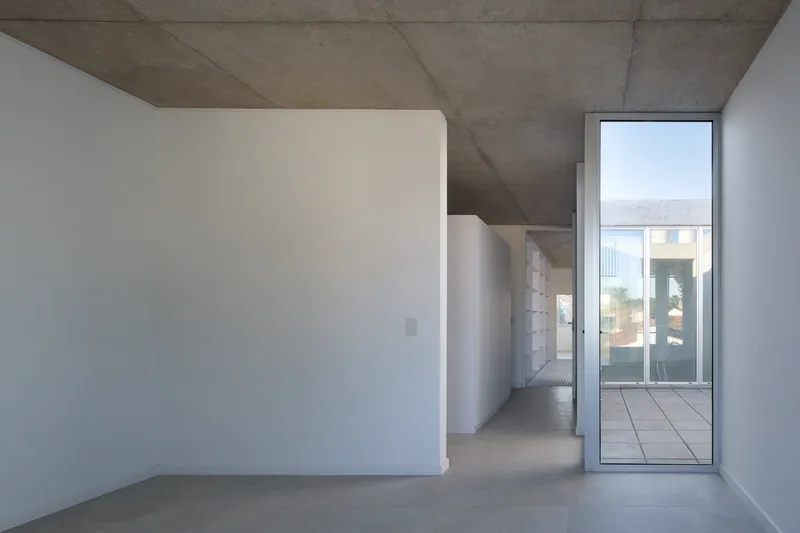
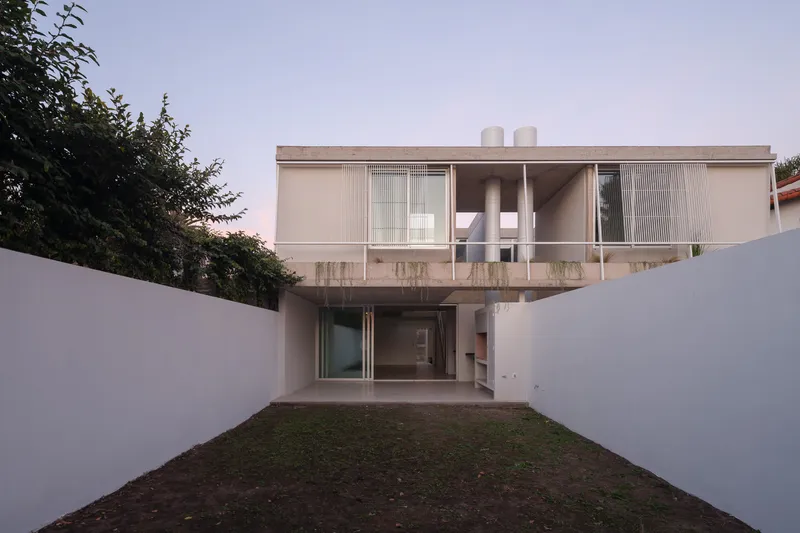
The ground floor is designed for functional clarity, with service areas organized in linear strips extending from front to back. Central voids in each residence act as organizing elements, defining different levels of privacy while connecting various spaces. The double-height living area creates spatial separation between secondary bedrooms and the master suite, which sits on the upper floor.
A metal walkway elegantly links the master bedroom to other upper-level spaces. The master suite’s terrace allows abundant natural light to fill the interior while overlooking the double-height gallery below, enhancing openness and visual connectivity.
Materiality and Architectural Expression
The material palette reinforces the spatial concept. Exposed reinforced concrete slabs flow uninterrupted, emphasizing structural clarity, while vertical surfaces are finished in white paint or glazing to balance solidity and transparency.
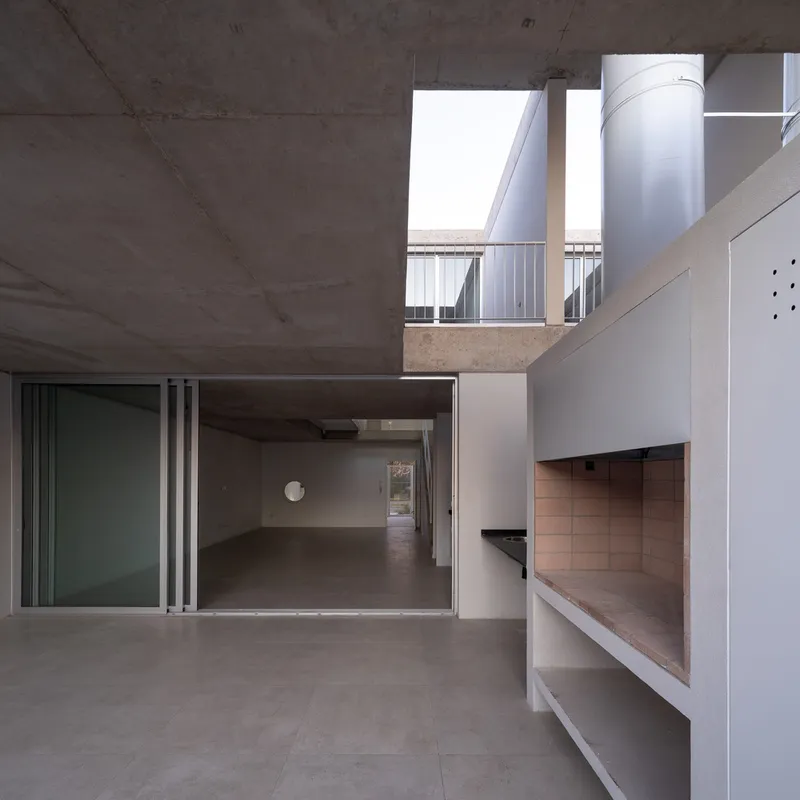
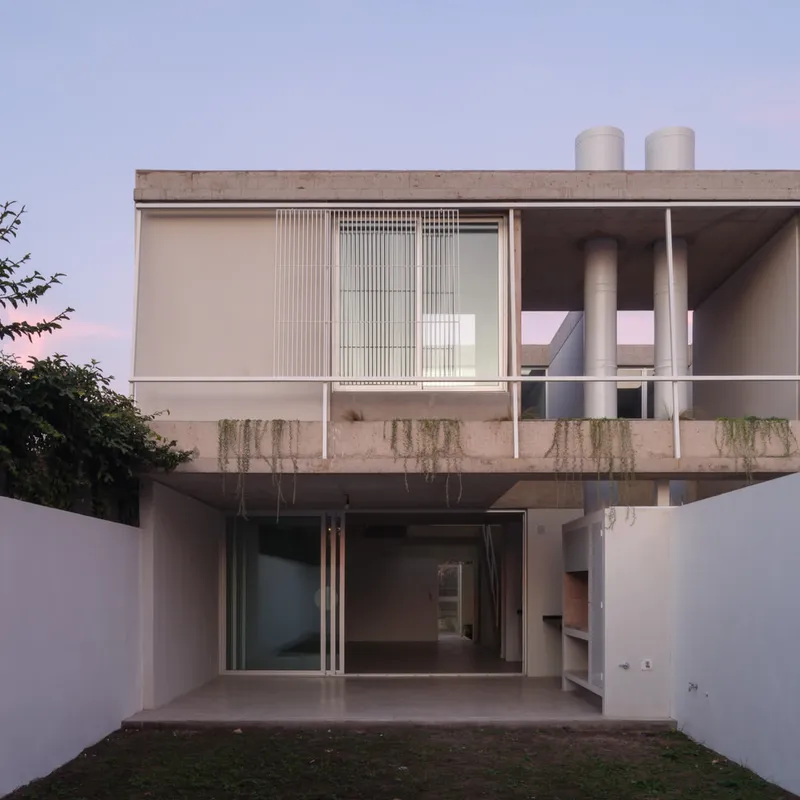
Patterns are consistently used throughout the project, appearing in cladding, furniture, and light-filtering screens, which extend spatial perception and introduce playful visual rhythm. Sunshades are designed for both functionality and aesthetic coherence: horizontal fixed sunshades at the front protect against the morning sun, while movable screens at the back adjust to the afternoon sun, ensuring privacy and comfort for bedrooms and double-height spaces.
Symmetry and Light Integration
The rear elevation highlights the symmetry inherent in the design. Movable sunshades and privacy screens not only regulate sunlight but also create a flexible environment tailored to the occupants’ needs. This careful balance of light, shadow, and material continuity reinforces the modern aesthetic and functional precision of the homes.
All photographs are works of Javier Agustín Rojas



Popular Articles
Popular articles from the community


The Ocean Hive: Sustainable Architecture for a Self-Sufficient Civilization at Sea
The Ocean Hive imagines sustainable architecture at sea, where modular habitats, algae, wave power and ocean waste sustain a growing colony.

Co-life: Sustainable Architecture for Age-Friendly Community Living
Co-life reimagines sustainable architecture for seniors through courtyards, rammed earth, shared gardens, and spaces designed for belonging.

Hill & Cross Opera: Sculptural Opera House Architecture Shaped by Tallinn’s Landscape and Identity
Hill & Cross Opera reimagines opera house architecture in Tallinn through its sculptural hill, civic plaza, glass wave and a luminous cross.

Riyadh For All: Intergenerational Urban Design for Active Aging in Rabat
Riyadh For All reimagines urban design in Rabat with intergenerational co-living, adaptive courtyards, and Moroccan cultural exchange today.


Similar Reads
You might also enjoy these articles


Hodi-Mandai Geram
Project Function: Preservation and revitalization of the Intangible heritage and socio-spatial identity of the Hodi by Housing, Cultural Memory Center, Sacred Grove, landscape, local tourism economy


Olio Towers: A Mid-Rise for Performers That Fuses Housing, Rehearsal, and Stage
Located blocks from Houston's Theater District, this modular tower stacks living units around a central performance atrium.

Oasis: Modular Green Housing Carved into Dhaka's Urban Fabric
A shortlisted Plugin Housing entry reclaims unauthorized settlements in Dhaka with stepped concrete volumes, green roofs, and ventilation-driven design.

Black Hole: A Floating Megastructure for the Post-Physical Era
Emiliano Mazzarotto envisions a spherical, self-scaling arena where e-sports, digital hotels, and holographic stadiums replace traditional public space.


Explore Architecture Competitions
Discover active competitions in this discipline



Challenge to reimagine the Iron Throne


Photograph architecture without architects


Illustrate the lost glory of Angkor Wat - Render Challenge


Design challenge to reuse E-waste
Comments (0)
Please login or sign up to add comments
No comments yet. Be the first to comment!