

Pengpeng’er Bistro by UN-GROUP
A railway-inspired bistro in Chengdu blending heritage, landscape, and lightweight architecture to create a vibrant community hub within a revitalized linear park.


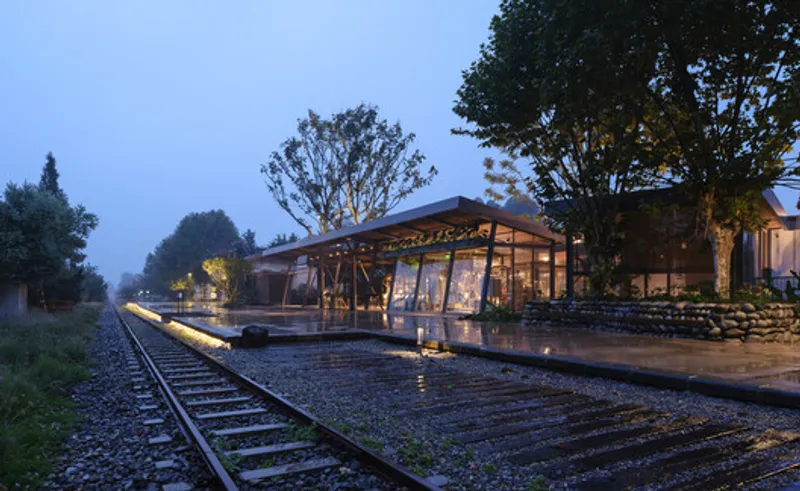
Located in the outskirts of Chengdu, in Danjingshan Town of Pengzhou, Pengpeng’er Bistro is a carefully crafted restaurant project that combines architectural renewal, cultural memory, and contemporary leisure. Completed in 2025, the 410 m² bistro forms part of the larger Jianjiang Small Train Linear Park regeneration initiative, transforming a former railway corridor into a vibrant public and tourism destination.
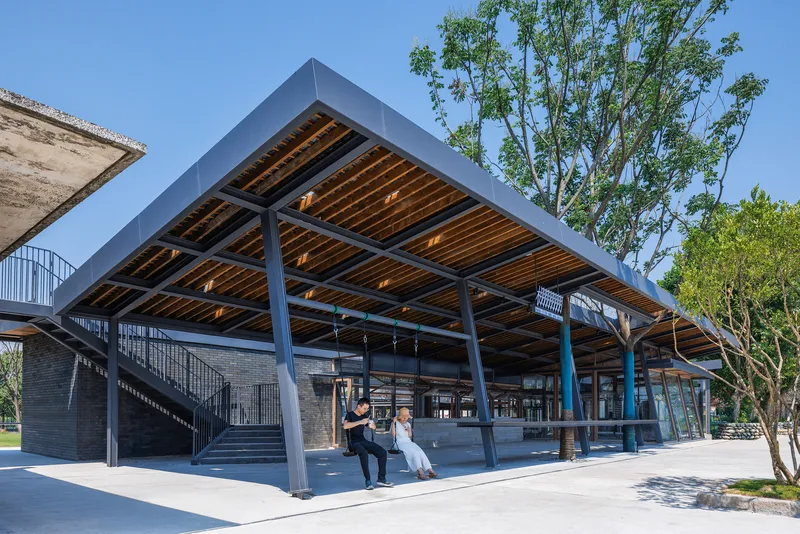
Designed by UN-GROUP under the leadership of Wang Xiaoyu and Yang Lie, the project reinterprets industrial heritage through lightweight structures, flexible spaces, and landscape integration. Rather than functioning solely as a dining venue, the bistro operates as a social anchor and cultural landmark within the evolving railway park.
Historical Context and Urban Regeneration
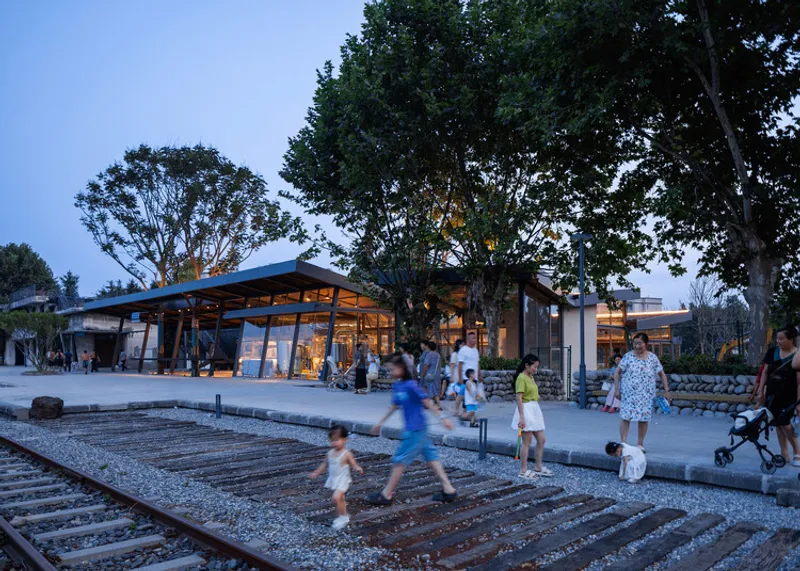
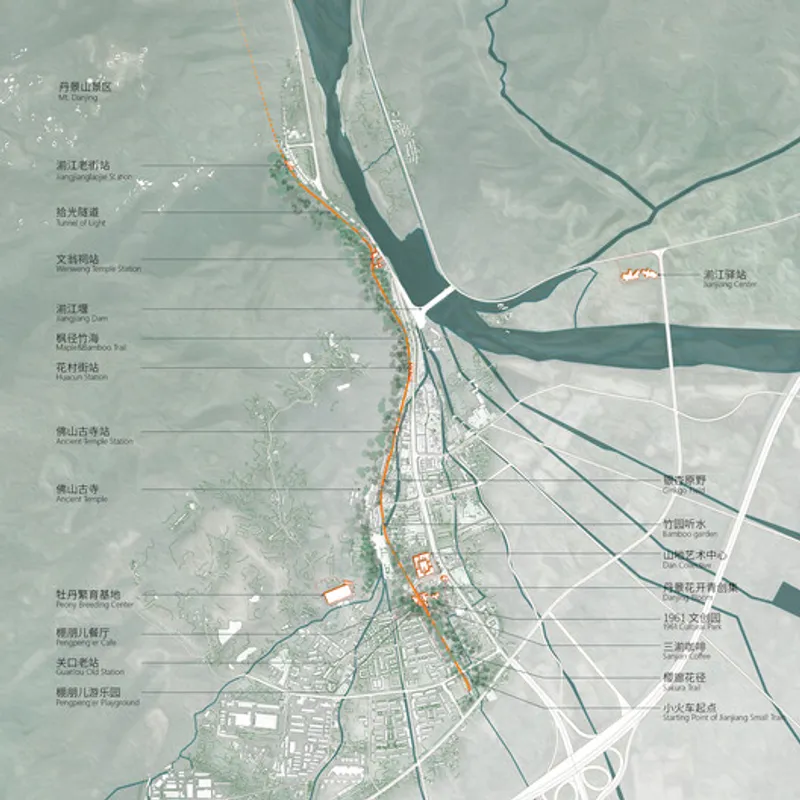
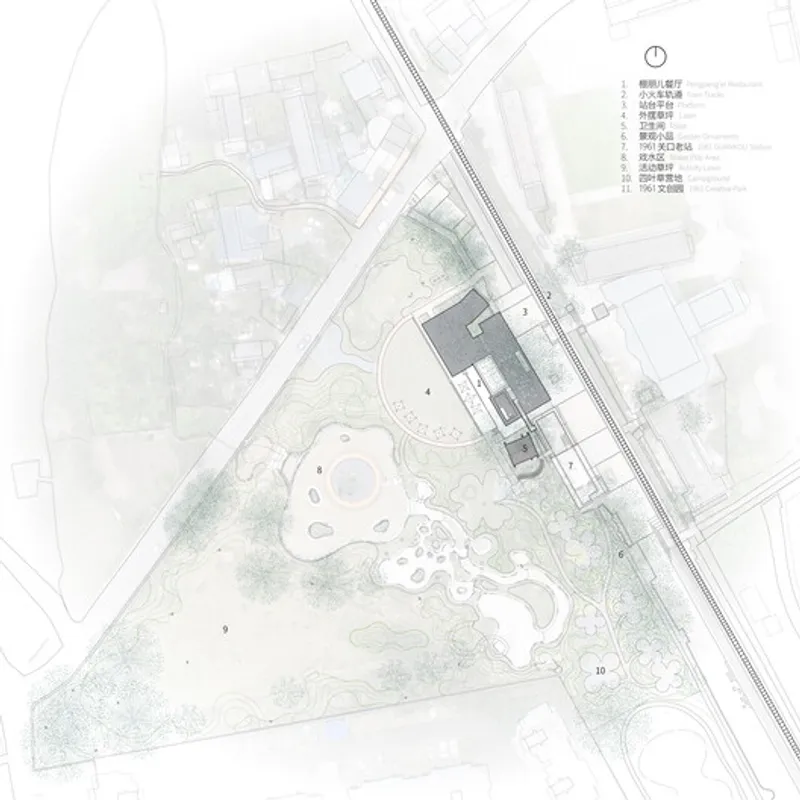
The Jianjiang Small Train Linear Park follows the route of the former Peng-Bai Railway, a narrow-gauge line inaugurated in 1961 and discontinued in 2004. For decades, this railway served as a crucial connection for local communities, and its closure left a strong emotional imprint on the region.
In 2024, a comprehensive regeneration strategy was launched based on an “operations-led” development model. Under the concept of “Time Fold · Rebirth on Tracks,” the railway corridor was envisioned as a linear cultural and leisure infrastructure linking dining, exhibitions, art spaces, and heritage sites.
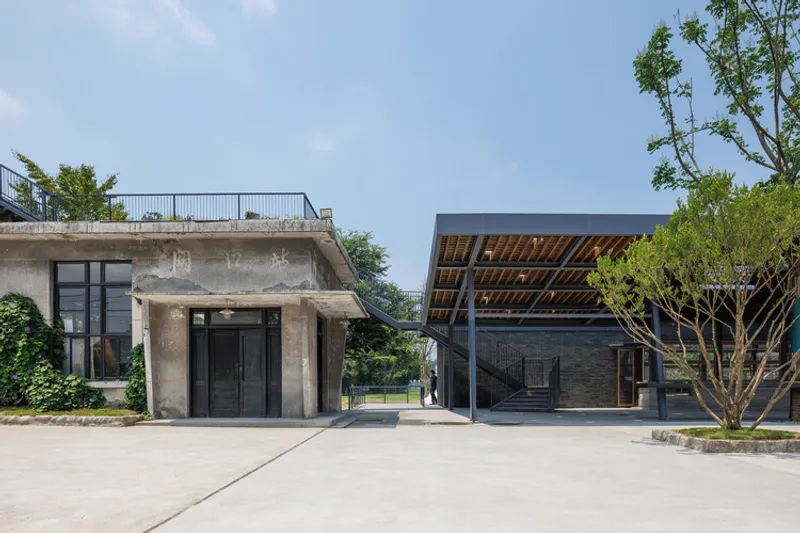
Pengpeng’er Bistro was established as the first major node along this route. Positioned next to the historic Guankou Old Station, it sets the tone for the entire redevelopment, acting as both gateway and gathering space.
Design Philosophy: Old Station Rebirth
The central idea guiding the project is “Old Station Rebirth.” Instead of isolating the new building from its historical surroundings, the design seeks to extend and reinterpret the existing station.
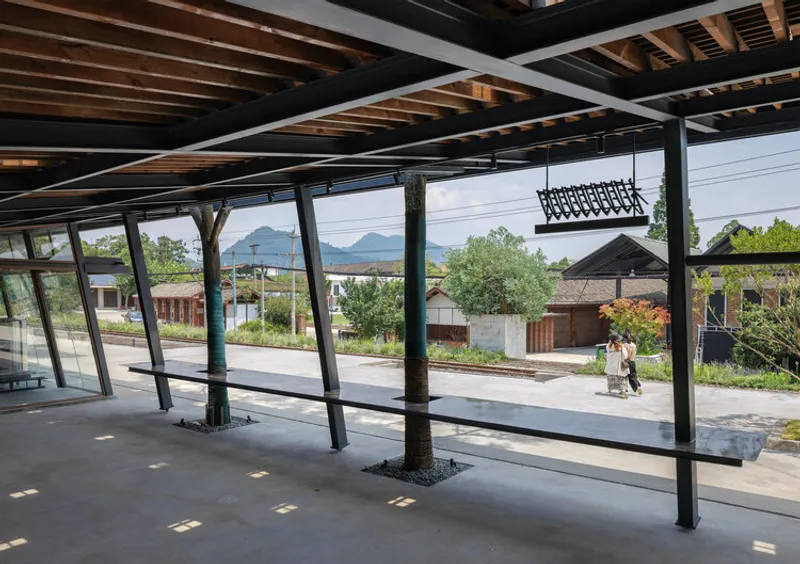
Inspired by the Western Sichuan tradition of “Dapengpeng’er” (temporary shacks or shelters), the architects developed a semi-outdoor canopy structure that runs parallel to the old station. This element recreates the familiar atmosphere of “drinking tea under a shack,” a deeply rooted local lifestyle practice.
Through this approach, the bistro becomes a contemporary continuation of everyday social rituals, blending past and present in a natural and accessible manner.
Architectural Composition and Structural Strategy
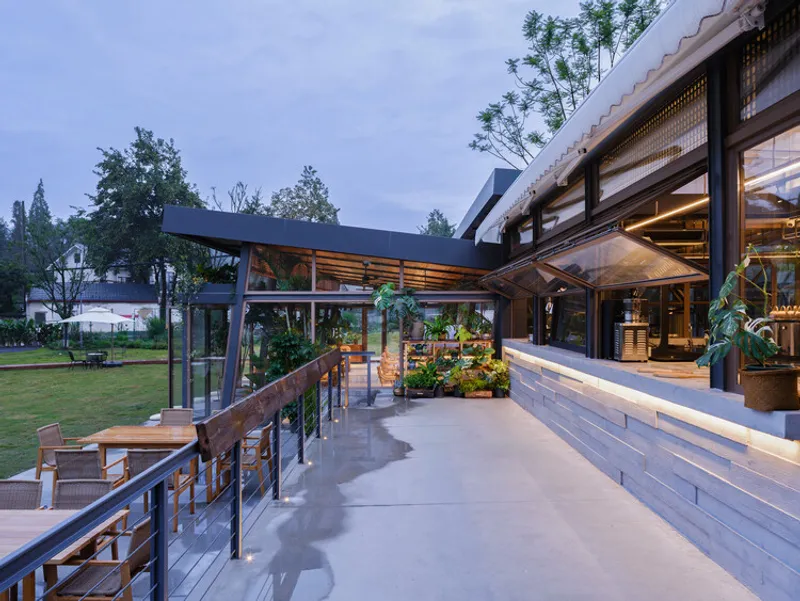
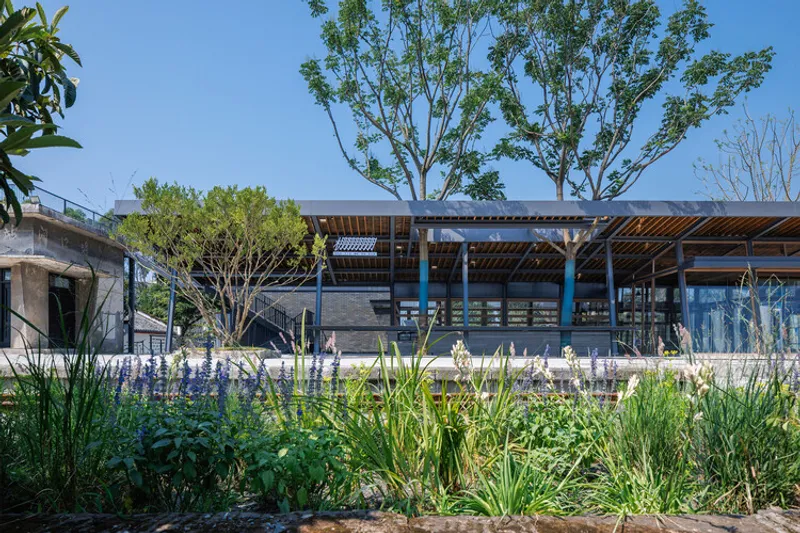
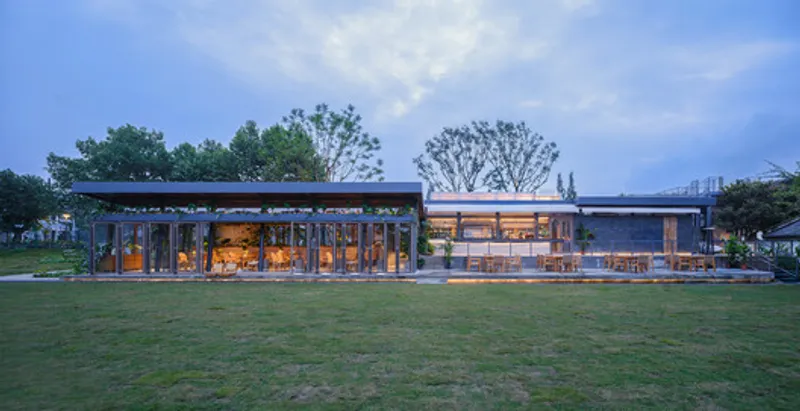
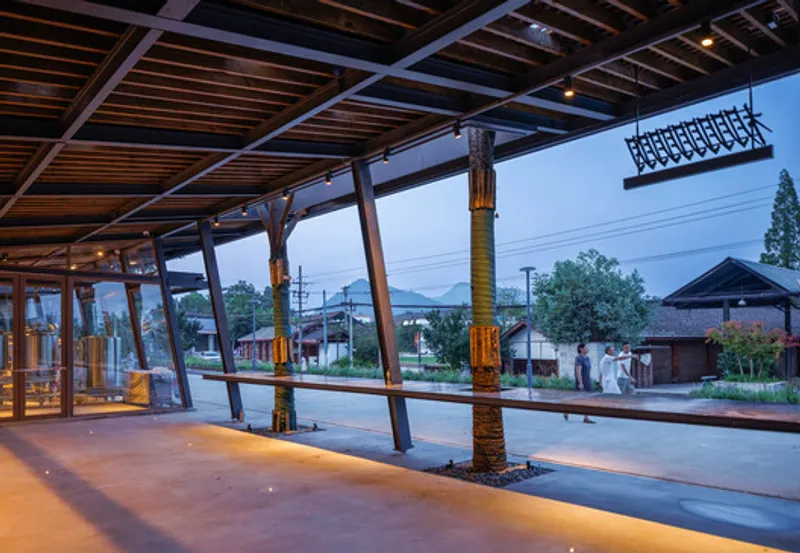
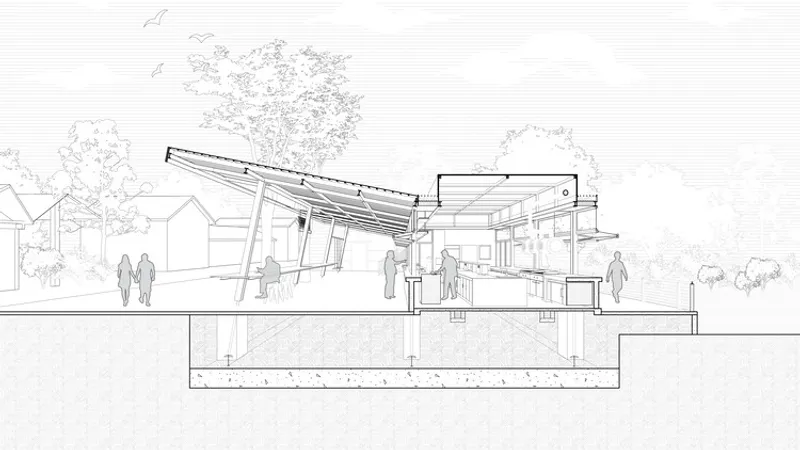
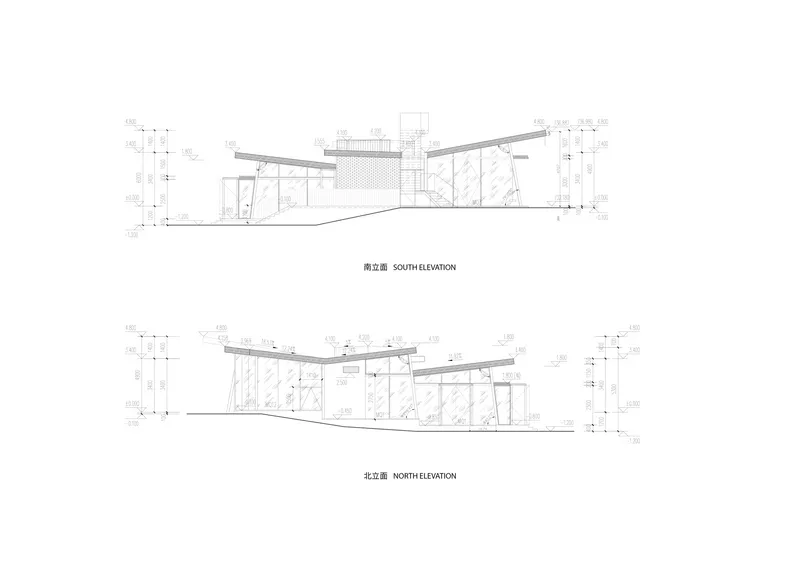
The most prominent architectural feature is the slanted, semi-outdoor canopy that matches the height of the historic station. This canopy functions as waiting area, circulation space, and dining zone, forming the spatial heart of the project.
A lightweight steel staircase connects the canopy to the station’s rooftop terrace without altering the original structure. This reversible intervention ensures heritage preservation while enabling new forms of use.
The primary structure is composed of steel columns and beams arranged at precise right angles. Tilted columns meet soaring beams to create a sense of rootedness combined with visual lightness. This structural clarity reflects UN-GROUP’s emphasis on balancing strength, economy, and elegance.
Light, Roof, and Environmental Expression
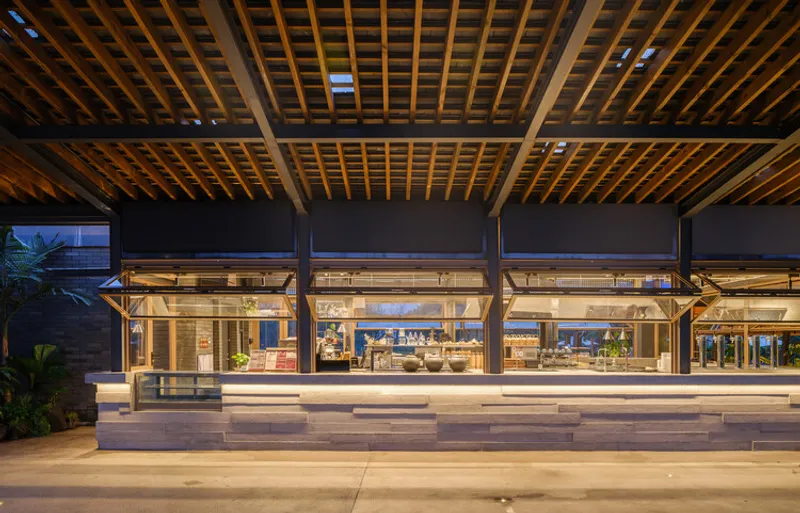
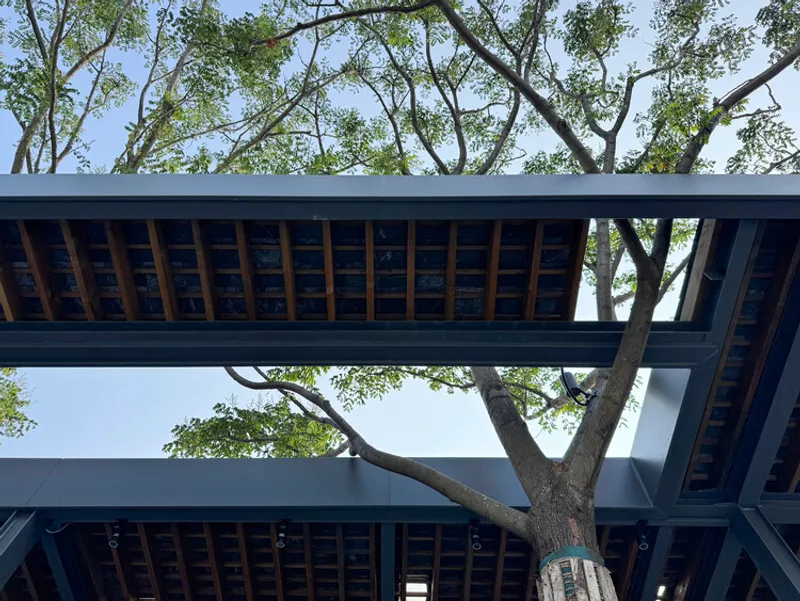
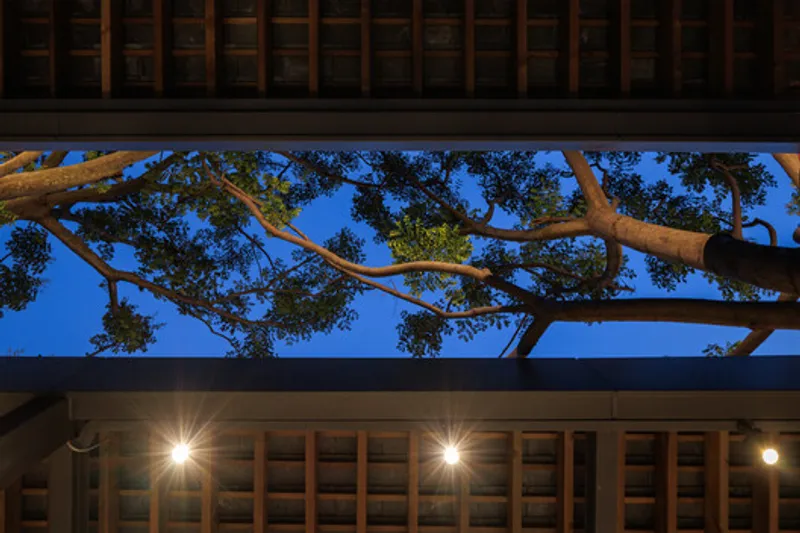
The roof system is designed as both environmental device and architectural feature. Exposed purlins support randomly arranged transparent and slate tiles, allowing daylight to filter into the semi-outdoor spaces.
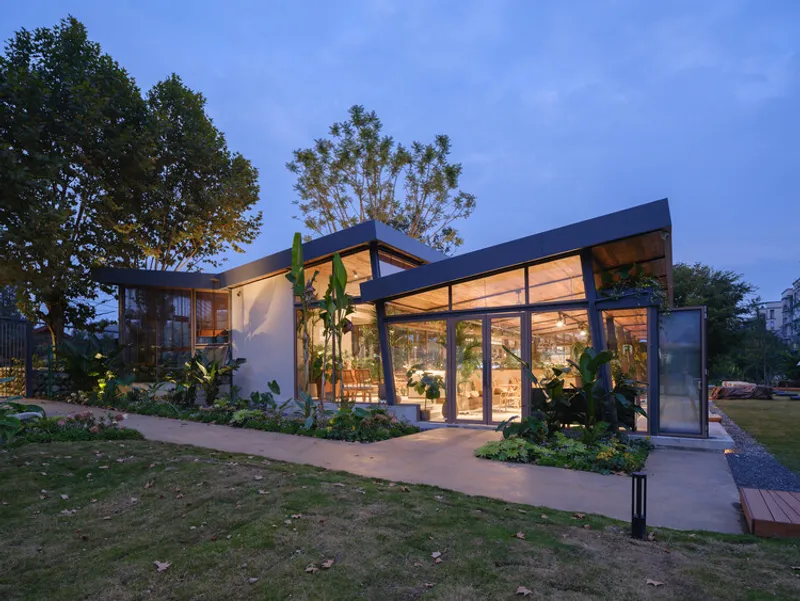
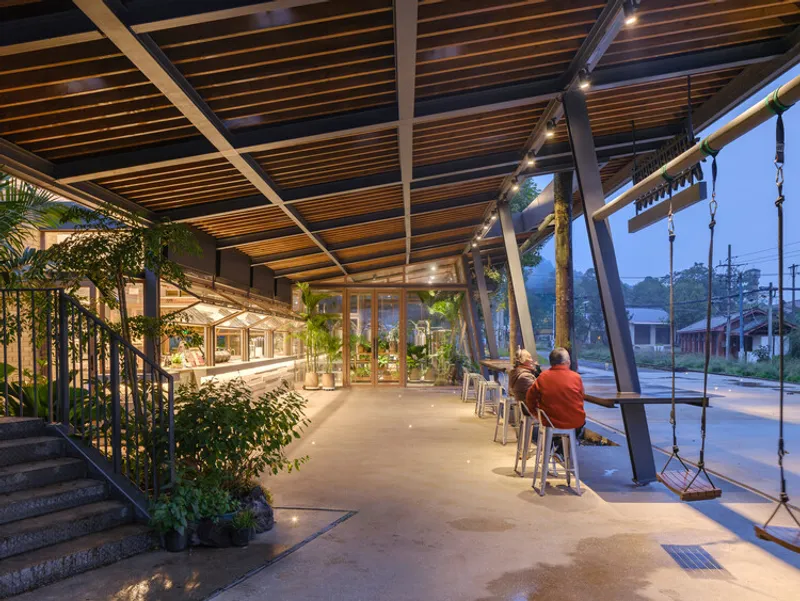
During the day, this system creates soft, diffused illumination. At night, embedded lighting transforms the canopy into a constellation-like ceiling, producing a festive and welcoming atmosphere.
A semi-translucent polycarbonate roof covers the central bar, enabling it to glow like a lantern after dark. This luminous core acts as a visual beacon for visitors approaching from the park and railway path.
Landscape Integration and Living Architecture
Landscape plays an essential role in shaping the spatial identity of Pengpeng’er Bistro. Original London plane trees, which could not be preserved due to health issues, were replaced with mature Goldenrain trees (Koelreuteria paniculata).
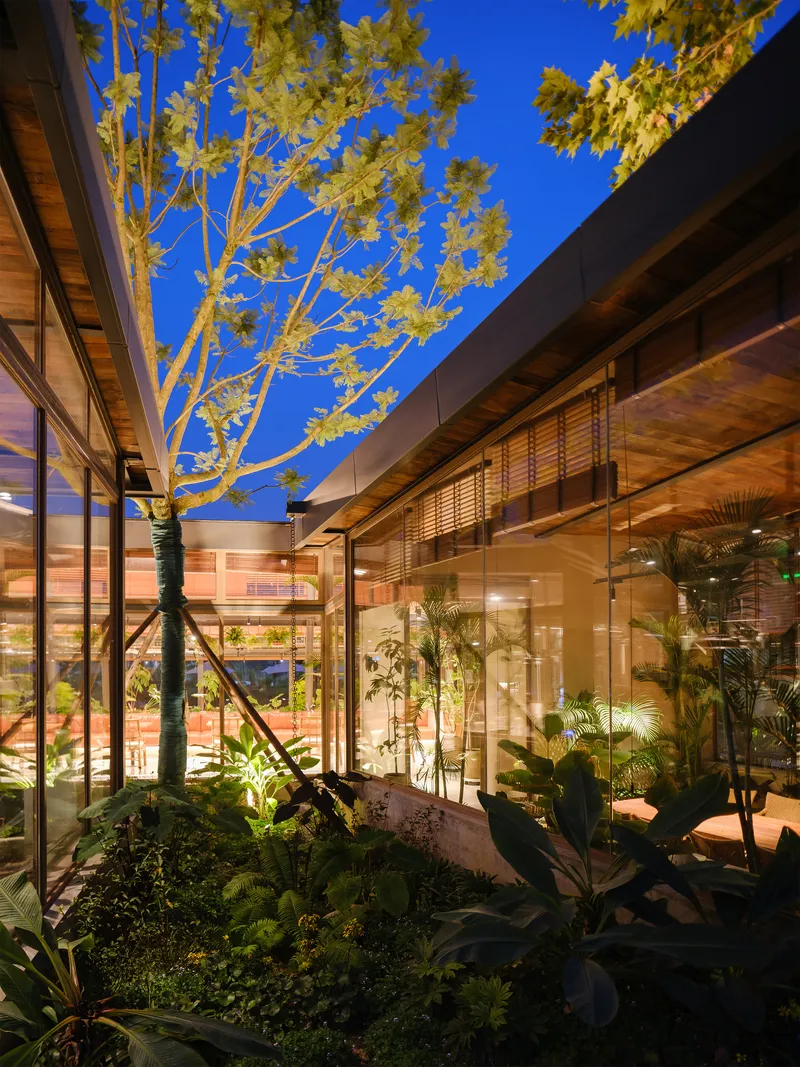
These trees penetrate through openings in the roof, visually connecting interior spaces with the surrounding Longmen Mountains. Their branches and seasonal changes become part of the architectural experience, reinforcing the idea of the building as a living system.
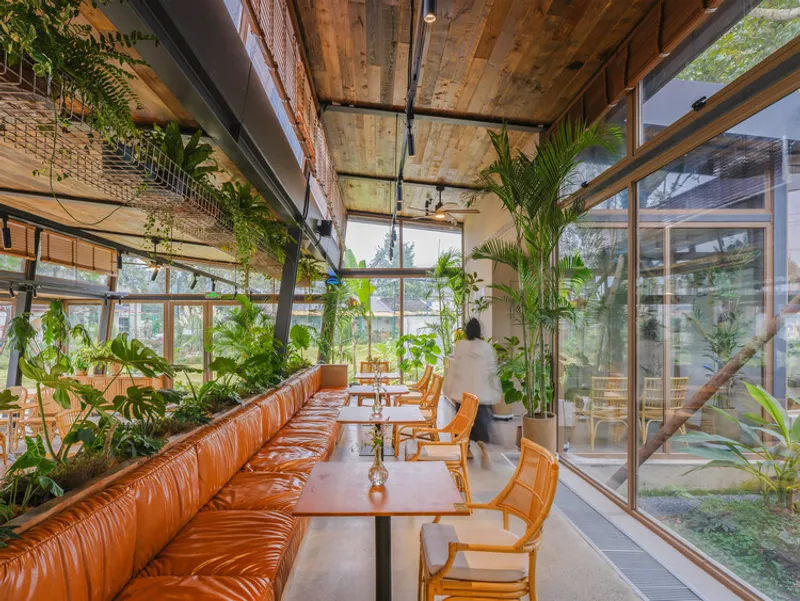
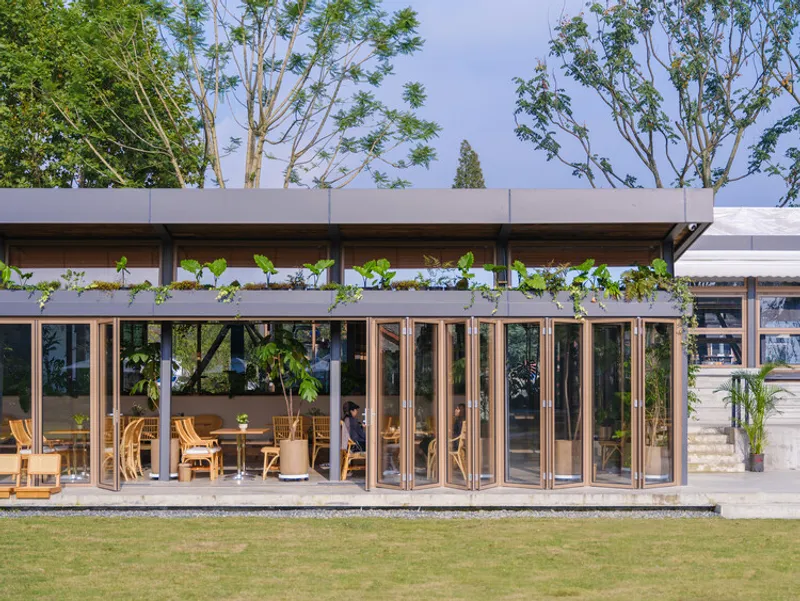
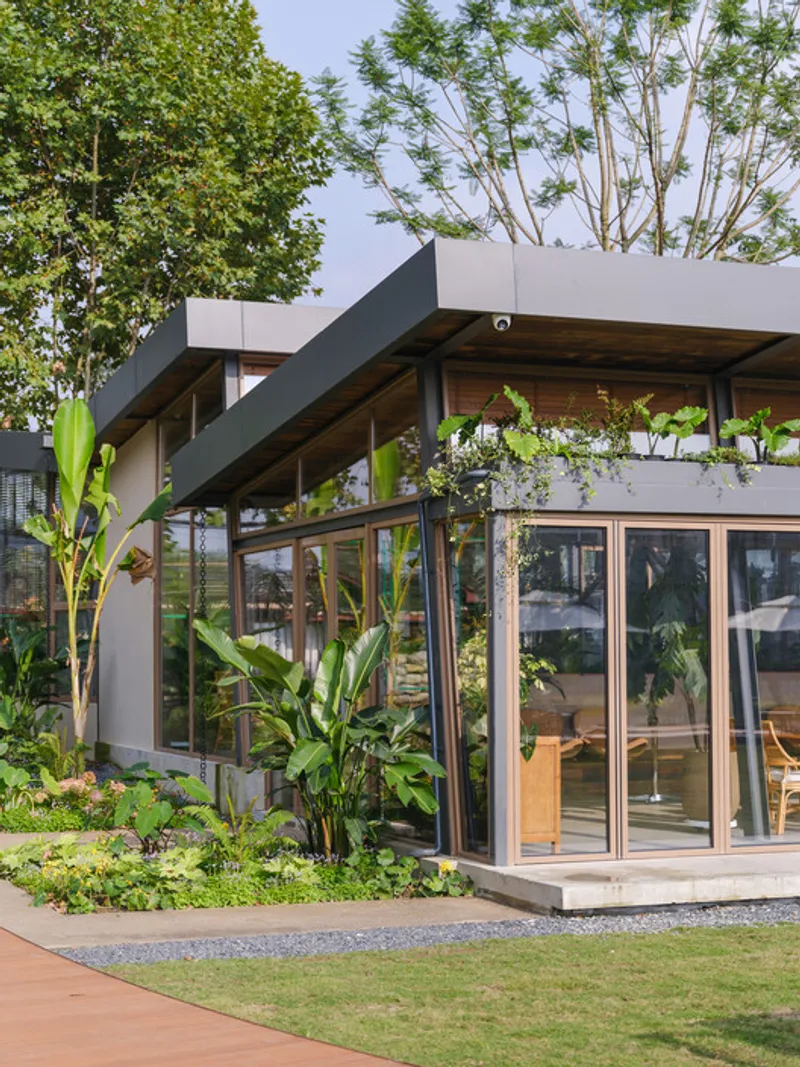
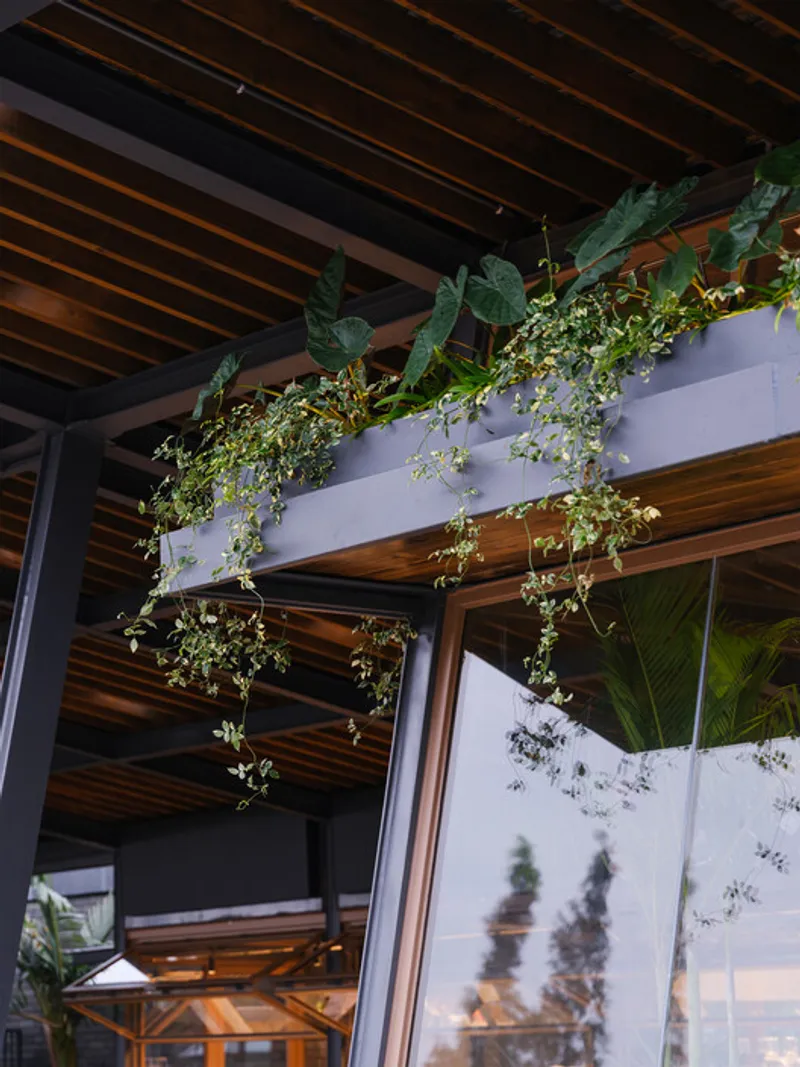
Greenery is further integrated through continuous planters, vertical green windows, and layered courtyards. This strategy softens structural elements and blurs the boundary between built form and natural environment.
Spatial Organization and Functional Flexibility
The semi-outdoor zone beneath the canopy is conceived as a flexible, multifunctional platform. It accommodates casual seating, community events, informal gatherings, and waiting areas for visitors using the railway park.
A cast-in-place fair-faced concrete bar with wood-textured surfaces introduces warmth into the material palette. This central element anchors the space and supports both indoor and outdoor dining functions.
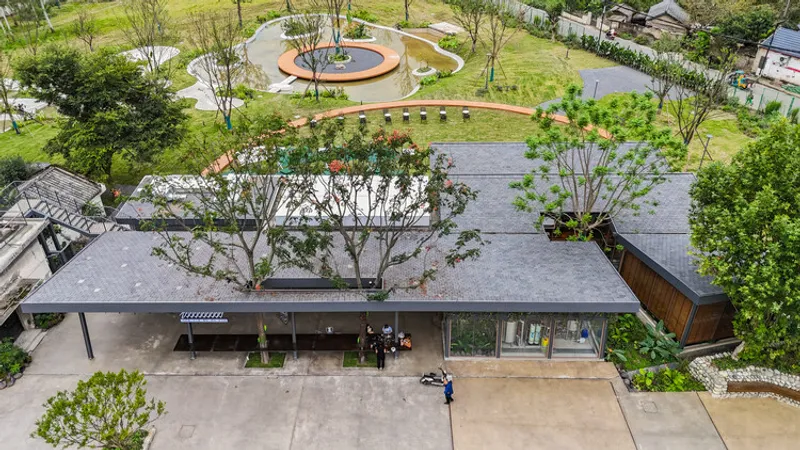
Additional features include suspended communal tables, swings near the old station, and tiered terraces that manage the site’s 1.2-meter elevation change. These elements encourage diverse modes of occupation and enhance spatial adaptability.
Interior Design and Material Memory
The interior spaces continue the narrative of heritage and familiarity. Reclaimed wood, rattan furniture, and natural finishes evoke memories of traditional leisure environments in Sichuan.
Large glass façades maximize visual connection to the park and courtyards, while folding doors allow the interior to merge seamlessly with exterior platforms.
All HVAC equipment is concealed underground, preserving the visual lightness of the roof and maintaining architectural clarity.
Through restrained detailing and tactile materials, the interiors support comfort without overshadowing the project’s broader spatial narrative.
Industrial Heritage and Detail Design
One of the project’s most distinctive aspects is its attention to small-scale details that reference railway history.
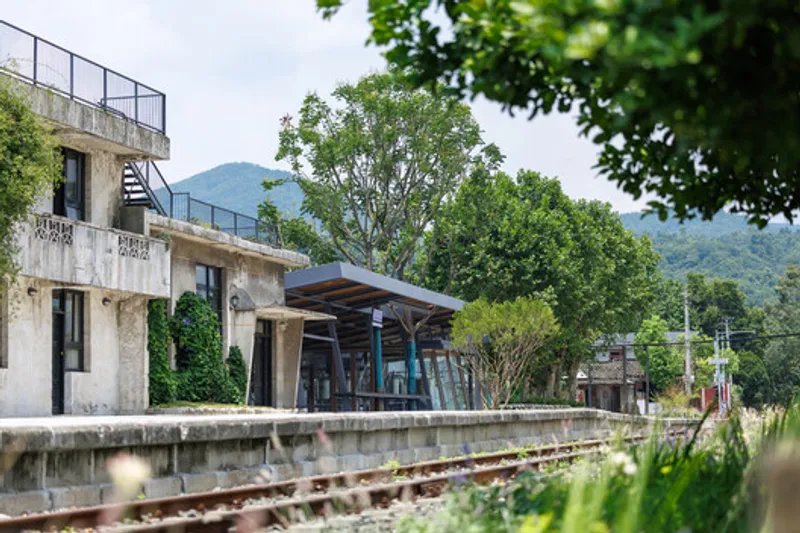
Examples include:
- Door handles crafted from narrow-gauge rails
- Steps made from reclaimed railway sleepers
- Embedded seating tracks recalling former rail lines
- Industrial-inspired fixtures and fittings
These elements function as subtle reminders of the site’s past, allowing visitors to engage with history through everyday interaction.
Rather than presenting heritage as static display, the design integrates it into daily use.
Public Space and Community Role
Beyond its commercial function, Pengpeng’er Bistro operates as a “community living room.” It hosts families, cyclists, tourists, and local residents, providing a shared space for relaxation and social exchange.
A children’s play area and multi-level platforms at the rear extend its appeal across age groups. The openness of the layout encourages spontaneous encounters and informal activities.
As the small train enters trial operation, the bistro has become a central node within the linear park, strengthening social cohesion and regional identity.
Sustainability and Long-Term Adaptability
Environmental responsibility is addressed through passive design strategies, lightweight construction, and landscape integration. Shading systems, natural ventilation, and diffused lighting reduce energy demand.
The flexible layout and modular structural approach support future adaptations as the park develops further. This ensures that the building remains relevant within the long-term regeneration framework.
Sustainability here is understood not only as environmental efficiency, but also as cultural and social resilience.
A Model for Heritage-Based Hospitality Design
Pengpeng’er Bistro demonstrates how hospitality architecture can play a transformative role in urban and rural regeneration. By merging historical memory, contemporary design, and public life, the project transcends conventional restaurant typologies.
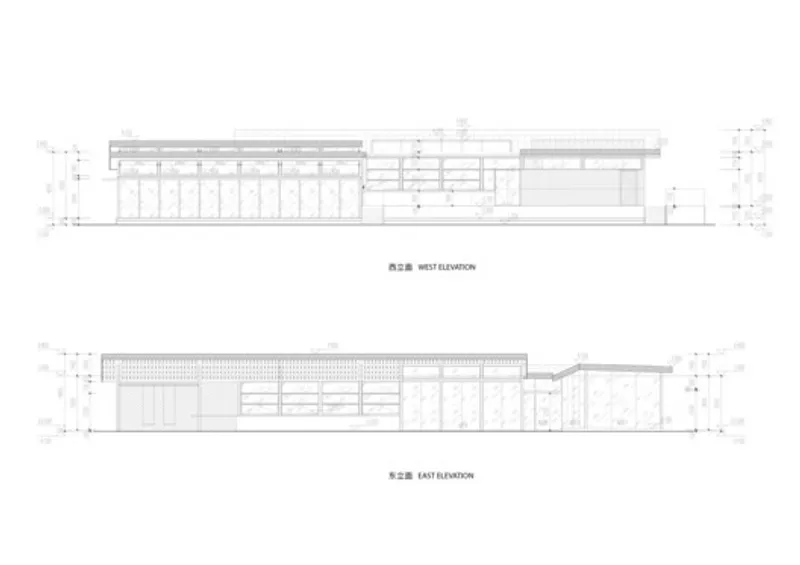
It shows that adaptive reuse does not require imitation, but rather thoughtful reinterpretation. Through its canopy structure, material language, and landscape strategy, the bistro establishes a strong architectural identity rooted in place.
UN-GROUP’s design offers a compelling model for future heritage-based developments across China and beyond.
All the Photographs are works of Songkai Liu


Popular Articles
Popular articles from the community


Aquadapt: An Underwater Habitat That Rewrites Its Rooms by the Hour
Curved modules ring the seabed while one shell shifts from breakfast room to cinema, farm and football pitch as residents' needs change.


David Ortega Stacks a Two-Story Mexico City Penthouse Around a Steel Stair and a Pergola-Shaded Roof Terrace
In Colonia Roma, a 300 m² penthouse uses oak joinery, a planted steel stair and a slatted roof pergola to make a new-build apartment feel like a house.

FCC Arquitectura Expands a Portuguese Granite House with a Board-Marked Concrete Wing
In Portugal, JV House pairs a cleaned-up whitewashed and granite dwelling with a timber-shuttered concrete extension, courtyards and a garden pool.

ETEH Reworks the Shared Spaces of São Domingos School in Brazil Around Timber, Color and Hanging Plants
At São Domingos School in Brazil, 436 m² of hall, refectory and library are recast with timber joinery, a yellow and blue code and trailing greenery.

Similar Reads
You might also enjoy these articles


Hodi-Mandai Geram
Project Function: Preservation and revitalization of the Intangible heritage and socio-spatial identity of the Hodi by Housing, Cultural Memory Center, Sacred Grove, landscape, local tourism economy


Olio Towers: A Mid-Rise for Performers That Fuses Housing, Rehearsal, and Stage
Located blocks from Houston's Theater District, this modular tower stacks living units around a central performance atrium.

Oasis: Modular Green Housing Carved into Dhaka's Urban Fabric
A shortlisted Plugin Housing entry reclaims unauthorized settlements in Dhaka with stepped concrete volumes, green roofs, and ventilation-driven design.

Black Hole: A Floating Megastructure for the Post-Physical Era
Emiliano Mazzarotto envisions a spherical, self-scaling arena where e-sports, digital hotels, and holographic stadiums replace traditional public space.

Explore Chengdu Competitions
Discover active competitions in this discipline

Challenge to reimagine the Iron Throne

Photograph architecture without architects

Illustrate the lost glory of Angkor Wat - Render Challenge

Design challenge to reuse E-waste
Comments (0)
Please login or sign up to add comments
No comments yet. Be the first to comment!