
People Tree House by Archiopteryx – A Sustainable Home Inspired by the Sacred Fig
People Tree House by Archiopteryx blends sustainable design, sacred fig inspiration, rainwater harvesting, and biodiversity, creating harmony between humans and nature.


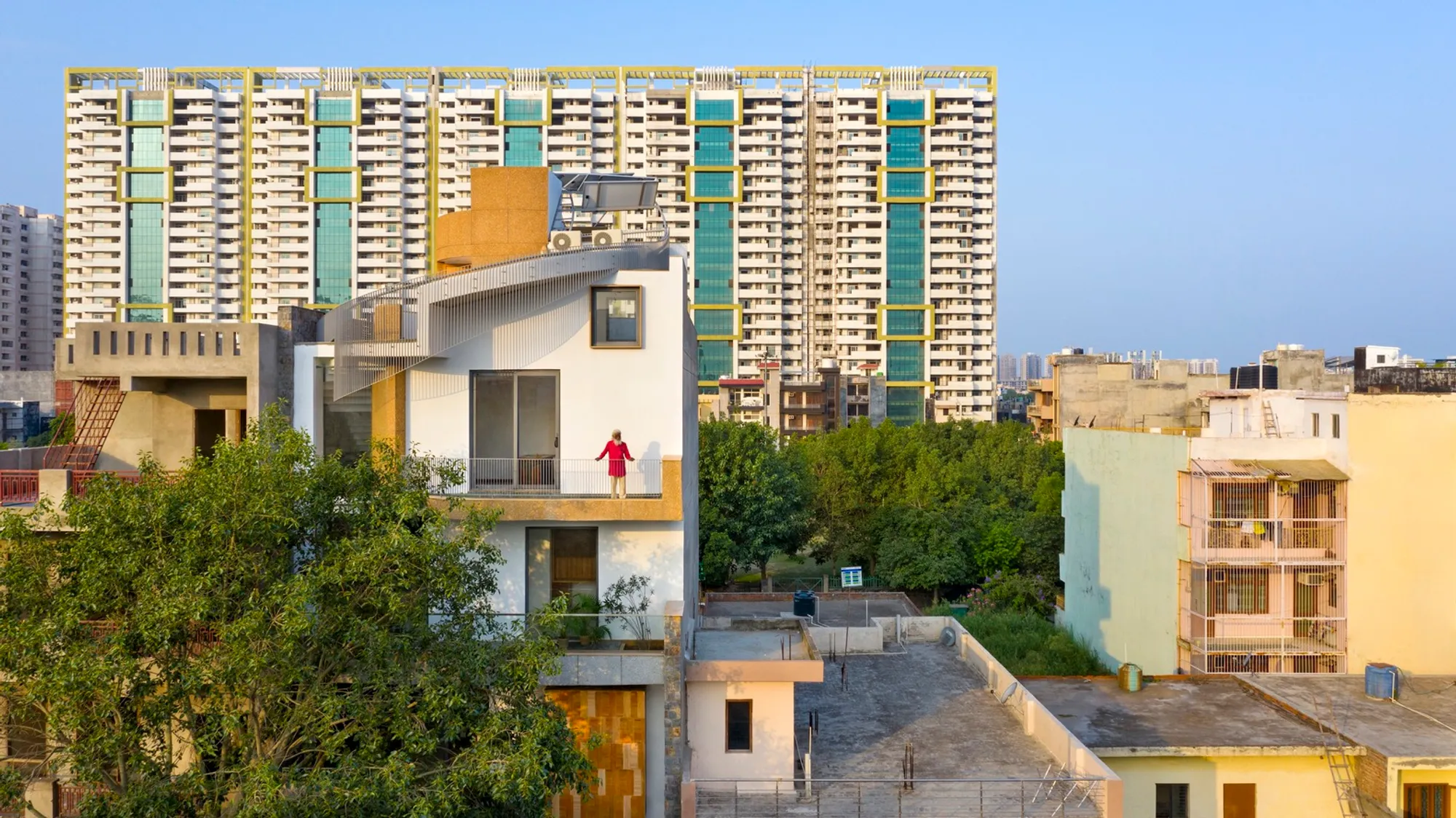
The People Tree House in Noida, India, designed by Archiopteryx, is a striking 500 m² residence completed in 2022. Seamlessly blending sustainable design, vernacular architecture, and ecological sensitivity, this project creates a dialogue between humans, architecture, and the natural ecosystem.
Concept and Inspiration
The house is named “Ashvattha”, derived from Sanskrit, meaning “that which remains tomorrow.” This symbolic name reflects the sacred fig tree (Peepal) located at the corner of the site. The design draws from the cultural, ecological, and spiritual significance of fig trees in India, known for their symbiotic relationship with fig-wasps and role in sustaining biodiversity.
The vision was to create a sustainable sanctuary where humans and non-human inhabitants—birds, insects, and small mammals—could coexist. By carefully curating plant species and designing spaces that attract wildlife, the People Tree House redefines the idea of living in harmony with nature.

Site and Urban Context
Located in Noida, a planned satellite city of Delhi within the National Capital Region of India, the site is part of a rectilinear urban grid, surrounded on three sides by neighboring buildings. Despite its compact setting, the design uses light, ventilation, and green integration to establish a retreat-like atmosphere within the dense city fabric.

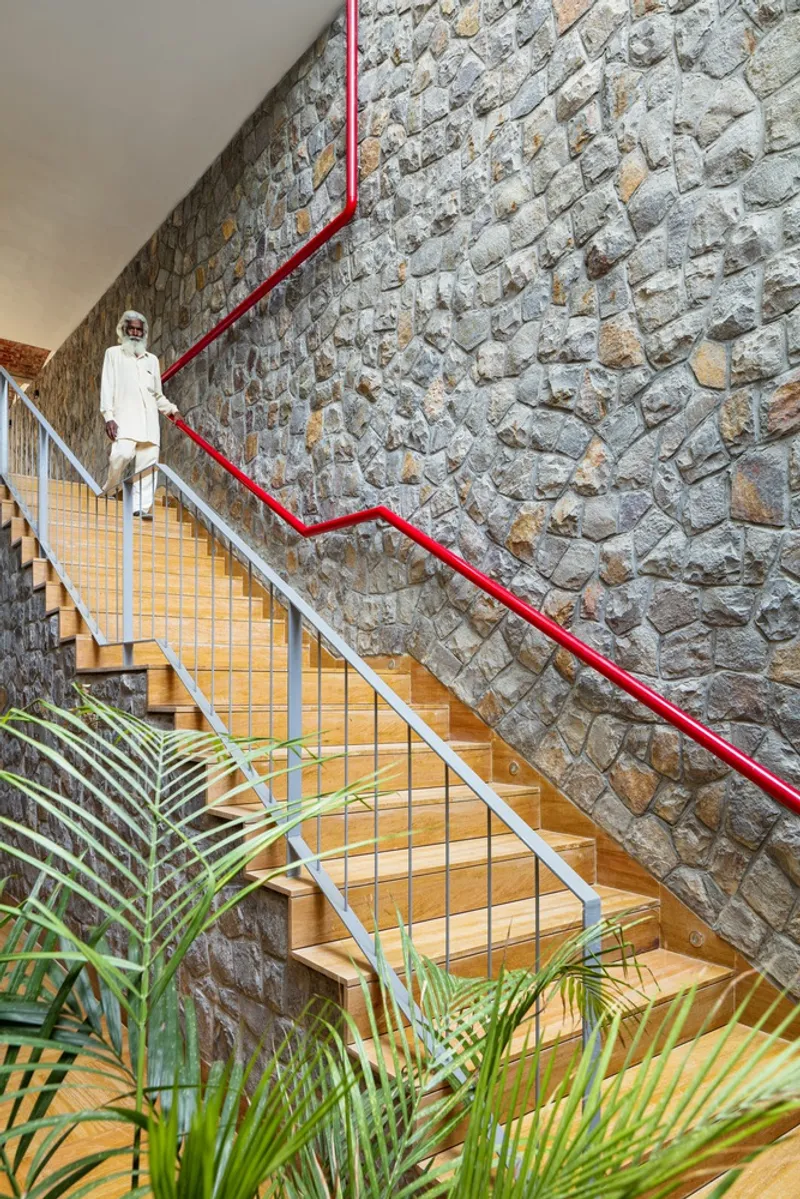
Architectural Design
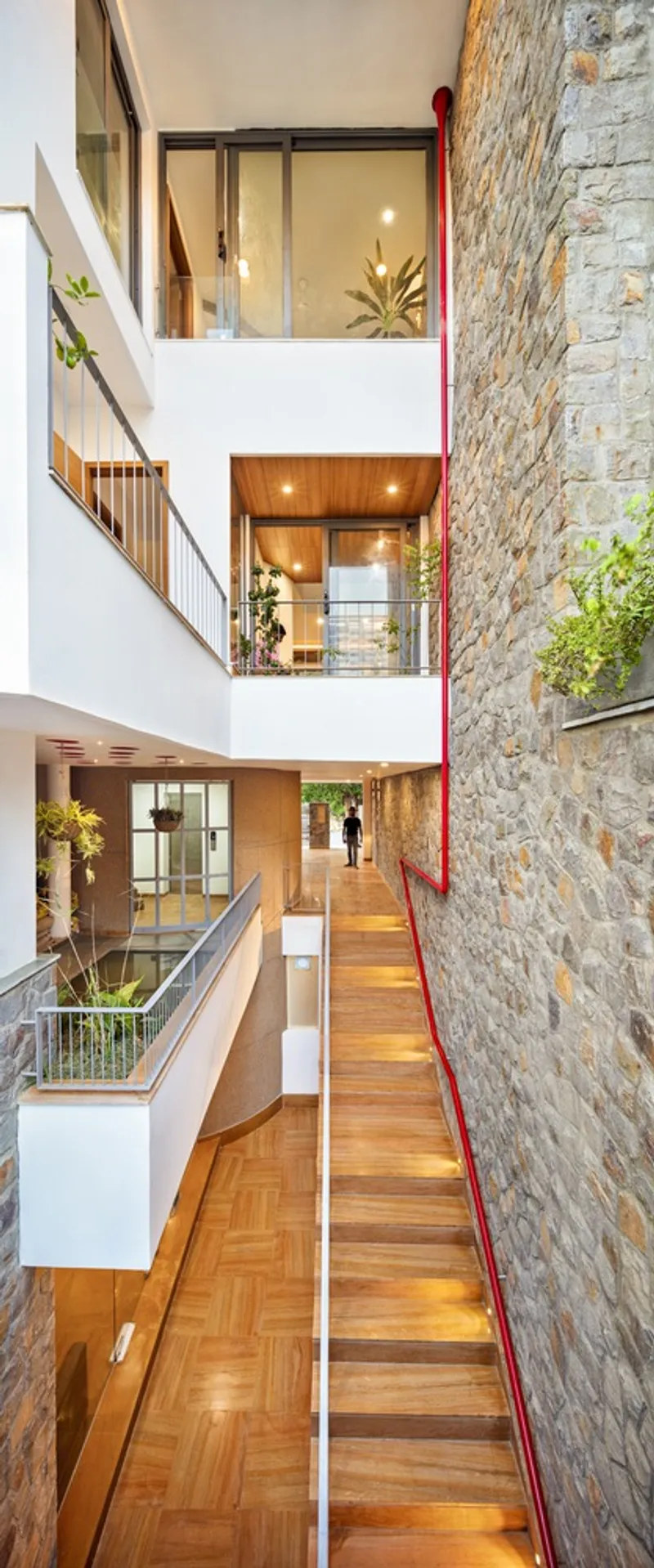
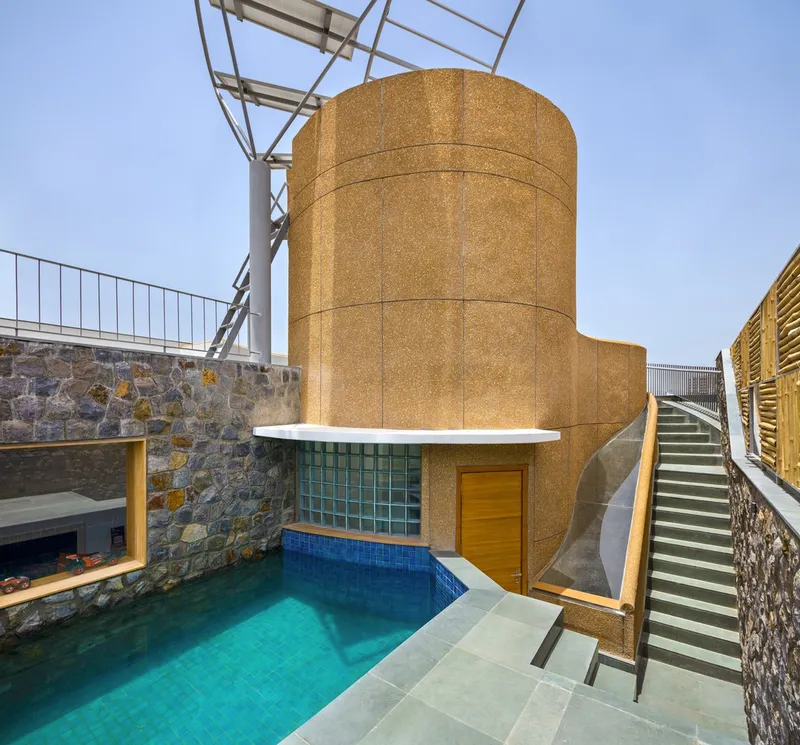
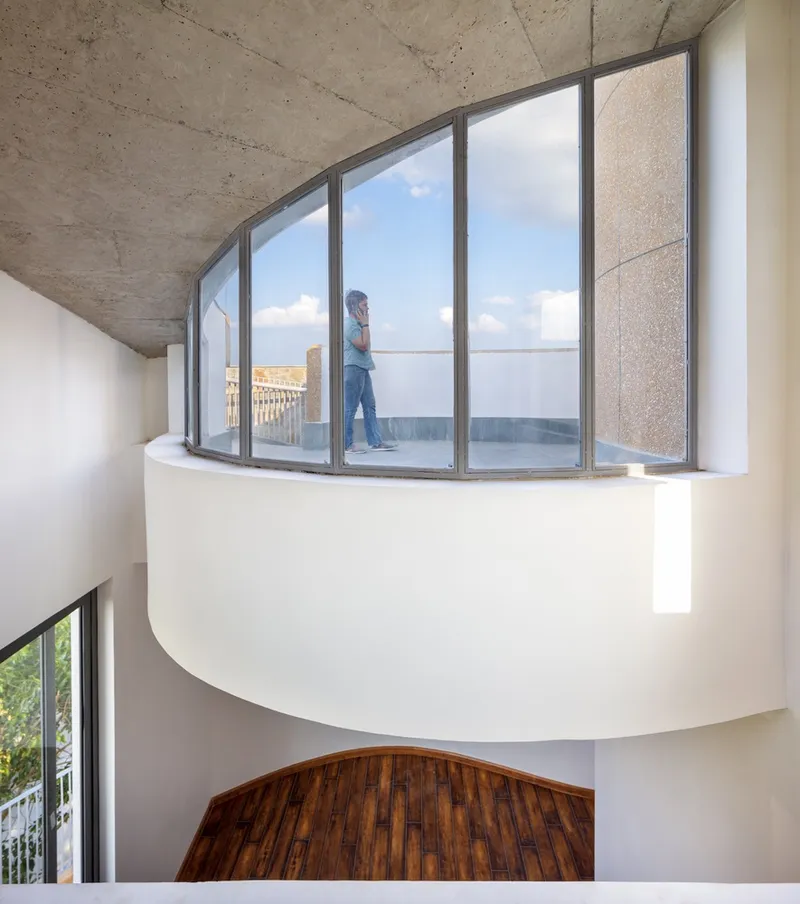
The residence is organized around a central cylindrical core—a sculptural “trunk” housing the elliptical staircase and elevator. This central element becomes both a spatial anchor and a symbolic connection to the People Tree.
Key features include:
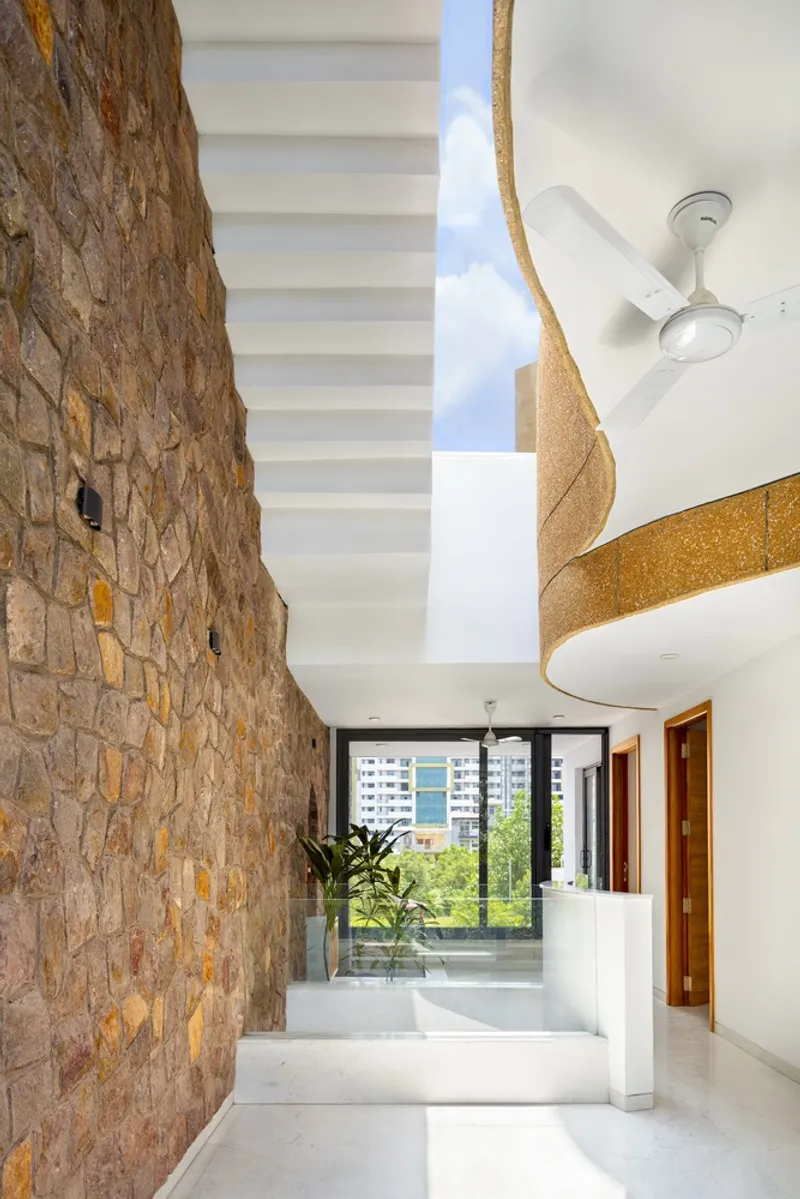
- Curved roof and sloped skylight to channel rainwater into harvesting systems.
- Balcony extensions with WPC flooring, doubling as water reservoirs.
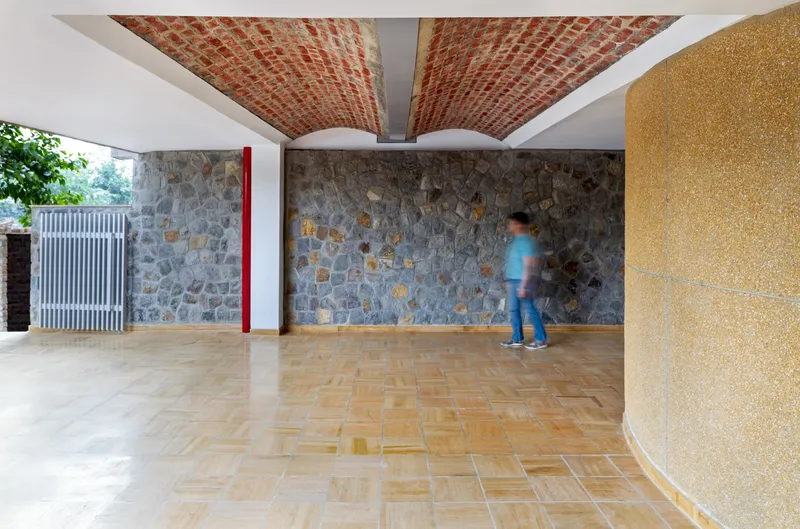
- Brick vaults and rubble masonry, reducing reliance on concrete and steel.
- Handcrafted grit-washed walls, celebrating forgotten artisanal craftsmanship.


Sustainable Systems
Sustainability is woven into every aspect of the design.
- Rainwater harvesting & irrigation loop: Rainwater is collected, stored, and redistributed through drip irrigation systems to nourish plants at multiple levels.
- Energy generation: Solar panels and efficient building systems reduce dependency on external energy sources.
- Material efficiency: Locally sourced stone, brick, and earthen pots provide natural insulation while minimizing carbon footprint.
This closed-loop water and energy cycle ensures long-term ecological balance, echoing traditional Indian water-harvesting wisdom.
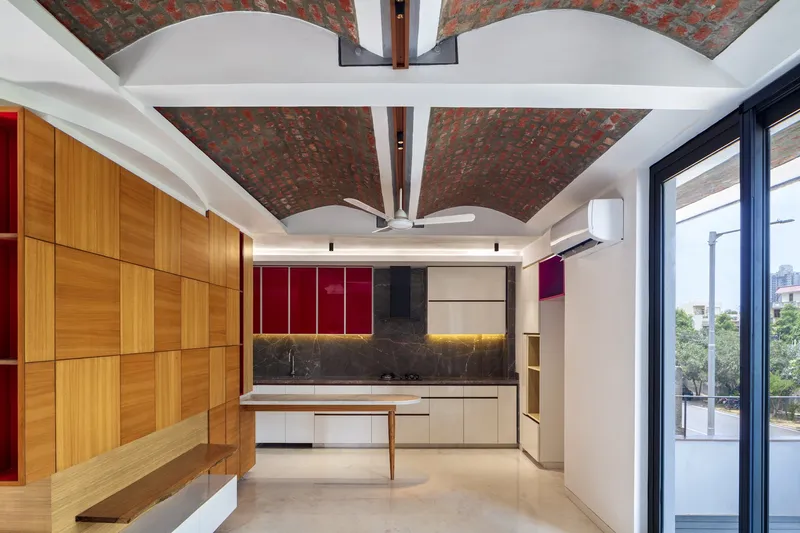

Spatial Experience
Light filters into the home through apertures, skylights, and cut-outs, creating dynamic shadow play reminiscent of India’s architectural heritage. Spaces are designed to invite cross-ventilation and visual respite, countering the effects of digital fatigue and urban density.
Interior and exterior living spaces open to framed views of the fig tree, surrounding greenery, and the sky, creating a meditative connection to nature.
Ecological and Cultural Significance
The People Tree House is more than a residence—it is a living ecosystem. Just as fig trees sustain more species than any other plant group, this house fosters biodiversity through intentional design.
In a world facing climate change, deforestation, and ecological imbalance, this project offers hope by presenting architecture as an agent of coexistence, resilience, and renewal.

All Photographs are works of Andre J Fanthome



Popular Articles
Popular articles from the community


Co-life: Sustainable Architecture for Age-Friendly Community Living
Co-life reimagines sustainable architecture for seniors through courtyards, rammed earth, shared gardens, and spaces designed for belonging.

The Ocean Hive: Sustainable Architecture for a Self-Sufficient Civilization at Sea
The Ocean Hive imagines sustainable architecture at sea, where modular habitats, algae, wave power and ocean waste sustain a growing colony.

Hill & Cross Opera: Sculptural Opera House Architecture Shaped by Tallinn’s Landscape and Identity
Hill & Cross Opera reimagines opera house architecture in Tallinn through its sculptural hill, civic plaza, glass wave and a luminous cross.

Conexión: Biophilic Design Reimagines High-Rise Living in Hong Kong
Conexión reimagines high-rise living in Hong Kong through biophilic design, green facades, shared spaces, daylight, water and nature within.


Similar Reads
You might also enjoy these articles


Hodi-Mandai Geram
Project Function: Preservation and revitalization of the Intangible heritage and socio-spatial identity of the Hodi by Housing, Cultural Memory Center, Sacred Grove, landscape, local tourism economy


Olio Towers: A Mid-Rise for Performers That Fuses Housing, Rehearsal, and Stage
Located blocks from Houston's Theater District, this modular tower stacks living units around a central performance atrium.

Oasis: Modular Green Housing Carved into Dhaka's Urban Fabric
A shortlisted Plugin Housing entry reclaims unauthorized settlements in Dhaka with stepped concrete volumes, green roofs, and ventilation-driven design.

Black Hole: A Floating Megastructure for the Post-Physical Era
Emiliano Mazzarotto envisions a spherical, self-scaling arena where e-sports, digital hotels, and holographic stadiums replace traditional public space.


Explore Tree House Competitions
Discover active competitions in this discipline



Challenge to reimagine the Iron Throne


Photograph architecture without architects


Illustrate the lost glory of Angkor Wat - Render Challenge


Design challenge to reuse E-waste
Comments (0)
Please login or sign up to add comments
No comments yet. Be the first to comment!