
Phoenix House by HGA.Studio: A Restored Queenslander House in Byron Bay Symbolizing Renewal and Sustainable Design
A restored Queenslander house in Byron Bay transformed through sustainable design, personal resilience, and community connection by HGA.Studio.


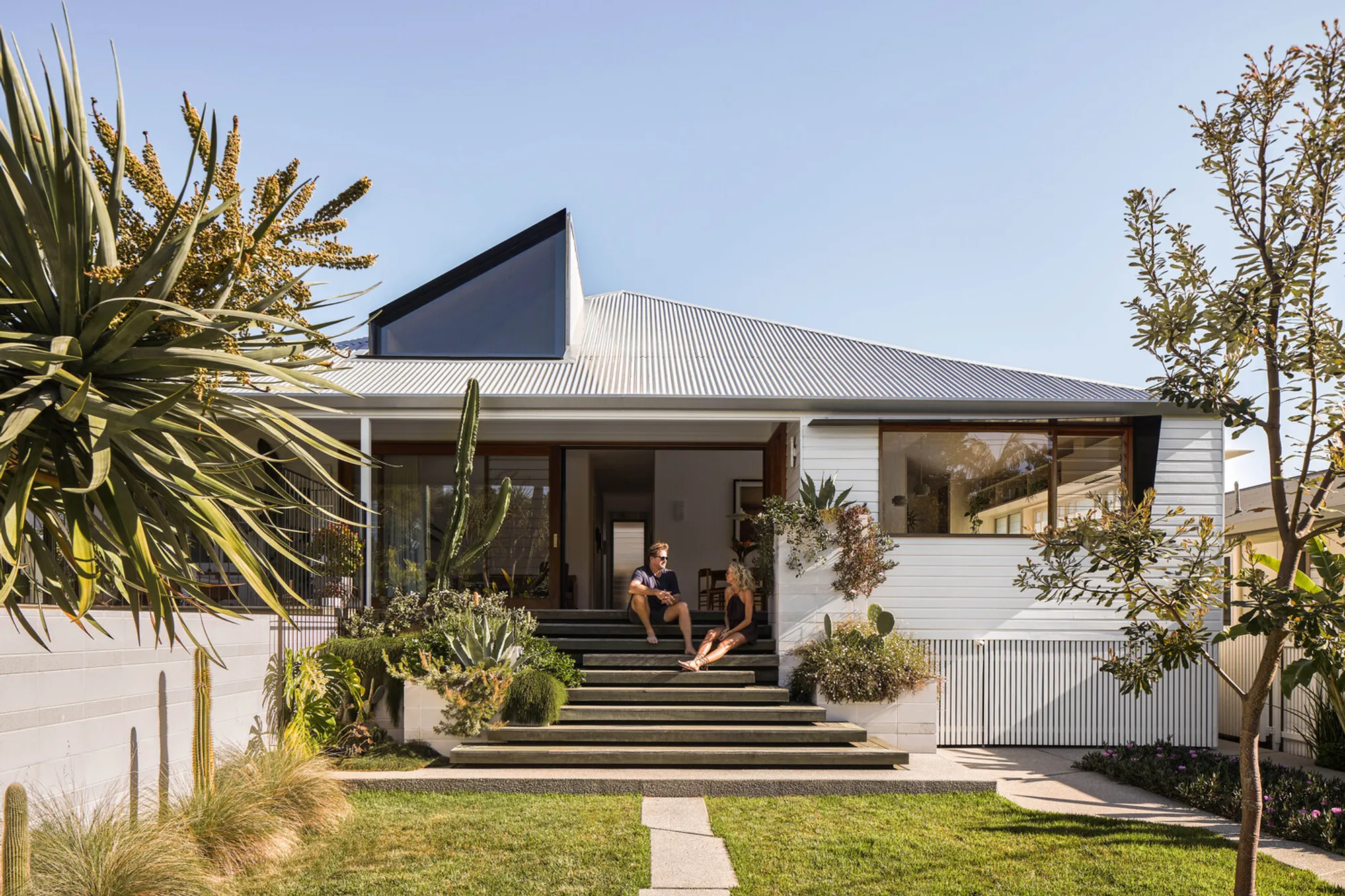
Phoenix House, designed by HGA.Studio, is more than a renovation—it’s a profound story of transformation. Located in Byron Bay’s historic precinct, the restored Queenslander house rises from personal hardship and environmental challenge to become a symbol of rebirth. This 140 m² home thoughtfully bridges past and future, heritage and innovation, simplicity and resilience.
A Personal Journey of Restoration and Rebirth
The project began with an early 1900s Queenslander purchased in Brisbane, originally intended for other purposes. However, after being stored in the cane fields near Ballina, the house endured devastating southerly storms. The protective tarps were torn away, water had soaked the timber structure, and the side veranda collapsed into ruins. Faced with what appeared to be irreversible decay, the architect found himself at an emotional low point. Yet, in this moment of vulnerability, a vision emerged—Phoenix House would rise from destruction, becoming a metaphor for his own personal and familial renewal.

Friends, colleagues, and professionals joined the cause, moved by the symbolic and literal act of rebuilding. The result is a house imbued with intention, story, and architectural clarity.

A Sustainable Remix of Heritage Elements
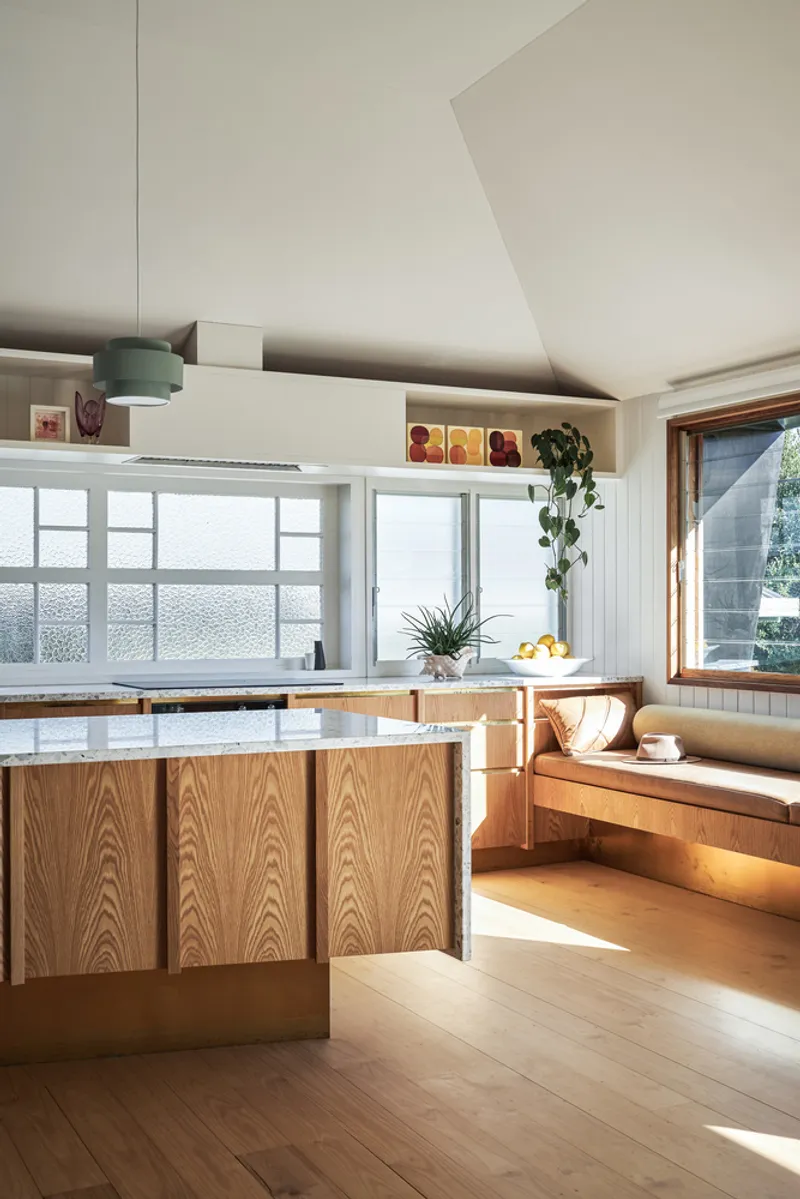
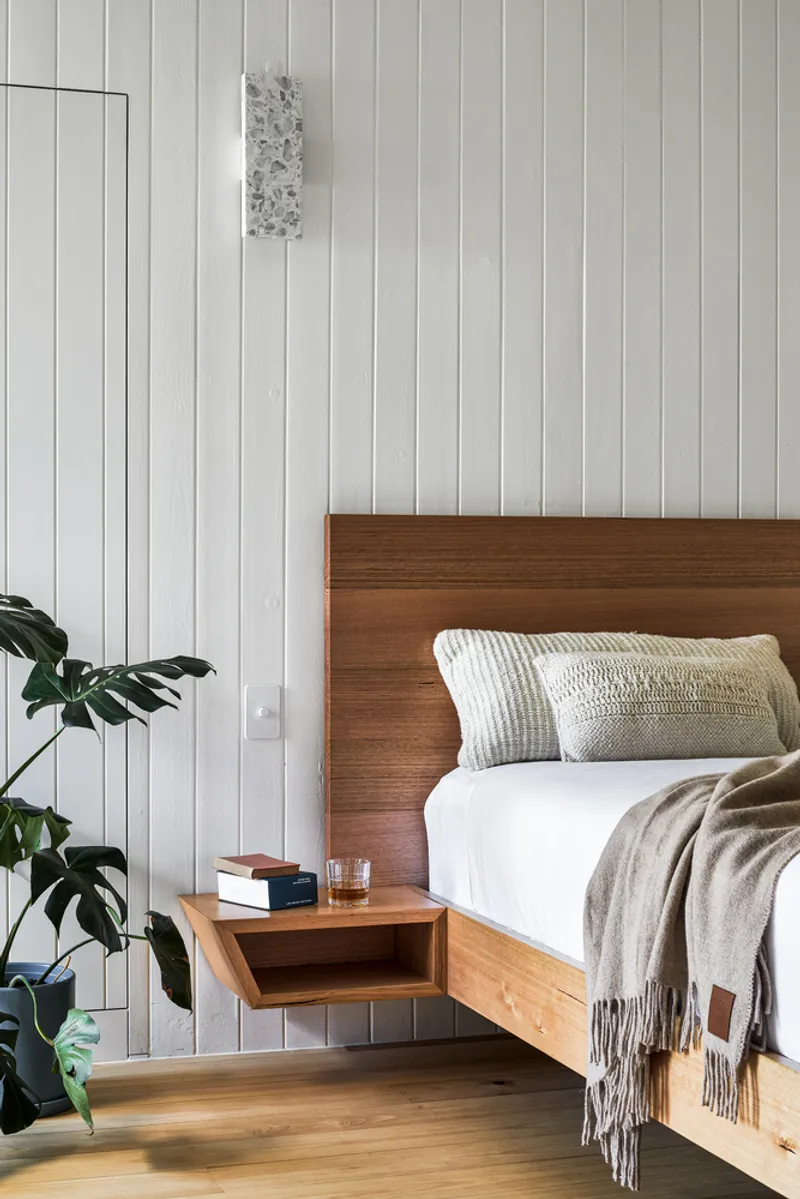
HGA.Studio approached the project as one would a remix album—deconstructing the original house to its essentials and carefully cataloging each salvageable component. These materials were not only reused but celebrated in new contexts. Old casement windows became the splashback in the kitchen. Teak decking found new life as bedroom wall linings. Every piece of material became part of a sustainable, puzzle-like reassembly that honors the building’s history.

This upcycled strategy not only reduced waste but also strengthened the tactile and emotional connection to the home’s origins. Through this transformation, Phoenix House maintains the character of a traditional Queenslander while reimagining its relevance for modern living.

Community Connection and Spatial Openness
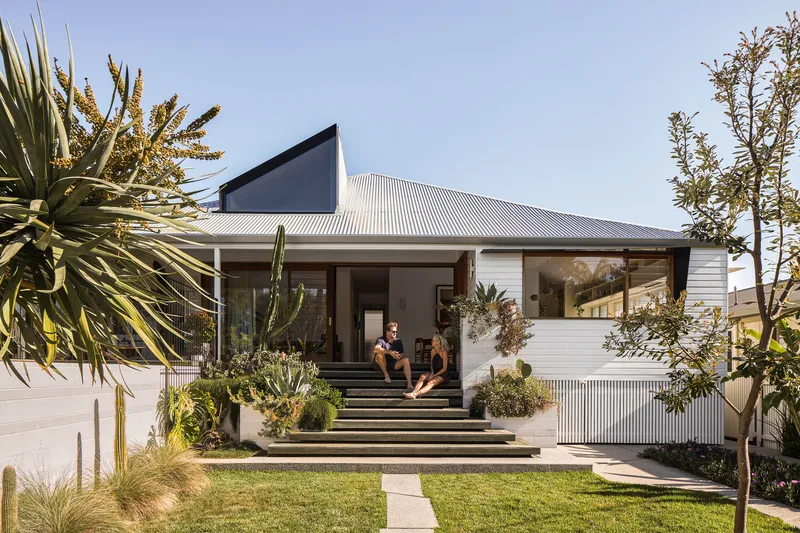
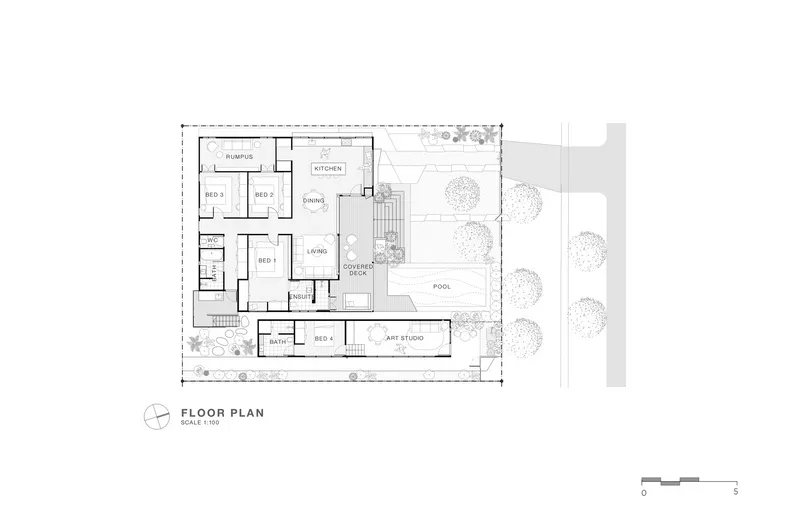
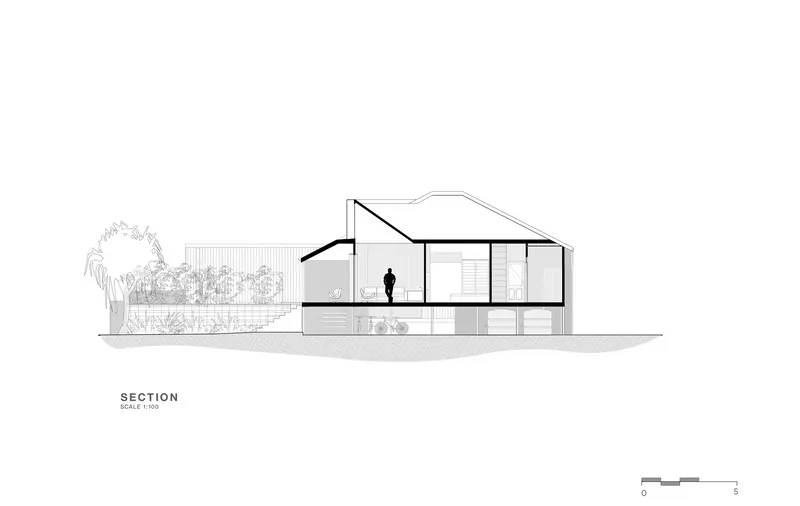
Situated near the architect’s grandparents’ old fisherman’s cottage, the house embraces community as much as privacy. Raised 1600mm above ground, the house provides space underneath for bikes, surfboards, and vital sustainability systems like water tanks and solar batteries. The elevation also creates a wide timber stair and front deck that feels like a stage—an informal gathering space that fosters connection with neighbors and the adjacent park.
The front veranda acts as a bridge between the private domestic world and the communal outdoors. In a town increasingly shaped by new development, this architectural gesture reinforces the value of human-scaled, socially engaged design.

A Compact, Crafted Interior
Despite its modest 140 m² footprint, the home contains three bedrooms and feels remarkably spacious. A minimalist plan and restrained material palette give the interiors a sense of calm and cohesion. Natural light is skillfully harnessed through a central skylight, while a large 3x3 meter sliding door opens the living area to the surrounding parkland, reinforcing the relationship between indoors and out.

Craftsmanship and joinery take center stage inside. The house feels like a piece of finely made furniture, where each detail serves both aesthetic and functional purposes. Wood dominates, offering warmth and texture, complemented by soft lighting and simple finishes.

Pool, Planters, and the Tiny House Prototype
Beside the main residence, a blockwork pool and planters filled with native vegetation give the home a sense of groundedness. These landscape elements contrast beautifully with the lightweight structure of the house. Nearby, a 45 m² studio, only 2.8 meters wide but with 4-meter ceilings, stands as a prototype for future tiny homes—showing that small-scale architecture can feel open, generous, and dignified.
This studio serves not only as a work or guest space but as a forward-thinking model for sustainable coastal living, where footprint is minimized and livability is maximized.

A New Model for Coastal Development
Phoenix House speaks to the identity crisis facing many of Australia’s coastal towns. As places like Byron Bay undergo rapid transformation, this project offers a powerful alternative to generic development. It demonstrates that restored heritage homes can be reimagined with empathy and sustainability, respecting both history and environment.
Ultimately, Phoenix House is a story of hope—one that champions reuse, community, and simplicity in architecture. It is a blueprint for how design can both heal and inspire, offering a future grounded in care, craft, and continuity.



Popular Articles
Popular articles from the community


The Earth Pod: 3D Printed Homes for Resilient Refugee Communities
The Earth Pod reimagines refugee housing through 3D printed homes made from clay, combining resilience, self-sufficiency, and rapid shelter.

Co-life: Sustainable Architecture for Age-Friendly Community Living
Co-life reimagines sustainable architecture for seniors through courtyards, rammed earth, shared gardens, and spaces designed for belonging.

The Ocean Hive: Sustainable Architecture for a Self-Sufficient Civilization at Sea
The Ocean Hive imagines sustainable architecture at sea, where modular habitats, algae, wave power and ocean waste sustain a growing colony.
EW PARK: Sustainable Architecture Reimagines the Future of Urban Parking
EW PARK reimagines city parking as a modular wooden tower combining automation, solar energy, electric mobility, and adaptable urban design.


Similar Reads
You might also enjoy these articles

FAMM Arquitectura Organizes Ten Villas Around Courtyards and Jungle in Nosara, Costa Rica
El Molino pairs two elongated volumes with deep overhangs and timber louvers to build a compact coastal community five minutes from the beach.
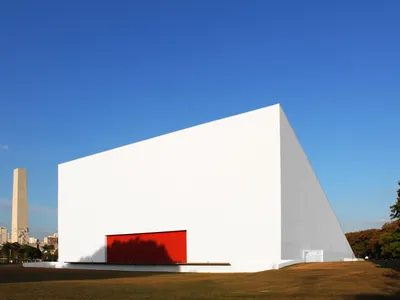
Oscar Niemeyer's Ibirapuera Park Pavilions Define São Paulo's Cultural Identity in Concrete and Curve
A constellation of modernist volumes set within São Paulo's most important urban park, conceived for the city's 400th anniversary in 1954.
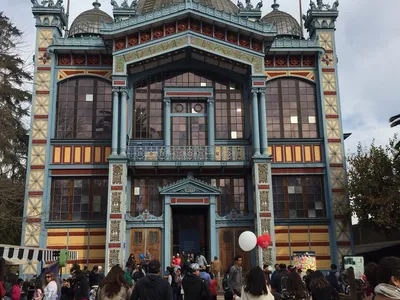
How Henri Picq's 1889 Paris Pavilion Traveled 11,000 Kilometers to Become Santiago's Artequín Museum
A prefabricated iron and glass pavilion built for the Paris Universal Exposition found a second life as a children's art museum in Chile.
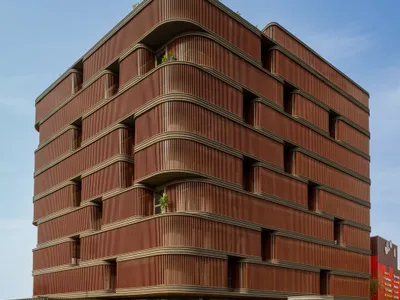
Sanjay Puri Architects Wraps a Jaipur Office Tower in Capsule-Shaped Green Buffers
A nine-level climate-responsive workplace near Jaipur Airport uses stacked planter terraces and aluminium screens to fight 40°C heat.


Explore Architecture Competitions
Discover active competitions in this discipline



Challenge to reimagine the Iron Throne


Photograph architecture without architects


Illustrate the lost glory of Angkor Wat - Render Challenge


Design challenge to reuse E-waste
Comments (0)
Please login or sign up to add comments
No comments yet. Be the first to comment!