

Phuffle Restaurant and Café: A Landmark of Social Architecture in Pathum, Bangkok
Phuffle Restaurant in Bangkok blends architecture, art, and social interaction, featuring a central staircase, voids, dynamic lighting, and modern monochrome interiors.


Phuffle Restaurant and Café, designed by Too.architects, redefines the concept of modern dining by merging culinary experience with immersive architectural design. Located in Pathum, Bangkok, this 477 m² space is conceived as more than a restaurant: it is a social platform, an architectural canvas, and a space for community interaction.
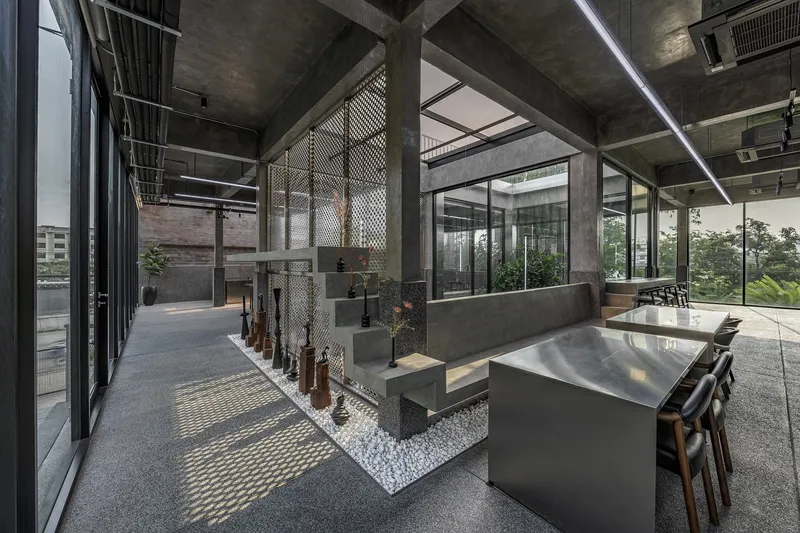

A Staircase That Connects Space and People
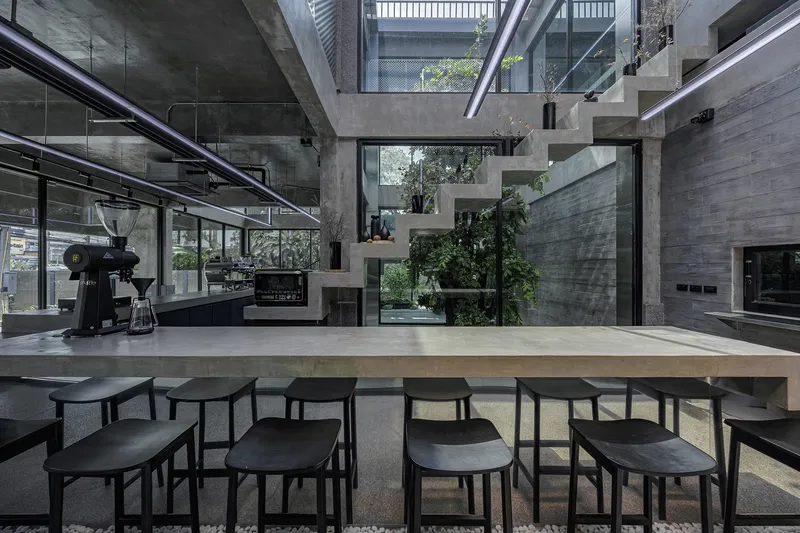
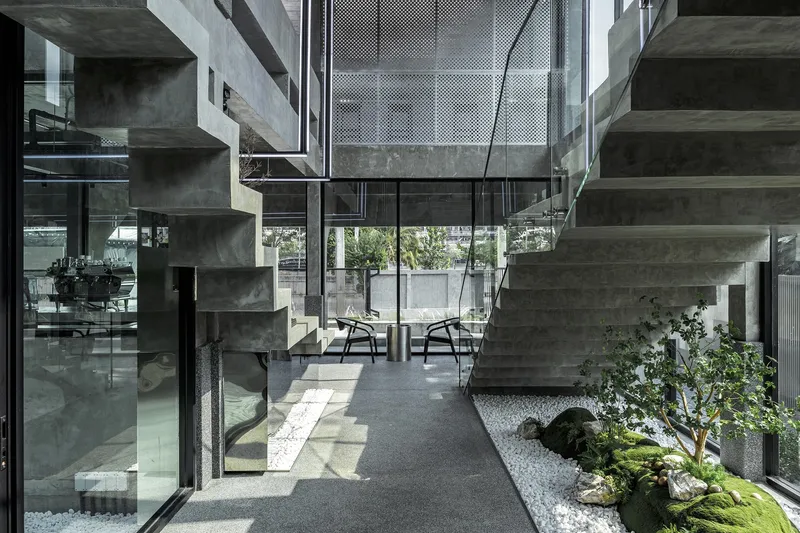
At the heart of Phuffle is its central staircase, a design element that transcends mere functionality. Inspired by the fluidity and connectivity of public staircases, the staircase acts as a symbolic and literal bridge, linking the ground and upper floors while encouraging continuous movement and social interaction. It is both a structural marvel and the defining identity of the space, enhancing perspectives and redefining the way visitors experience spatial dynamics.
The staircase exemplifies innovative interior architecture, creating an interplay of light, movement, and human interaction. It transforms the restaurant into a dynamic environment where dining, socializing, working, and art exhibitions coexist seamlessly.
Three Strategic Voids for Spatial Flow
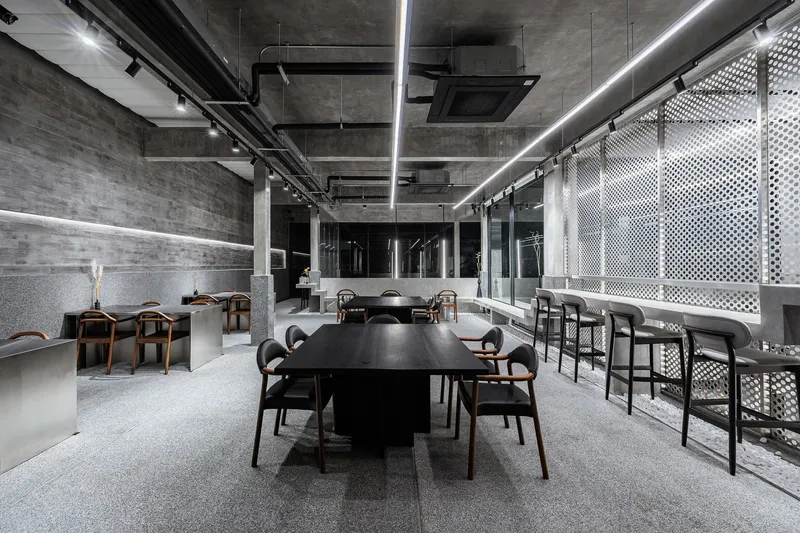
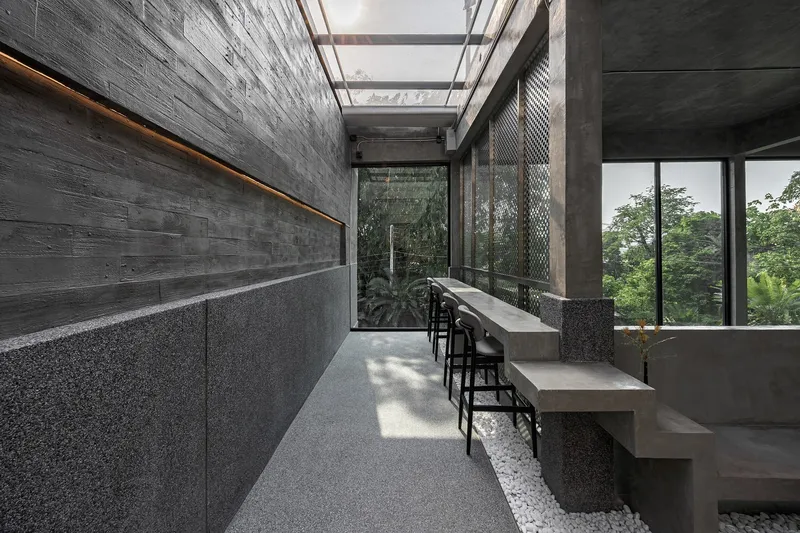
Phuffle’s interior design is organized around three key voids, each contributing to the connectivity, natural ventilation, and social essence of the space:
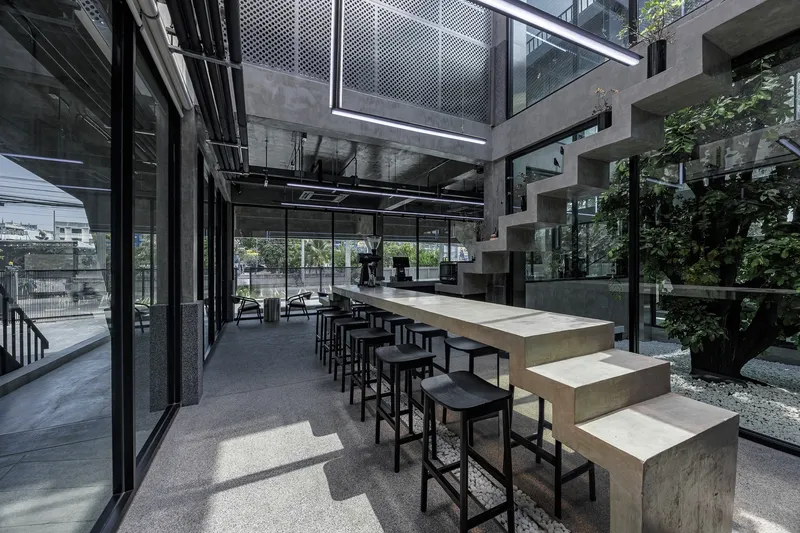
- Main Staircase Void: The primary circulation hub encourages movement between levels and serves as a communal gathering point.
- Central Courtyard Void: Introducing natural sunlight, greenery, and passive cooling, this courtyard fosters a serene, nature-infused environment.
- Bar Connection Void: Linking the “Slow Bar” on the ground floor with the “Main Bar” reception, this void visually and functionally reinforces social interaction across levels.
These voids reflect the architects’ vision of holistic spatial design, blending functionality with social engagement while integrating natural elements for a balanced indoor environment.


Materiality and Monochrome Elegance
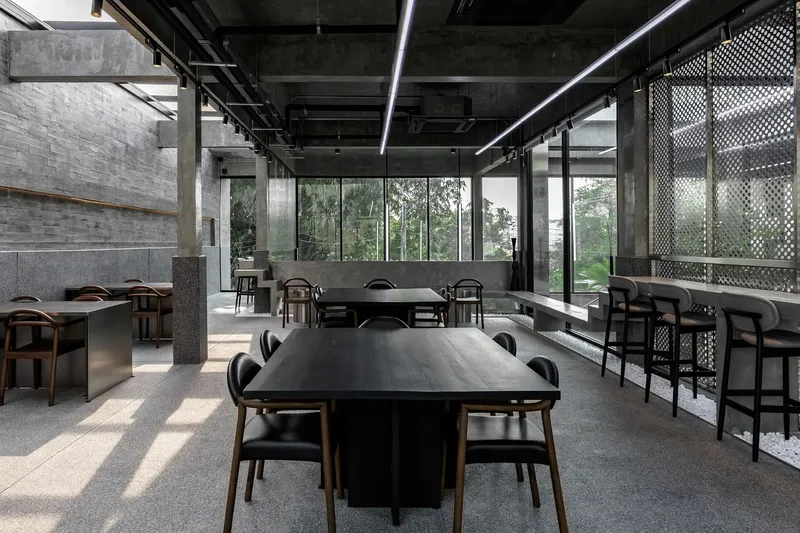
Phuffle’s design employs a greyscale palette, combining washed sand, brushed stainless steel, and wooden stamped concrete walls to create a modern, timeless aesthetic. Tactile textures contrast with reflective surfaces, enhancing the sensory experience for visitors. Prefabricated construction ensures precision, particularly for the staircase, which must float elegantly while supporting diverse activities.
The material choices reflect a contemporary approach to restaurant interiors, emphasizing durability, refinement, and subtle sophistication.

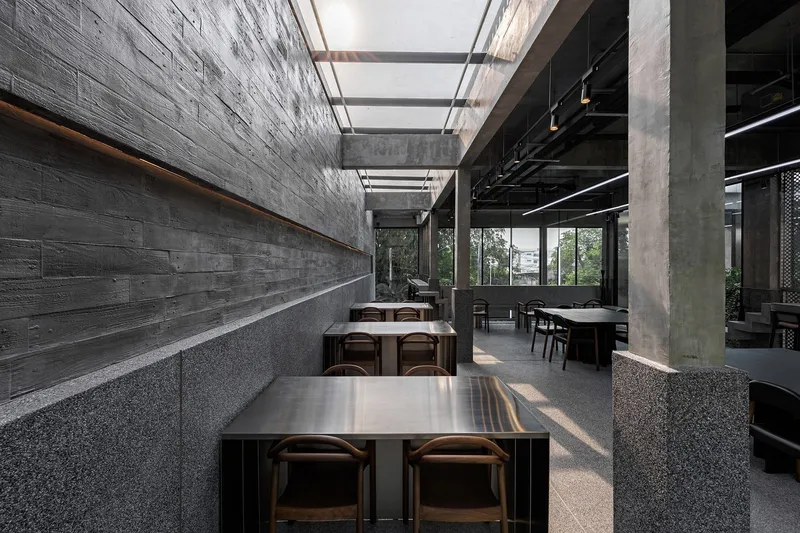
Adaptive Lighting for Dynamic Experiences
Lighting plays a pivotal role in Phuffle’s architectural narrative. Adaptive systems shift from 12000K daylight tones to 1800K warm candlelight, mimicking natural environmental changes throughout the day. This dynamic lighting strategy supports a range of functions, from casual dining to art exhibitions, while creating a comfortable and engaging atmosphere.
Balancing Openness and Privacy
Situated on a busy road, Phuffle addresses urban challenges through thoughtful façade design. The second floor features a solid concrete façade to obscure street views and reduce noise, while transparent glass on the first floor maintains openness and visual connectivity. This combination balances privacy, light penetration, and accessibility, offering visitors a harmonious dining environment despite the surrounding urban bustle.

Phuffle: Beyond a Restaurant
Phuffle transcends conventional dining spaces, positioning itself as a social landmark in Pathum, Bangkok. Its central staircase and interconnected voids transform spatial experience into a continuous flow of engagement, encouraging visitors to ascend, descend, and interact throughout the day. By integrating art, architecture, and social functionality, Phuffle delivers a truly immersive and multifunctional experience.
This architectural approach highlights innovative restaurant design, combining interior architecture, spatial connectivity, and community interaction in a singular experience that is both functional and visually striking.

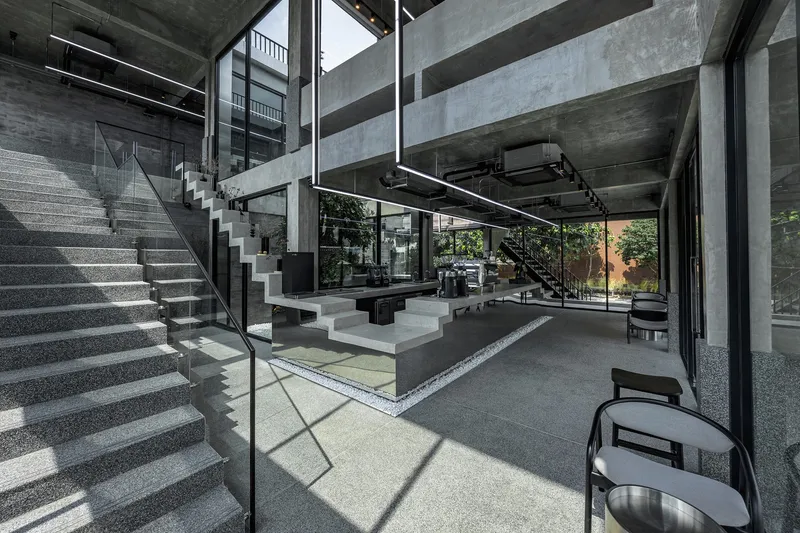

All photographs are works of
Jatupoom Srimuang




Popular Articles
Popular articles from the community


Co-Life: Senior Housing Design That Reconnects Older Adults With the City
Co-Life reimagines senior housing design through healing gardens, shared streets, workshops, and a sustainable community across generations.

Hill & Cross Opera: Sculptural Opera House Architecture Shaped by Tallinn’s Landscape and Identity
Hill & Cross Opera reimagines opera house architecture in Tallinn through its sculptural hill, civic plaza, glass wave and a luminous cross.

Conexión: Biophilic Design Reimagines High-Rise Living in Hong Kong
Conexión reimagines high-rise living in Hong Kong through biophilic design, green facades, shared spaces, daylight, water and nature within.

The Ocean Hive: Sustainable Architecture for a Self-Sufficient Civilization at Sea
The Ocean Hive imagines sustainable architecture at sea, where modular habitats, algae, wave power and ocean waste sustain a growing colony.

Similar Reads
You might also enjoy these articles

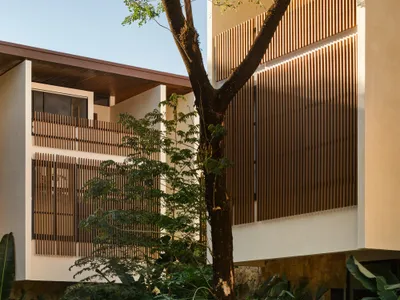
FAMM Arquitectura Organizes Ten Villas Around Courtyards and Jungle in Nosara, Costa Rica
El Molino pairs two elongated volumes with deep overhangs and timber louvers to build a compact coastal community five minutes from the beach.
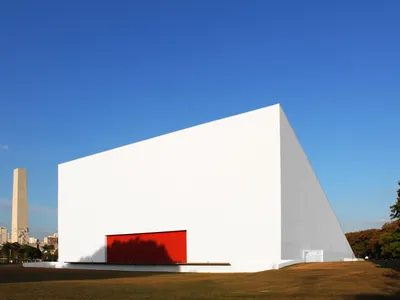
Oscar Niemeyer's Ibirapuera Park Pavilions Define São Paulo's Cultural Identity in Concrete and Curve
A constellation of modernist volumes set within São Paulo's most important urban park, conceived for the city's 400th anniversary in 1954.
How Henri Picq's 1889 Paris Pavilion Traveled 11,000 Kilometers to Become Santiago's Artequín Museum
A prefabricated iron and glass pavilion built for the Paris Universal Exposition found a second life as a children's art museum in Chile.
Sanjay Puri Architects Wraps a Jaipur Office Tower in Capsule-Shaped Green Buffers
A nine-level climate-responsive workplace near Jaipur Airport uses stacked planter terraces and aluminium screens to fight 40°C heat.

Explore Architecture Competitions
Discover active competitions in this discipline


Challenge to design luxury tourism on rails


Challenge to reimagine the Iron Throne


Photograph architecture without architects


VR headsets Storefront design competition
Comments (0)
Please login or sign up to add comments
No comments yet. Be the first to comment!