
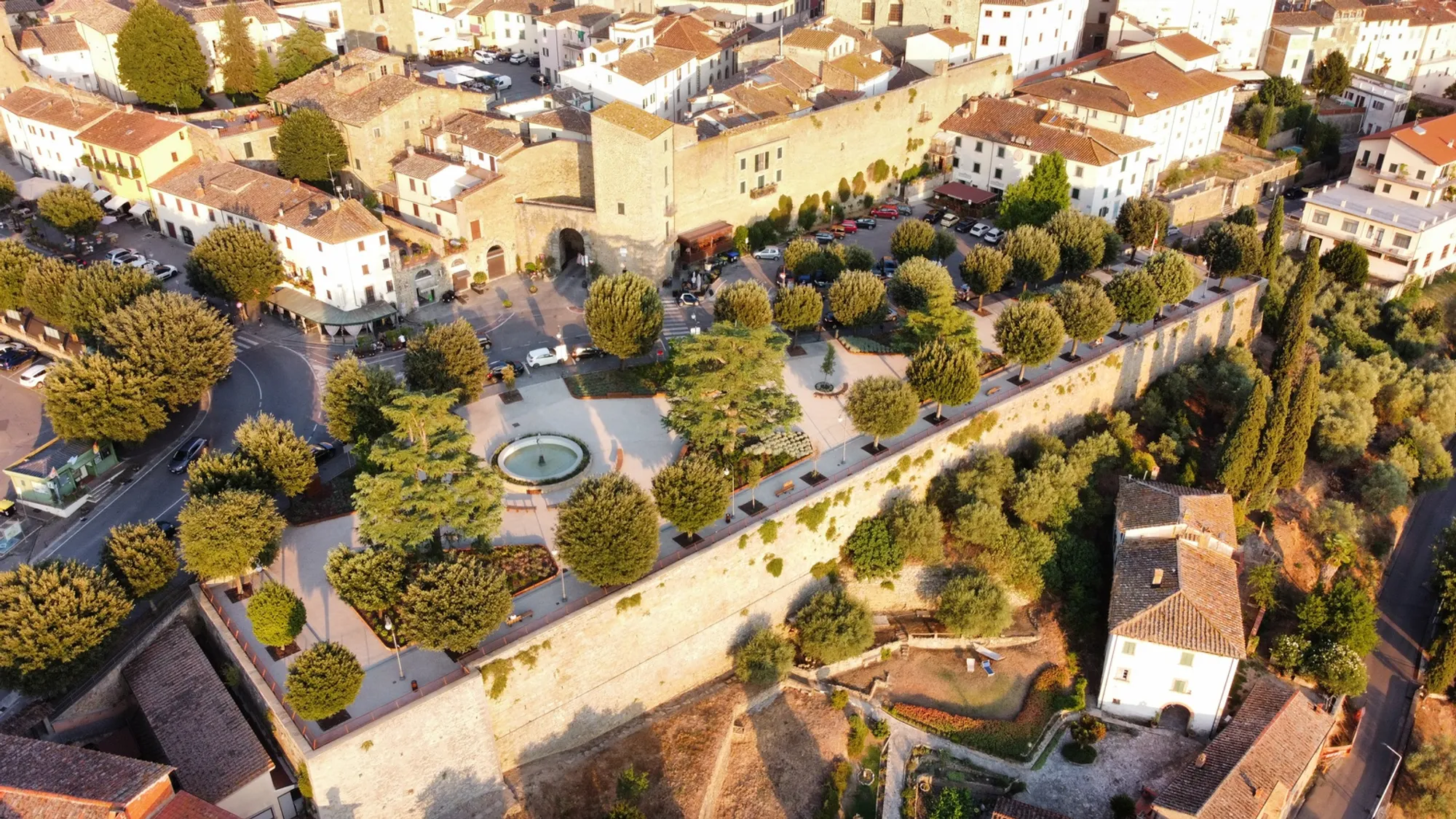
Piazza Matteotti Public Gardens Revitalization by Pool Landscape
A revitalized historic garden with clarified paths, lush vegetation, shaded resting areas, and modern materials, creating a vibrant and inclusive public space in Tuscany.


The revitalization of the Piazza Matteotti Public Gardens in Castiglion Fiorentino, Italy, presents a thoughtful reimagining of a beloved urban space whose original early-1900s character had gradually faded through decades of fragmented interventions. Designed by Pool Landscape, the project restores architectural clarity, spatial hierarchy, and ecological coherence, transforming one of the town’s most iconic terraces overlooking the Val di Chiana into a welcoming, vibrant civic destination.
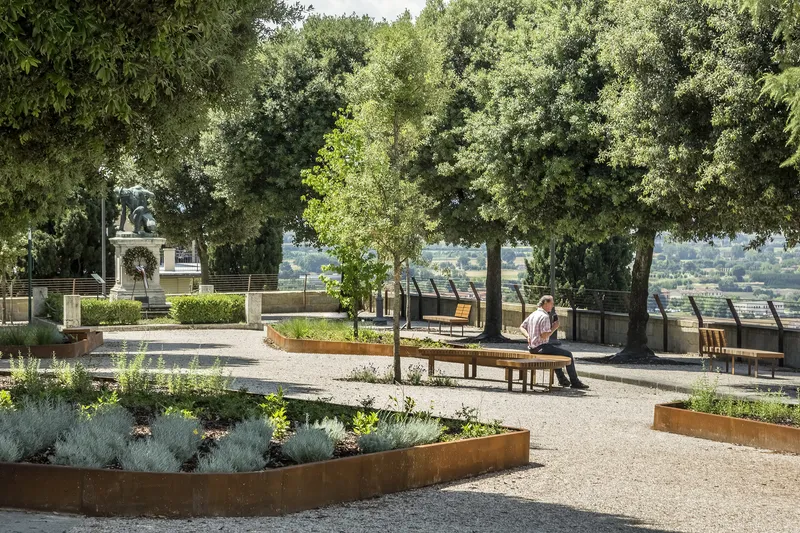
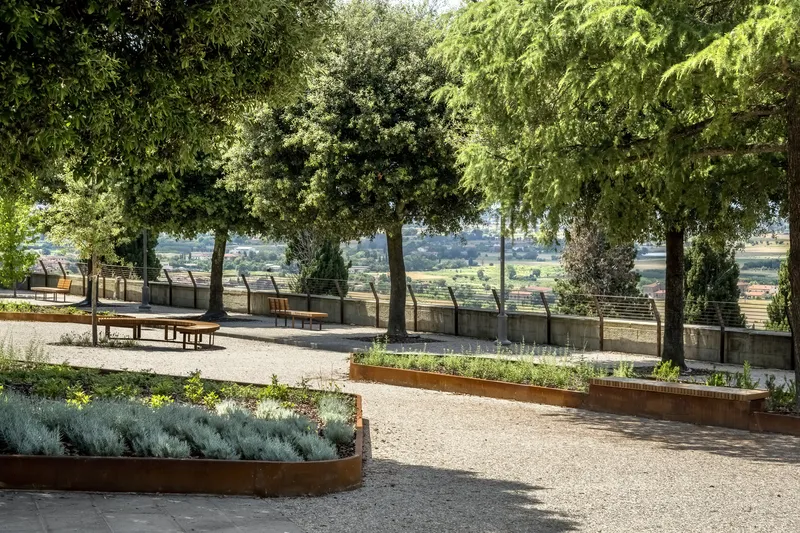
Reconnecting the Historic Garden to its Landscape Heritage
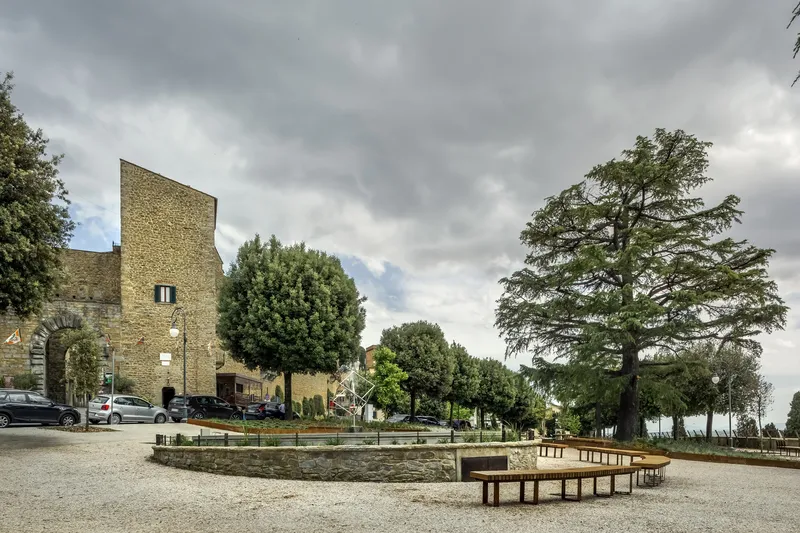
The architects approached the project as an opportunity to recover the garden’s cultural identity while meeting contemporary expectations for comfort, accessibility, and environmental resilience. Situated at the gateway to the historic center, the gardens now serve as a refined urban threshold, strengthening the relationship between the town’s architectural fabric and the surrounding Tuscan landscape.
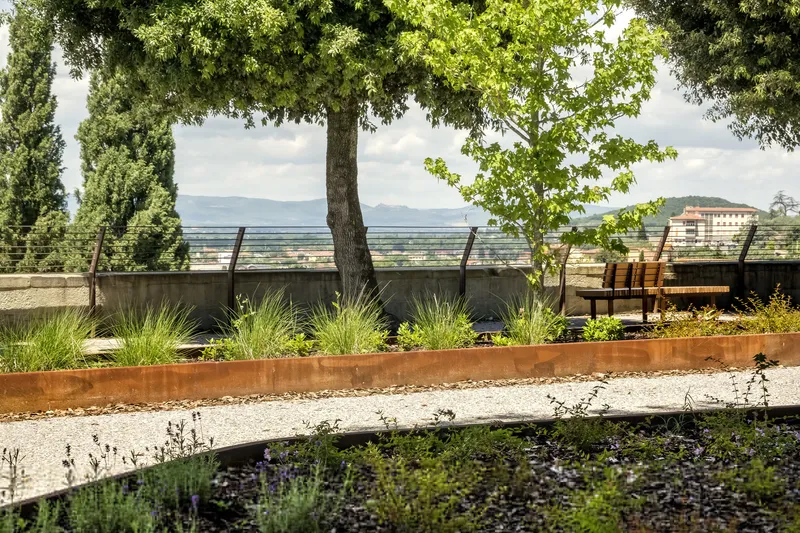
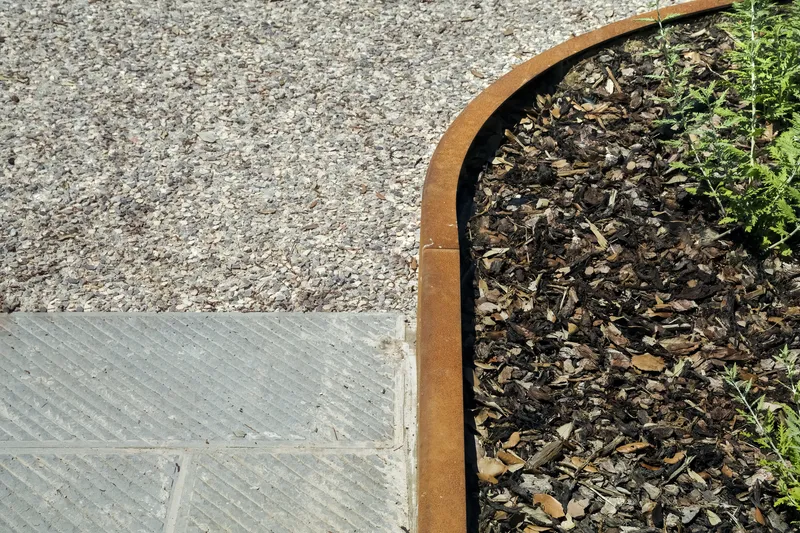
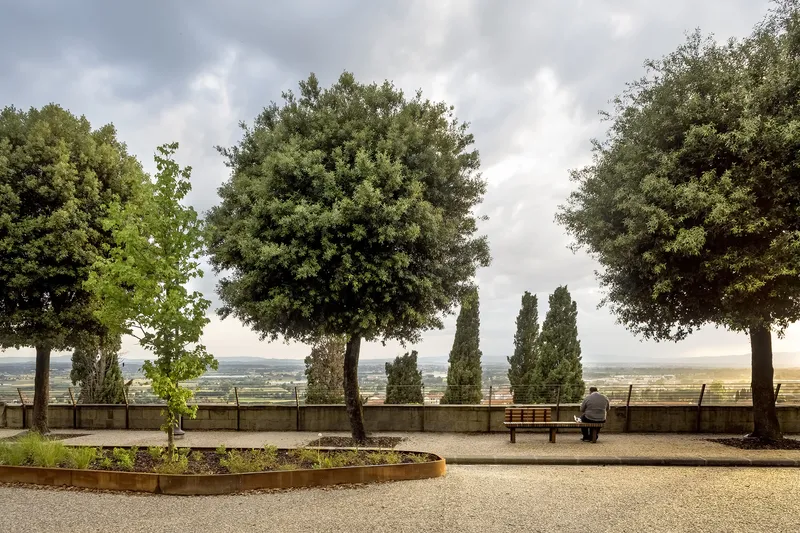
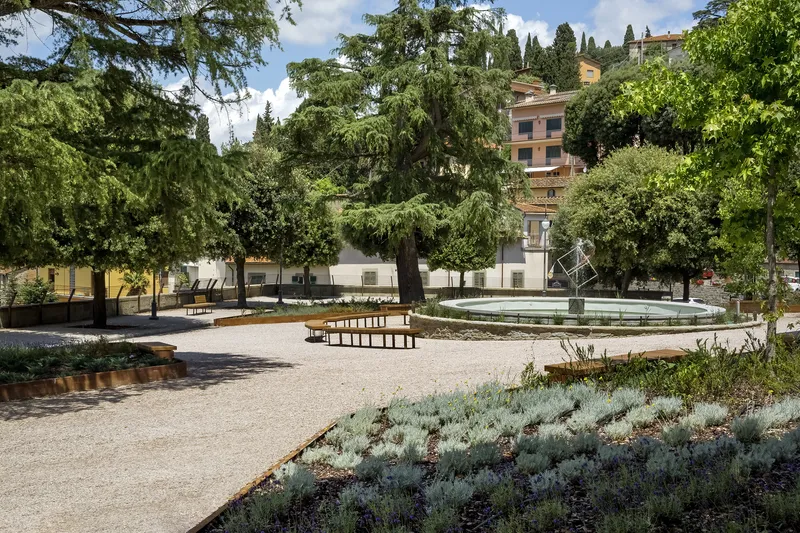
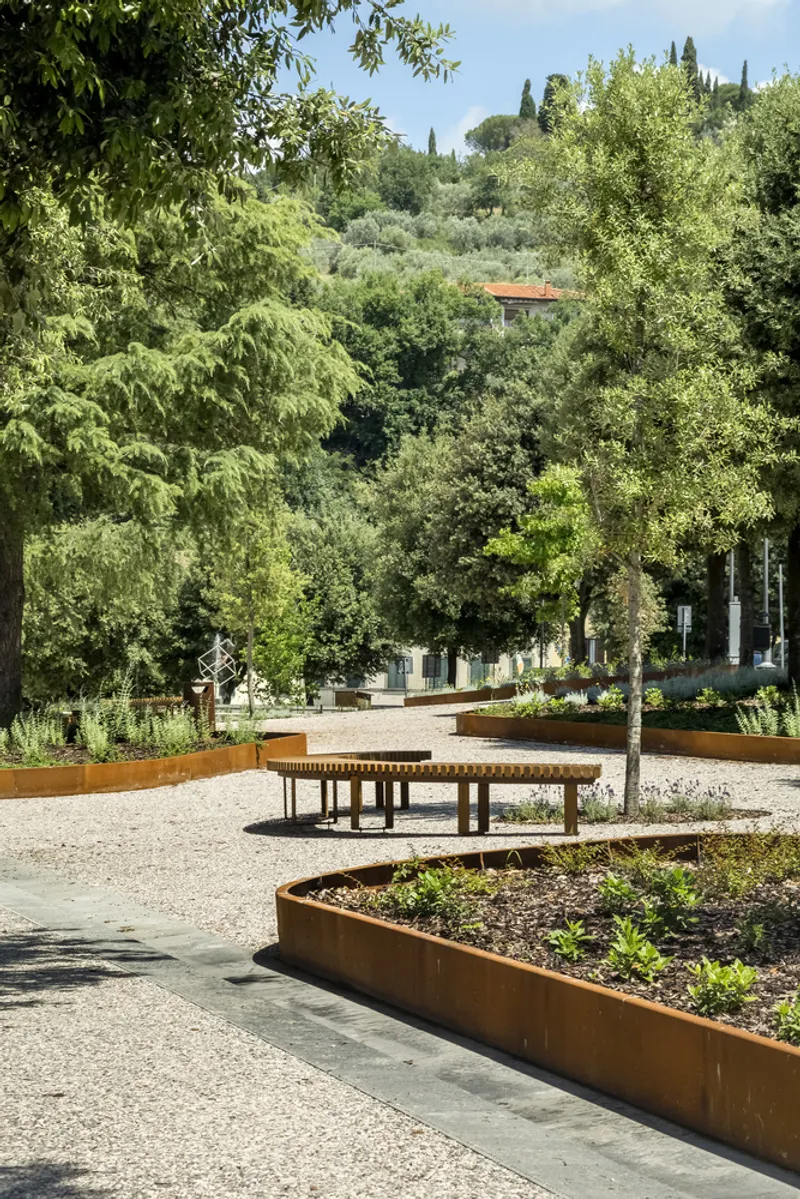
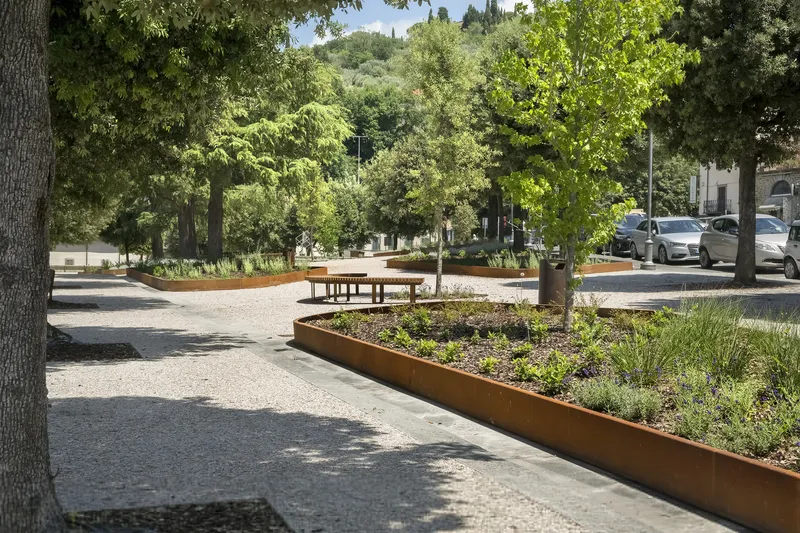
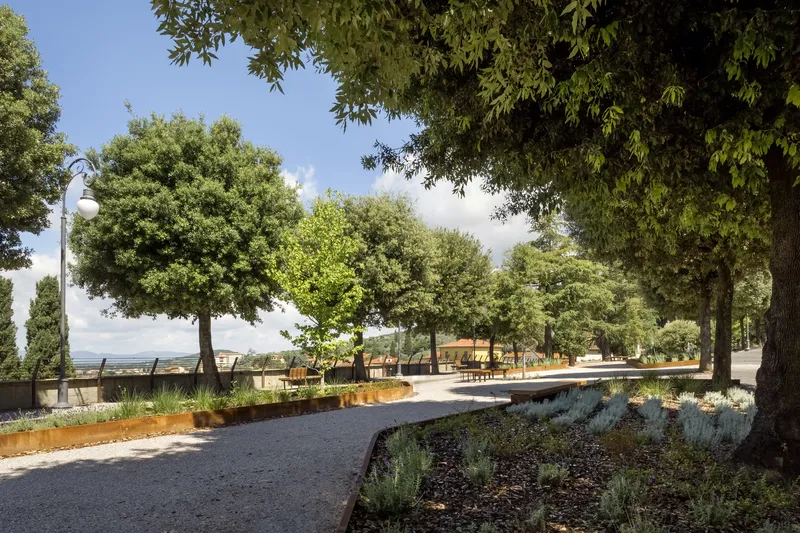
A new masterplan reorganizes the entire 3,200-square-meter site with a clear and balanced spatial logic. Vegetation once again becomes the defining element of the composition, reinstating the botanical richness that originally characterized the gardens. The design re-establishes a strong contrast between the “solids” of the dense, sculpted shrub beds and the “voids” of the central open areas: calm, shaded pockets for rest, gathering, and social interaction beneath the existing mature trees.
Simplified Geometry and Modern Material Strategy
Pool Landscape emphasizes a clean, legible geometry throughout the site, enhancing usability while preserving the garden’s historic atmosphere. A new draining pavement supports inclusive, barrier-free circulation and improves environmental performance by increasing permeability and reducing heat accumulation. This updated surface subtly unifies the pathways, small plazas, and rest zones, offering users a smoother and more comfortable experience.
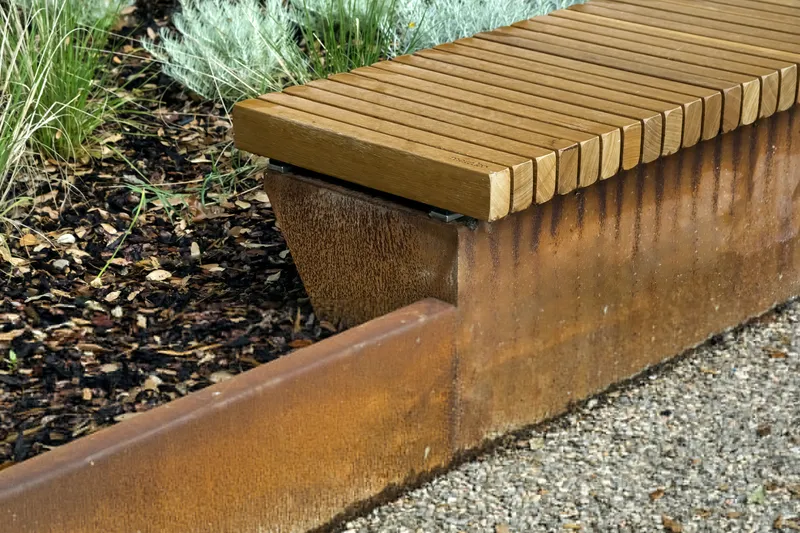
Architectural elements: including seating, borders, and structural features, are crafted with a controlled and thoughtful selection of materials that merge durability with visual harmony. The result is a cohesive language that allows contemporary interventions to coexist respectfully with the site’s historical context.
A 1930s Garden Typology Reinterpreted for Today
The design echoes the structure of the 1930s garden layout while translating it into a fresh, modern framework. Pathways are distilled into clear hierarchies, connecting a sequence of “little squares” and shaded spaces that encourage slow, contemplative movement through the landscape. This reinterpretation preserves the spirit of the original design while making it relevant for today’s urban life.
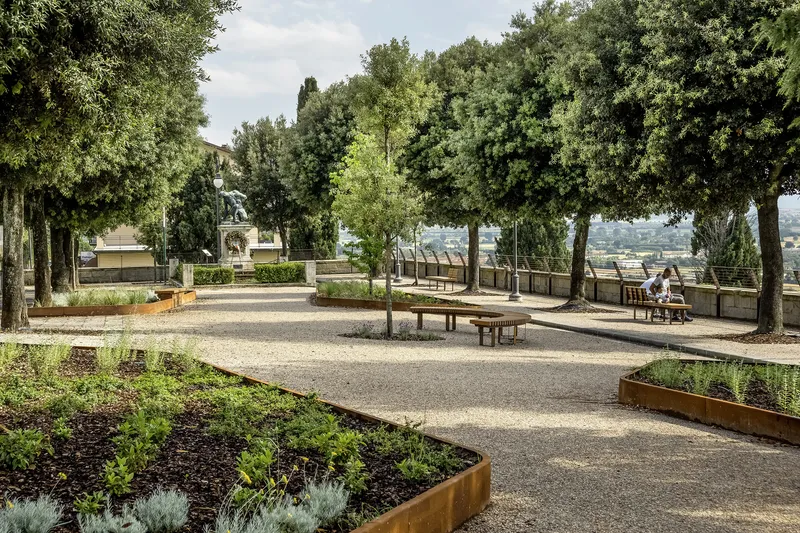
All photographs are works of Alessandra Bello, Marco Frappi




Popular Articles
Popular articles from the community


The Earth Pod: 3D Printed Homes for Resilient Refugee Communities
The Earth Pod reimagines refugee housing through 3D printed homes made from clay, combining resilience, self-sufficiency, and rapid shelter.

The Ocean Hive: Sustainable Architecture for a Self-Sufficient Civilization at Sea
The Ocean Hive imagines sustainable architecture at sea, where modular habitats, algae, wave power and ocean waste sustain a growing colony.

Play: Fragments of Their World
Familiar architecture becomes modular playground design, creating safe spaces where displaced children can learn, connect, imagine and play.

The Musturak Paradise: Senior Living Architecture for a Connected Future in Temara, Morocco
The Musturak Paradise reimagines senior living architecture in Temara via private homes, social spaces, culture, community, and shared care.


Similar Reads
You might also enjoy these articles


Hodi-Mandai Geram
Project Function: Preservation and revitalization of the Intangible heritage and socio-spatial identity of the Hodi by Housing, Cultural Memory Center, Sacred Grove, landscape, local tourism economy


Olio Towers: A Mid-Rise for Performers That Fuses Housing, Rehearsal, and Stage
Located blocks from Houston's Theater District, this modular tower stacks living units around a central performance atrium.

Oasis: Modular Green Housing Carved into Dhaka's Urban Fabric
A shortlisted Plugin Housing entry reclaims unauthorized settlements in Dhaka with stepped concrete volumes, green roofs, and ventilation-driven design.

Black Hole: A Floating Megastructure for the Post-Physical Era
Emiliano Mazzarotto envisions a spherical, self-scaling arena where e-sports, digital hotels, and holographic stadiums replace traditional public space.


Explore Landscape Design Competitions
Discover active competitions in this discipline



Challenge to reimagine the Iron Throne


Photograph architecture without architects


Illustrate the lost glory of Angkor Wat - Render Challenge


Design challenge to reuse E-waste
Comments (0)
Please login or sign up to add comments
No comments yet. Be the first to comment!