

Pinheiros House: Harmonizing Heritage and Contemporary Living in São Paulo
Pinheiros House in São Paulo blends historic charm with modern design, featuring yellow hydraulic tiles, open-plan living, curves, natural light, and garden integration.


Nestled in the vibrant neighborhood of São Paulo, Brazil, the Pinheiros House by Balaio Arquitetura is a masterful example of architectural renovation that seamlessly blends the historic character of a traditional home with modern design interventions. Covering an area of 90 m² and completed in 2023, this residence demonstrates how careful restoration and thoughtful contemporary updates can create a harmonious dialogue between past and present.


Preserving Original Elements with Thoughtful Interventions
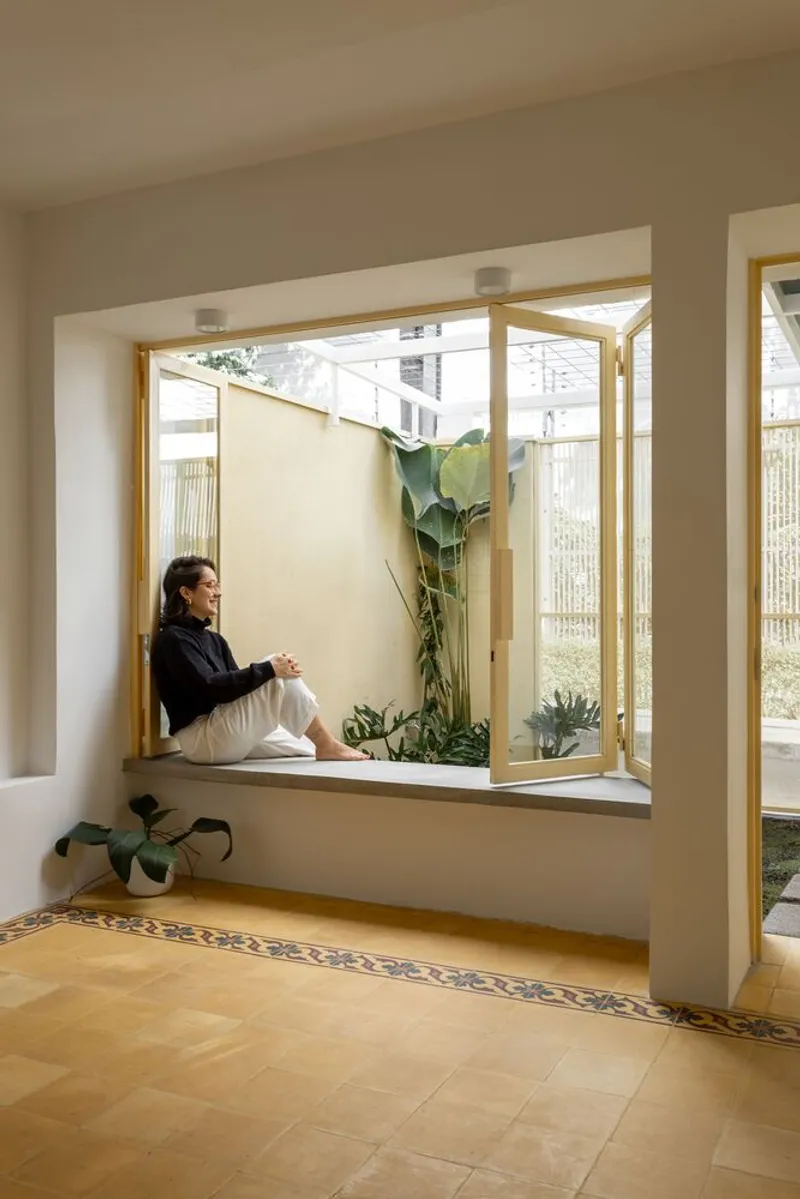
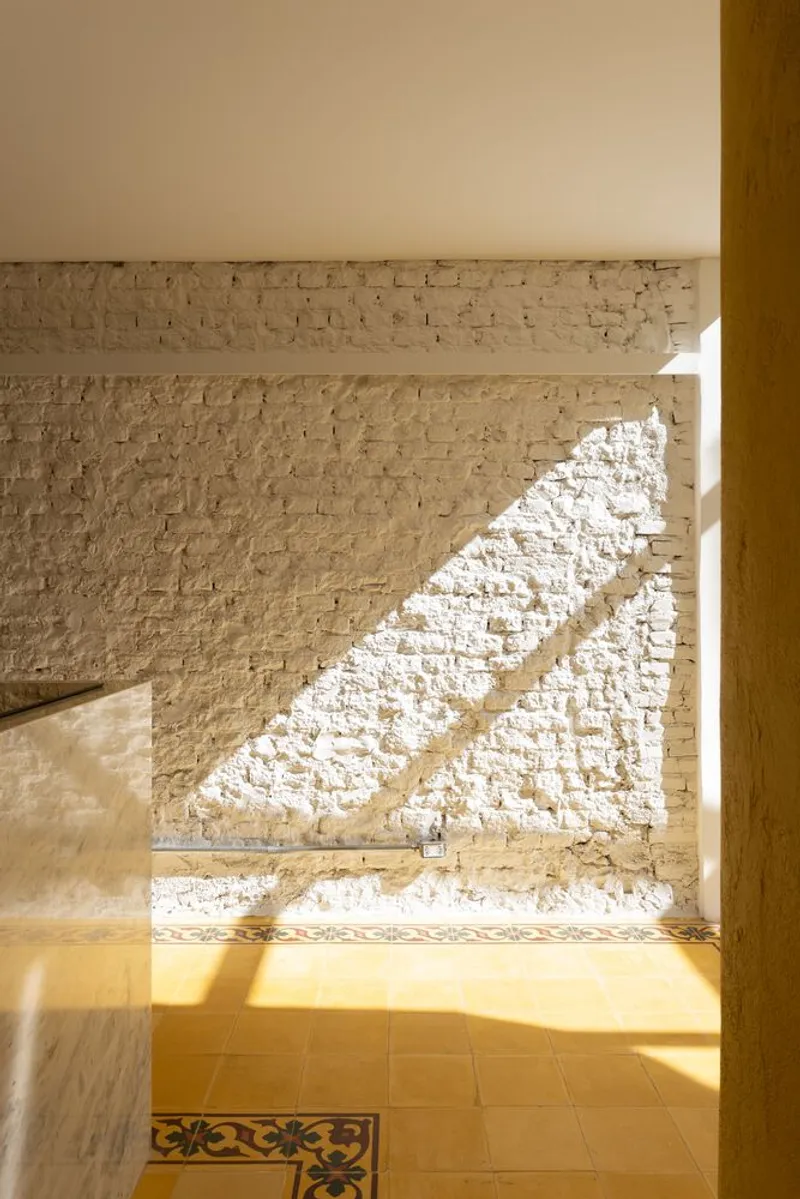
From the very first consultation with the homeowners, Balaio Arquitetura prioritized preserving the original architectural features of Pinheiros House while integrating modern enhancements. A striking feature is the yellow hydraulic tile flooring, which runs along the perimeter of the ground floor and visually connects the interior spaces with the street-level façade. This vibrant flooring, illuminated by generous natural light streaming through recessed openings, enhances the sense of openness throughout the open-plan social area, from the living room to the kitchen and dining spaces.
Transparency and permeability are key to the design, achieved through glass doors, windows, and a perforated metal gate, allowing subtle visual connections between the garden and street while maintaining privacy. The garden itself features a protective metal roof, occasionally accented with glass, guiding visitors toward the entrance while creating a dynamic landscape-ready structure for climbing vegetation.


Renovation for Spatial Cohesion
The renovation involved removing previous interventions deemed incongruous with the home’s character, such as a brick-textured façade cladding and a trapezoidal bay window that disrupted garden space. By refining the house's geometry and enlarging openings, the architects strengthened the integration between the living room and backyard, introducing a concrete bench that blurs the line between indoor and outdoor spaces.
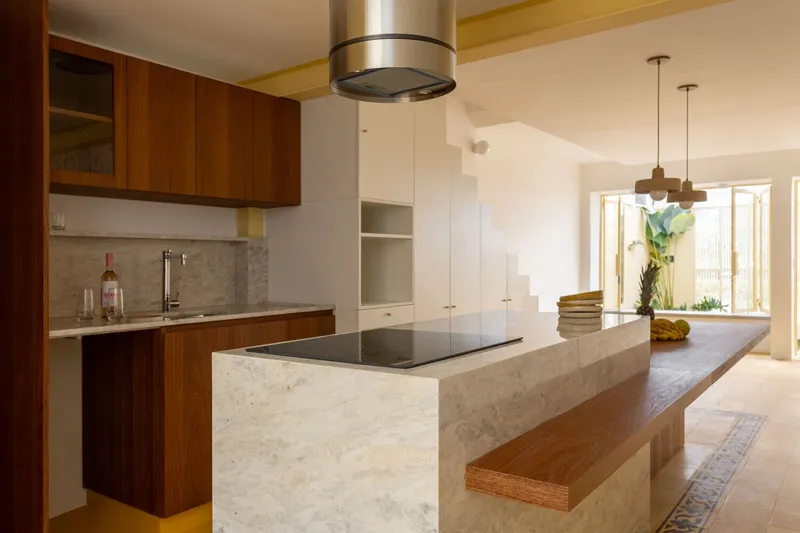
Structural reinforcements were necessary to expand internal spaces safely, including the removal of a central masonry pillar. This intervention revealed previously hidden features, such as the wooden tread staircase, which now serves as a visual and functional centerpiece of the home. The kitchen, another social hub, showcases a Paraná marble island, which connects seamlessly to the dining area via a custom-made dining table. The interplay of Cumaru wood panels and white surfaces around the staircase enhances spatial continuity and sensory integration.

Curves, Textures, and Materiality
An original design element, the gentle curve of the rear façade, is echoed subtly along the kitchen wall, guiding circulation between the interior and garden. Curved forms are also featured in the powder room, where softly tinted tiles and a sculpted pink quartz countertop complement polyurethane flooring, emphasizing fluidity and light within the compact space.
The upper floor retained its original layout, including wooden bedroom flooring, corridors lined with hydraulic tiles, and restored wooden windows with shutters. Bathrooms were updated thoughtfully with blue floor tiles and a double sink marble countertop from Pigues, merging functionality with refined aesthetics.

Contextual Design and Lifestyle Integration
Casa Pinheiros embodies a sensitive approach to urban renovation. Located on a small, residential street lined with terraced houses, the project respects the neighborhood’s village-like character while providing contemporary updates that accommodate modern living. Every design decision, from material selection to structural adjustments, reflects a commitment to both heritage preservation and user-centered functionality, ensuring the home is timeless yet suited to the lifestyle of its residents.
Pinheiros House demonstrates how sustainable renovation, thoughtful spatial planning, and material authenticity can transform a historic home into a modern sanctuary that celebrates its roots while embracing the present.


All photographs are works of
Leila Viegas


Popular Articles
Popular articles from the community

Opera by the Sea Estonia: Three Shells Dissolving Architecture into Tallinn's Coastline
A winning opera house proposal replaces monumental form with interconnected shells that blur the boundary between building, park and Baltic Sea.
Opera on the Sea: Driftwood Logic Shapes a Timber Opera House on Estonia's Coast
Trevor Orgill's opera house translates the entangled drift of floating timber into a civic building where wood, water, and music converge.

The Amber Palace Opera: A Geological Fiction Surfaces on Tallinn's Baltic Waterfront
Pierre Brillard reimagines a Baltic legend as a public landscape, opera house, and waterfront promenade rooted in Tallinn's coastal identity.

Extended Shell: Retrofitting Kolkata's Balconies as Living Urban Thresholds
A modular retrofit system recovers the social and environmental intelligence of Kolkata's historic verandas for contemporary Park Street residents.

Similar Reads
You might also enjoy these articles

Bamboo Housing Challenge 2026: Design Affordable, Sustainable Homes Using Bamboo
An international design competition by Bamboo U and IBUKU inviting architects and designers to reimagine affordable housing using bamboo — with the winning design built full-scale in Bali.

Computational Design & Education: Beegraphy Design Awards Introduces 7th Category (Featuring Jiyun's Innovative Approach)
Dive into Beegraphy’s 7th Design Awards category, where computational design meets education to create immersive, interactive learning tools, inspired by Jiyun’s work.

From Parametric Lighting to Urban Furniture: Join the 2nd Workshop in Beegraphy’s Computational Design Series
Dive into Cutting-Edge Design Techniques and Practical Applications with Industry Experts

Last Call: Unleash Your Architectural Genius in SHAK's Kindergarten Design Competition
Urgent call for architects to join SHAK's kindergarten design competition before the looming deadline

Explore Sao Paulo Competitions
Discover active competitions in this discipline

Challenge to reimagine the Iron Throne

Photograph architecture without architects

Illustrate the lost glory of Angkor Wat - Render Challenge

Design challenge to reuse E-waste
Comments (0)
Please login or sign up to add comments
No comments yet. Be the first to comment!