

Pinjarra Hills House by Sullivan Skinner – Innovative Residential Extension in Brisbane, Australia
Pinjarra Hills House is a modern Brisbane home by Sullivan Skinner, blending indoor-outdoor living, natural light, terraces, and family-friendly design.


Perched on sloping land beside a serene creek in Brisbane’s semi-rural outskirts, Pinjarra Hills House, designed by Sullivan Skinner Architects, is a thoughtful extension and renovation of a 1970s brick home. Completed in 2021 and covering 330 m², this family residence blends indoor and outdoor living, connecting occupants with the natural landscape while enhancing everyday family life.
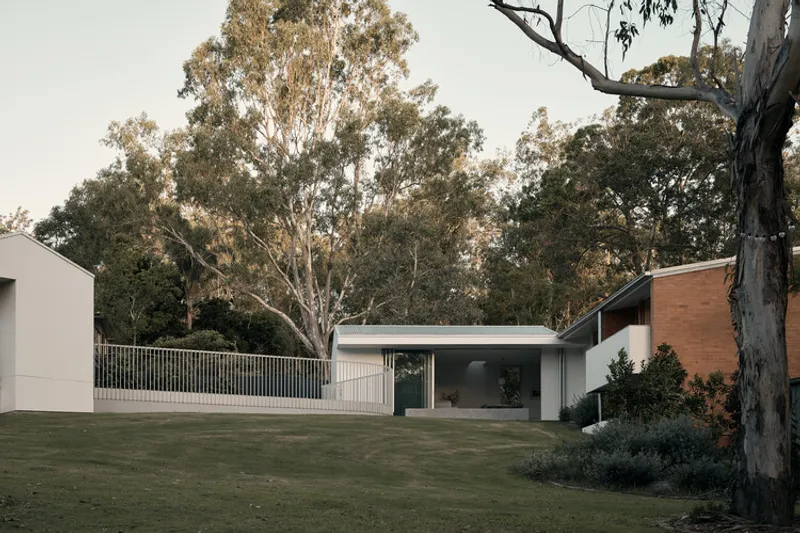
The primary brief focused on improving social spaces, strengthening the connection to the existing swimming pool, enlarging the kitchen and bathrooms, and clarifying the entry sequence for visitors. Previously, the family’s daily activities—cooking, dining, playing, swimming, and relaxing—were confined to disconnected zones. The renovation sought to stitch these activities together, creating a cohesive, interrelated domestic environment that prioritizes interaction and connectivity.
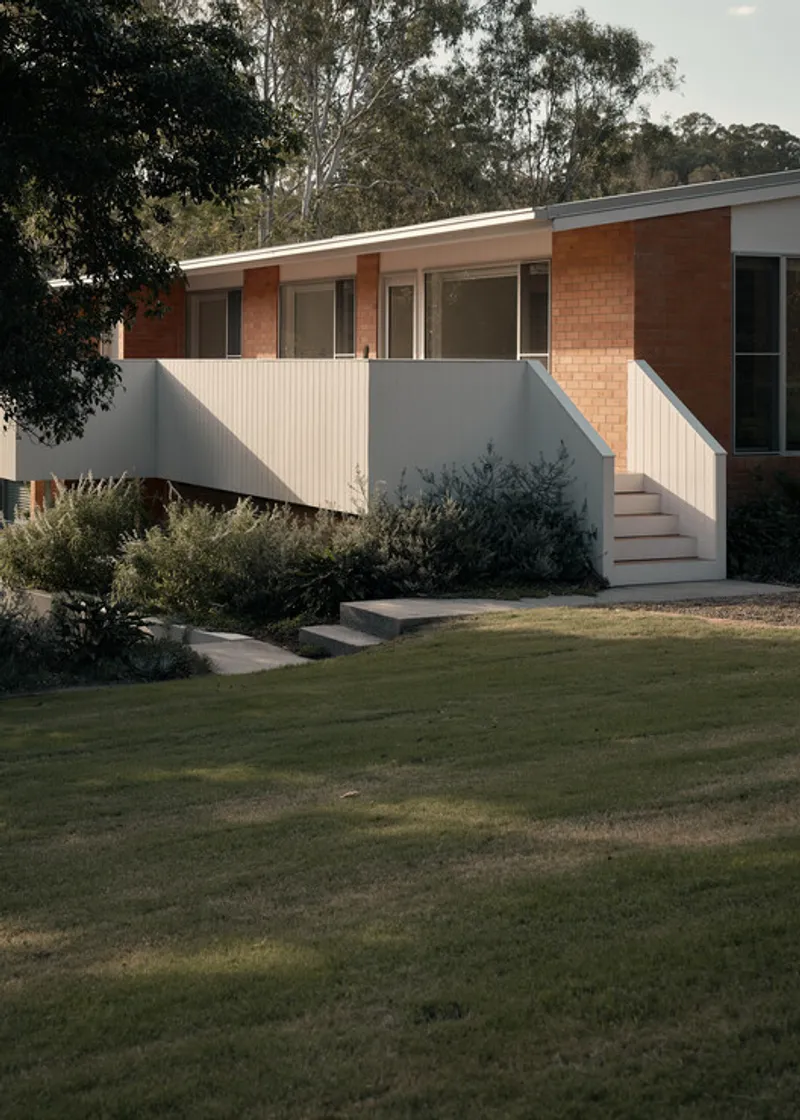
One of the major challenges was the home’s physical and visual disconnection from its surroundings. Low-pitched patio roofs over the kitchen and dining areas restricted natural light and circulation, while altered ground levels limited engagement with the pool. The new design introduces two gabled forms arranged along the high contour of the site, restructuring the open space into terraces that seamlessly integrate with the pre-existing pool. These forms house a family room and pavilion, framing expansive views of the surrounding eucalypt and pine tree canopy, and creating a strong visual connection with the natural landscape.
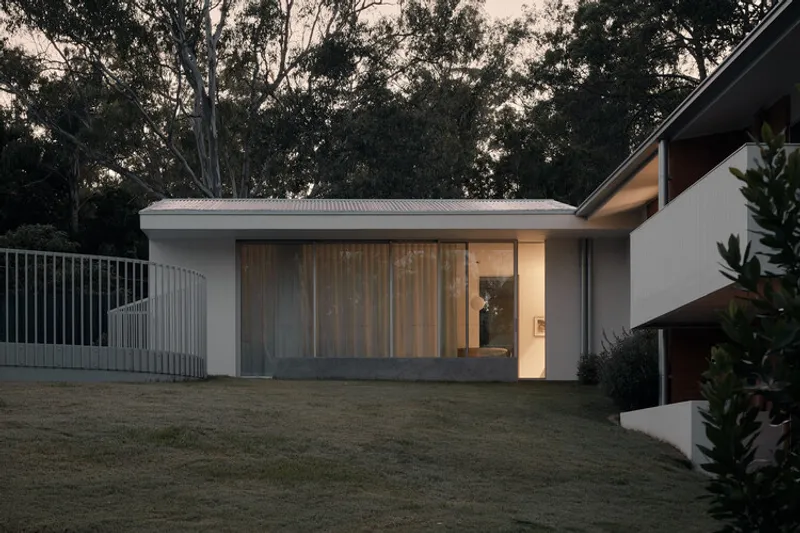
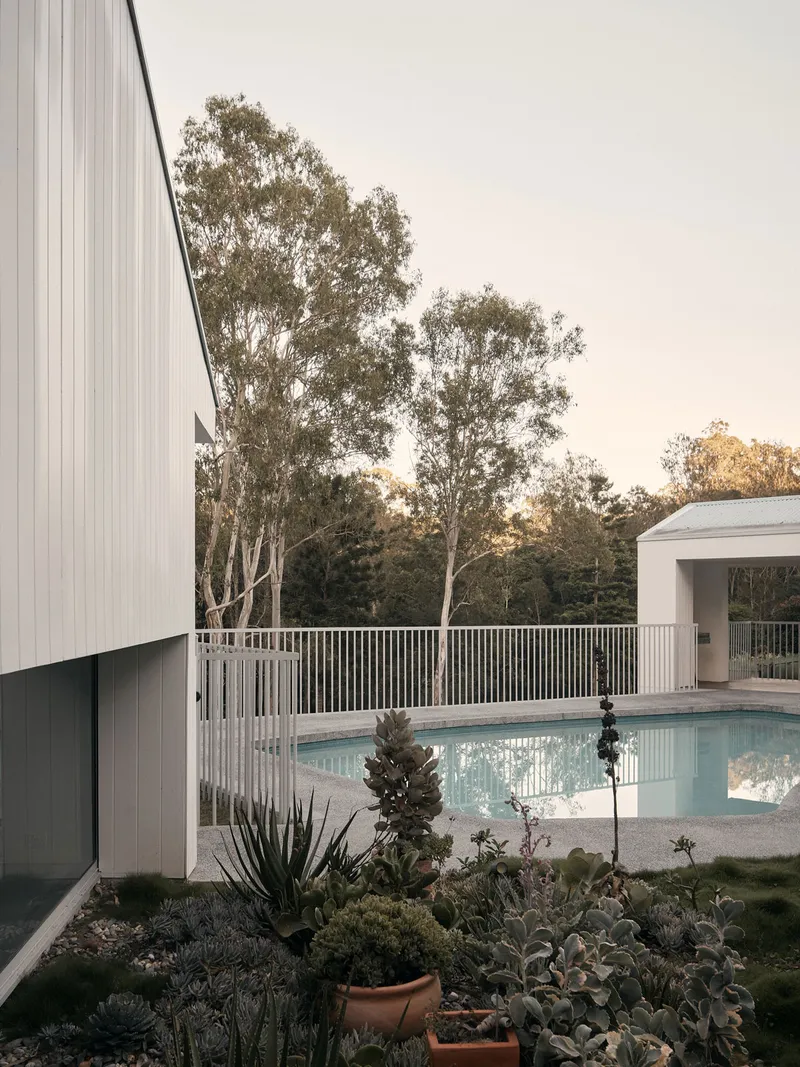
Sullivan Skinner Architects implemented several strategies to maximize daylight, ventilation, and privacy. Three skylight shafts were introduced to balance natural light throughout the interior, while carefully placed door, window, and skylight openings diffuse light across floors, walls, and ceilings, minimizing glare. The design amplifies sunlight penetration while maintaining privacy from neighboring residences, creating a luminous, comfortable, and energy-efficient home.
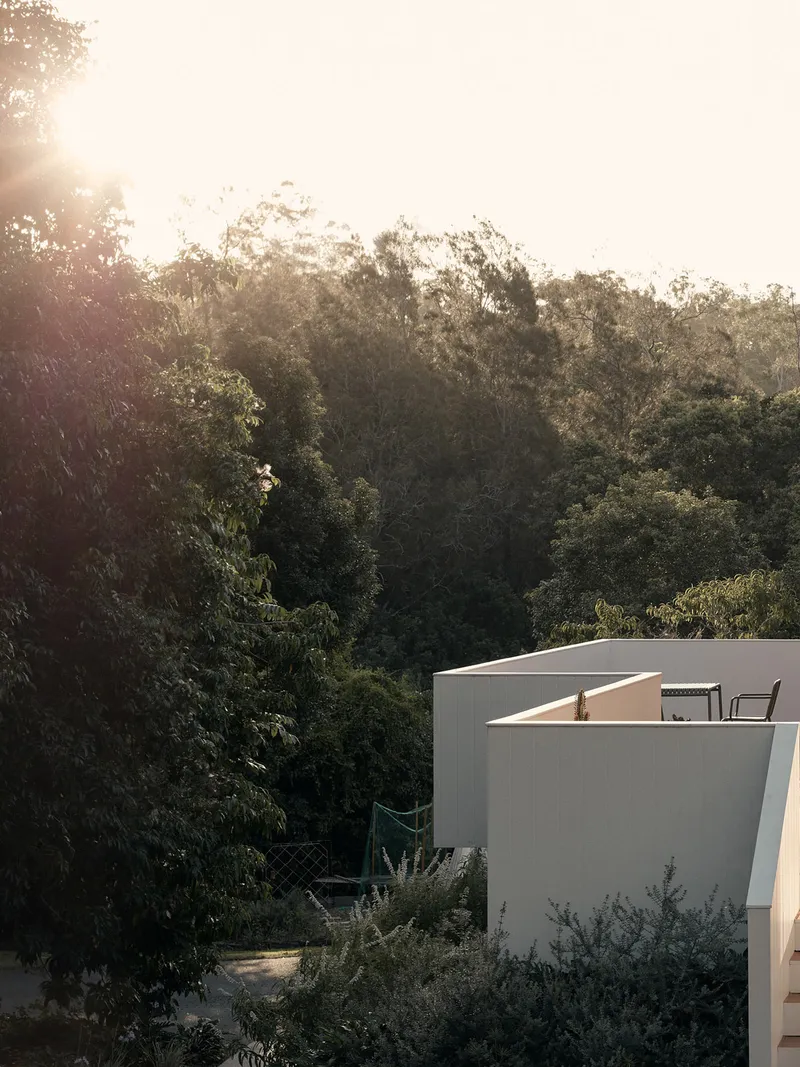
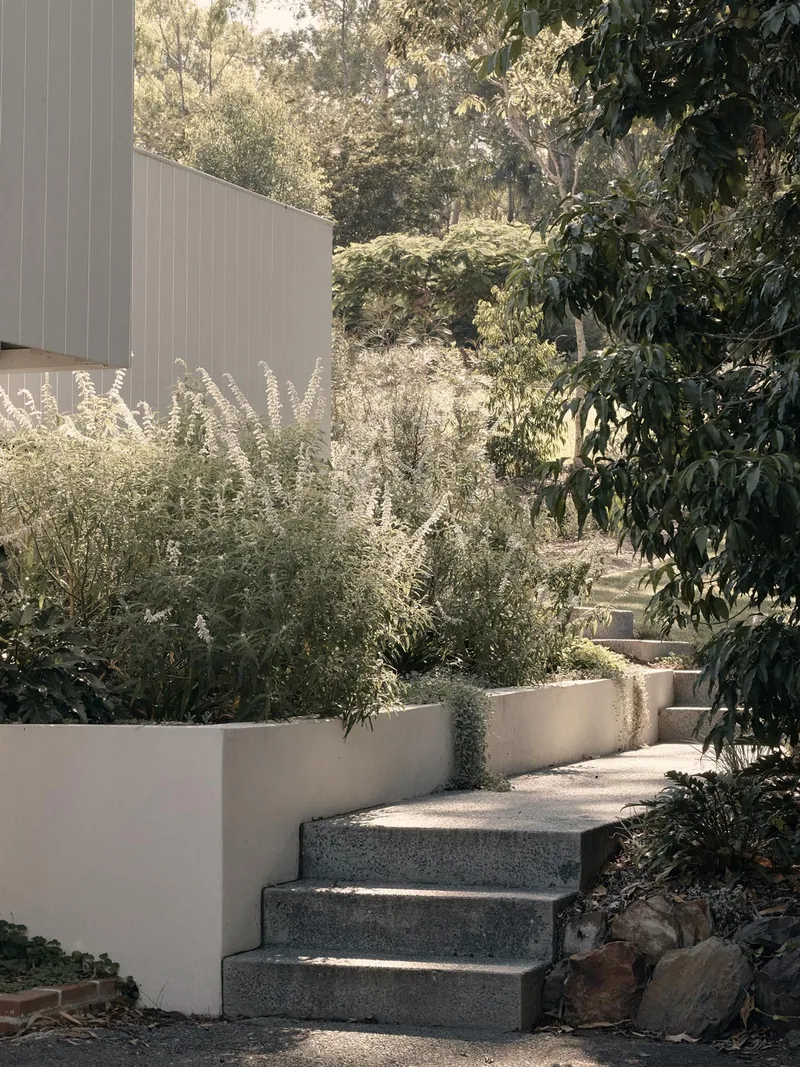
The material palette is restrained yet impactful, reflecting a modern Australian aesthetic. The gabled additions are constructed using few, high-quality materials that harmonize with the original 1970s dwelling while asserting a contemporary presence. Interiors are simple and functional, emphasizing spatial quality, daylight, and connection to nature.
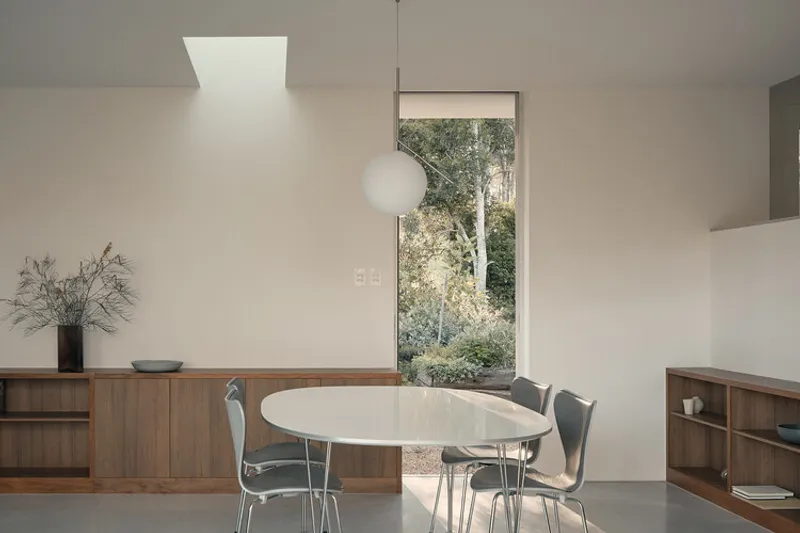
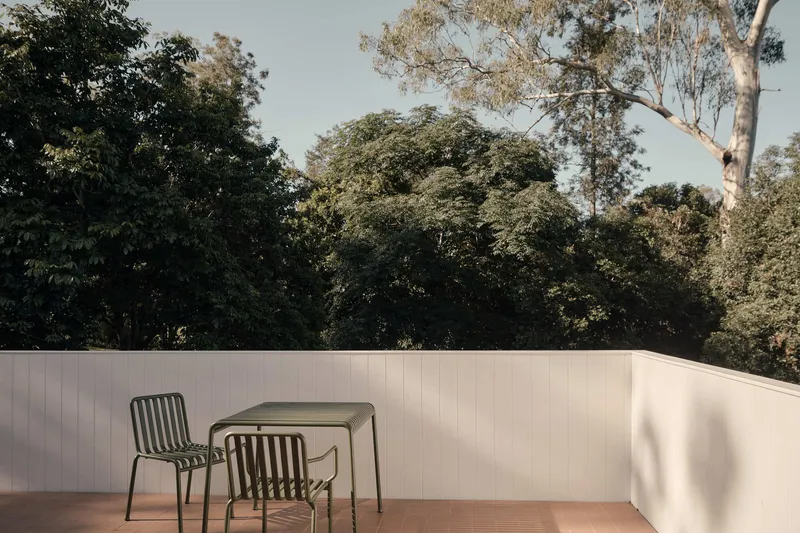
Today, Pinjarra Hills House is more than a renovated dwelling—it’s a holistic family environment where occupants can fully inhabit the landscape. It exemplifies modern residential architecture in Australia, demonstrating how thoughtful extensions can transform dated structures into functional, light-filled, and visually engaging homes.
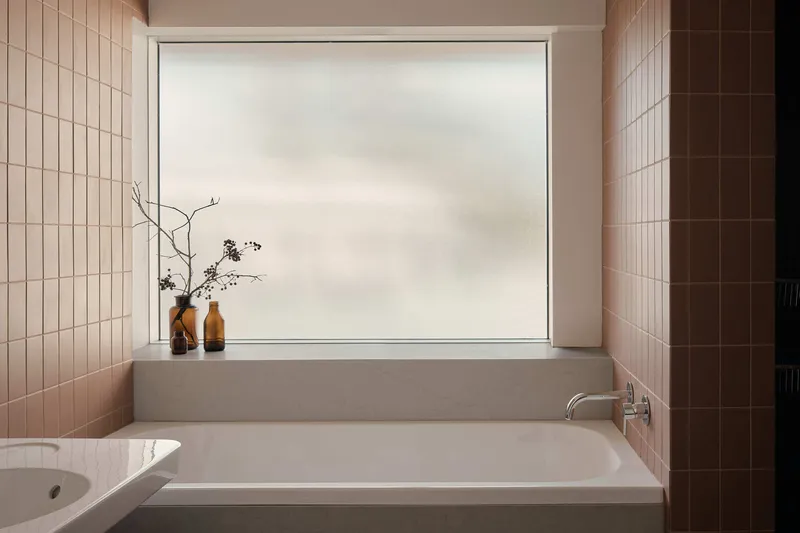
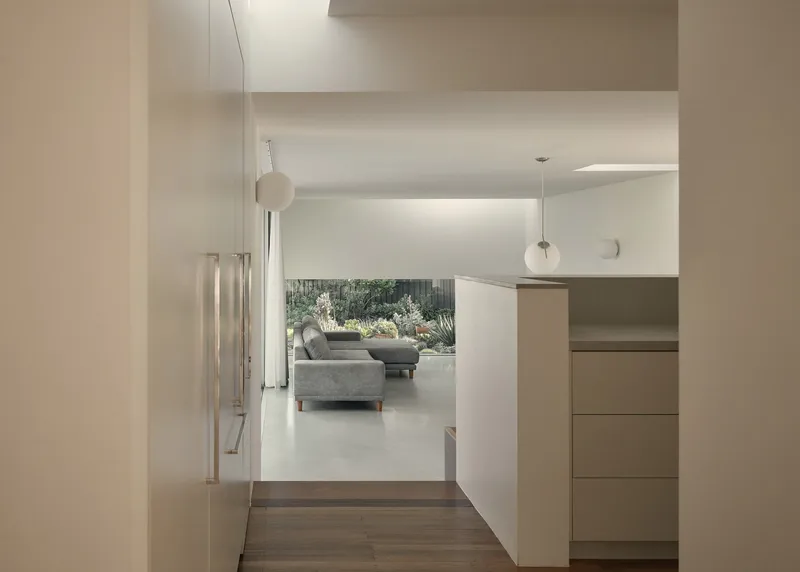
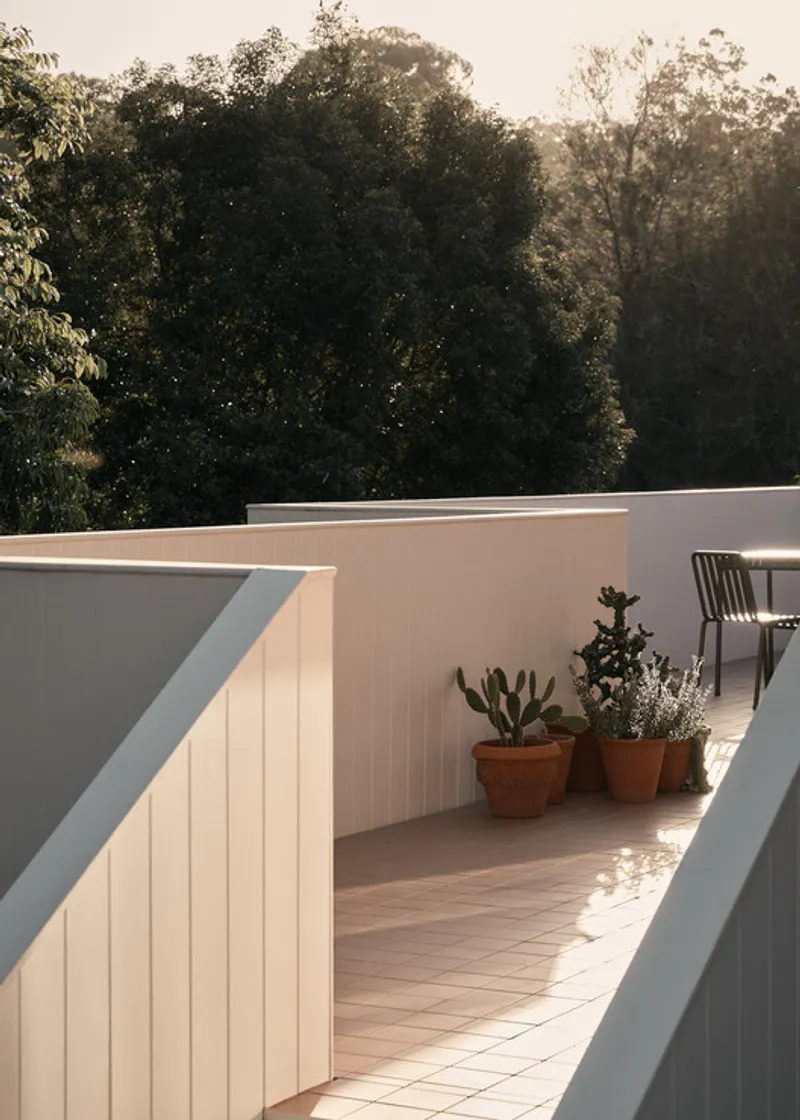
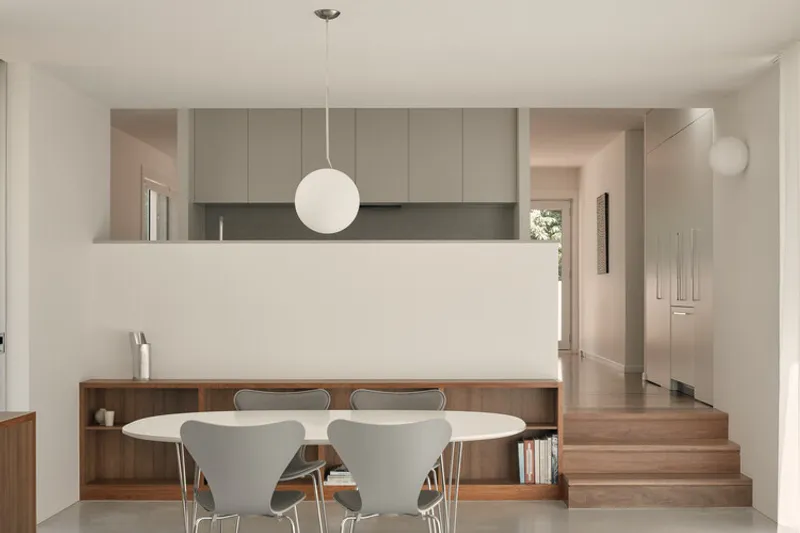
All the photographs are works of David Chatfield



Popular Articles
Popular articles from the community


Riyadh For All: Intergenerational Urban Design for Active Aging in Rabat
Riyadh For All reimagines urban design in Rabat with intergenerational co-living, adaptive courtyards, and Moroccan cultural exchange today.

Hill & Cross Opera: Sculptural Opera House Architecture Shaped by Tallinn’s Landscape and Identity
Hill & Cross Opera reimagines opera house architecture in Tallinn through its sculptural hill, civic plaza, glass wave and a luminous cross.

Co-Life: Senior Housing Design That Reconnects Older Adults With the City
Co-Life reimagines senior housing design through healing gardens, shared streets, workshops, and a sustainable community across generations.

The Earth Pod: 3D Printed Homes for Resilient Refugee Communities
The Earth Pod reimagines refugee housing through 3D printed homes made from clay, combining resilience, self-sufficiency, and rapid shelter.


Similar Reads
You might also enjoy these articles


Hodi-Mandai Geram
Project Function: Preservation and revitalization of the Intangible heritage and socio-spatial identity of the Hodi by Housing, Cultural Memory Center, Sacred Grove, landscape, local tourism economy


Olio Towers: A Mid-Rise for Performers That Fuses Housing, Rehearsal, and Stage
Located blocks from Houston's Theater District, this modular tower stacks living units around a central performance atrium.

Oasis: Modular Green Housing Carved into Dhaka's Urban Fabric
A shortlisted Plugin Housing entry reclaims unauthorized settlements in Dhaka with stepped concrete volumes, green roofs, and ventilation-driven design.

Black Hole: A Floating Megastructure for the Post-Physical Era
Emiliano Mazzarotto envisions a spherical, self-scaling arena where e-sports, digital hotels, and holographic stadiums replace traditional public space.


Explore Architecture Competitions
Discover active competitions in this discipline



Challenge to reimagine the Iron Throne


Photograph architecture without architects


Illustrate the lost glory of Angkor Wat - Render Challenge


Design challenge to reuse E-waste
Comments (0)
Please login or sign up to add comments
No comments yet. Be the first to comment!