

Piraeus Tower by PILA: Greece’s First Green High-Rise Redefining the Athenian Riviera
Piraeus Tower by PILA transforms a dormant landmark into Greece’s first green high-rise, combining reuse, mixed-use, and climate-responsive facade design.


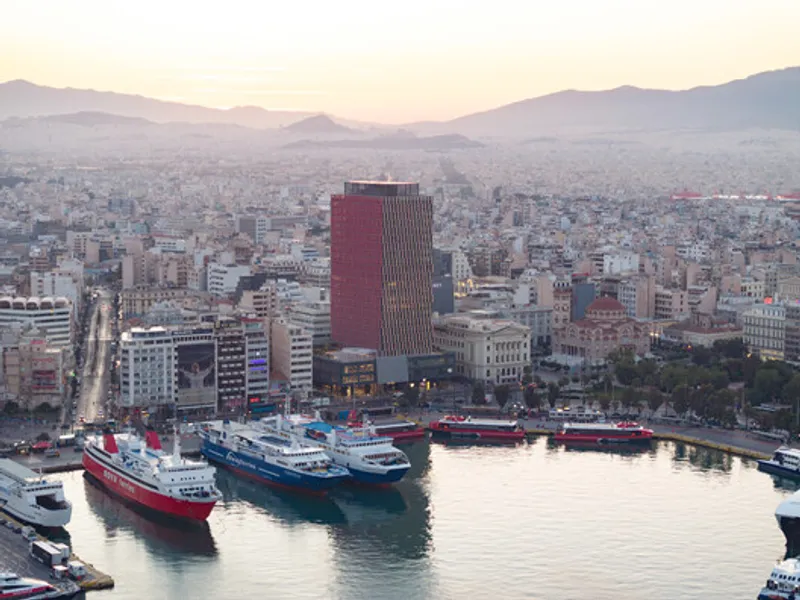
Rising prominently at the gateway of the Athenian Riviera, Piraeus Tower stands as a powerful symbol of urban regeneration, adaptive reuse, and sustainable high-rise architecture in Greece. Officially reopening to tenants and the public in June 2024, the tower marks the transformation of a long-dormant structure into the first green skyscraper in the country, redefining the skyline of the port city of Piraeus.
Designed by PILA Architecture Studio, the redevelopment breathes new life into a building that remained inactive for nearly five decades. Once a static presence, the tower has been reimagined as a contemporary mixed-use destination that integrates retail, offices, public spaces, and cutting-edge sustainability strategies within a single vertical landmark.
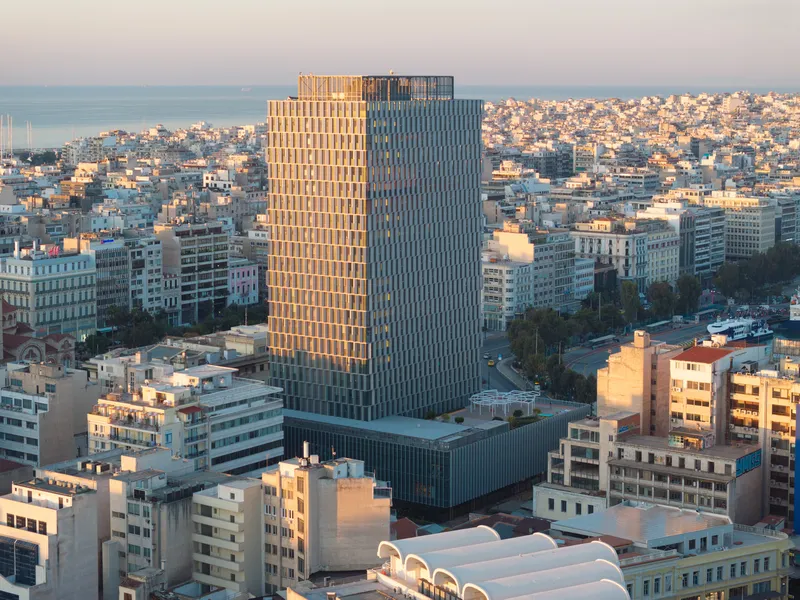

Urban Scale, Context, and Mixed-Use Program
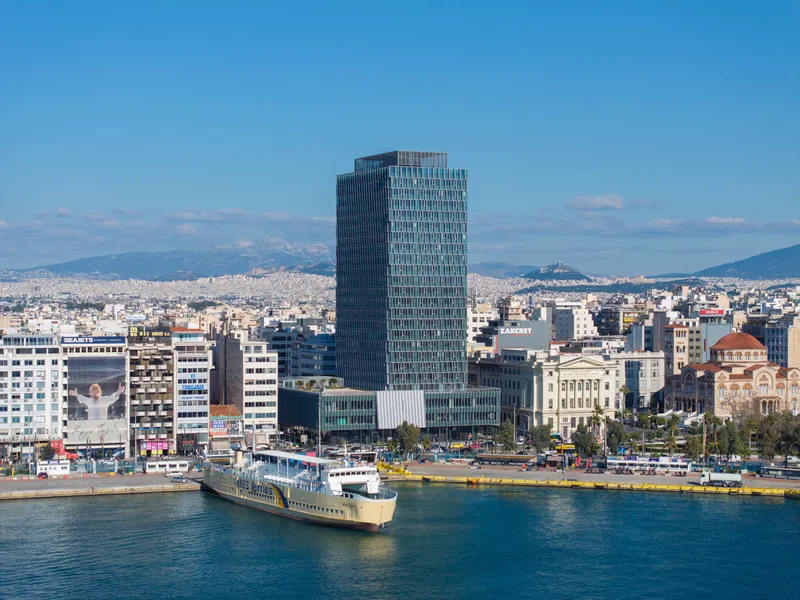
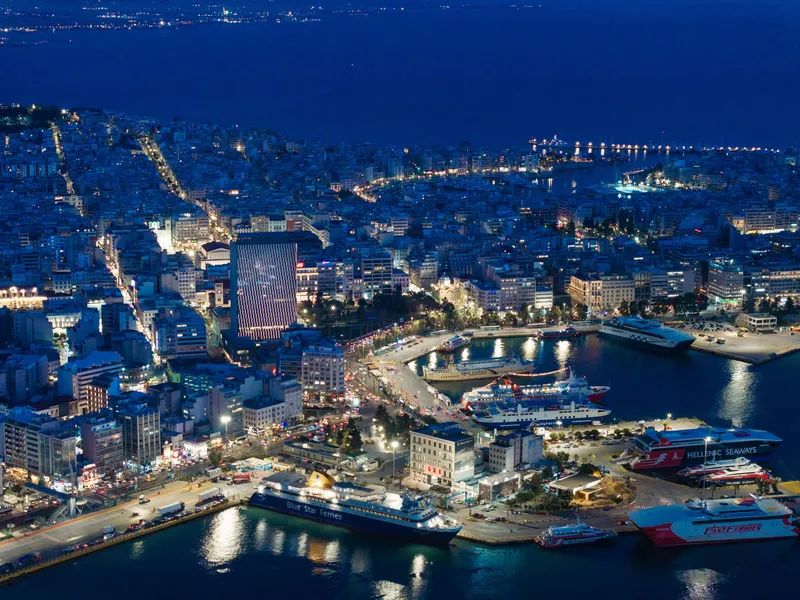
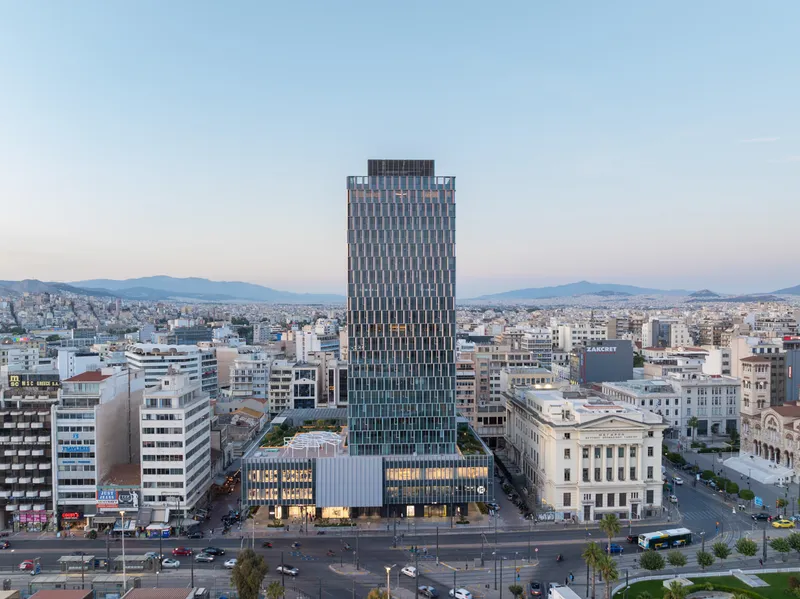
With a height of 88 metres and a total built area of 34,623 square metres on a compact urban plot, Piraeus Tower is currently the tallest structure in the port of Piraeus and the second tallest building in Greece. Its strategic position establishes it as a visual anchor for the city, visible from land, sea, and the wider metropolitan landscape.
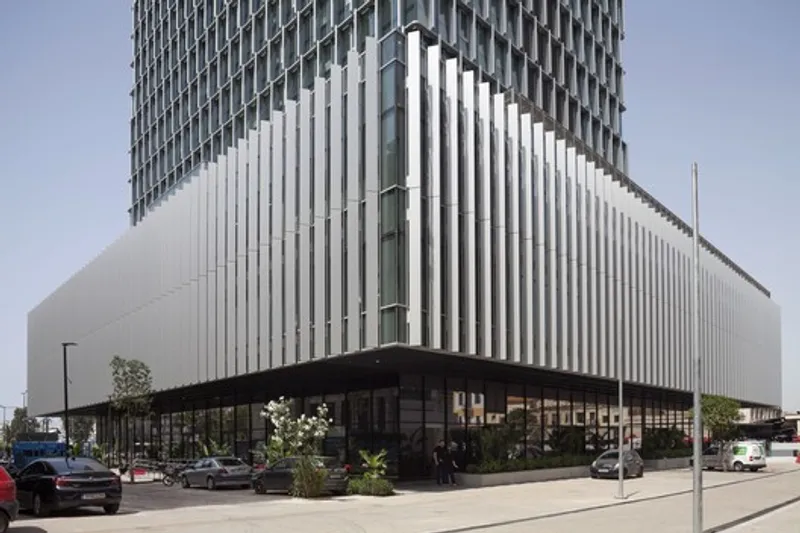
The building accommodates a diverse mixed-use program that activates the tower throughout the day. The lower levels host retail spaces leased to international brands such as Zara, Zara Home, and JD Sports, while food and beverage venues and a fitness centre animate the mid-level floors. Above, flexible office floors accommodate up to 2,000 employees, housing major tenants including Dialectica, NorthStandard, and V Group of Companies. PILA also designed the interior common areas and the executive headquarters on the top floor, ensuring architectural continuity throughout the building.

Facade Design as Environmental Infrastructure
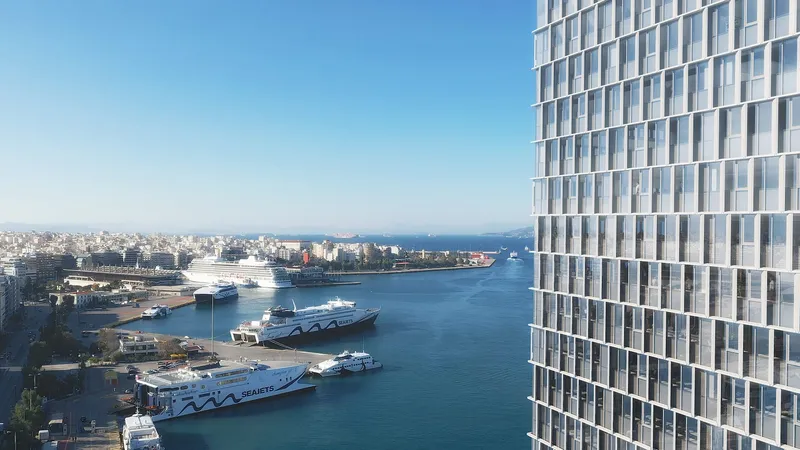
At the heart of the project lies the innovative facade redesign, developed by PILA following their winning proposal in an invited competition. Rather than treating the facade as a purely aesthetic layer, the design functions as a climate-responsive architectural system that dramatically reduces energy consumption.
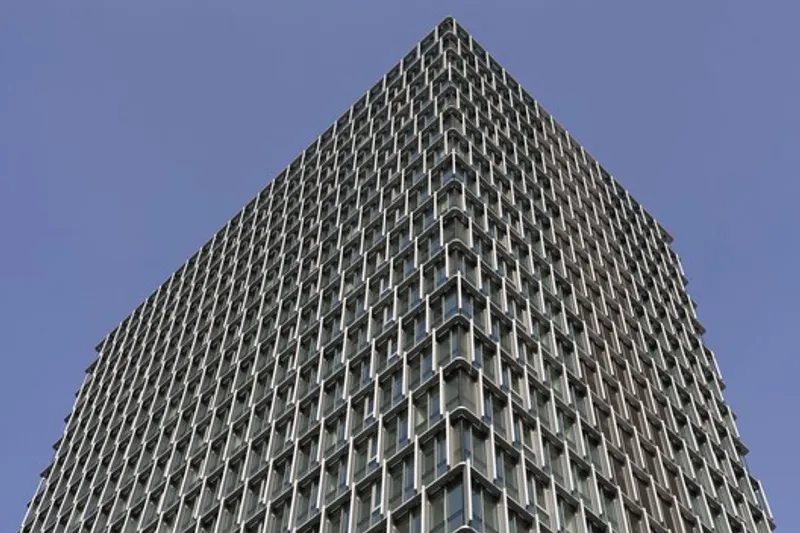
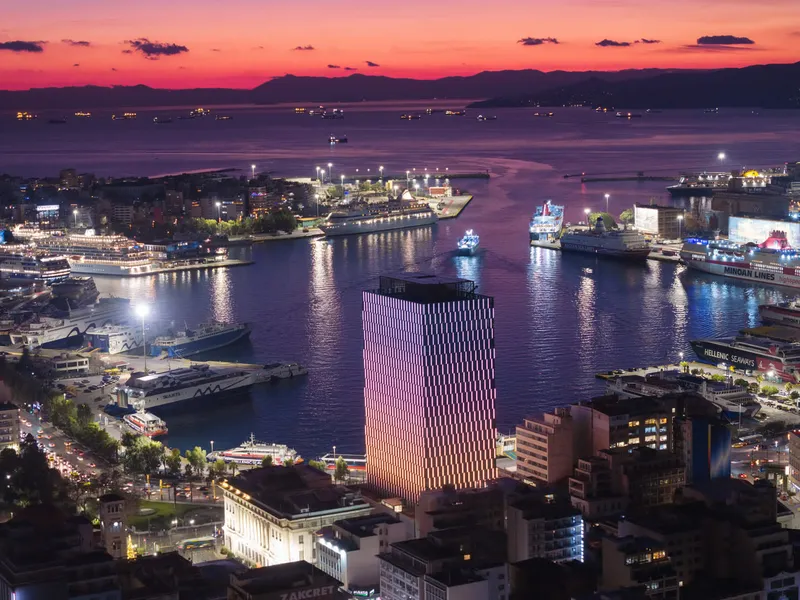
A three-dimensional shading structure composed of vertical and horizontal fins wraps around the tower, forming a dynamic pattern that shifts subtly from floor to floor. Each vertical fin is horizontally displaced, creating a spiralling effect that gives the facade a sense of motion and softness, often described as resembling a piece of fabric draped around the building. This constantly changing visual perception enhances the experience of the tower from multiple vantage points: whether viewed from the port, the city streets, or the sea.
Night Identity and Responsible Lighting Design
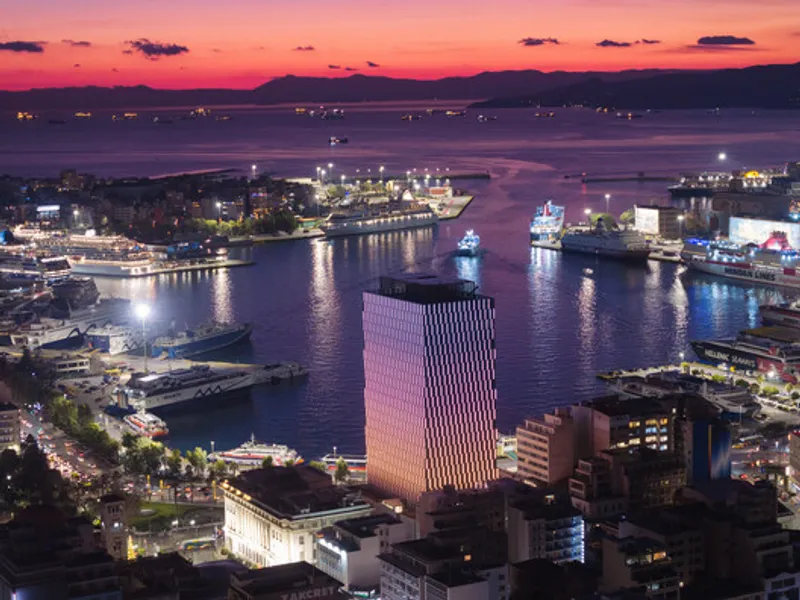
The tower’s presence extends into the night through a carefully calibrated lighting strategy designed by Thanos Danilof. Integrated into the facade fins, the lighting system transforms the building into a luminous urban beacon without contributing to light pollution. Studies informed the choice of a permanent warm white glow, while special colour sequences are reserved for significant civic moments, such as the welcoming of the Olympic Flame.
Remarkably, the energy required to illuminate the tower each night is equivalent to the consumption of just two residential air-conditioning units, underscoring the project’s commitment to responsible energy use.
Sustainability, Circular Economy, and Smart Systems
Piraeus Tower is pursuing LEED Platinum certification, positioning it among the most environmentally advanced office buildings in Southeast Europe. It is also enrolled in the WELL Core™ programme, prioritising occupant health, comfort, and wellbeing, while achieving an A++ energy performance rating.
Circular economy principles were embedded in the construction process. Materials from the original facade were carefully separated, with 126 tonnes of glass recycled through an international reuse cycle involving Saint-Gobain. The building incorporates photovoltaic panels on the rooftop, advanced heating and cooling systems, greywater reuse tanks, and smart building management systems that allow each floor to operate independently according to tenant needs.
Electric vehicle charging, resilient backup power infrastructure, and seamless access to public transport reinforce the tower’s role as a future-ready workplace integrated into regional and international mobility networks.

Public Realm, Connectivity, and Urban Life
Beyond the tower itself, the project contributes to the wider urban fabric of Piraeus. An elevated public walkway designed by PILA connects Karaiskaki Square to the surrounding park, running above the port fence and offering uninterrupted views of the harbour. More than a circulation route, the walkway includes seating areas and landscaped zones, encouraging pause, interaction, and engagement with the city’s maritime identity.
The grand inauguration of the tower transformed the skyline during a celebratory evening featuring drone performances, orchestral music, and light installations, reinforcing the building’s civic significance and symbolic rebirth.


International Recognition and Architectural Legacy
The facade design of Piraeus Tower has received international acclaim, earning the 2024 CTBUH Facade Award of Excellence, a recognition that places the project among the most innovative tall building envelopes worldwide. The award underscores the tower’s success in combining architectural expression, environmental performance, and urban presence into a cohesive and forward-looking landmark.
All photographs are works of Nikos Daniilidis, Yiannis Hadjiaslanis



Popular Articles
Popular articles from the community


Hill & Cross Opera: Sculptural Opera House Architecture Shaped by Tallinn’s Landscape and Identity
Hill & Cross Opera reimagines opera house architecture in Tallinn through its sculptural hill, civic plaza, glass wave and a luminous cross.

The Earth Pod: 3D Printed Homes for Resilient Refugee Communities
The Earth Pod reimagines refugee housing through 3D printed homes made from clay, combining resilience, self-sufficiency, and rapid shelter.
EW PARK: Sustainable Architecture Reimagines the Future of Urban Parking
EW PARK reimagines city parking as a modular wooden tower combining automation, solar energy, electric mobility, and adaptable urban design.

Riyadh For All: Intergenerational Urban Design for Active Aging in Rabat
Riyadh For All reimagines urban design in Rabat with intergenerational co-living, adaptive courtyards, and Moroccan cultural exchange today.

Similar Reads
You might also enjoy these articles


Hodi-Mandai Geram
Project Function: Preservation and revitalization of the Intangible heritage and socio-spatial identity of the Hodi by Housing, Cultural Memory Center, Sacred Grove, landscape, local tourism economy


Olio Towers: A Mid-Rise for Performers That Fuses Housing, Rehearsal, and Stage
Located blocks from Houston's Theater District, this modular tower stacks living units around a central performance atrium.

Oasis: Modular Green Housing Carved into Dhaka's Urban Fabric
A shortlisted Plugin Housing entry reclaims unauthorized settlements in Dhaka with stepped concrete volumes, green roofs, and ventilation-driven design.

Black Hole: A Floating Megastructure for the Post-Physical Era
Emiliano Mazzarotto envisions a spherical, self-scaling arena where e-sports, digital hotels, and holographic stadiums replace traditional public space.

Explore Attica Landscape Competitions
Discover active competitions in this discipline



Challenge to reimagine the Iron Throne


Photograph architecture without architects


Illustrate the lost glory of Angkor Wat - Render Challenge


Design challenge to reuse E-waste
Comments (0)
Please login or sign up to add comments
No comments yet. Be the first to comment!