
PIXEL HALL
The proposed project aims to create a sustainable, versatile space, in communion with nature and the surrounding city, Paris.
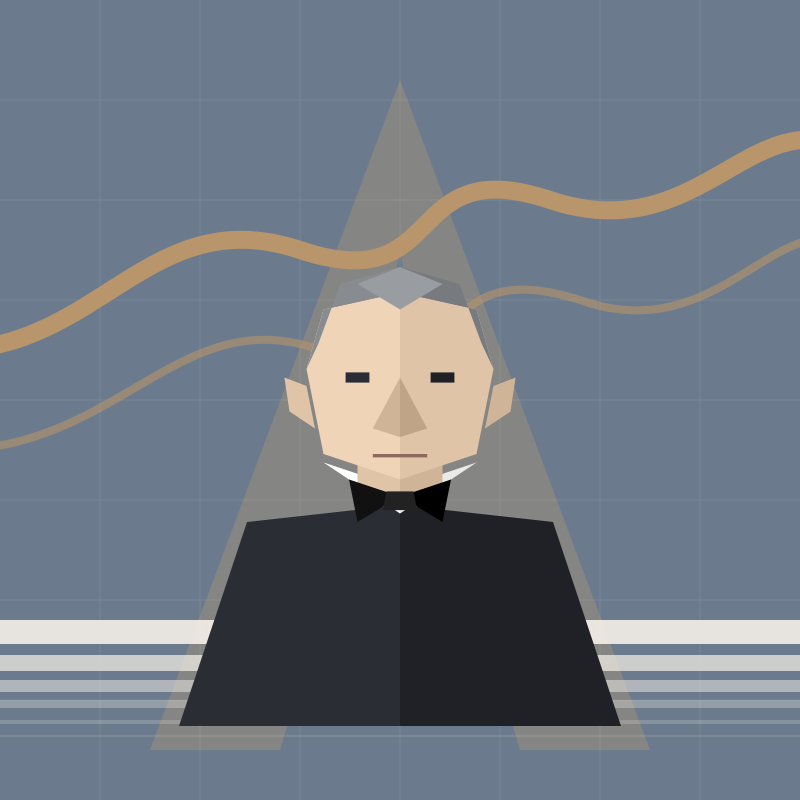
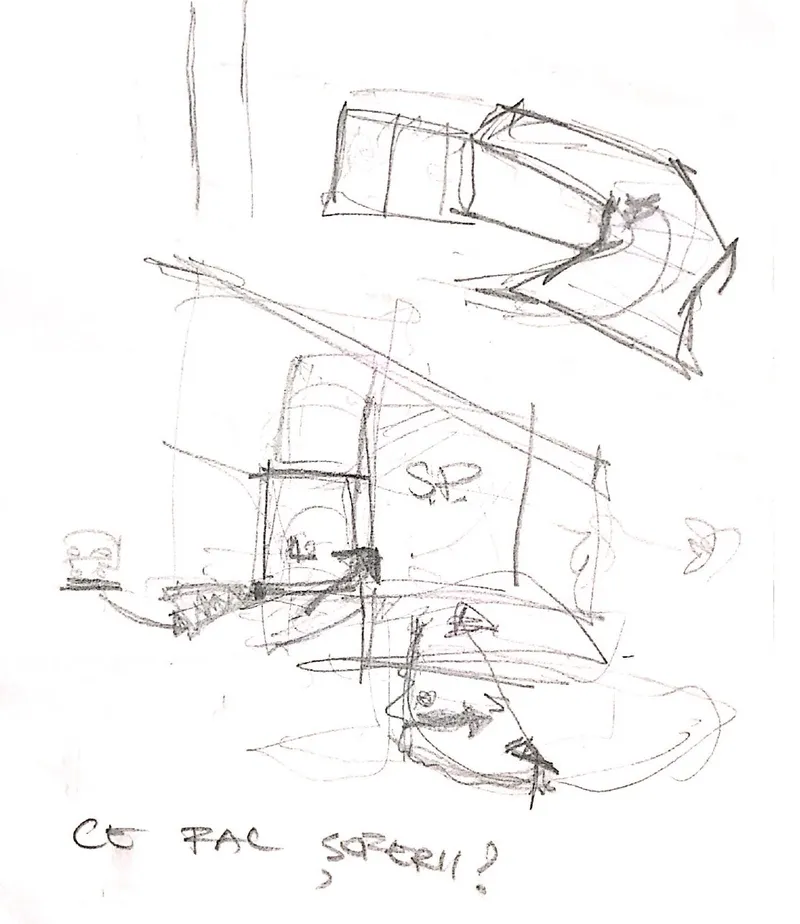
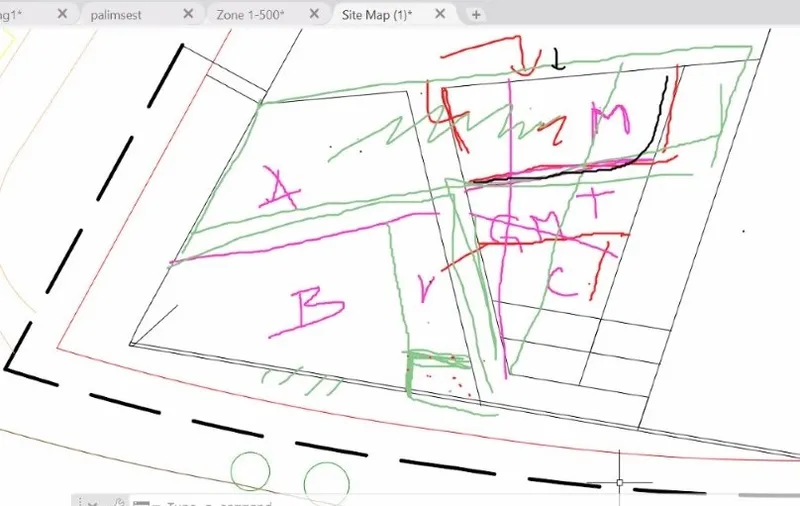

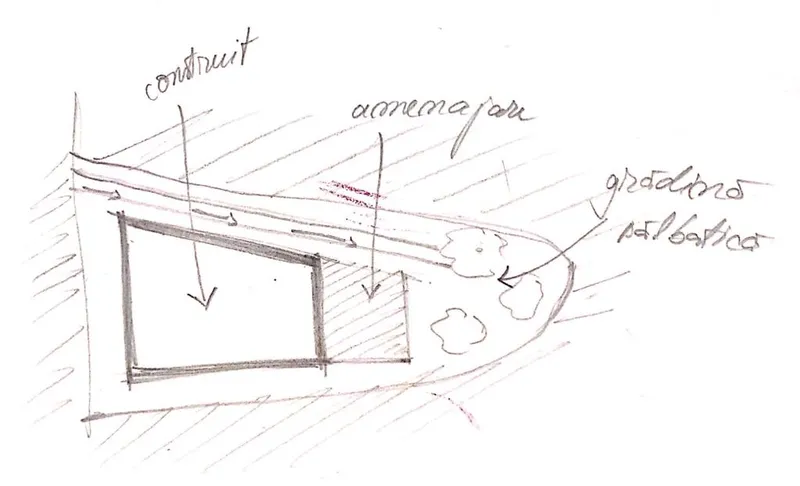
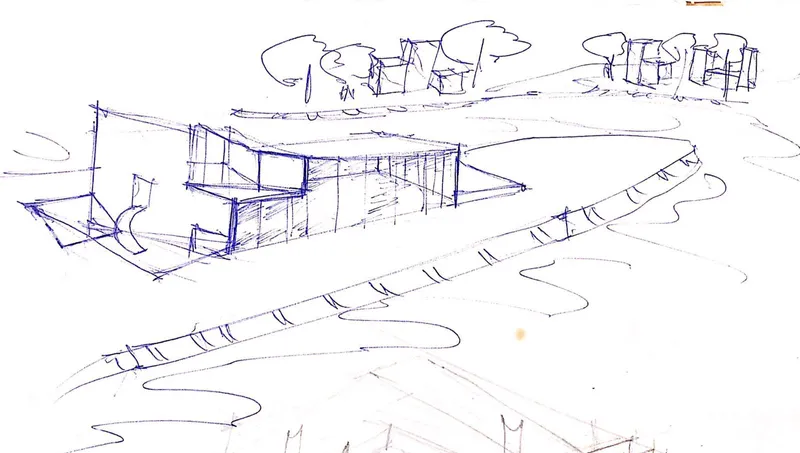
The space itself is inspired by the piece of land on which it sits, transposing its proportions and shape into its own configuration. The footprint is a trapezius with free sides parallel to the edges of the island. The positioning - near the western limit, in the vicinity of the bridge that leaves accessible the penetration from the city - allows the existence of a patch of nature towards the eastern top of the island. It plays the role of a garden for the guests of the events to be hosted.
The space is divided into two main areas, which allow the development of events variable in scale by the existence of two festivity halls proportionately and arranged differently. The western body integrates variable functions – access to the building, reception, offices, creative workshops open to the public, employees' greenroom, technical spaces, all positioned on the ground floor. The conference room is on the floor of this building, opening to a sun-lit terrace at noon.
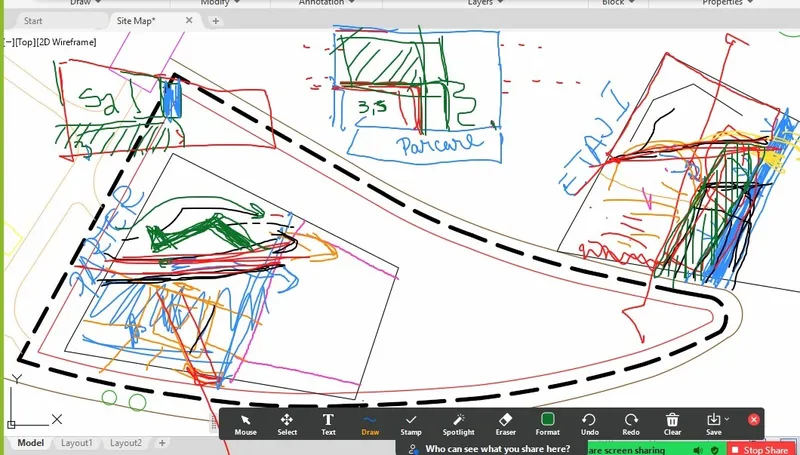
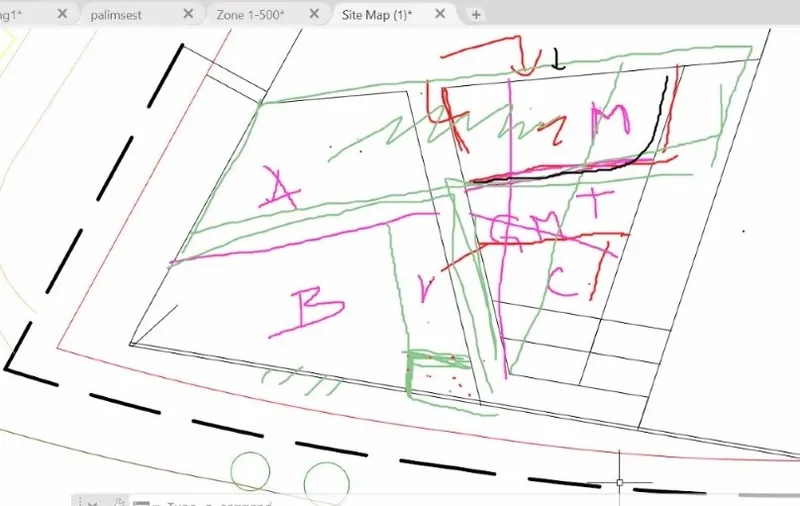
The separation between this body and the second, representing the room dedicated to fashion shows, is made through the technical space of the latter, positioned on the upper floor of the building. It includes a room for sound engineers, booths for models, their own greenroom and the backstage of the entrance to the podium of hall 2.
The second room is adaptable to the various requirements of the designers who are going to benefit from it, in terms of the development of the show itself. Performance can differentiate considerably, thus offering the opportunity for uniqueness.
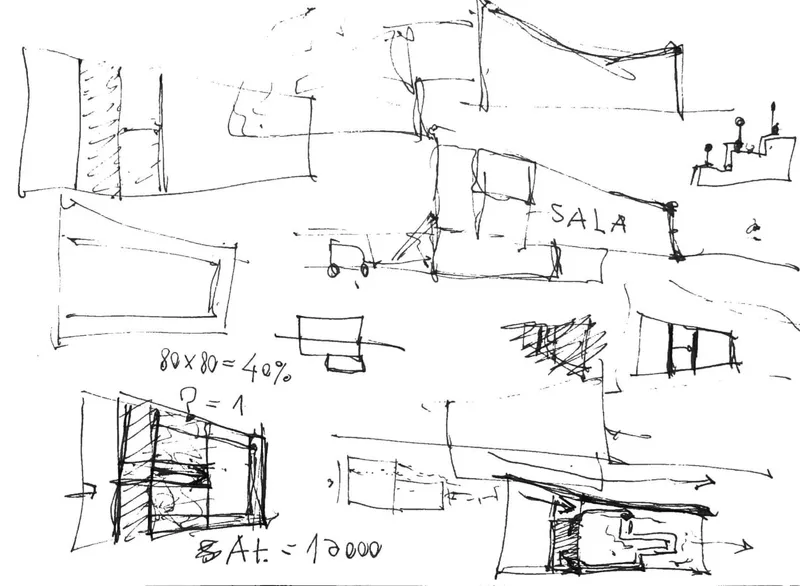
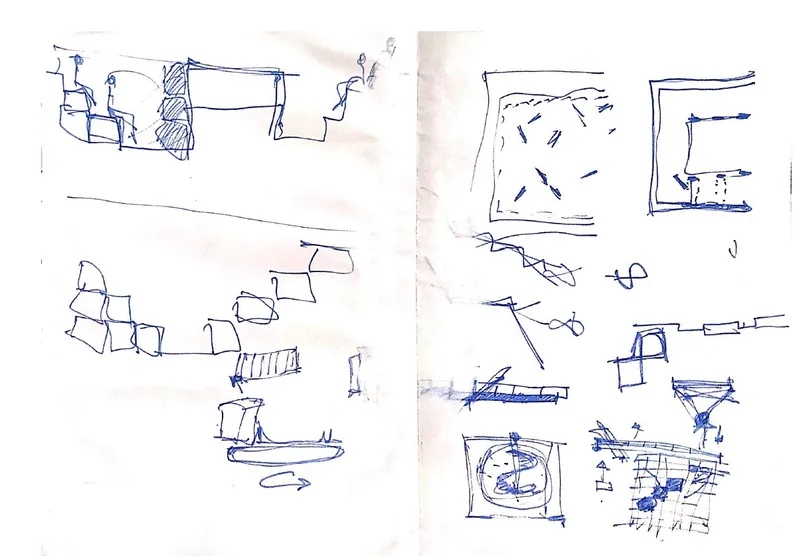
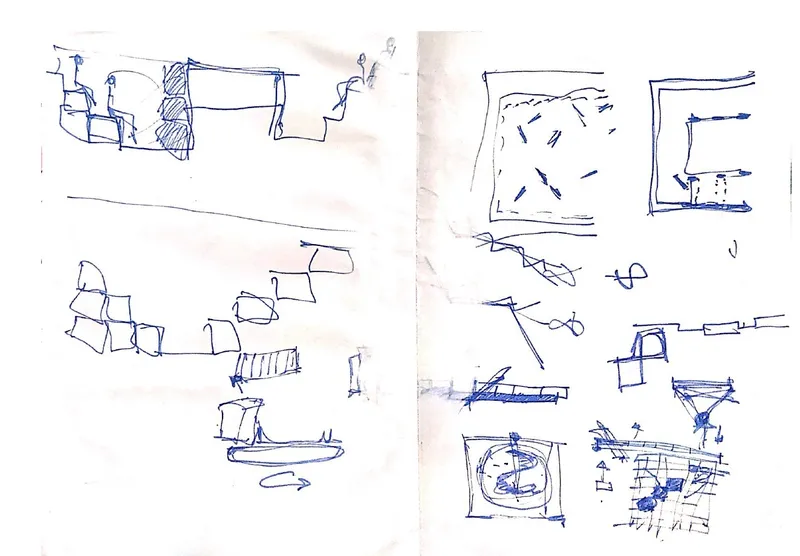
This is given by the configuration of the scroll platform, otherwise unconfigured. The room provides its own pixelated fingerprint, projected on the ceiling. Each pixel represents a parallelepiped of variable height, which, once lowered to the level of the floor on the beams that support it, becomes the limestone platform and the step to the next lowered parallelepiped that will ensure the continuity of the scroll in the direction that the designer wants.

Thus, the project achieves its initial goal – the creation of a versatile, self-sufficient architecture, which through sincerity and availability thanks both technically and aesthetically the needs of a fashion show and its audience. Parallelepipeds attached to the ceiling grids can also be lowered to create the spectators' sitting places.
The invited public benefits from a unique spatial promenade, the circulation between the levels being made exclusively through ramps: the ramp that descends the ground level from the front of the building to the underground parking, revealing it, the access ramp from this underground level to the ground floor, the monumental ramp in the space on double level, allowing access to the conference room, the service ramps that cross all the floors. They have a slight inclination, they are usable for all both for movement and for material transport.
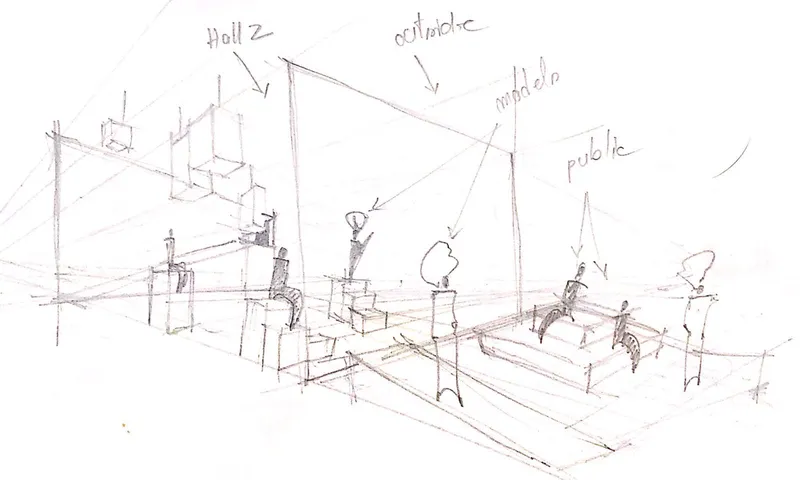
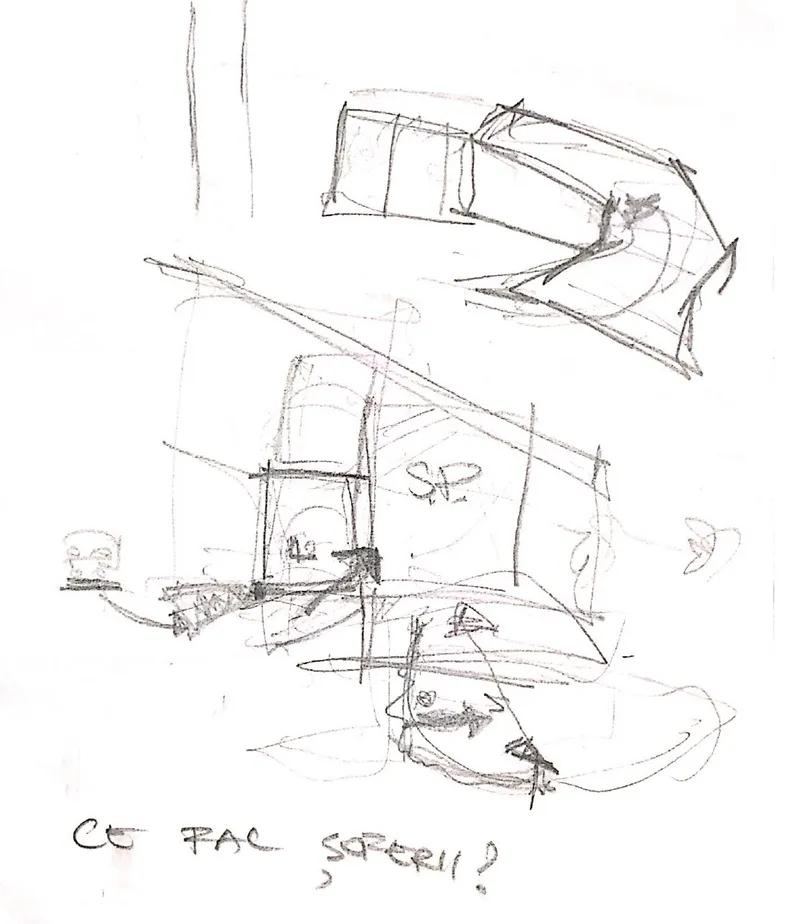
Also, the audience is put in an equal relationship with the stars that are going to perform, positioning them even in the position of spectator on parallelepipeds that do not contribute to the construction of the scroll platform and on the ramps that allow the continuity of the show to the outer space of the eastern garden to which hall 2 opens. The garden, arranged near the building, is continued by a wild area to the eastern top of the island. It can also be accessed through the sides of the building, on a concrete path.
Sustainability is also achieved through the roles performed by the sloping and planted roof. Rainwater drains from its slope, is captured in tanks, filtered and put in the circuit. The energy is provided by the solar panels positioned on it. The roof is superighed above the conference room, in order to ensure an acceptable interior height for the second room, taking into account the need to store the parallelepipeds at a height.
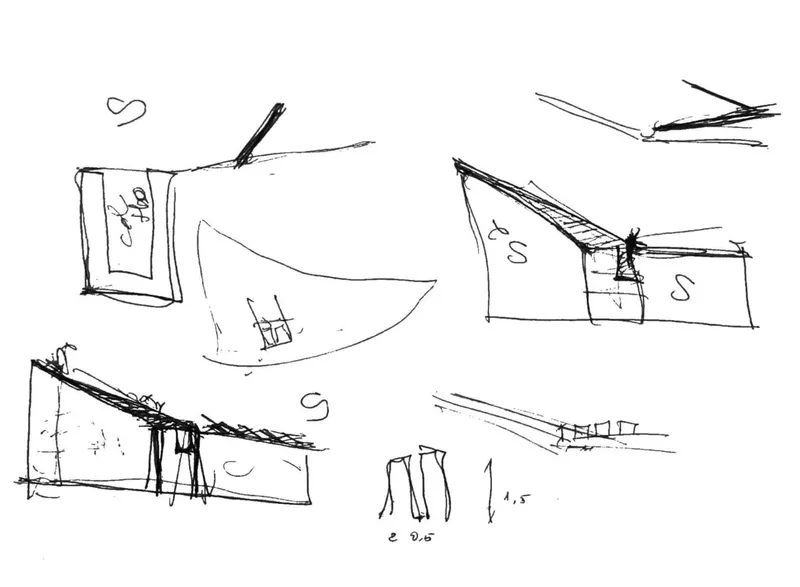
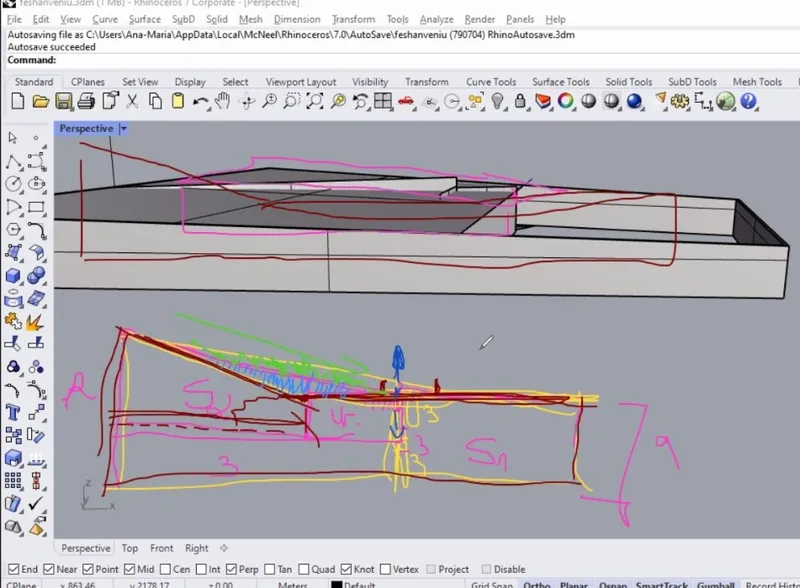
The materials used allow impressive opening: concrete, metal and glass. Glass is predominant, closes the walls of the trapeze drawn on the ground, is supported by metal poles and ensures natural ventilation with the opening of the panels. It allows perspective on the city and the surrounding nature – the water and the garden in the back – while leaving the sun to penetrate the interior. The windows are provided with drapes that can be lowered to darken the space if necessary.

Popular Articles
Popular articles from the community


ETEH Reworks the Shared Spaces of São Domingos School in Brazil Around Timber, Color and Hanging Plants
At São Domingos School in Brazil, 436 m² of hall, refectory and library are recast with timber joinery, a yellow and blue code and trailing greenery.

Juan García Correa, John González and Claudia Rueda Sink a Circular Amphitheater into a Manizales Engineering Building
On the La Nubia campus in Manizales, Colombia, the S1 Building folds labs and offices into a hillside of ramped lawns that double as a campus route.

Cube Design Draws an Ecological Corridor Between Two Shenzhen Hills with the Nankai Building
Beside Shenzhen's container docks, the Nankai Building pairs stacked balconies with a climbing green screen to connect two hillsides across its height.

graciastudio Turns a Viewless Tijuana Lot Inward Around a Courtyard of Concrete, Timber and Trees
In Tijuana, Jorge Gracia's GA2 House stacks a timber-clad private floor over exposed concrete and replaces a missing view with a planted interior patio.

Similar Reads
You might also enjoy these articles
The Rhythm of Seasons
A Farmers' Market Connecting Nature and the City

More Than a Building-Designing a Living System
More Than a Building-Designing a Living System
Base Beyond
DESERT COMPOUND ARID: TOURISM OF ABSENCE AND ABUNDANCE


Comments (1)
Please login or sign up to add comments
good job!