
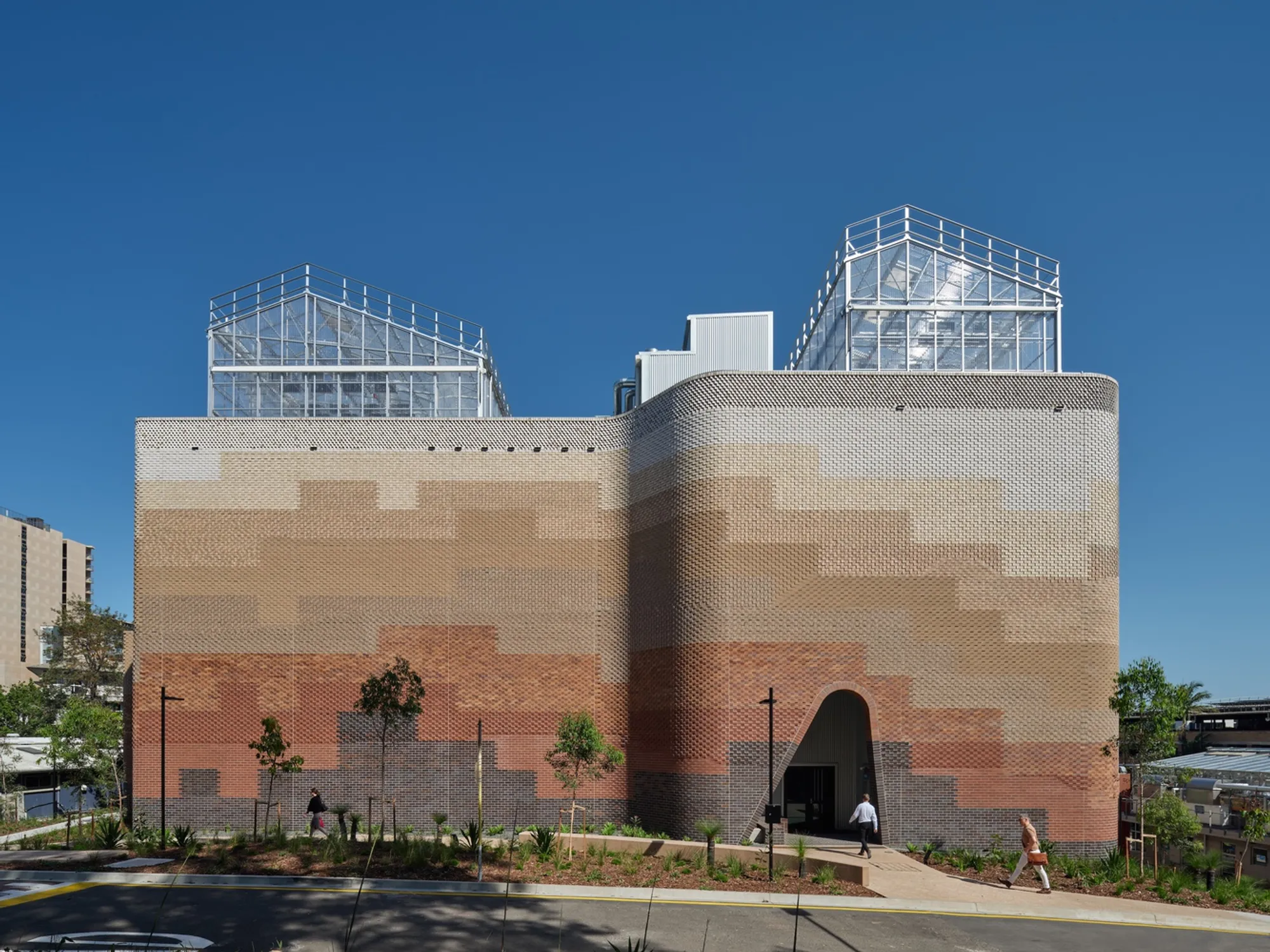
Plant Futures Facility – The University of Queensland by m3architecture
Plant Futures Facility by m3architecture integrates sustainable research spaces, modular design, and contextual brick architecture to advance climate-responsive agricultural innovation.


A Sustainable “Walled Garden” for the Future of Plant Science
Located on the University of Queensland’s Saint Lucia campus, the Plant Futures Facility by m3architecture represents a groundbreaking step in sustainable research infrastructure. Designed as a “walled garden”, this 5,266-square-meter facility supports advanced research into sustainable food, fibre, and fuel production—addressing global challenges of climate change and population growth through design and technology.
The project merges architectural expression, environmental performance, and scientific precision, forming one of Australia’s few true phytotrons—a research building capable of replicating and controlling diverse climatic conditions with exceptional accuracy.
Context and Concept: A Wall of Earth and Knowledge
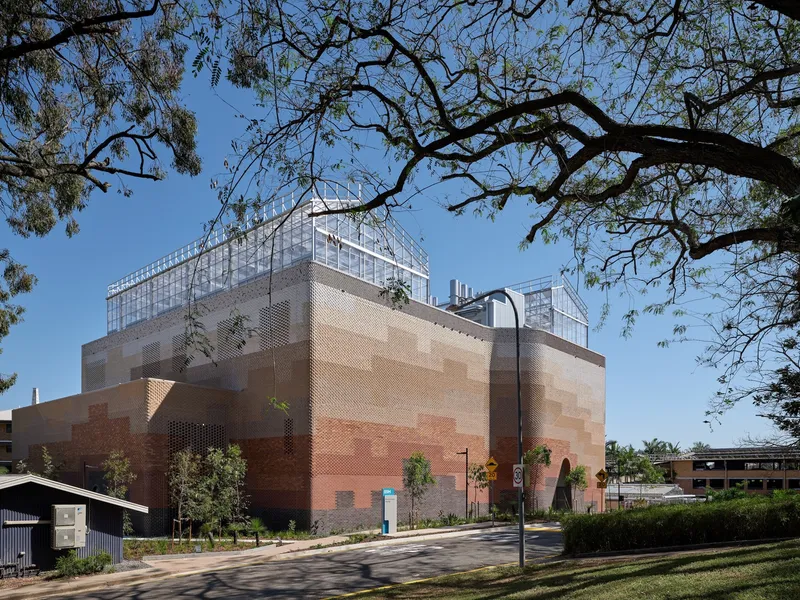
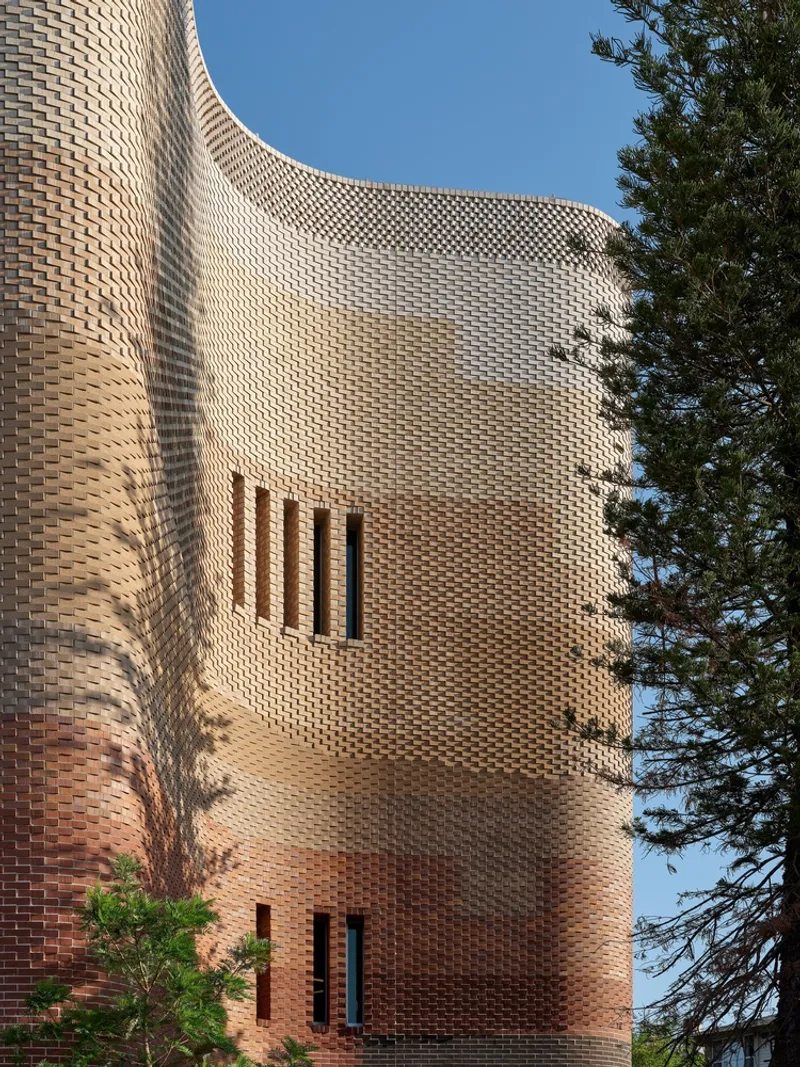
The design concept emerges from the soil itself. The building’s pixelated brick façade mirrors Queensland’s geological cross-section, symbolizing the deep connection between the region’s geology, ecology, and agricultural innovation. From afar, it reads as a solid stone wall; up close, it reveals intricate patterns and texture—a metaphor for the complexity of the natural systems it supports.
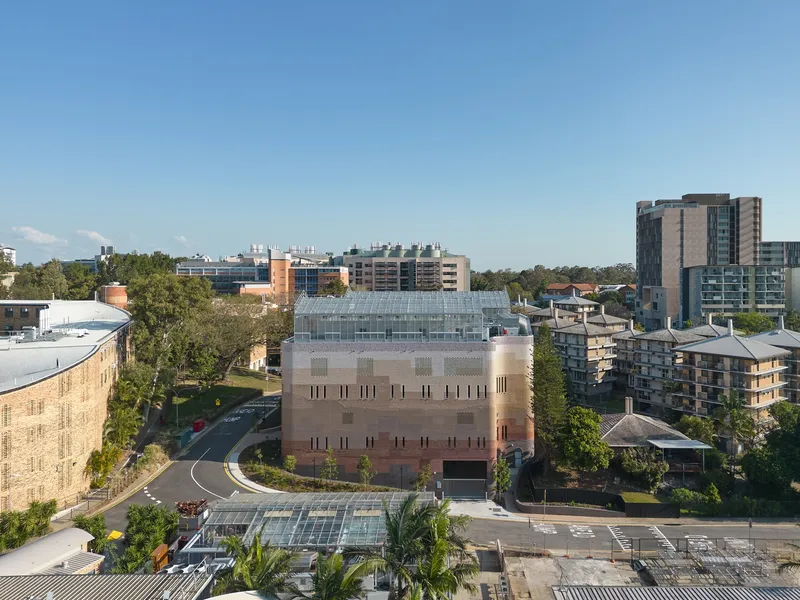
This contextual brickwork not only celebrates local materials and craftsmanship but also grounds the facility in its cultural and environmental landscape. A protected Norfolk Pine anchors the site, while the façade subtly shifts in texture to reveal changes in topography and soil composition.
Functional Design: A “Hotel for Plants”
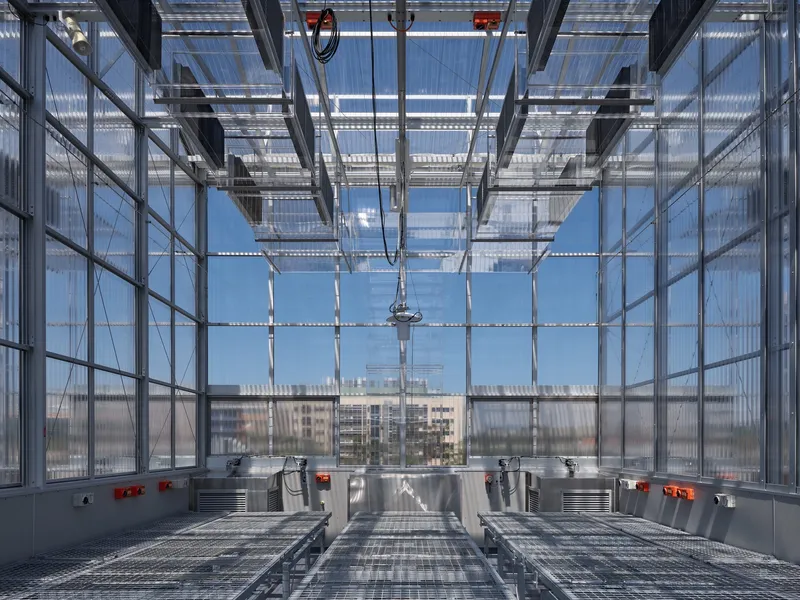
The Plant Futures Facility is both a scientific instrument and a living architecture. Functionally described as a “hotel for plants,” researchers can reserve high-performance grow rooms for specific periods of experimentation. The modular design is derived from the scale of a standard plant pot—8 pots form a tray, 5 trays form a trolley, and 6 trolleys define a small grow room.
This modular system ensures research precision, operational flexibility, and maximum spatial efficiency. Each controlled environment room, reach-in cabinet, and rooftop glasshouse can replicate climatic conditions—from arid deserts to humid tropics—with fine-tuned control over temperature, humidity, and light.
By vertically stacking service spaces above the grow rooms, m3architecture preserved valuable campus land for future development while maintaining rigorous biosafety and operational efficiency.
Architectural Expression and Interior Experience
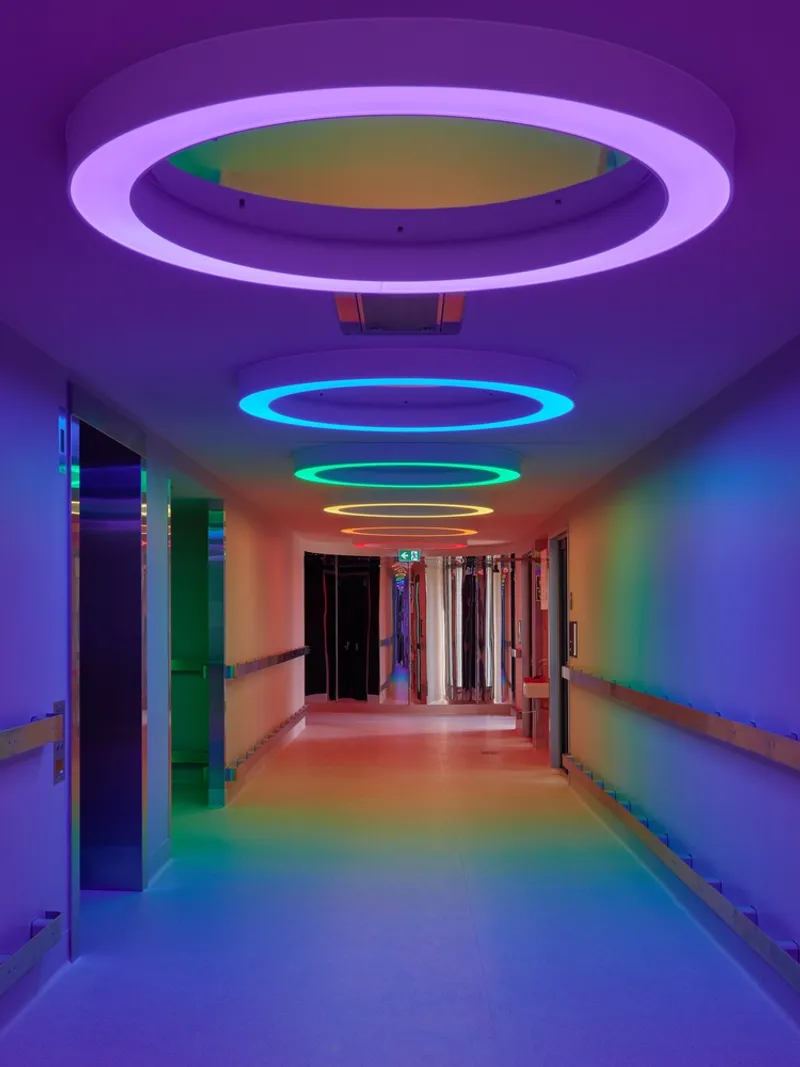
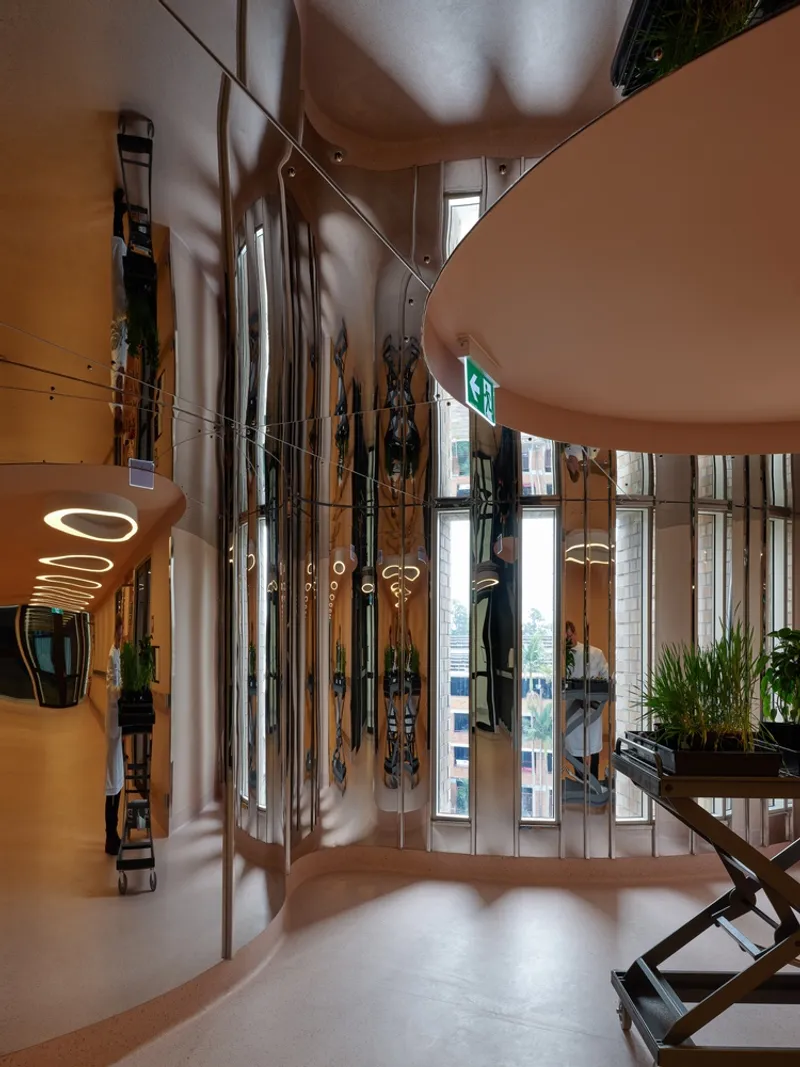
Internally, the building is a play of light, reflection, and perception. Stainless steel panels line key corridors, their mirrored surfaces distorting space and allowing researchers to detect unwanted pests on clothing before entering pest-free zones. Lighting dynamically changes throughout the day, subtly altering the color and mood of the corridors—a reminder that researchers, too, are participants in the experiments of light and growth.
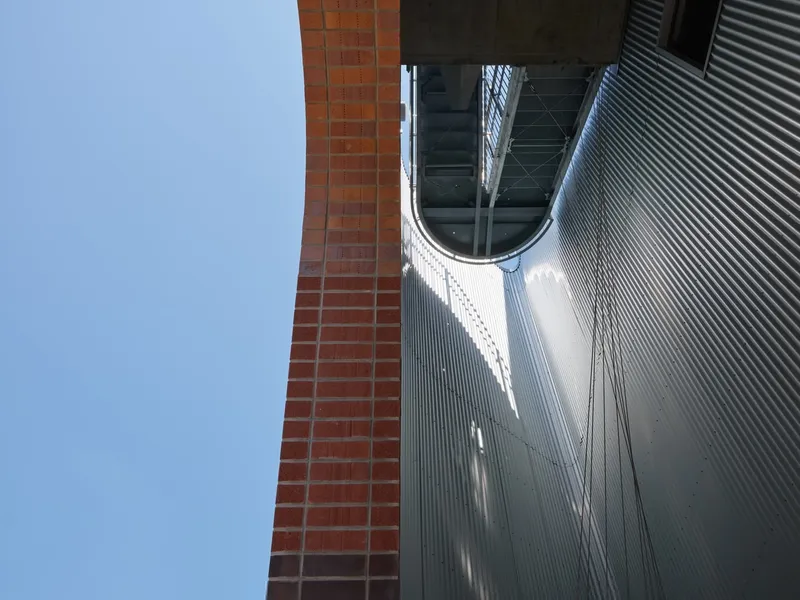
Referencing James Birrell’s nearby Hartley Teakle Building, m3architecture inverted the concrete roof and rainwater outlet into a sculptural entry arch, framing a captive garden illuminated by a skylight above. This gesture connects the built environment with the natural cycle of water and light.
Innovation and Environmental Performance
At the heart of the facility lies a series of pioneering technical solutions. The use of lightweight interstitial floors allows mechanical systems to be serviced without entering controlled environments, maintaining strict containment standards. Replacing traditional concrete floors with 150mm insulated panels reduces weight, cost, and embodied carbon while improving energy efficiency.
Fire engineering innovations permitted the use of plexiglass ducts and glasshouse panels, maximizing sunlight penetration for optimal plant growth while maintaining safety standards. The air-conditioning system, delivered through transparent ducts, prevents shading and ensures even light distribution.
These solutions collectively create a low-carbon, adaptable research environment, setting a benchmark for scientific architecture in Australia.
Sustainability and Connection to Country
The Plant Futures Facility embodies a holistic approach to sustainability—social, cultural, and environmental. Developed alongside the University of Queensland’s “Campuses on Countries: Aboriginal and Torres Strait Islander Design Framework”, the building integrates a First Nations interpretive landscape, ensuring that Indigenous knowledge and connection to Country are central to its identity.
Compact massing, modular construction, and lightweight materials minimize embodied carbon and material waste, while the energy-efficient envelope and limited occupancy reduce ongoing operational energy demands.
Through design, engineering, and cultural integration, the facility not only supports research into sustainable agricultural systems but also demonstrates sustainability in its very form—a building that grows knowledge as it nurtures life.
The Plant Futures Facility stands as a model for future-ready research architecture—an intersection of science, sustainability, and design excellence. By grounding innovation in material honesty and environmental awareness, m3architecture has created more than a building: a living laboratory that cultivates the conditions for planetary resilience.
All photographs are works of Christopher Frederick Jones




Popular Articles
Popular articles from the community

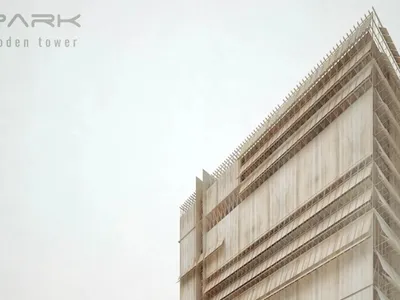
EW PARK: Sustainable Architecture Reimagines the Future of Urban Parking
EW PARK reimagines city parking as a modular wooden tower combining automation, solar energy, electric mobility, and adaptable urban design.
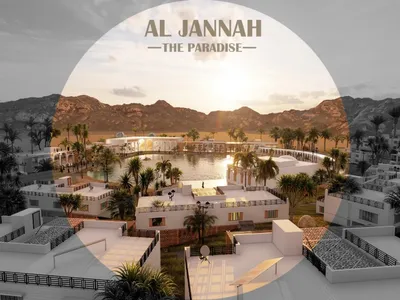
AL-JANNAH: Sustainable Architecture and Permaculture for Afghan Widows
AL-JANNAH uses sustainable architecture and permaculture to create resilient oasis of housing, learning, work and renewal for Afghan widows.

Conexión: Biophilic Design Reimagines High-Rise Living in Hong Kong
Conexión reimagines high-rise living in Hong Kong through biophilic design, green facades, shared spaces, daylight, water and nature within.

The Ocean Hive: Sustainable Architecture for a Self-Sufficient Civilization at Sea
The Ocean Hive imagines sustainable architecture at sea, where modular habitats, algae, wave power and ocean waste sustain a growing colony.


Similar Reads
You might also enjoy these articles


Hodi-Mandai Geram
Project Function: Preservation and revitalization of the Intangible heritage and socio-spatial identity of the Hodi by Housing, Cultural Memory Center, Sacred Grove, landscape, local tourism economy


Olio Towers: A Mid-Rise for Performers That Fuses Housing, Rehearsal, and Stage
Located blocks from Houston's Theater District, this modular tower stacks living units around a central performance atrium.

Oasis: Modular Green Housing Carved into Dhaka's Urban Fabric
A shortlisted Plugin Housing entry reclaims unauthorized settlements in Dhaka with stepped concrete volumes, green roofs, and ventilation-driven design.

Black Hole: A Floating Megastructure for the Post-Physical Era
Emiliano Mazzarotto envisions a spherical, self-scaling arena where e-sports, digital hotels, and holographic stadiums replace traditional public space.


Explore Educational Building Competitions
Discover active competitions in this discipline


Challenge to design public laboratory


Challenge to reimagine the Iron Throne


Photograph architecture without architects


Illustrate the lost glory of Angkor Wat - Render Challenge
Comments (0)
Please login or sign up to add comments
No comments yet. Be the first to comment!