

Plant Nursery in Belo Horizonte: A Collaborative Community Architecture Project
The Plant Nursery in Belo Horizonte fosters community collaboration, sustainable urban gardening, and educational architecture using functional wooden structures and participatory design.


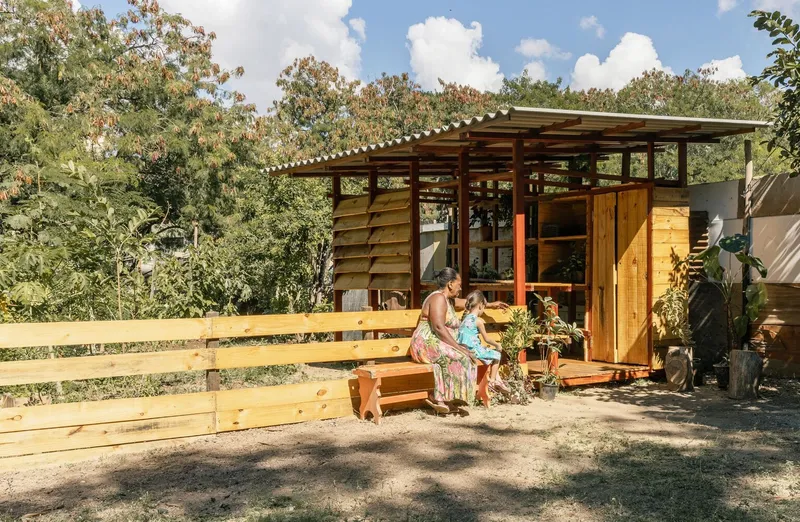
The Plant Nursery in the Fazendinha informal settlement, located in the Calafate neighborhood of Belo Horizonte, Brazil, stands as a remarkable example of community-driven architecture and academic collaboration. Designed and implemented by PFLEX - Escola de Arquitetura at UFMG, under the guidance of Professor Hugo Alkmim de Matos, this project combines practical architectural education with meaningful social impact. Completed in 2024, the initiative engages students, technicians, local supporters, and community residents in a hands-on construction process that merges learning with real-world application.
Context and Purpose
The Plant Nursery emerged from a desire to enhance local urban agriculture and community self-management. Within the settlement, the community garden became a central hub for interaction, food production, and cooperative efforts, particularly strengthened during the pandemic in 2020. Recognizing the need for organized, functional infrastructure, the project aimed to design a small yet efficient wooden structure that supports the garden’s operations while fostering collaborative community engagement.
By prioritizing practical functionality and safety, the nursery offers a space that improves working conditions for residents. The structure efficiently organizes the activities of planting, maintaining, and storing seedlings, ensuring that the garden can continue to thrive as a sustainable urban farming hub.
Architectural Design and Features
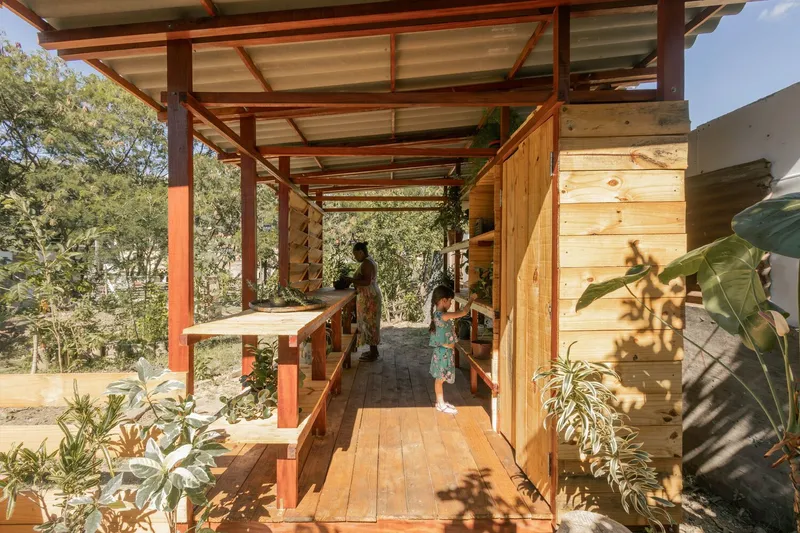
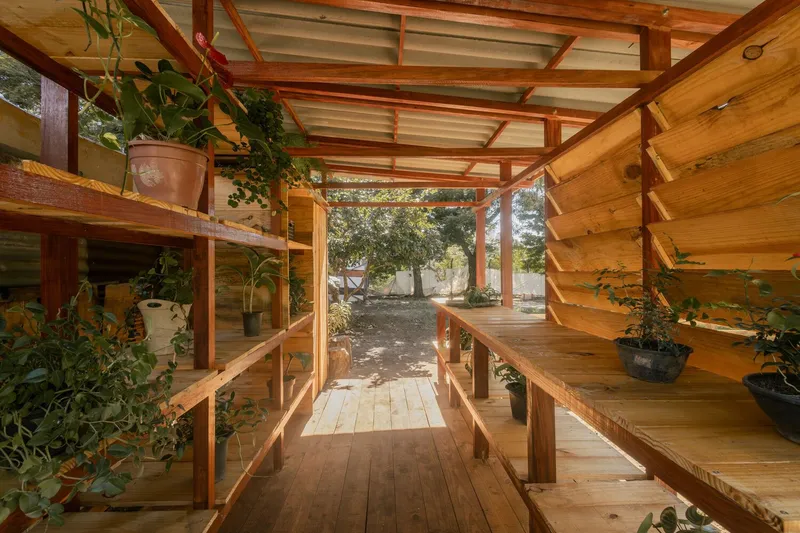
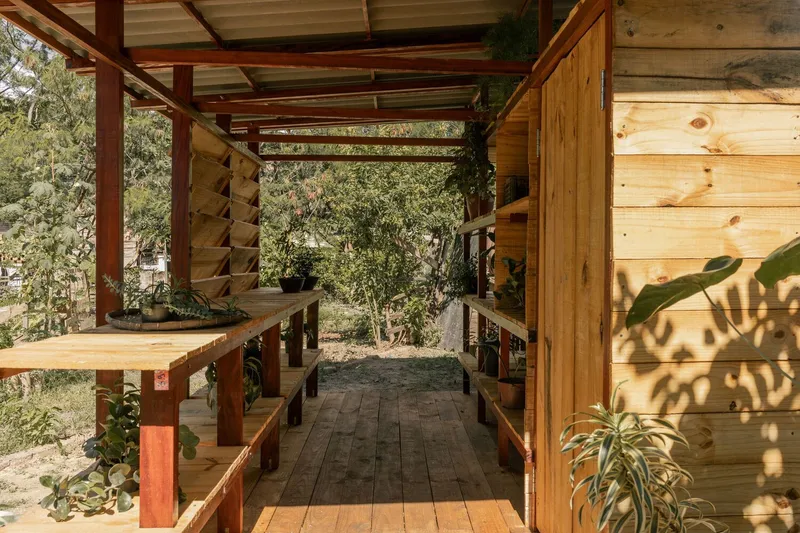
Covering approximately 18 m², the nursery includes a covered area with direct access to the vegetable garden. The layout integrates functional elements such as:
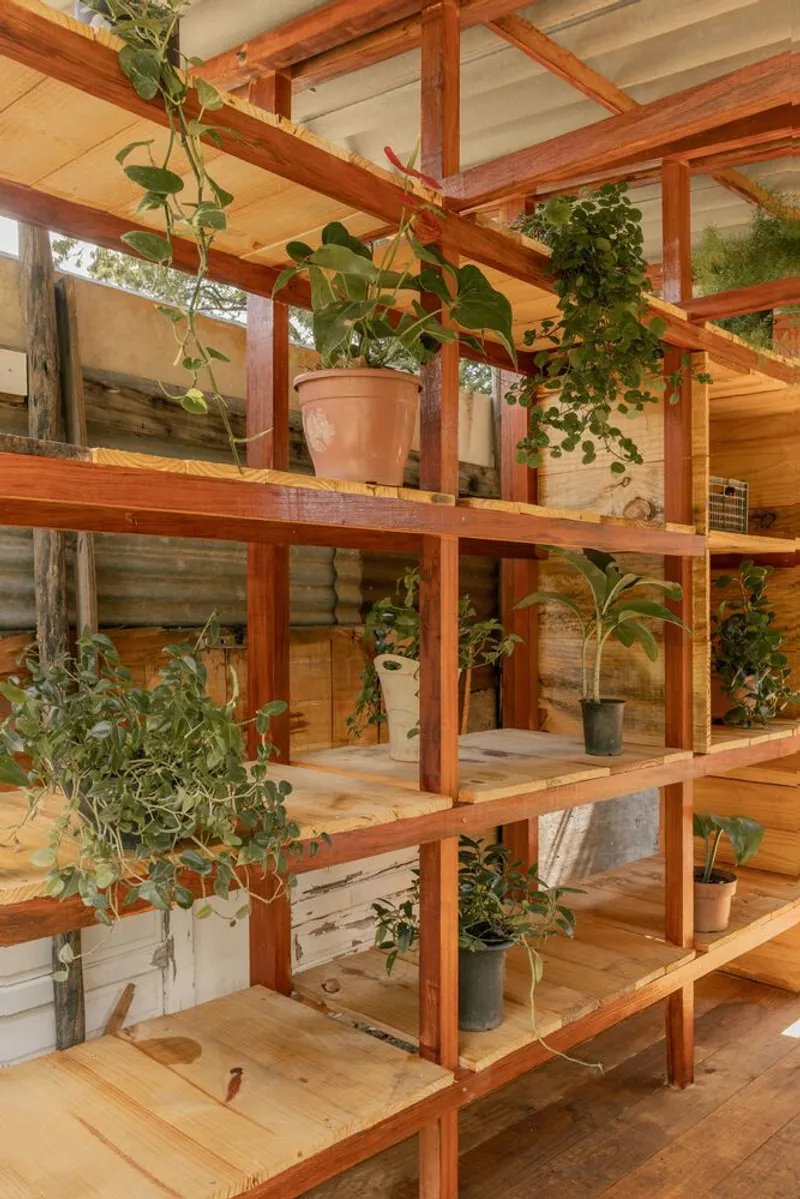
- Shelves and benches for seedling production and storage
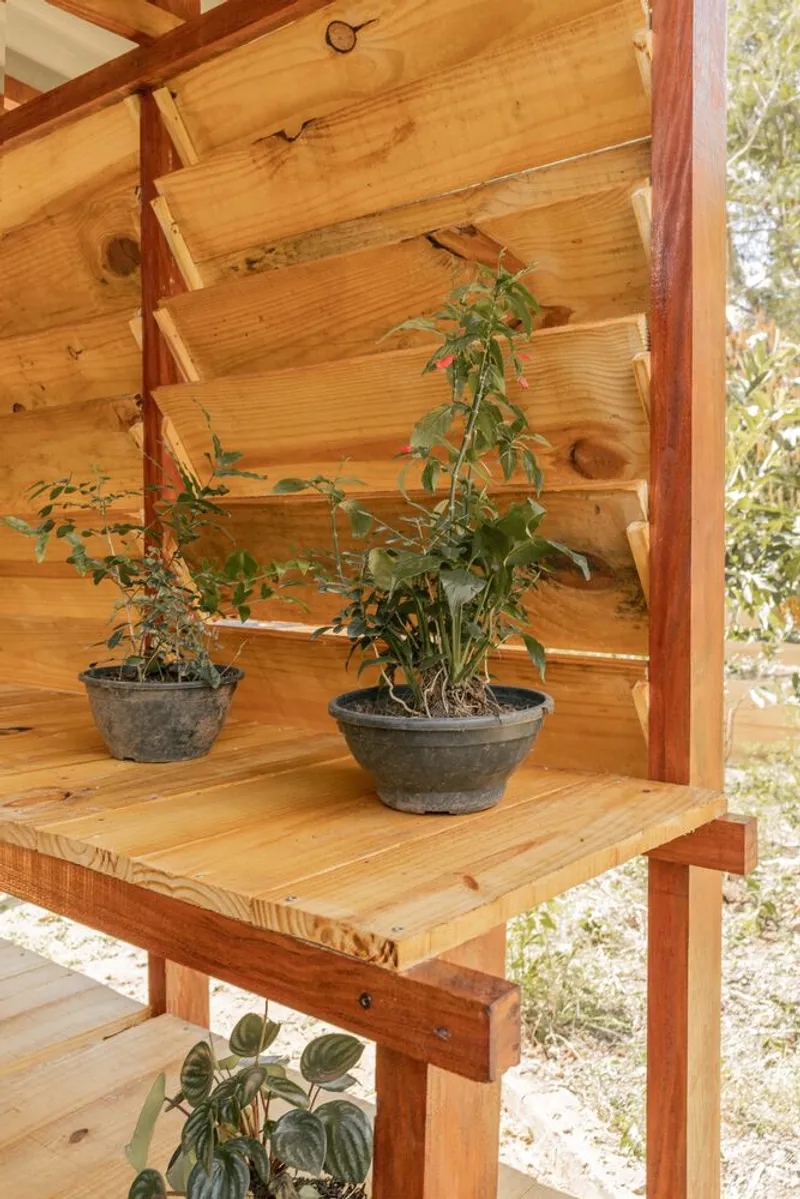
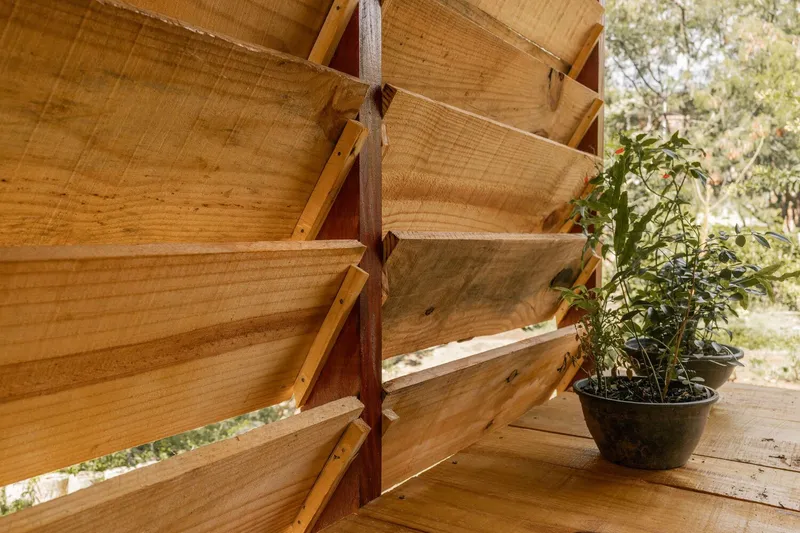
- Louvers to filter morning sunlight, enhancing working comfort
- A tool storage cabinet for organized equipment management
The design reflects a human-centered approach, where every spatial decision supports the daily routines of garden work while maintaining structural integrity and safety.
Materials and Construction
The construction employs locally sourced wood, demonstrating a commitment to sustainability and material efficiency:
- Cupiúba wood forms the main structural components, including five frames, horizontal braces, and roof purlins.
- Pinewood was used for the floor deck, storage cabinet, and sun-filtering louvers.
The choice of materials not only provides durability but also highlights a sensitive, context-driven architectural approach, adapting traditional construction techniques to meet modern social needs.
Educational Impact and Social Integration
One of the most significant aspects of this project is its role in connecting academic practice with community development. By involving students directly in design, fabrication, and assembly, PFLEX fosters experiential learning that goes beyond theoretical study. Simultaneously, the community gains tailored infrastructure that reflects its practical needs, strengthening the bond between the university and society.
The initiative exemplifies how educational architecture projects can be adaptable to diverse urban contexts, providing replicable models for similar socially engaged construction projects in vulnerable communities
The Plant Nursery by PFLEX - Escola de Arquitetura at UFMG is a compelling example of sustainable, community-oriented architecture. Its design emphasizes collaboration, functionality, and social responsibility, serving both as a practical workspace for the community garden and a learning platform for students. Through innovative use of materials, thoughtful spatial planning, and participatory construction, the project illustrates how architecture can empower communities while advancing educational objectives.
All photographs are works of
Sofia Vasconcelos


Popular Articles
Popular articles from the community


The Amber Palace Opera: A Geological Fiction Surfaces on Tallinn's Baltic Waterfront
Pierre Brillard reimagines a Baltic legend as a public landscape, opera house, and waterfront promenade rooted in Tallinn's coastal identity.
Opera by the Sea Estonia: Three Shells Dissolving Architecture into Tallinn's Coastline
A winning opera house proposal replaces monumental form with interconnected shells that blur the boundary between building, park and Baltic Sea.
Cloaked Colonization: A Mobile Underwater Habitat That Moves Like a Fish
Micah Abaya's shortlisted EHC Pacific entry reimagines ocean settlement as a dispersed network of self-sustaining architectural organisms.

Opera on the Sea: Driftwood Logic Shapes a Timber Opera House on Estonia's Coast
Trevor Orgill's opera house translates the entangled drift of floating timber into a civic building where wood, water, and music converge.

Similar Reads
You might also enjoy these articles


FAMM Arquitectura Organizes Ten Villas Around Courtyards and Jungle in Nosara, Costa Rica
El Molino pairs two elongated volumes with deep overhangs and timber louvers to build a compact coastal community five minutes from the beach.

Oscar Niemeyer's Ibirapuera Park Pavilions Define São Paulo's Cultural Identity in Concrete and Curve
A constellation of modernist volumes set within São Paulo's most important urban park, conceived for the city's 400th anniversary in 1954.

Sanjay Puri Architects Wraps a Jaipur Office Tower in Capsule-Shaped Green Buffers
A nine-level climate-responsive workplace near Jaipur Airport uses stacked planter terraces and aluminium screens to fight 40°C heat.
RHO Converts a Berlin Spree-Side Industrial Courtyard into Enkime's 1,000 m² Agency Headquarters
A social media agency's new home in Charlottenburg trades glossy branding for concrete waffle ceilings, glazed tile, and sheer curtains.

Explore Community Garden Competitions
Discover active competitions in this discipline

Challenge to reimagine the Iron Throne

Photograph architecture without architects

Illustrate the lost glory of Angkor Wat - Render Challenge

Design challenge to reuse E-waste
Comments (0)
Please login or sign up to add comments
No comments yet. Be the first to comment!