

Po-Yo House by MMCV: A Contemporary Concrete Home Reimagined in Buenos Aires
Po-Yo House transforms an existing Buenos Aires home with exposed concrete, split-level interiors, sculptural circulation, and serene indoor-outdoor spaces for contemporary urban living.


Reinventing an Existing Home with Bold Materiality and Spatial Clarity
Po-Yo House by MMCV is a transformative residential renovation located in Villa Devoto, Buenos Aires. Conceived as a contemporary reinterpretation of an existing home, the project blends raw concrete expression, sculptural architectural gestures, and thoughtful spatial sequencing to create a refined, modern urban residence. With a total area of 250 m², the home embraces light, height, and fluid circulation, turning a once-traditional structure into a serene modern sanctuary.
This architectural renovation prioritizes exposed concrete, visual continuity, and indoor-outdoor integration, redefining domestic life through minimalism and spatial depth. MMCV preserves the memory of the original house while giving it a bold new identity rooted in material honesty and geometric clarity.
Context and Design Approach: Respecting Heritage While Looking Forward
A Dual Vision of Preservation and Innovation
The project began with a clear mission — to reclaim the spatial virtues of the original home while amplifying its experiential qualities. Rather than demolish the structure, MMCV strategically removed interior partitions, exposing the existing concrete bones and enhancing natural light and circulation.
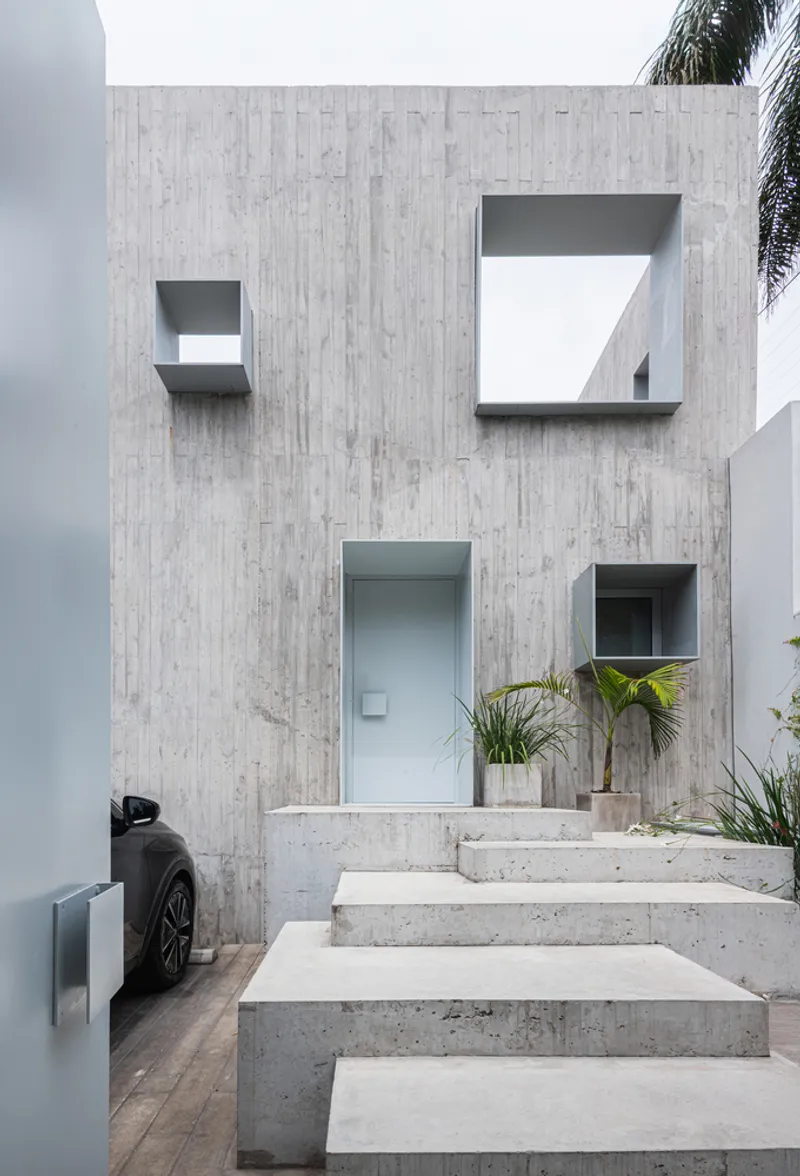
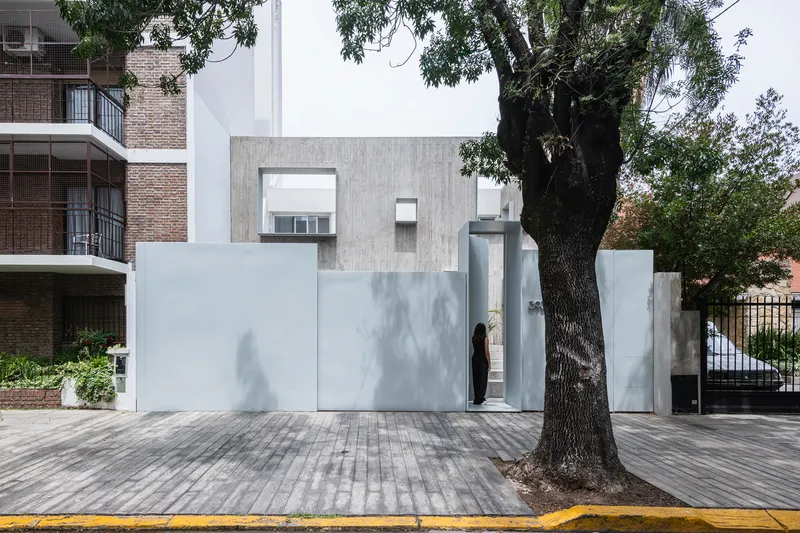
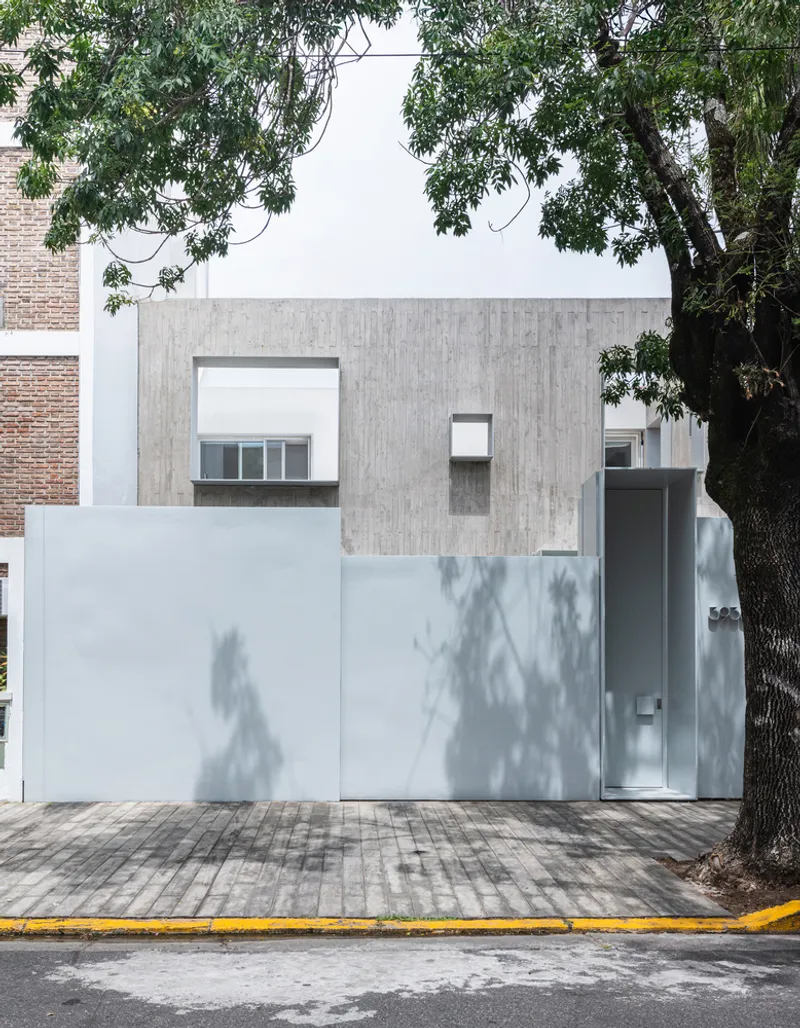
The external envelope is redefined as a monolithic concrete box, imbuing the house with strength, permanence, and a sculptural presence within its urban context. The form acts as both memory and monument, grounding the renovation in the language of timeless modernism.
Spatial Experience: Layered Circulation and Elevated Light
A Threshold Between City and Home
Visitors enter through a striking 3.5-meter-high folded steel gate, stepping into a small forecourt that operates as a transitional buffer between street and interior. This patio extends the public realm inward, creating a contemplative pause before entry.
A sequence of concrete volumes frames the journey, heightening awareness of spatial rhythm and grounding the home in a tactile architectural experience.
Interior Organization and Vertical Movement
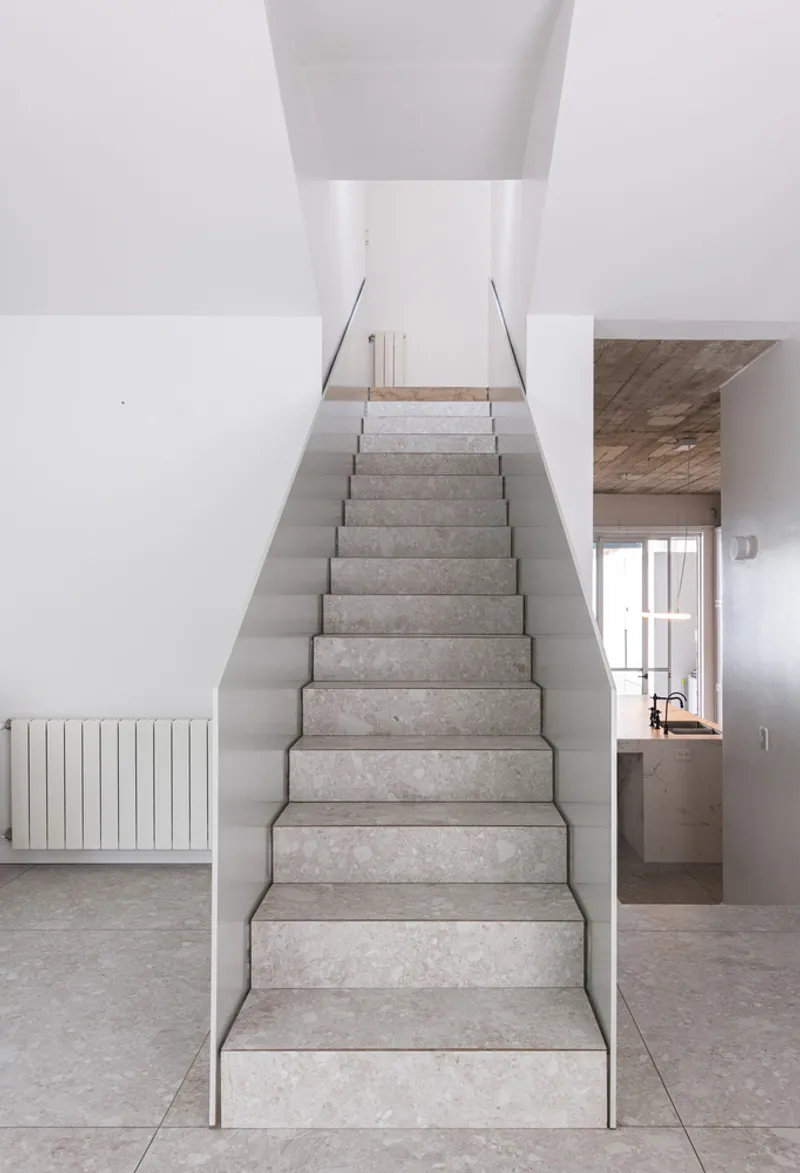
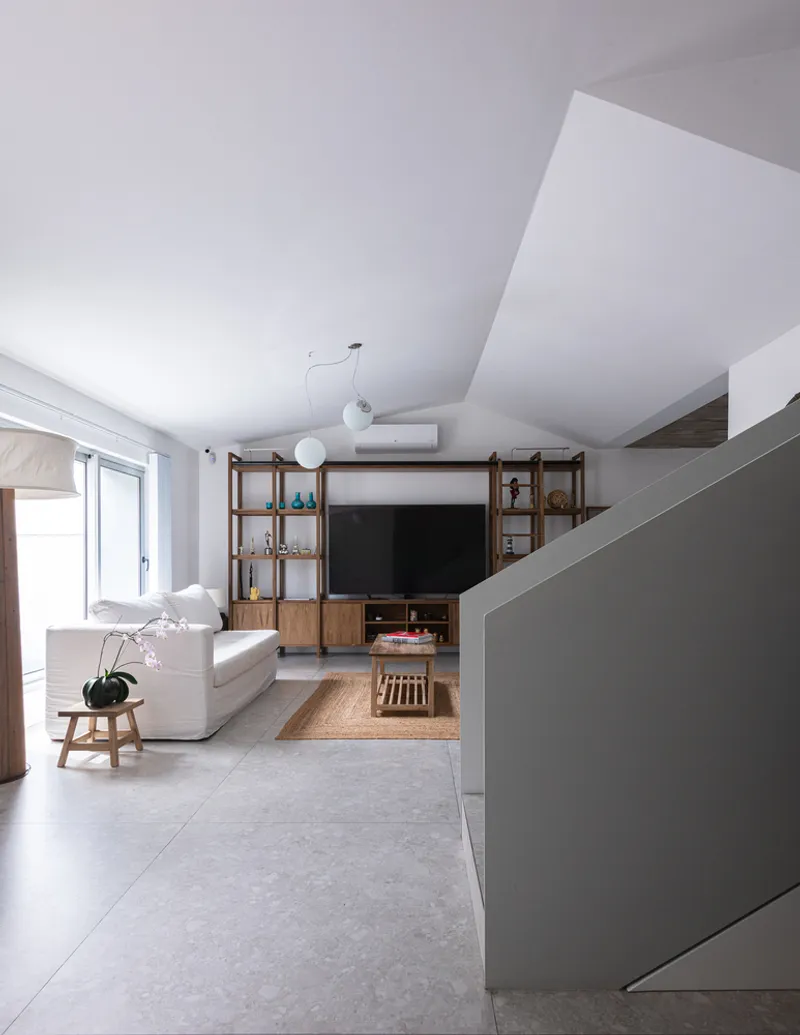
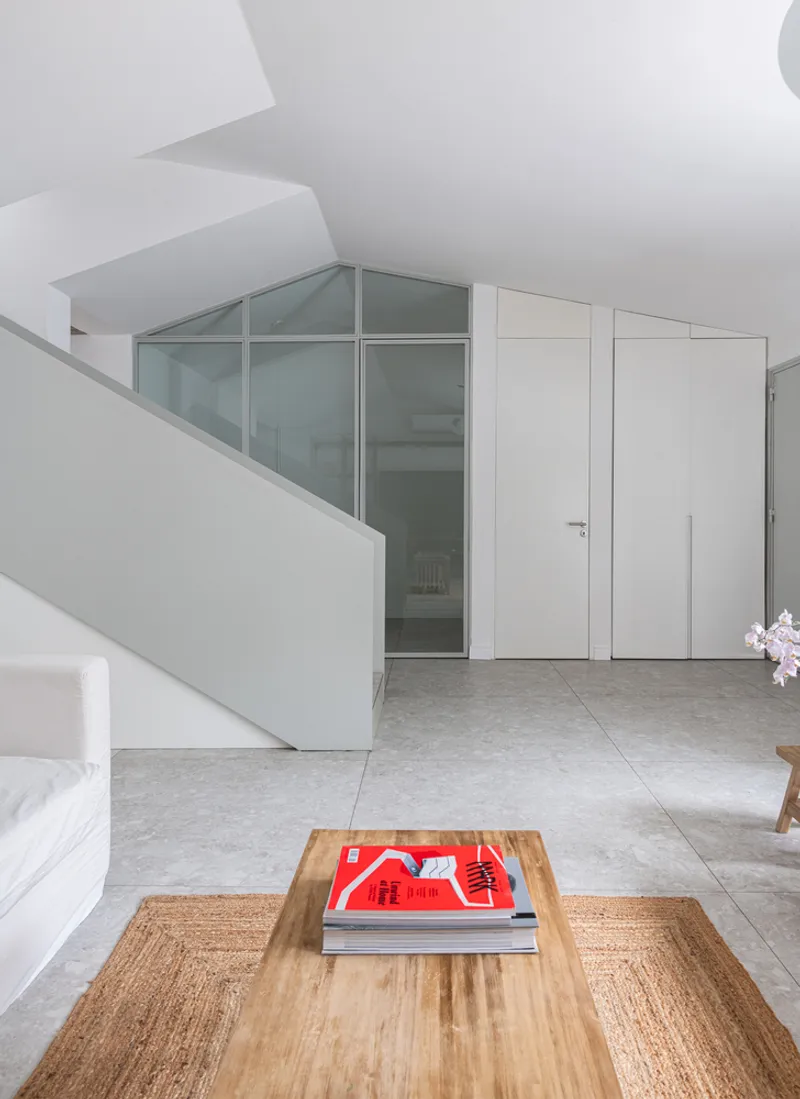
The interior unfolds across split-level platforms, emphasizing movement, perspective, and spatial depth.
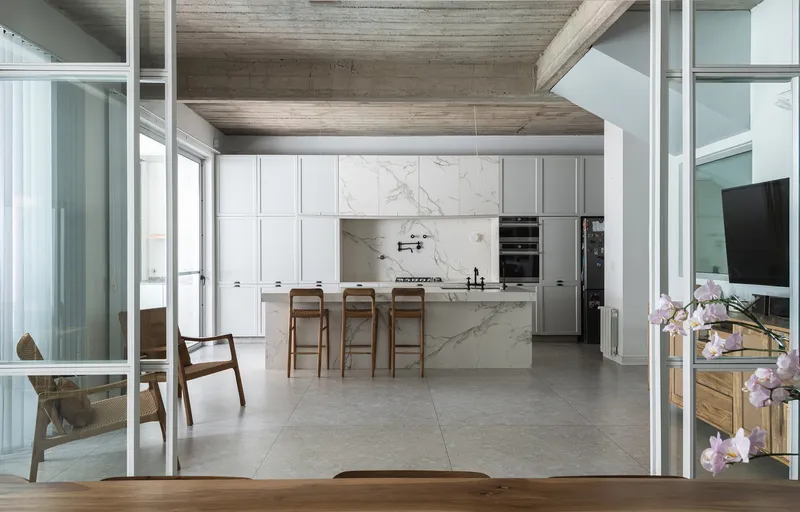
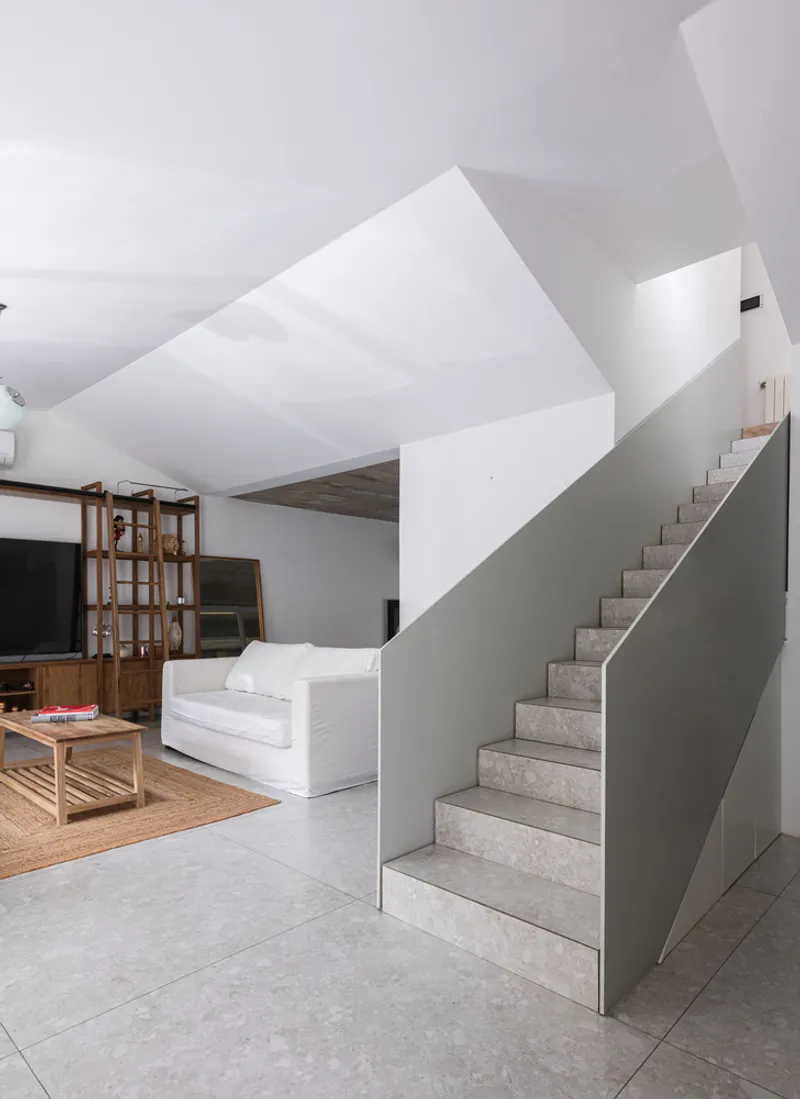
• The main living room anchors the entry level • A few steps below, the kitchen and dining area open to a lush garden and pool • A sculptural staircase leads upward to the master suite and two bedrooms • A second stair descends to a basement playroom and laundry area
These staggered levels maintain visual connectivity, reinforcing a dynamic interplay of light, shadow, and volume.
Material Palette: Serene, Timeless, and Sensory
Concrete Warmed by Wood and Refined Finishes
The home balances robust structure with tactile materials:
• Exposed concrete establishes permanence and structure • Stone-like flooring enhances textural depth • Anodized aluminum frames add precision and shadow • Custom wood furniture brings warmth and quiet elegance
Metal-framed openings filter light and cast rhythmic shadows across the façade, while the staircase — piercing the sloped ceiling — becomes an architectural centerpiece, sculpting light and lines across the interior.
A Home Rooted in Memory and Modernity
Po-Yo House stands as more than a renovation — it is a respectful reimagining of architecture through spatial clarity, material honesty, and urban refinement. MMCV demonstrates how adaptive reuse can preserve identity while crafting a new narrative of contemporary living.
This project embodies the evolving spirit of Buenos Aires residential architecture, highlighting the power of concrete minimalism, adaptive reuse, and crafted detail in shaping modern domestic environments.
Po-Yo House by MMCV in Buenos Aires transforms an existing home into a sculptural concrete residence featuring split-level design, indoor-outdoor living, and timeless materiality. A masterful example of contemporary renovation and adaptive reuse in Argentina.
All photographs are works of Juan Muller




Popular Articles
Popular articles from the community


The Earth Pod: 3D Printed Homes for Resilient Refugee Communities
The Earth Pod reimagines refugee housing through 3D printed homes made from clay, combining resilience, self-sufficiency, and rapid shelter.
EW PARK: Sustainable Architecture Reimagines the Future of Urban Parking
EW PARK reimagines city parking as a modular wooden tower combining automation, solar energy, electric mobility, and adaptable urban design.

The Musturak Paradise: Senior Living Architecture for a Connected Future in Temara, Morocco
The Musturak Paradise reimagines senior living architecture in Temara via private homes, social spaces, culture, community, and shared care.

Hill & Cross Opera: Sculptural Opera House Architecture Shaped by Tallinn’s Landscape and Identity
Hill & Cross Opera reimagines opera house architecture in Tallinn through its sculptural hill, civic plaza, glass wave and a luminous cross.


Similar Reads
You might also enjoy these articles


Hodi-Mandai Geram
Project Function: Preservation and revitalization of the Intangible heritage and socio-spatial identity of the Hodi by Housing, Cultural Memory Center, Sacred Grove, landscape, local tourism economy


Olio Towers: A Mid-Rise for Performers That Fuses Housing, Rehearsal, and Stage
Located blocks from Houston's Theater District, this modular tower stacks living units around a central performance atrium.

Oasis: Modular Green Housing Carved into Dhaka's Urban Fabric
A shortlisted Plugin Housing entry reclaims unauthorized settlements in Dhaka with stepped concrete volumes, green roofs, and ventilation-driven design.

Black Hole: A Floating Megastructure for the Post-Physical Era
Emiliano Mazzarotto envisions a spherical, self-scaling arena where e-sports, digital hotels, and holographic stadiums replace traditional public space.

Explore Housing Competitions
Discover active competitions in this discipline



Challenge to reimagine the Iron Throne


Photograph architecture without architects


Illustrate the lost glory of Angkor Wat - Render Challenge


Design challenge to reuse E-waste
Comments (0)
Please login or sign up to add comments
No comments yet. Be the first to comment!