
Porous Abode by Rahul Pudale Design: A Light-Filled Urban Home Rooted in Climate-Responsive Architecture
A narrow urban home with terracotta façade, light-filled courts, sleek metal stair, and climate-responsive design creating airy, connected family spaces.


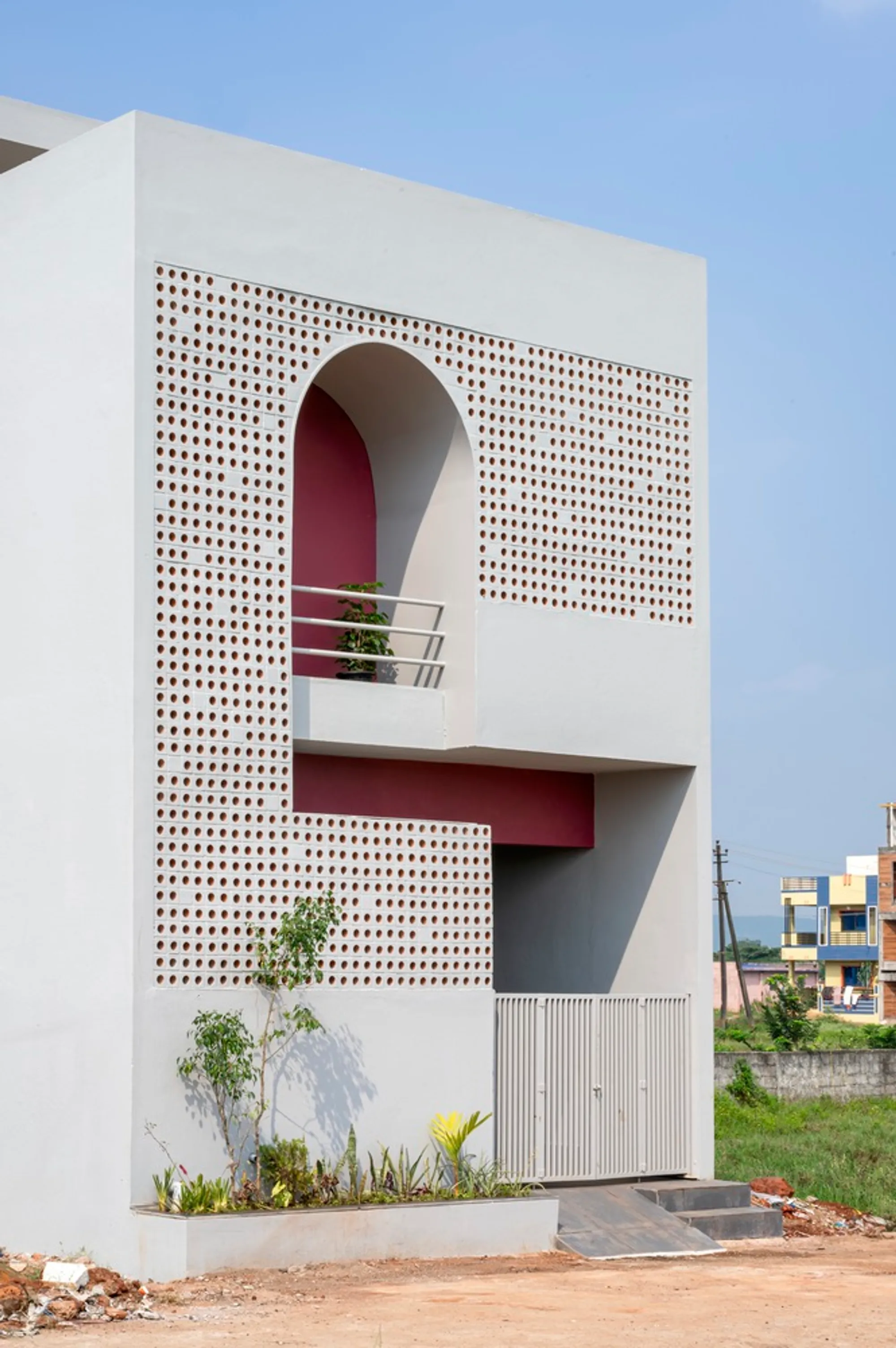
Porous Abode by Rahul Pudale Design is a thoughtful residential intervention that transforms a narrow 6-by-15-meter plot in Belagavi, India into a layered, light-filled home for a young family of four. Completed in 2024, the 190-square-meter house demonstrates how compact sites in rapidly densifying Indian neighborhoods can be reimagined through sensitive planning, passive strategies, and a tactile material palette. With photography by Atik Bheda, the project captures the evolving character of Belagavi’s urban edge while responding to the client’s desire for openness, comfort, and long-term adaptability.
Designing for a Narrow Urban Plot
Located in the expanding periphery of Belgaum, the site presented immediate constraints typical of emerging Indian residential streets: limited frontage, close proximity to neighbors, and restricted natural light entering from only the two narrow sides. Instead of treating these limitations as barriers, the design team used them as opportunities to create a porous interplay of voids, courts, and light wells. This strategy anchors the project, guiding the spatial organization and enabling daylight to permeate deep into the home throughout the day.
Courtyards as Light Wells and Social Anchors
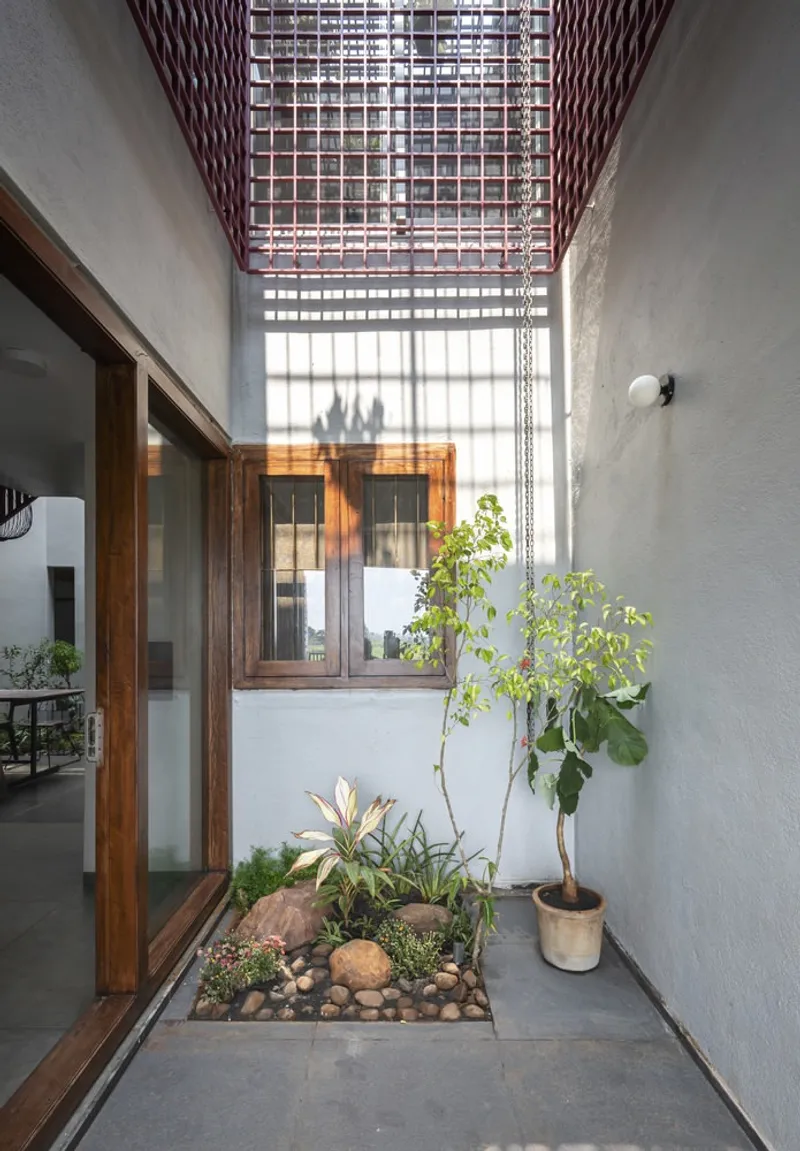
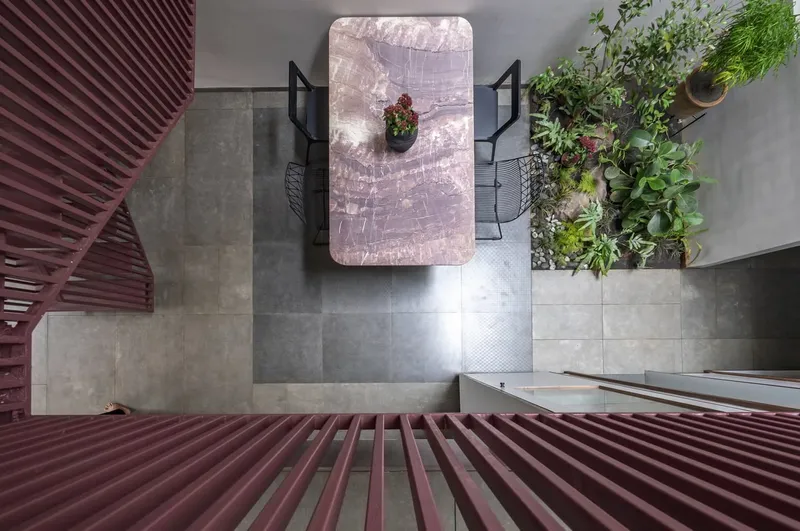
At the heart of the architectural concept lies the integration of carefully placed courtyards that function simultaneously as light wells, ventilation shafts, and pockets of greenery. These courts soften the home’s compact footprint while cultivating a direct relationship between architecture and landscape. The courts offer moments of pause, allowing sunlight and fresh air to filter inside and creating a more breathable, comfortable living environment.
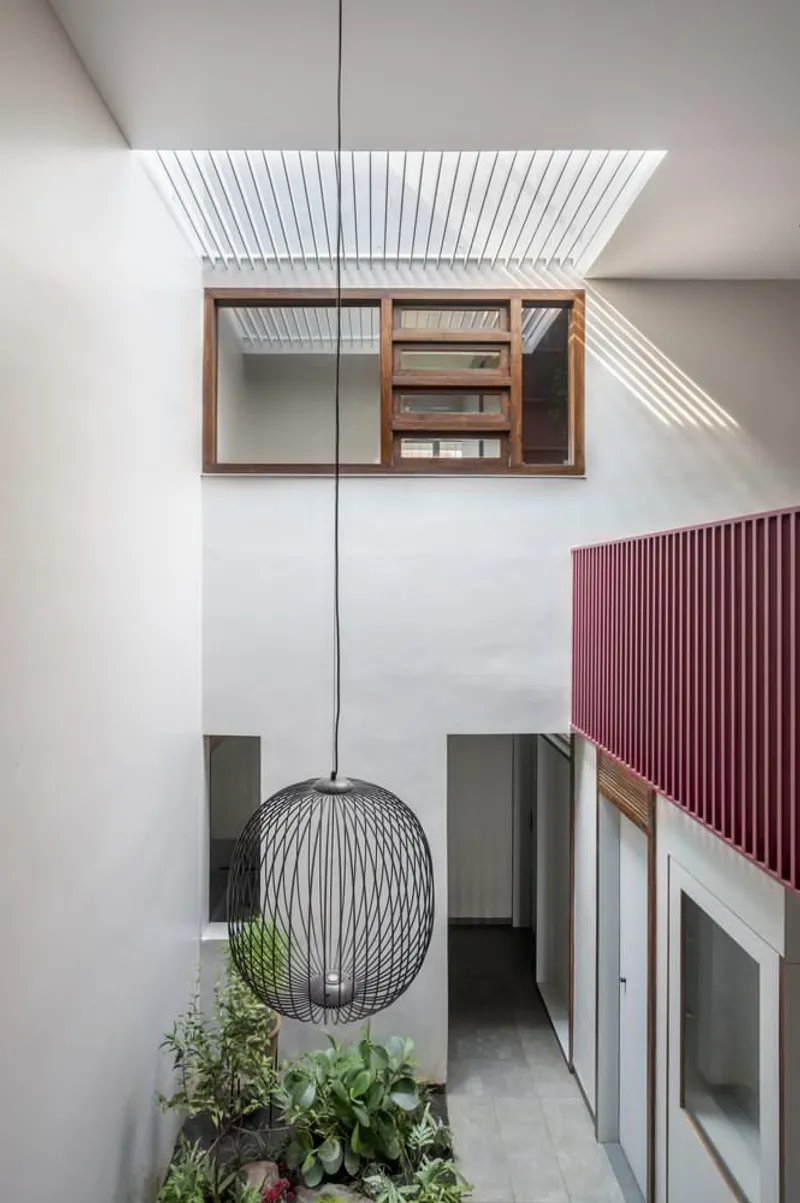
The double-height entrance court sets the tone for the spatial experience. As residents and guests enter, they are greeted by an uplifting vertical volume where natural light cascades through a suspended metal grill adorned with lush creepers. This transitional space establishes a sense of calm and openness before unfolding into the rest of the home.
Dynamic Circulation Centered on a Sleek Metal Staircase
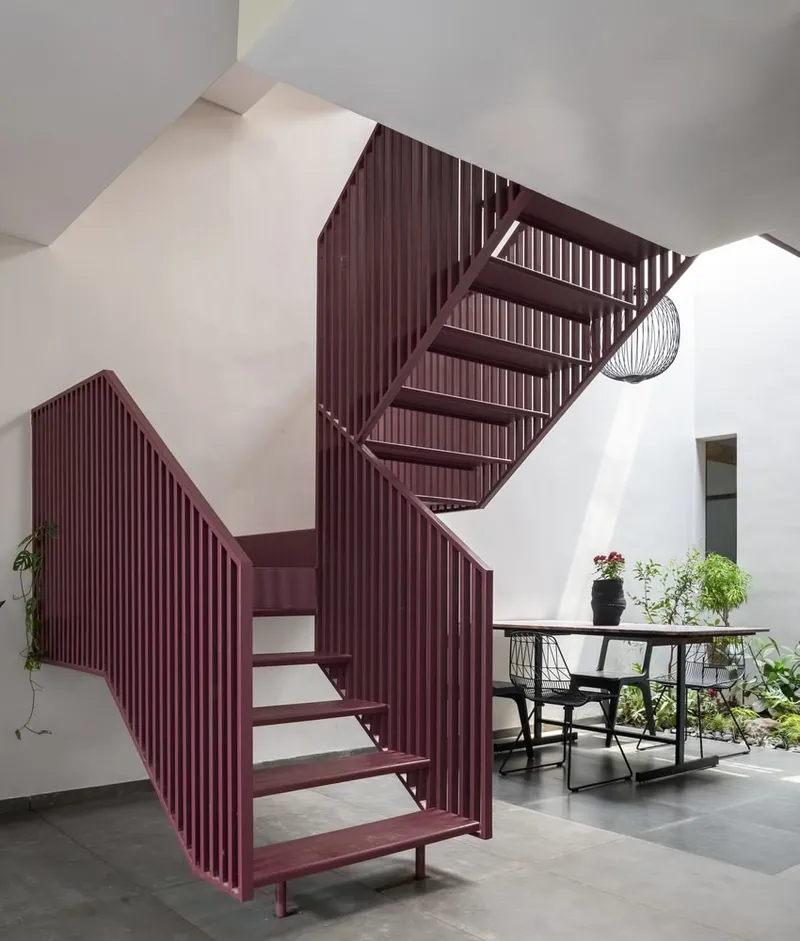
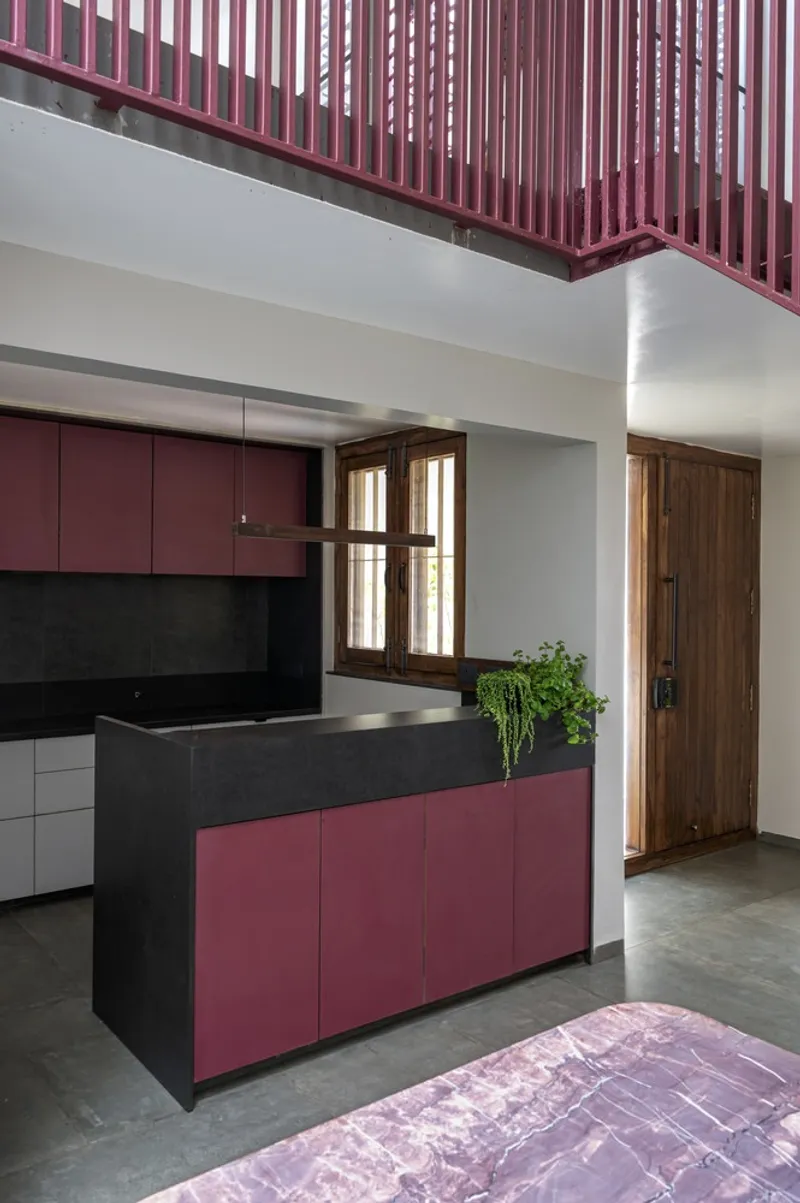
A defining architectural gesture is the elegant metal staircase that becomes the visual anchor of the interior. Positioned alongside the double-height dining court, the stair acts as a sculptural element, simple yet expressive, guiding movement across floors while enhancing spatial fluidity. Its lightweight geometry contrasts with the solidity of surrounding walls and terraces, creating a playful tension between mass and permeability.
All primary rooms are planned around the two major courts, ensuring that circulation, visual connectivity, and natural light work together. The design creates intuitive movement patterns while maintaining intimacy and privacy where needed.
Terracotta Perforated Façade as a Passive Cooling Device
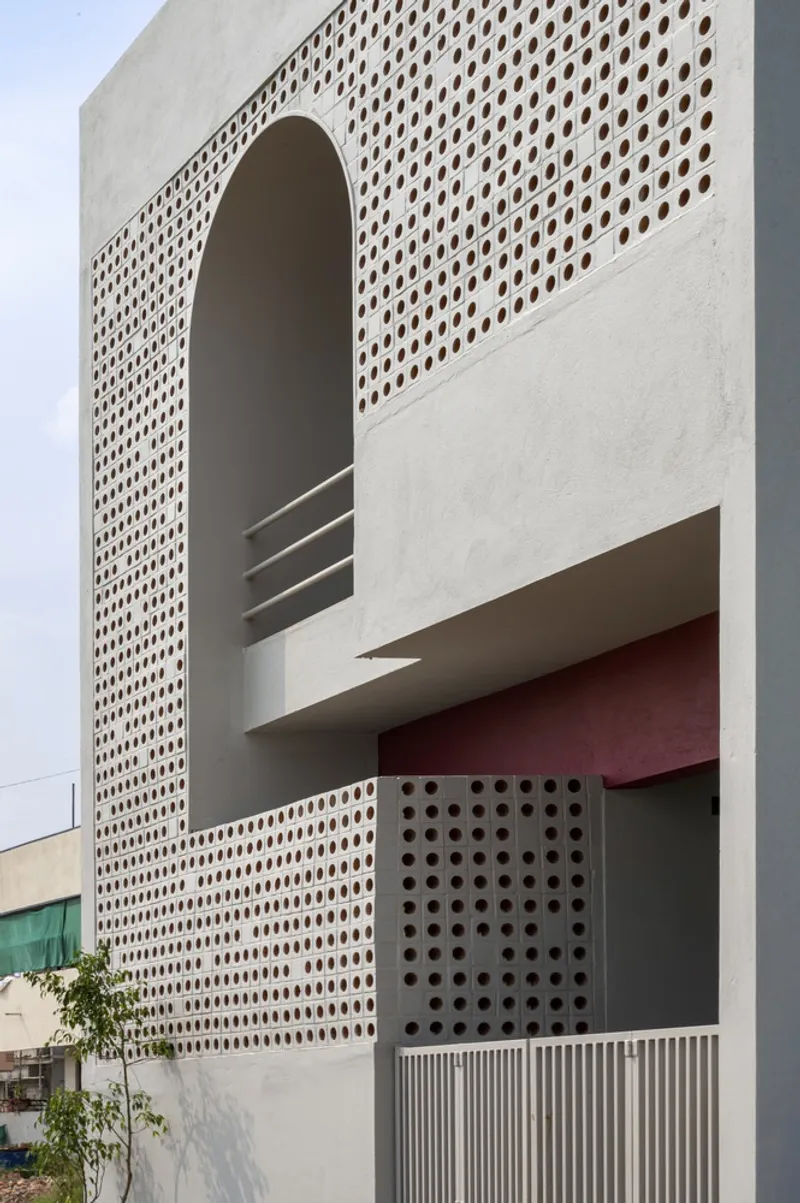
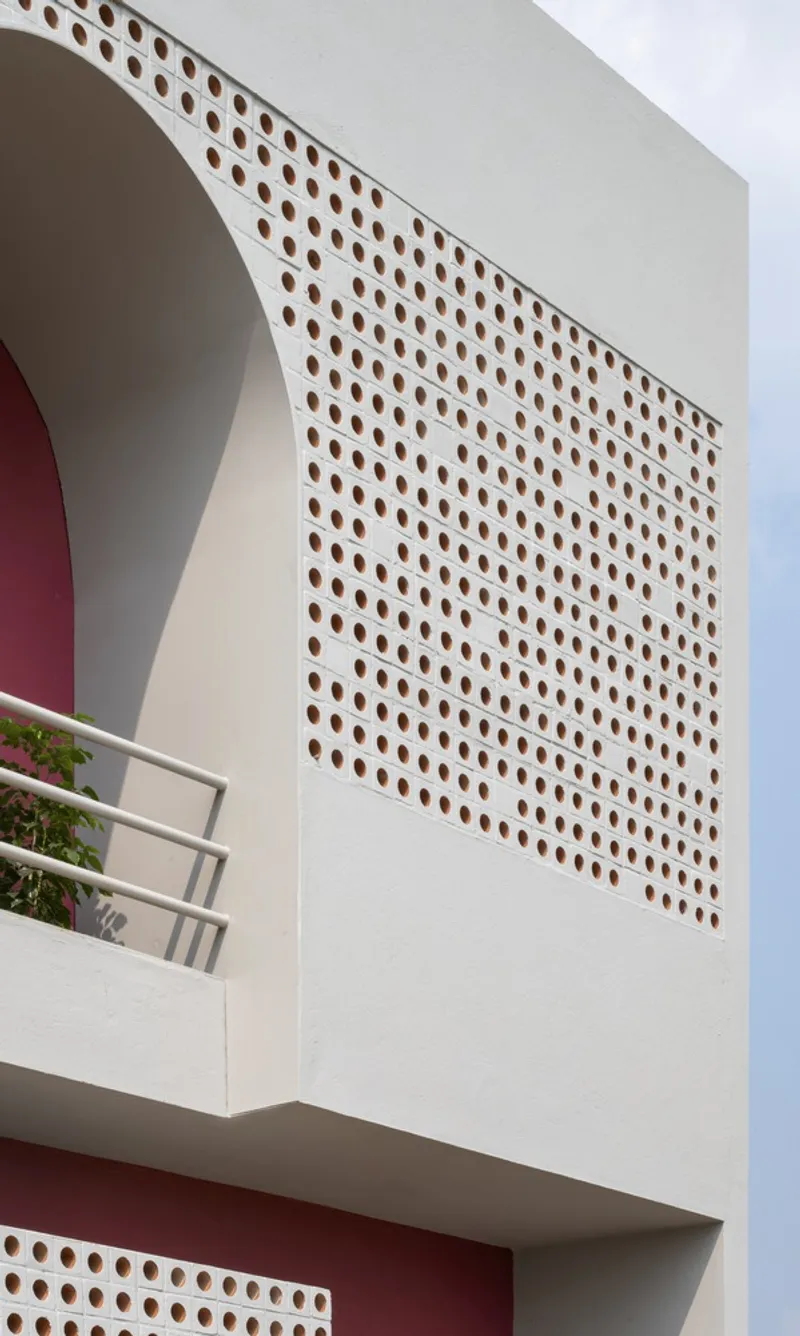
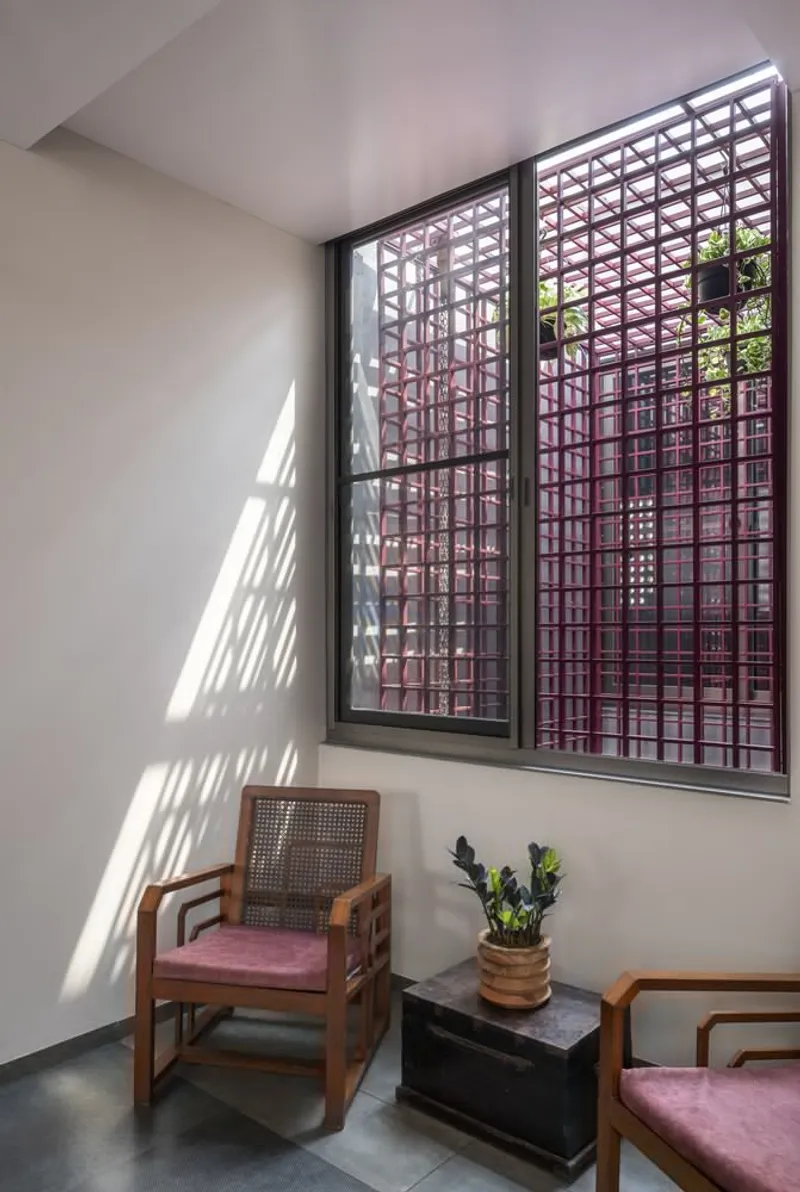
Sustainability plays a central role in the architectural language of Porous Abode. The south-facing orientation brought heat gain challenges that the design addresses through a crafted terracotta jaali façade. This porous skin tempers harsh sunlight while allowing diffused brightness and breeze to pass through. The perforated surface becomes a thermal buffer, reducing indoor heat buildup and lowering dependency on mechanical cooling systems.
This façade is not merely functional, it contributes significantly to the home’s visual identity. Its textured surface, shifting shadows, and warm tones root the building in a regional material expression while giving it a distinctive architectural character.
Material Palette and Accents That Elevate Spatial Warmth
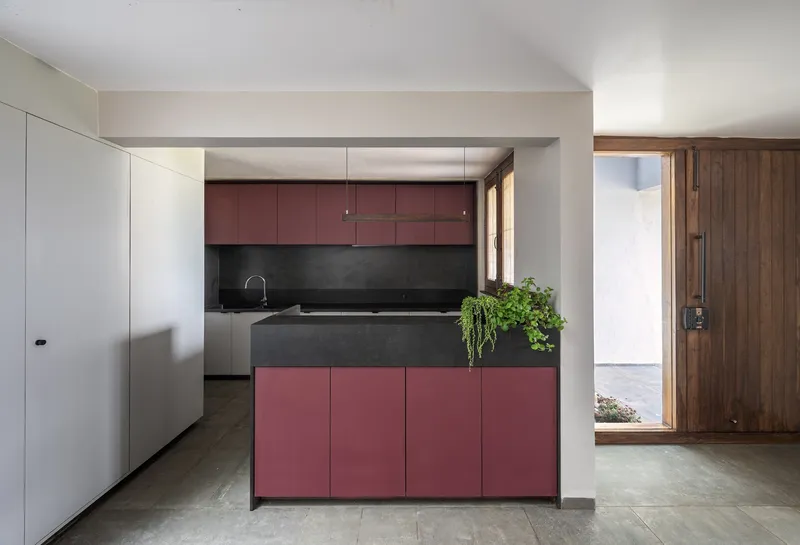
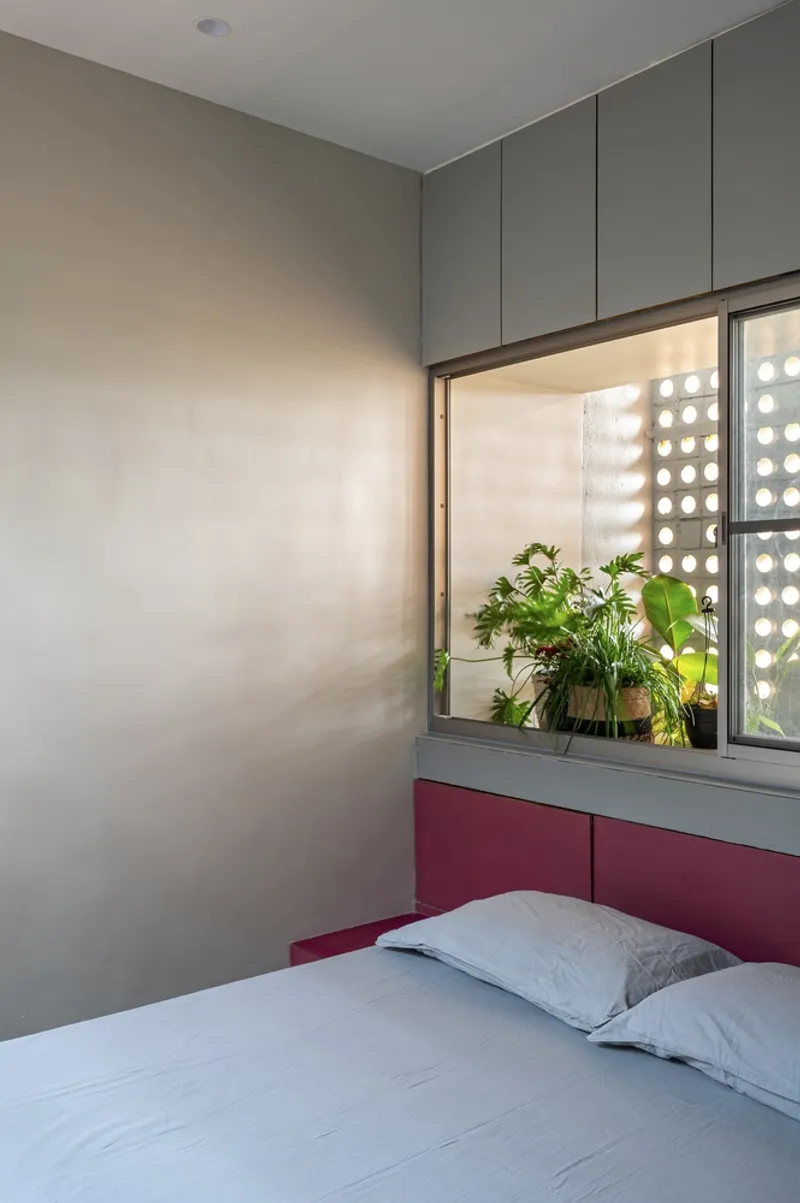
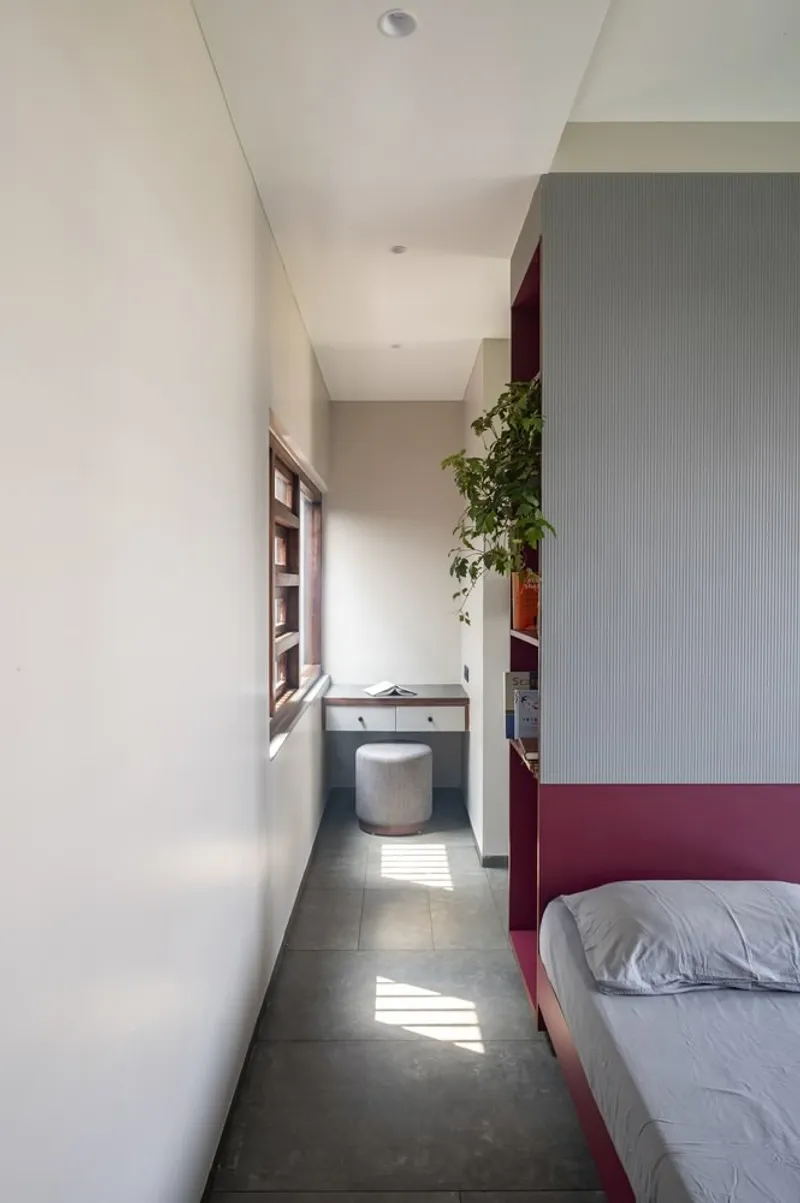
Interior spaces carry a restrained palette anchored in greys, whites, and natural textures, elevated by strategic bursts of magenta. This bold hue appears in multiple forms: from the metal staircase to marble counters, planters, and curated décor elements. These accents unify the home’s interiors, adding depth and vibrancy without overwhelming the calm spatial composition.
Despite the compact footprint, the layout feels generous due to the meticulous planning, layered volumes, and careful material selections that reinforce warmth, tactility, and openness. The design reflects an approach that respects the tight urban context while delivering a serene, comfortable, and climate-responsive family home.
Porous Abode stands as a compelling model of urban residential design in India’s evolving cities. Rahul Pudale Design orchestrates light, ventilation, and spatial fluidity with effortless precision, crafting a porous, breathable home that celebrates materiality, passive cooling, and human comfort. By embracing site constraints and transforming them into opportunities, the project demonstrates how small plots can yield meaningful, sustainable architecture that enhances everyday living.
All photographs are works of Atik Bheda




Popular Articles
Popular articles from the community


The Ocean Hive: Sustainable Architecture for a Self-Sufficient Civilization at Sea
The Ocean Hive imagines sustainable architecture at sea, where modular habitats, algae, wave power and ocean waste sustain a growing colony.

Hill & Cross Opera: Sculptural Opera House Architecture Shaped by Tallinn’s Landscape and Identity
Hill & Cross Opera reimagines opera house architecture in Tallinn through its sculptural hill, civic plaza, glass wave and a luminous cross.

Play: Fragments of Their World
Familiar architecture becomes modular playground design, creating safe spaces where displaced children can learn, connect, imagine and play.

Co-life: Sustainable Architecture for Age-Friendly Community Living
Co-life reimagines sustainable architecture for seniors through courtyards, rammed earth, shared gardens, and spaces designed for belonging.


Similar Reads
You might also enjoy these articles


Hodi-Mandai Geram
Project Function: Preservation and revitalization of the Intangible heritage and socio-spatial identity of the Hodi by Housing, Cultural Memory Center, Sacred Grove, landscape, local tourism economy


Olio Towers: A Mid-Rise for Performers That Fuses Housing, Rehearsal, and Stage
Located blocks from Houston's Theater District, this modular tower stacks living units around a central performance atrium.

Oasis: Modular Green Housing Carved into Dhaka's Urban Fabric
A shortlisted Plugin Housing entry reclaims unauthorized settlements in Dhaka with stepped concrete volumes, green roofs, and ventilation-driven design.

Black Hole: A Floating Megastructure for the Post-Physical Era
Emiliano Mazzarotto envisions a spherical, self-scaling arena where e-sports, digital hotels, and holographic stadiums replace traditional public space.

Explore Architecture Competitions
Discover active competitions in this discipline



Challenge to reimagine the Iron Throne


Photograph architecture without architects


Illustrate the lost glory of Angkor Wat - Render Challenge


Design challenge to reuse E-waste
Comments (0)
Please login or sign up to add comments
No comments yet. Be the first to comment!