

Portal 62 – A Subterranean-Inspired Retreat in Yucatán by MORO Taller de Arquitectura & Veinte Diezz Arquitectos
Compact Yucatán home shaped by a discovered cavern, using rammed earth, cedar, and spatial sequences to create serene, intimate architectural experiences.


Portal 62 is a compact yet deeply atmospheric residence in Yucatán, Mexico, designed by MORO Taller de Arquitectura and Veinte Diezz Arquitectos. What began as a simple architectural intervention transformed into a profound spatial exploration when the architects uncovered a hidden cavern beneath the site—an unexpected discovery that reshaped the entire design approach. Rather than imposing form, Portal 62 embraces what the land reveals, resulting in a home that balances architectural restraint, natural materiality, and immersive spatial experiences.
A Project Defined by Discovery
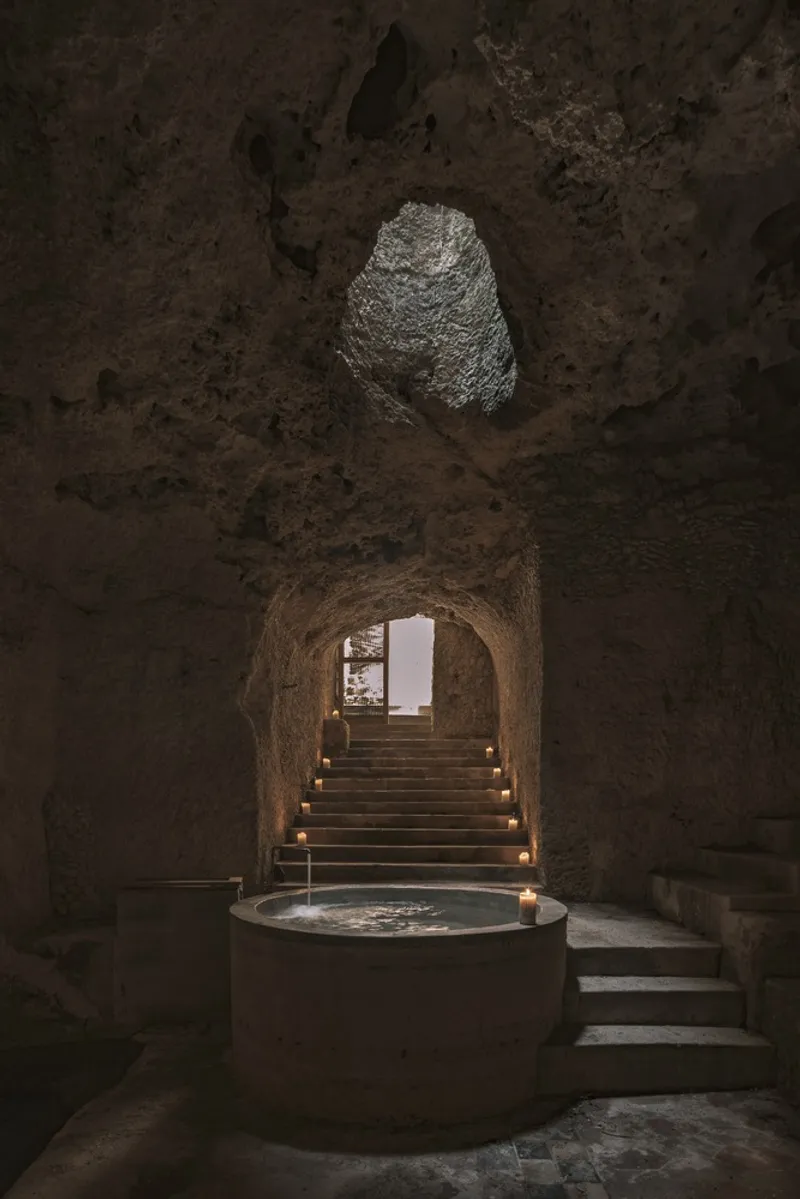
During the initial clearing phase, the team found a sealed well that hinted at something unusual beneath the surface. As excavation continued, a stairway blocked by a concrete wall emerged. Once opened, it revealed a rubble-filled cavern—an extraordinary element that instantly reoriented the project’s scale, layout, and intentions.
This subterranean void became the project’s conceptual anchor. The architects reduced the built footprint to only 70 m², ensuring that the intervention respected the cavern’s natural boundaries rather than overrunning them. Portal 62 became an exercise in designing from what the land dictated, not from preconceived plans.
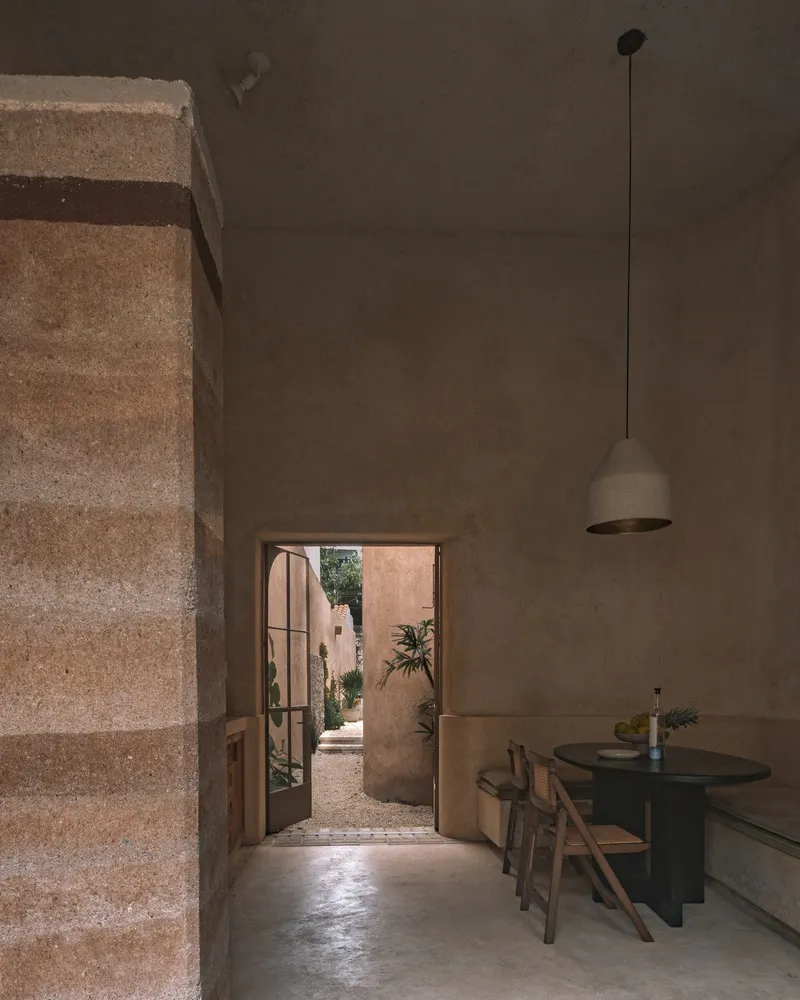
A Compact Layout Rooted in Sequence and Restraint
The home unfolds through a series of measured transitions:
The Original Bay
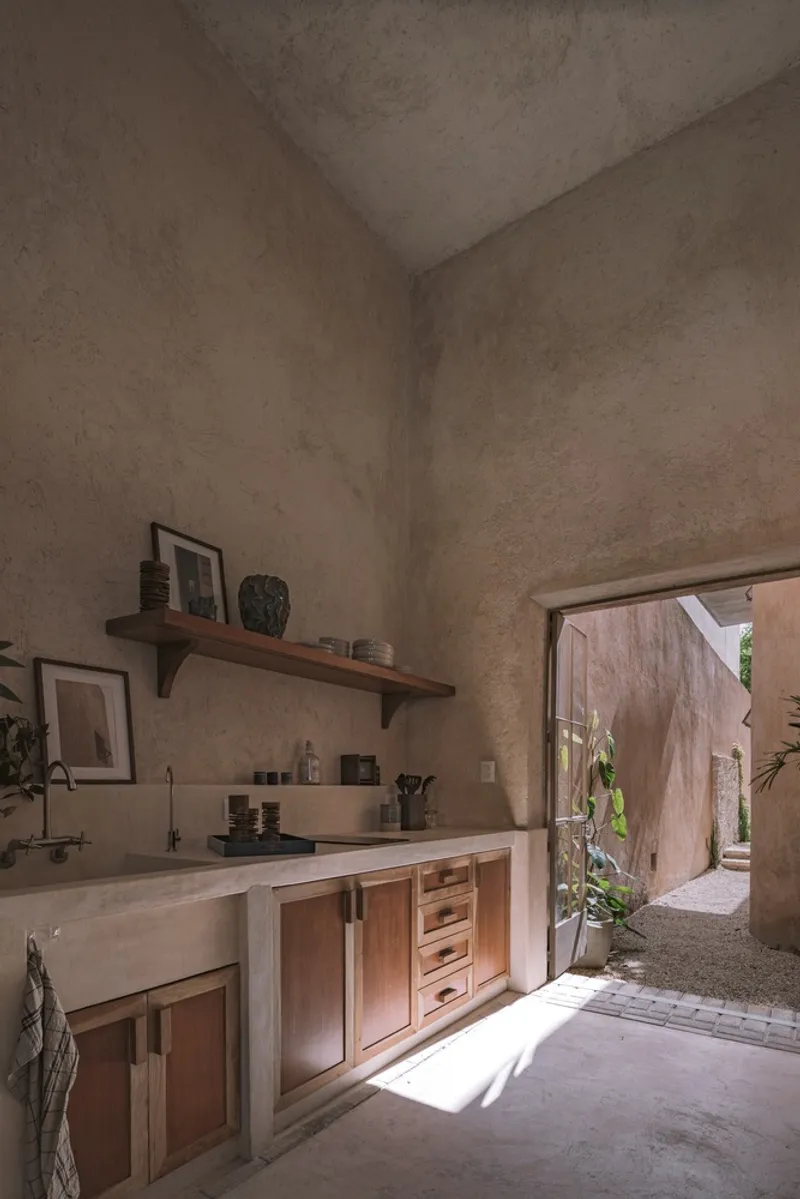
The first volume contains the kitchenette, living, and dining spaces—a compact core that opens subtly toward the outdoors. Its simplicity sets the tone for the project: warm materials, filtered light, and a sense of quiet enclosure.
The New Bedroom Volume
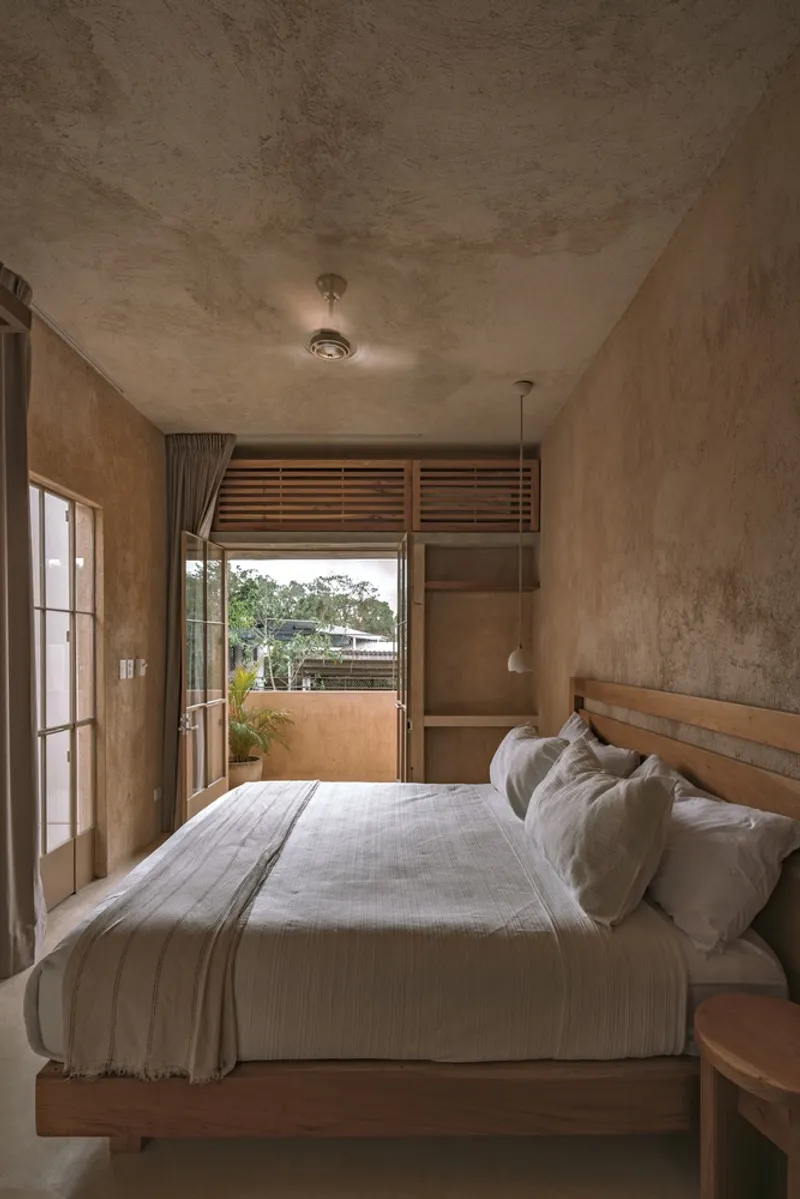
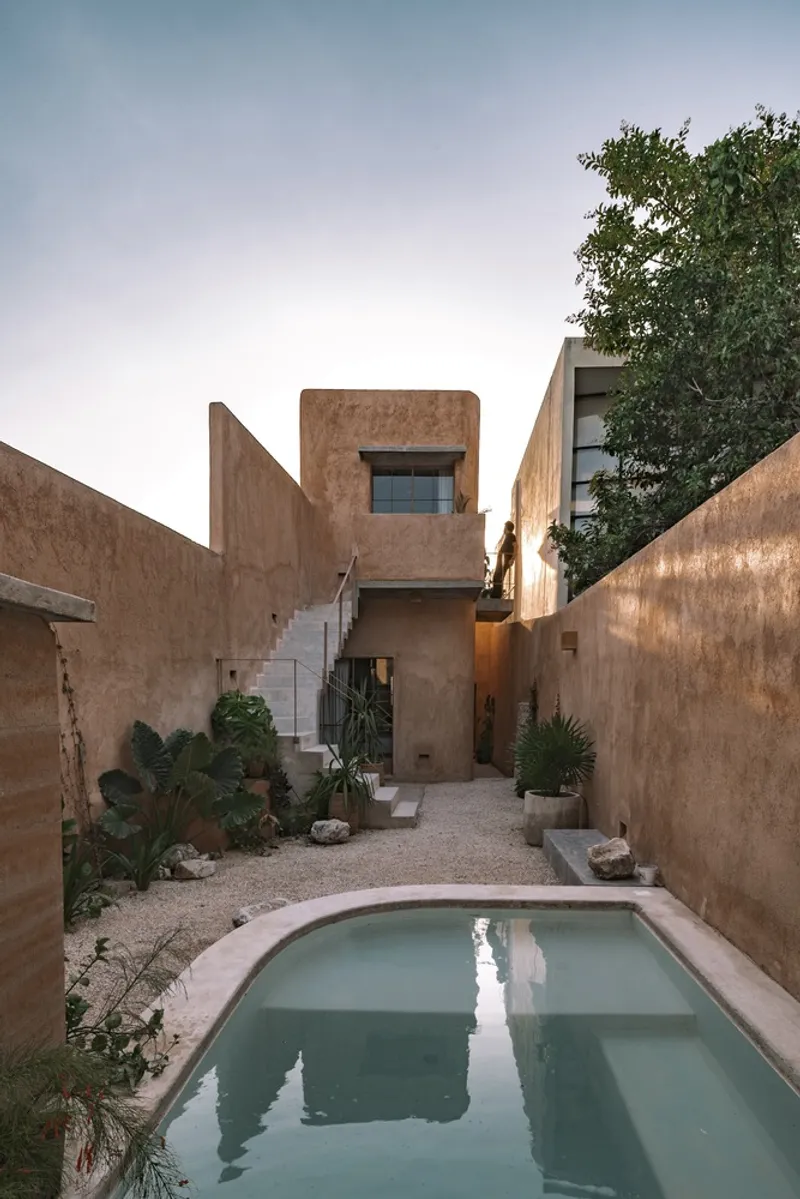
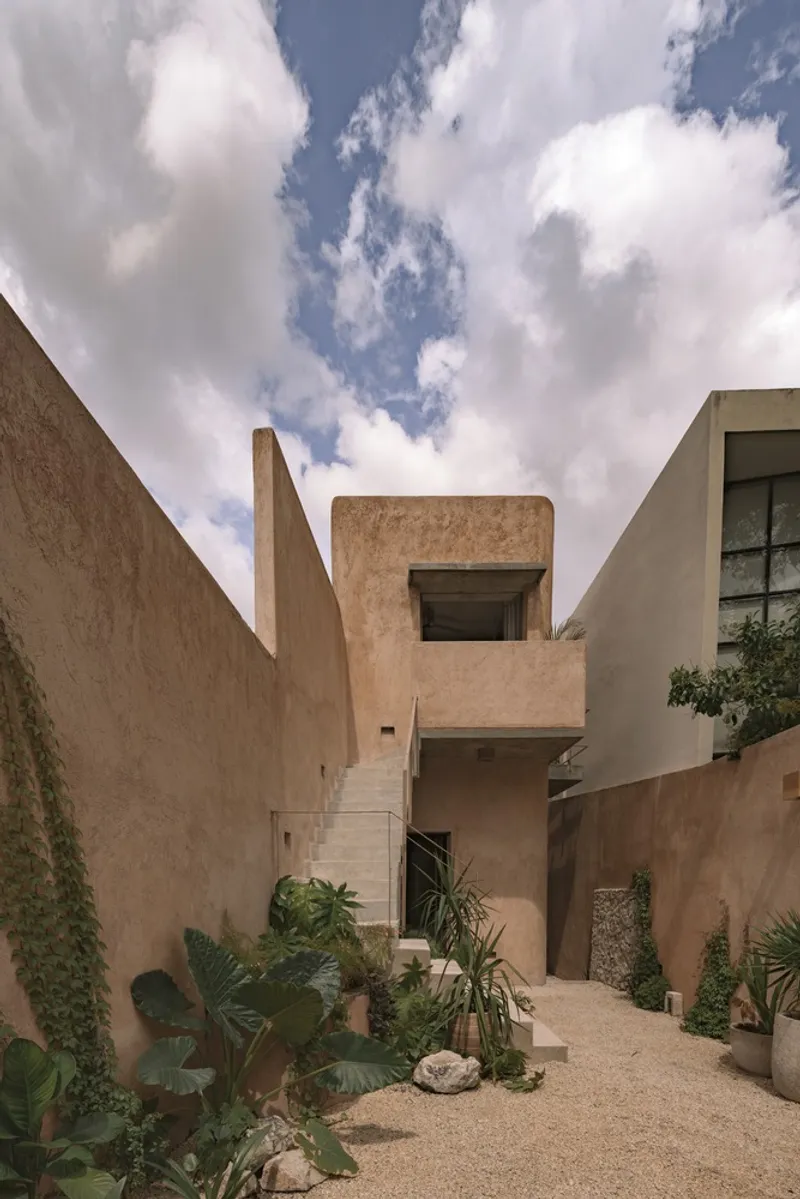
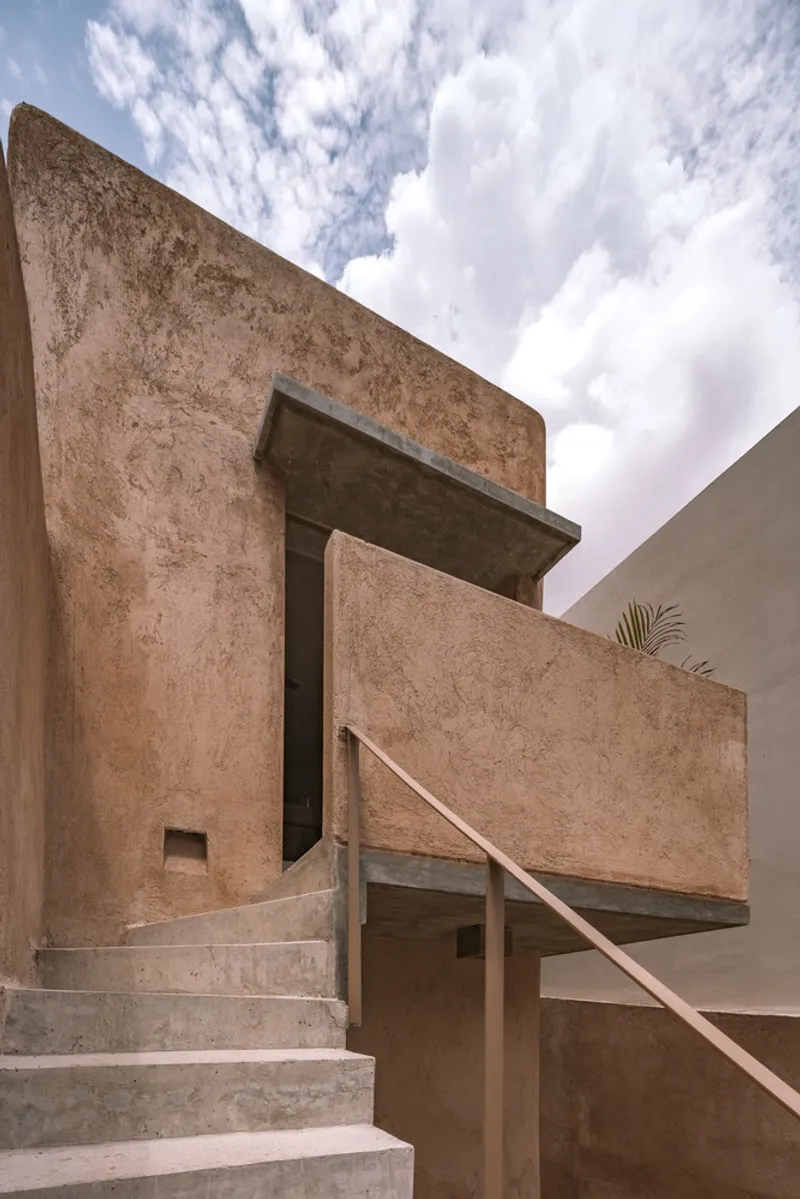
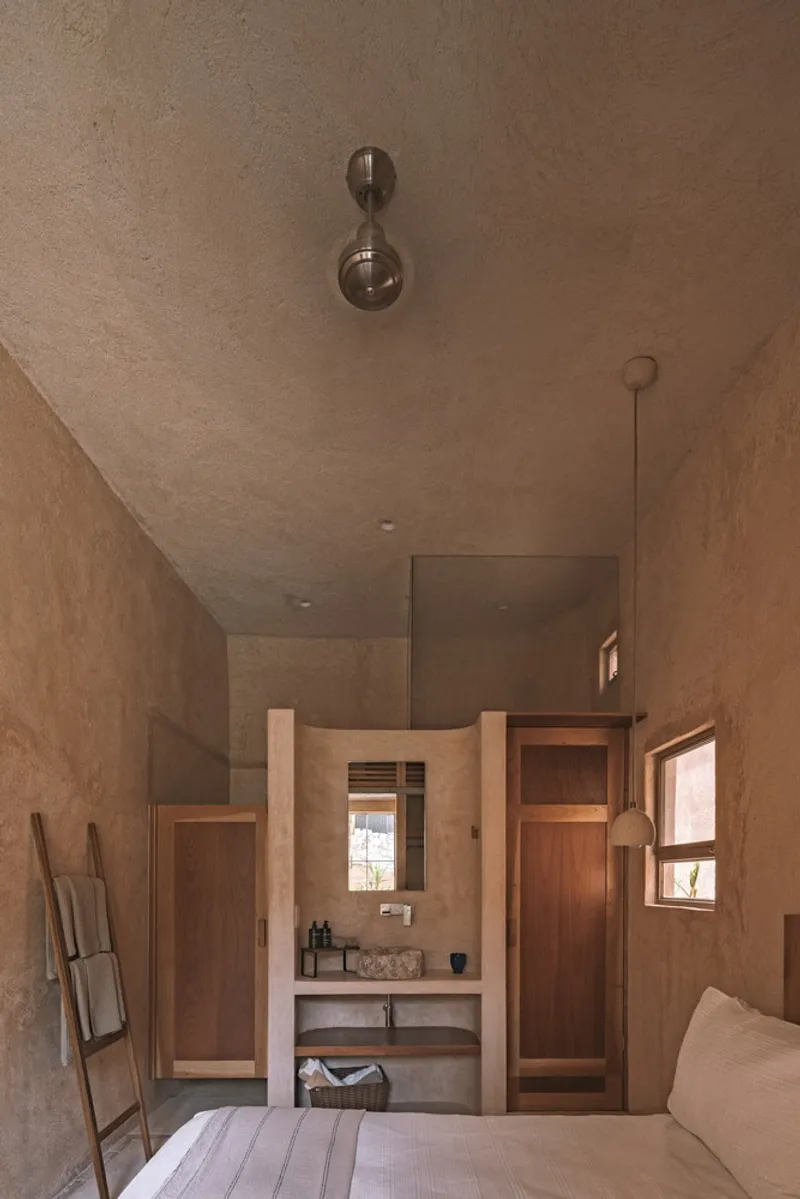
A second structure extends toward the rear, hosting two bedrooms—one at ground level and another above. This addition stops precisely at the point where the cavern begins, using the underground boundary as the project’s natural limit. The resulting massing feels intentional, grounded, and unobtrusive.
A Path That Compresses and Releases
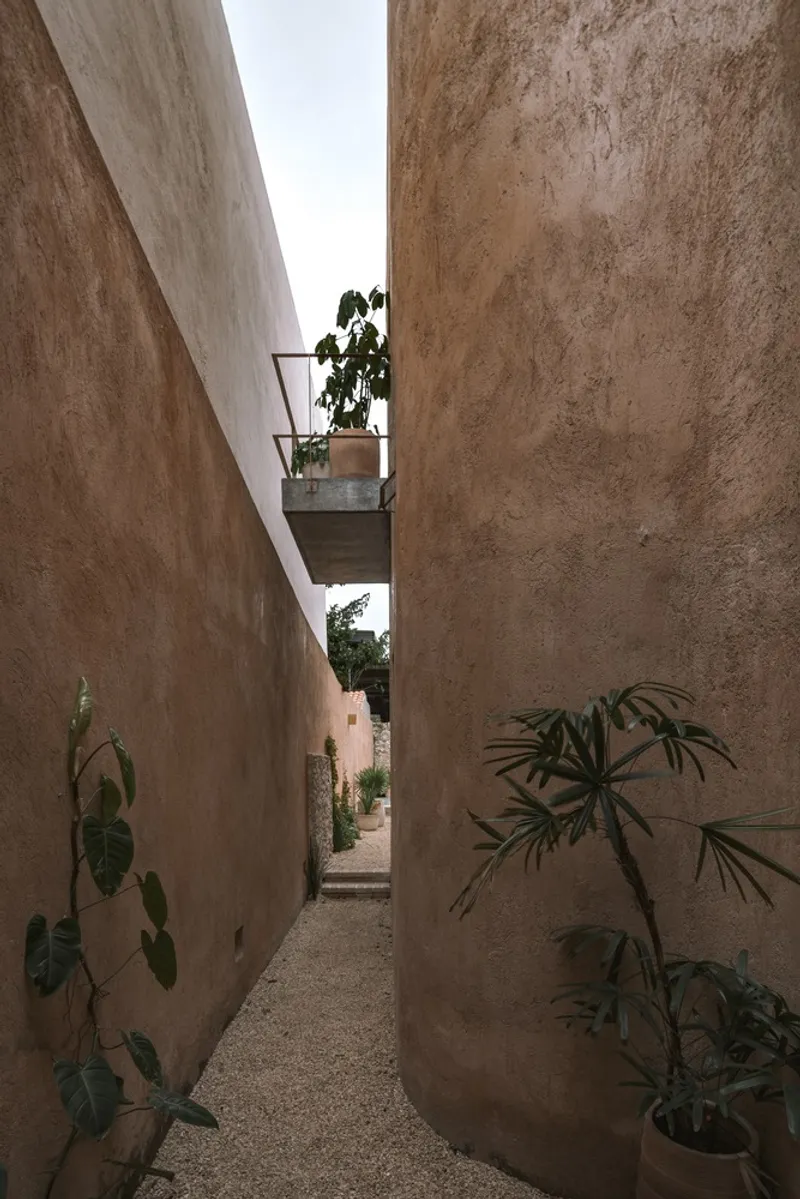
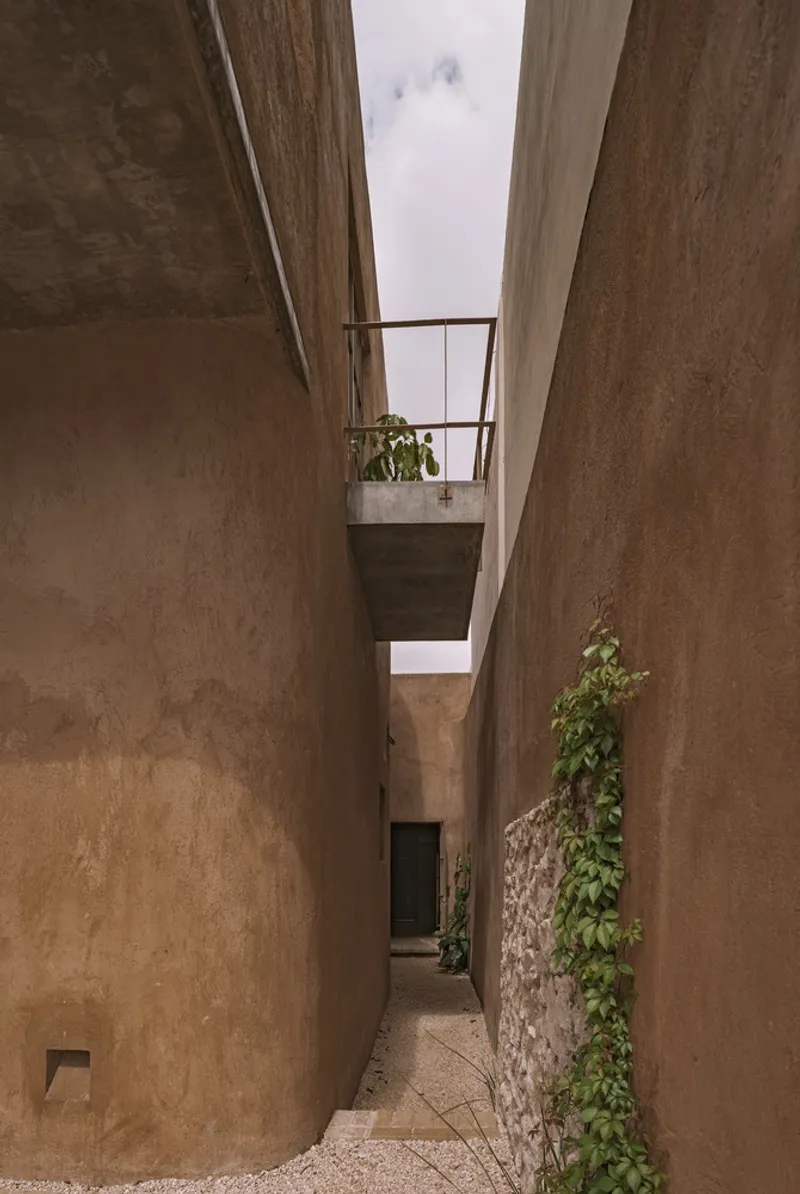
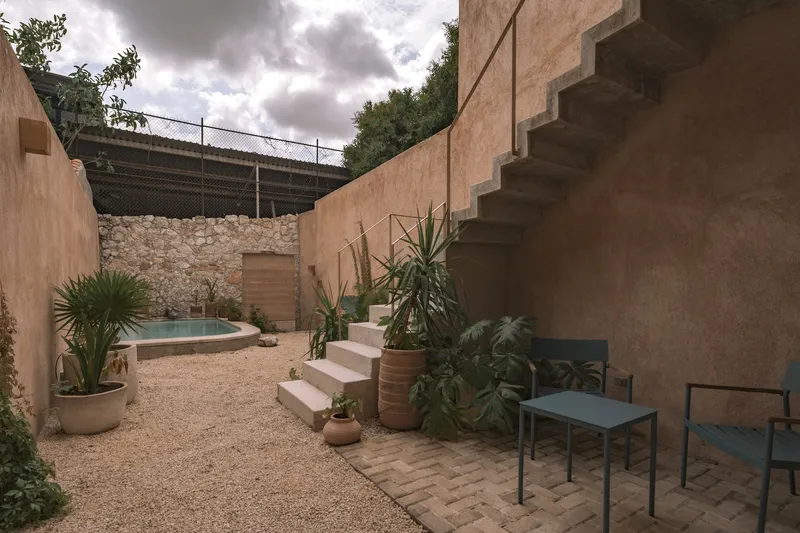
Moving from the living area into the new wing, a narrow corridor introduces a moment of compression before dramatically expanding into the rear patio. This controlled sequencing creates a rhythm of tension and release—one of the project's most distinctive experiential qualities.
Landscape, Water, and the Descent Underground
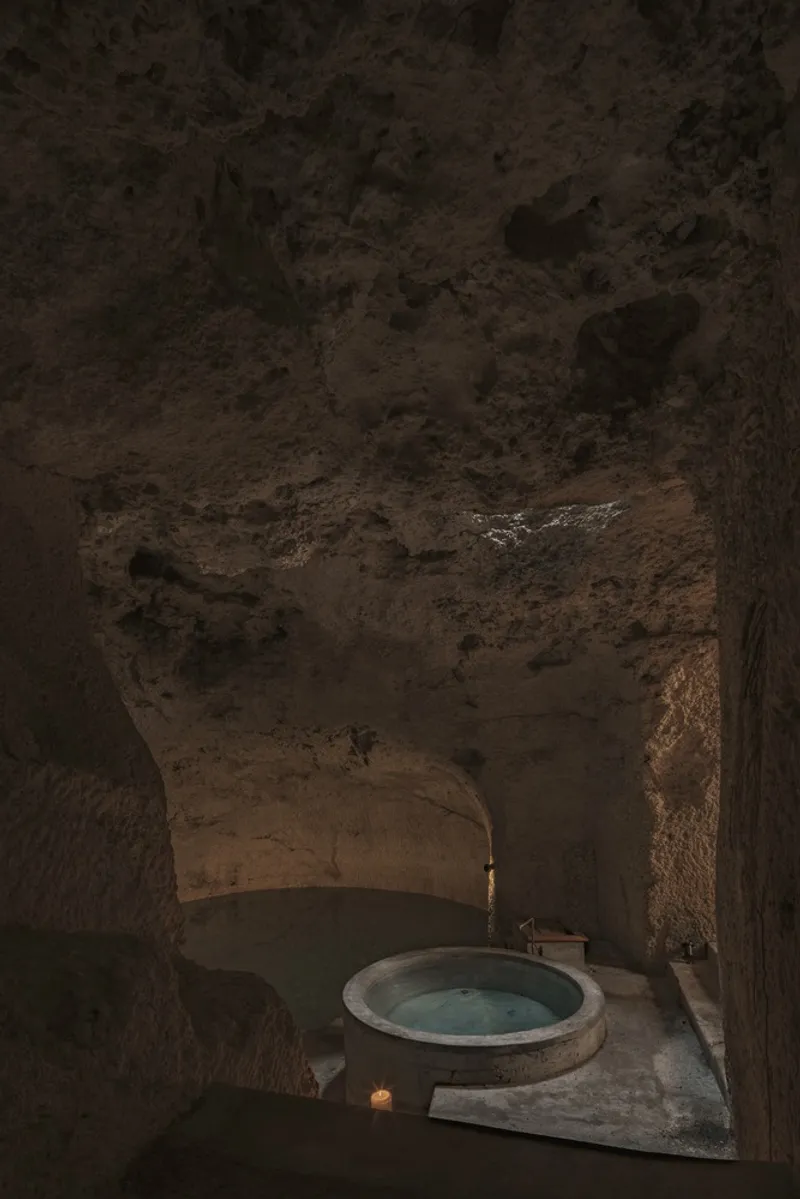
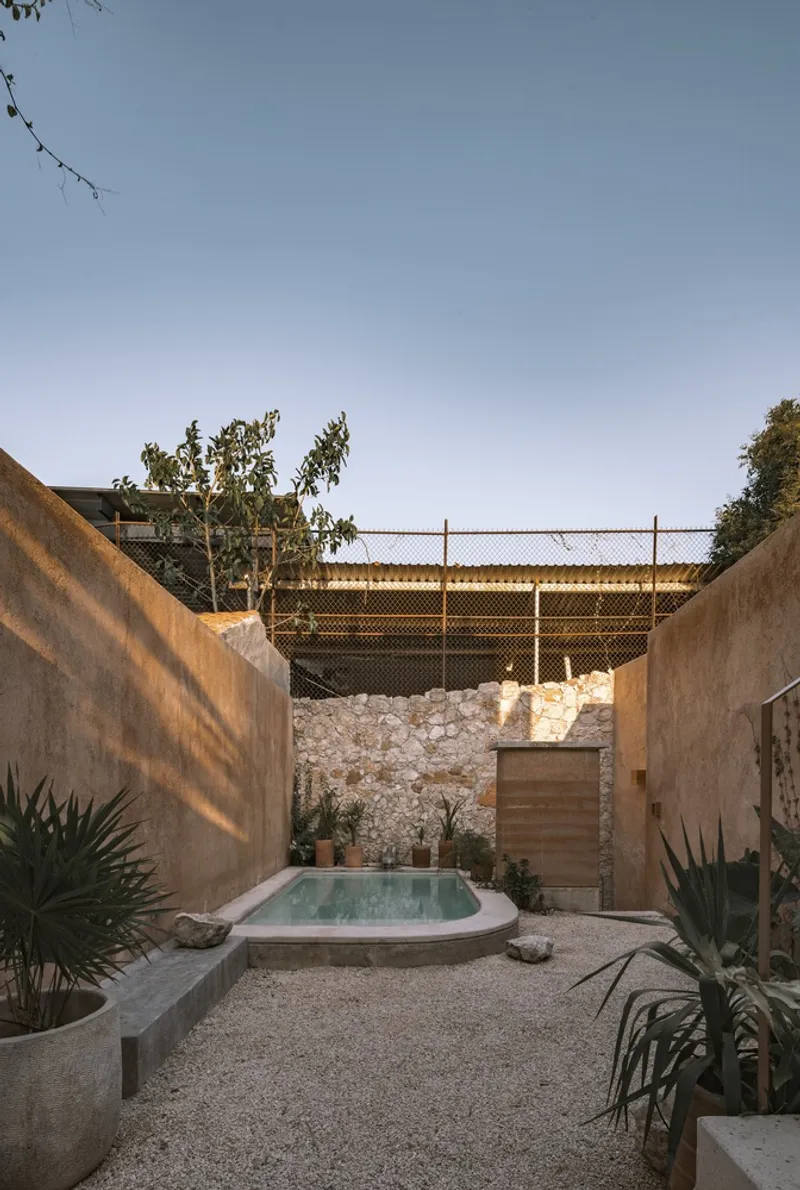
Beyond the patio lies a pool framed by a sculptural rammed-earth wall that filters views before the descent into the subterranean level. A stairway beside the pool leads downward to the artificial tub placed directly below the original well shaft.
Natural light pours through the vertical opening, illuminating the water in a way that feels sacred and intimate. This chamber—humid, quiet, and carved by discovery—becomes the emotional heart of Portal 62. The experience is one of stillness, reflection, and awe.
Materiality that Echoes the Land
Material choices bind the home closely to its Yucatán context:
- Rammed earth and local soil infusions lend the exterior walls their warm terracotta tone, grounding the architecture in its landscape.
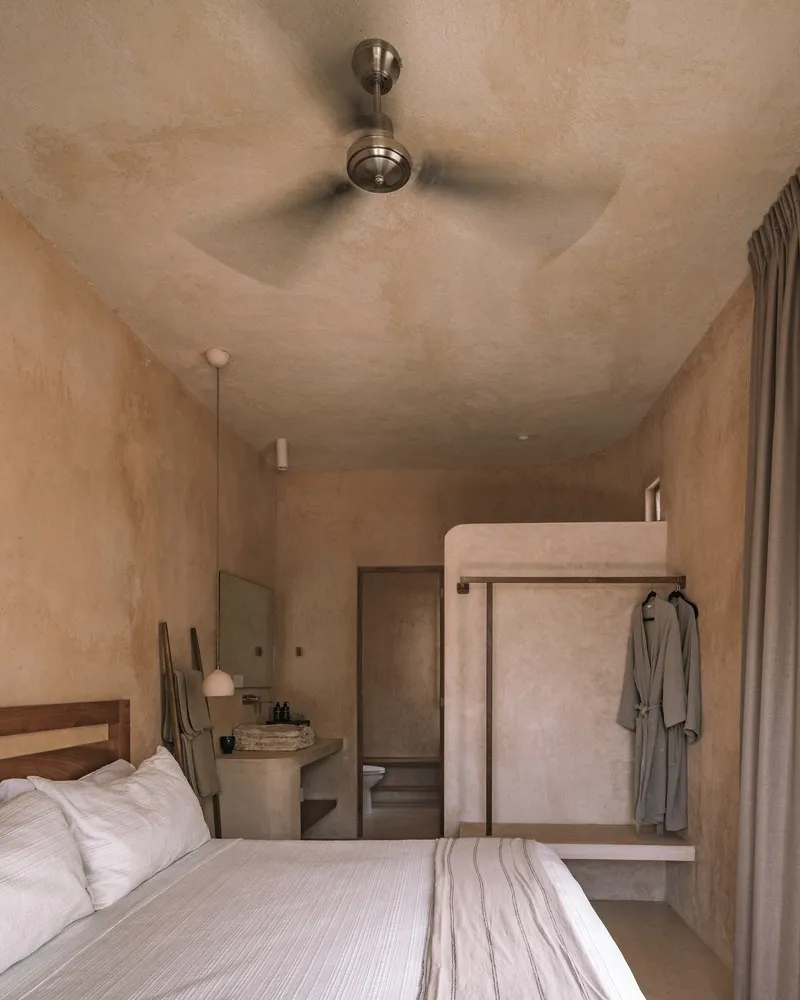
- Solid cedar carpentry and built-in furniture add continuity, texture, and a restrained elegance.
- A minimal, sober palette keeps the architecture timeless, allowing spatial experience—not ornament—to define the project.
Every material speaks to permanence, warmth, and simplicity. Portal 62 may be small in footprint, but it is rich in intention and sensory depth.
A Home Meant to Be Uncovered, Not Displayed
Portal 62 stands as a reminder that architecture can emerge from the land itself. Instead of forcing a vision onto the site, the architects allowed discovery to guide design. The result is a quiet, grounded home that reveals itself gradually, just as the cavern revealed its presence during construction.
All photographs are works of Jasson Rodríguez


Popular Articles
Popular articles from the community


Cube Design Draws an Ecological Corridor Between Two Shenzhen Hills with the Nankai Building
Beside Shenzhen's container docks, the Nankai Building pairs stacked balconies with a climbing green screen to connect two hillsides across its height.

longwave studio Reorganizes a 112 m² Tainan Apartment Around the Daily Routines of a Family and Two Cats
In Tainan, Taiwan, birch plywood, rust-red furniture and a freestanding plaster wall link arrival, storage, work and family life in one apartment.

David Ortega Stacks a Two-Story Mexico City Penthouse Around a Steel Stair and a Pergola-Shaded Roof Terrace
In Colonia Roma, a 300 m² penthouse uses oak joinery, a planted steel stair and a slatted roof pergola to make a new-build apartment feel like a house.

U.GA Architects Wraps an Oval Rooftop Pool in Curved Board-Formed Concrete on Busan's Jeollidan-gil
In Busan's Jeonpo-dong, a 454 m² mixed-use block stacks a neighborhood facility, guest rooms and an oval rooftop pool inside spiraling concrete walls.

Similar Reads
You might also enjoy these articles


Hodi-Mandai Geram
Project Function: Preservation and revitalization of the Intangible heritage and socio-spatial identity of the Hodi by Housing, Cultural Memory Center, Sacred Grove, landscape, local tourism economy


Olio Towers: A Mid-Rise for Performers That Fuses Housing, Rehearsal, and Stage
Located blocks from Houston's Theater District, this modular tower stacks living units around a central performance atrium.

Oasis: Modular Green Housing Carved into Dhaka's Urban Fabric
A shortlisted Plugin Housing entry reclaims unauthorized settlements in Dhaka with stepped concrete volumes, green roofs, and ventilation-driven design.

Black Hole: A Floating Megastructure for the Post-Physical Era
Emiliano Mazzarotto envisions a spherical, self-scaling arena where e-sports, digital hotels, and holographic stadiums replace traditional public space.

Explore Hospitality Building Competitions
Discover active competitions in this discipline

Challenge to reimagine the Iron Throne

Photograph architecture without architects

Illustrate the lost glory of Angkor Wat - Render Challenge

Design challenge to reuse E-waste
Comments (0)
Please login or sign up to add comments
No comments yet. Be the first to comment!