

Positive Energy House: A Net-Positive Residential Renovation in Shenzhen
Net-positive renovated home in Shenzhen uses layered insulation, passive ventilation, and solar roofs to generate surplus energy sustainably.


The Positive Energy House, designed by People’s Architecture Office (PAO) in Shenzhen, China, redefines sustainable residential architecture by demonstrating how existing buildings can be transformed into net-positive energy homes. Completed in 2023, this 505-square-meter house moves beyond reducing environmental impact to actively contributing surplus renewable energy, positioning itself as a forward-thinking model for regenerative architecture.

Rather than pursuing demolition and reconstruction, the project embraces adaptive reuse, proving that older residential structures can achieve high-performance environmental standards through strategic renovation. This approach significantly reduces embodied carbon, construction waste, and material consumption, aligning with contemporary principles of circular construction and climate-responsive design.
A Layered Renovation Strategy for Energy Efficiency
The architectural strategy centers on wrapping the existing house with two additional layers, creating a high-performance envelope that dramatically improves thermal efficiency while enabling on-site energy generation. The original structure is preserved at the core, minimizing disruption and material loss.
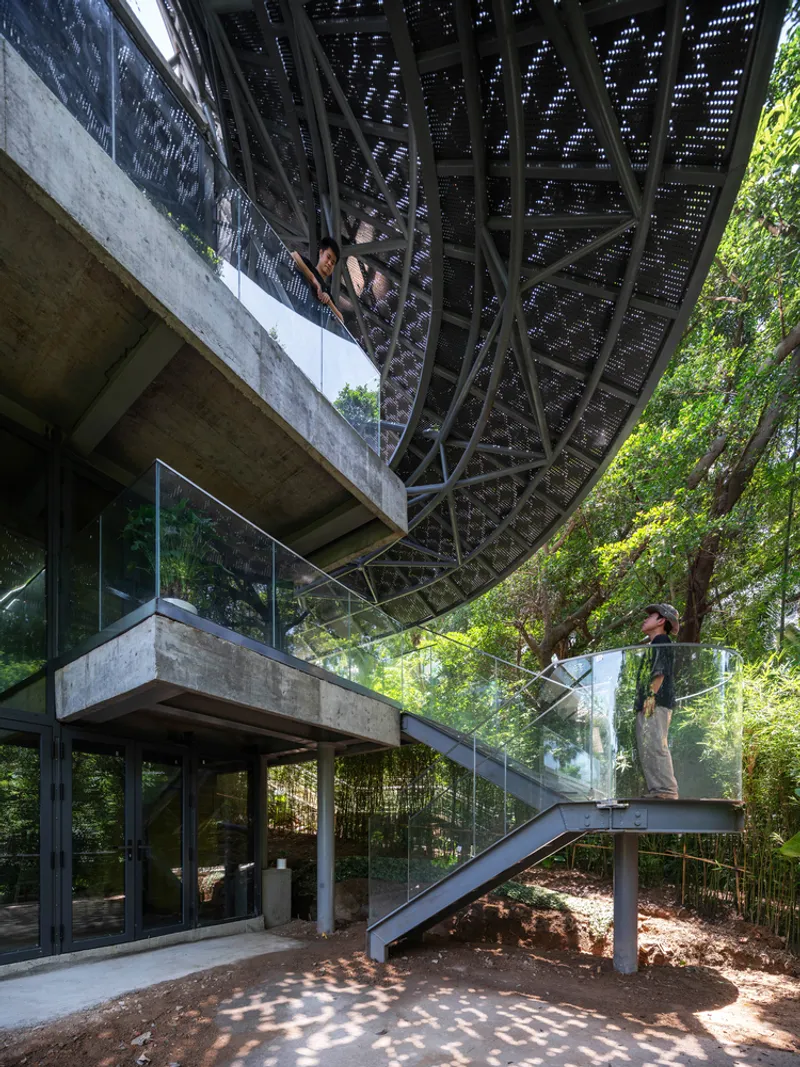
The first added layer consists of a well-sealed, highly insulated building skin that enhances airtightness and thermal performance. On the south-facing façade, this layer expands outward to form an interstitial atrium, positioned between the original house and the new insulated shell. This space plays a critical role in regulating the indoor climate through passive design strategies.


Atrium Design and Passive Environmental Control
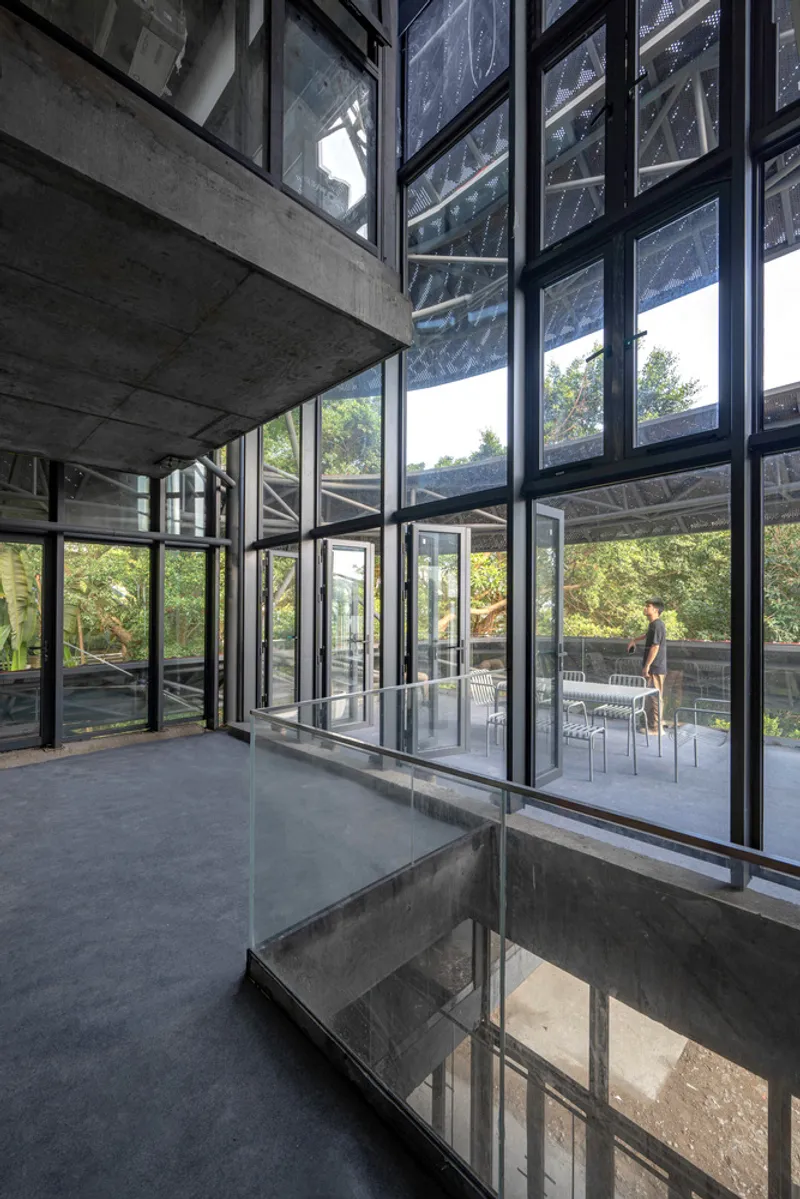
Enclosed with a triple-glazed glass façade, the atrium integrates operable windows and doors that support natural ventilation during mild weather conditions. This semi-conditioned space acts as a thermal buffer, reducing heat gain and loss while allowing fresh air circulation.
During periods of more extreme temperatures, the atrium can be sealed and mechanically ventilated, providing efficient cooling and significantly reducing reliance on conventional air conditioning systems. As a result, active cooling is reserved only for the most severe climatic conditions, lowering overall energy demand.
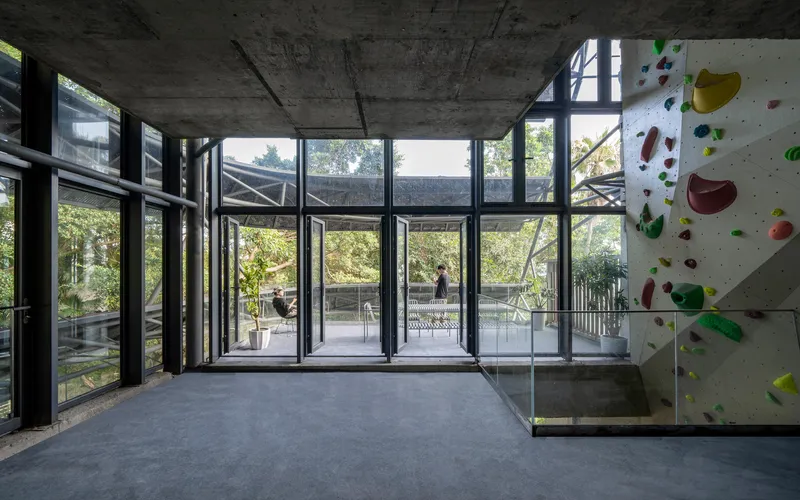
Beyond its environmental function, the atrium also becomes a multifunctional social and recreational space. Designed specifically for the homeowner, an avid rock climber, the atrium incorporates a vertical climbing wall spanning all four levels, reinforcing the project’s emphasis on personalized, experiential living within sustainable architecture.
Chimney Effect Ventilation and Daylighting Optimization
Within the original building, PAO integrated a vertical air vent aligned with the existing elevator core. This feature leverages the chimney effect, drawing air upward through the house to promote continuous natural ventilation. Simultaneously, the vent functions as a light well, channeling daylight deep into the interior and reducing dependence on artificial lighting.
This dual-purpose system exemplifies the project’s holistic environmental approach, where architectural elements are designed to perform multiple functions, enhancing both comfort and energy efficiency.
Solar Roofs and Net-Positive Energy Production
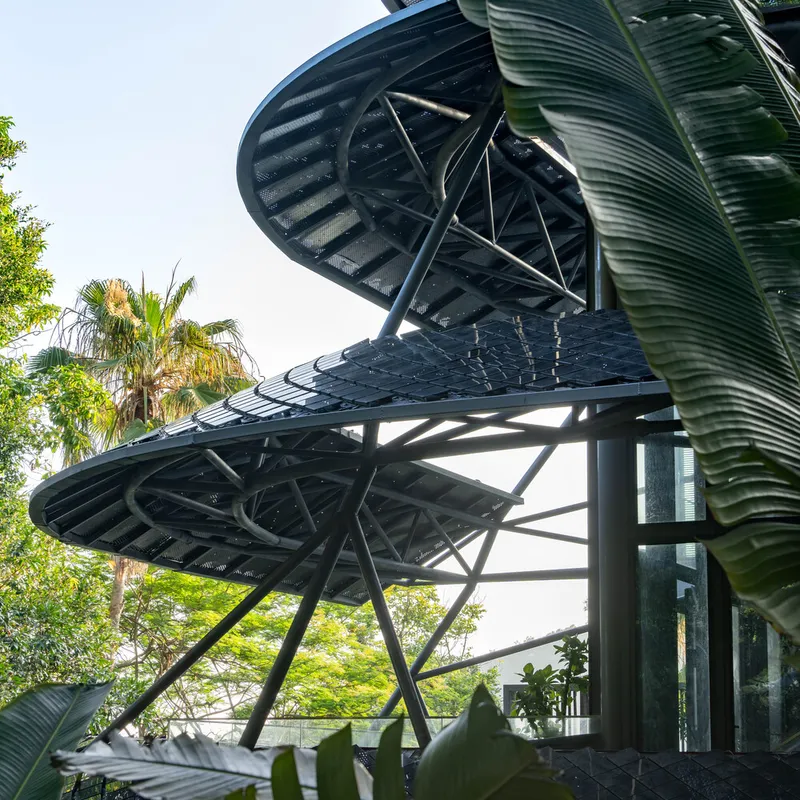
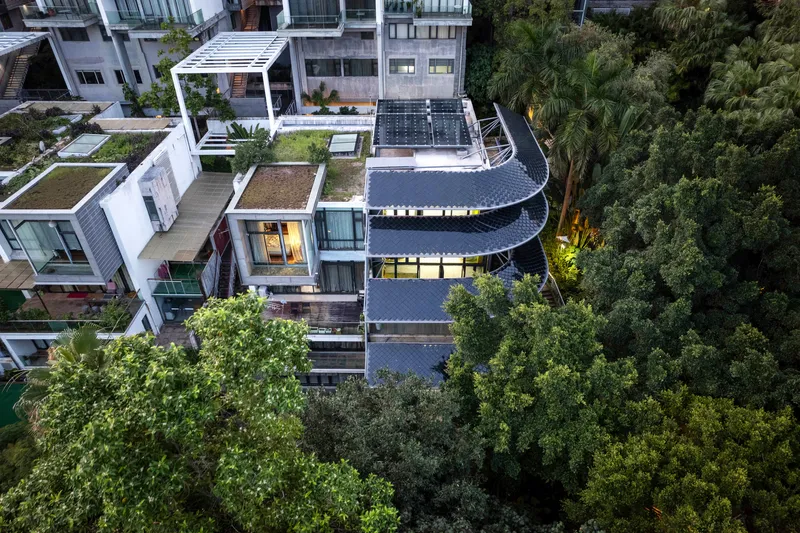
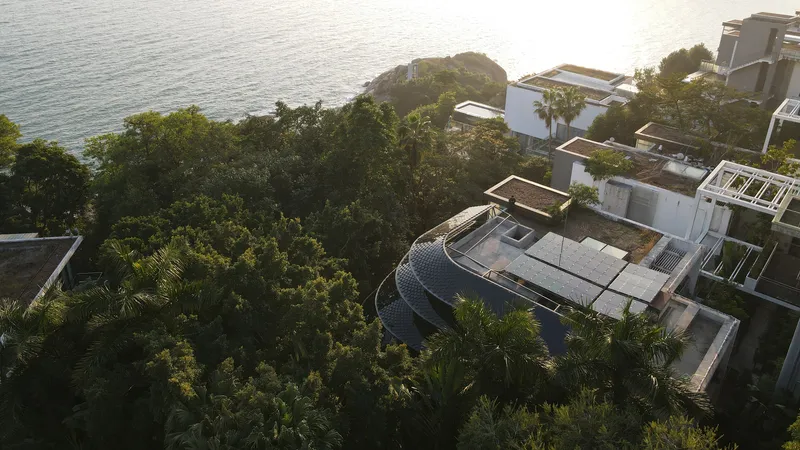
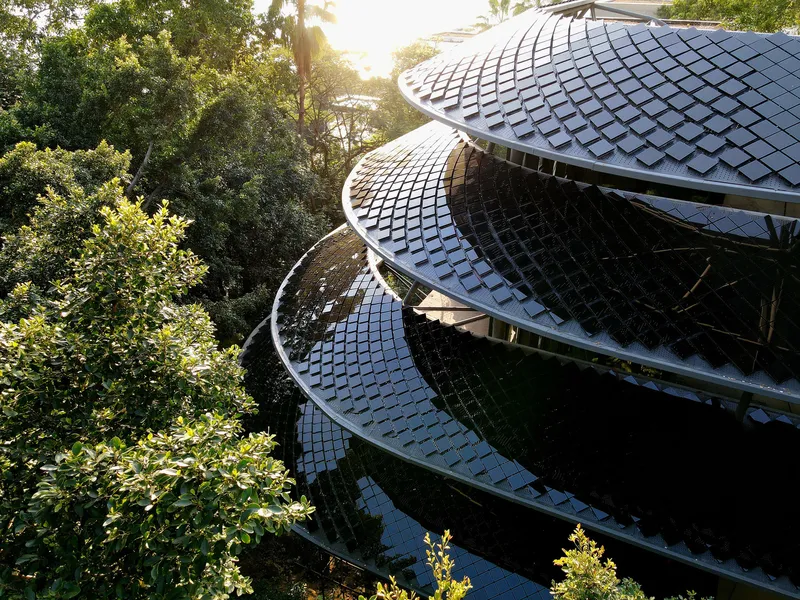
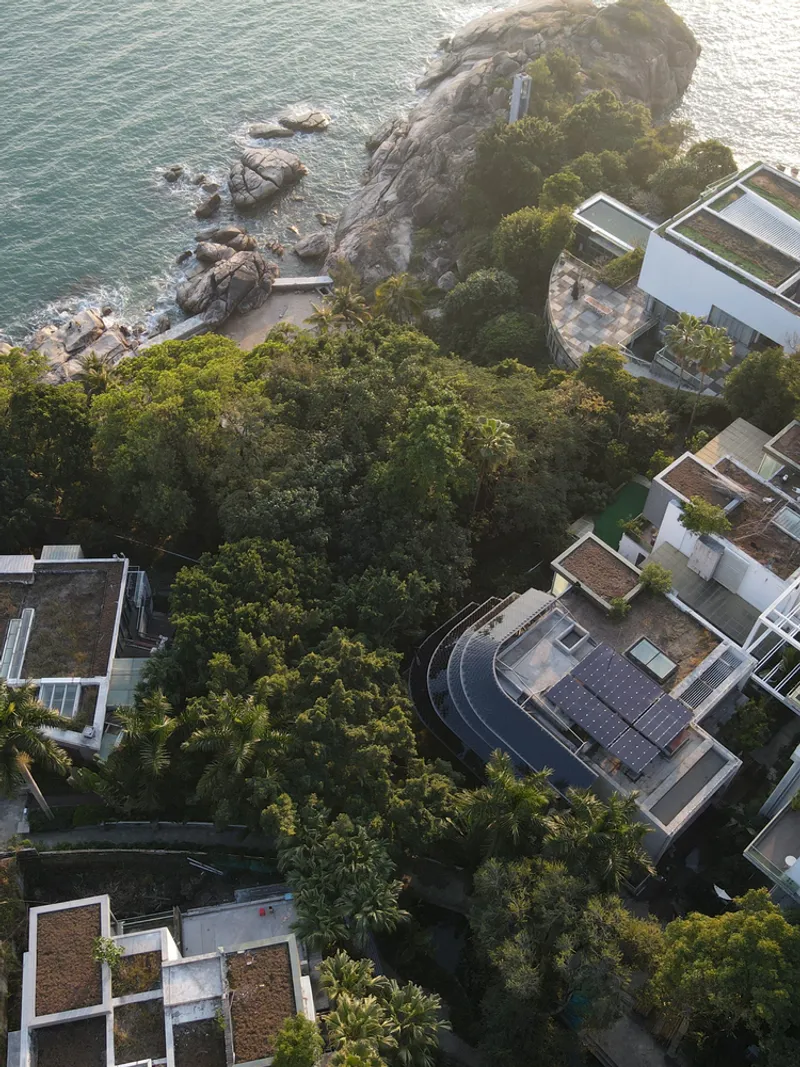
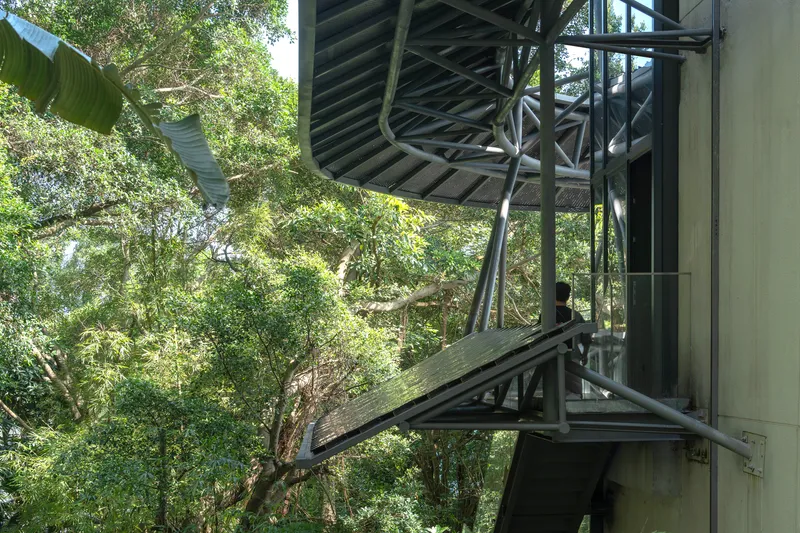
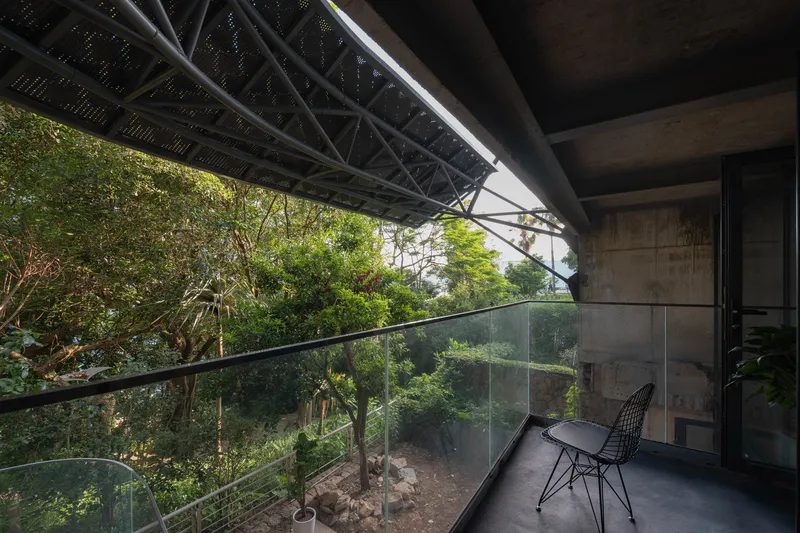
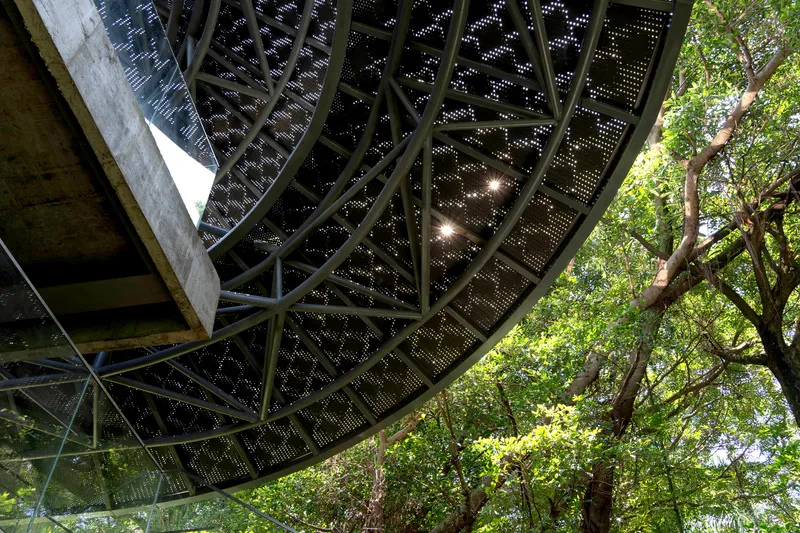
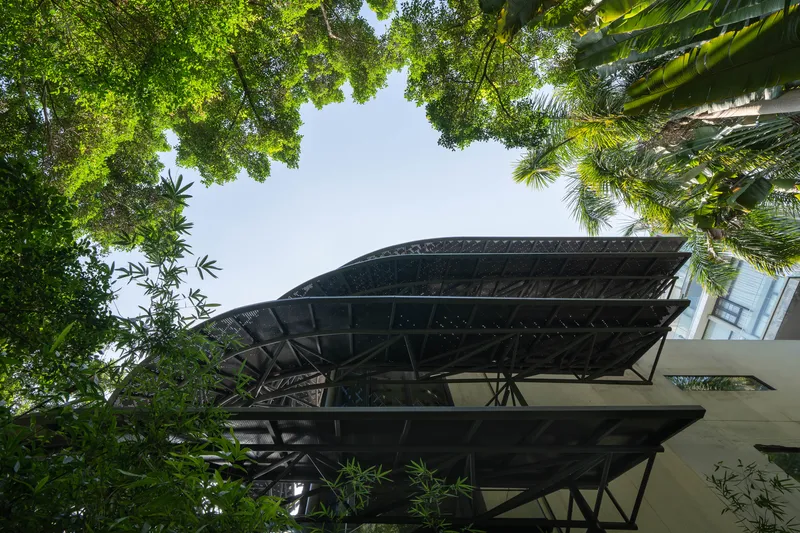
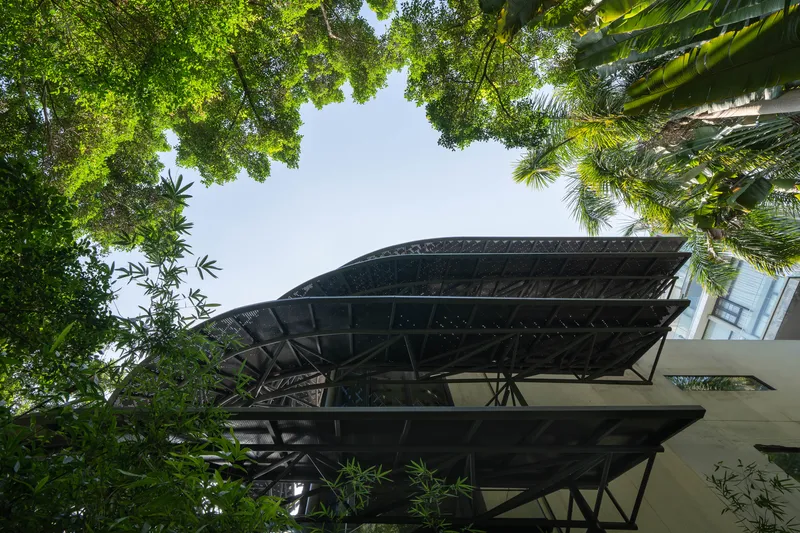
The outermost layer of the renovation introduces a series of curvilinear solar roofs, extending beyond the insulated building envelope. These roofs are clad with cadmium telluride photovoltaic panels, enabling the house to generate more energy than it consumes over the course of a year.
Supported by lightweight prefabricated truss structures, the solar roofs provide generous shading for interior spaces and outdoor terraces while preserving unobstructed airflow and visual openness. The stacked, flowing roof forms unify performance and aesthetics, giving the house a distinctive architectural identity rooted in environmental function.

A Replicable Model for Sustainable Residential Renovation
The Positive Energy House stands as a compelling prototype for sustainable urban living, particularly in dense cities where demolition-driven development is increasingly unsustainable. By layering insulation, passive climate systems, and renewable energy infrastructure around an existing structure, People’s Architecture Office demonstrates a scalable strategy for transforming aging residential buildings into energy-generating assets.
This project highlights the future of housing renovation: where architecture not only minimizes harm but actively participates in ecological regeneration, occupant well-being, and long-term resilience.
All photographs are works of
ZC Architectural Photography Studio, People’s Architecture Office


Popular Articles
Popular articles from the community


Opera on the Sea: Driftwood Logic Shapes a Timber Opera House on Estonia's Coast
Trevor Orgill's opera house translates the entangled drift of floating timber into a civic building where wood, water, and music converge.
Tsunami Convergenics: Turning Catastrophic Ocean Forces into Underwater Housing Infrastructure
A speculative underwater settlement off the coast of Onagawa, Japan, treats tsunamis and typhoons as energy sources rather than threats.

Faces of the Soviet Avant-Garde: Turning Moscow's Street Names into an Open-Air Museum
A network of sculptural installations across a Moscow residential district transforms forgotten architect names into spatial encounters with cultural memor

Manzana Morphosis: Stretching Barcelona's Grid into a Living Landscape for 2050
A radical reworking of the Eixample manzana turns density into a tool for generous public space, vertical ecology, and environmental performance.

Similar Reads
You might also enjoy these articles


Hodi-Mandai Geram
Project Function: Preservation and revitalization of the Intangible heritage and socio-spatial identity of the Hodi by Housing, Cultural Memory Center, Sacred Grove, landscape, local tourism economy


Olio Towers: A Mid-Rise for Performers That Fuses Housing, Rehearsal, and Stage
Located blocks from Houston's Theater District, this modular tower stacks living units around a central performance atrium.

Oasis: Modular Green Housing Carved into Dhaka's Urban Fabric
A shortlisted Plugin Housing entry reclaims unauthorized settlements in Dhaka with stepped concrete volumes, green roofs, and ventilation-driven design.

Black Hole: A Floating Megastructure for the Post-Physical Era
Emiliano Mazzarotto envisions a spherical, self-scaling arena where e-sports, digital hotels, and holographic stadiums replace traditional public space.

Explore Living Building Competitions
Discover active competitions in this discipline

Challenge to reimagine the Iron Throne

Photograph architecture without architects

Illustrate the lost glory of Angkor Wat - Render Challenge

Design challenge to reuse E-waste
Comments (0)
Please login or sign up to add comments
No comments yet. Be the first to comment!