
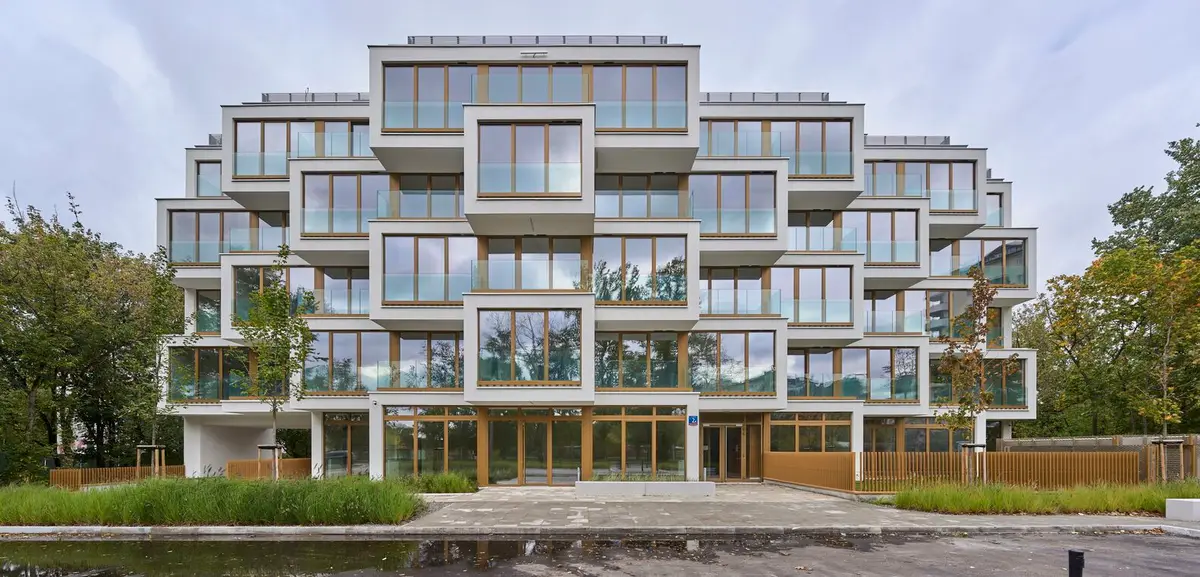
Potocka Apartments by POLE Architekci: A Context-Responsive, Sculptural Residential Block in Warsaw
Sculptural residential building in Warsaw featuring staggered modular forms, large windows, and contextual design that maximizes sunlight, privacy, and openness.


Project Title: Potocka Apartments Architects: POLE Architekci (Bartłomiej Popiela, Łukasz Gniewek, Wojciech Gajewski) Location: Żoliborz District, Warsaw, Poland Year Completed: 2017 Gross Floor Area: 2000 m² Photography: Jakub Certowicz Collaborators:
- Structural Design: Adam Bobryk Konstrukcje
- Interior Design: POLE Architekci
- Lighting Design: AG Light
- Landscape Design: Rock & Flower
- Manufacturers: Fin-Pro, IDS, Urzędowski
A Thoughtful Urban Infill in Historical Żoliborz
Nestled on Potocka Street in Warsaw’s historical Żoliborz district, the Potocka Apartments by POLE Architekci offer a contemporary response to the complexities of urban renewal. Located on a compact plot once occupied by two deteriorating structures, the project replaces these outdated buildings while paying close attention to historical context, existing vegetation, and neighborhood scale.
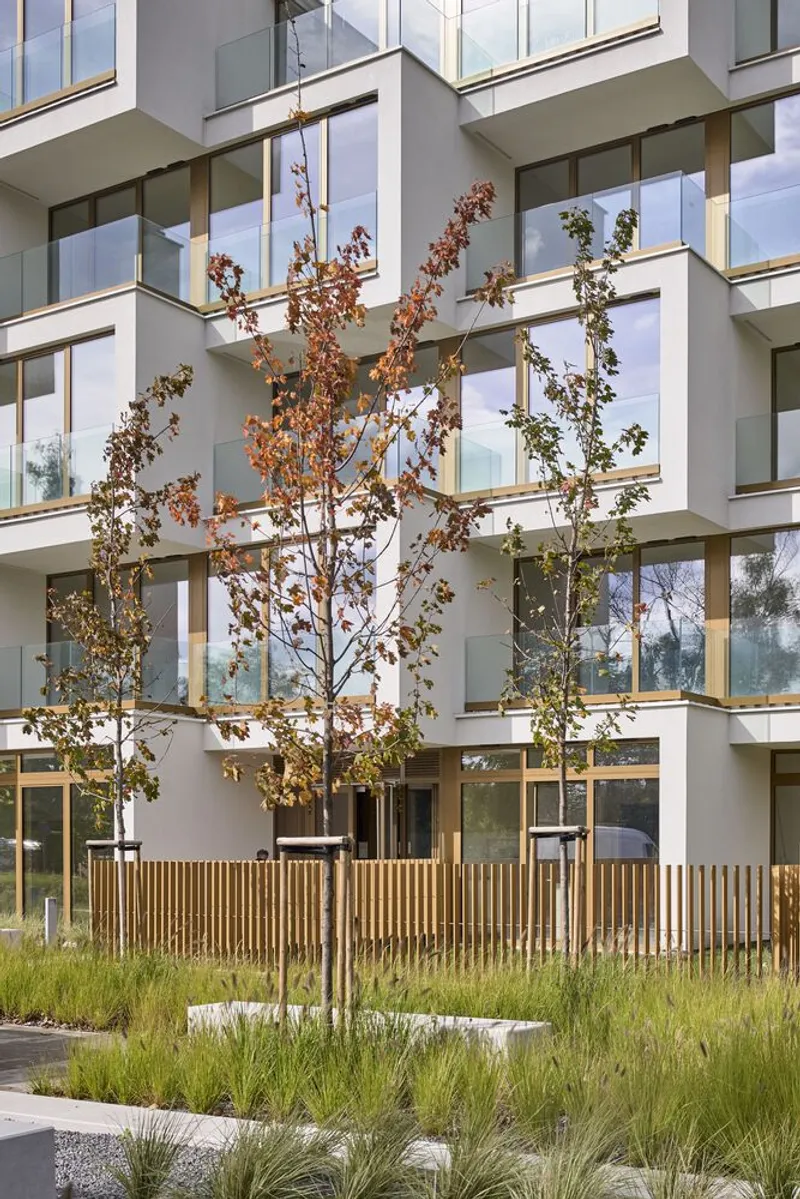
The site, a remnant of the original Marymont-Potok housing estate layout, contrasts with its towering post-war neighbors and the expansive Marymont sports complex across the street. Instead of aligning with the local zoning plan that encourages continuous street frontage, the architects made a deliberate choice: to create a freestanding residential building surrounded by open green space, preserving the neighborhood's original suburban rhythm.
Irregular Geometry for Light, Views, and Privacy
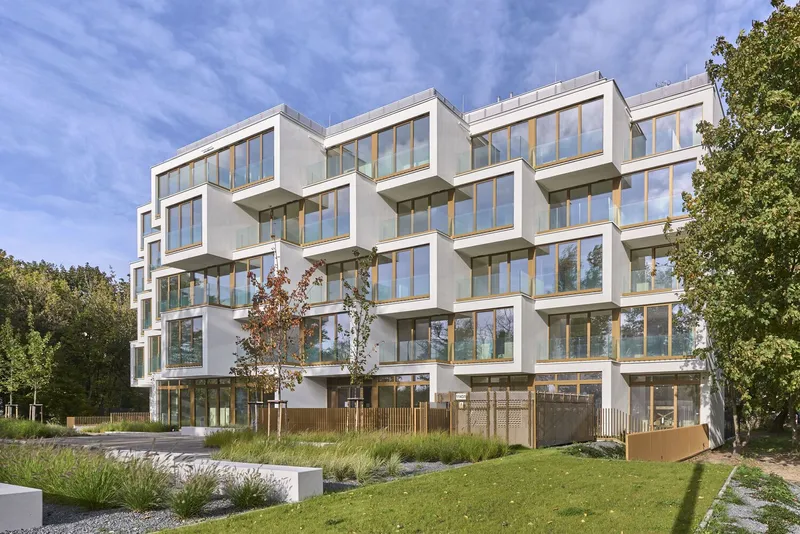
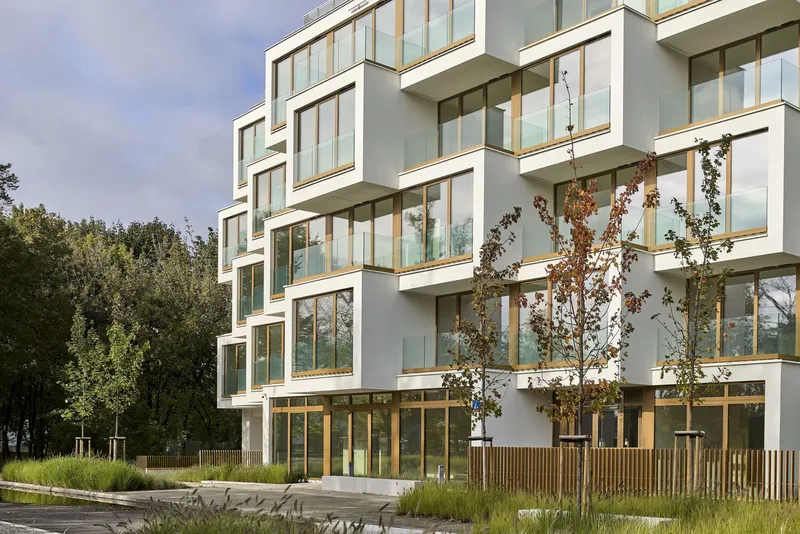
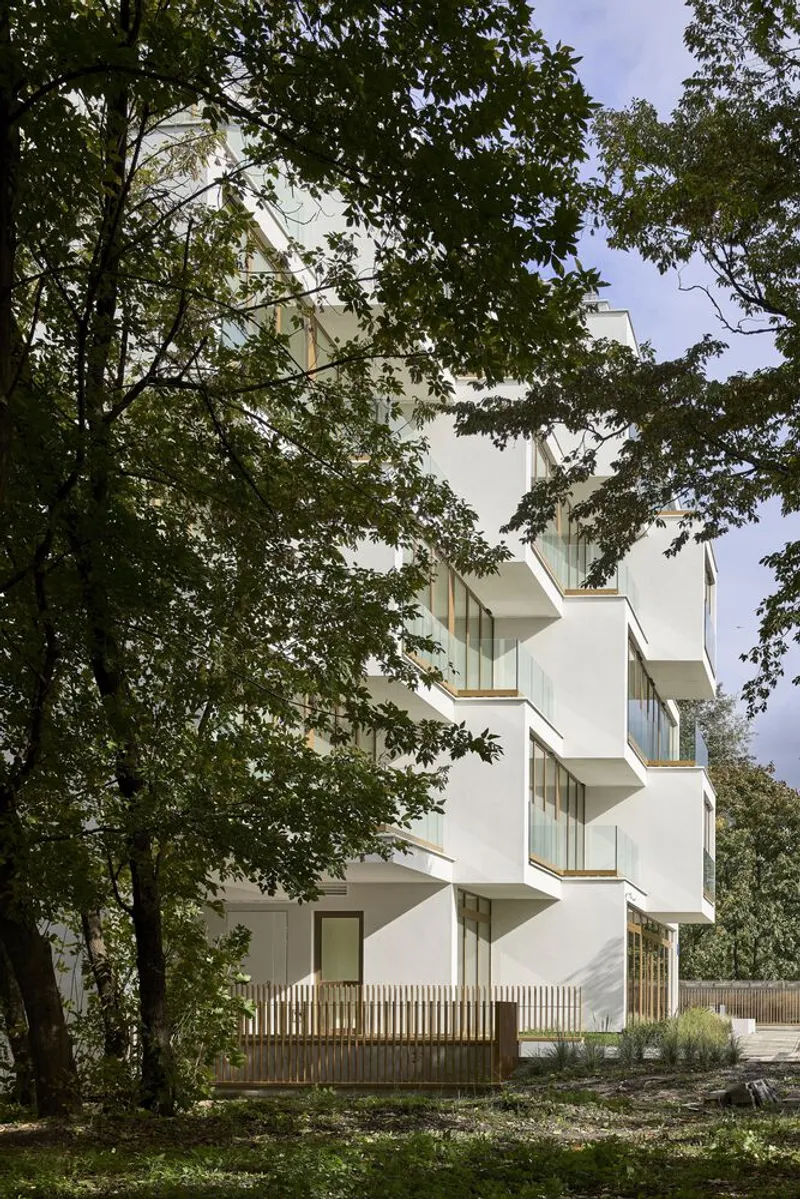
At the core of the architectural concept is an irregular rhombus-shaped footprint, formed by staggered modules that adapt to sun paths and site constraints. This form enhances natural light exposure, particularly from the west, and opens views in all directions.
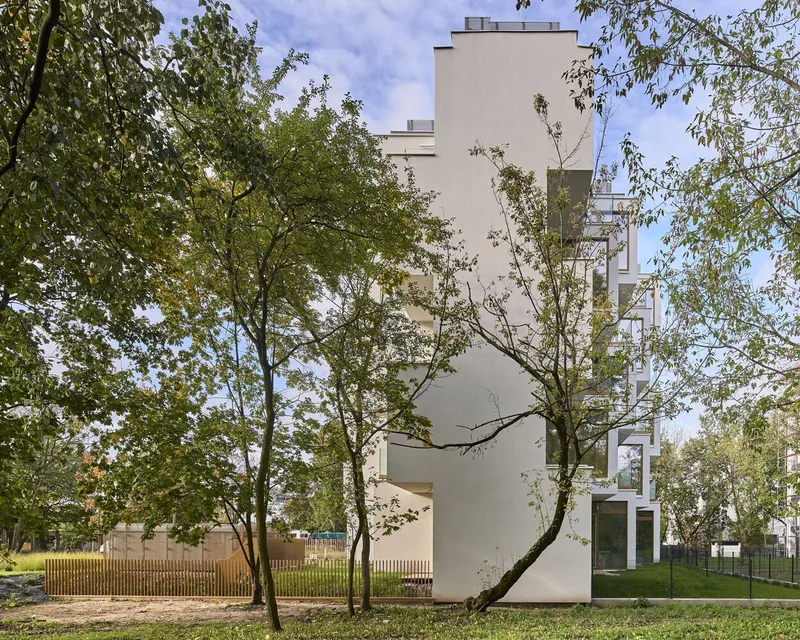
Had the building followed a strict street-parallel orientation, the garden-facing units would have lost sunlight, and neighbors’ views would be obstructed. Instead, the dynamic massing ensures both visual porosity and solar optimization, allowing the building to breathe within its natural surroundings. The elevations are deliberately varied, and the result is a structure that is equally compelling from every angle.
Modular Design with Human Scale
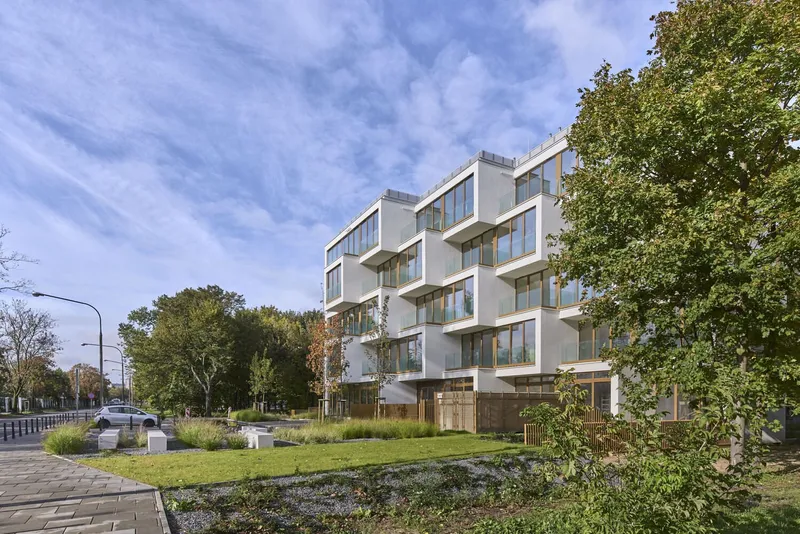
Despite its modernity, the building maintains a human scale, with just five floors and an elevated ground level that meets the risen street level of Potocka. The subtle height increase enabled the architects to integrate two levels of automated underground parking, maximizing functional use of the sloped terrain.
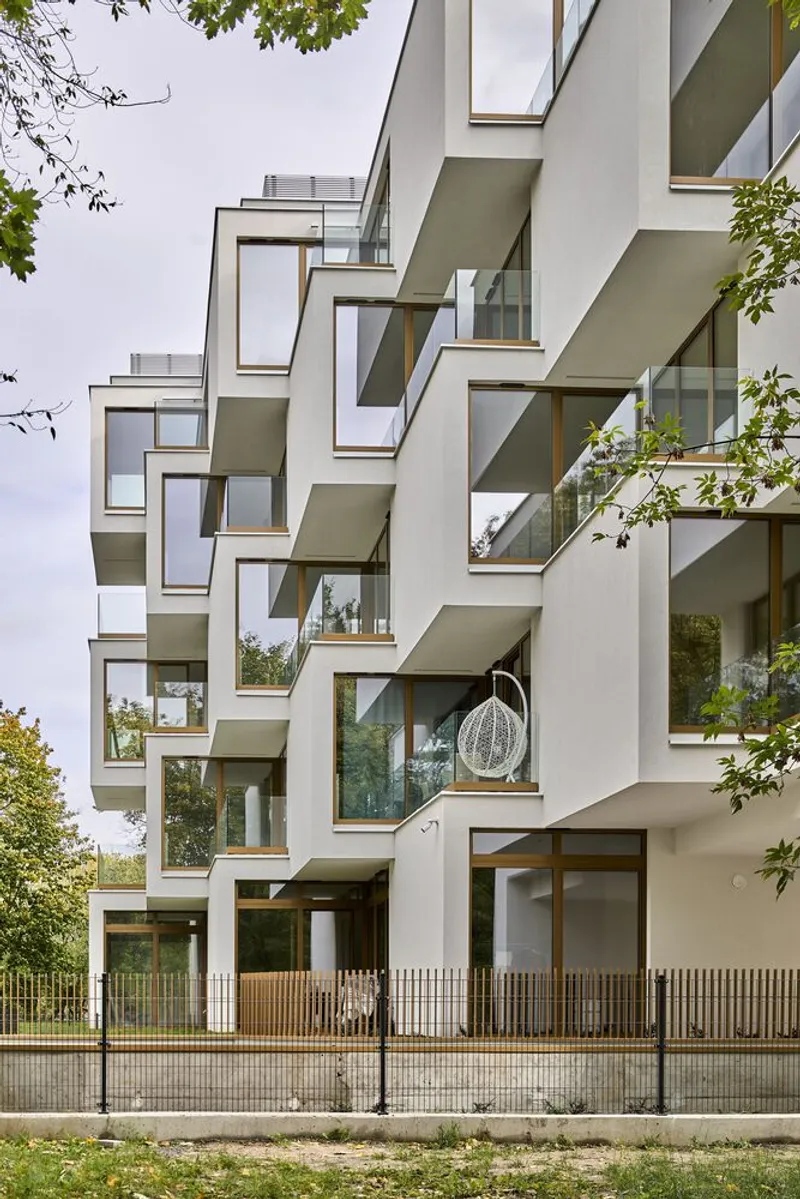
The core structure relies on 8-meter-square reinforced concrete modules, which act as the project’s organizing grid. This modularity allowed the architects to customize unit sizes and insert glassed-in oriels and terraces into the volume. These sculptural insertions break down the mass visually and create private outdoor spaces that enhance living quality.
Interiors Rooted in Historic Typologies
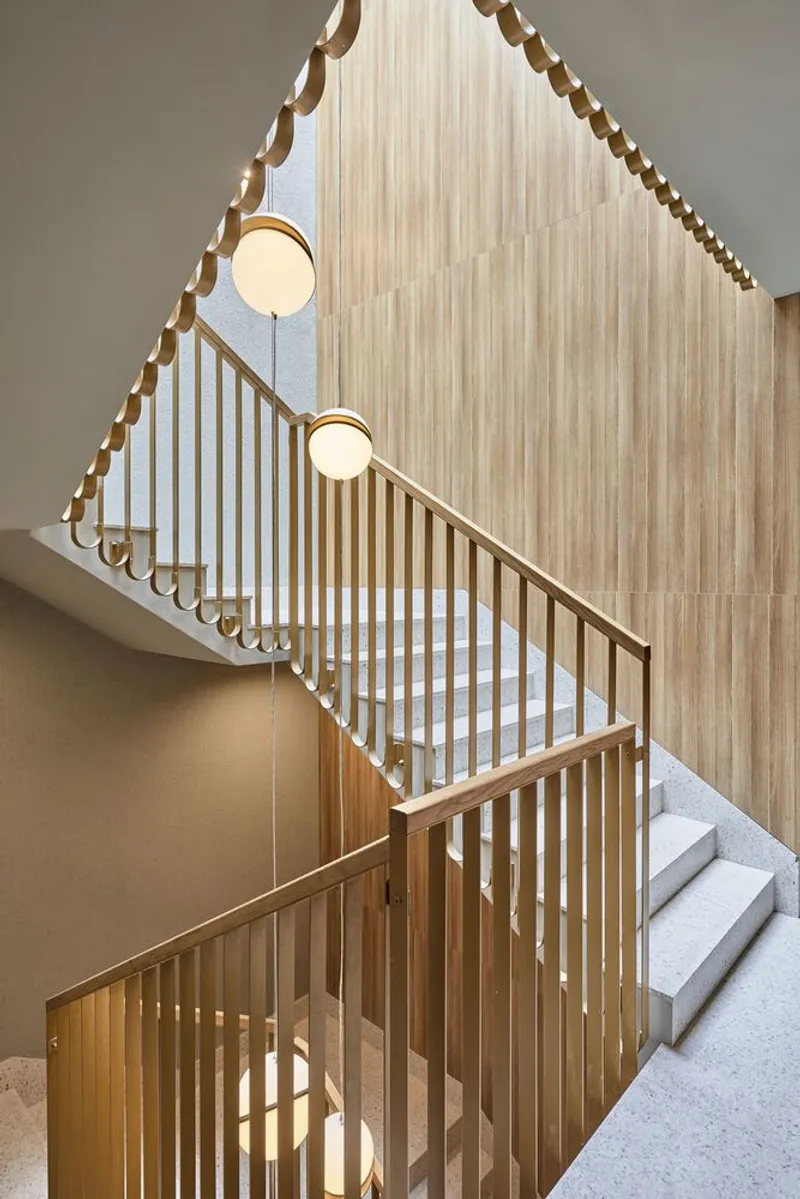
The interior design echoes early 20th-century Warsaw apartment blocks. A central open staircase flooded with natural light defines the vertical circulation, creating a sense of openness and transparency. The stairwell’s generous proportions and skylit atrium make it not just a functional necessity but also an architectural statement.
The apartments are arranged with flexibility in mind. The shifting modules allowed the architects to craft varied floorplans, accommodating a mix of unit sizes without compromising spatial quality. Vertical glass extensions provide access to rooftop areas in larger apartments, blending private luxury with urban living.
Material Restraint and Expressive Form
While the form of the building is intricate, its material palette is restrained. The facades are simply rendered in plaster, proving that sculptural architecture need not rely on expensive finishes to make an impact. Instead, the architecture derives its expression from depth, geometry, and proportion—with large windows punctuating the elevations to maximize light, air, and visual engagement with the surrounding landscape.
The interplay between solid and void, between staggered projections and recesses, creates a natural separation between units, ensuring privacy while maintaining visual unity across the building.
The Potocka Apartments project by POLE Architekci is a masterclass in context-sensitive residential design. By responding intelligently to site constraints, solar orientation, and urban history, the architects have created a building that respects its environment while asserting a distinct identity. It stands as a low-rise urban landmark, combining modern living with a deep understanding of place, light, and form.


Popular Articles
Popular articles from the community


LT2A and OPEN Architectes Thread a Brick and Glass High School Through a Wooded Belgian Campus
In Braine-l'Alleud, a 3,000 m² wing for Collège Cardinal Mercier pairs pale brick with a glazed colonnade, deferring to a small chapel and a dense wood.

Cube Design Draws an Ecological Corridor Between Two Shenzhen Hills with the Nankai Building
Beside Shenzhen's container docks, the Nankai Building pairs stacked balconies with a climbing green screen to connect two hillsides across its height.

GROUP A Strips a 1969 Rotterdam Harbor Headquarters to Its Frame and Wraps It in Timber Louvers
In Rotterdam's M4H harbor district, Ferro Offices reuses a 1969 frame, adds one timber storey and reaches BREEAM-NL Outstanding.

Jaramillo Van Sluys Arquitectura and Urbanismo Turn a Demolished Registry Lot in Quito into an Orchard Plaza
In Quito's Centro Histórico, a 2,800 m² plaza exposes the San Agustín convent wall and redraws its lost Augustinian orchard in volcanic stone.

Similar Reads
You might also enjoy these articles


Hodi-Mandai Geram
Project Function: Preservation and revitalization of the Intangible heritage and socio-spatial identity of the Hodi by Housing, Cultural Memory Center, Sacred Grove, landscape, local tourism economy


Olio Towers: A Mid-Rise for Performers That Fuses Housing, Rehearsal, and Stage
Located blocks from Houston's Theater District, this modular tower stacks living units around a central performance atrium.

Oasis: Modular Green Housing Carved into Dhaka's Urban Fabric
A shortlisted Plugin Housing entry reclaims unauthorized settlements in Dhaka with stepped concrete volumes, green roofs, and ventilation-driven design.

Black Hole: A Floating Megastructure for the Post-Physical Era
Emiliano Mazzarotto envisions a spherical, self-scaling arena where e-sports, digital hotels, and holographic stadiums replace traditional public space.

Explore College Of Art In Opole Competitions
Discover active competitions in this discipline

Challenge to reimagine the Iron Throne

Photograph architecture without architects

Illustrate the lost glory of Angkor Wat - Render Challenge

Design challenge to reuse E-waste
Comments (0)
Please login or sign up to add comments
No comments yet. Be the first to comment!