

PR House by Plus Idea Studio: A Vietnamese Climate-Responsive House Design for Sustainable Family Living
A climate-responsive Vietnamese home by Plus Idea Studio blending raw materials, passive design, and flexible spaces for sustainable family living.


Introduction to a Context-Driven Home in Phan Rang
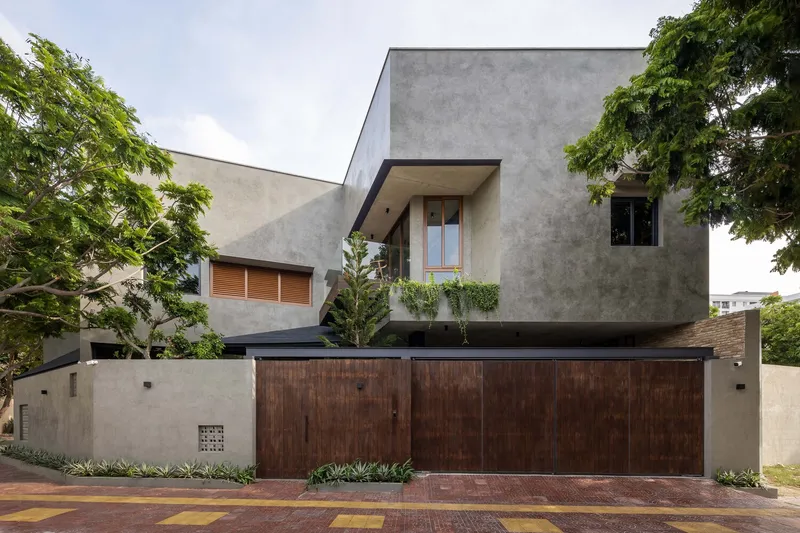
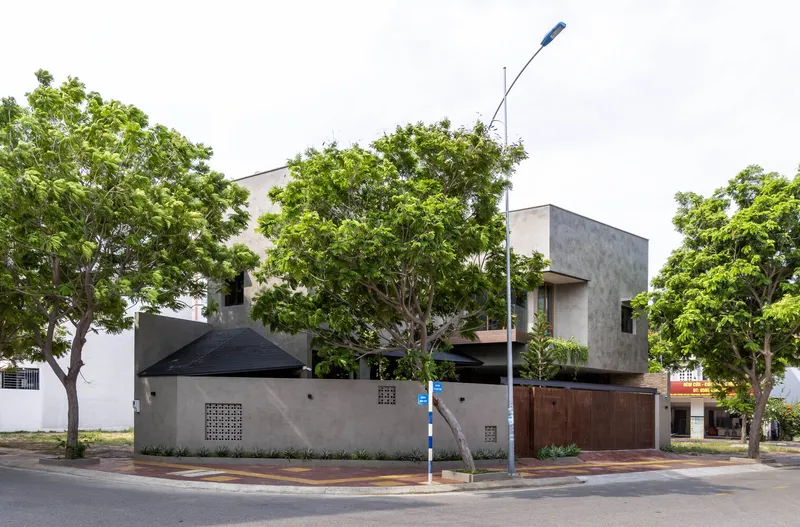
Situated in the coastal city of Phan Rang–Tháp Chàm, Vietnam, PR House by Plus Idea Studio is a 513 m² residence that exemplifies a thoughtful Vietnamese climate-responsive house design. Located in a high-density neighborhood exposed to intense sun and sea winds, this project is a model for sustainable living, blending architectural innovation with environmental sensitivity.

Designing for Climate and Community
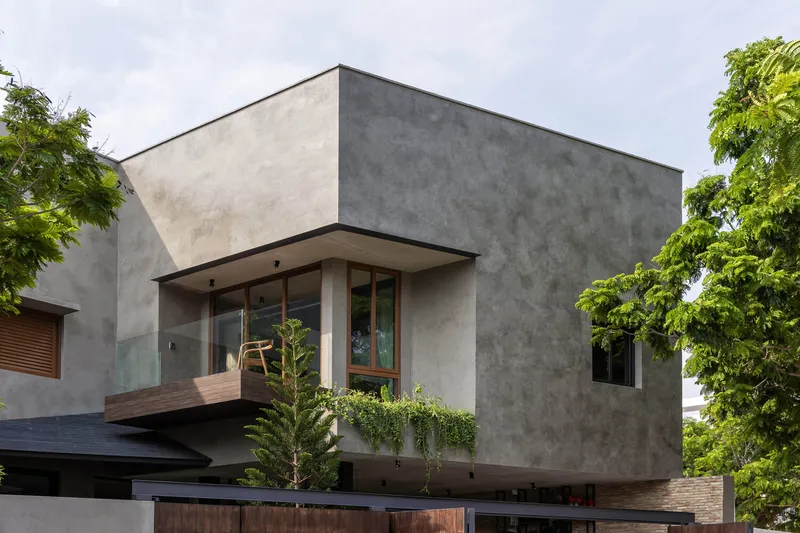
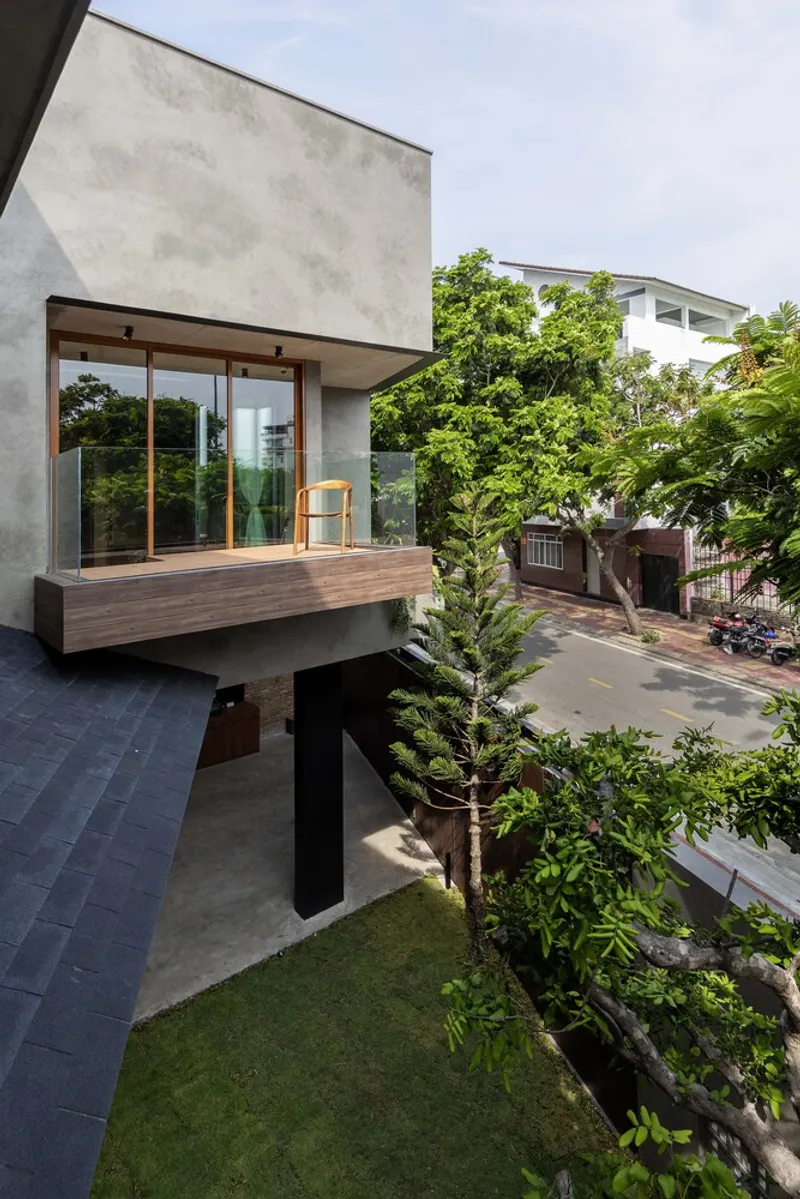
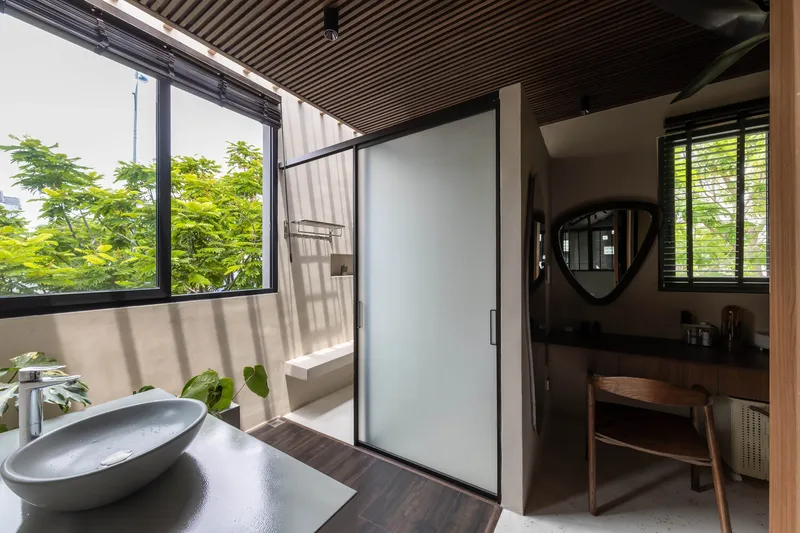
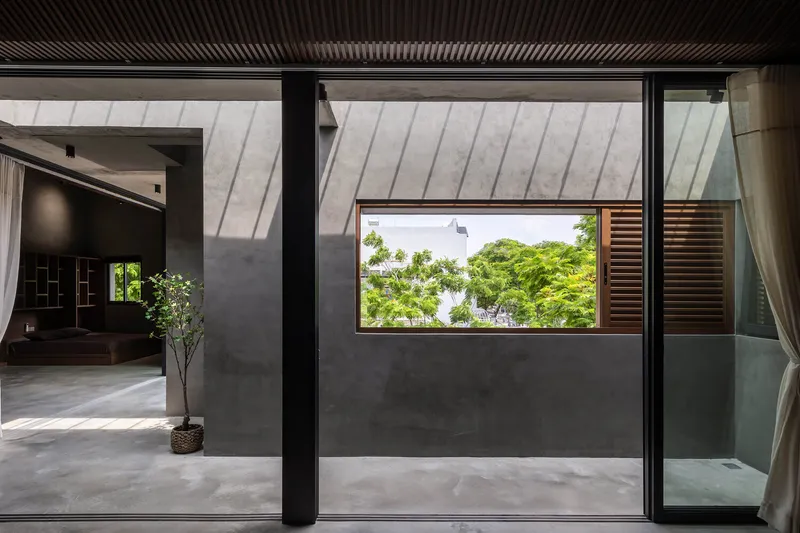
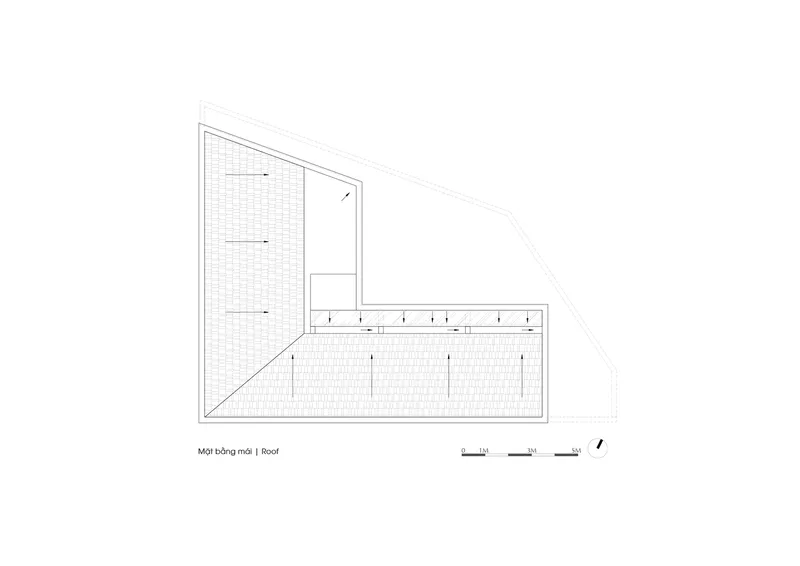
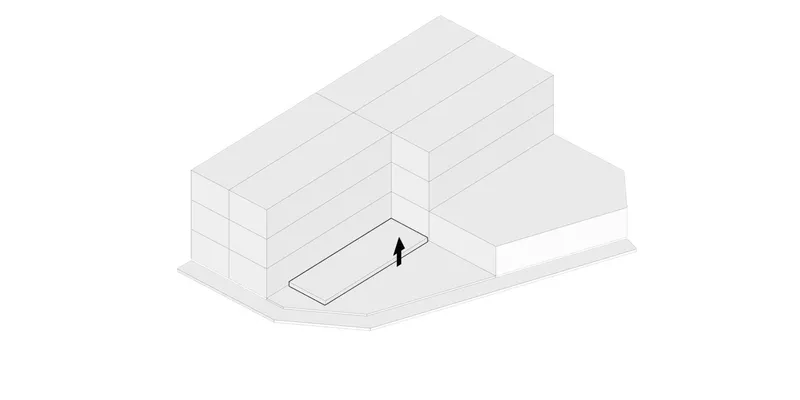
Responding directly to the local climatic challenges, the architects minimized direct solar gain while maximizing the cooling effects of natural sea breezes. The house, built on a compact 178 m² plot, comprises a ground floor, upper floor, and rooftop, organized to promote natural ventilation and shade. Elements such as wide eaves, dense vegetation, and shading devices are integrated into the façade to reduce heat while ensuring daylight enters softly throughout the day.


Open Plan Living to Enhance Family Connection
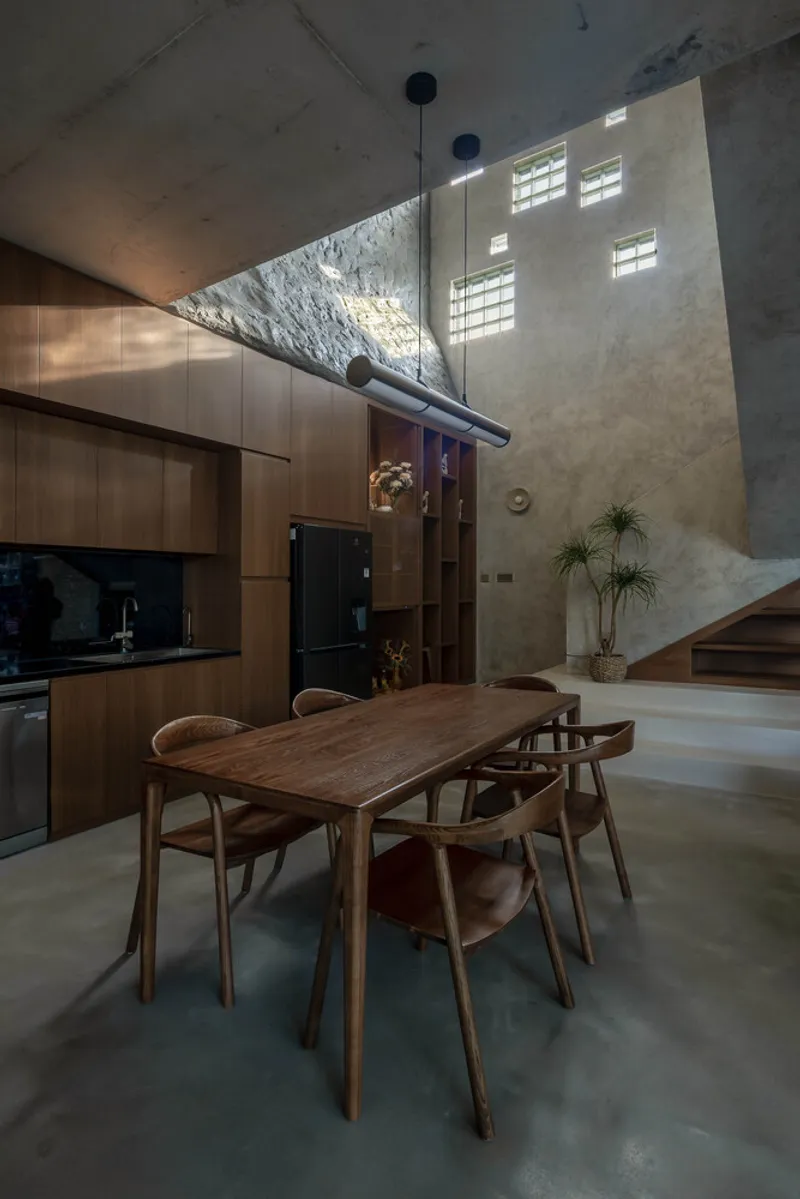
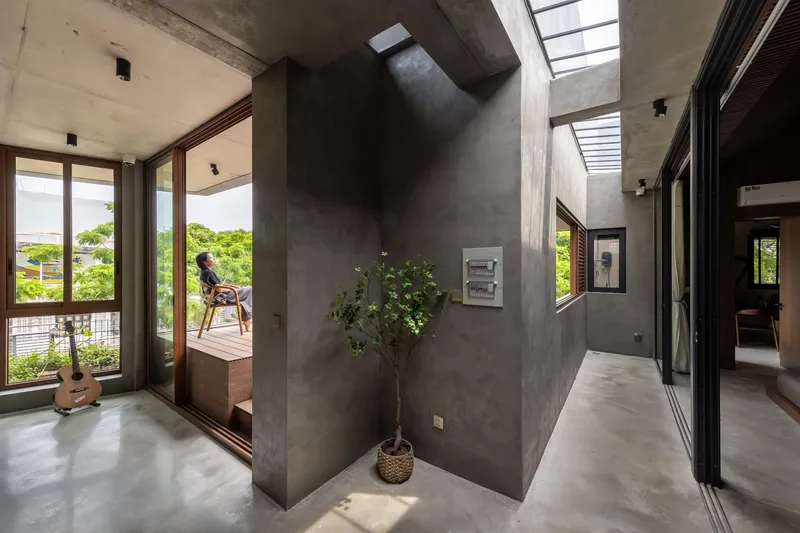
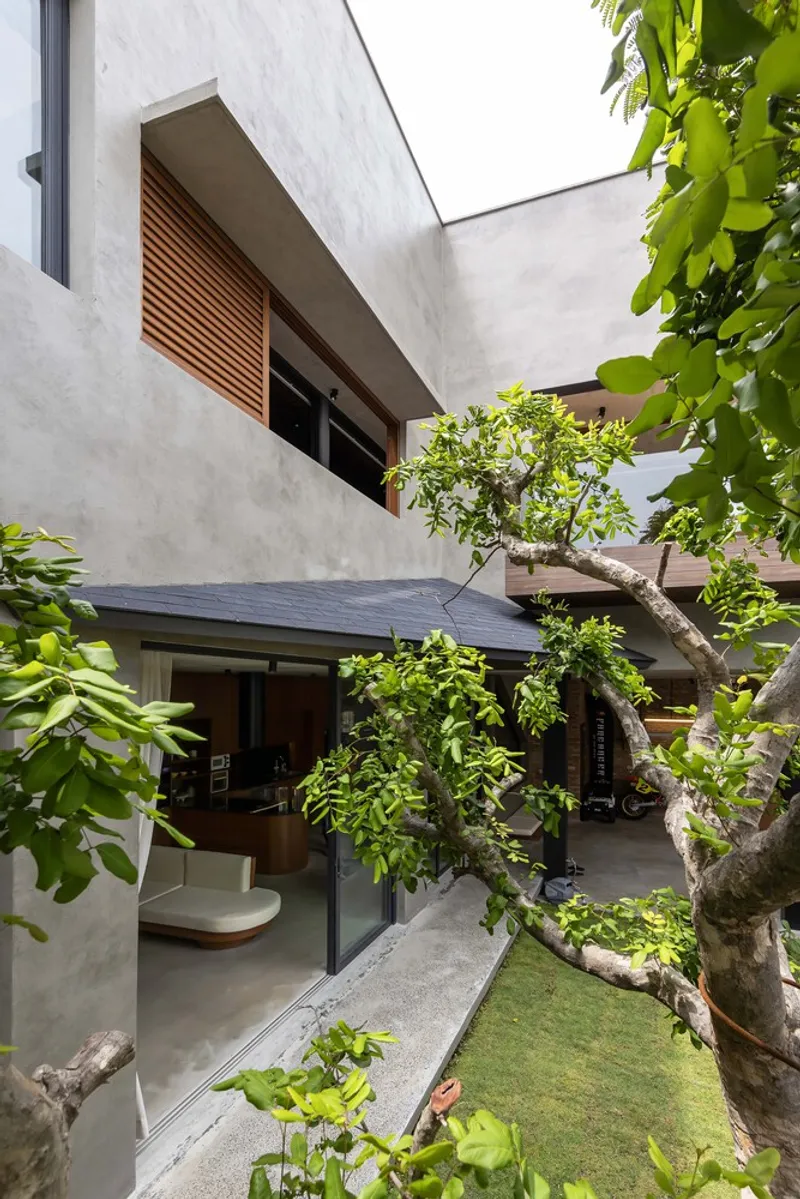
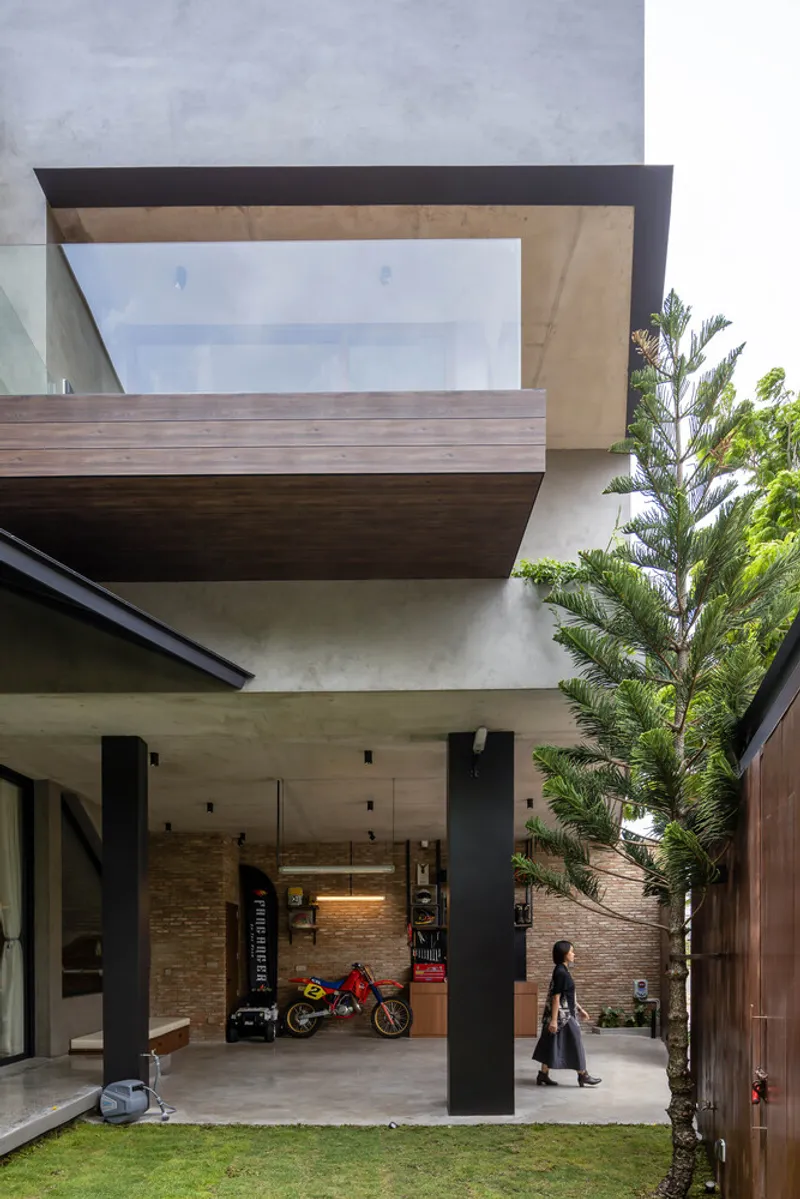
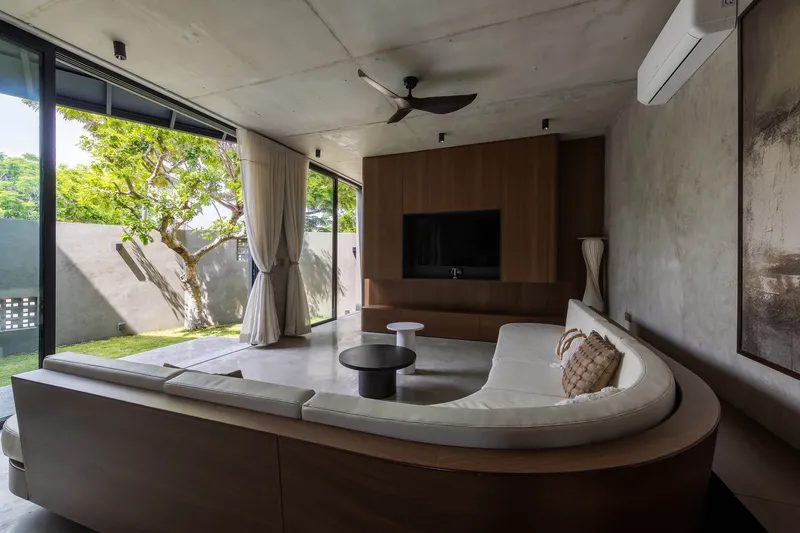
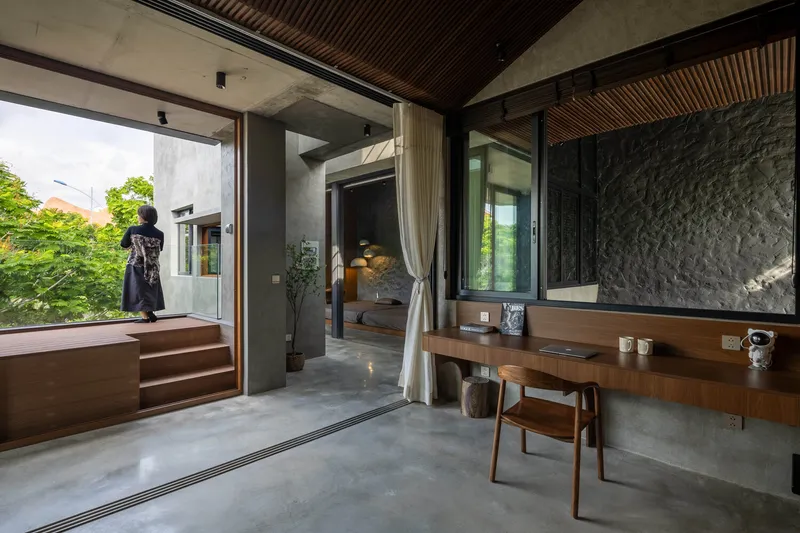
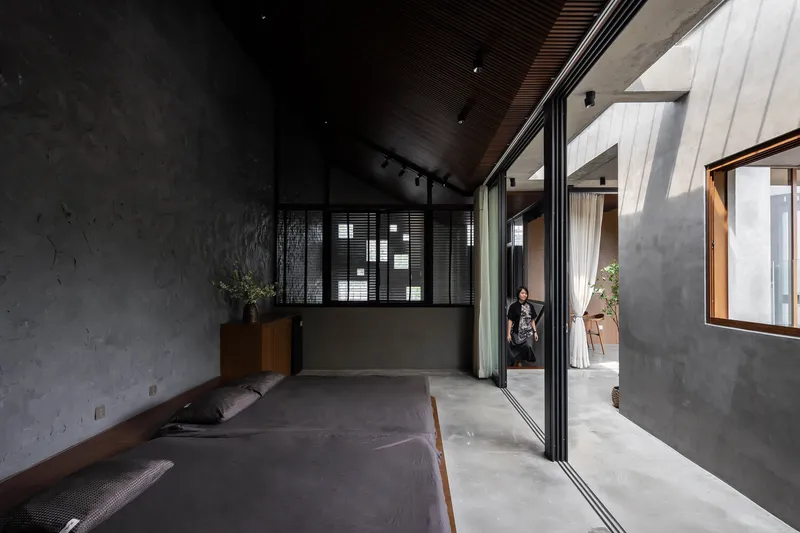
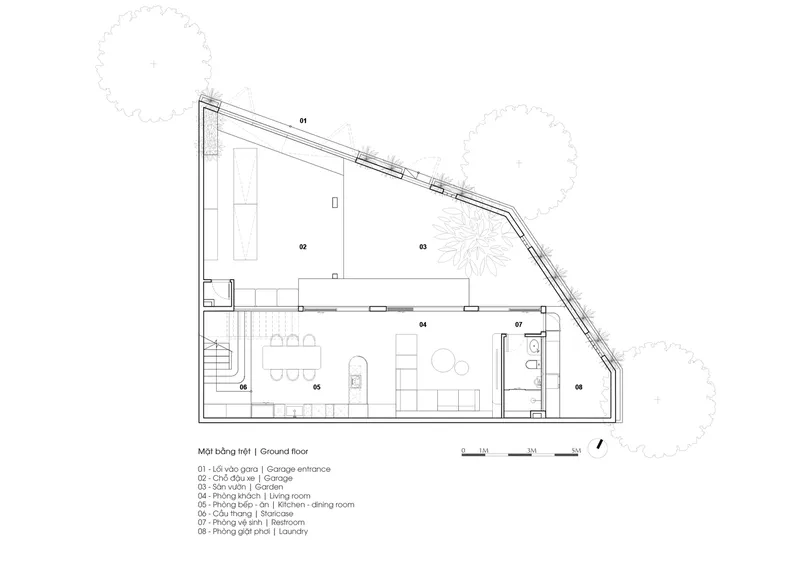
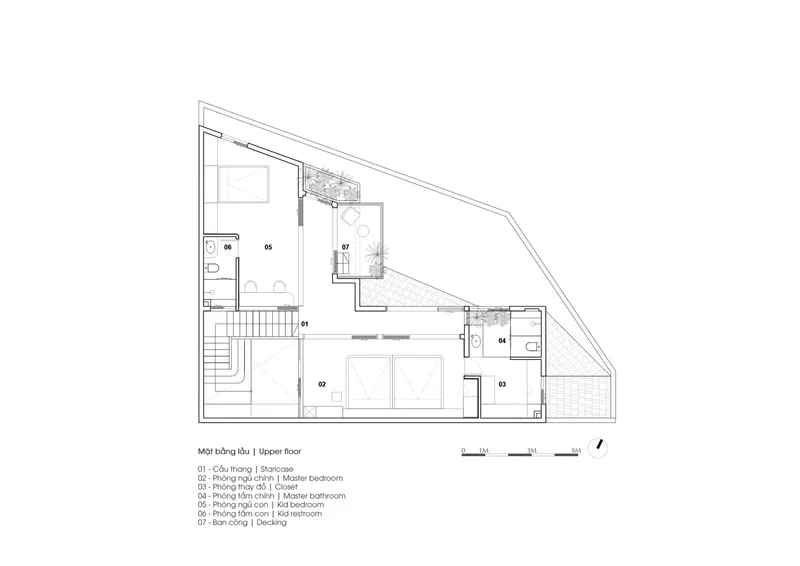
PR House was designed for a young couple with two children. The ground floor is open and fluid, allowing living, dining, and kitchen areas to merge without rigid partitions. This encourages frequent communication and shared experiences among family members. The upper level continues this open concept, using sliding partitions instead of conventional walls to create adaptable spaces that shift between private and communal as needed.


Sustainable Materials and Raw Finishes
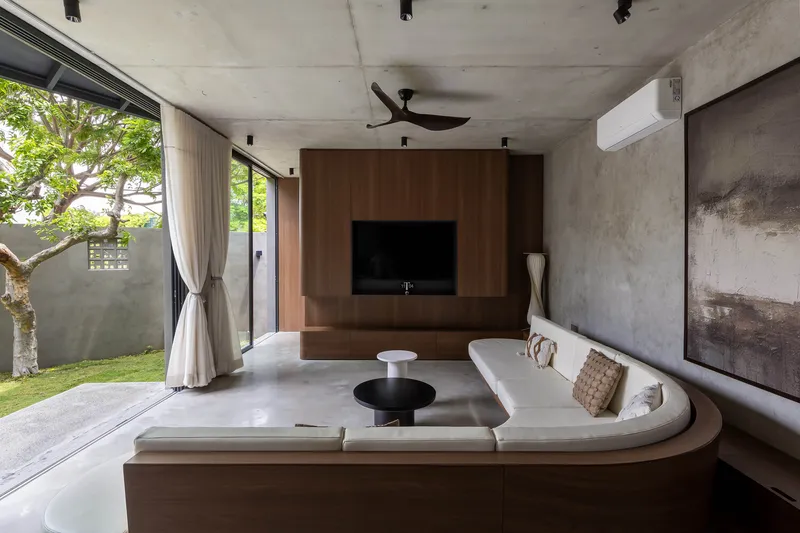
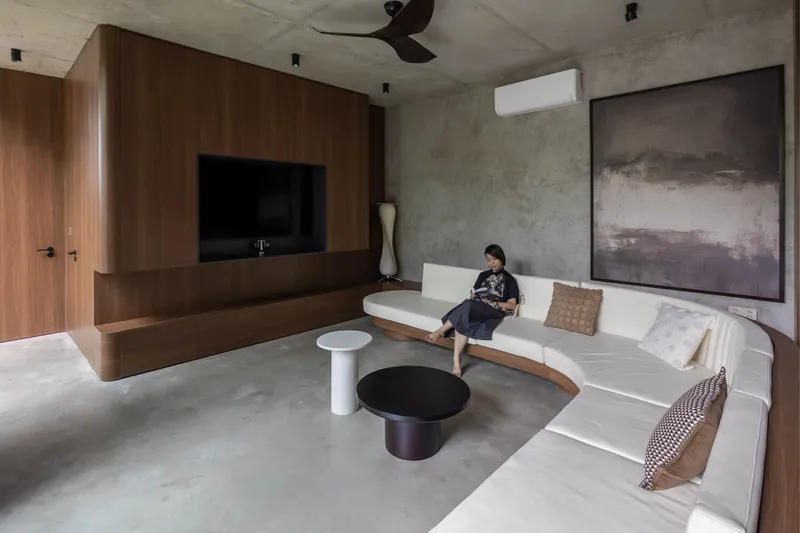
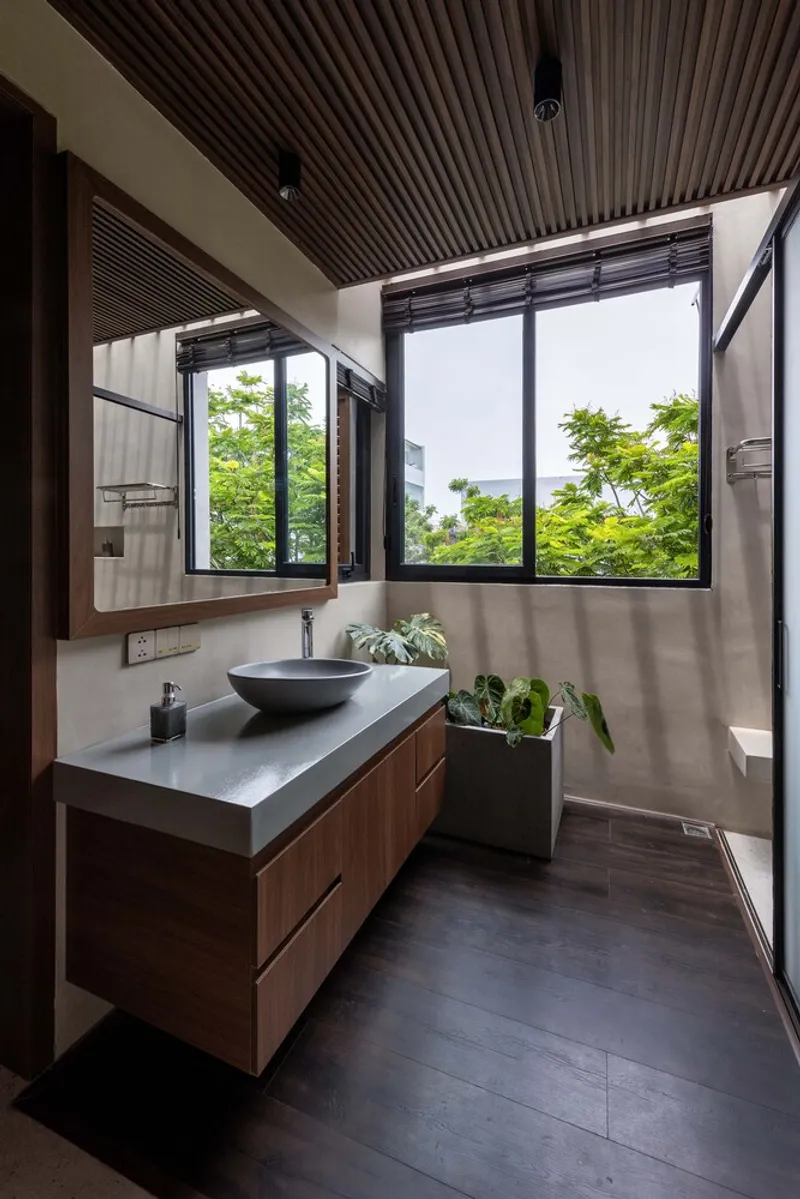
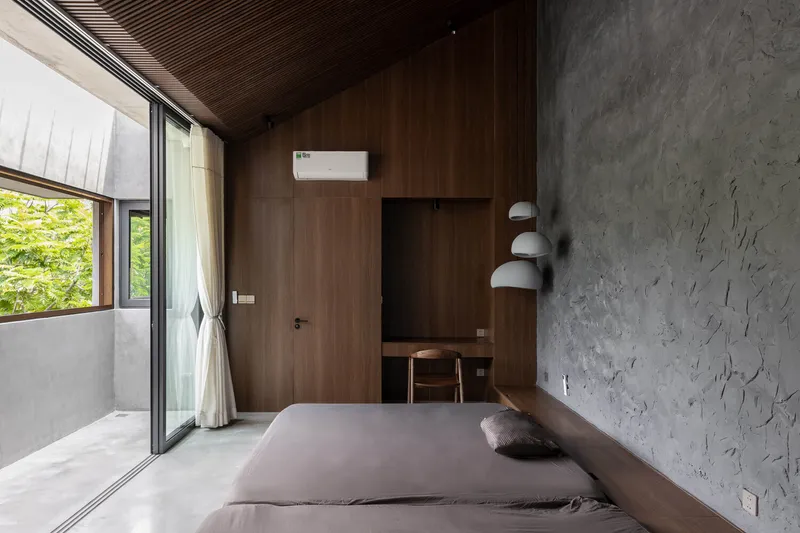
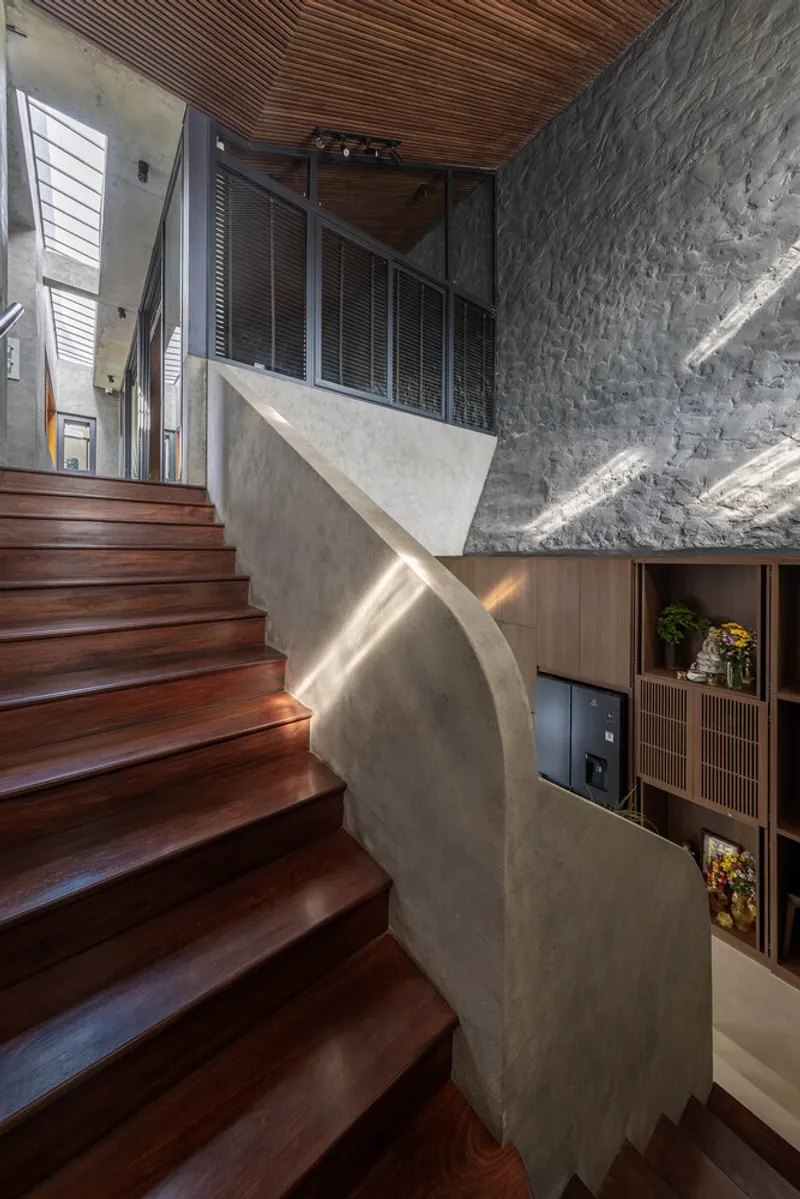
Material choices in PR House reflect both sustainability and local identity. Rather than conventional tile or plaster finishes, the design embraces exposed raw concrete for walls, ceilings, and floors. This honest use of material adds character while reducing maintenance and energy-intensive finishes. The concrete double-slab system is structurally robust and also facilitates precise integration of technical infrastructure, maintaining the minimalist aesthetic.

Lighting and Ambience
Carefully orchestrated lighting plays a key role in shaping the home's ambiance. Directional, warm-toned fixtures contrast with the cool material palette to create a welcoming and intimate environment. These lighting decisions complement the architecture’s natural strategies, enhancing the overall comfort and spatial quality.
Architectural Expression of Sustainability
PR House goes beyond conventional domestic architecture. It is a spatial expression of sustainability, demonstrating how a Vietnamese climate-responsive house design can harmonize environmental efficiency, family intimacy, and contemporary aesthetics. The use of natural ventilation, passive cooling techniques, and thoughtful zoning underscores the home’s adaptability in a changing climate.

A Model for Modern Vietnamese Residential Architecture
In blending vernacular strategies with modern spatial principles, Plus Idea Studio crafts a home that is both future-ready and rooted in tradition. PR House stands as a prototype for new residential developments in tropical climates—an architecture that is honest, climate-conscious, and deeply humane.
All the photographs are works of Paul Phan


Popular Articles
Popular articles from the community


longwave studio Reorganizes a 112 m² Tainan Apartment Around the Daily Routines of a Family and Two Cats
In Tainan, Taiwan, birch plywood, rust-red furniture and a freestanding plaster wall link arrival, storage, work and family life in one apartment.

Juan García Correa, John González and Claudia Rueda Sink a Circular Amphitheater into a Manizales Engineering Building
On the La Nubia campus in Manizales, Colombia, the S1 Building folds labs and offices into a hillside of ramped lawns that double as a campus route.

U.GA Architects Wraps an Oval Rooftop Pool in Curved Board-Formed Concrete on Busan's Jeollidan-gil
In Busan's Jeonpo-dong, a 454 m² mixed-use block stacks a neighborhood facility, guest rooms and an oval rooftop pool inside spiraling concrete walls.

Jaramillo Van Sluys Arquitectura and Urbanismo Turn a Demolished Registry Lot in Quito into an Orchard Plaza
In Quito's Centro Histórico, a 2,800 m² plaza exposes the San Agustín convent wall and redraws its lost Augustinian orchard in volcanic stone.

Similar Reads
You might also enjoy these articles

Gil Mello Arquitetura Tilts a Single Roof Toward the Waterfalls on a Plateau Above Aiuruoca, Brazil
In Aiuruoca, Minas Gerais, a 200 m² house of local labor and reclaimed poles pairs a low valley veranda with a tall mountain one.
U.GA Architects Wraps an Oval Rooftop Pool in Curved Board-Formed Concrete on Busan's Jeollidan-gil
In Busan's Jeonpo-dong, a 454 m² mixed-use block stacks a neighborhood facility, guest rooms and an oval rooftop pool inside spiraling concrete walls.

Felipe Hess Arquitetos Turns a Blind Stone Wall to the Street and Opens a Brazilian House onto a Courtyard and Canal
A canal-front house in Brazil hides behind painted stone and planting, then opens to an olive-tree courtyard, a reed-ceilinged porch and a curving pool.

David Macias Steps a Doorless Stone and Plaster House Down a Tropical Colombian Hillside
In the humid hills of Colombia, Threshold House replaces the front door with an open void and terraces its 850 m² down the slope instead of fighting it.

Explore Climate Responsive Competitions
Discover active competitions in this discipline

Challenge to reimagine the Iron Throne

Photograph architecture without architects

Illustrate the lost glory of Angkor Wat - Render Challenge

Design challenge to reuse E-waste
Comments (0)
Please login or sign up to add comments
No comments yet. Be the first to comment!