
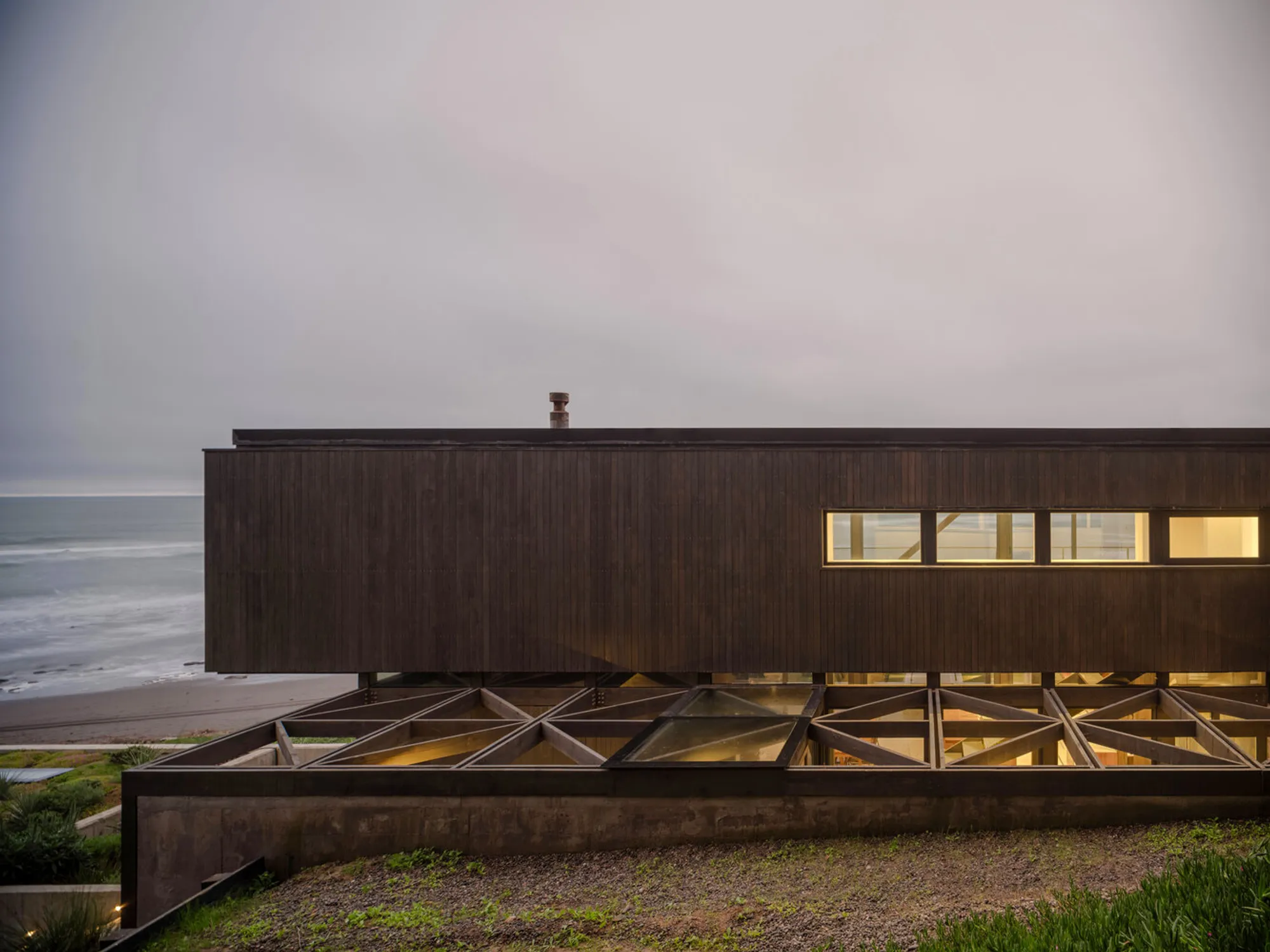
Primeriza House by Stanaćev Granados: A Harmonious Blend of Architecture and Nature in Chorrillos, Chile
Primeriza House by Stanaćev Granados blends wood, concrete, and terraces, harmonizing indoor-outdoor living with stunning Pacific Ocean views.


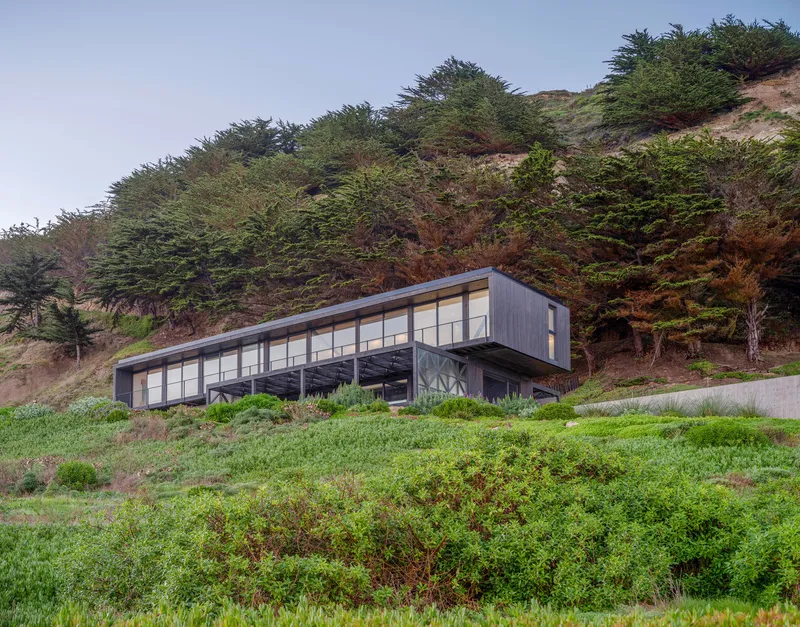
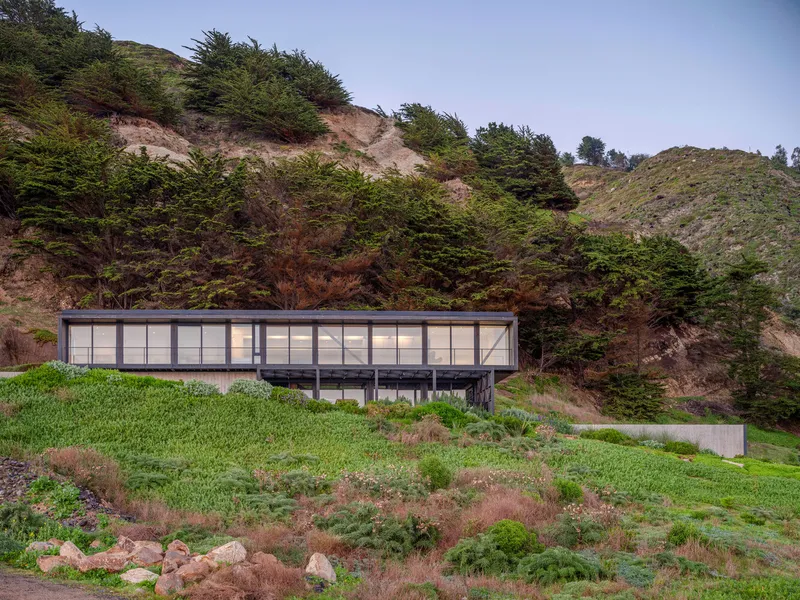
Nestled on a small clearing within a steeply sloped terrain, Primeriza House stands as a remarkable architectural response to its surroundings. Designed by the talented architects Stanaćev Granados, the residence offers breathtaking views of the Pacific Ocean to the front and is backed by an almost vertical slope adorned with dense cypress trees.
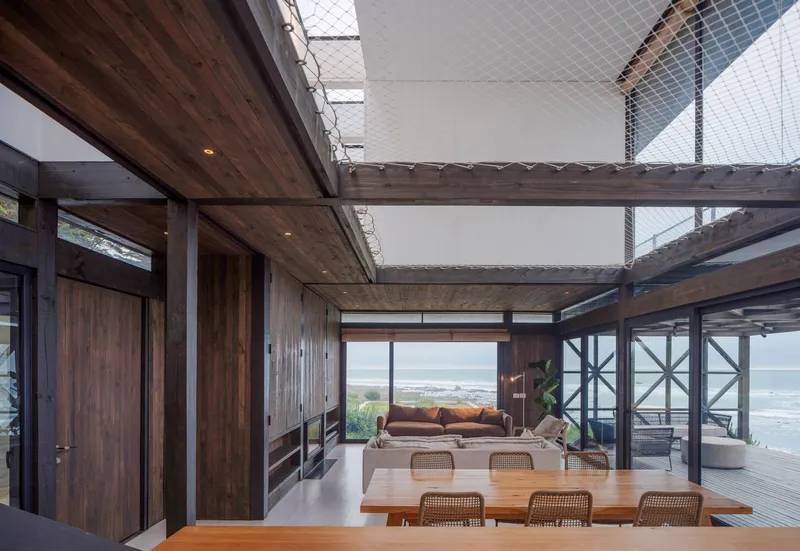
The clients’ vision emphasized outdoor living and sought to maximize the opportunities for inhabiting exterior spaces while also creating diverse interior environments with unique moods and intimate nooks. These guiding principles, combined with the site’s natural slope and climate conditions, shaped the home’s distinct volumes and seamless transitional spaces.
Architecture that Embraces the Landscape
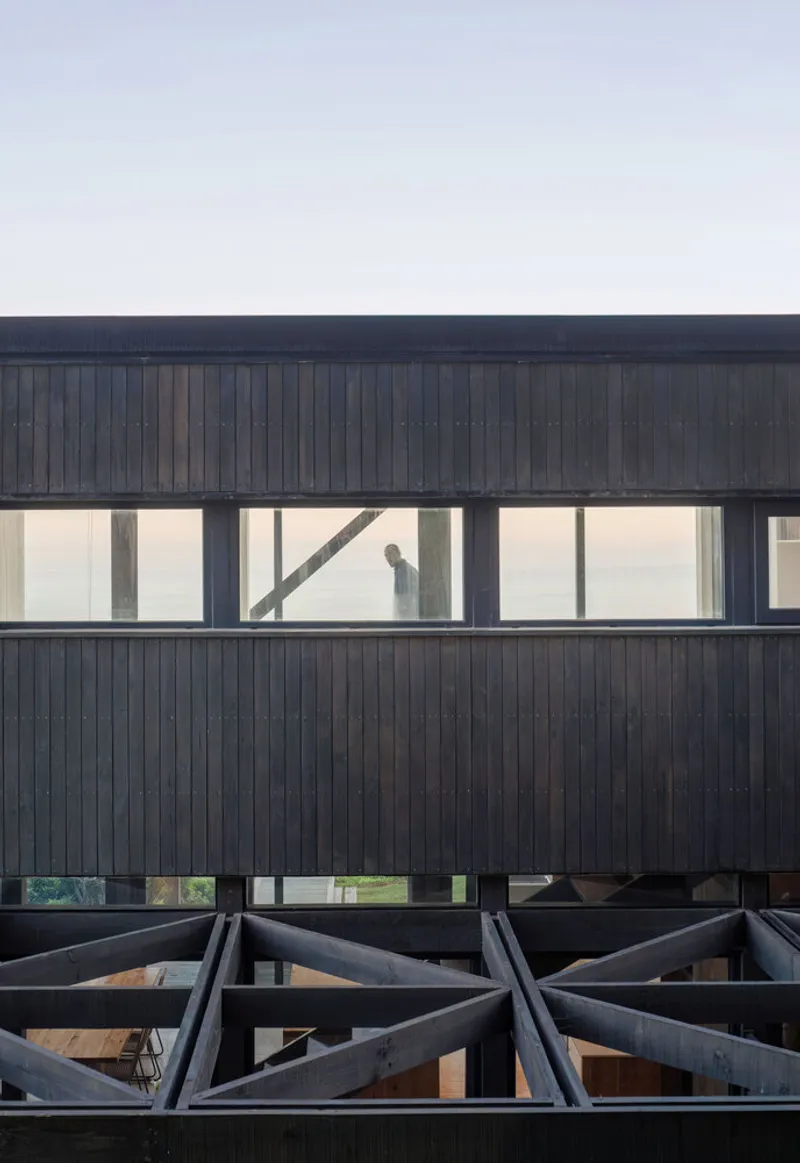
The home’s design strategically conquers the slope through a solid concrete base, accommodating a semi-buried garage and a spacious storage area. These retaining walls support the upper floors while allowing the surrounding terrain to flow naturally around the structure. The pedestrian entrance is cleverly tucked between the exposed concrete wall and landscaped hill, blending harmoniously into the vegetation.
A large staircase landing acts as the first intermediary space upon reaching the ground level, leading into a windbreak porch and mudroom. This transparent prism filters views toward a small patio, creating a kaleidoscopic interplay of interior and exterior spaces.
Light, Space, and Materiality
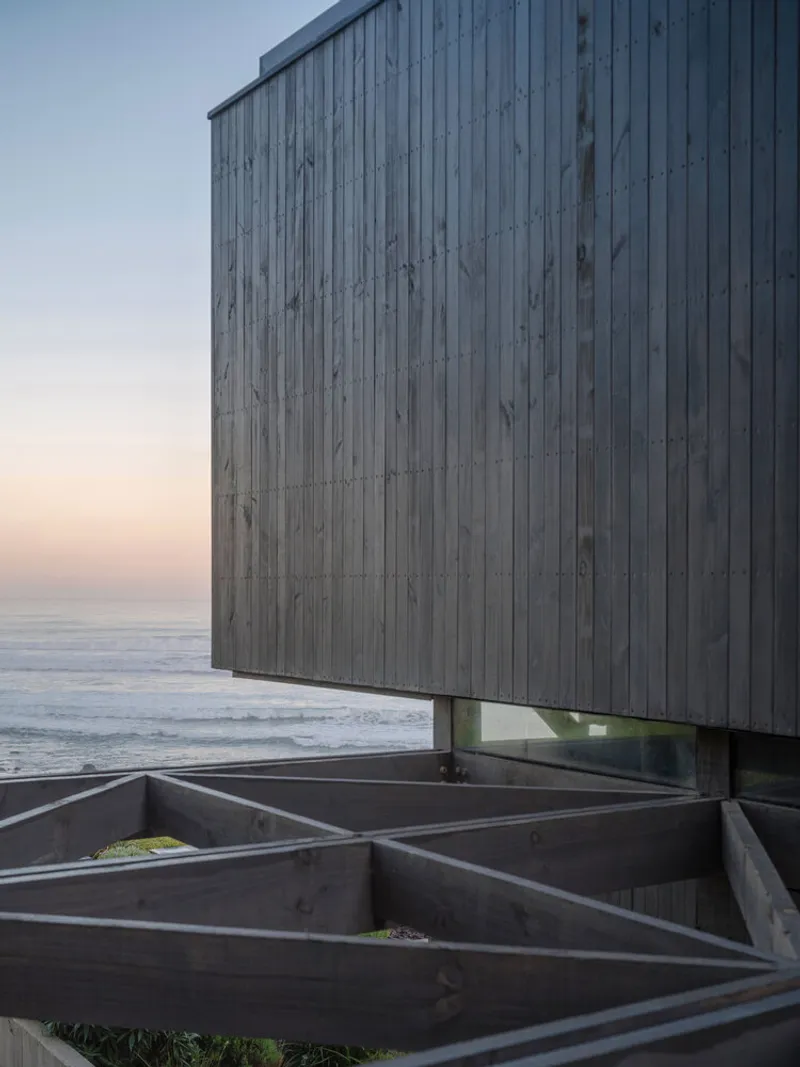
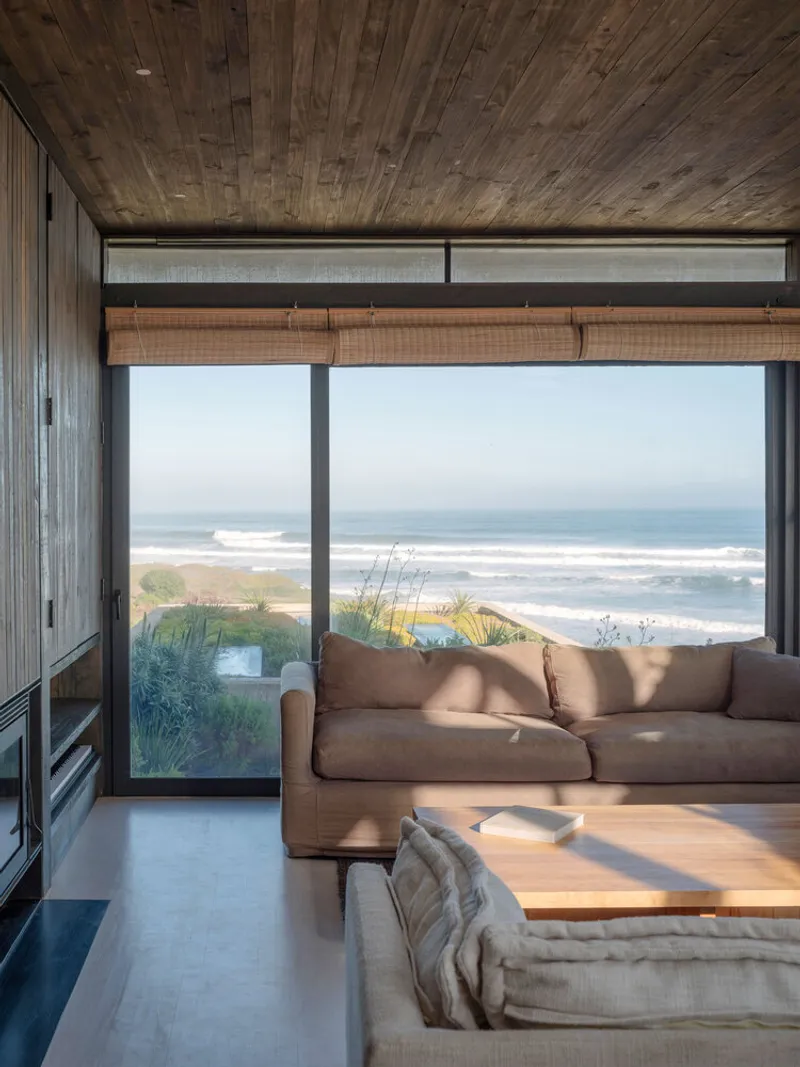
The main living area contrasts the solid base with a wooden structure and floor-to-ceiling windows, connecting visually with the main terrace to the north, a sunken landscaped patio to the west, and the entrance patio acting as a natural light well to the south. Storage and service spaces are integrated into solid perimeters, maintaining the openness of communal areas.
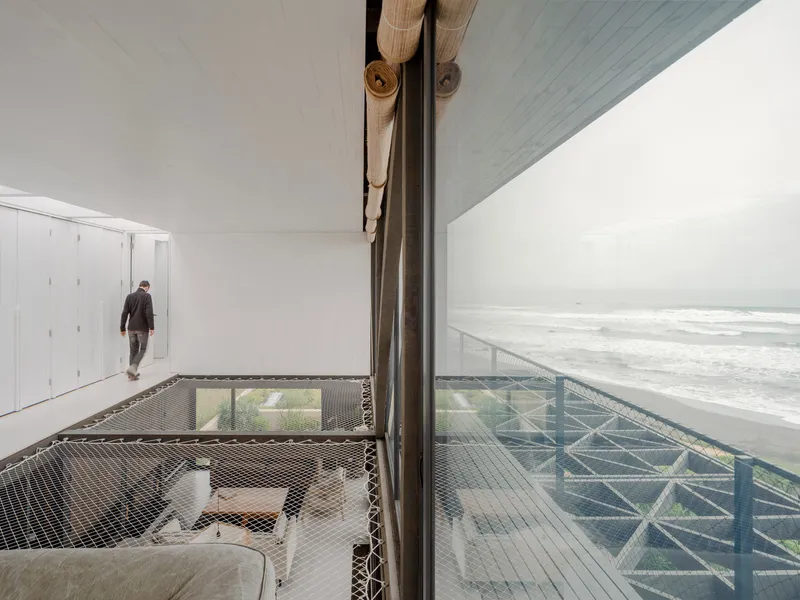
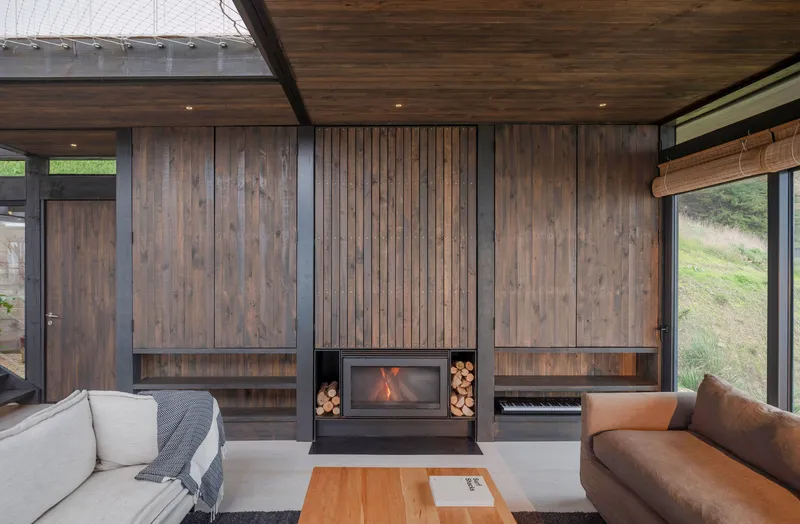
Inside, the living and dining room are defined by a bespoke fireplace and a double-height ceiling that visually links to the TV room and circulation areas leading to bedrooms. The interior mood shifts from dark, moody spaces on the first floor to pristine, white finishes on the second floor, fostering a harmonious environment for uninterrupted family life across two floors.
Wood is the primary interior material, treated differently for each level:
- First floor: Dark, semi-transparent tint absorbs light from all orientations.
- Second floor: Solid semi-gloss white stain reflects exterior colors, shifting with weather and daylight.
A playful suspended safety net spans between floors, inviting children’s play and family interactions while serving as an unobtrusive barrier in place of railings.
Seamless Indoor-Outdoor Connections
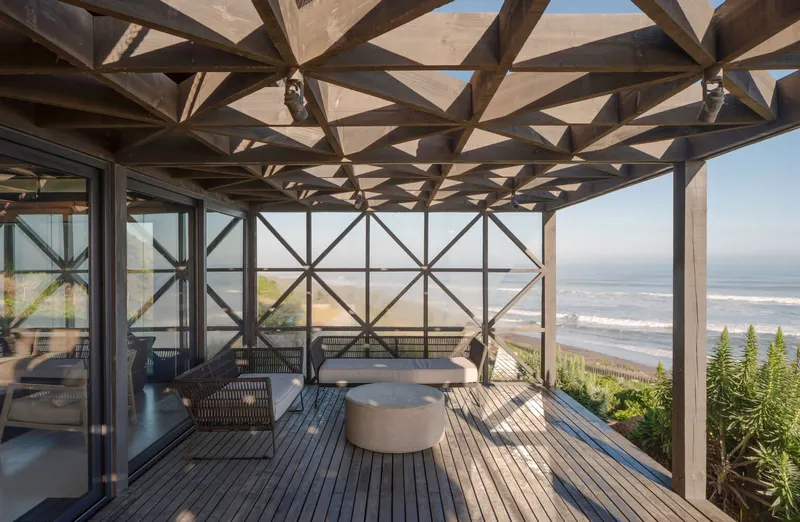
By integrating the home with the site’s topography, the design creates a fluid connection between interior and exterior spaces. A large terrace extends the main living area into the landscape, while the second-floor playroom opens to a small outdoor platform that connects through landscaping to the pool lounge and main terrace. Interior and exterior circulation form a continuous loop, enhancing the sense of openness and freedom throughout the property.
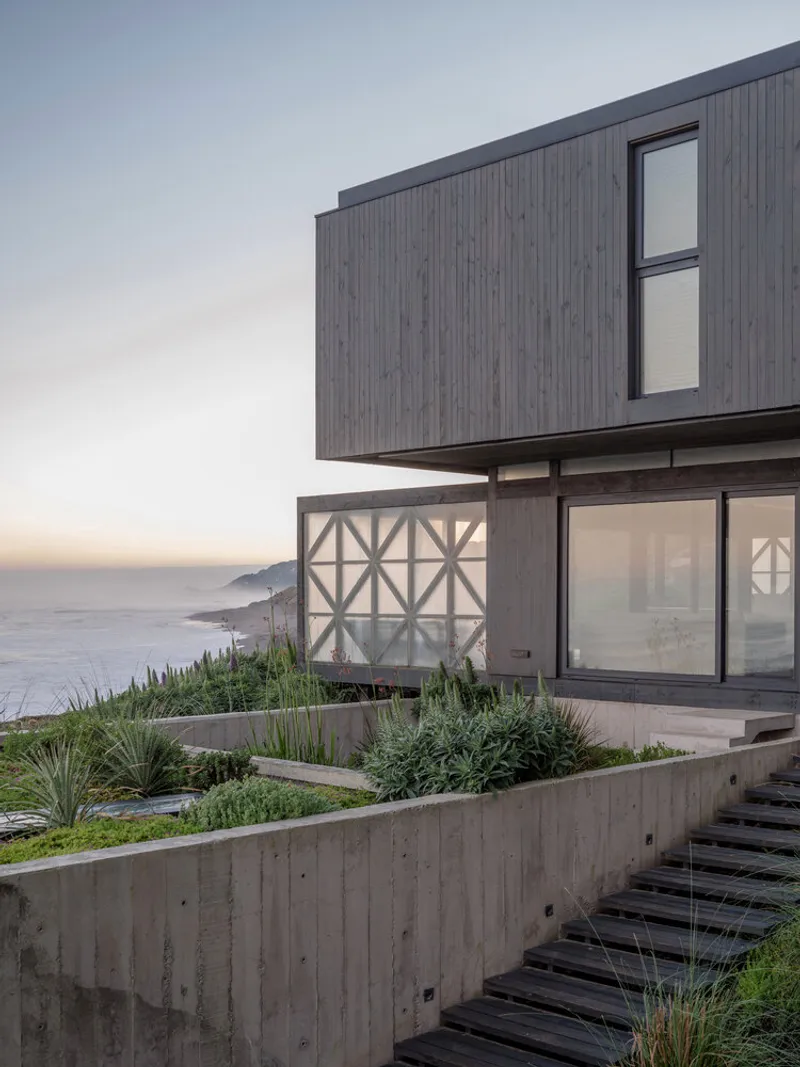
The building orientation acts as a natural shield against southern winds, keeping the front of the house calm and protected. A sunken exterior terrace between the garage’s green roof and the living room provides a private outdoor retreat, perfectly positioned for sunlight and tranquility.
A Project of Firsts
The Primeriza House (“primerizo” in Spanish, meaning “first-born”) marks the architects’ first independent project. Although design was completed in 2018 while residing in Chile, construction was delayed and remotely supervised from Spain during the first pandemic lockdown. The architects were only able to visit the completed home over a year later, making it a testament to resilience, creativity, and the power of digital collaboration.
Key Features:
- 256 m² residence in Chorrillos, Chile
- Solid concrete base with semi-buried garage
- Floor-to-ceiling windows for panoramic ocean views
- Wood interiors with contrasting finishes per floor
- Double-height living spaces and bespoke fireplace
- Suspended safety net for children’s play
- Seamless indoor-outdoor connections
- Sunken terrace shielded from southern winds




Popular Articles
Popular articles from the community


Conexión: Biophilic Design Reimagines High-Rise Living in Hong Kong
Conexión reimagines high-rise living in Hong Kong through biophilic design, green facades, shared spaces, daylight, water and nature within.

Co-Life: Senior Housing Design That Reconnects Older Adults With the City
Co-Life reimagines senior housing design through healing gardens, shared streets, workshops, and a sustainable community across generations.

Hill & Cross Opera: Sculptural Opera House Architecture Shaped by Tallinn’s Landscape and Identity
Hill & Cross Opera reimagines opera house architecture in Tallinn through its sculptural hill, civic plaza, glass wave and a luminous cross.

Co-life: Sustainable Architecture for Age-Friendly Community Living
Co-life reimagines sustainable architecture for seniors through courtyards, rammed earth, shared gardens, and spaces designed for belonging.


Similar Reads
You might also enjoy these articles


Hodi-Mandai Geram
Project Function: Preservation and revitalization of the Intangible heritage and socio-spatial identity of the Hodi by Housing, Cultural Memory Center, Sacred Grove, landscape, local tourism economy


Olio Towers: A Mid-Rise for Performers That Fuses Housing, Rehearsal, and Stage
Located blocks from Houston's Theater District, this modular tower stacks living units around a central performance atrium.

Oasis: Modular Green Housing Carved into Dhaka's Urban Fabric
A shortlisted Plugin Housing entry reclaims unauthorized settlements in Dhaka with stepped concrete volumes, green roofs, and ventilation-driven design.

Black Hole: A Floating Megastructure for the Post-Physical Era
Emiliano Mazzarotto envisions a spherical, self-scaling arena where e-sports, digital hotels, and holographic stadiums replace traditional public space.


Explore Architecture Competitions
Discover active competitions in this discipline



Challenge to reimagine the Iron Throne


Photograph architecture without architects


Illustrate the lost glory of Angkor Wat - Render Challenge


Design challenge to reuse E-waste
Comments (0)
Please login or sign up to add comments
No comments yet. Be the first to comment!