
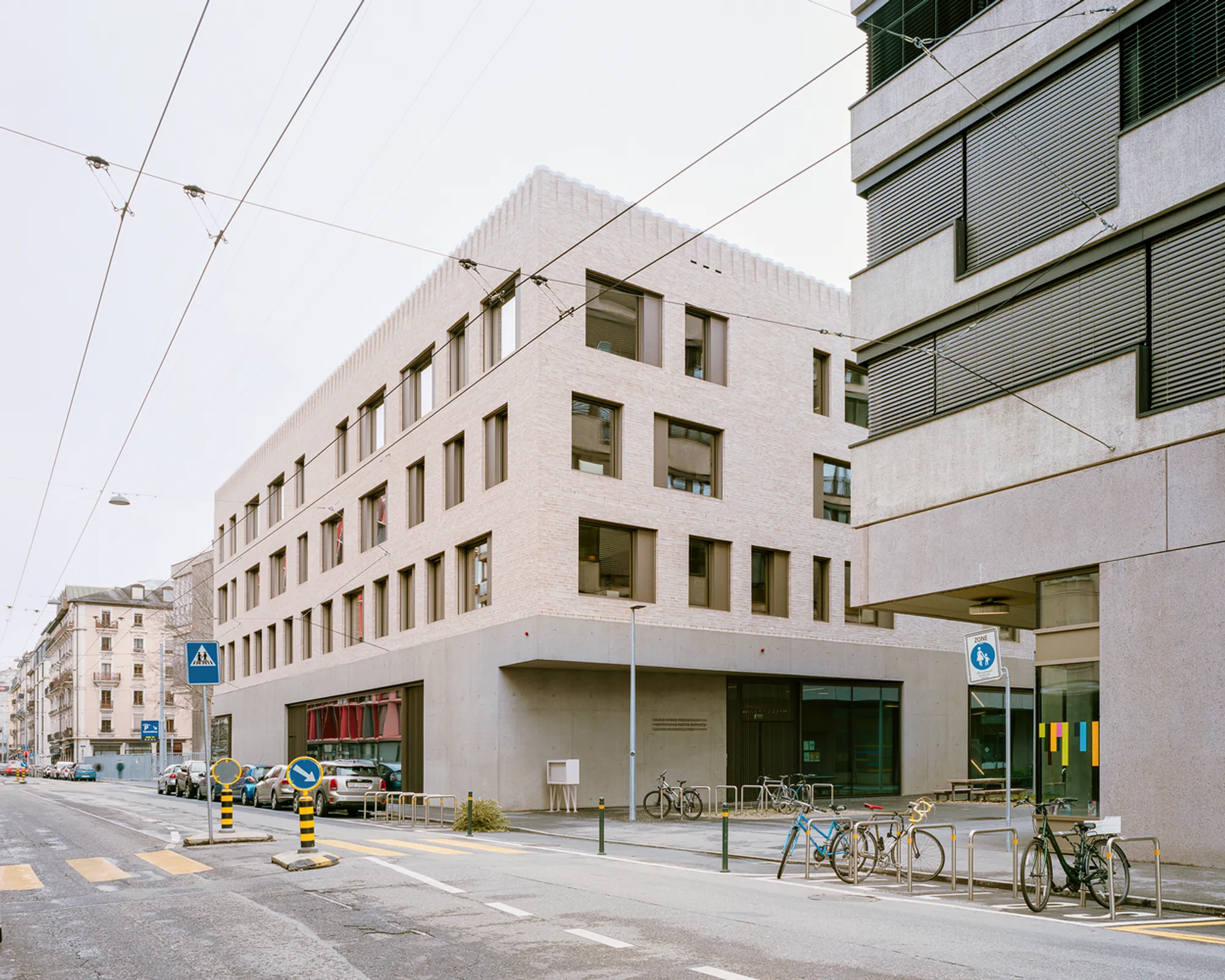
Public Facilities Building in Genève by Lacroix Chessex
Compact civic building in Geneva integrates crèche, sports hall, and community spaces within brick volumes organized around a raised platform.


Located in Jonction, Genève, Switzerland, the Public Facilities Building by Lacroix Chessex forms an integral part of a new-generation eco-district that combines residential density with civic infrastructure. Designed as a 4,600 m² multi-program public architecture project completed in 2021, the building strengthens the urban fabric while introducing high-quality public space into the neighborhood.
Conceived as a civic anchor within the evolving district, the project complements three existing residential blocks and reinforces the transformation of the former Artamis industrial site. Its strategic placement along Boulevard Saint-Georges establishes a strong urban frontage, affirming its presence along one of Genève’s primary thoroughfares.
Urban Integration and Sustainable District Planning
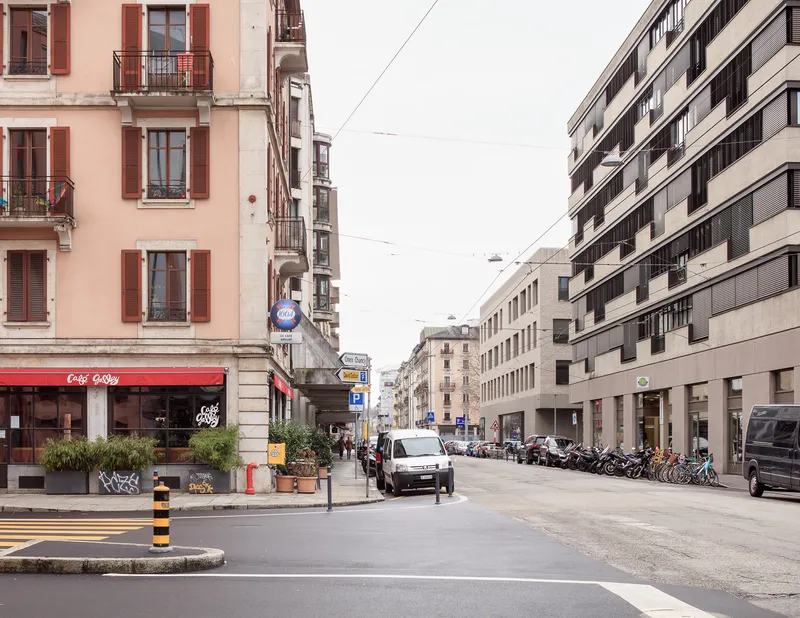
The architectural concept is based on a composition of differentiated yet interrelated volumes. These offset blocks create a compact footprint, freeing valuable ground space for a generous public square that connects to a sequence of open urban spaces leading toward Rue des Gazomètres. This gesture establishes a new gateway to the district and enhances pedestrian continuity within the eco-district masterplan.
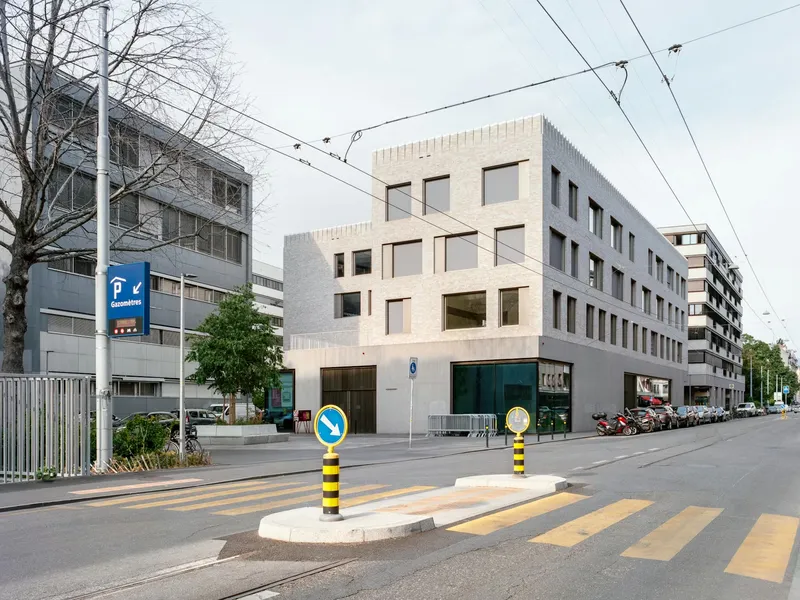
By consolidating built mass, the design prioritizes public realm quality, sustainability, and efficient land use, core principles of contemporary Swiss urban development. The building’s compact form reduces land consumption while promoting density, walkability, and community interaction.
The reinterpretation of the traditional “public base” typology is central to the design. The lower levels accommodate more robust, civic-oriented functions, while domestic and child-focused spaces rise above, creating a vertical hierarchy of programs.
Clear Programmatic Zoning: Adults Below, Children Above
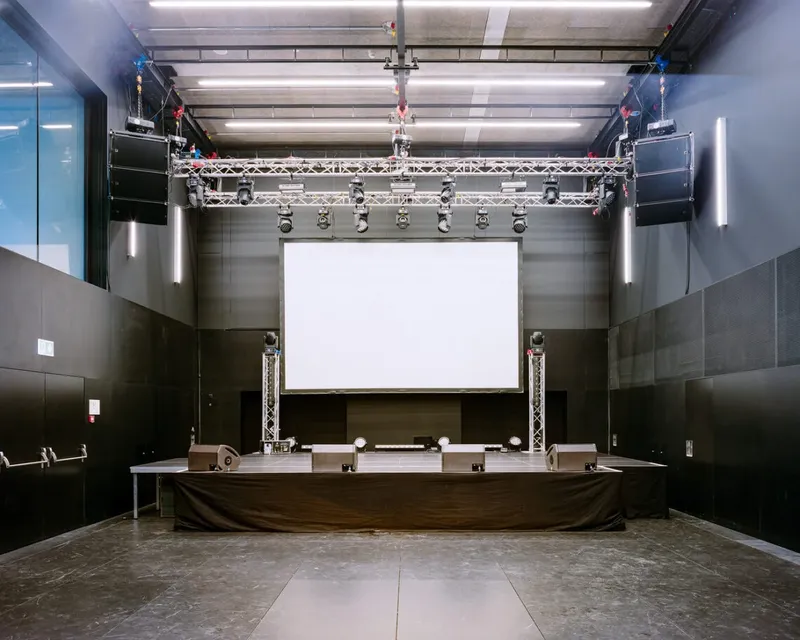
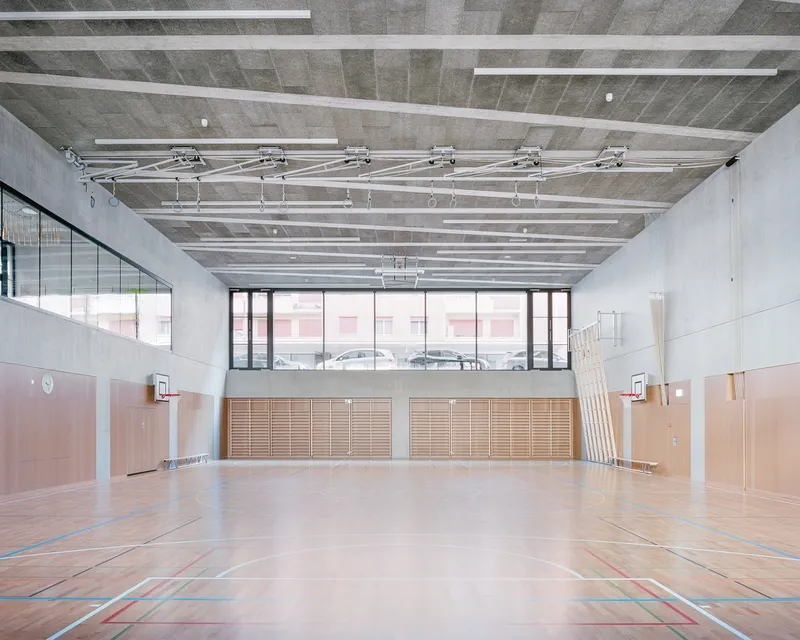
The building houses a crèche, sports hall, extracurricular activity rooms, and a multi-purpose hall. These diverse functions are organized through a highly legible spatial strategy.
The adult-oriented programs, the sports hall and multi-purpose hall, are located at ground level, directly connected to the earth and public realm. Above them, the children’s spaces ascend toward the sky, symbolically and physically separating the two worlds.
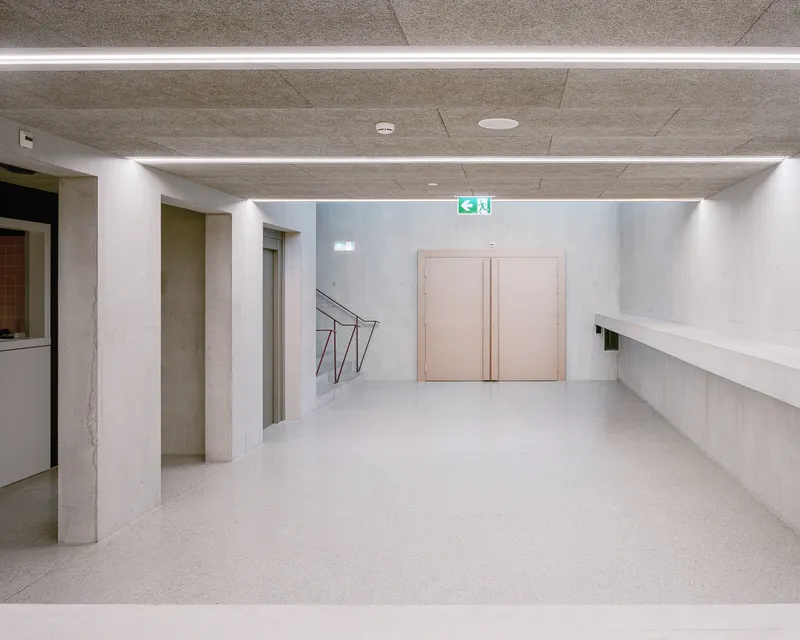
A monumental concrete platform defines this transition. This structural slab performs multiple roles: it spans large distances required by the sports hall, distributes loads efficiently, and ensures acoustic insulation between the dynamic ground-floor activities and the quieter childcare facilities above. The platform becomes both a structural and conceptual boundary, clearly distinguishing civic and educational zones.
The Crèche as an Urban Fortress and Safe Haven
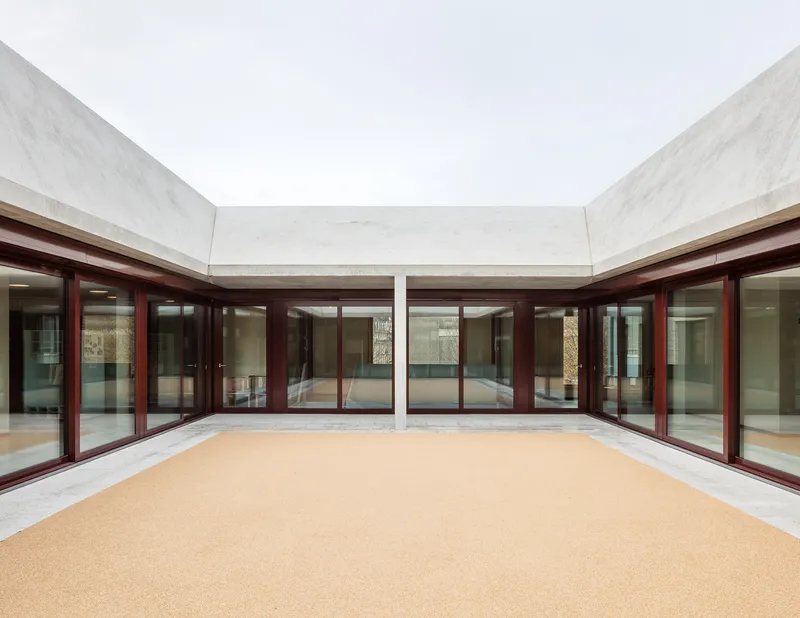
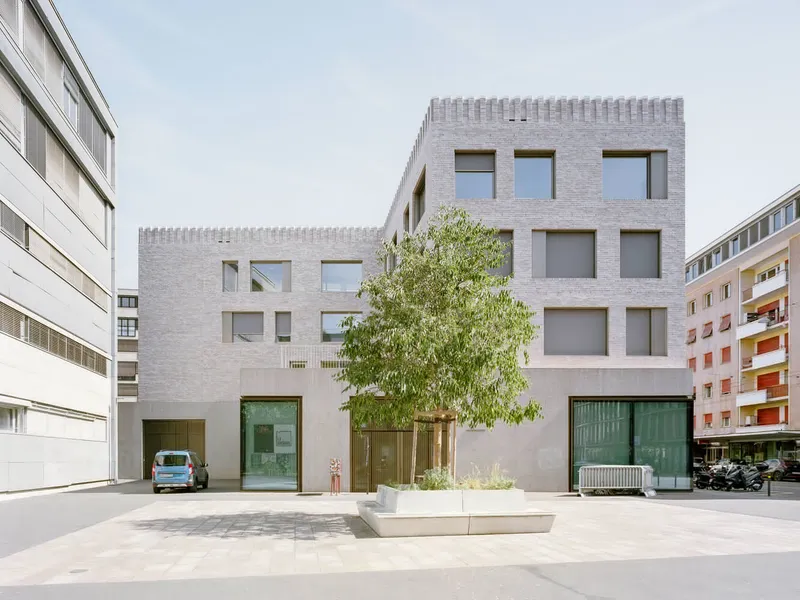
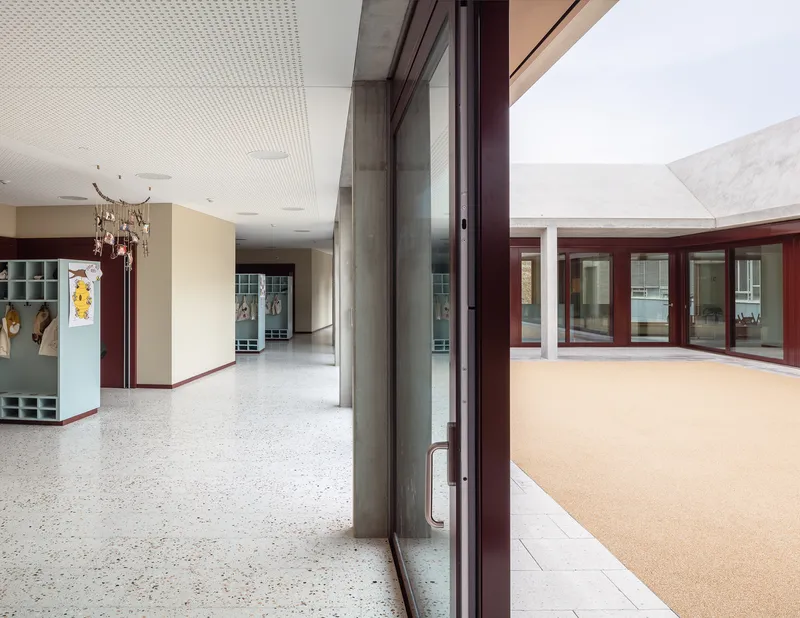
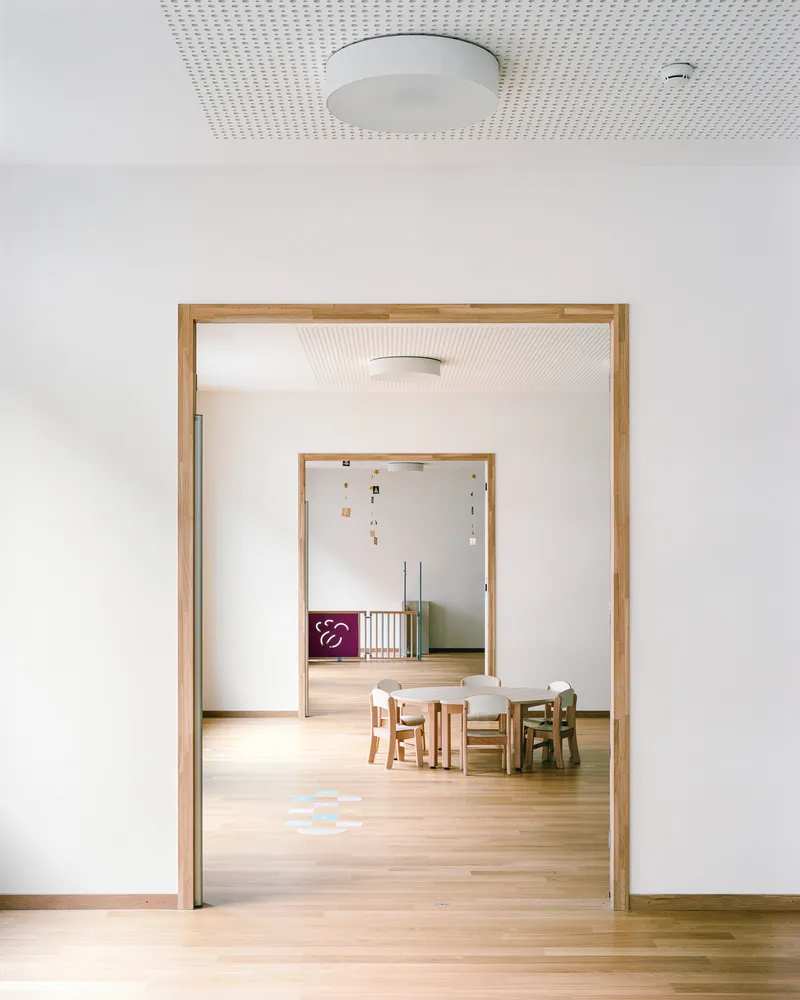
Above the concrete base rises the crèche, conceived as a large brick-built house organized around an open-air inner courtyard. This courtyard typology introduces natural light, ventilation, and a protected outdoor space at the heart of the childcare facility.
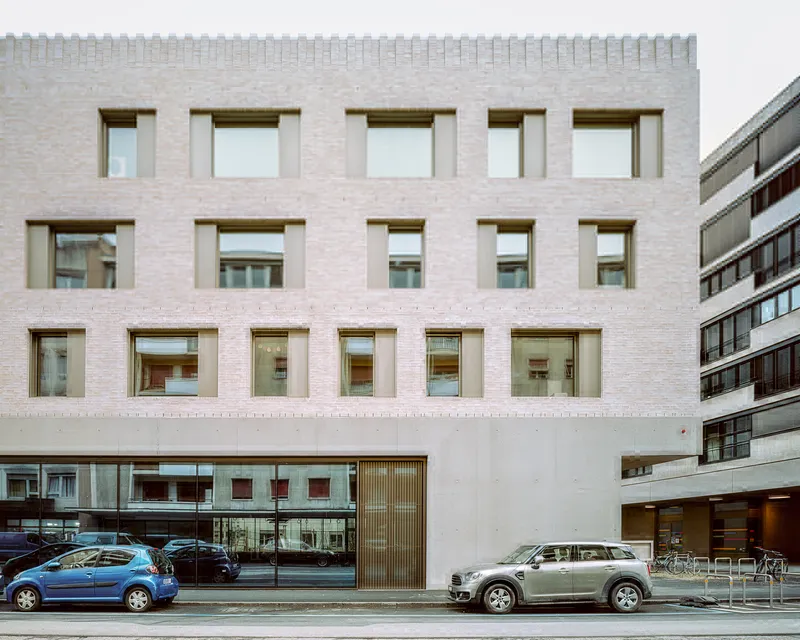
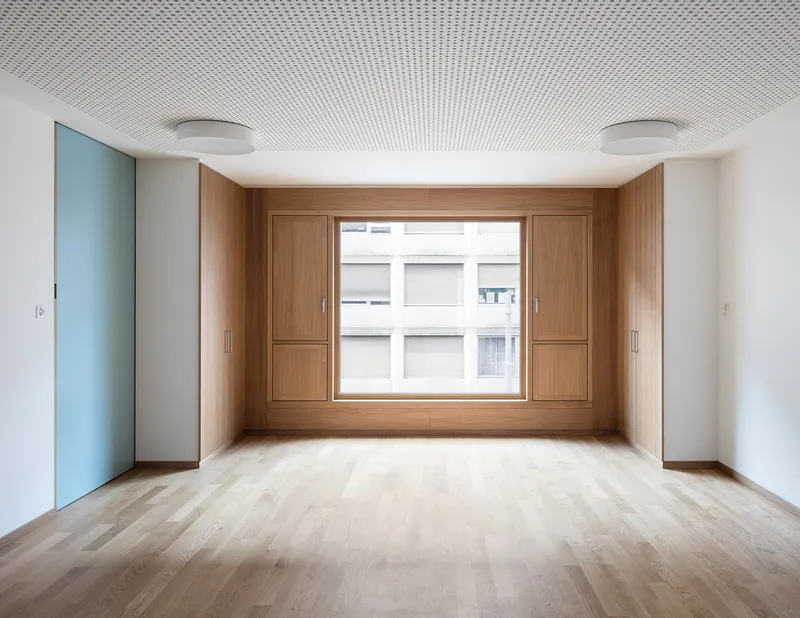
The architectural language evokes the imagery of childhood, reminiscent of sandcastles and protective enclosures. The brick volume appears almost fortress-like within the urban environment, offering children a secure, nurturing environment in the center of the city. This “Cité de l’enfance” creates a micro-world where learning, play, and development unfold within a carefully scaled architectural framework.
Materially, the brick façade reinforces the building’s civic identity while referencing traditional urban construction in Genève. The massing strategy ensures both monumentality and intimacy, balancing institutional presence with domestic warmth.
Structural Innovation and Building Performance
The engineering collaboration: including civil, acoustic, building physics, and environmental specialists, ensures high technical performance aligned with eco-district standards. The concrete platform addresses structural spanning challenges while enhancing sound insulation. Heating, ventilation, and electrical systems are integrated to meet contemporary Swiss sustainability requirements, reinforcing the project’s environmental credentials.
The interplay between heavy structural base and lighter brick upper volume expresses a dialogue between permanence and protection. This layered construction system supports flexibility, durability, and long-term adaptability, key aspects of sustainable public architecture.
Reinforcing Community Through Civic Architecture
Beyond its programmatic efficiency, the Public Facilities Building acts as a social condenser. It brings together children, families, athletes, and local residents, reinforcing community identity within the Jonction district.
Its large urban frontage and carefully articulated public square transform it into more than an educational facility, it becomes a civic landmark. By combining educational architecture, sports infrastructure, and community space within a coherent architectural language, Lacroix Chessex delivers a project that exemplifies contemporary European public building design.
The project demonstrates how compact massing, clear spatial hierarchy, sustainable engineering, and contextual urban integration can converge to create meaningful civic architecture in dense urban environments.
All photographs are works of
Olivier di Giambattista



Popular Articles
Popular articles from the community


Conexión: Biophilic Design Reimagines High-Rise Living in Hong Kong
Conexión reimagines high-rise living in Hong Kong through biophilic design, green facades, shared spaces, daylight, water and nature within.

Co-life: Sustainable Architecture for Age-Friendly Community Living
Co-life reimagines sustainable architecture for seniors through courtyards, rammed earth, shared gardens, and spaces designed for belonging.

The Earth Pod: 3D Printed Homes for Resilient Refugee Communities
The Earth Pod reimagines refugee housing through 3D printed homes made from clay, combining resilience, self-sufficiency, and rapid shelter.

Play: Fragments of Their World
Familiar architecture becomes modular playground design, creating safe spaces where displaced children can learn, connect, imagine and play.


Similar Reads
You might also enjoy these articles

FAMM Arquitectura Organizes Ten Villas Around Courtyards and Jungle in Nosara, Costa Rica
El Molino pairs two elongated volumes with deep overhangs and timber louvers to build a compact coastal community five minutes from the beach.
Oscar Niemeyer's Ibirapuera Park Pavilions Define São Paulo's Cultural Identity in Concrete and Curve
A constellation of modernist volumes set within São Paulo's most important urban park, conceived for the city's 400th anniversary in 1954.
How Henri Picq's 1889 Paris Pavilion Traveled 11,000 Kilometers to Become Santiago's Artequín Museum
A prefabricated iron and glass pavilion built for the Paris Universal Exposition found a second life as a children's art museum in Chile.
Sanjay Puri Architects Wraps a Jaipur Office Tower in Capsule-Shaped Green Buffers
A nine-level climate-responsive workplace near Jaipur Airport uses stacked planter terraces and aluminium screens to fight 40°C heat.


Explore Public Architecture Competitions
Discover active competitions in this discipline



Challenge to design public laboratory


Challenge to reimagine the Iron Throne


Photograph architecture without architects


Illustrate the lost glory of Angkor Wat - Render Challenge
Comments (0)
Please login or sign up to add comments
No comments yet. Be the first to comment!