

Pujiang Platform By MVRDV: A Sustainable Viewpoint Merging Architecture and Landscape in China
Pujiang Platform by MVRDV is a sustainable timber viewpoint blending architecture and landscape, offering panoramic mountain views and community event space.


Designed by MVRDV, the Pujiang Platform is a landmark viewpoint and event pavilion located in the hills near Pujiang, southwest of Chengdu, China. Completed in 2024, this compact yet powerful structure exemplifies sustainable architecture, landscape integration, and contemporary timber construction, while offering breathtaking panoramic views of the growing town of Pujiang and the Qionglai Mountain range.
Architecture Shaped by the Landscape
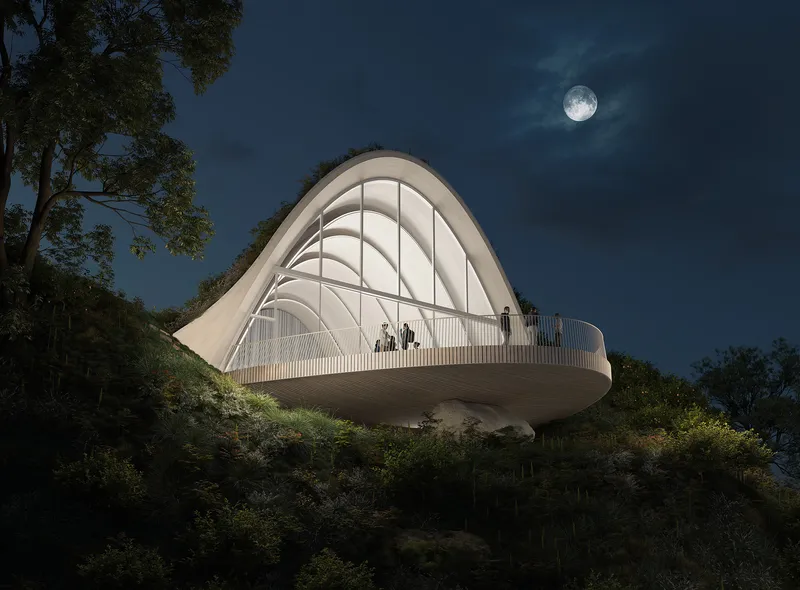
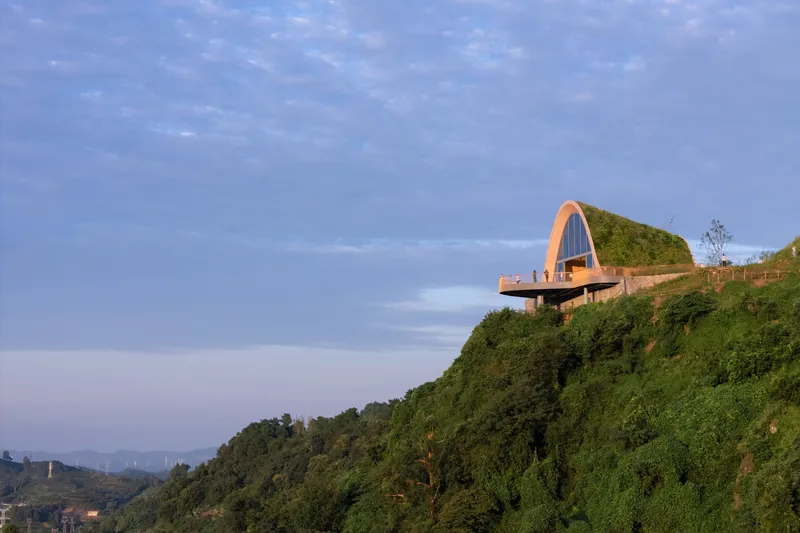
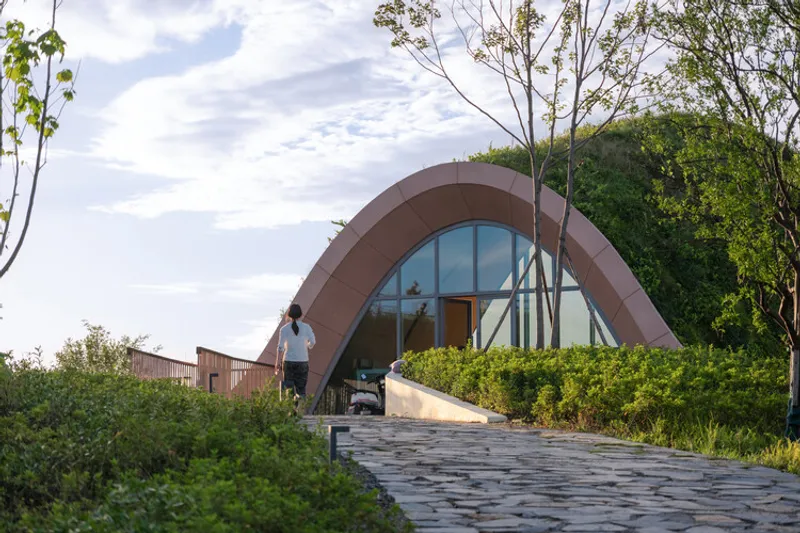
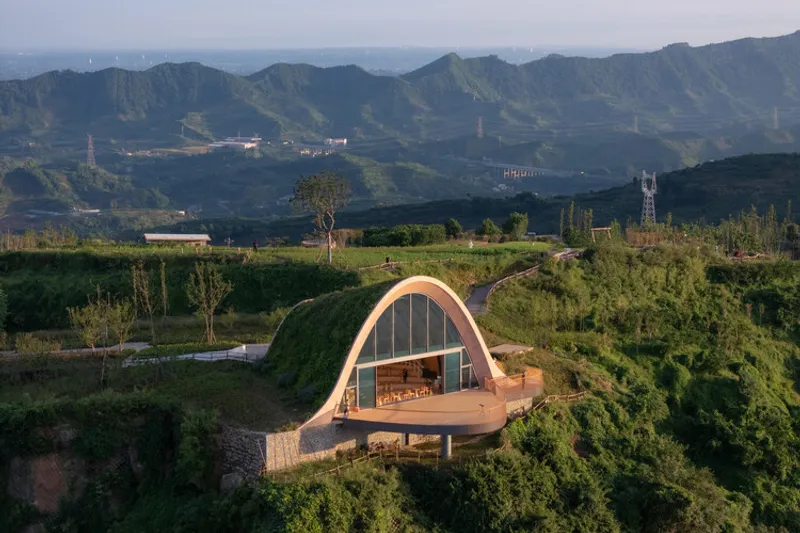
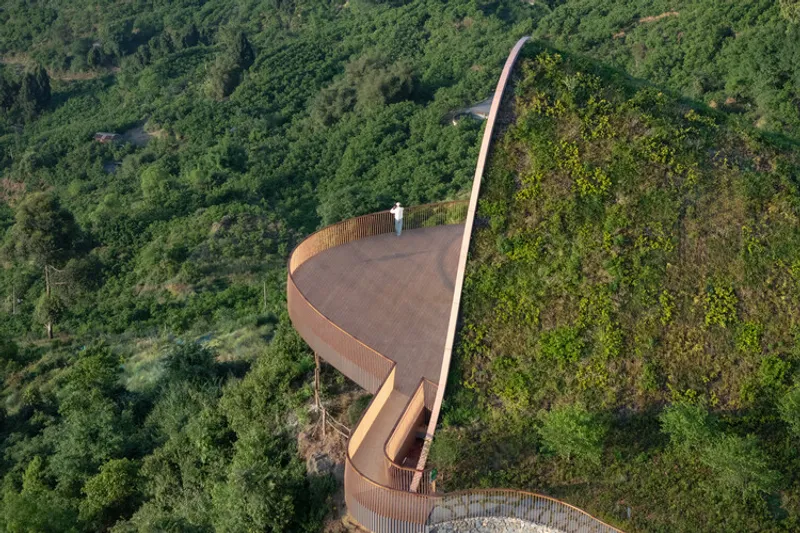
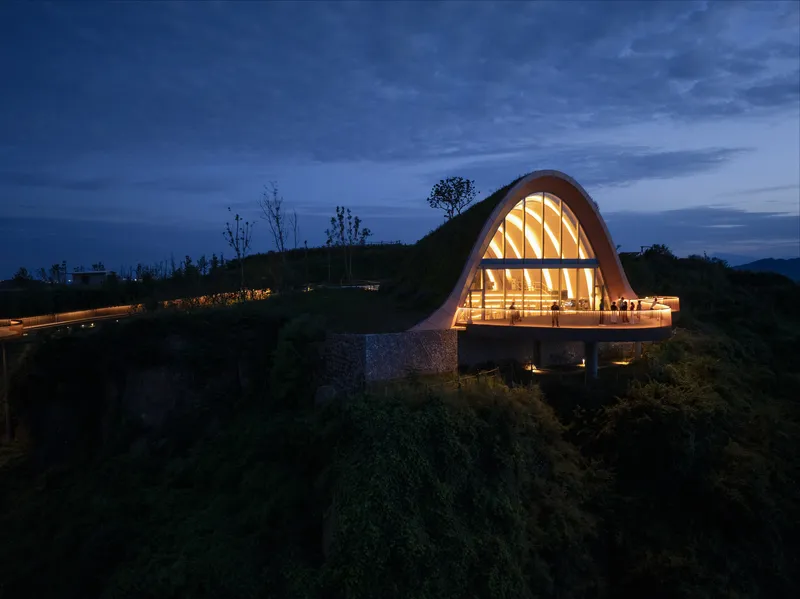
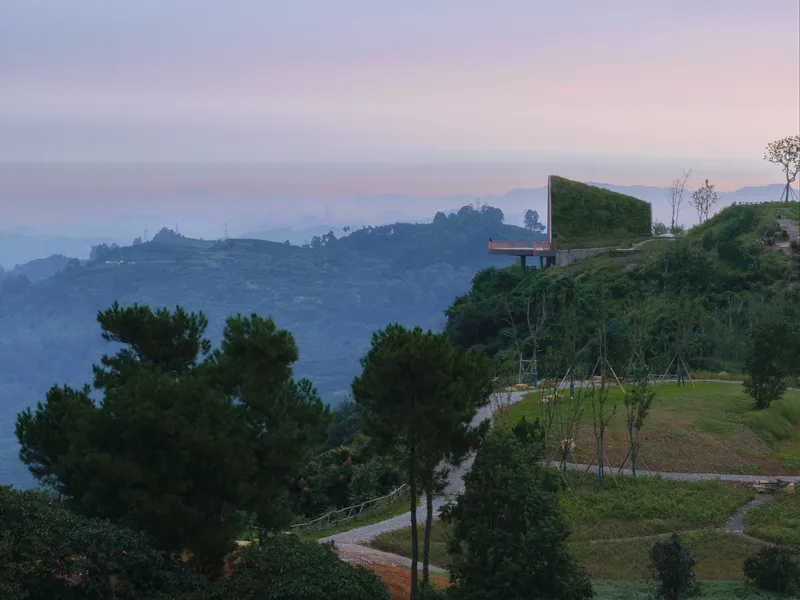
The project replaces an existing, flattened viewing point with a carefully considered architectural intervention that restores the original topography. MVRDV’s response is an arched, earth-covered timber pavilion that visually echoes the hill that once stood on the site. Covered with soil and native vegetation, the building appears as a continuation of the landscape rather than an intrusion, reinforcing the idea of architecture as landform.
From the plains below, the Pujiang Platform stands out subtly as a beacon, while from up close it dissolves into the hillside. This dual identity, blending in and standing out, defines the project’s architectural character.
A Telescopic Pavilion for Views and Events
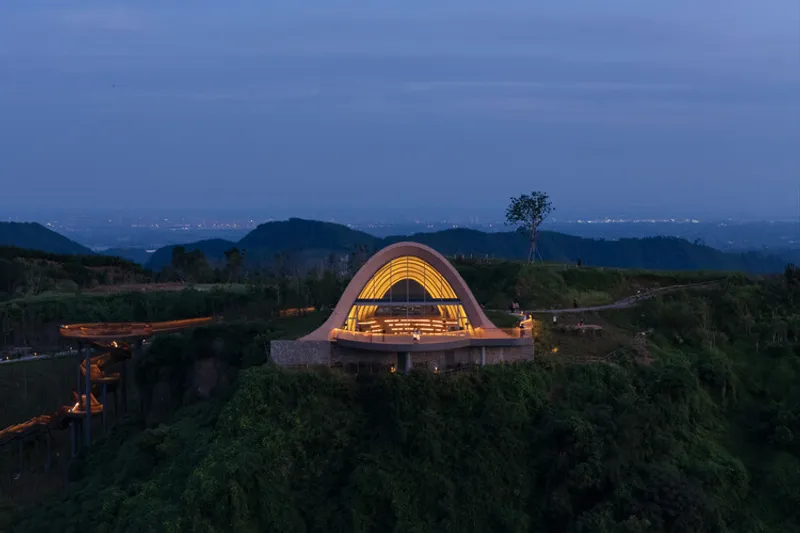
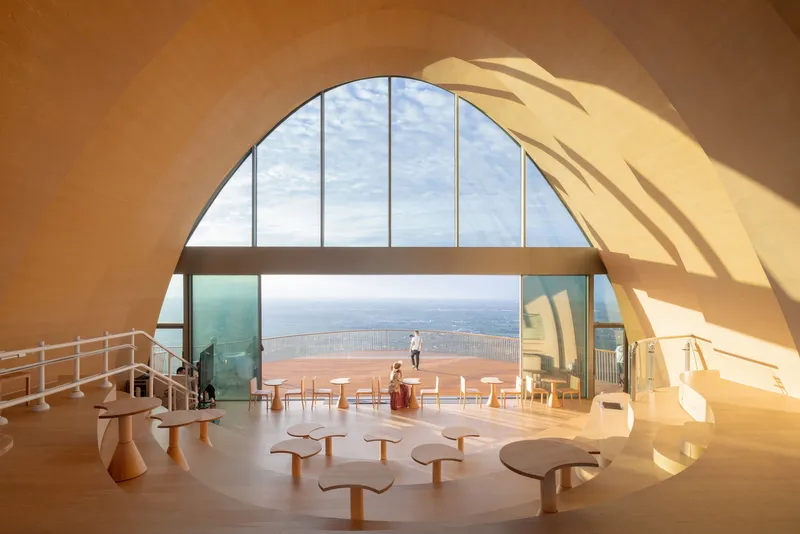
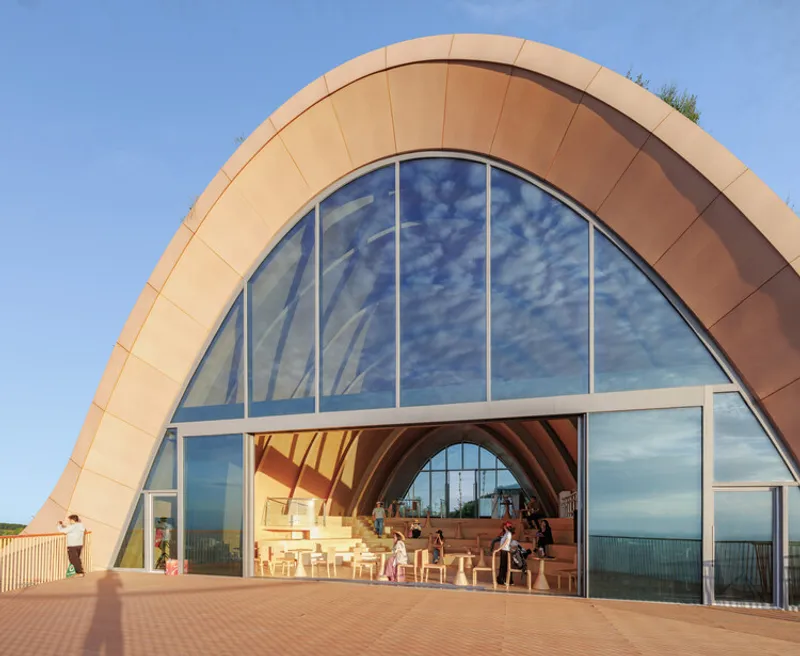
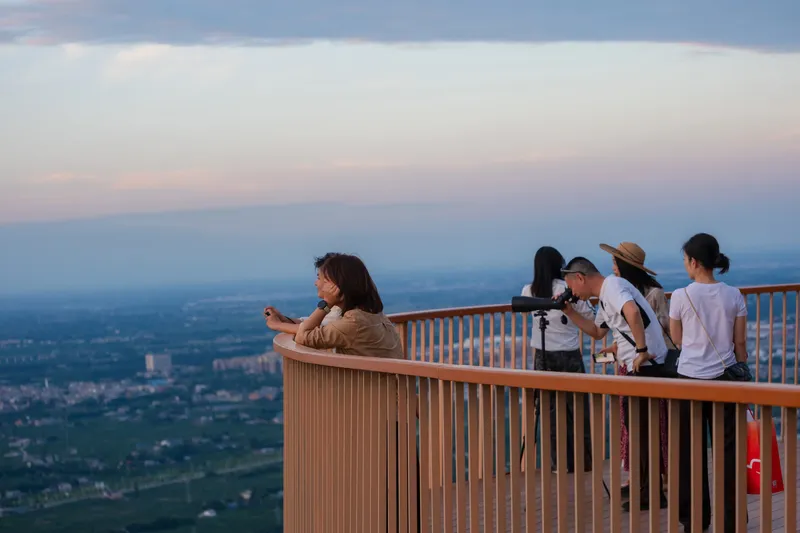
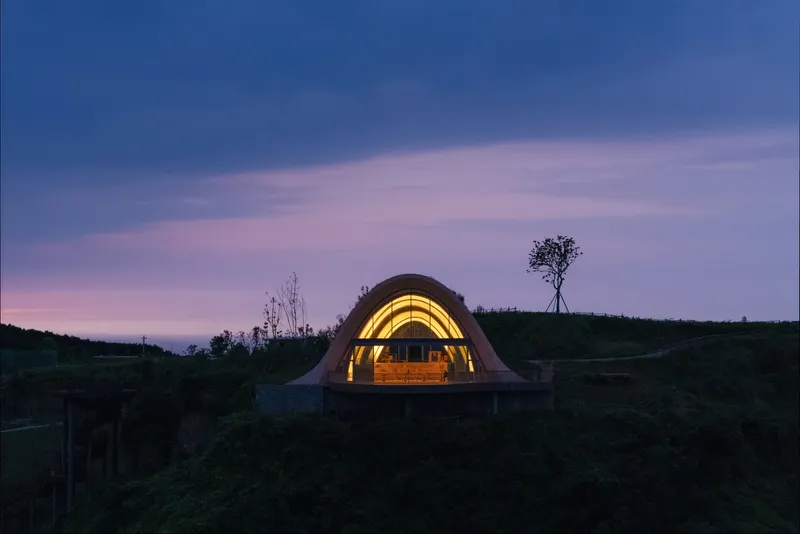
The timber structure is composed of telescopic arches that naturally guide visitors toward a dramatic 10-meter-tall glazed façade. This large viewing window frames expansive mountain vistas and opens onto a cantilevered balcony overlooking the slope. Inside, the pavilion’s floor gently slopes downward while the ceiling rises upward, forming a natural tribune suitable for gatherings, presentations, weddings, and community events.
Oversized sliding glass doors blur the boundary between interior and exterior, allowing the balcony to function as an extension of the event space and reinforcing the strong visual connection to nature.
Sustainable Timber Construction and Low-Carbon Design
Pujiang Platform serves as a demonstration project advocating for greater use of timber in China’s construction industry. The primary structure is made from wood, significantly reducing embodied carbon compared to conventional concrete or steel buildings. This material choice aligns with MVRDV’s broader commitment to climate-conscious design.
Sustainability strategies extend beyond structure. The earth berm covering the pavilion provides insulation and thermal mass, stabilizing indoor temperatures throughout the year. A layered ceiling enables natural ventilation, while the north-facing orientation of the main façade minimizes solar heat gain. Roof overhangs, existing trees, and the landscape itself offer additional shading. Operational energy demands are further reduced through the integration of a geothermal heat pump system.
Landscape, Biodiversity, and Circulation
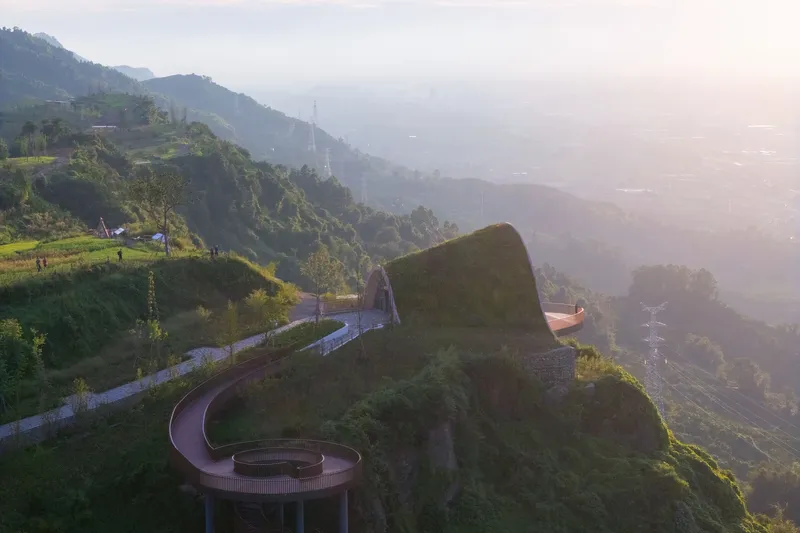
The surrounding landscape design enhances existing ecological conditions rather than replacing them. Native grasses, flowers, and small shrubs grow on the green roof, supported by a 10-centimeter soil layer. Existing waterways are reused for rainwater collection and irrigation, reinforcing a closed-loop environmental strategy.
Pathways already present on the site are upgraded and connected via a new staircase that forms a continuous walking loop. At its peak sits a circular secondary viewing platform, offering 360-degree views of both distant mountain ranges and the immediate hillside environment.
A Beacon for a Sustainable Town
Commissioned by the Pujiang County Planning and Resources Bureau, the project aligns with the vision of Pujiang as a sustainable new town. More than a scenic lookout, the Pujiang Platform is a public destination, educational example, and social gathering space that demonstrates how architecture can respect nature while enhancing human experience.
At night, light spilling from the glazed façade transforms the pavilion into a glowing landmark, visible from afar, yet deeply rooted in the landscape it inhabits.
All the photographs are works of Arch-Exist


Popular Articles
Popular articles from the community


Tsunami Convergenics: Turning Catastrophic Ocean Forces into Underwater Housing Infrastructure
A speculative underwater settlement off the coast of Onagawa, Japan, treats tsunamis and typhoons as energy sources rather than threats.

Temporary Home for Dogs: A Reversed Zoo Rethinks Animal Shelter Architecture
In Bucharest, a sinuous corridor and freed landscape flip the logic of containment, designing a shelter that works to make itself unnecessary.

Cloaked Colonization: A Mobile Underwater Habitat That Moves Like a Fish
Micah Abaya's shortlisted EHC Pacific entry reimagines ocean settlement as a dispersed network of self-sustaining architectural organisms.

Opera on the Sea: Driftwood Logic Shapes a Timber Opera House on Estonia's Coast
Trevor Orgill's opera house translates the entangled drift of floating timber into a civic building where wood, water, and music converge.

Similar Reads
You might also enjoy these articles


Hodi-Mandai Geram
Project Function: Preservation and revitalization of the Intangible heritage and socio-spatial identity of the Hodi by Housing, Cultural Memory Center, Sacred Grove, landscape, local tourism economy


Olio Towers: A Mid-Rise for Performers That Fuses Housing, Rehearsal, and Stage
Located blocks from Houston's Theater District, this modular tower stacks living units around a central performance atrium.

Oasis: Modular Green Housing Carved into Dhaka's Urban Fabric
A shortlisted Plugin Housing entry reclaims unauthorized settlements in Dhaka with stepped concrete volumes, green roofs, and ventilation-driven design.

Black Hole: A Floating Megastructure for the Post-Physical Era
Emiliano Mazzarotto envisions a spherical, self-scaling arena where e-sports, digital hotels, and holographic stadiums replace traditional public space.

Explore Viewing Platform Competitions
Discover active competitions in this discipline

Challenge to design locus for the upliftment of human rights

Challenge to reimagine the Iron Throne

Photograph architecture without architects

Illustrate the lost glory of Angkor Wat - Render Challenge
Comments (0)
Please login or sign up to add comments
No comments yet. Be the first to comment!