

Puring 2050: A Vision for Sustainable Skyscraper Architecture in Indonesia
A bamboo-inspired zero-emission skyscraper that blends culture, ecology, and mobility for Indonesia's future vertical capital.


Puring 2050: Sustainable Skyscraper Architecture for a Self-Sustaining Future
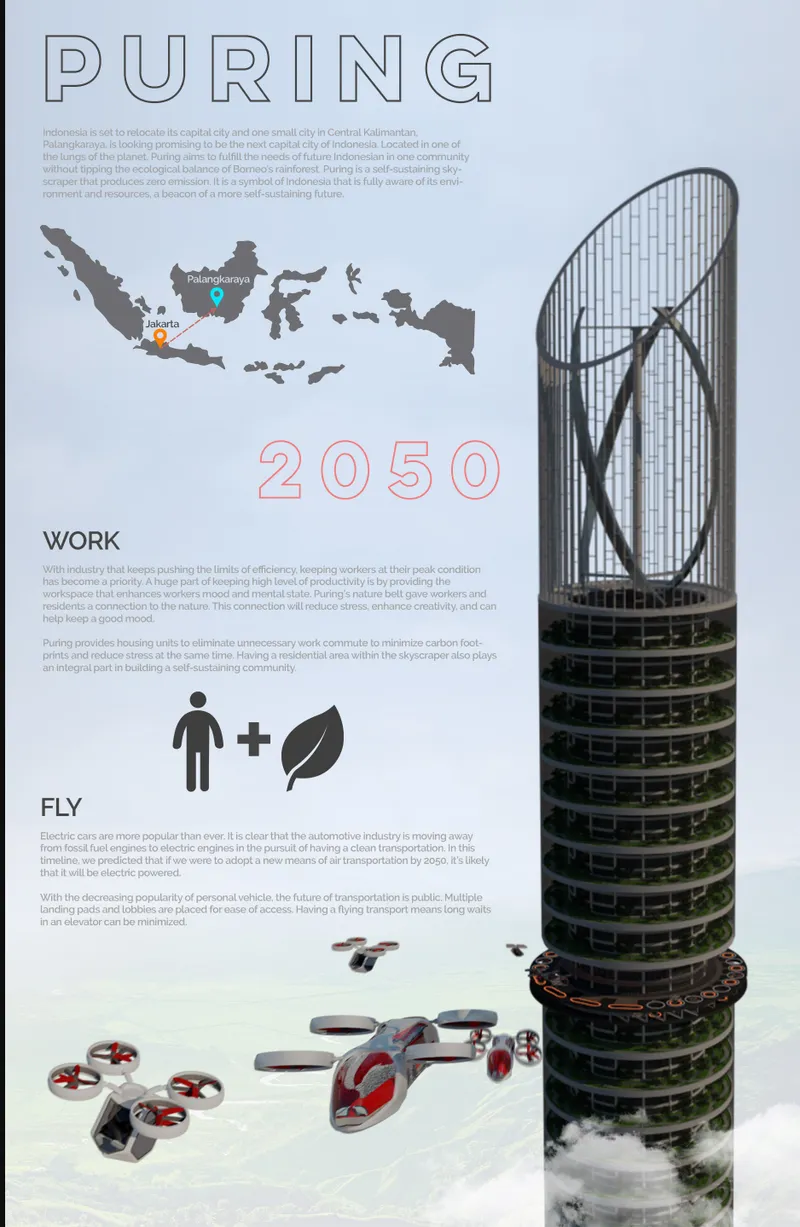
As Indonesia moves forward with plans to relocate its capital from Jakarta due to overcrowding and environmental challenges, Palangkaraya in Central Kalimantan is positioned as the ideal site for a bold new urban future. Surrounded by rich biodiversity and dense rainforests, Palangkaraya offers a unique opportunity to test new approaches to urban development. Enter "Puring"—an ambitious vision for sustainable skyscraper architecture that integrates zero-emission living, eco-conscious design, and advanced urban mobility.
Puring reimagines the vertical city model for the year 2050 by aligning it with the environmental and cultural priorities of Indonesia. Designed to be a fully self-sustaining structure, Puring minimizes its ecological footprint while maximizing liveability, functionality, and community engagement.
Designed by Aziz Kahfi, Farhan Qalbain, Faiz Agra, and Darien Ilham, Puring is a shortlisted entry of Hybrid Futures '19 - Work x Fly competition, which challenges designers to create adaptive, future-ready architectural typologies.
A Symbol of Ecological Responsibility
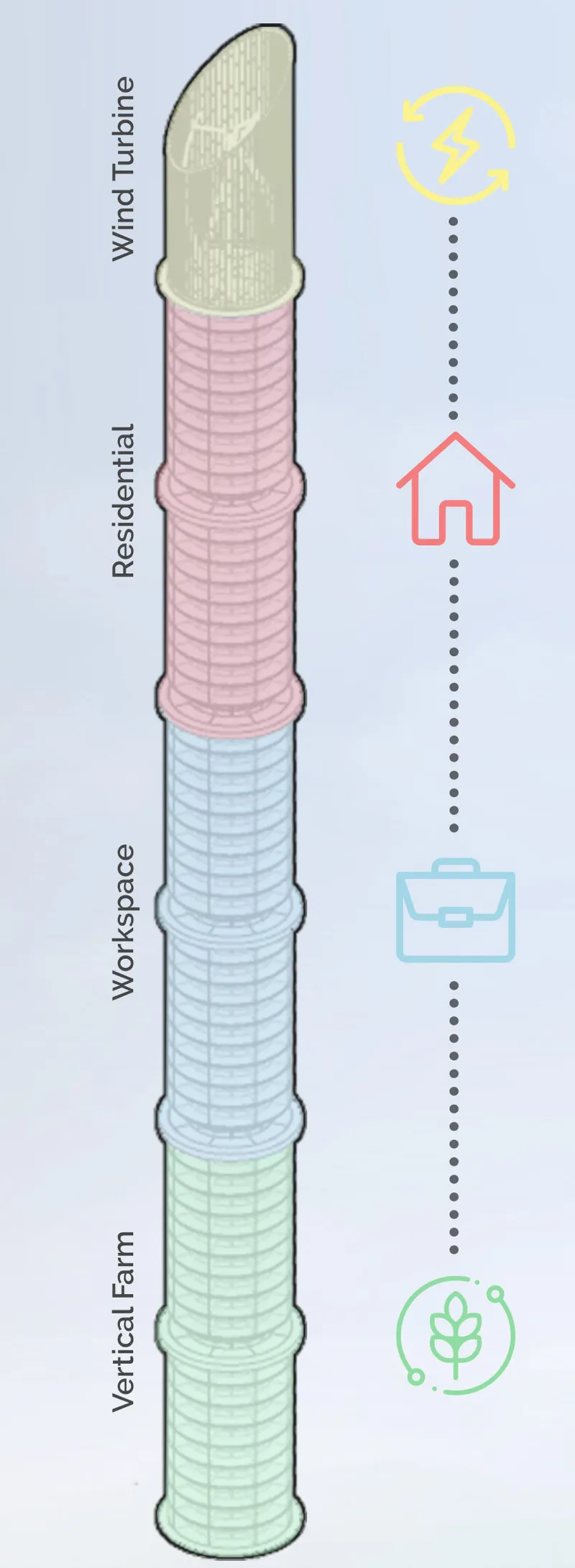
Puring is not just another skyscraper—it’s a declaration of a greener, more responsible urban future. Drawing inspiration from the natural structure and symbolism of bamboo, the building is segmented into six modular zones: vertical farm, workspace, residential, lobby/air terminal, commercial core, and wind turbine energy production. Each module is designed with unique functions and sustainable technologies, making the tower a microcosm of an entire city.
To achieve net-zero energy status, Puring employs a combination of wind turbines positioned at the tower’s apex and photovoltaic glass windows throughout its skin to capture solar power. Rainwater harvesting systems further reduce environmental strain by filtering and recycling local rainfall for use within the building. The integration of these systems highlights a shift toward regenerative architecture that actively contributes to, rather than extracts from, its environment.
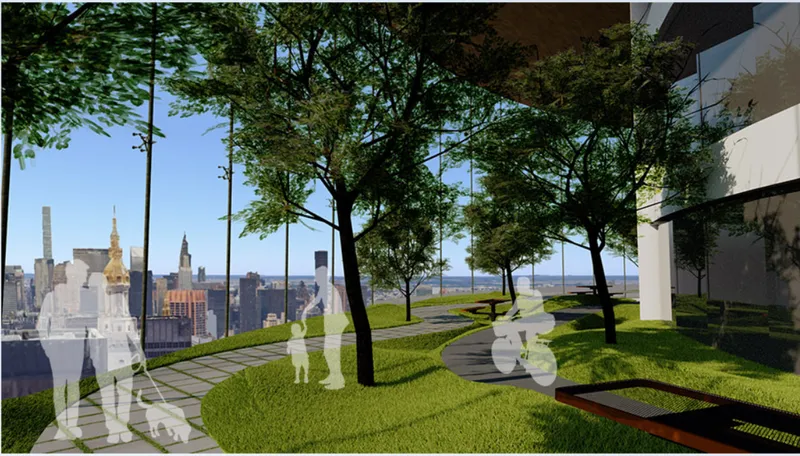
The vertical nature belt—a suspended garden looped along each module—introduces greenery into the sky, improving air quality and offering psychological benefits to inhabitants. This belt reflects a philosophy of biophilic design, wherein nature is seamlessly incorporated into daily life, even in high-density urban settings.
Integrated Work, Life, and Mobility
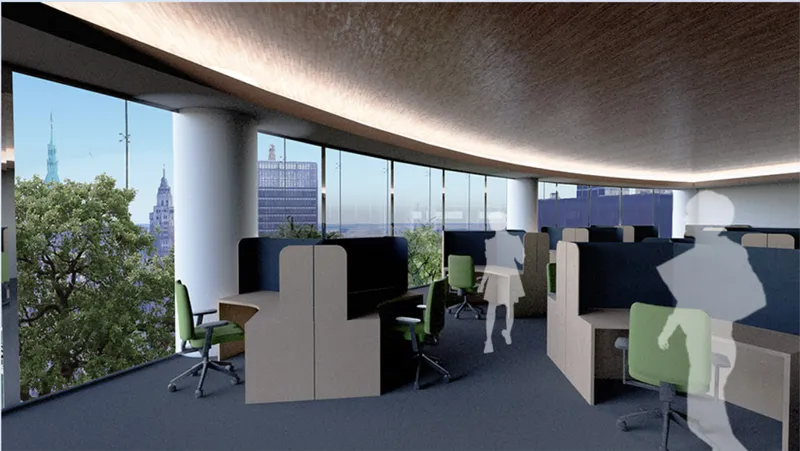
Modern urban life demands flexibility, and Puring delivers by integrating workspaces, living quarters, and transportation infrastructure into a unified vertical ecosystem. The workspace zones are strategically located within the tower to provide calming views of nature and boost cognitive performance. The built environment encourages creativity, collaboration, and mental well-being—factors often neglected in traditional office design.
Residential units, located just beneath the wind turbine module, provide tranquil, elevated living spaces with panoramic views and reduced noise pollution. These homes foster a sense of serenity rarely found in conventional high-rise dwellings.
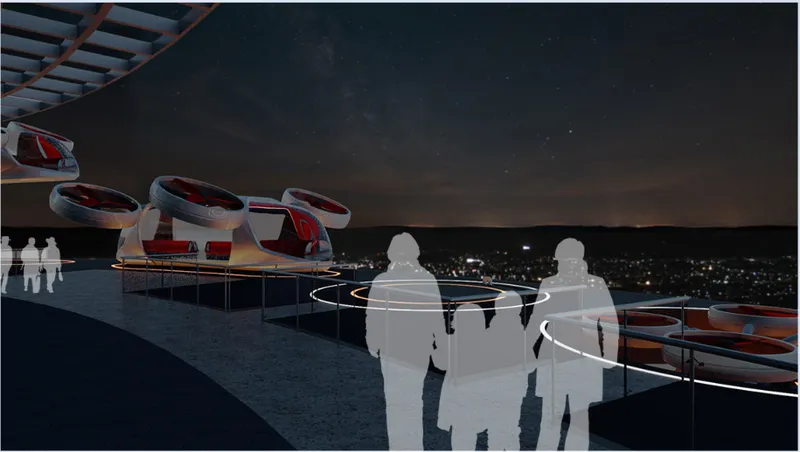
Crucially, the tower incorporates futuristic urban mobility. Vertical take-off and landing (VTOL) vehicles are central to Puring’s transit vision. With distributed air terminals positioned between modules, flying vehicles offer direct access to multiple levels without requiring elevators. This significantly cuts waiting times and enhances accessibility, especially for emergency and service access.
Urban Agriculture and Community Building
At the heart of Puring’s ground-level module is a fully integrated urban agriculture system, including vertical farms and nourishment labs. These spaces are designed to grow a variety of crops and lab-grown meat, thereby supporting food independence and reducing the need for transportation of goods. The result is a highly efficient urban food supply system embedded directly into the architecture.
Communal spaces within the tower include elevated courtyards, inspired by the traditional Indonesian rumah cluster layout. These social spaces serve as gathering points for residents, maintaining a strong sense of local culture and interaction within a futuristic context. The courtyards, located at multiple heights, mirror the social rhythm of village life and ensure that vertical living does not mean social isolation.
Architecture Rooted in Culture
Puring is deeply rooted in Indonesian culture and symbolism. Its bamboo-like structure is more than an aesthetic choice—it conveys resilience, unity, and sustainable strength. Each segment, or "node," of the tower mimics the natural joints in bamboo stalks, reinforcing its modular logic and aerodynamic form.
Historically, bamboo has represented resistance and growth in Indonesian folklore, and Puring honors that legacy. The spiked bamboo form at the top pays tribute to traditional weapons used in Indonesia’s independence struggle, subtly tying national history to future aspirations. This metaphor extends through the architectural language of the building, making it not just a functional tower but a living narrative of identity and evolution.
The rounded shape of the structure enhances wind resistance and is engineered to accommodate multiple aerial entrances. All public zones are designed to be easily accessible at various levels, ensuring inclusivity and circulation efficiency.
Puring 2050 redefines the boundaries of sustainable skyscraper architecture. It is an architectural manifesto that proves high-rise buildings can be more than just space-saving mechanisms. They can be regenerative, culturally expressive, and socially inclusive urban habitats.
With climate change, urban migration, and resource scarcity becoming global challenges, Puring offers a glimpse into a future where architecture doesn't just adapt to the planet—but actively heals it. As Indonesia transitions to a new capital, projects like Puring serve as beacons for future-forward, environmentally integrated urban design.


Popular Articles
Popular articles from the community


longwave studio Reorganizes a 112 m² Tainan Apartment Around the Daily Routines of a Family and Two Cats
In Tainan, Taiwan, birch plywood, rust-red furniture and a freestanding plaster wall link arrival, storage, work and family life in one apartment.

Jaramillo Van Sluys Arquitectura and Urbanismo Turn a Demolished Registry Lot in Quito into an Orchard Plaza
In Quito's Centro Histórico, a 2,800 m² plaza exposes the San Agustín convent wall and redraws its lost Augustinian orchard in volcanic stone.

GROUP A Strips a 1969 Rotterdam Harbor Headquarters to Its Frame and Wraps It in Timber Louvers
In Rotterdam's M4H harbor district, Ferro Offices reuses a 1969 frame, adds one timber storey and reaches BREEAM-NL Outstanding.

Juan García Correa, John González and Claudia Rueda Sink a Circular Amphitheater into a Manizales Engineering Building
On the La Nubia campus in Manizales, Colombia, the S1 Building folds labs and offices into a hillside of ramped lawns that double as a campus route.

Similar Reads
You might also enjoy these articles


Hodi-Mandai Geram
Project Function: Preservation and revitalization of the Intangible heritage and socio-spatial identity of the Hodi by Housing, Cultural Memory Center, Sacred Grove, landscape, local tourism economy


Olio Towers: A Mid-Rise for Performers That Fuses Housing, Rehearsal, and Stage
Located blocks from Houston's Theater District, this modular tower stacks living units around a central performance atrium.

Oasis: Modular Green Housing Carved into Dhaka's Urban Fabric
A shortlisted Plugin Housing entry reclaims unauthorized settlements in Dhaka with stepped concrete volumes, green roofs, and ventilation-driven design.

Black Hole: A Floating Megastructure for the Post-Physical Era
Emiliano Mazzarotto envisions a spherical, self-scaling arena where e-sports, digital hotels, and holographic stadiums replace traditional public space.

Comments (0)
Please login or sign up to add comments
No comments yet. Be the first to comment!