

Pustevny Gateway Center by henkai architekti: A Modern Mountain Entry Experience in Czechia
The Pustevny Gateway Center in Czechia is a wooden mountain hub with café, bell tower, parking, and sustainable visitor-friendly design.


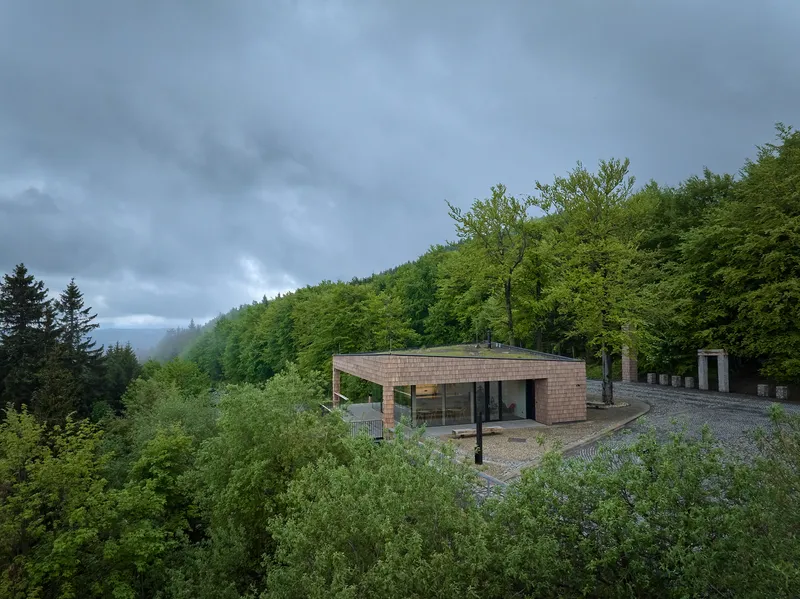
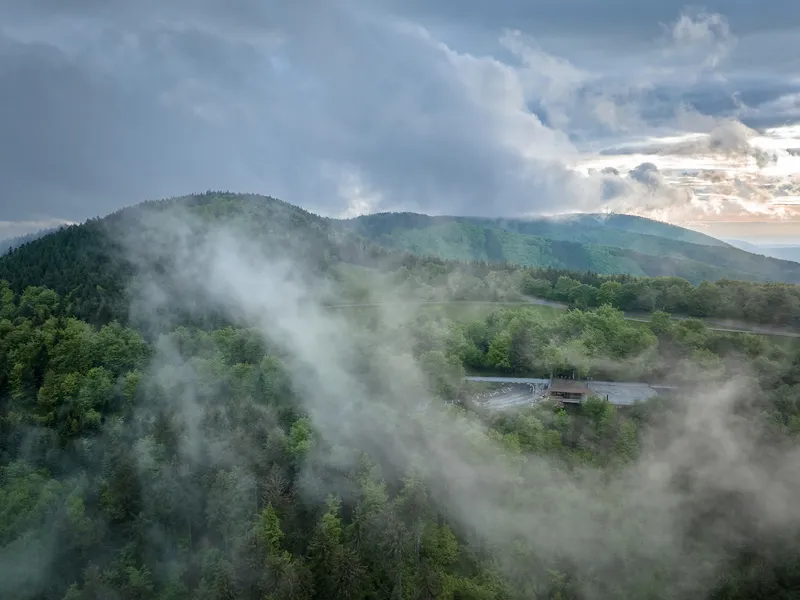
The Pustevny Gateway Center, designed by henkai architekti, is a contemporary visitor center and transportation hub situated in the Beskydy Mountains of Czechia. This strategically located site serves as a crucial entry point for tourists exploring the scenic Pustevny ridge, an area rich in cultural history, architectural heritage, and recreational opportunities.
Context and Location
Pustevny is a historically significant mountain saddle that has been attracting tourists since the late 19th century. The area is known for its unique architectural landmarks, including the traditional shelters designed by Dušan Jurkovič and the cable car terminal by Kamil Mrva. Once a secluded area home to hermitages (the Czech word “poustevníci” inspired the name Pustevny), it has gradually transformed into a bustling tourist destination accessible via cable car from Trojanovice or by road from Prostřední Bečva.
As tourism increased, so did vehicular traffic, creating conflicts between cars and pedestrians. To address this, henkai architekti developed the Pustevny Gateway Center to improve access, reduce congestion, and enhance visitor experience.


Design Concept
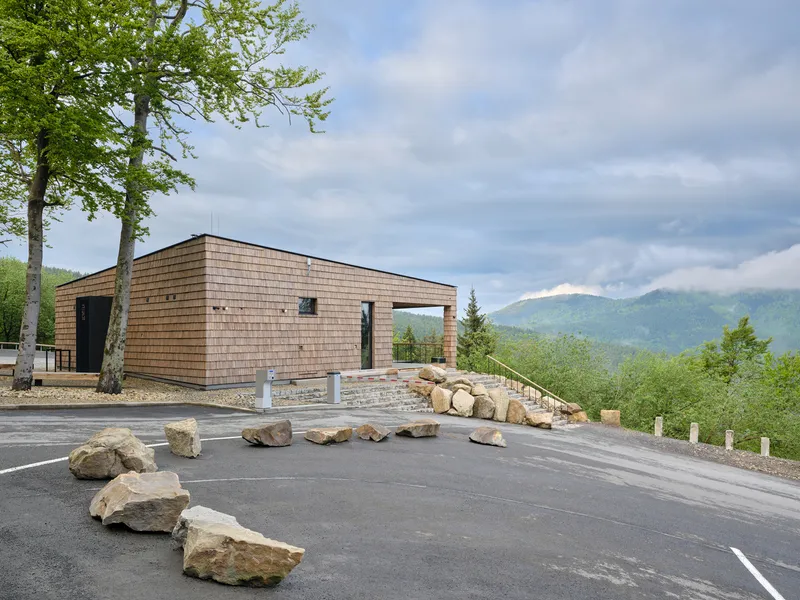
The Pustevny Gateway Center is thoughtfully designed to spread across both sides of the main access road. On one side, the primary building: referred to as “the house”: connects with the parking lot, bus stop, and turnaround area. It functions as a multi-purpose facility including:
- Visitor information center
- Waiting room café
- Parking staff facilities
- Bus shelter with seating
- Public restrooms
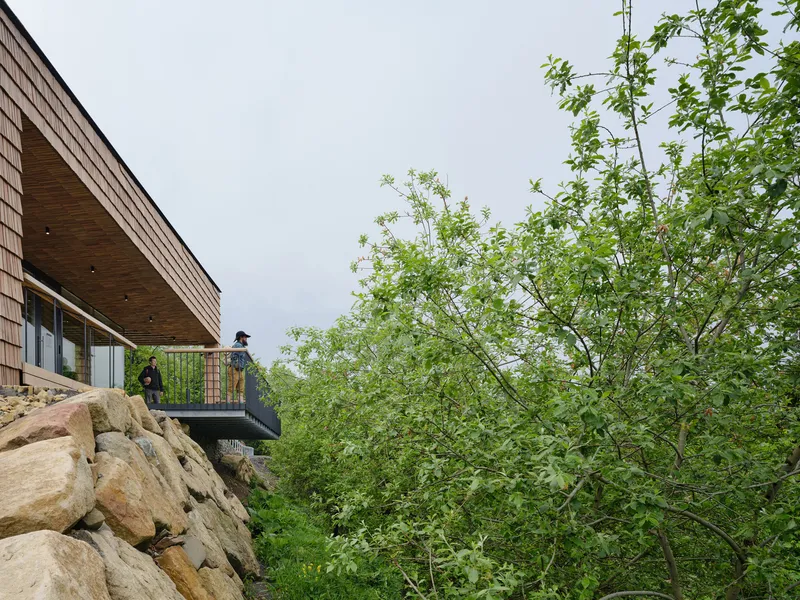
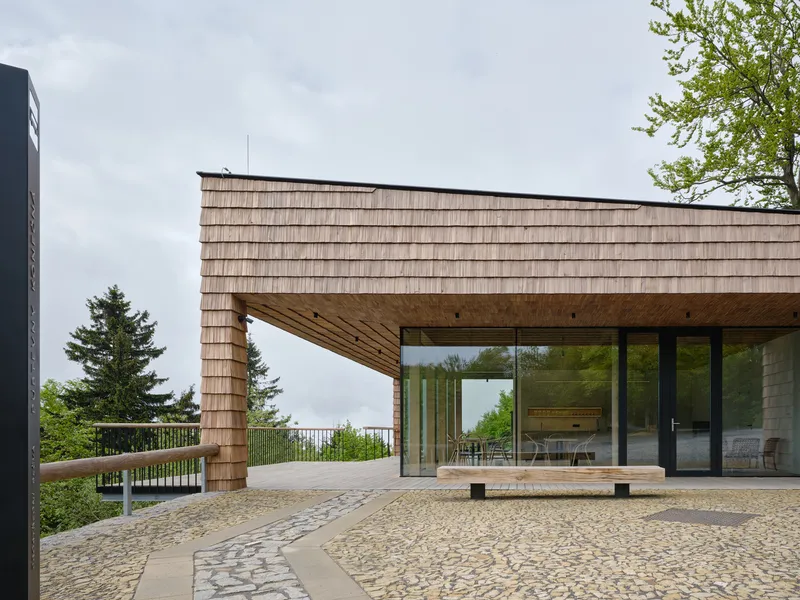
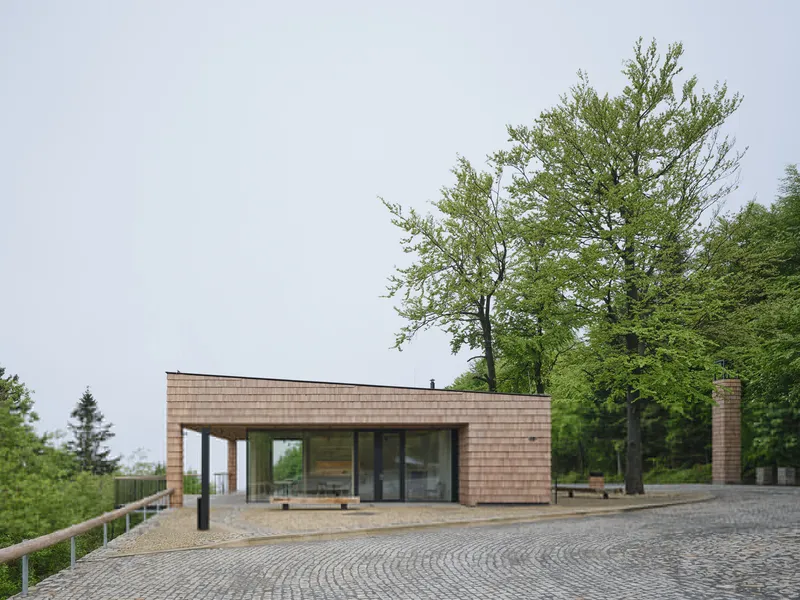
- Terrace with panoramic mountain views
The opposing side features a bell tower and the entrance to a forest trail leading to the Radhošť ridge. The bell tower serves as a vertical landmark and symbolizes both human presence and a spiritual connection to the landscape, bridging historical and contemporary narratives of Pustevny.
The paved area between the bell tower and the main building offers shaded seating under mature beeches, encouraging visitors to linger and enjoy the natural surroundings. The terrace and central interior space are carefully designed to flow together, creating an open yet protected environment suitable for all seasons.

Architectural Features
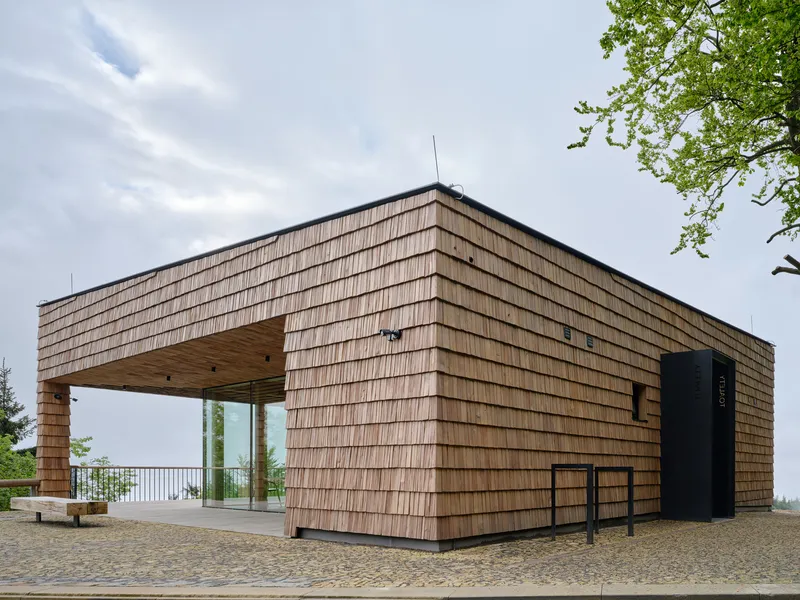
Constructed primarily of wood on micro-piles, the building incorporates a frame structure with a sloping roof made of glulam timber beams. The shingle façade references traditional Beskydy construction techniques, while the green roof integrates local mountain flora, blending seamlessly with surrounding meadows. Sandstone pavements and walls highlight the geological character of the Beskydy ridge, forming a clear, cohesive landscape point that marks the gateway to Pustevny.
The architectural composition: wooden building on one side, vertical bell tower on the other, stone-paved connection, and mature beech trees, creates a landmark that is both functional and symbolic. Visitors experience a welcoming, aesthetically compelling entrance to the region, whether arriving by car, bus, or on foot.

Sustainable Transportation and Urban Planning
The Pustevny Gateway Center aligns with municipal efforts to reduce car traffic and promote public transportation. The project relocates the original bus stop to a lower parking area, integrating bus turnaround facilities and enhancing pedestrian safety. The design is part of a broader initiative to modernize public transport, develop cycle paths, and unify the architectural language of municipal infrastructure.
Through projects like the Pustevny Gateway Center, the municipality continues to invest in public spaces with high architectural quality, including the revitalization of the village center, new playgrounds, and educational facilities. These developments ensure that Pustevny remains accessible, sustainable, and culturally vibrant for future generations.


Visitor Experience
The center provides a seamless experience for tourists, offering shelter during inclement weather, panoramic views from the terrace, and easy access to hiking trails. The combination of wood, stone, and greenery fosters a connection to the Beskydy Mountains’ natural and cultural heritage, making the Pustevny Gateway Center both a practical hub and a destination in itself.

All photographs are works of
BoysPlayNice


Popular Articles
Popular articles from the community


longwave studio Reorganizes a 112 m² Tainan Apartment Around the Daily Routines of a Family and Two Cats
In Tainan, Taiwan, birch plywood, rust-red furniture and a freestanding plaster wall link arrival, storage, work and family life in one apartment.

LT2A and OPEN Architectes Thread a Brick and Glass High School Through a Wooded Belgian Campus
In Braine-l'Alleud, a 3,000 m² wing for Collège Cardinal Mercier pairs pale brick with a glazed colonnade, deferring to a small chapel and a dense wood.

Juan García Correa, John González and Claudia Rueda Sink a Circular Amphitheater into a Manizales Engineering Building
On the La Nubia campus in Manizales, Colombia, the S1 Building folds labs and offices into a hillside of ramped lawns that double as a campus route.

GROUP A Strips a 1969 Rotterdam Harbor Headquarters to Its Frame and Wraps It in Timber Louvers
In Rotterdam's M4H harbor district, Ferro Offices reuses a 1969 frame, adds one timber storey and reaches BREEAM-NL Outstanding.

Similar Reads
You might also enjoy these articles


Hodi-Mandai Geram
Project Function: Preservation and revitalization of the Intangible heritage and socio-spatial identity of the Hodi by Housing, Cultural Memory Center, Sacred Grove, landscape, local tourism economy


Olio Towers: A Mid-Rise for Performers That Fuses Housing, Rehearsal, and Stage
Located blocks from Houston's Theater District, this modular tower stacks living units around a central performance atrium.

Oasis: Modular Green Housing Carved into Dhaka's Urban Fabric
A shortlisted Plugin Housing entry reclaims unauthorized settlements in Dhaka with stepped concrete volumes, green roofs, and ventilation-driven design.

Black Hole: A Floating Megastructure for the Post-Physical Era
Emiliano Mazzarotto envisions a spherical, self-scaling arena where e-sports, digital hotels, and holographic stadiums replace traditional public space.

Explore Architecture Competitions
Discover active competitions in this discipline

Challenge to reimagine the Iron Throne

Photograph architecture without architects

Illustrate the lost glory of Angkor Wat - Render Challenge

Design challenge to reuse E-waste
Comments (0)
Please login or sign up to add comments
No comments yet. Be the first to comment!