

Qarahziya House by Davood Boroojeni Office: A Harmonious Blend of Tradition and Innovation
Qarahziya House blends traditional Iranian architecture with modern sustainability, featuring a central light trap, vertical greenery, and passive design strategies.


Introduction to Qarahziya House
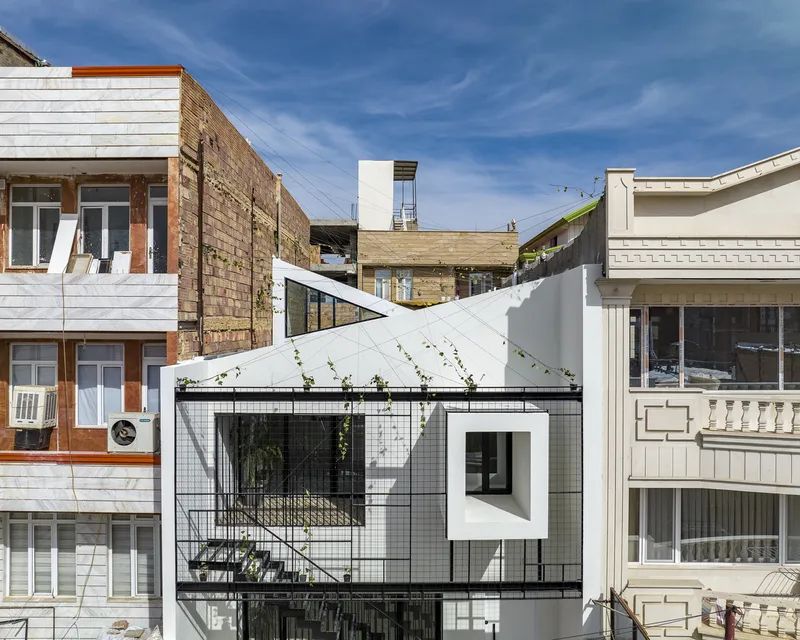
The Qarahziya House, designed by Davood Boroojeni Office, is an architectural response to the evolving urban fabric of Qaraziyauddin, Iran. This contemporary residence reinterprets traditional Iranian architectural elements while addressing modern-day spatial challenges.
Urban Context and Design Challenges
Qaraziyauddin has undergone significant urban transformations, driven by rising land prices and the demand for expanded living spaces. As a result, many single-story houses are being replaced with multi-story buildings. However, field research conducted by the architects revealed that many newly constructed third and fourth floors remain unoccupied, disrupting the human scale of the city.
Architectural Approach: Balancing Functionality and Aesthetics
Middle Space: Enhancing Light and Connectivity
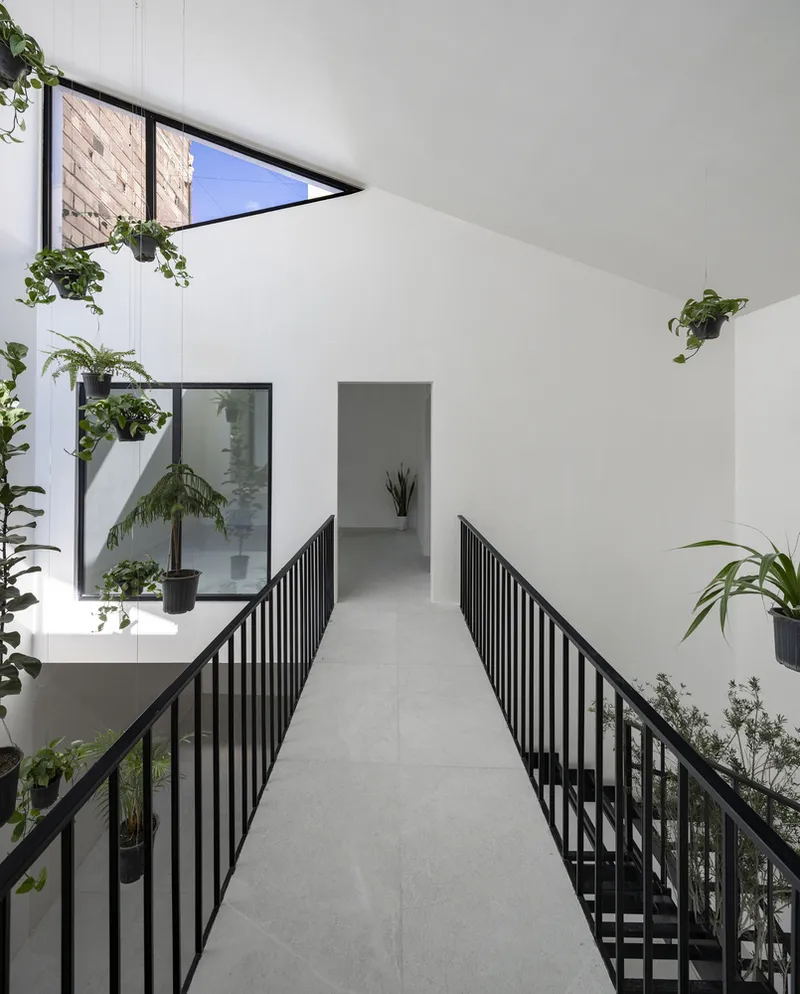
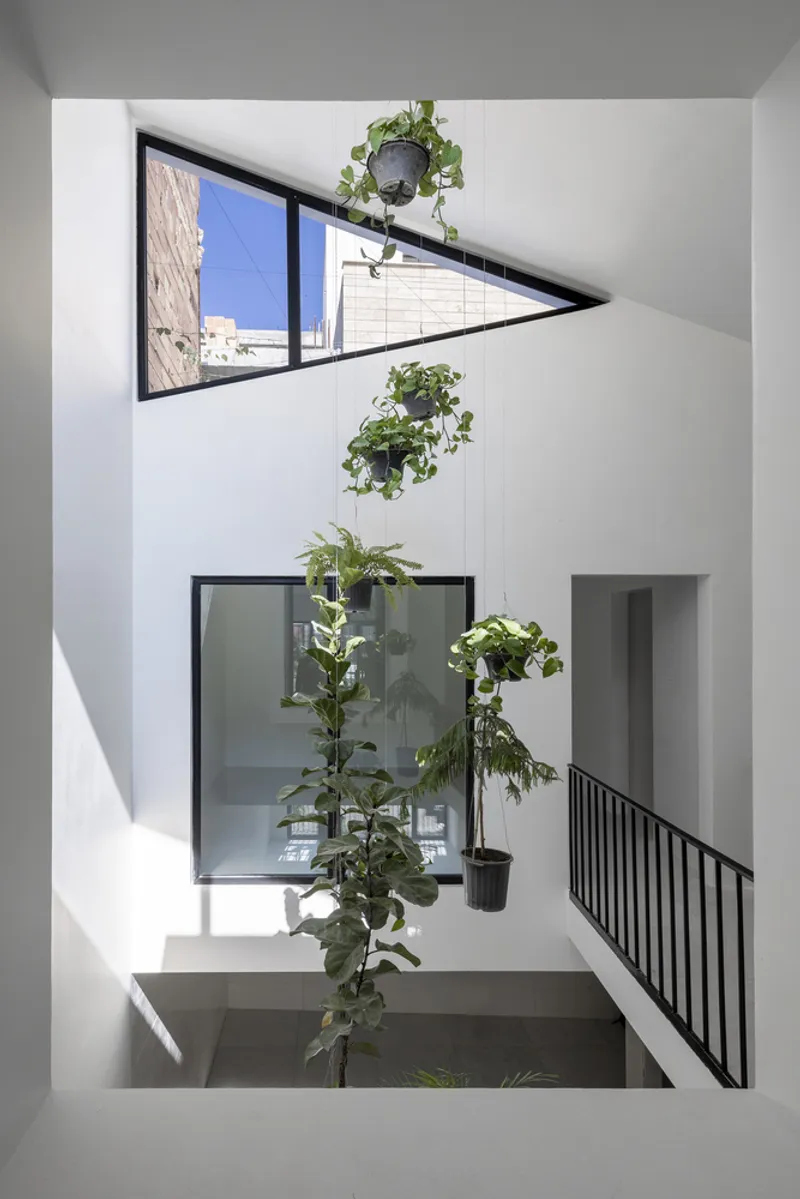
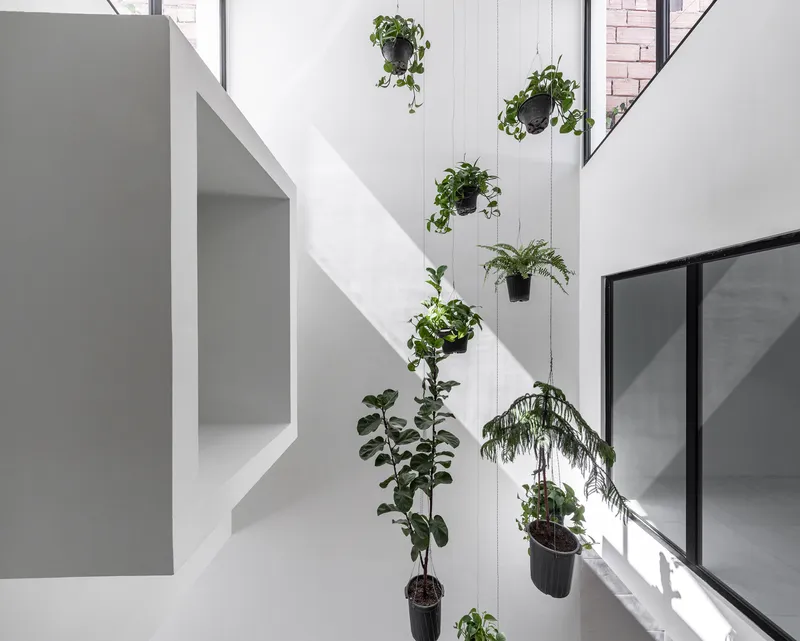
A key challenge in the project was the elongated layout of the site, which limited natural light penetration. To address this, the architects incorporated a "middle space", a central void that serves as a light trap while connecting different floors. This design strategy is deeply rooted in Iranian architectural heritage, where central courtyards have historically played a crucial role in enhancing ventilation and spatial quality.
Maximizing Vertical Space
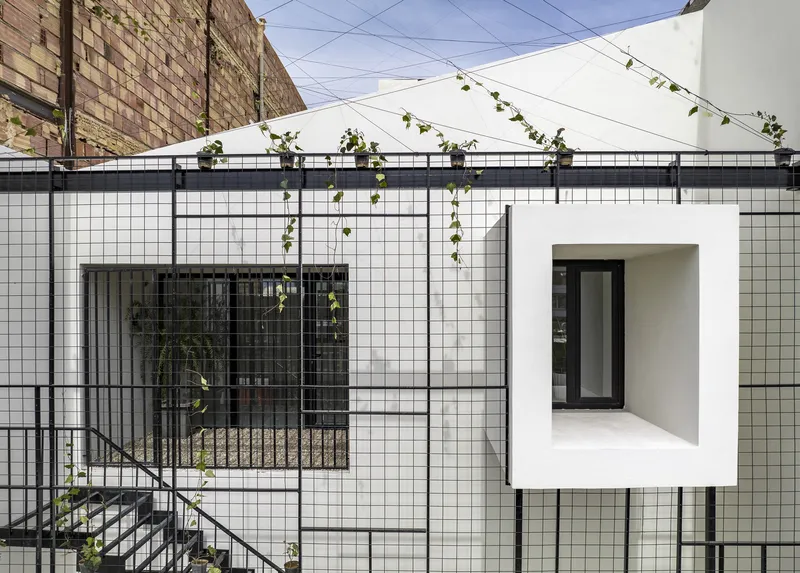
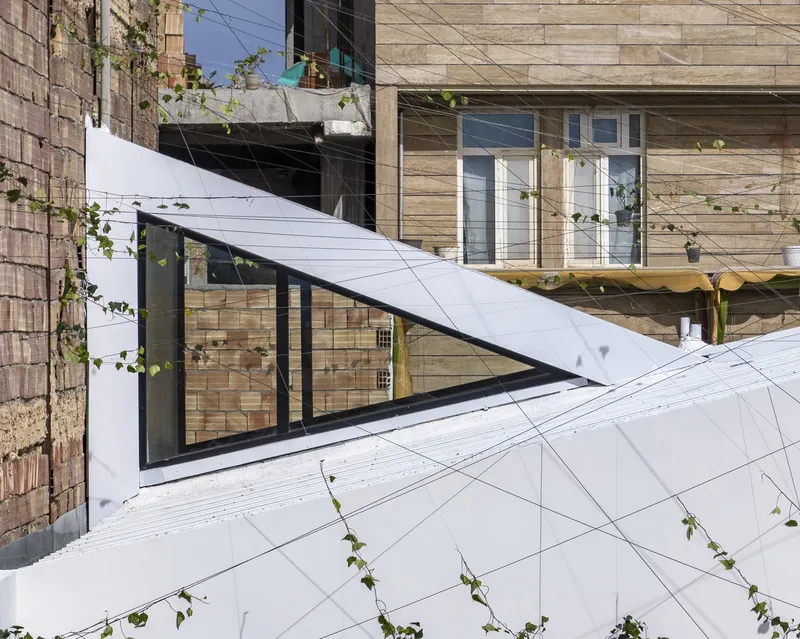
Given the constraints imposed by neighboring buildings, the design optimizes vertical space utilization. An empty void between the house and its adjacent structures was carefully reconsidered to introduce strategic openings and outdoor seating areas. The inclusion of exterior-facing windows not only enhances daylighting but also creates a dynamic relationship between interior and exterior spaces.
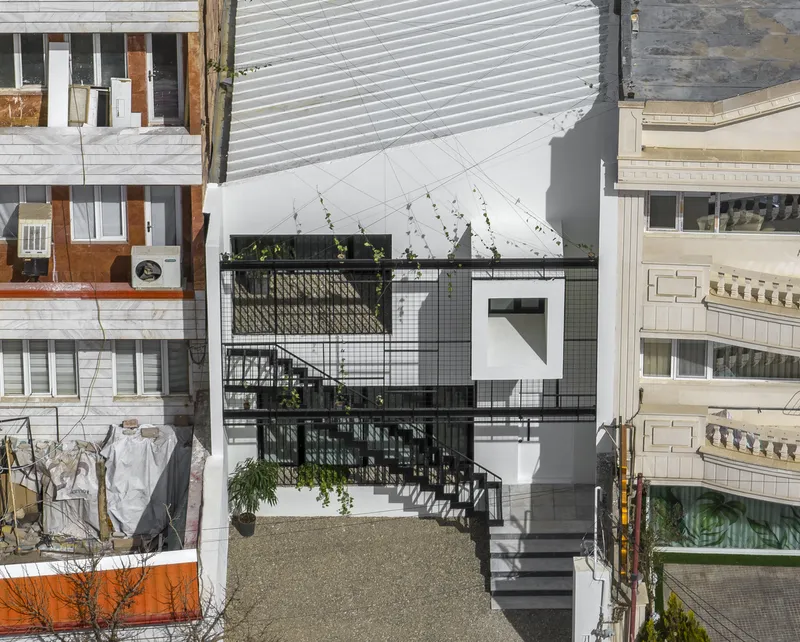
The "Sixth View": A Green Urban Solution
A defining feature of the project is its interaction with the western boundary wall, which was initially an unsightly structure made of damaged pottery. Instead of disregarding this element, the architects transformed it into an integrated green facade. By strategically placing potted plants within the empty spaces of the wall and incorporating climbing wires, the design fosters vertical greenery, contributing to a better microclimate and urban aesthetics.
Sustainable and Contextual Design Strategies
- Passive Lighting & Ventilation: The middle space allows for improved air circulation and natural illumination, reducing the reliance on artificial lighting.
- Material Reuse: The existing structure was evaluated for potential adaptive reuse, minimizing waste and promoting sustainability.
- Urban Engagement: The integration of green elements enhances the neighborhood’s visual appeal, fostering a connection between private and public spaces.
A Thoughtful Response to Urban Evolution
The Qarahziya House is more than just a residence; it is a critical architectural response to the rapid urban changes in Iran’s housing landscape. By blending traditional Iranian spatial concepts with modern sustainable solutions, the project stands as a model for future urban developments.
All Photographs are works of Parham Taghioff


Popular Articles
Popular articles from the community


The Earth Pod: 3D Printed Homes for Resilient Refugee Communities
The Earth Pod reimagines refugee housing through 3D printed homes made from clay, combining resilience, self-sufficiency, and rapid shelter.

Conexión: Biophilic Design Reimagines High-Rise Living in Hong Kong
Conexión reimagines high-rise living in Hong Kong through biophilic design, green facades, shared spaces, daylight, water and nature within.

The Ocean Hive: Sustainable Architecture for a Self-Sufficient Civilization at Sea
The Ocean Hive imagines sustainable architecture at sea, where modular habitats, algae, wave power and ocean waste sustain a growing colony.

The Musturak Paradise: Senior Living Architecture for a Connected Future in Temara, Morocco
The Musturak Paradise reimagines senior living architecture in Temara via private homes, social spaces, culture, community, and shared care.

Similar Reads
You might also enjoy these articles


Hodi-Mandai Geram
Project Function: Preservation and revitalization of the Intangible heritage and socio-spatial identity of the Hodi by Housing, Cultural Memory Center, Sacred Grove, landscape, local tourism economy


Olio Towers: A Mid-Rise for Performers That Fuses Housing, Rehearsal, and Stage
Located blocks from Houston's Theater District, this modular tower stacks living units around a central performance atrium.

Oasis: Modular Green Housing Carved into Dhaka's Urban Fabric
A shortlisted Plugin Housing entry reclaims unauthorized settlements in Dhaka with stepped concrete volumes, green roofs, and ventilation-driven design.

Black Hole: A Floating Megastructure for the Post-Physical Era
Emiliano Mazzarotto envisions a spherical, self-scaling arena where e-sports, digital hotels, and holographic stadiums replace traditional public space.

Explore Persian Architecture Competitions
Discover active competitions in this discipline



Challenge to reimagine the Iron Throne


Photograph architecture without architects


Illustrate the lost glory of Angkor Wat - Render Challenge


Design challenge to reuse E-waste
Comments (0)
Please login or sign up to add comments
No comments yet. Be the first to comment!