
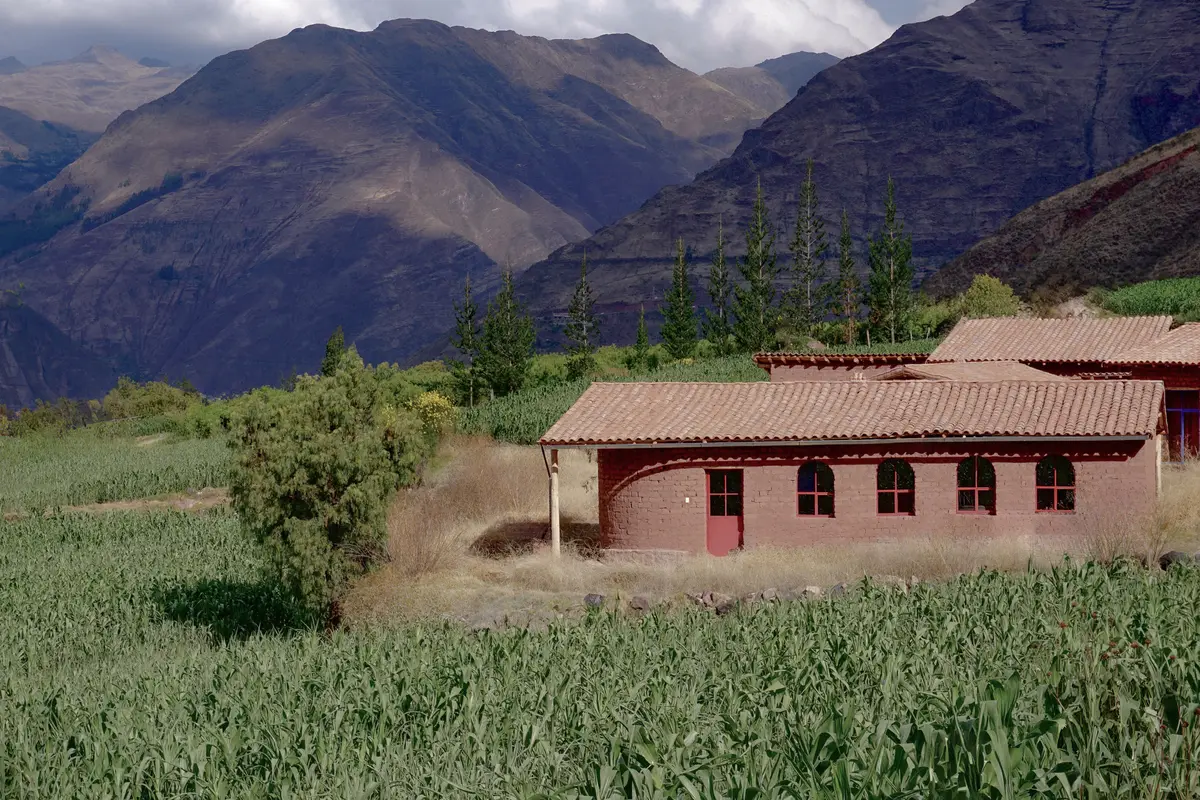
Quincho Bernarda Community Center
Adobe community center in the Peruvian Andes featuring vaulted arches, central nave, terraces, and flexible gathering spaces rooted in tradition.


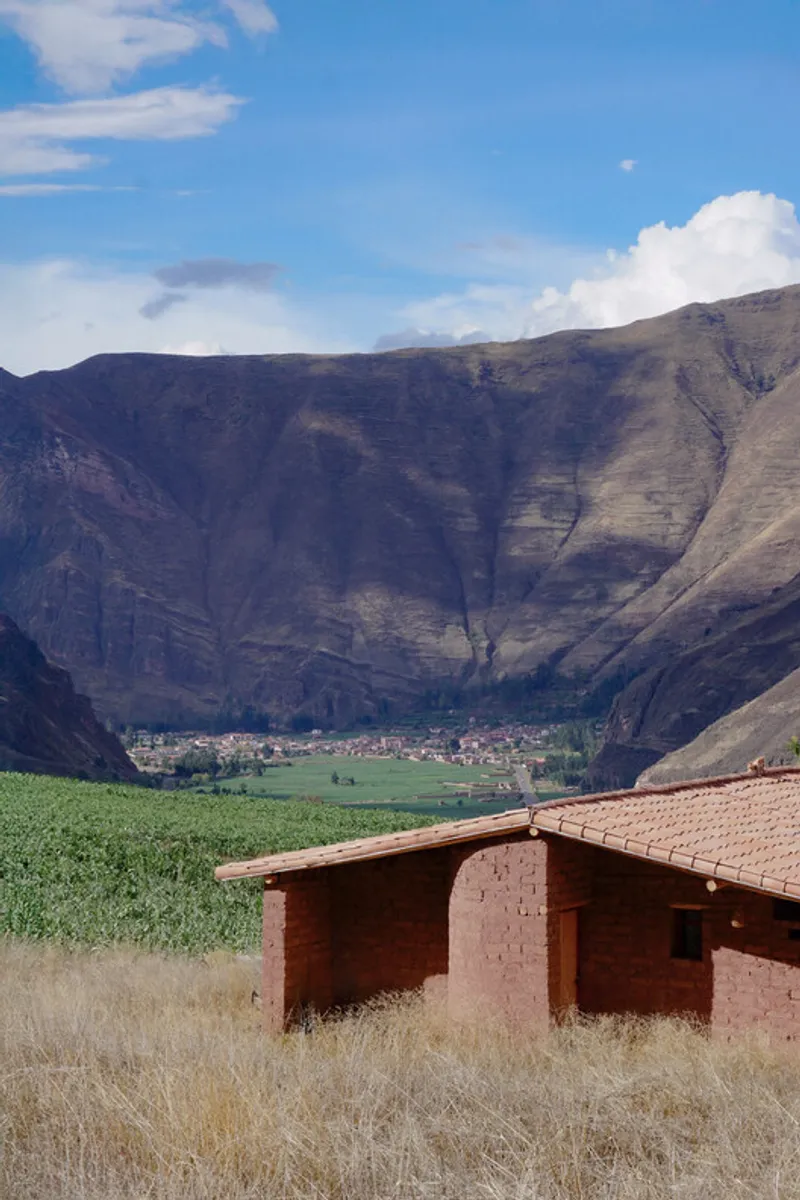
Set within the dramatic Andean landscape between the archaeological parks of Písac Archaeological Park and Uchuy Qosqo, the Quincho Bernarda Community Center serves as the social and cultural heart of KUSKA, a network of inhabitable structures woven into the mountains of southern Peru.
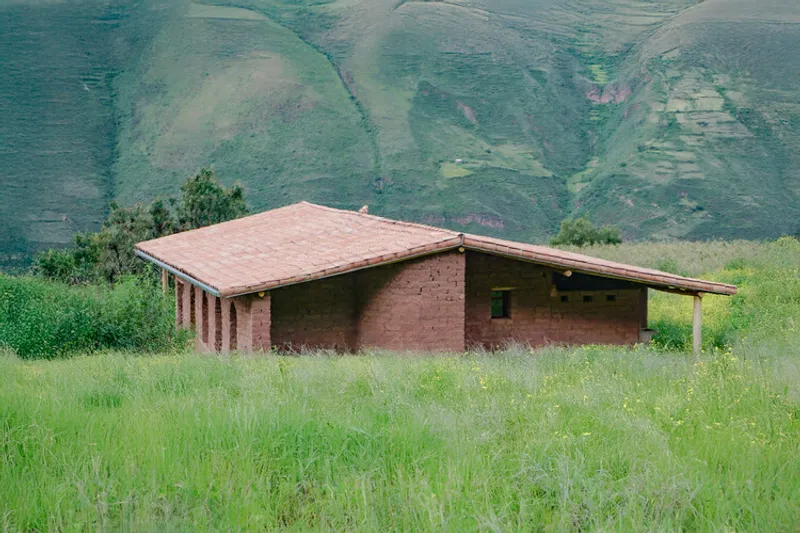
Designed by Taller MACAA, this 140 m² adobe community center in Peru reinterprets vernacular Andean construction through contemporary spatial strategies. The project merges traditional earthen architecture, seismic resilience, and collective programming into a warm and flexible gathering space rooted in local identity.
Architecture for Encounter in the Andes
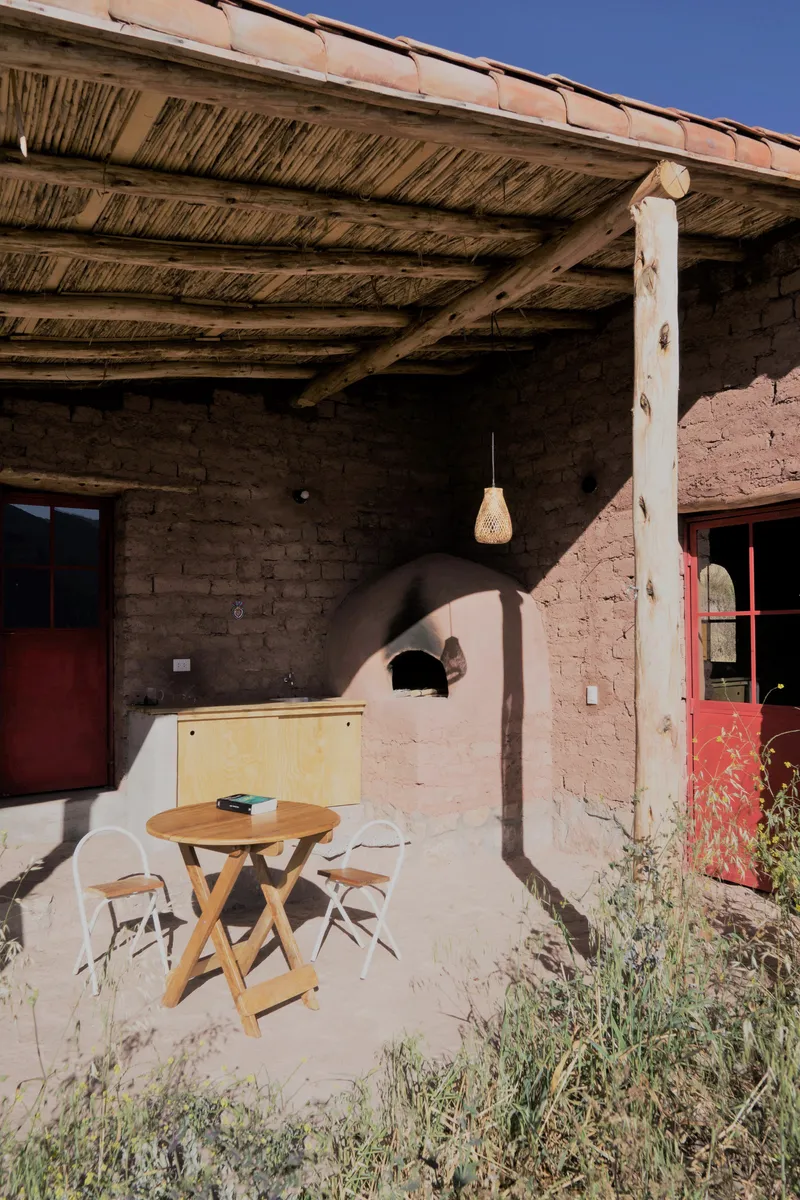
The word quincho originates from Argentine domestic culture, describing a space dedicated to gathering around food and drink. Here, that tradition is reimagined as an Andean communal architecture, where residents and visitors meet for cultural exchange, shared meals, workshops, and performances.
Unlike the more outward-looking residential structures within KUSKA, Quincho Bernarda is inwardly focused. It functions as a protected communal nave: a shared interior landscape that fosters dialogue, celebration, and reflection.
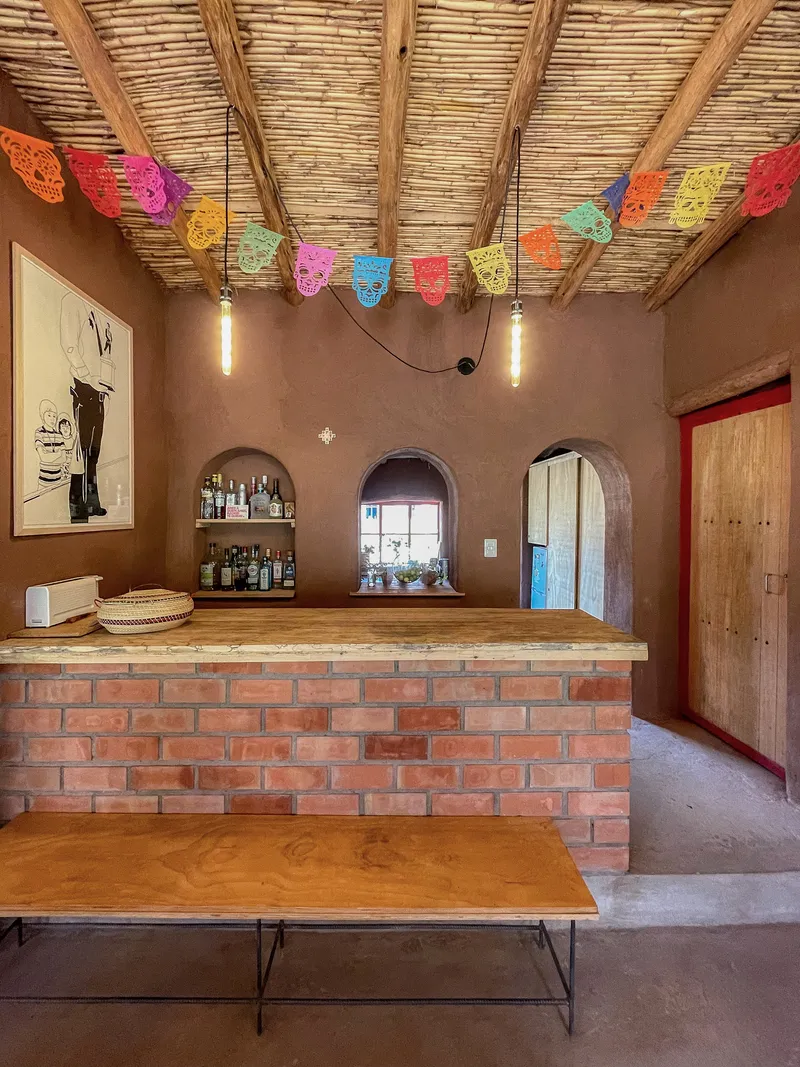
Exposed Adobe Construction and Seismic Intelligence
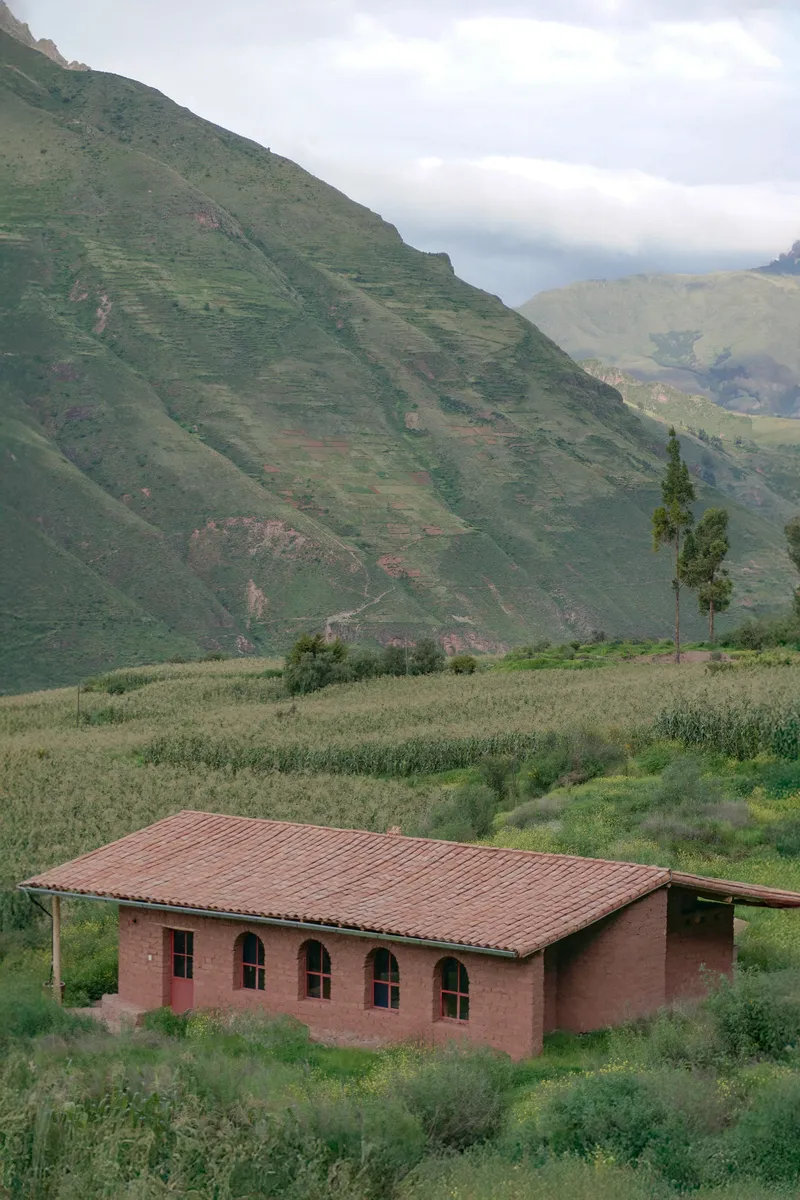
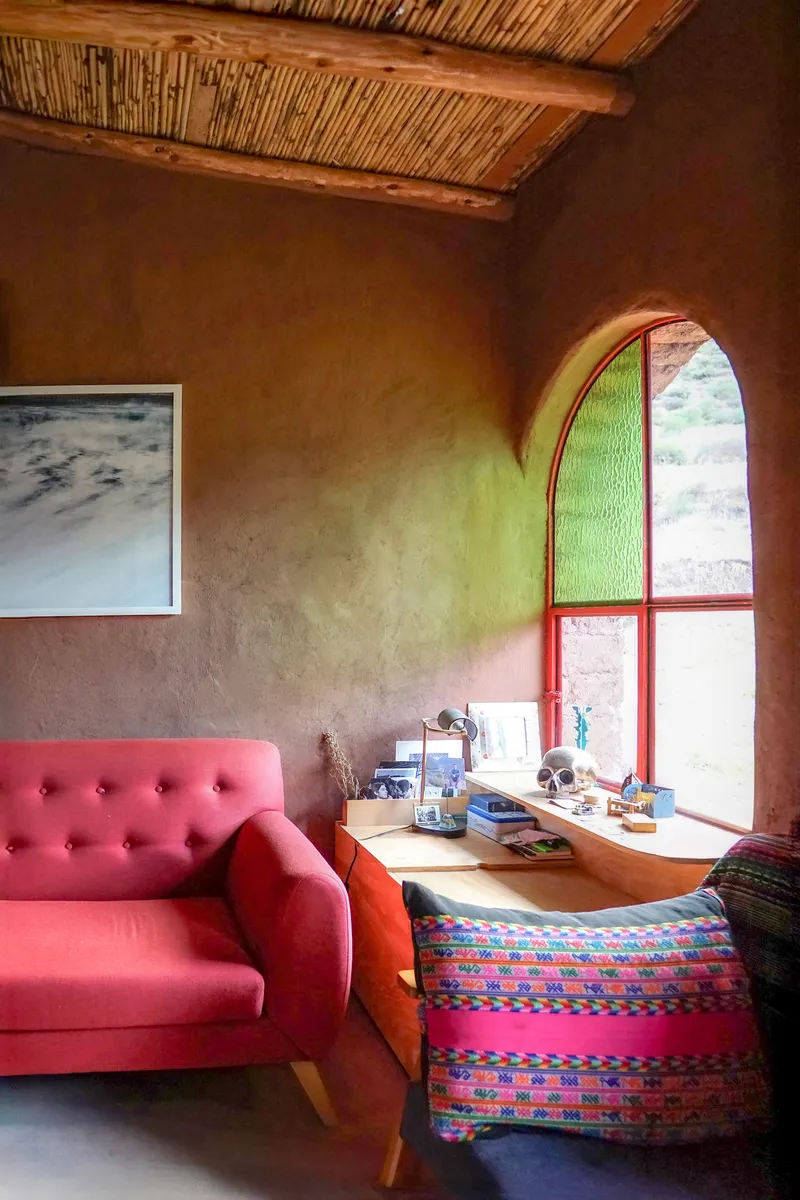
Adobe is not concealed in this project; it is celebrated as structure, texture, and spatial language. Thick load-bearing earthen walls provide thermal mass, stability, and a tactile warmth that resonates with the surrounding terrain.
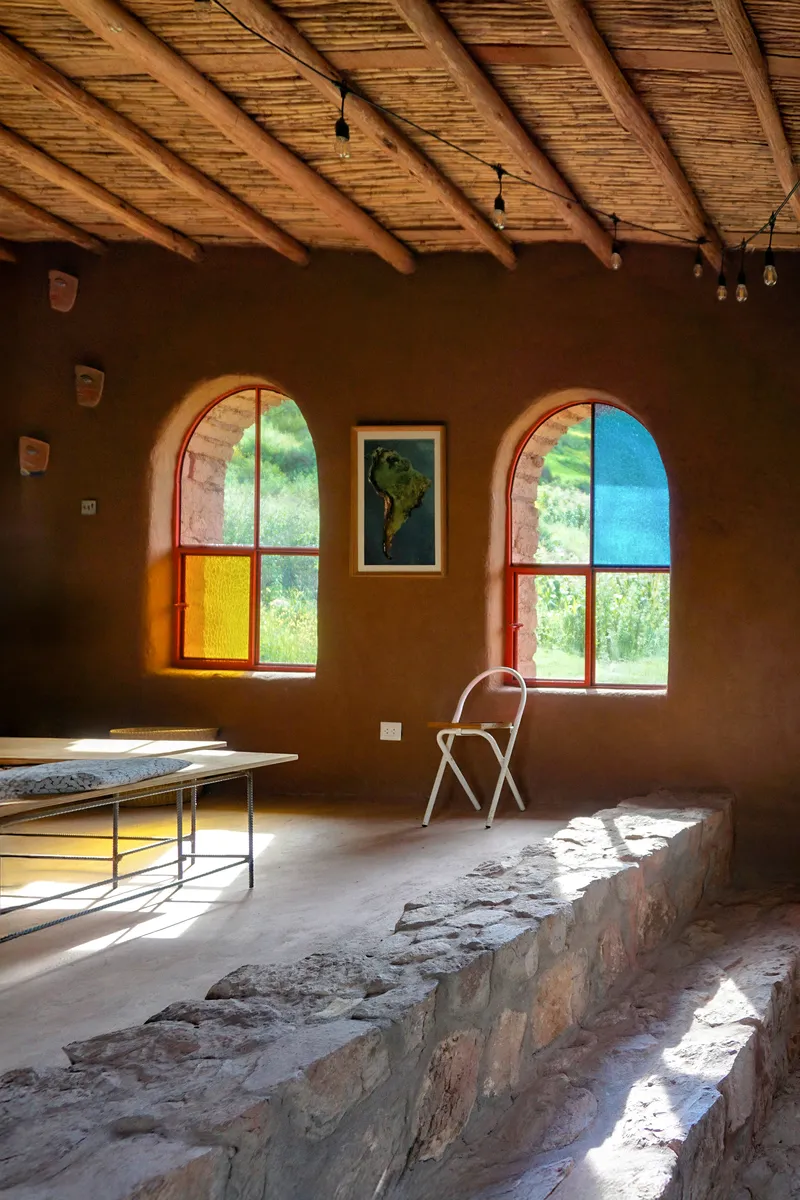
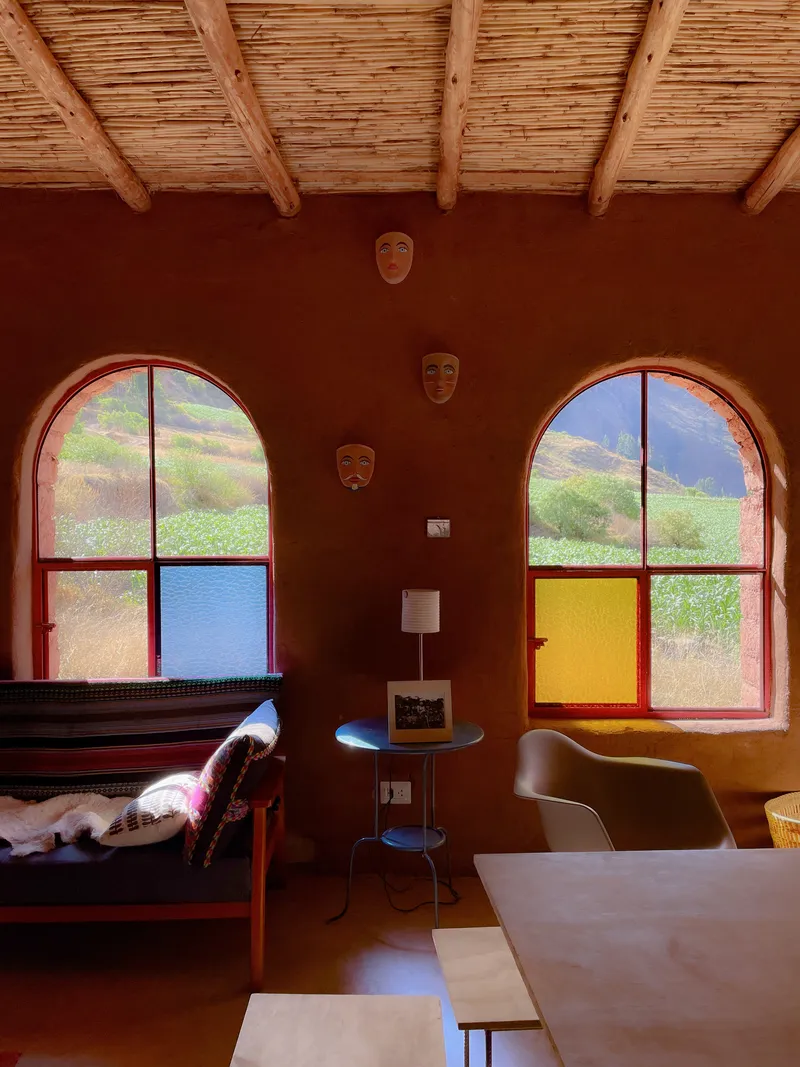
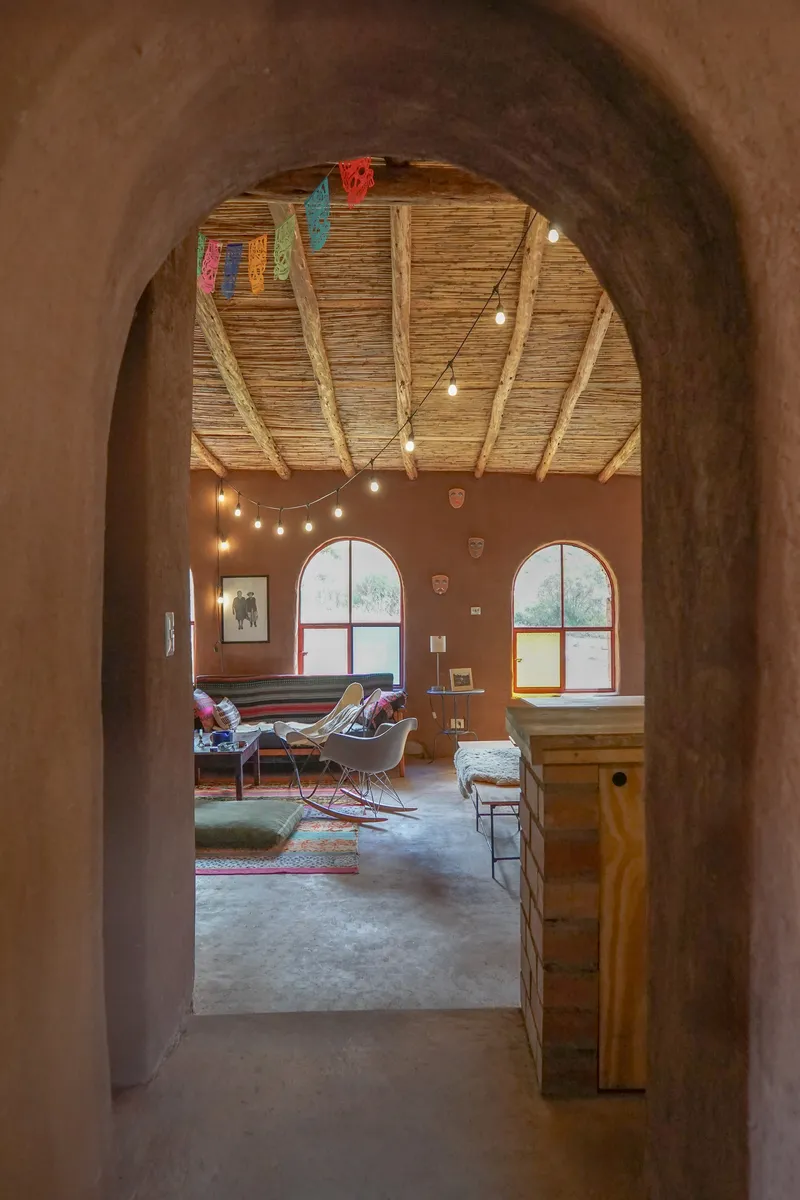
To enhance seismic performance, crucial in the Peruvian Andes, the architects introduced structural arches instead of conventional lintels. These curved openings:
- Improve load distribution
- Strengthen earthquake resistance
- Integrate storage niches within wall thickness
- Enhance spatial fluidity
Curved adobe walls guide circulation and reinforce the enveloping character of the space, demonstrating how vernacular materials can meet contemporary engineering demands.
Reinterpreting the Basilica Typology
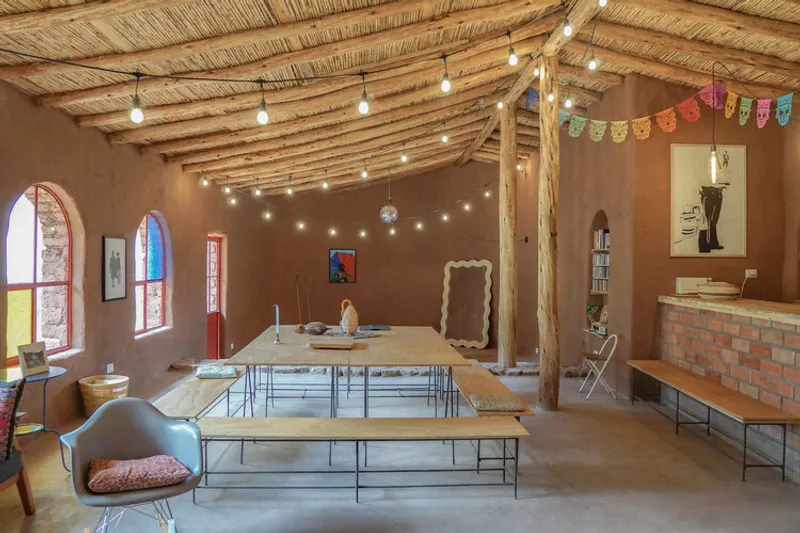
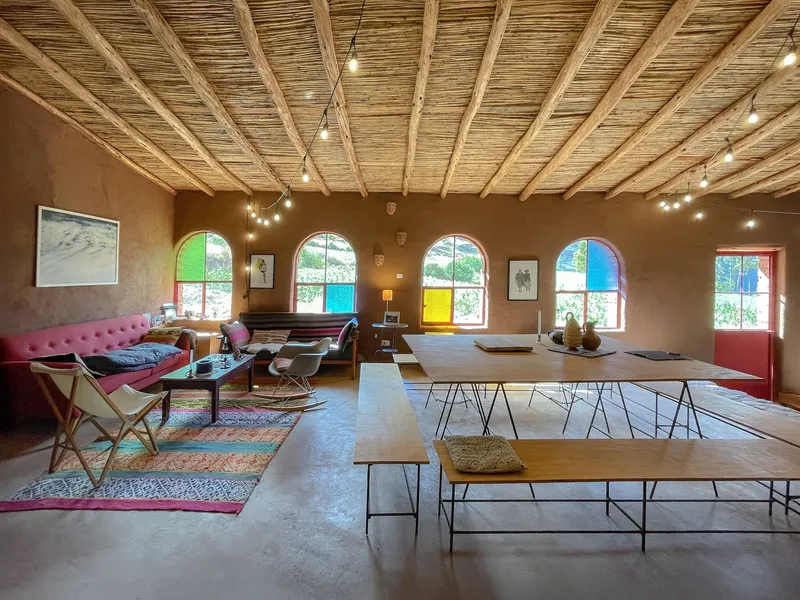
The spatial organization follows a simple yet symbolic layout: a single gabled volume reminiscent of a basilica nave. However, its religious associations are stripped away and redefined for collective use.
A central hall anchors the program, accompanied by:
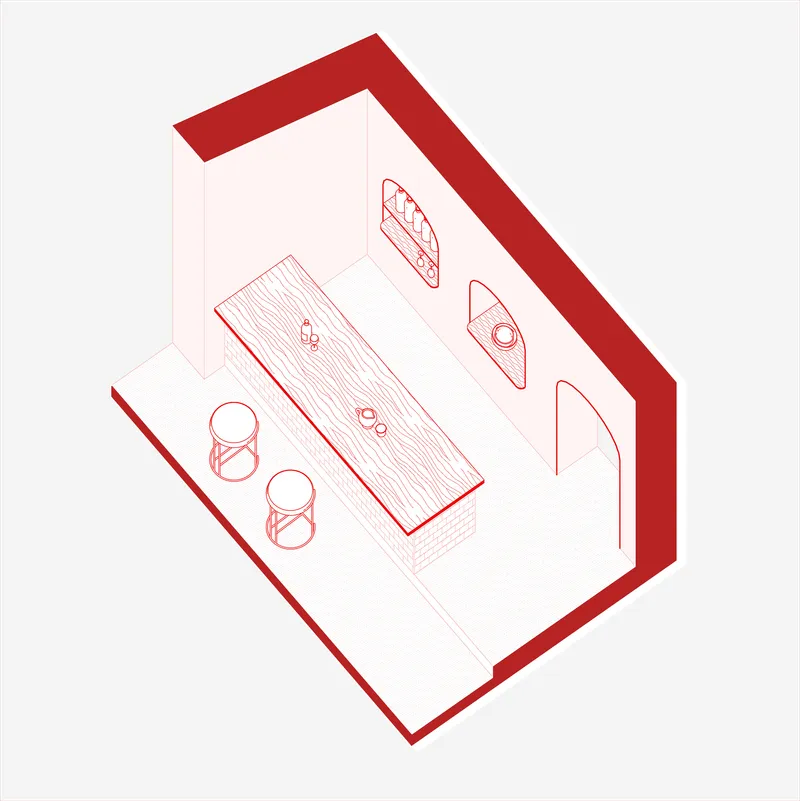
- A communal kitchen
- A lounge area
- A shared dining table
- A bar connected via curved pass-through openings
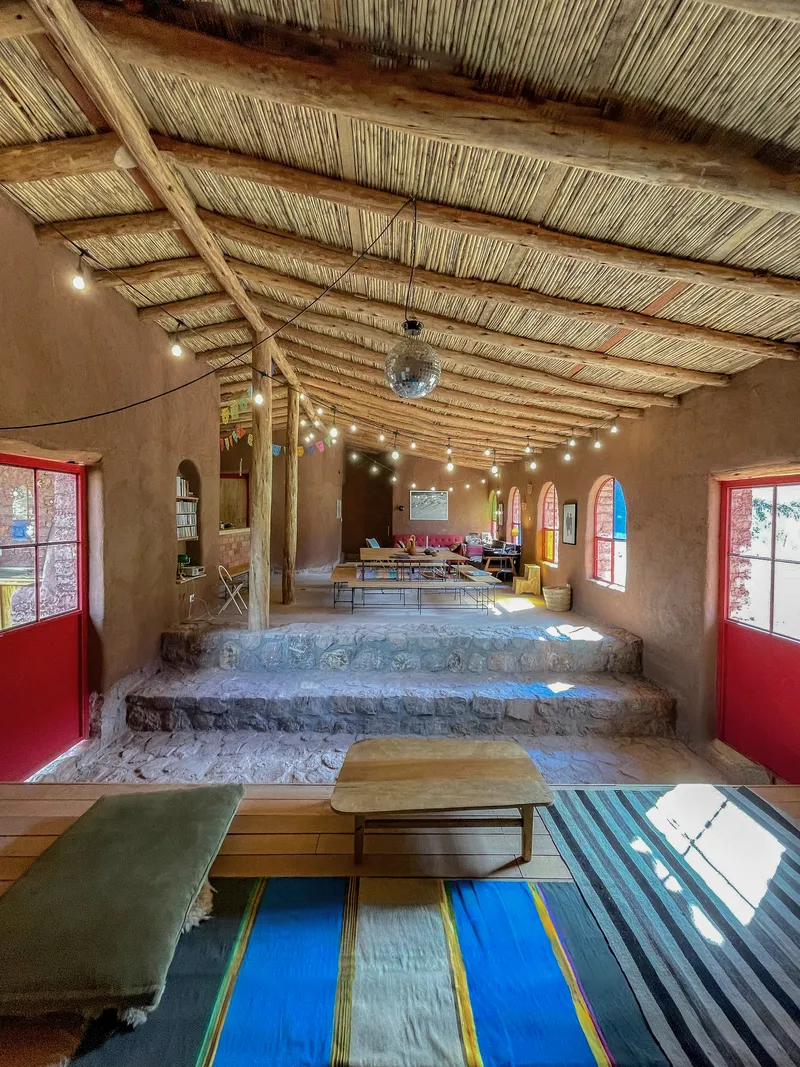
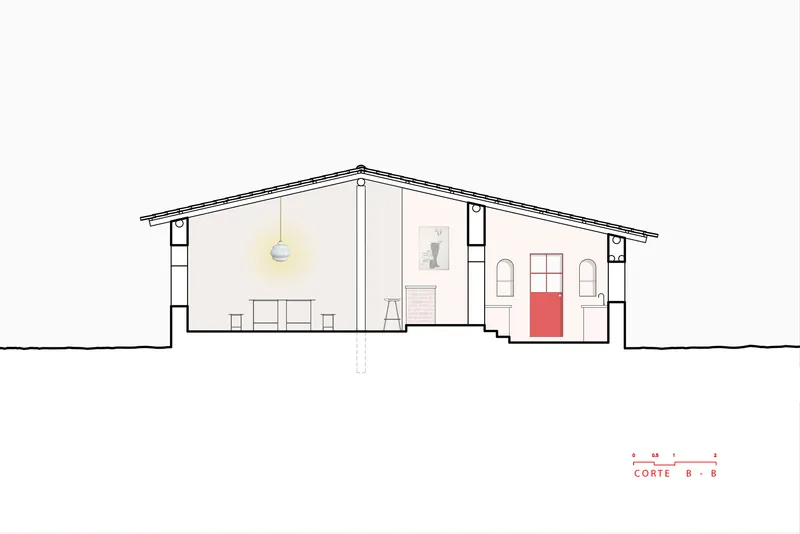
- A small sunken stage
The stage replaces the traditional altar as the focal point, reinforcing the idea of culture, rather than ritual, as the organizing principle of the space. Stone steps between the nave and stage double as informal seating, creating a flexible platform for performances, gatherings, and community events.
Structural Asymmetry and Material Honesty
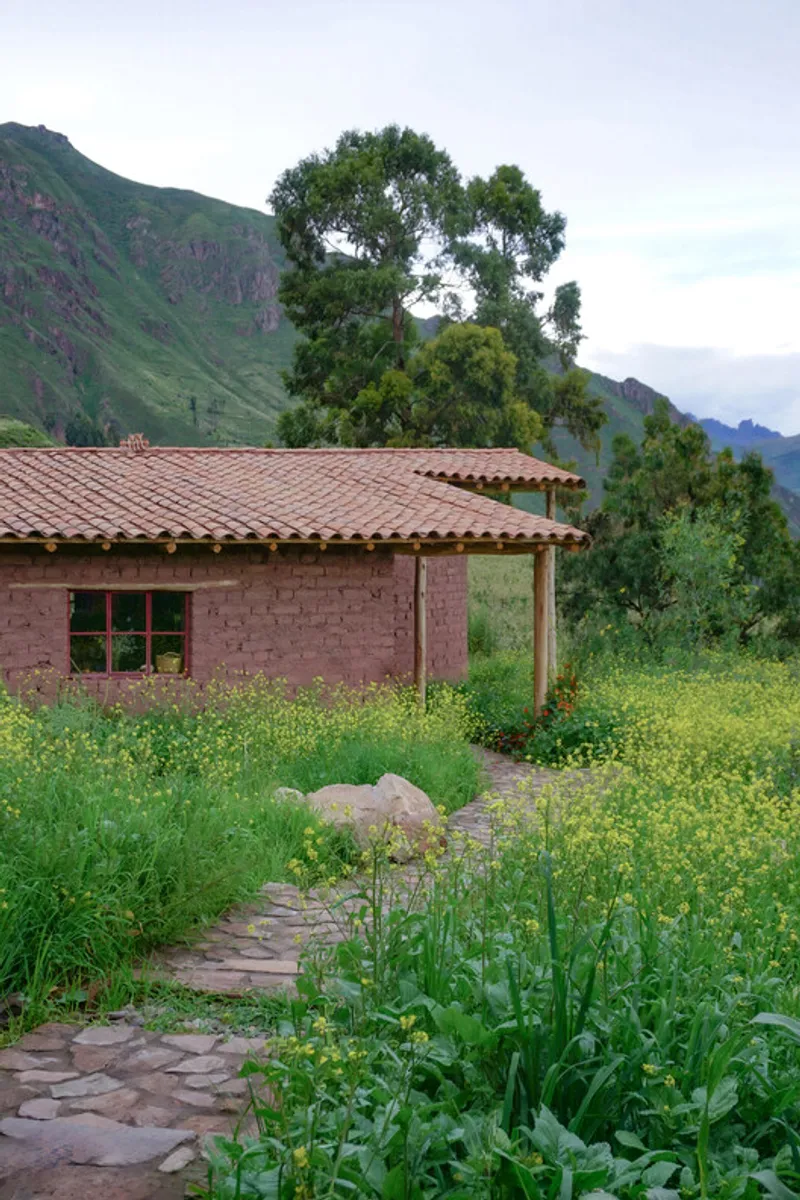
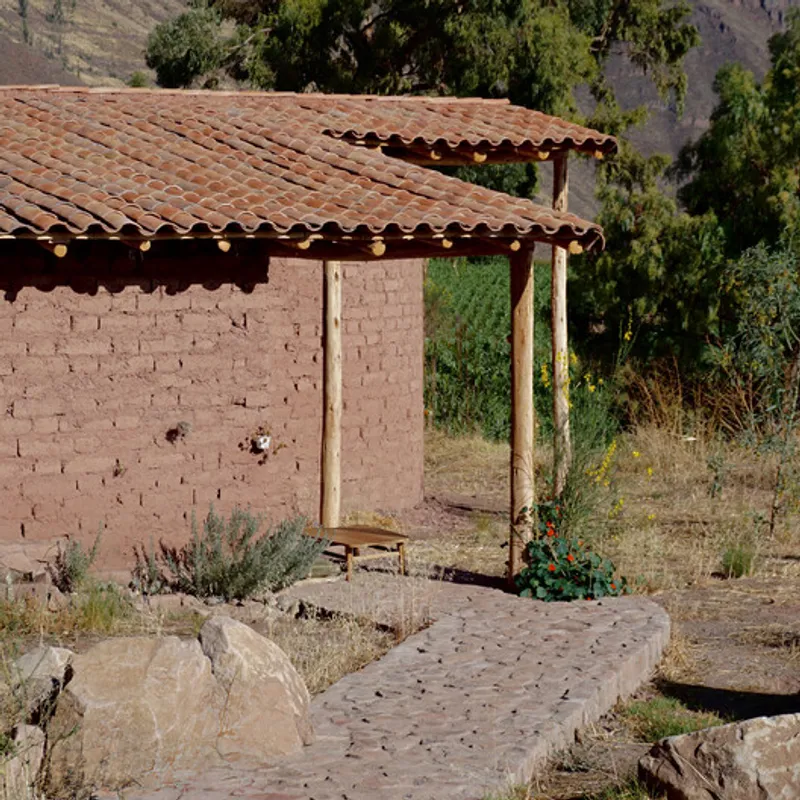
The gabled tiled roof rests on adobe walls and two eucalyptus columns. The ridge beam is intentionally offset from the hall’s central axis, generating subtle asymmetry. Combined with the sloping terrain, this structural shift establishes spatial hierarchy without partitions.
This strategy reflects low-tech sustainable construction in Peru, maximizing local materials while minimizing unnecessary complexity.
Terraces and Landscape Integration
Two terraces extend the communal experience outward into the Andean landscape:
- The northeast terrace, covered and positioned between kitchen and hall, captures soft morning light.
- The northwest terrace, semi-covered and aligned with the slope, acts as a lookout toward the sacred mountain Apu Sahuasiray.
The west façade incorporates colored stained glass, filtering evening sunlight into warm hues while enhancing the adobe’s thermal mass. These subtle environmental strategies reinforce passive climate control and spatial atmosphere.
Community-Centered Sustainable Design
Quincho Bernarda exemplifies sustainable earthen architecture in the Andes, integrating:
- Locally sourced adobe walls
- Eucalyptus structural columns
- Traditional tiled roofing
- Passive solar orientation
- Thermal mass performance
- Seismic-sensitive arch systems
The building demonstrates how architecture can operate as both shelter and social infrastructure, strengthening community ties while honoring indigenous construction knowledge.
Cultural Resilience Through Architecture
More than a physical structure, Quincho Bernarda is a cultural anchor within KUSKA. It transforms the basilica typology into a secular gathering hall, reclaiming architectural symbolism for everyday life.
In doing so, Taller MACAA positions adobe architecture not as nostalgic tradition, but as a living and adaptable system capable of supporting contemporary communal needs in the Andes.
All the photographs are works of
Rafael Ortiz Santos


Popular Articles
Popular articles from the community


David Ortega Stacks a Two-Story Mexico City Penthouse Around a Steel Stair and a Pergola-Shaded Roof Terrace
In Colonia Roma, a 300 m² penthouse uses oak joinery, a planted steel stair and a slatted roof pergola to make a new-build apartment feel like a house.

GROUP A Strips a 1969 Rotterdam Harbor Headquarters to Its Frame and Wraps It in Timber Louvers
In Rotterdam's M4H harbor district, Ferro Offices reuses a 1969 frame, adds one timber storey and reaches BREEAM-NL Outstanding.

Cube Design Draws an Ecological Corridor Between Two Shenzhen Hills with the Nankai Building
Beside Shenzhen's container docks, the Nankai Building pairs stacked balconies with a climbing green screen to connect two hillsides across its height.

LT2A and OPEN Architectes Thread a Brick and Glass High School Through a Wooded Belgian Campus
In Braine-l'Alleud, a 3,000 m² wing for Collège Cardinal Mercier pairs pale brick with a glazed colonnade, deferring to a small chapel and a dense wood.

Similar Reads
You might also enjoy these articles

Gil Mello Arquitetura Tilts a Single Roof Toward the Waterfalls on a Plateau Above Aiuruoca, Brazil
In Aiuruoca, Minas Gerais, a 200 m² house of local labor and reclaimed poles pairs a low valley veranda with a tall mountain one.

U.GA Architects Wraps an Oval Rooftop Pool in Curved Board-Formed Concrete on Busan's Jeollidan-gil
In Busan's Jeonpo-dong, a 454 m² mixed-use block stacks a neighborhood facility, guest rooms and an oval rooftop pool inside spiraling concrete walls.

Felipe Hess Arquitetos Turns a Blind Stone Wall to the Street and Opens a Brazilian House onto a Courtyard and Canal
A canal-front house in Brazil hides behind painted stone and planting, then opens to an olive-tree courtyard, a reed-ceilinged porch and a curving pool.

David Macias Steps a Doorless Stone and Plaster House Down a Tropical Colombian Hillside
In the humid hills of Colombia, Threshold House replaces the front door with an open void and terraces its 850 m² down the slope instead of fighting it.

Explore Architecture Competitions
Discover active competitions in this discipline

Challenge to reimagine the Iron Throne

Photograph architecture without architects

Illustrate the lost glory of Angkor Wat - Render Challenge

Bring back Drive In's
Comments (0)
Please login or sign up to add comments
No comments yet. Be the first to comment!