

Qujiang Museum of Fine Arts Expansion by Neri&Hu: A Contemporary Cultural Landmark in Xi’an
Qujiang Museum extension by Neri&Hu blends sunken plazas, sculptural walkways, elevated platforms, and amphitheater, creating a landmark for art and public engagement.


Located at the forefront of Xi’an’s vibrant Datang Everbright City, just south of the iconic Giant Wild Goose Pagoda, the Qujiang Museum of Fine Arts Extension by Neri&Hu Design and Research Office emerges as a striking addition to the city’s cultural landscape. Completed in 2021 and spanning 1,990 m², this extension responds to the client’s request for a new architectural icon at the East Entry, designed to anchor both social history and contemporary cultural functions.
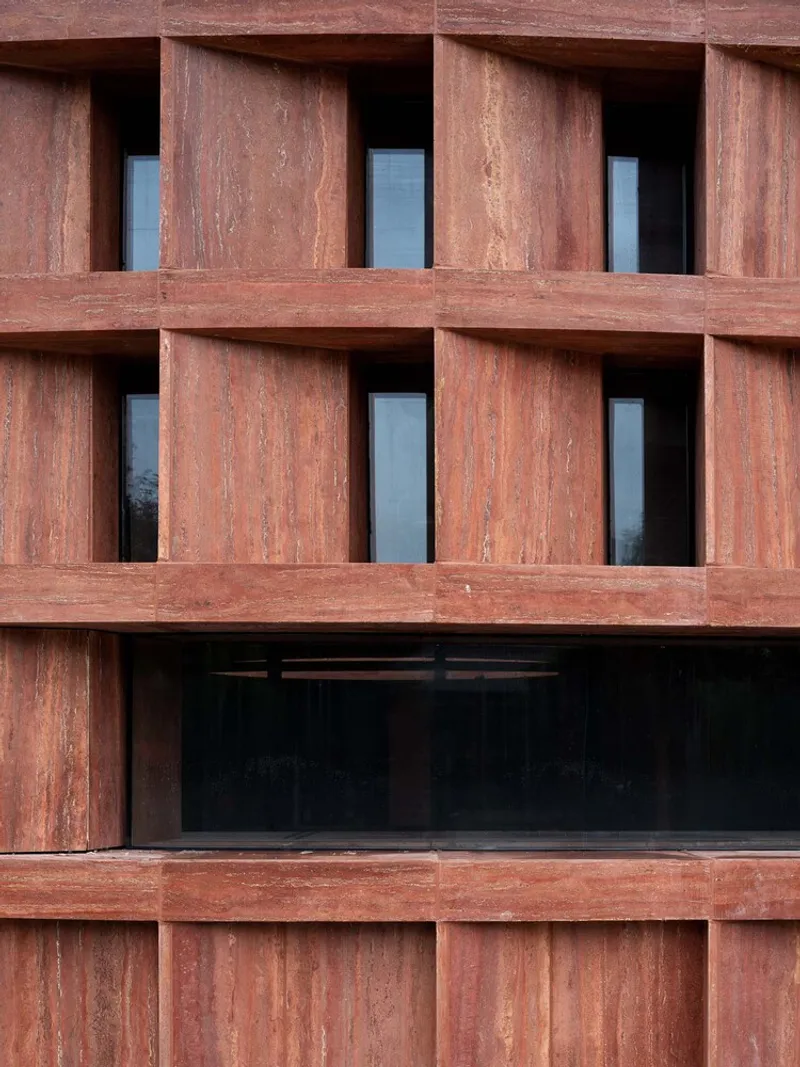
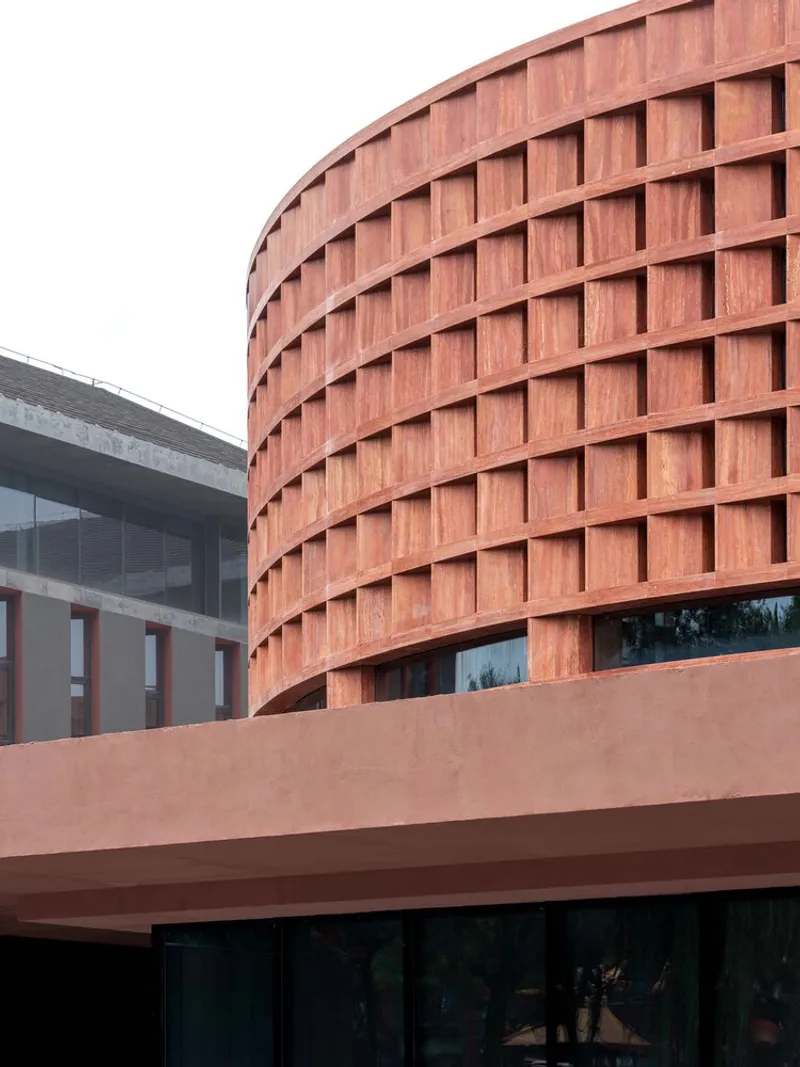

Emphasizing the concept of a monolithic urban monument, Neri&Hu carefully considered the surrounding galleries, creating a building that respects its context while asserting its presence as a landmark. The project strategically minimizes impact through precise architectural massing and detailing, blending seamlessly into Xi’an’s historic and modern urban fabric.
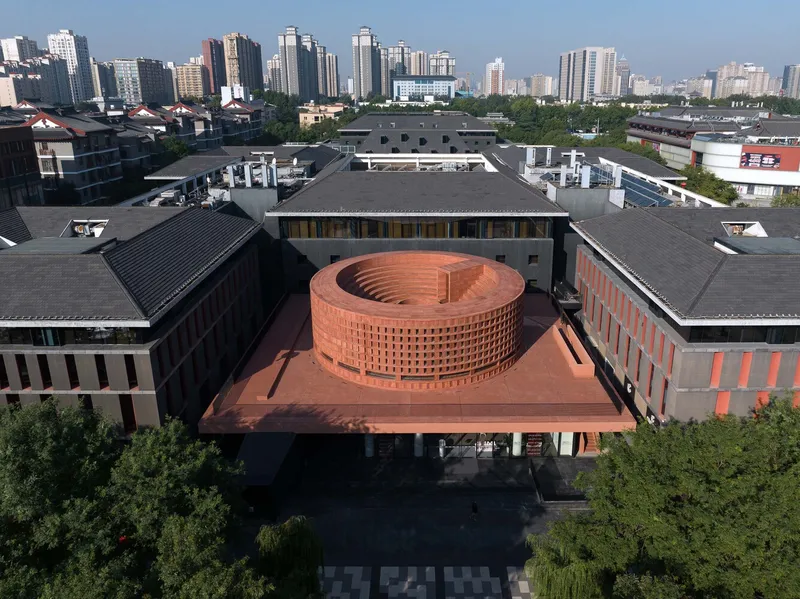
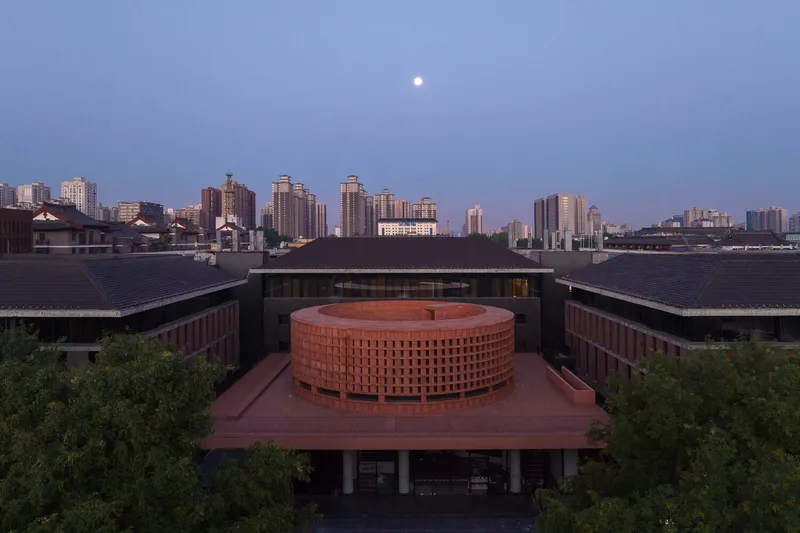
The museum extension is organized into four key architectural components: the partially sunken Base, the Sculptural Walk, the elevated Platform, and the crowning Monument. The Base, executed in cast-in-place concrete and partially sunken from the existing plaza, functions as a continuous public ground, housing both former museum spaces and new insertions, including retail outlets, restaurants, and public restrooms, enhancing the adjacent pedestrian street.

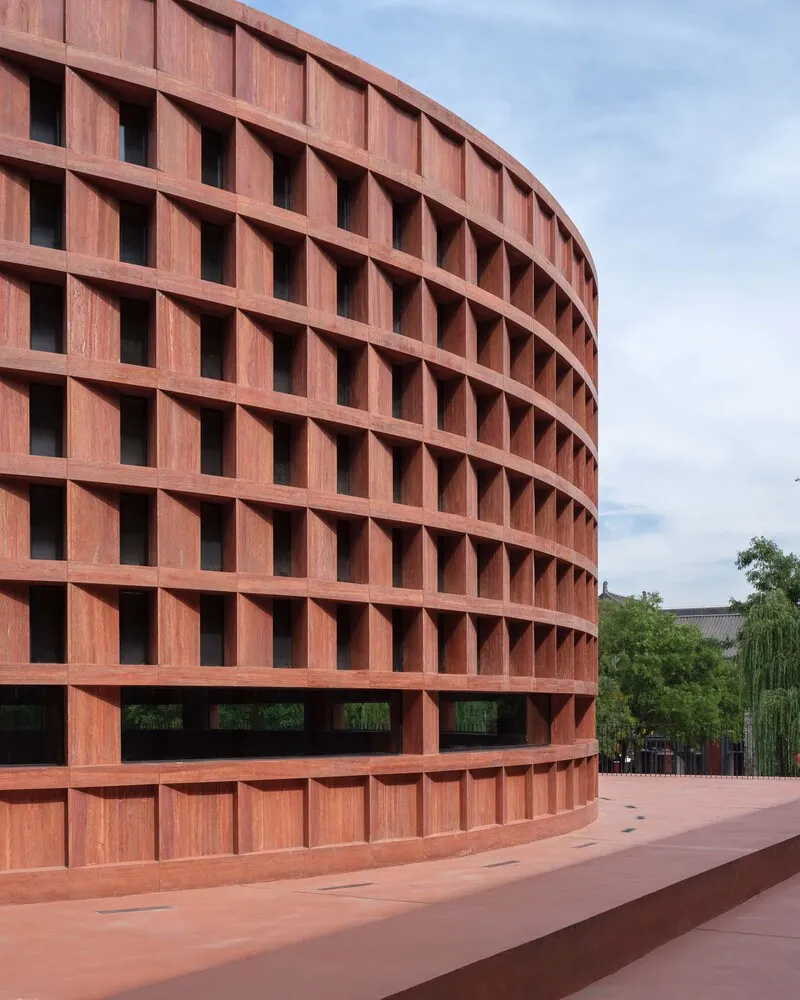

Visitors enter via the preserved wide steps, descending into a sunken piazza where escalators guide them to the underground B2 museum level. Concealed within sculptural forms, these circulation elements create spatial drama through alternating compression and expansion, culminating in a triple-story light well that floods the lower level with natural light.
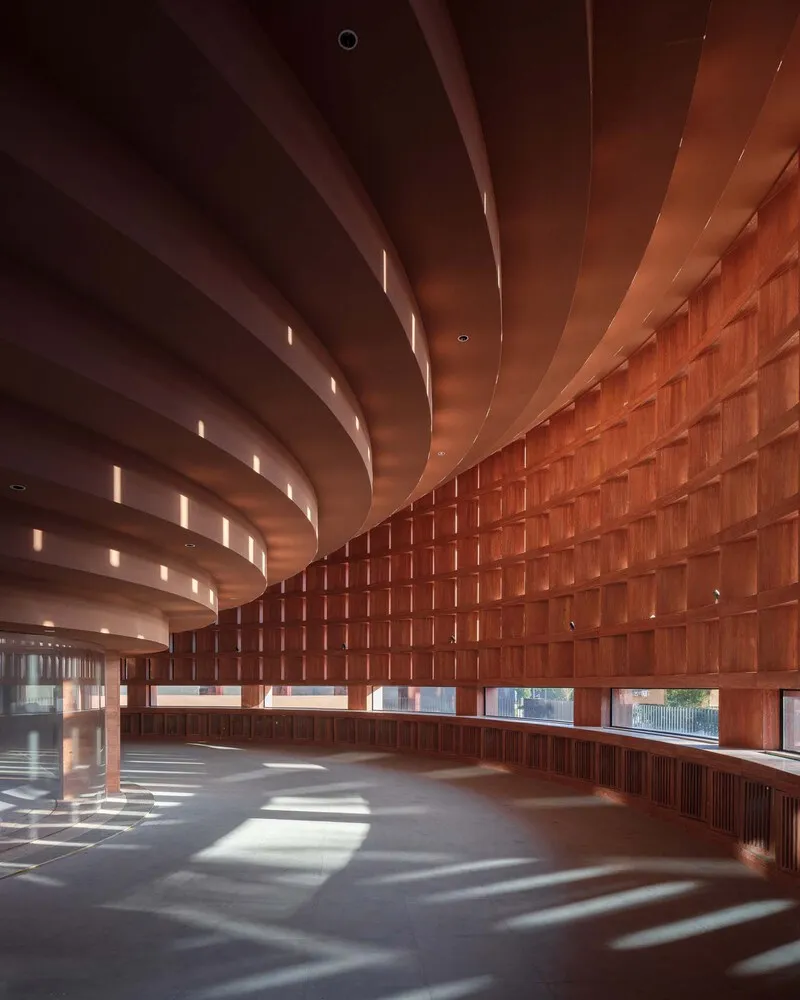

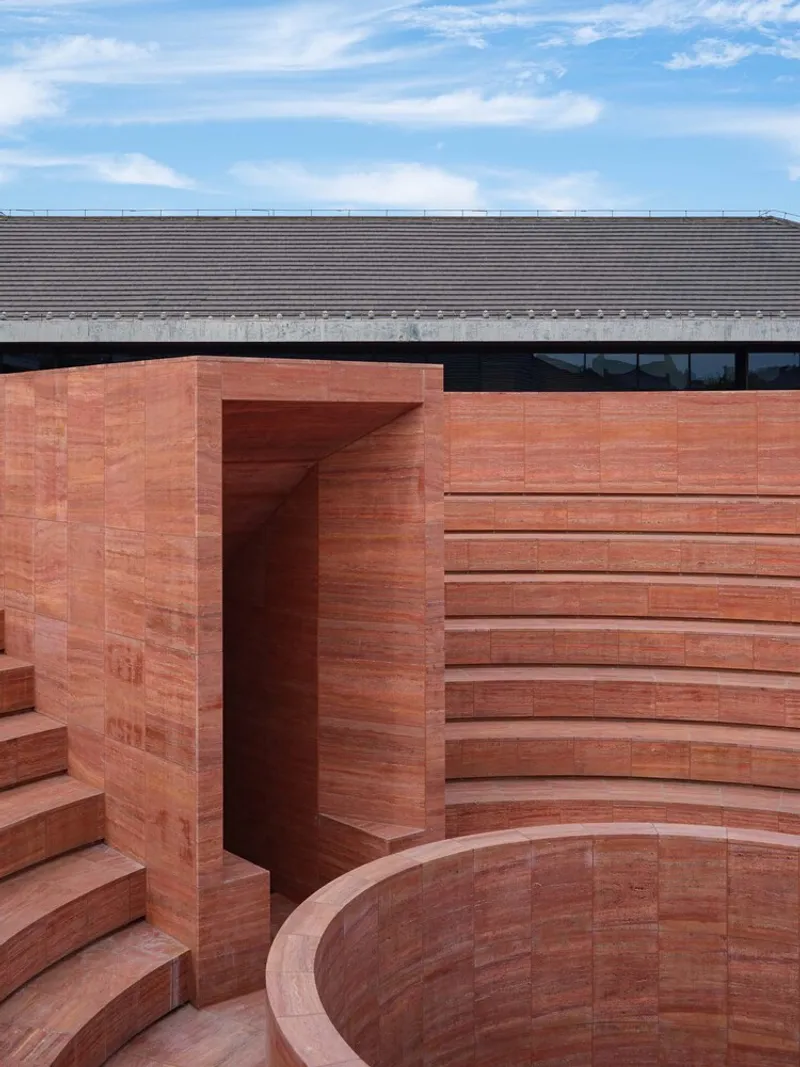
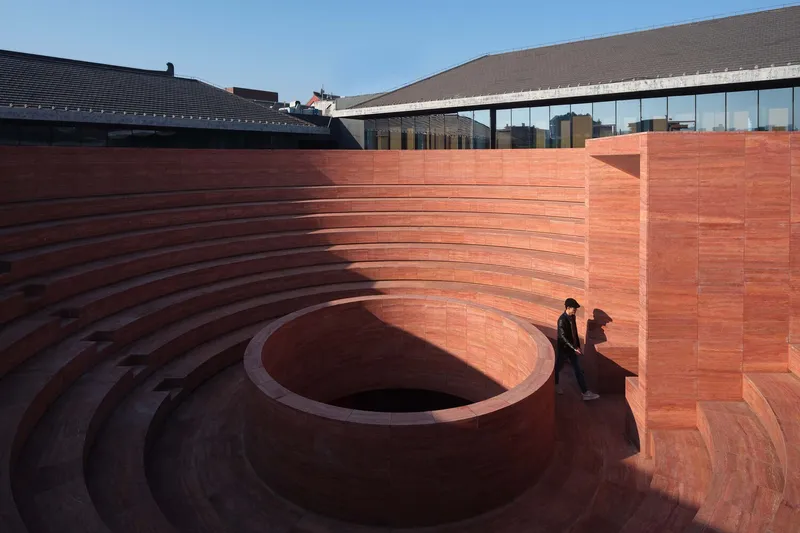
Above the Base, the Platform floats as a post-and-lintel structure with a grid of stone columns and glass curtain walls, showcasing retail spaces and establishing a visual separation between the grounded Base and the civic Monument above. The Monument houses a second-floor lounge and an outdoor amphitheater, its diamond-shaped red travertine masonry filtering light while creating dynamic visual interest. The amphitheater, designed as a hollowed-out bowl, extends from the lounge to provide a versatile public forum for performances, social gatherings, and fashion events.

Neri&Hu’s design achieves a careful balance between monumental presence and public accessibility, creating a culturally rich extension that elevates Xi’an’s museum experience. Through a combination of architectural precision, material expression, and public engagement, the Qujiang Museum of Fine Arts Extension stands as a contemporary emblem of civic identity and artistic vitality.


All photographs are works of
STUDIO FANG, Runzi Zhu



Popular Articles
Popular articles from the community


Co-life: Sustainable Architecture for Age-Friendly Community Living
Co-life reimagines sustainable architecture for seniors through courtyards, rammed earth, shared gardens, and spaces designed for belonging.

The Ocean Hive: Sustainable Architecture for a Self-Sufficient Civilization at Sea
The Ocean Hive imagines sustainable architecture at sea, where modular habitats, algae, wave power and ocean waste sustain a growing colony.

Co-Life: Senior Housing Design That Reconnects Older Adults With the City
Co-Life reimagines senior housing design through healing gardens, shared streets, workshops, and a sustainable community across generations.

The Earth Pod: 3D Printed Homes for Resilient Refugee Communities
The Earth Pod reimagines refugee housing through 3D printed homes made from clay, combining resilience, self-sufficiency, and rapid shelter.

Similar Reads
You might also enjoy these articles

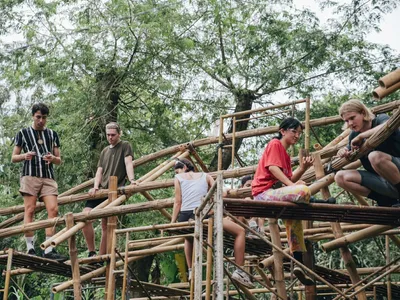
Bamboo Housing Challenge 2026: Design Affordable, Sustainable Homes Using Bamboo
An international design competition by Bamboo U and IBUKU inviting architects and designers to reimagine affordable housing using bamboo — with the winning design built full-scale in Bali.

Computational Design & Education: Beegraphy Design Awards Introduces 7th Category (Featuring Jiyun's Innovative Approach)
Dive into Beegraphy’s 7th Design Awards category, where computational design meets education to create immersive, interactive learning tools, inspired by Jiyun’s work.
From Parametric Lighting to Urban Furniture: Join the 2nd Workshop in Beegraphy’s Computational Design Series
Dive into Cutting-Edge Design Techniques and Practical Applications with Industry Experts

Last Call: Unleash Your Architectural Genius in SHAK's Kindergarten Design Competition
Urgent call for architects to join SHAK's kindergarten design competition before the looming deadline

Explore Architecture Competitions
Discover active competitions in this discipline



Challenge to reimagine the Iron Throne


Photograph architecture without architects


Illustrate the lost glory of Angkor Wat - Render Challenge


Design challenge to reuse E-waste
Comments (0)
Please login or sign up to add comments
No comments yet. Be the first to comment!