
R34 Office Space by TO.COLLECTOR: A Thoughtful Transformation of a Corner Residence in Bangkok
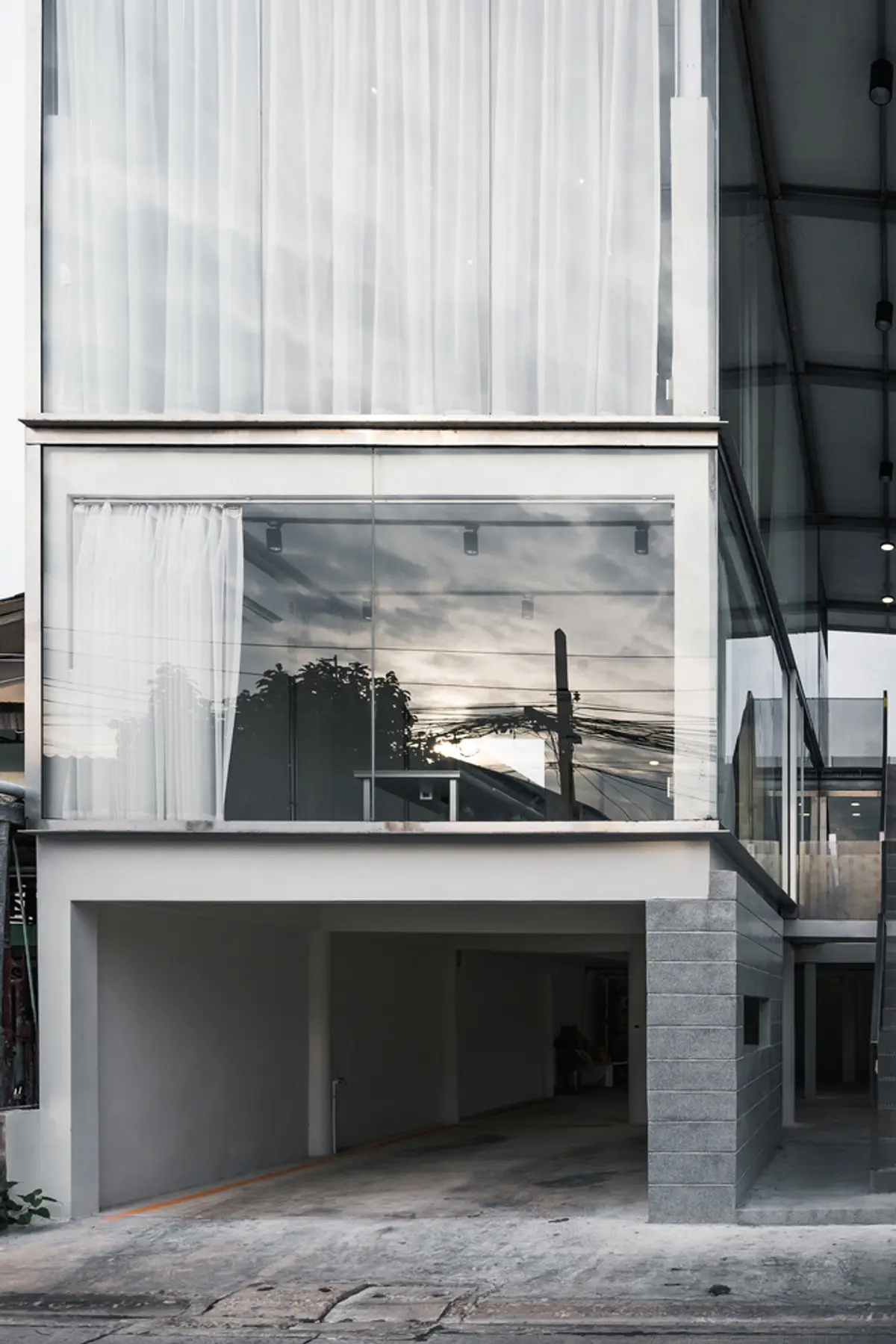
R34 Office Space transforms a residential corner house in Bangkok into an open, community-friendly, modern office with industrial aesthetics.


Project Title: R34 Office Space Location: Khet Bang Khen, Bangkok, Thailand Architects: TO.COLLECTOR Lead Architect: Chutipon Benjasupustananun Project Type: Office Renovation / Mixed-Use Architecture Project Area: 260 m² Year Completed: 2023 Photography: Surachet Kriengnarongdech Manufacturers: Aluinch, Bluescope, SYS, TOA
Reinventing a Residential Space for Collaborative Work
Located on the corner of Soi Ramintra 34 in Bangkok’s quiet Khet Bang Khen district, the R34 Office Space by TO.COLLECTOR transforms a previously private three-story residence into a modern rental office. This architectural renovation is not just about repurposing a building—it redefines the relationship between private property and the surrounding urban neighborhood.
The original house, nestled in a dense residential zone characterized by compact one- to two-story homes, stood fully built out on a narrow street corner. Rather than expanding further, the renovation strategy focused on opening up the building, enhancing visibility and creating a more welcoming, community-oriented presence.
Community-Driven Design and Spatial Openness
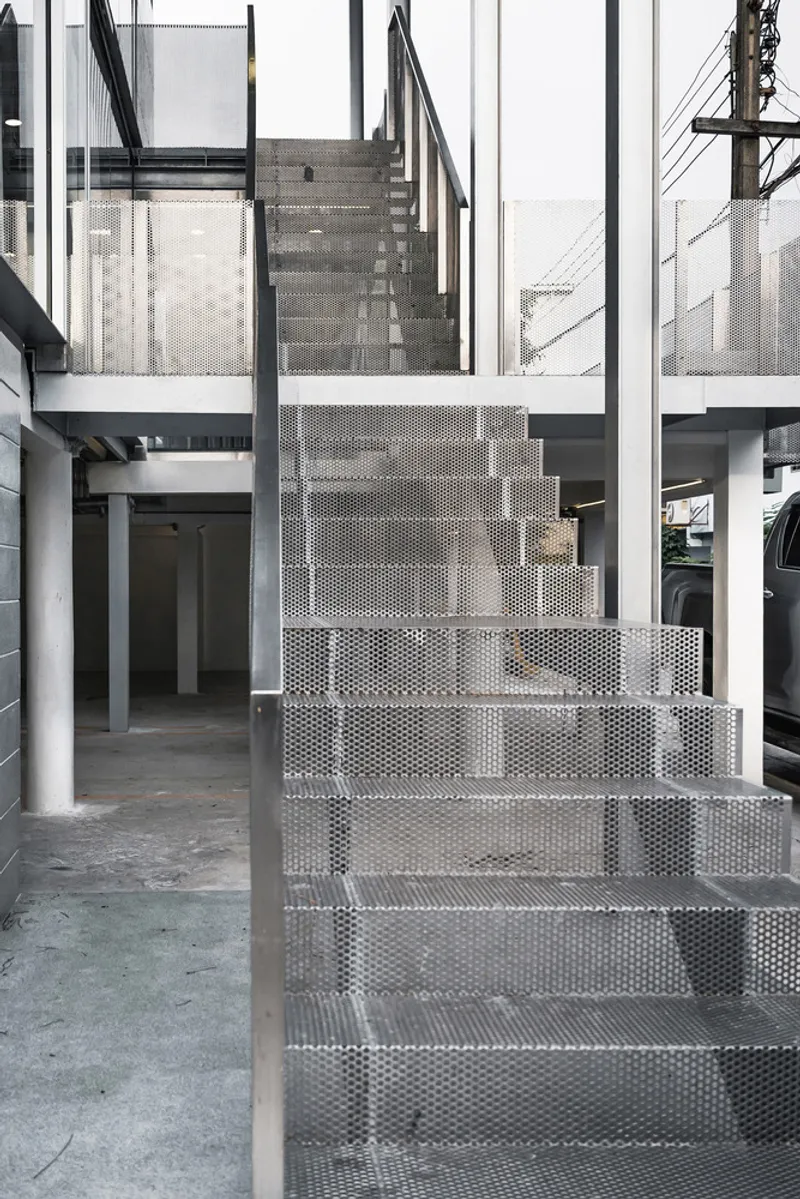
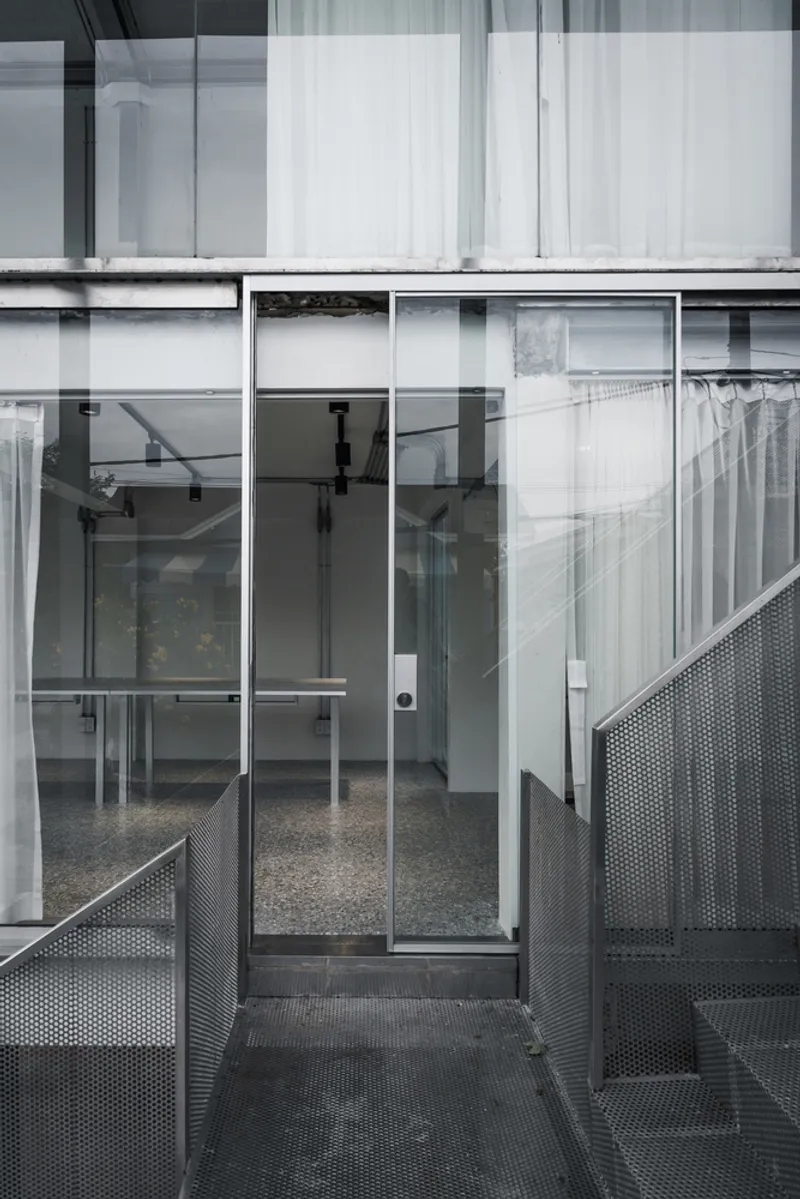
At the heart of this transformation is the idea of converting a highly enclosed domestic space into a shared office environment. The design removes most of the existing solid walls, allowing the structure to breathe both literally and metaphorically. By eliminating boundaries between the building and the street, TO.COLLECTOR fosters visual openness and invites casual interaction with passersby.
The result is a space that can be used not only for work but also as a micro-public realm—a place where children can play, neighbors can gather, or future community initiatives can take shape. The design subtly blurs the line between private use and public benefit, aligning architecture with social responsibility.
Preserving Structural Memory, Introducing Spatial Clarity
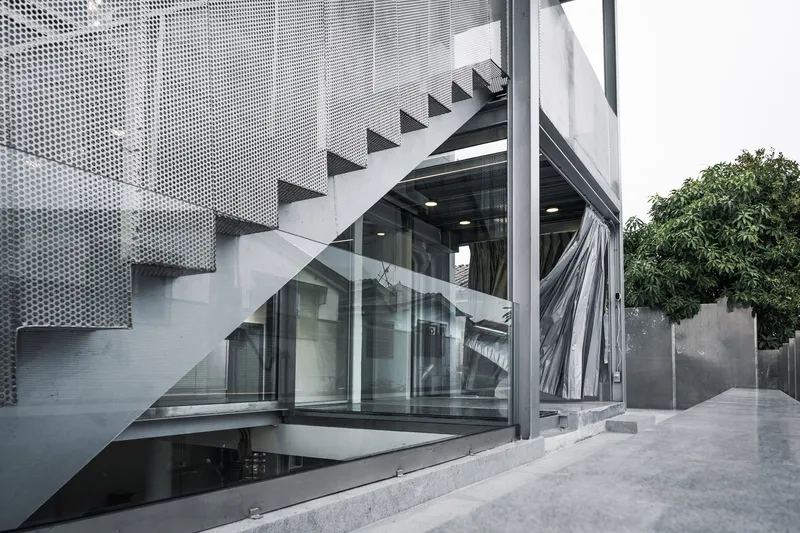
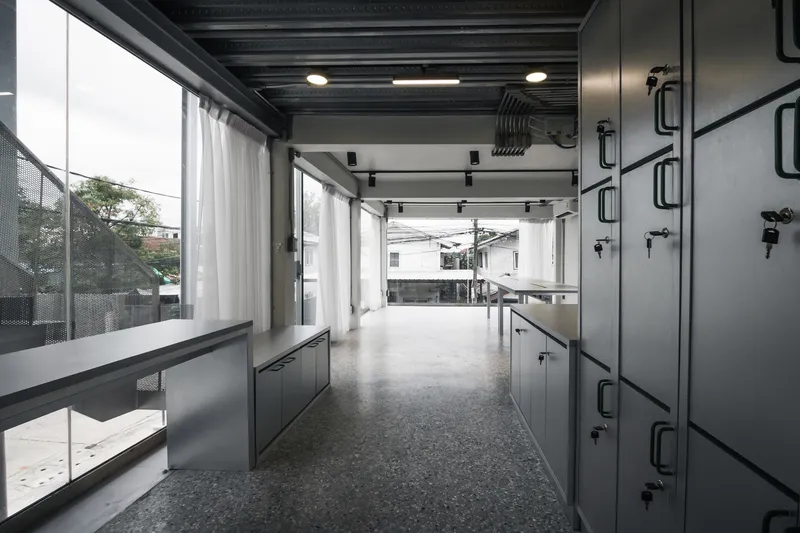
The original structure featured multiple steel extensions on its upper levels, which were later removed during the renovation. TO.COLLECTOR made a conscious decision to retain the main concrete framework—including key walls, columns, and beams—preserving the integrity and memory of the original corner house.
Rather than erase the past, the design maintains its presence through structural traces. Elements outside the new axis were carefully demolished, while the remaining forms contribute to a renewed spatial clarity.
Vertical Connectivity and Adaptive Layout
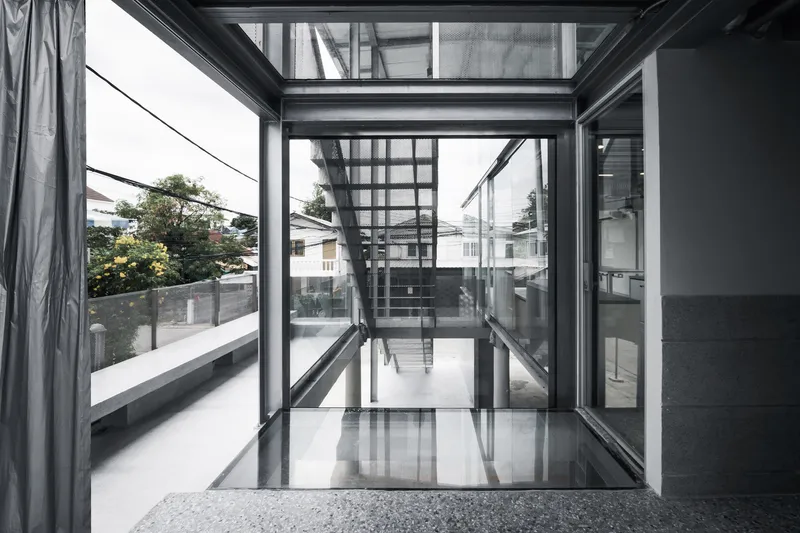
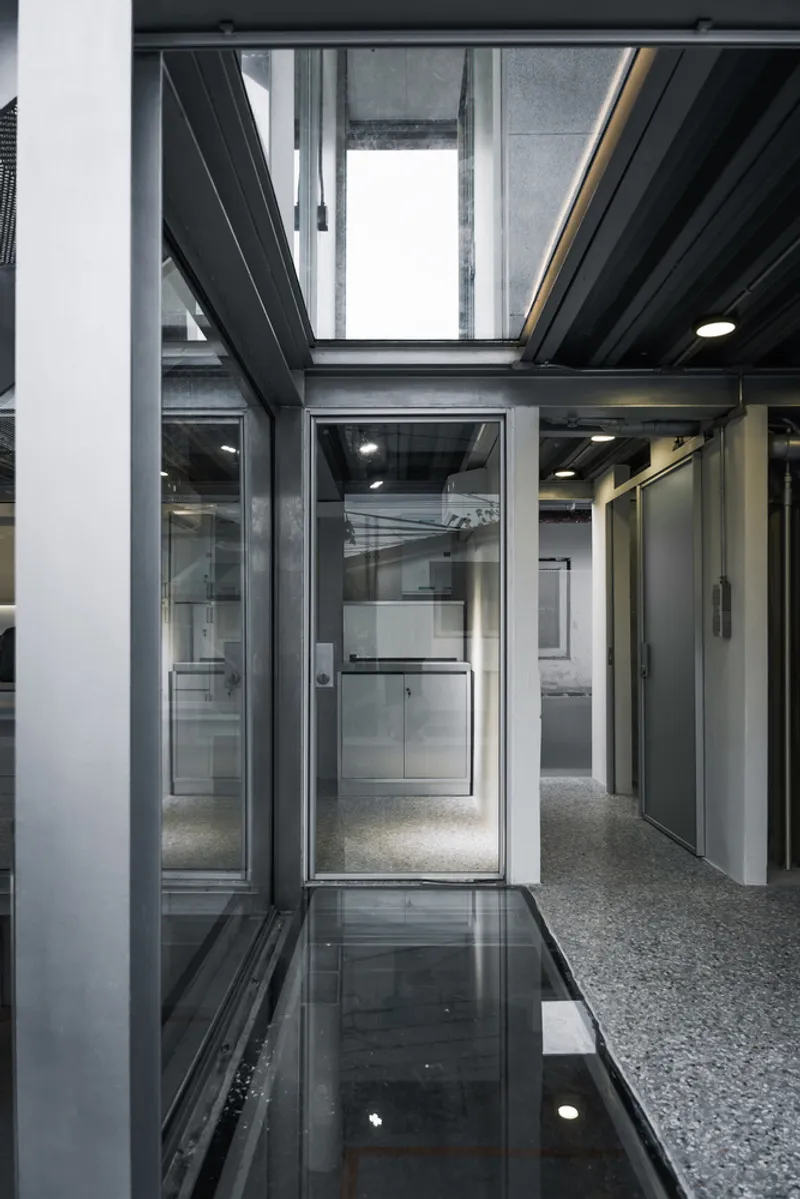
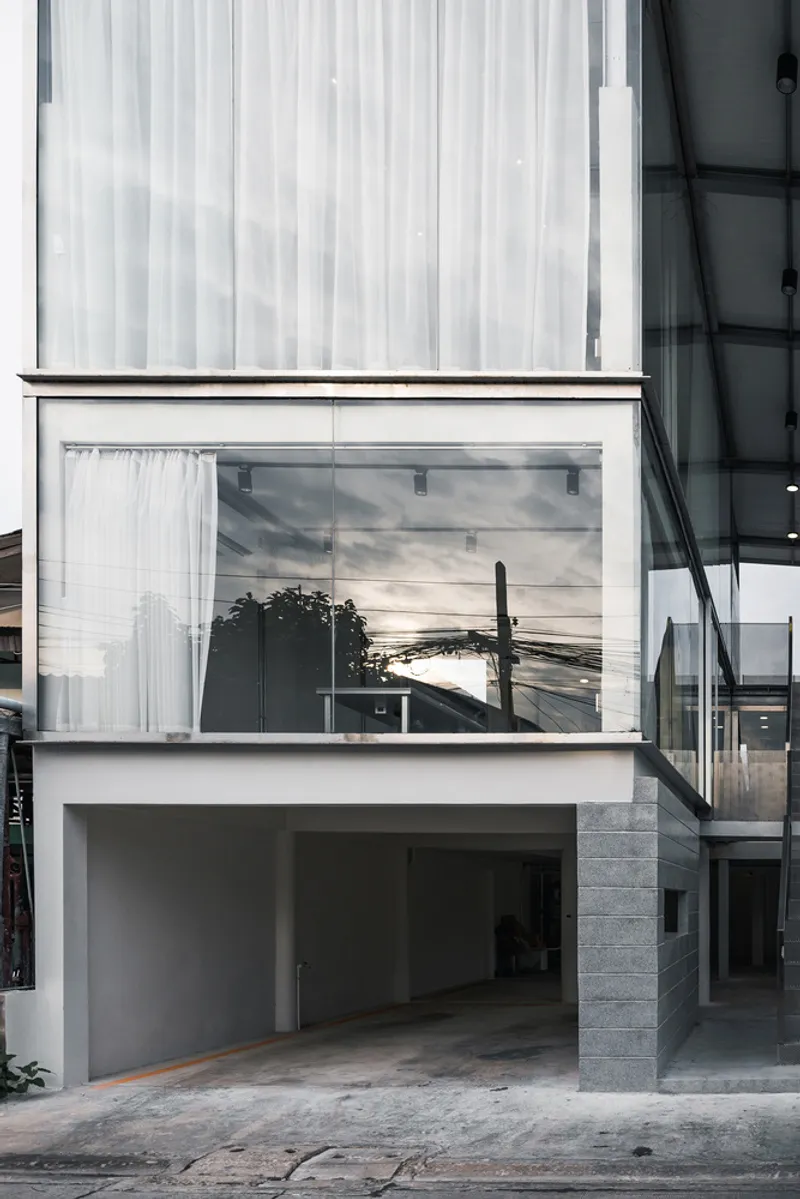
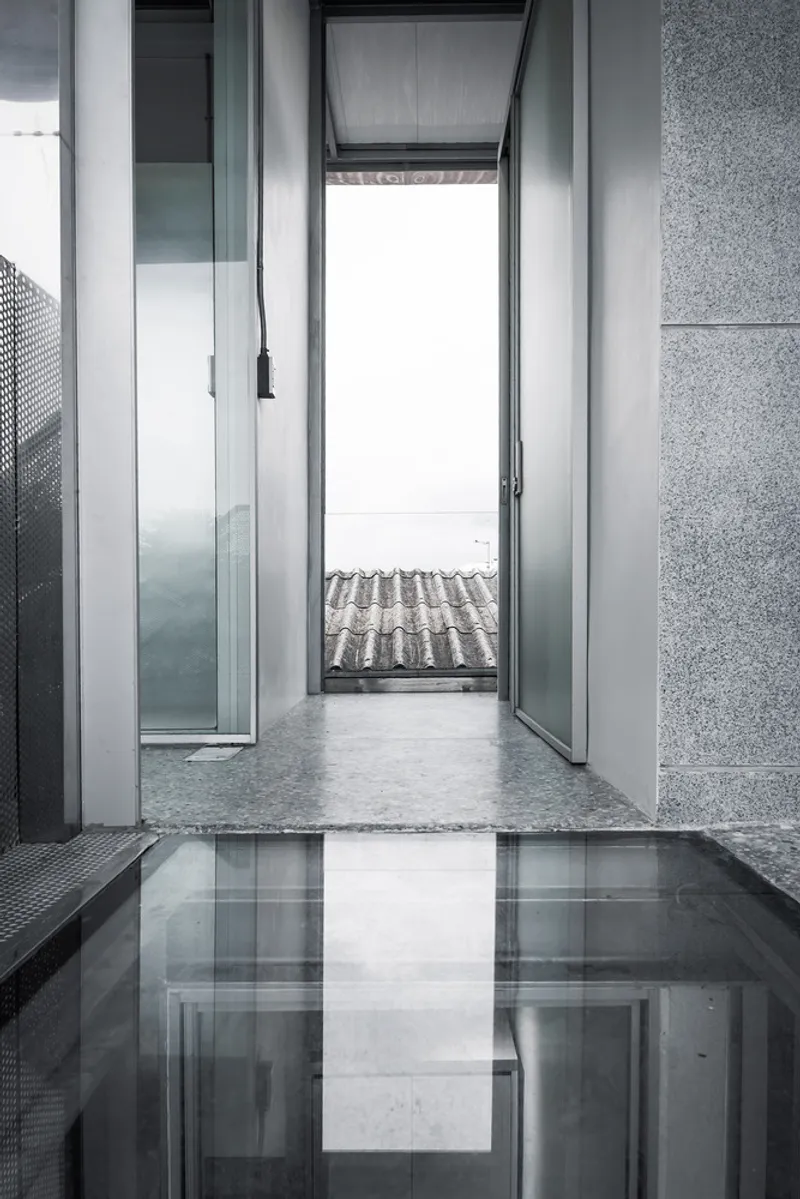
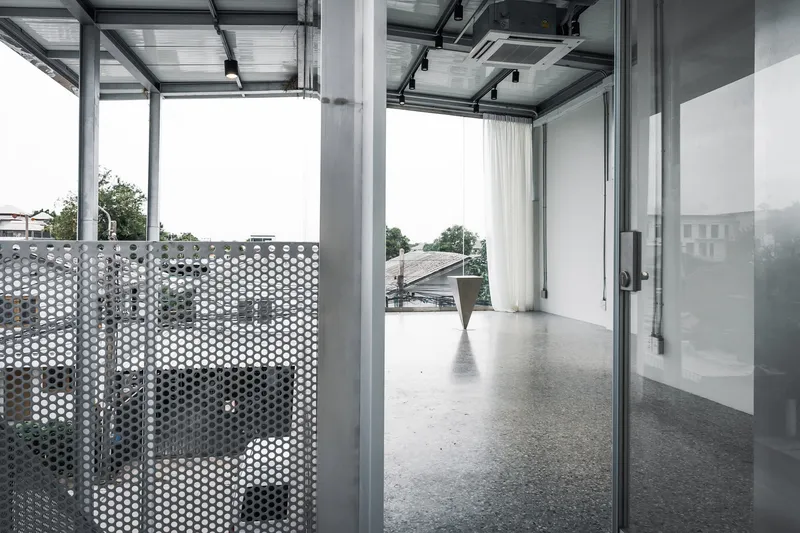
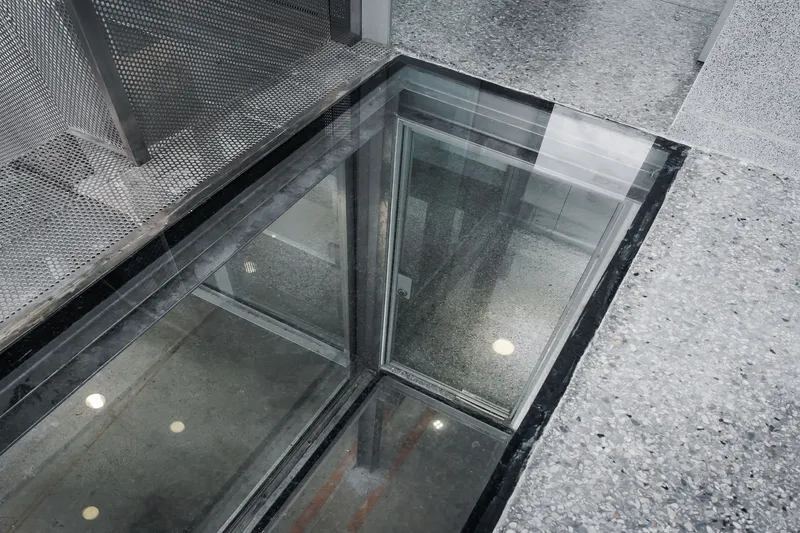
One of the most striking interventions lies in the building’s vertical reorganization. The ground floor, initially constrained by low ceilings and a steep, narrow staircase, was reimagined to improve natural airflow and user circulation. By breaking open a portion of the second-floor slab, the architects introduced a sense of vertical continuity, enhancing both visual and functional accessibility throughout the building.
This reconfiguration creates an open-plan interior that encourages flexibility for various office layouts, while maximizing daylight penetration and cross-ventilation—critical for tropical urban climates like Bangkok’s.
Material Honesty and Industrial Aesthetic
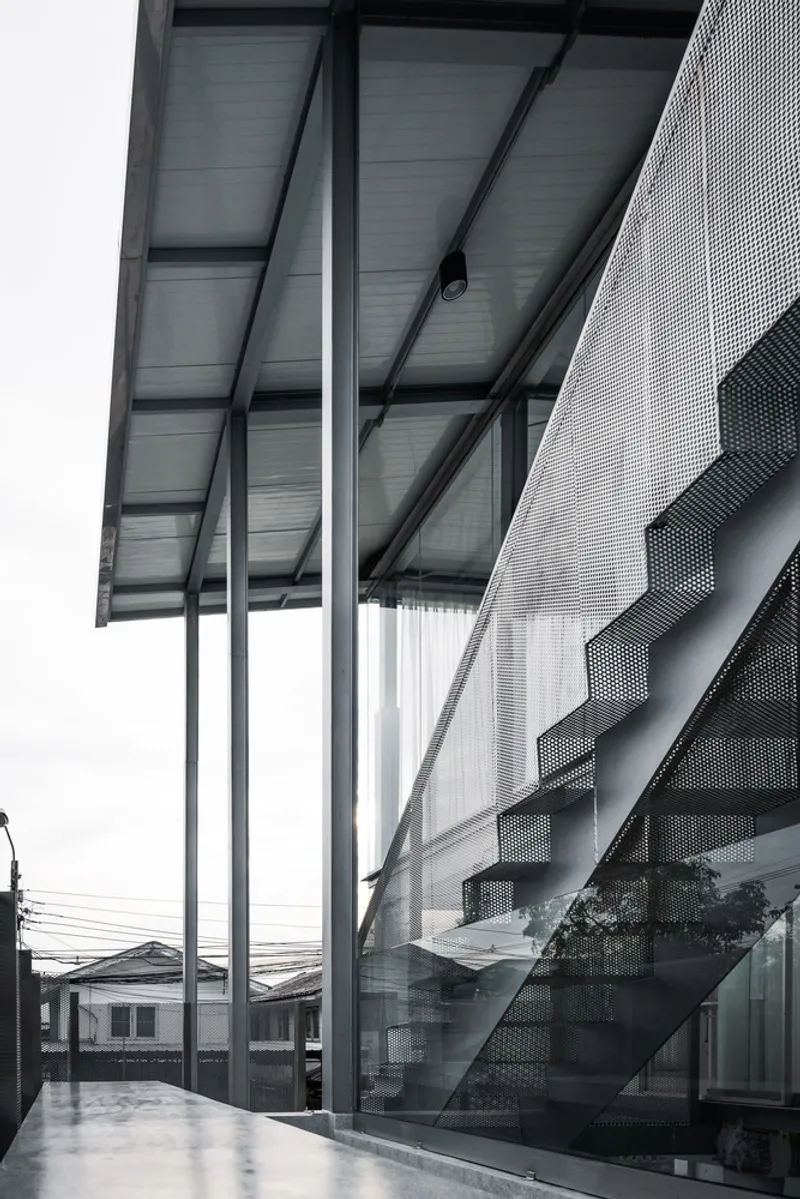
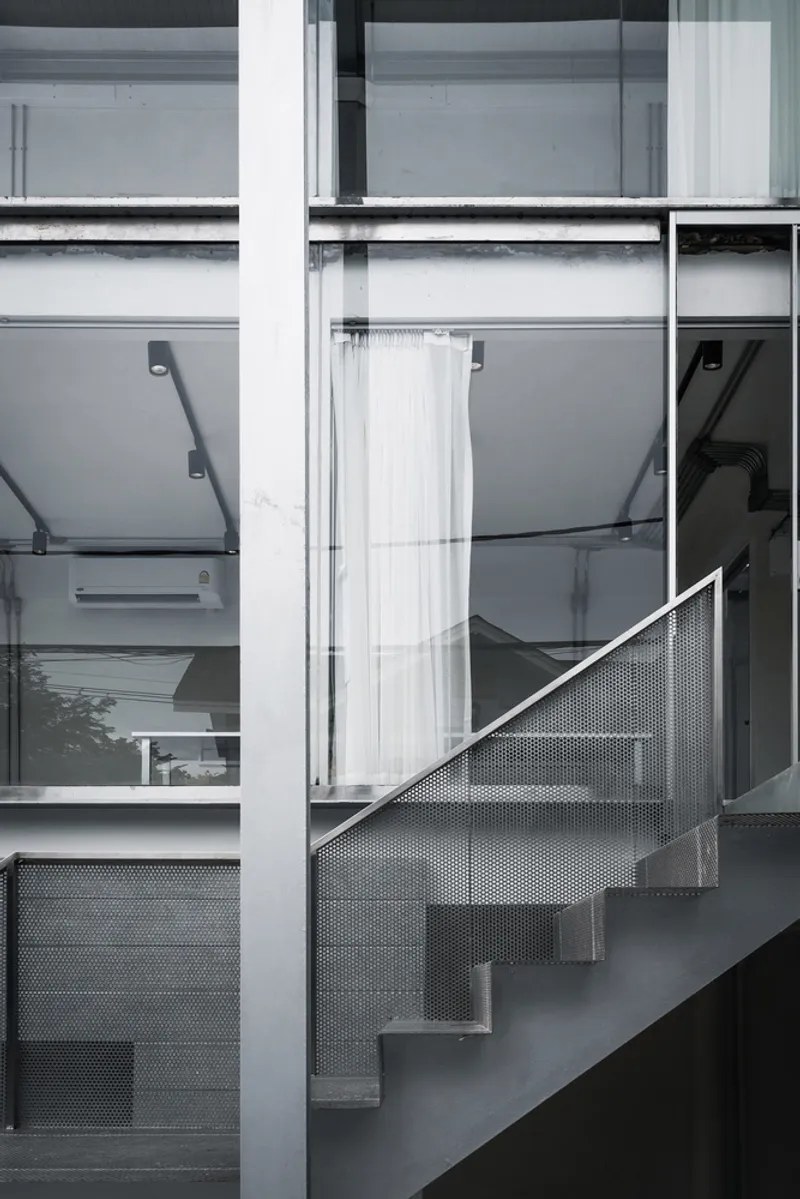
Materiality plays a crucial role in expressing the building’s architectural honesty. The renovation employs a palette of galvanized steel, polished concrete, and exposed stone aggregates, producing an industrial yet refined aesthetic. Silver tones from factory-finished metals are juxtaposed against the tactile surfaces of concrete and masonry, lending the interiors a sense of raw elegance.
This approach not only highlights the inherent beauty of construction materials but also ensures long-term durability and low maintenance—key considerations for adaptive reuse projects.
A Model for Urban Adaptation
The R34 Office Space project stands as a model for small-scale urban regeneration. Instead of opting for demolition or major redevelopment, TO.COLLECTOR shows how thoughtful adaptive reuse can contribute to sustainable urbanism, community well-being, and architectural heritage.


Popular Articles
Popular articles from the community


Jaramillo Van Sluys Arquitectura and Urbanismo Turn a Demolished Registry Lot in Quito into an Orchard Plaza
In Quito's Centro Histórico, a 2,800 m² plaza exposes the San Agustín convent wall and redraws its lost Augustinian orchard in volcanic stone.

Architekt Andreas Gruber Scatters 23 Dark Timber Chalets Across a South Tyrolean Forest Edge
In Molini di Tures, Amonti Chalets breaks a resort into a hamlet of gabled timber houses, with parking, storage and services pushed into the slope.

GROUP A Strips a 1969 Rotterdam Harbor Headquarters to Its Frame and Wraps It in Timber Louvers
In Rotterdam's M4H harbor district, Ferro Offices reuses a 1969 frame, adds one timber storey and reaches BREEAM-NL Outstanding.

U.GA Architects Wraps an Oval Rooftop Pool in Curved Board-Formed Concrete on Busan's Jeollidan-gil
In Busan's Jeonpo-dong, a 454 m² mixed-use block stacks a neighborhood facility, guest rooms and an oval rooftop pool inside spiraling concrete walls.

Similar Reads
You might also enjoy these articles


Hodi-Mandai Geram
Project Function: Preservation and revitalization of the Intangible heritage and socio-spatial identity of the Hodi by Housing, Cultural Memory Center, Sacred Grove, landscape, local tourism economy


Olio Towers: A Mid-Rise for Performers That Fuses Housing, Rehearsal, and Stage
Located blocks from Houston's Theater District, this modular tower stacks living units around a central performance atrium.

Oasis: Modular Green Housing Carved into Dhaka's Urban Fabric
A shortlisted Plugin Housing entry reclaims unauthorized settlements in Dhaka with stepped concrete volumes, green roofs, and ventilation-driven design.

Black Hole: A Floating Megastructure for the Post-Physical Era
Emiliano Mazzarotto envisions a spherical, self-scaling arena where e-sports, digital hotels, and holographic stadiums replace traditional public space.

Explore Office Building Competitions
Discover active competitions in this discipline

Challenge to reimagine the Iron Throne

Photograph architecture without architects

Illustrate the lost glory of Angkor Wat - Render Challenge

Design challenge to reuse E-waste
Comments (0)
Please login or sign up to add comments
No comments yet. Be the first to comment!