
Rambla Climate-House by Andrés Jaque: A Prototype for Climate Reparation Architecture in Murcia
Rambla Climate-House regenerates Murcia’s ravine ecosystems through sustainable design, water reuse, passive cooling, and community-driven climate reparation architecture.


Reclaiming the Rambla: Restoring Murcia's Ecological Arteries
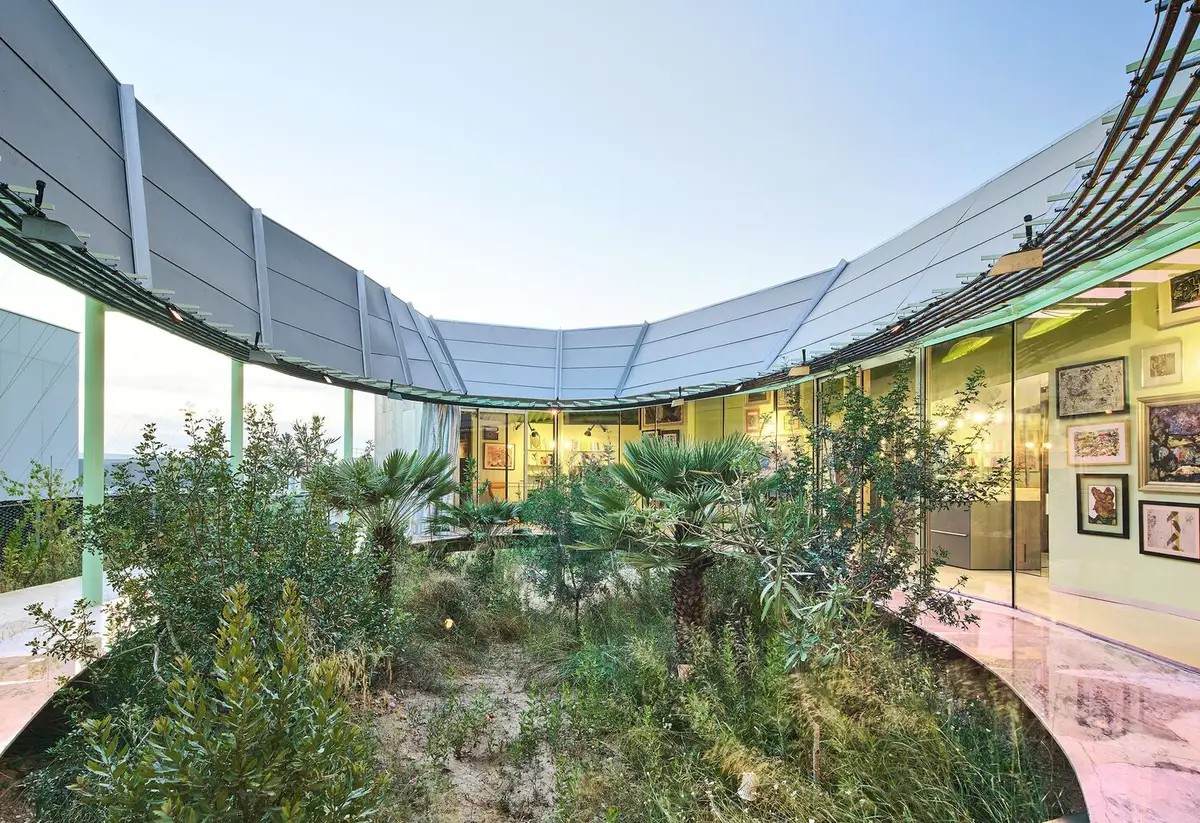
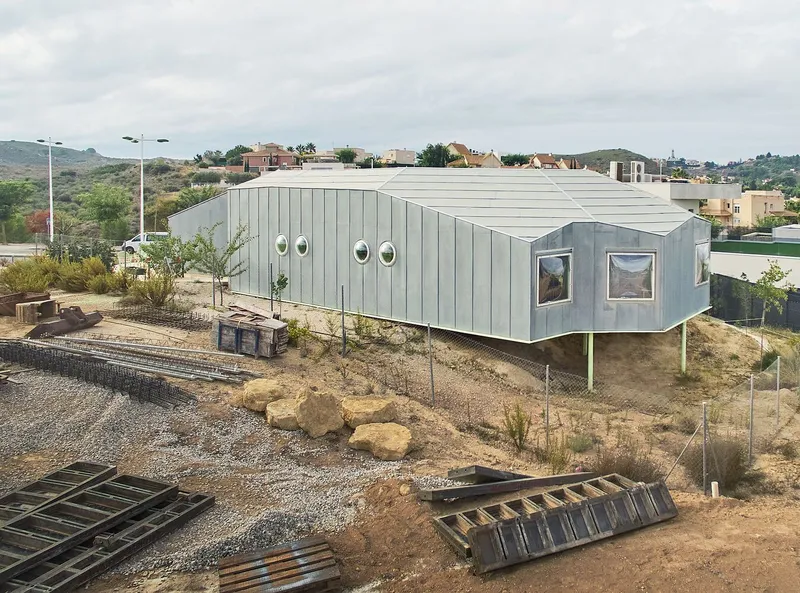
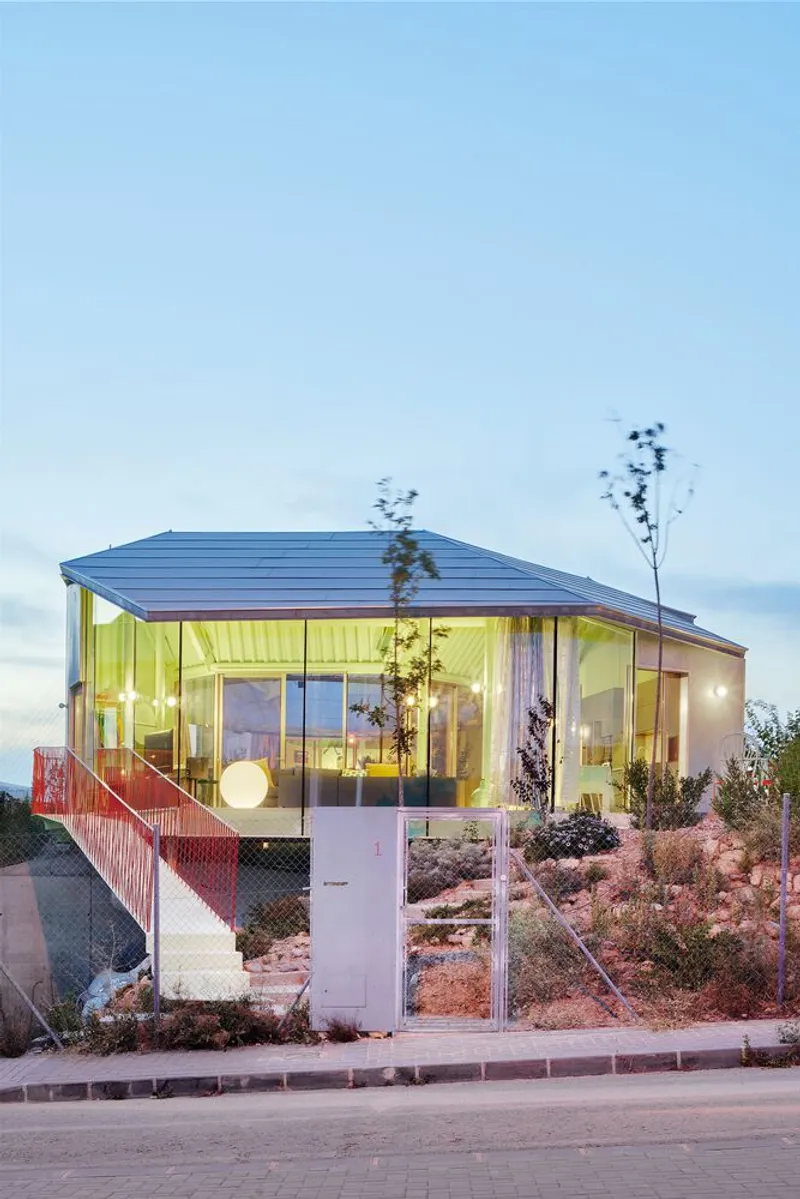
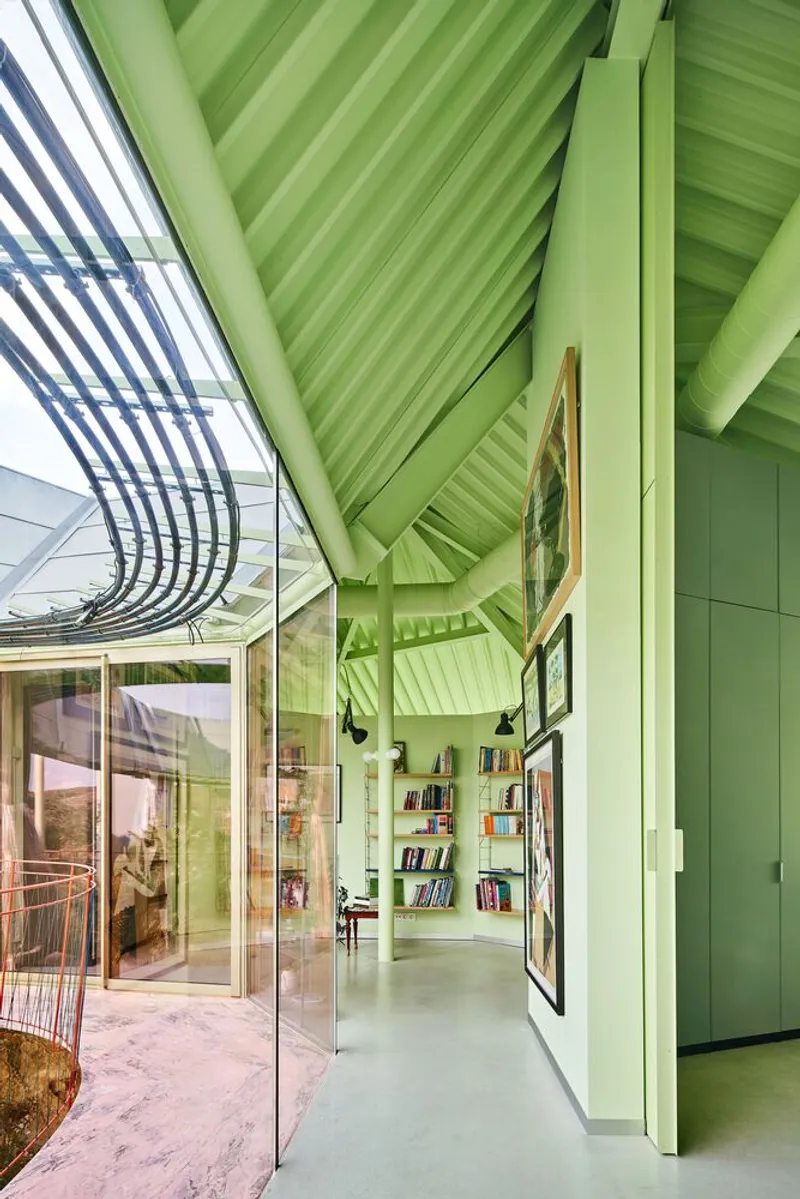
The Rambla Climate-House, designed by Andrés Jaque , Office for Political Innovation in collaboration with Miguel Mesa del Castillo, is more than a residence—it’s a strategic ecological intervention. Located in Molina de Segura, a region in Murcia that has undergone extensive suburban expansion since the 1980s, the house aims to reverse environmental degradation and restore the natural ravine (rambla) systems once vital to the area’s biodiversity.
Suburban development flattened natural terrain and disrupted the rambla network—dry stream beds that traditionally served as seasonal water channels. These ecological corridors not only captured rainfall and promoted vegetation growth but also stabilized local climate patterns and supported rich biodiversity. The Rambla Climate-House seeks to revive this natural infrastructure.
A Living Climate Device: Architecture as Environmental Technology
Designed as a climatic and ecological device, the house is part of a grassroots initiative for climate reparation, where architecture plays an active environmental role rather than being a passive object. Through advanced water management systems, it captures rainwater from the roofs and greywater from indoor use, redirecting it into the remnants of the rambla to restore the micro-ecosystem.
Automated Netro-sensors monitor soil humidity and conductivity, triggering irrigation independent of human input. This smart meteorology system ensures that the ecological restoration process remains consistent, data-driven, and adaptive to natural rhythms.
Architecture Around the Rambla: Observing, Participating, Regenerating
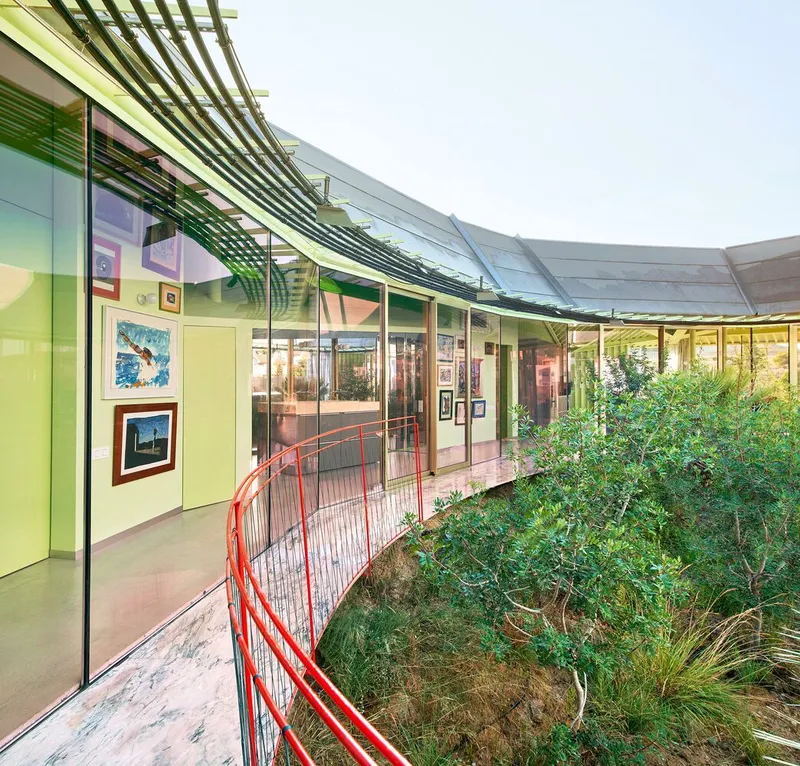
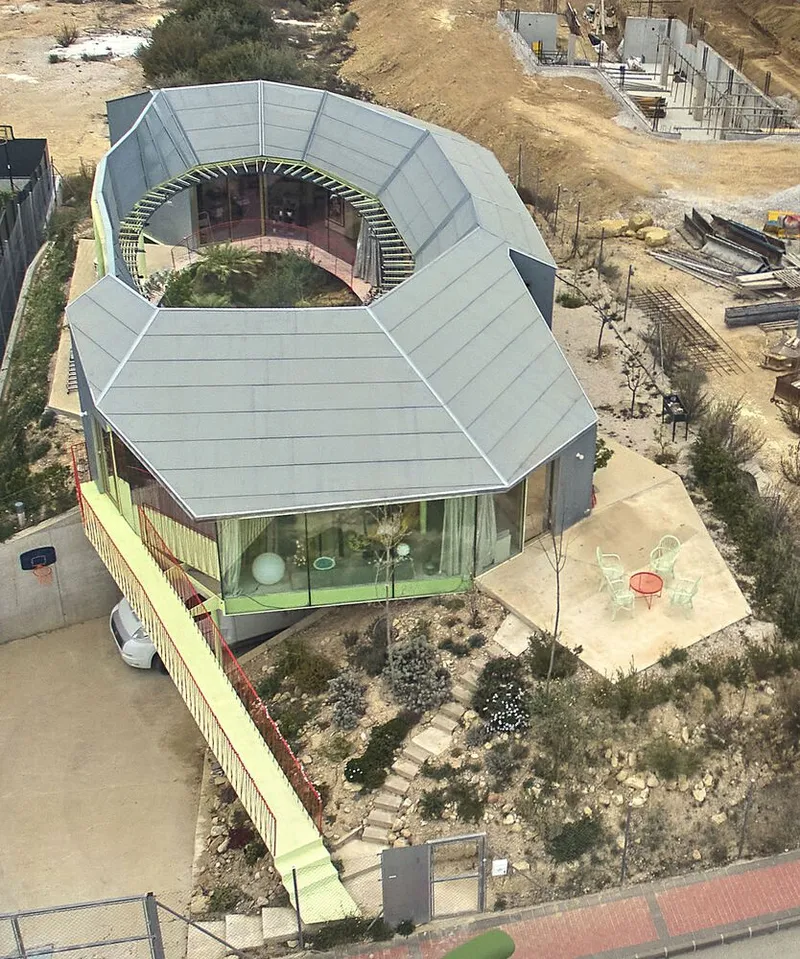
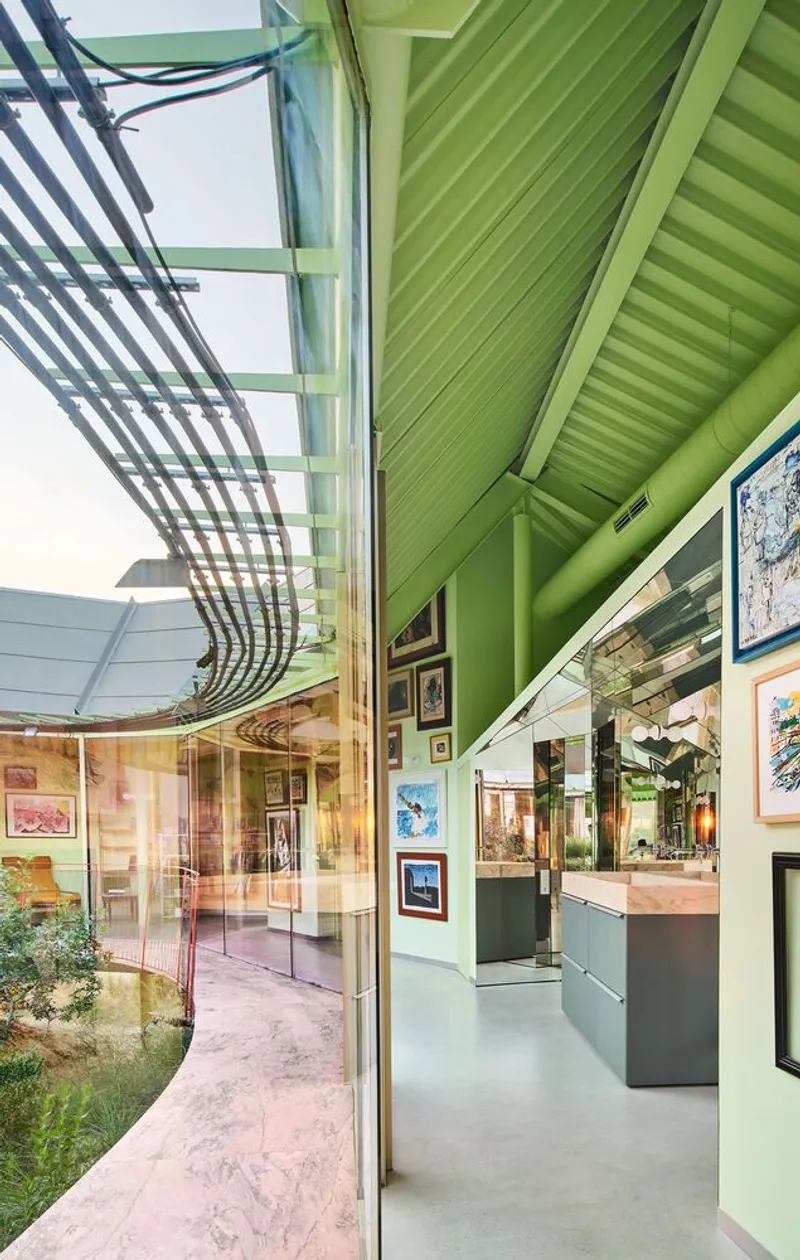
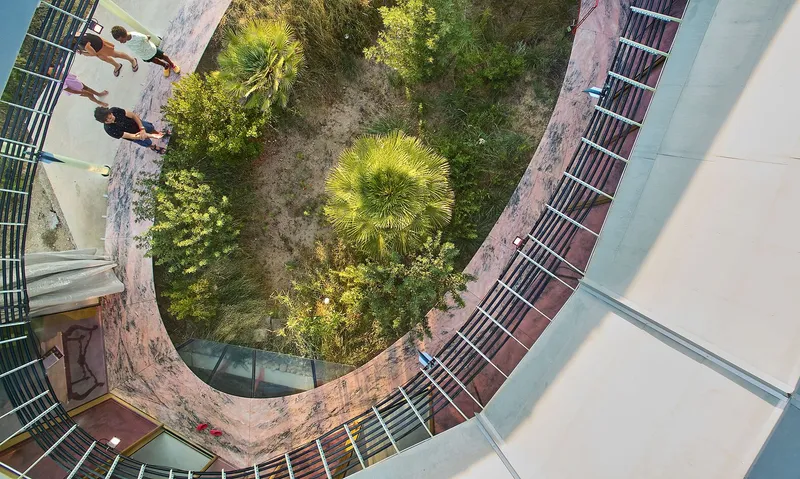
Spatially, the house is organized around the elliptical footprint of the former rambla, which now serves as both an observatory and a regenerative garden. The architecture weaves itself around this section, offering a sequence of fluid, interconnected indoor and outdoor spaces. Residents are invited to engage with this living system daily.
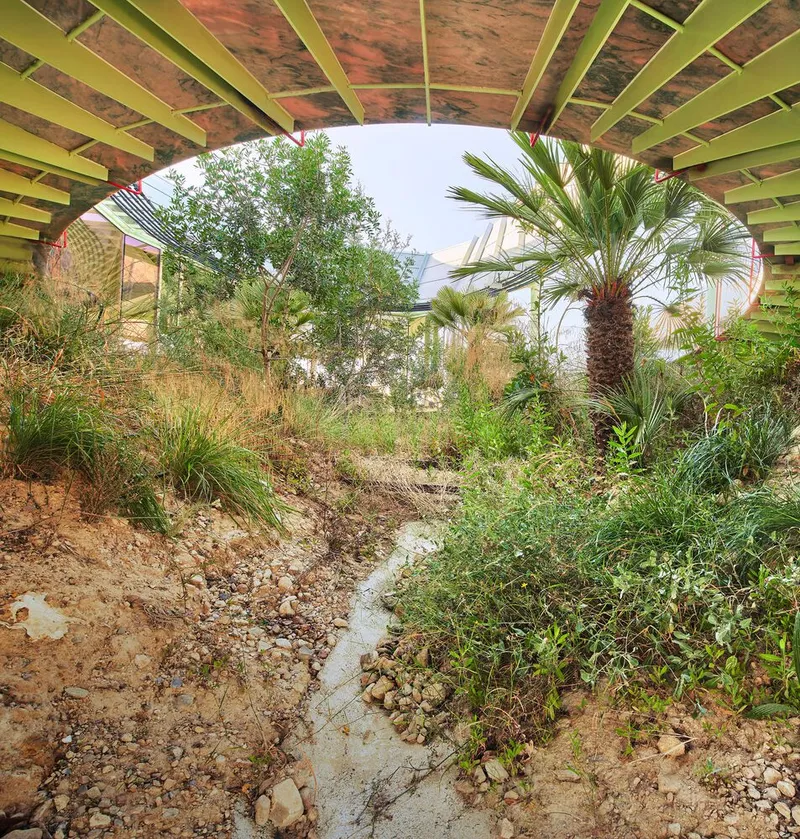
Within a year of activation, the restored rambla section began supporting native plant species like brachypodiums, myrtles, mastic trees, fan palms, oleanders, and fire trees. It also attracted local fauna—insects, birds, and lagomorphs—reaffirming its success as an ecological incubator.
Sustainable Thermal Design and Energy Efficiency
The Rambla Climate-House also explores thermal innovation. A continuous marble bench circling the rambla allows residents to cool down through contact with the building’s thermal mass. Passive solar design is employed via a solar coil positioned above the elliptical zone, generating year-round hot water with zero emissions.
This low-energy strategy minimizes mechanical cooling and heating, aligning the house with sustainable living principles while enhancing thermal comfort through architectural form and materiality.
Community, Collaboration, and Collective Climate Action
This architectural experiment is deeply rooted in community engagement. Beyond being a home, it functions as a public ecological prototype, hosting community gatherings, workshops, and shared learning events. Residents of Molina de Segura participate in collective discussions about sustainable urbanism, sharing insights on how architecture can serve as a tool for climate action.
The project was made possible through the multidisciplinary collaboration of architects, scientists, and ecologists, making it a flagship model for participatory environmental design. It stands as a built manifesto for eco-responsibility, proving that regenerative architecture is not only possible but necessary.
A Climate-Conscious Future Begins at Home
The Rambla Climate-House redefines what it means to dwell sustainably. By aligning architecture with ecological systems and community-led climate repair, it sets a precedent for regenerative design that heals rather than harms. As the impacts of climate change intensify, projects like this illuminate pathways for adaptive urban strategies, where homes become active participants in ecological resilience.


Popular Articles
Popular articles from the community


David Ortega Stacks a Two-Story Mexico City Penthouse Around a Steel Stair and a Pergola-Shaded Roof Terrace
In Colonia Roma, a 300 m² penthouse uses oak joinery, a planted steel stair and a slatted roof pergola to make a new-build apartment feel like a house.

GROUP A Strips a 1969 Rotterdam Harbor Headquarters to Its Frame and Wraps It in Timber Louvers
In Rotterdam's M4H harbor district, Ferro Offices reuses a 1969 frame, adds one timber storey and reaches BREEAM-NL Outstanding.

U.GA Architects Wraps an Oval Rooftop Pool in Curved Board-Formed Concrete on Busan's Jeollidan-gil
In Busan's Jeonpo-dong, a 454 m² mixed-use block stacks a neighborhood facility, guest rooms and an oval rooftop pool inside spiraling concrete walls.

Cube Design Draws an Ecological Corridor Between Two Shenzhen Hills with the Nankai Building
Beside Shenzhen's container docks, the Nankai Building pairs stacked balconies with a climbing green screen to connect two hillsides across its height.

Similar Reads
You might also enjoy these articles


Hodi-Mandai Geram
Project Function: Preservation and revitalization of the Intangible heritage and socio-spatial identity of the Hodi by Housing, Cultural Memory Center, Sacred Grove, landscape, local tourism economy


Olio Towers: A Mid-Rise for Performers That Fuses Housing, Rehearsal, and Stage
Located blocks from Houston's Theater District, this modular tower stacks living units around a central performance atrium.

Oasis: Modular Green Housing Carved into Dhaka's Urban Fabric
A shortlisted Plugin Housing entry reclaims unauthorized settlements in Dhaka with stepped concrete volumes, green roofs, and ventilation-driven design.

Black Hole: A Floating Megastructure for the Post-Physical Era
Emiliano Mazzarotto envisions a spherical, self-scaling arena where e-sports, digital hotels, and holographic stadiums replace traditional public space.

Explore Architecture Competitions
Discover active competitions in this discipline

Challenge to reimagine the Iron Throne

Photograph architecture without architects

Illustrate the lost glory of Angkor Wat - Render Challenge

Design challenge to reuse E-waste
Comments (0)
Please login or sign up to add comments
No comments yet. Be the first to comment!