

Rau Haus by Feldman Architecture: A Sustainable Sanctuary in Portola Valley
Modern L-shaped residence in Portola Valley blending sustainable design, panoramic views, and natural materials with passive strategies and serene living.


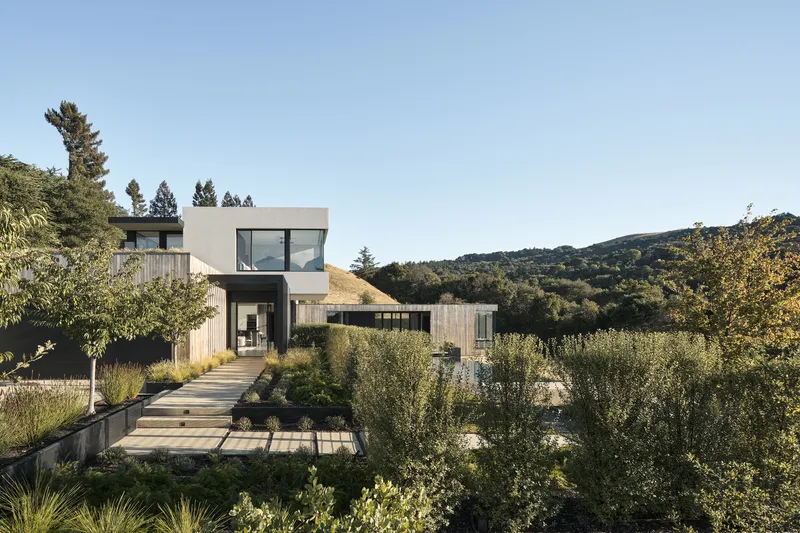
Nestled in the rolling hills of Portola Valley, California, Rau Haus by Feldman Architecture is a modern residential retreat that balances privacy, landscape immersion, and environmental responsibility. Designed for a young family relocating from the city, this 3,433-square-foot home offers expansive views over the Coal Creek Open Space Preserve, while maintaining a quiet dialogue with the natural surroundings.
Site-Sensitive Design Rooted in the Landscape
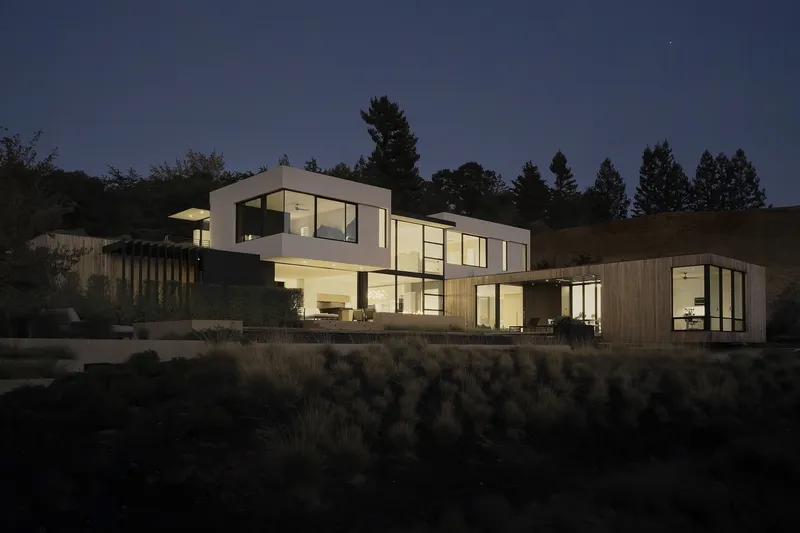
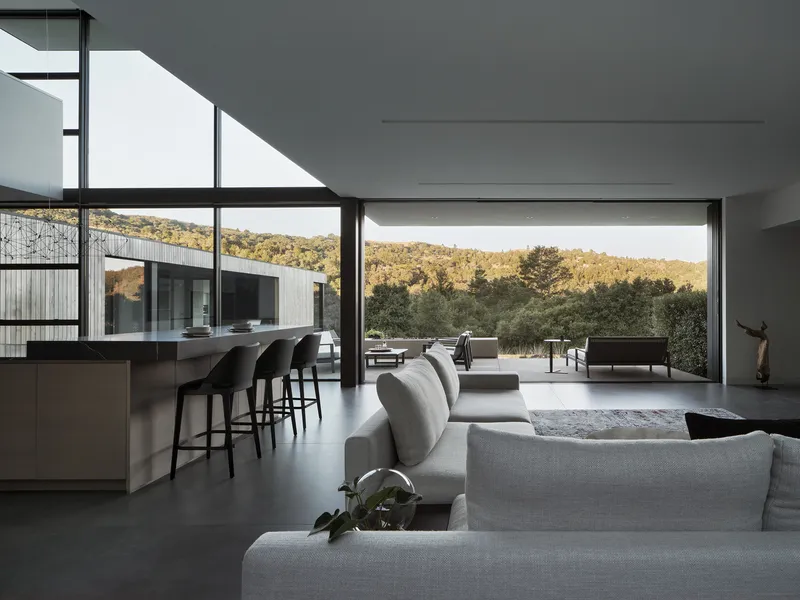
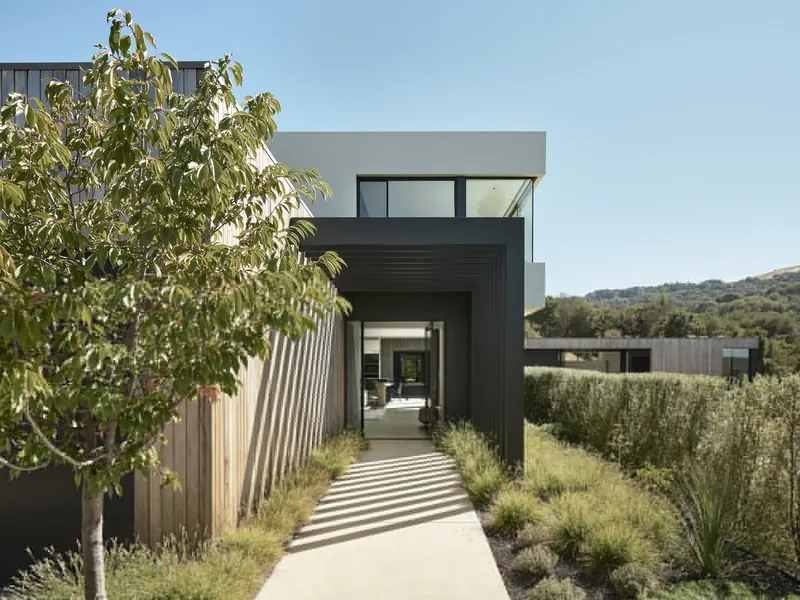
Carefully sited on an eastern hillside, the L-shaped home gently tucks into the terrain to frame panoramic views and create sheltered outdoor zones. The architectural layout strategically orients private and public living spaces to maximize sightlines toward the distant San Francisco Bay, while shielding the home from neighboring properties above. This sensitive positioning results in a seamless indoor-outdoor experience—where the building itself becomes an extension of the landscape.
Modern Volumes and Intuitive Spatial Flow
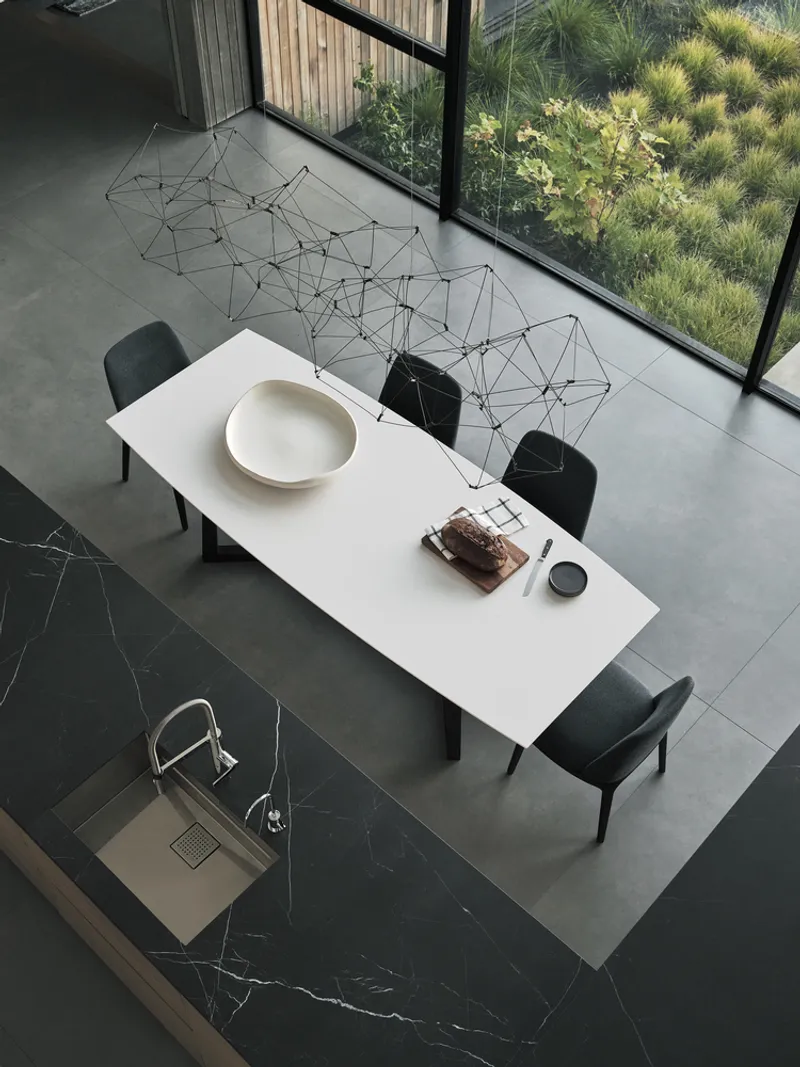
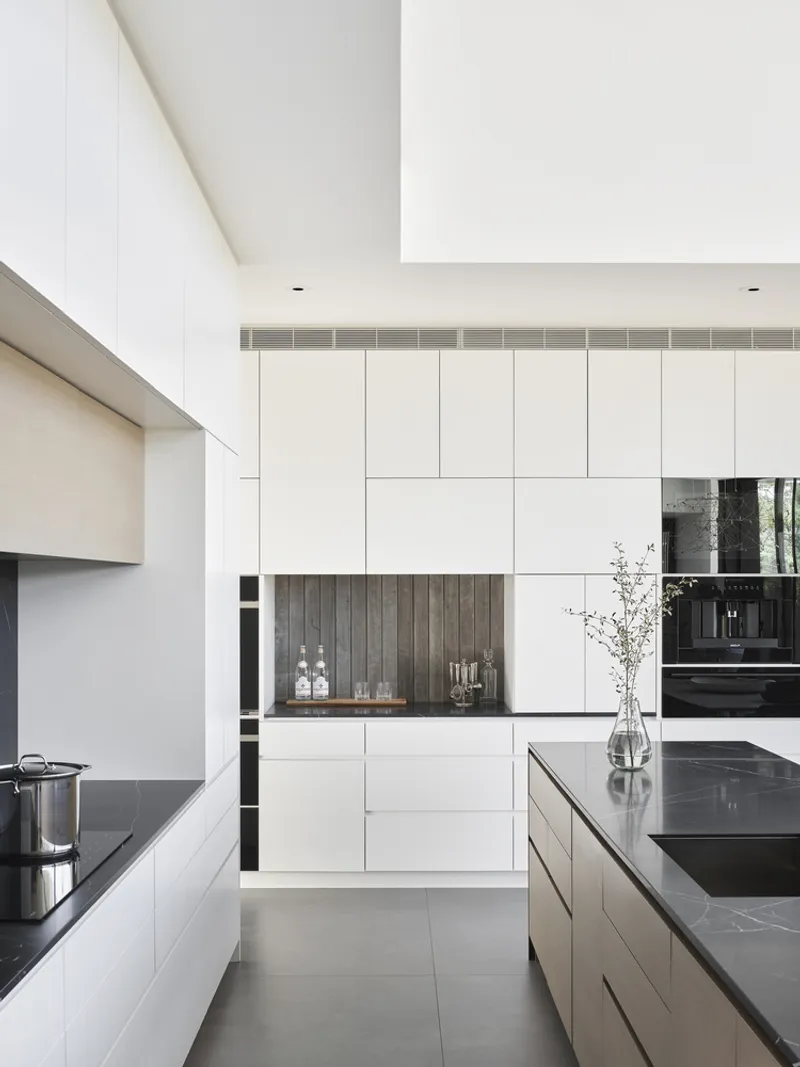
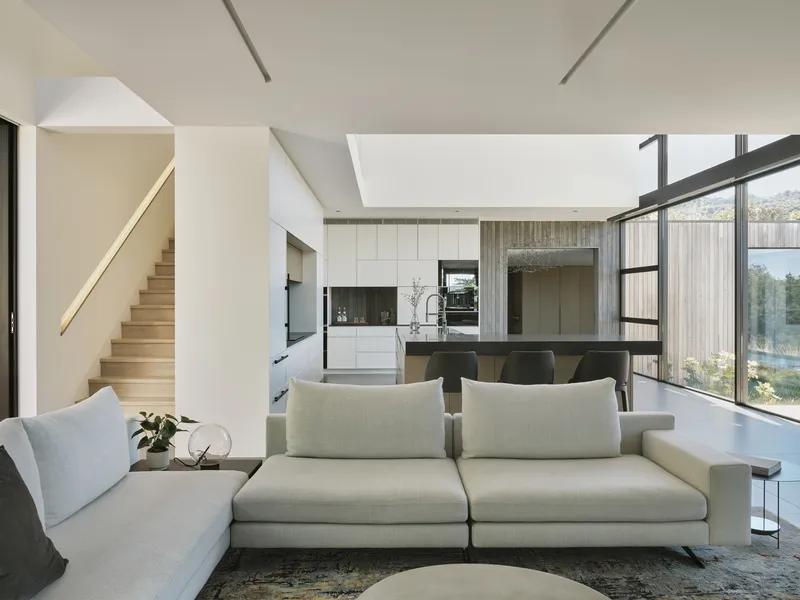
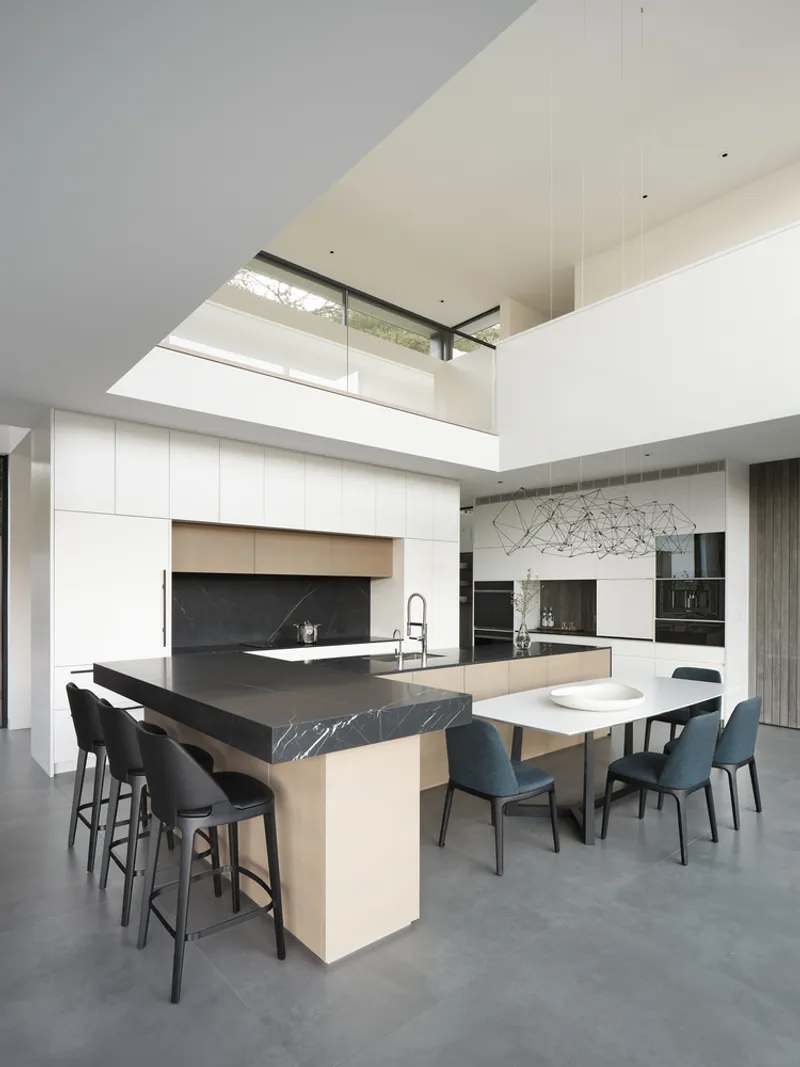
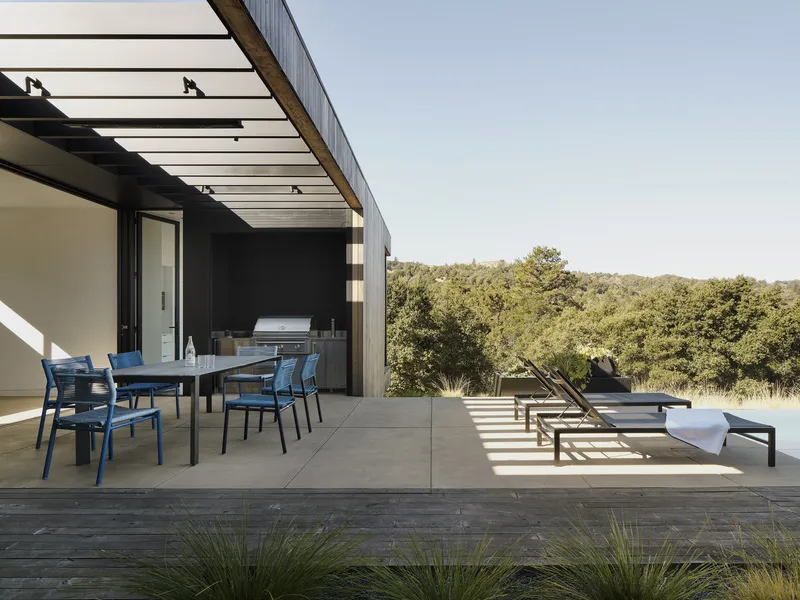
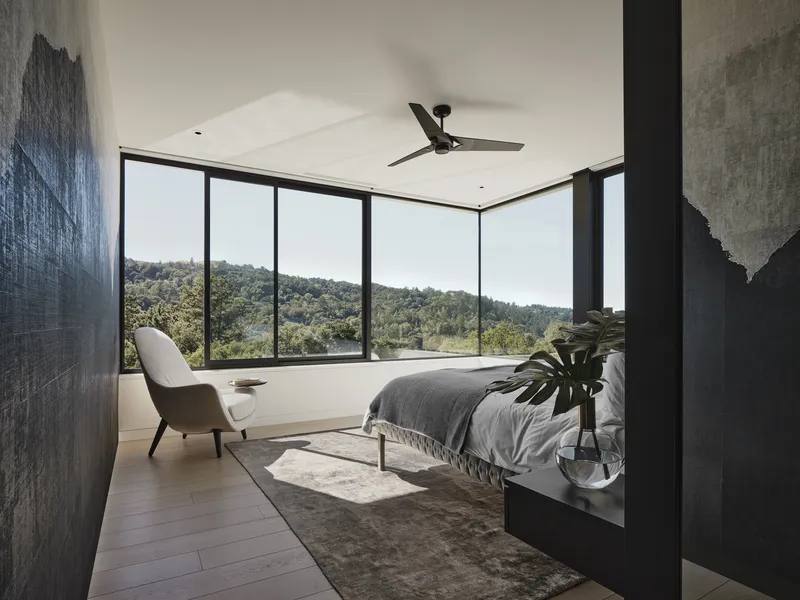
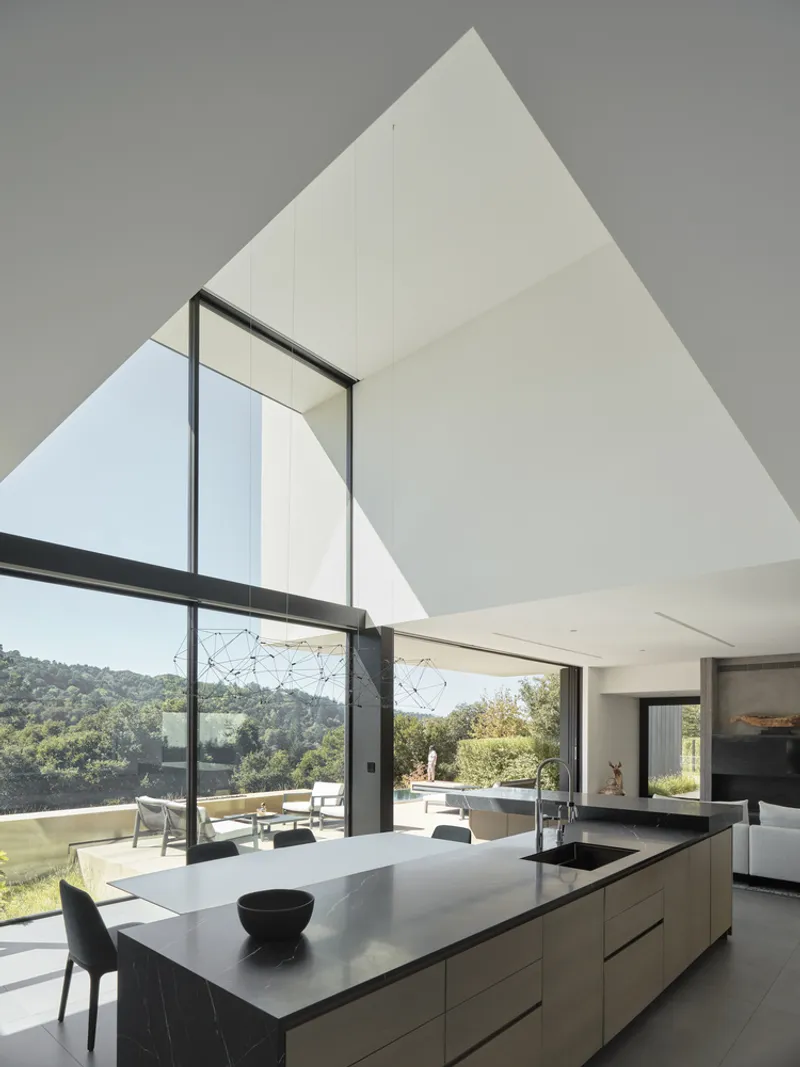
The primary volume runs north-south, expanding vertically into a dramatic double-height kitchen and dining area, visually connected to a lofted study and bedrooms on the upper floor. To the east, clerestory windows and light wells filter in morning sun while preserving privacy. A perpendicular single-story wing with a living green roof houses a multipurpose space for fitness, recreation, and social gatherings at pool level. Adjacent to this, an infinity-edge pool blurs the boundary between cultivated garden and untamed meadow.
Material Palette: Durable, Minimal, Contextual
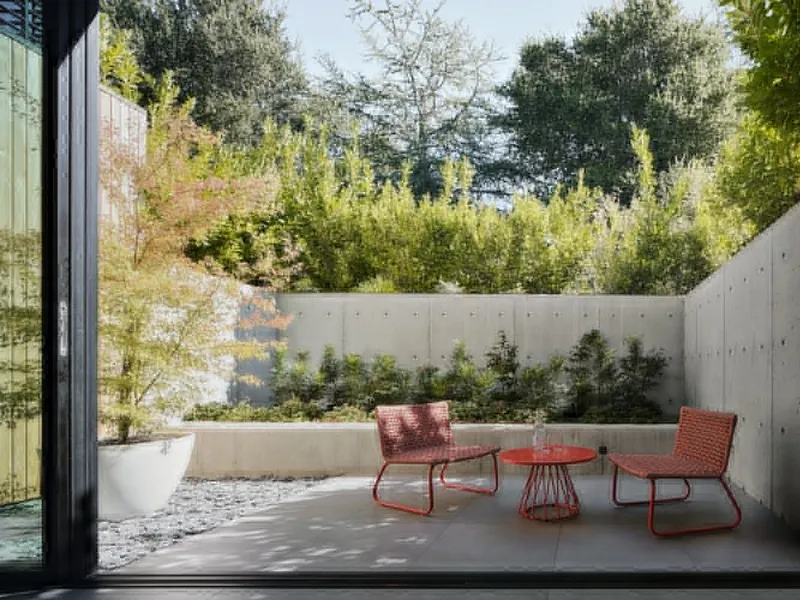
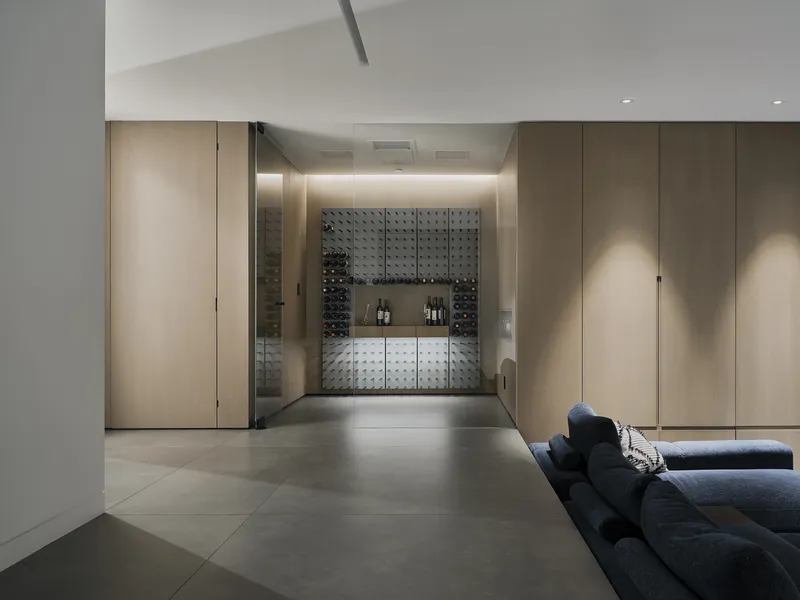
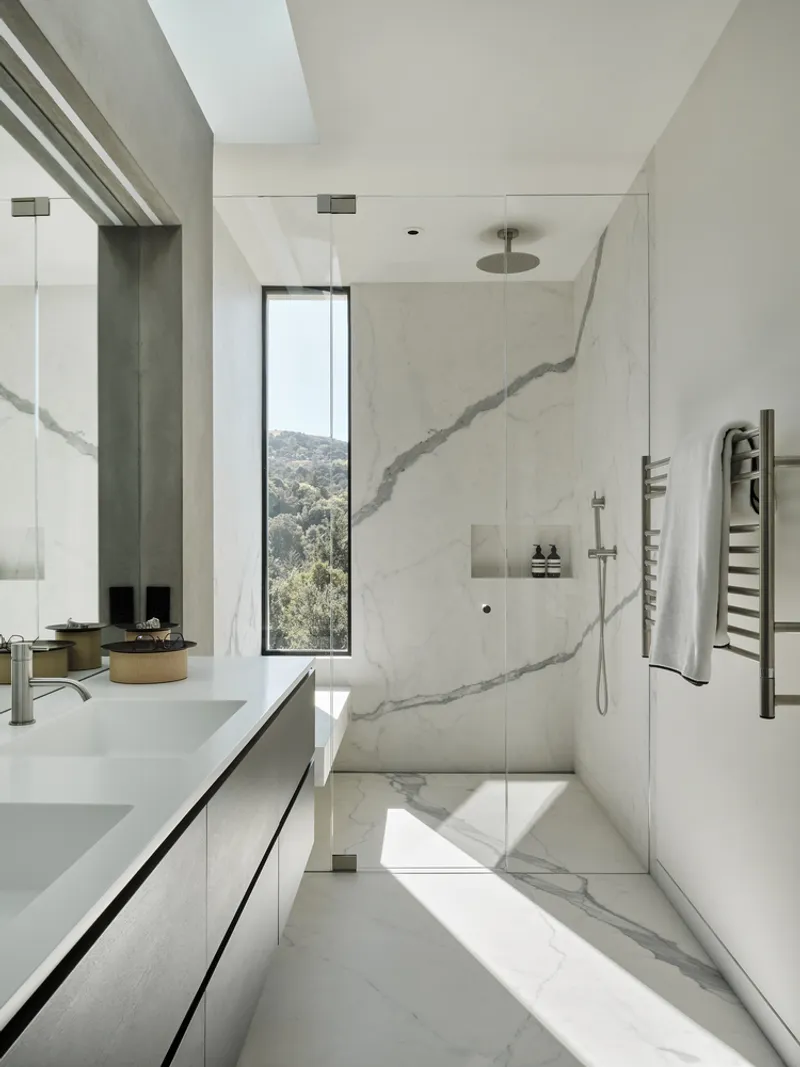
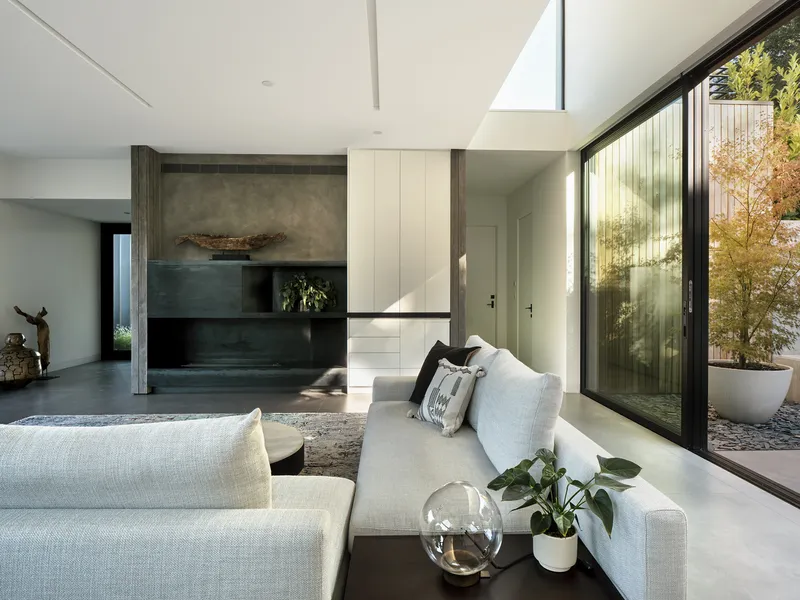
Rau Haus is clad in cement plaster and locally salvaged Monterey Cypress, chosen for their resilience and graceful aging. The Cypress siding, left untreated, weathers naturally, softening the geometric forms and tying the architecture to its wooded surroundings. Inside, the restrained material palette continues—minimal yet tactile, where monolithic concrete, wood textures, and expansive glazing create a calm, airy atmosphere.
Passive Design and Renewable Performance
Built with a strong commitment to sustainability, Rau Haus integrates passive design strategies and advanced systems to achieve year-round comfort and reduce its carbon footprint. Key features include:
- A 6.24kW photovoltaic array generating 9,777 kWh annually
- Two Heliodyne solar thermal panels connected to a 119-gallon hot water tank
- All-electric appliances and a high-efficiency electric heat pump HVAC system
- Deep roof overhangs, inset windows, and operable skylights for passive shading and cross-ventilation
- Concrete with 30% fly ash to reduce embodied carbon
- Locally milled cypress, avoiding chemical treatments or finishes
The result is a home that maintains internal comfort naturally, with outdoor patios at varying orientations offering comfort at different times of the day.
Elevated Details, Thoughtful Execution
“Beneath the quiet design sensibility is a rigorous articulation of forms and spaces that are precisely detailed within a tightly curated material palette,” shares Anjali Iyer, LEED AP, Project Architect. The home is the outcome of close collaboration between design teams, engineers, and skilled builders, ensuring each material junction and spatial connection feels intuitive and intentional.
According to Steven Stept, AIA, Project Principal, “This project allowed us to craft a space of serenity, well-balanced with a design that creates horizontal and vertical connections within and towards the landscape.”
A New Model for Sustainable Family Living
Rau Haus exemplifies the best of contemporary residential architecture—merging sculptural elegance, environmental stewardship, and family-centered design. It is a timeless home that invites nature in, while offering the privacy and flexibility modern life demands.
Project Credits
- Architects: Feldman Architecture
- Interior Design: FQ Designs Group
- Landscape Design: Thuilot Associates
- Lighting Design: Tucci Lighting
- Structural Engineer: ZFA Engineers
- Civil Engineer: Lea & Braze Engineering
- MEP: Philip Neumann Energy Design
- Photography: Adam Rouse


Popular Articles
Popular articles from the community


longwave studio Reorganizes a 112 m² Tainan Apartment Around the Daily Routines of a Family and Two Cats
In Tainan, Taiwan, birch plywood, rust-red furniture and a freestanding plaster wall link arrival, storage, work and family life in one apartment.

Juan García Correa, John González and Claudia Rueda Sink a Circular Amphitheater into a Manizales Engineering Building
On the La Nubia campus in Manizales, Colombia, the S1 Building folds labs and offices into a hillside of ramped lawns that double as a campus route.

David Ortega Stacks a Two-Story Mexico City Penthouse Around a Steel Stair and a Pergola-Shaded Roof Terrace
In Colonia Roma, a 300 m² penthouse uses oak joinery, a planted steel stair and a slatted roof pergola to make a new-build apartment feel like a house.

Architekt Andreas Gruber Scatters 23 Dark Timber Chalets Across a South Tyrolean Forest Edge
In Molini di Tures, Amonti Chalets breaks a resort into a hamlet of gabled timber houses, with parking, storage and services pushed into the slope.

Similar Reads
You might also enjoy these articles


Hodi-Mandai Geram
Project Function: Preservation and revitalization of the Intangible heritage and socio-spatial identity of the Hodi by Housing, Cultural Memory Center, Sacred Grove, landscape, local tourism economy


Olio Towers: A Mid-Rise for Performers That Fuses Housing, Rehearsal, and Stage
Located blocks from Houston's Theater District, this modular tower stacks living units around a central performance atrium.

Oasis: Modular Green Housing Carved into Dhaka's Urban Fabric
A shortlisted Plugin Housing entry reclaims unauthorized settlements in Dhaka with stepped concrete volumes, green roofs, and ventilation-driven design.

Black Hole: A Floating Megastructure for the Post-Physical Era
Emiliano Mazzarotto envisions a spherical, self-scaling arena where e-sports, digital hotels, and holographic stadiums replace traditional public space.

Explore Housing Competitions
Discover active competitions in this discipline

Challenge to reimagine the Iron Throne

Photograph architecture without architects

Illustrate the lost glory of Angkor Wat - Render Challenge

Design challenge to reuse E-waste
Comments (0)
Please login or sign up to add comments
No comments yet. Be the first to comment!