
Ray Garden by Akihisa Hirata: A Visionary Work of Biophilic Pavilion Architecture at Expo 2025 Osaka
Ray Garden by Akihisa Hirata redefines biophilic pavilion architecture through ecological form, rooftop gardens, and cultural topography at Expo 2025.


Reimagining the Future Through Organic Architecture
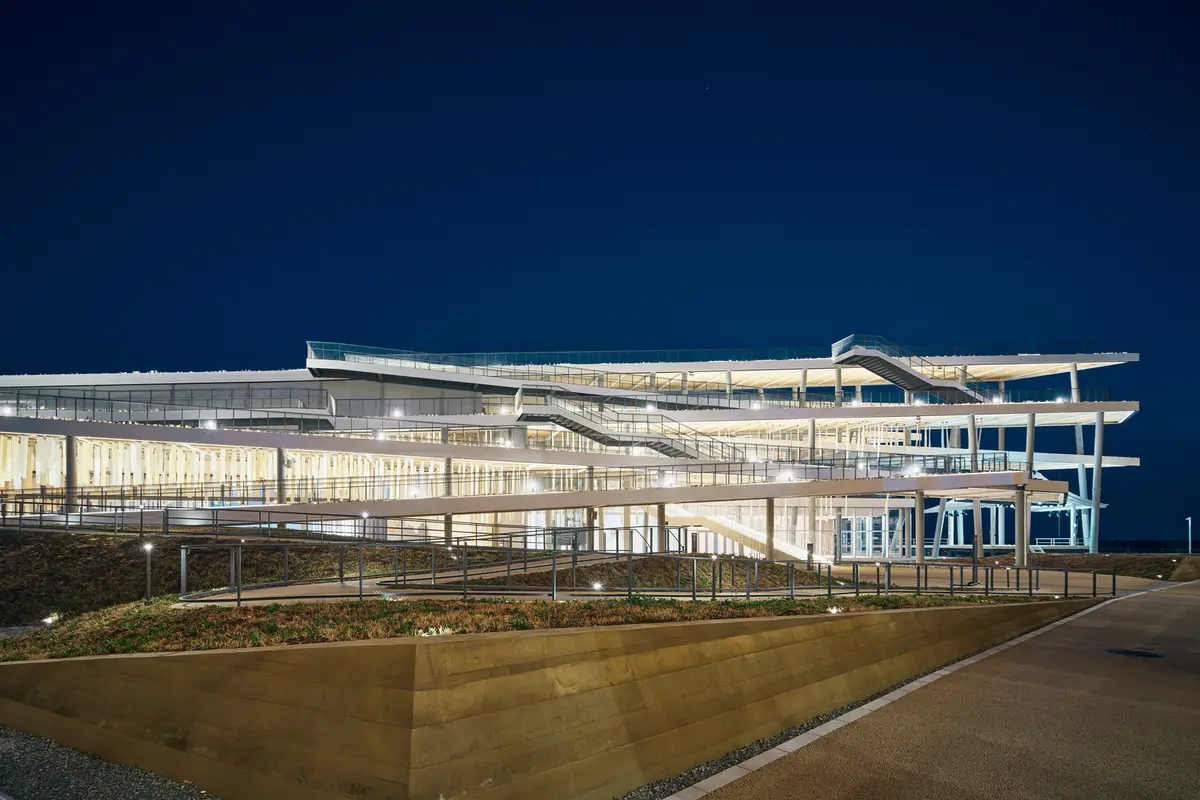
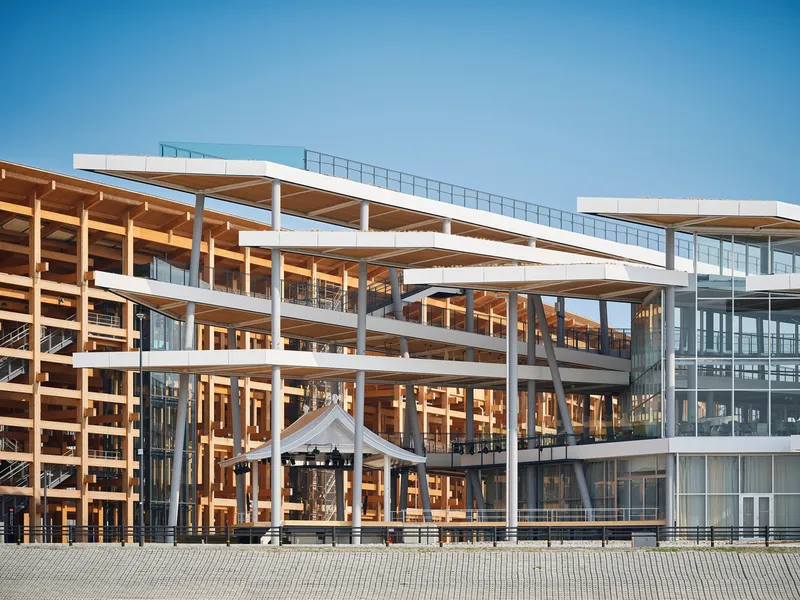
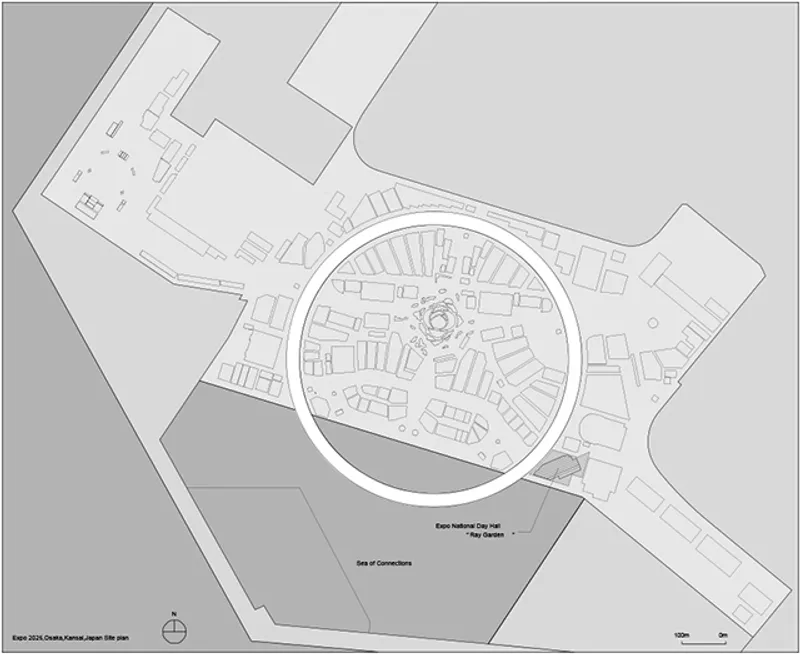
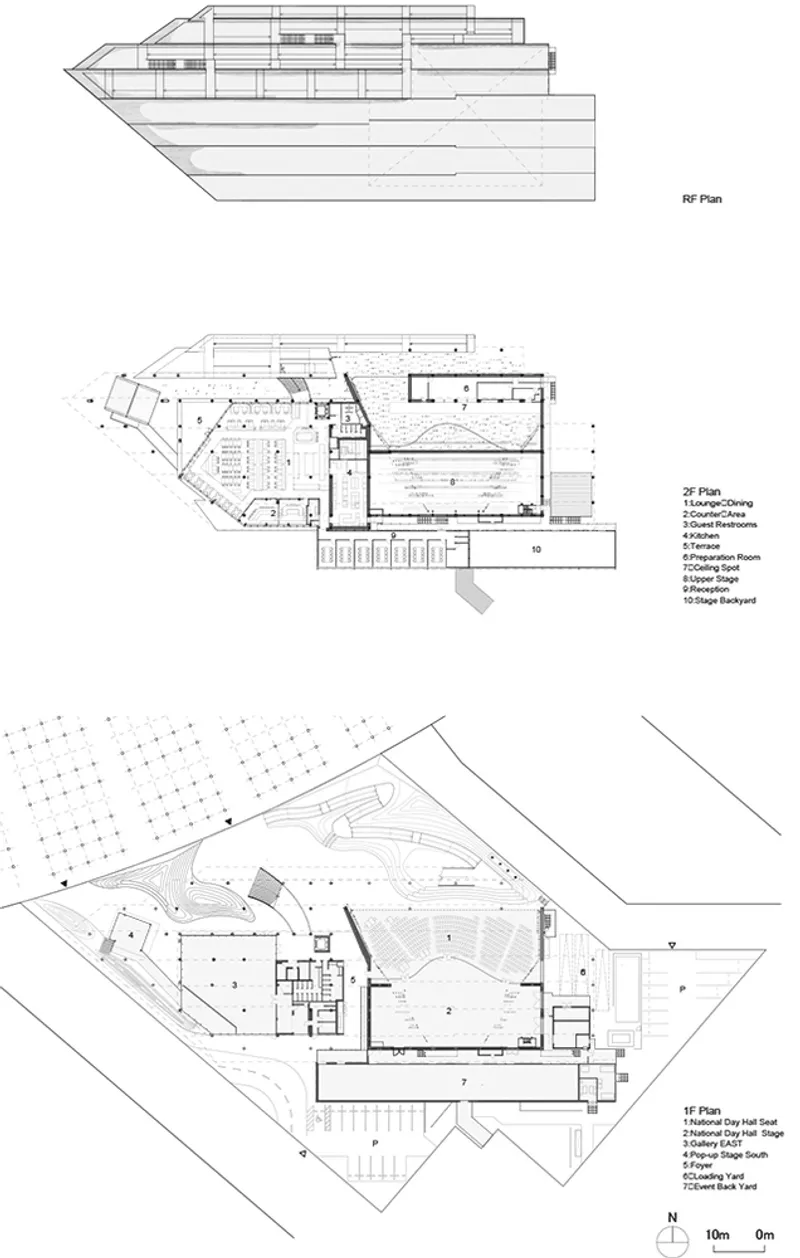
Located at the heart of Expo 2025 Osaka Kansai, the Ray Garden designed by Akihisa Hirata Architecture Office embodies the principles of biophilic pavilion architecture, merging human activity with the natural systems of earth, air, and water. Spanning 4,837 square meters, the National Day Hall serves as a multifunctional complex for performances, exhibitions, and dining, while also becoming a poetic structure that reflects Japan's natural rhythms and cultural memory.
Architecture as a Living Ecosystem
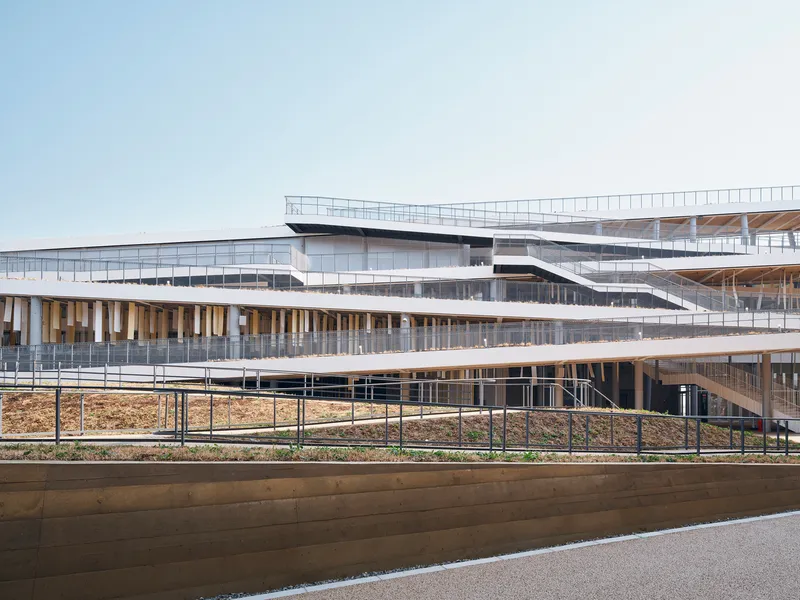
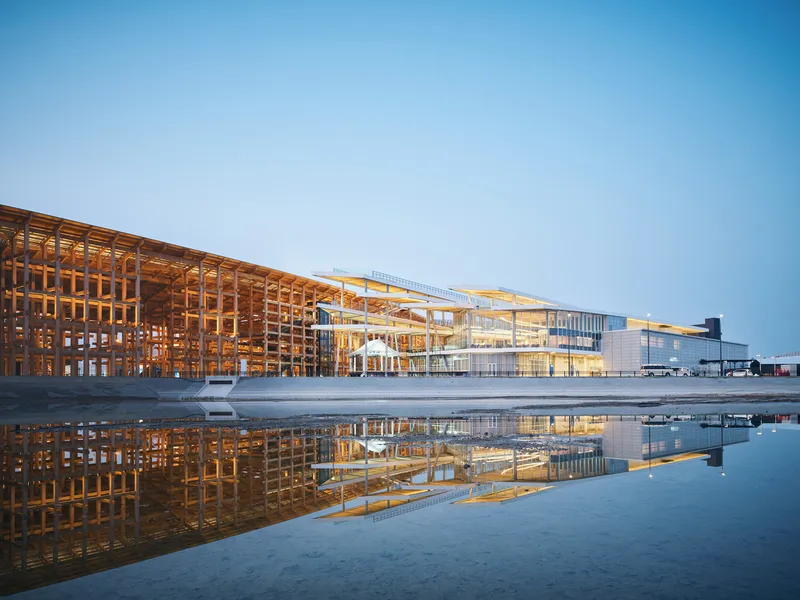
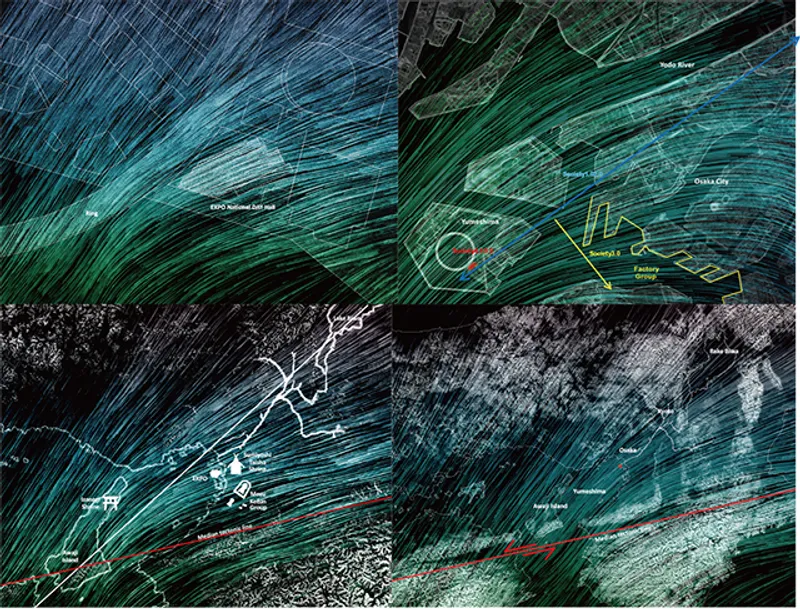
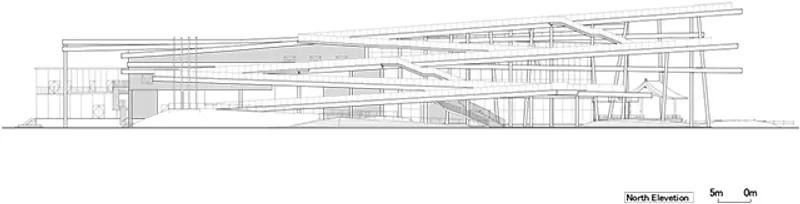
In response to the Expo’s theme, “Designing Future Society for Our Lives,” Ray Garden is envisioned as more than a building — it is an architectural ecosystem. Slabs unfurl across the site in interwoven layers, creating a flowing topography that mirrors the folds of the Kansai region and the prevailing winds of the Yodo River system. These organic geometries establish a deep spatial dialogue with the surrounding landscape and sea, where the structure extends outward as if growing from the coastal earth.
The orientation of the pavilion’s strips is not arbitrary but synchronized with regional geography, reinforcing a design narrative where the built form adapts to natural energy flows. This topographical responsiveness transforms the building into a landscape in motion, evoking windswept grasses, tidal forms, and aerial rhythms.
An Open-Air Theater of Culture and Nature
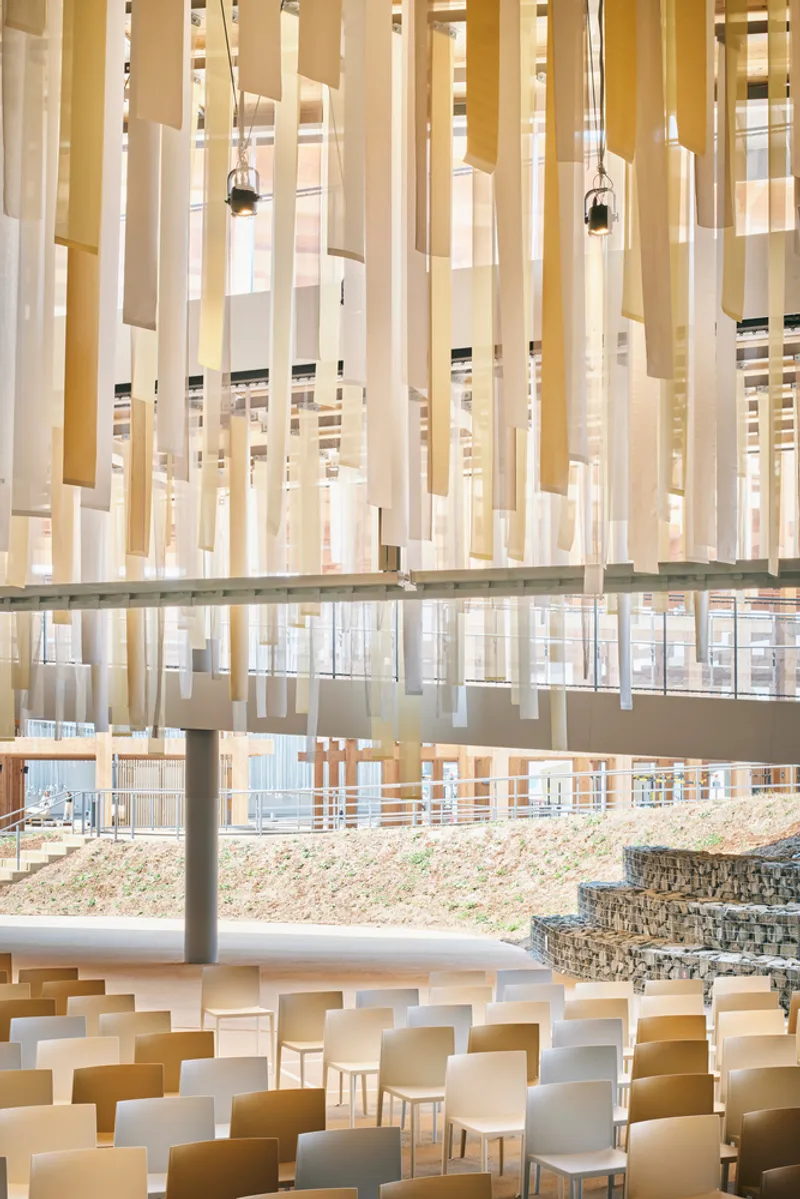
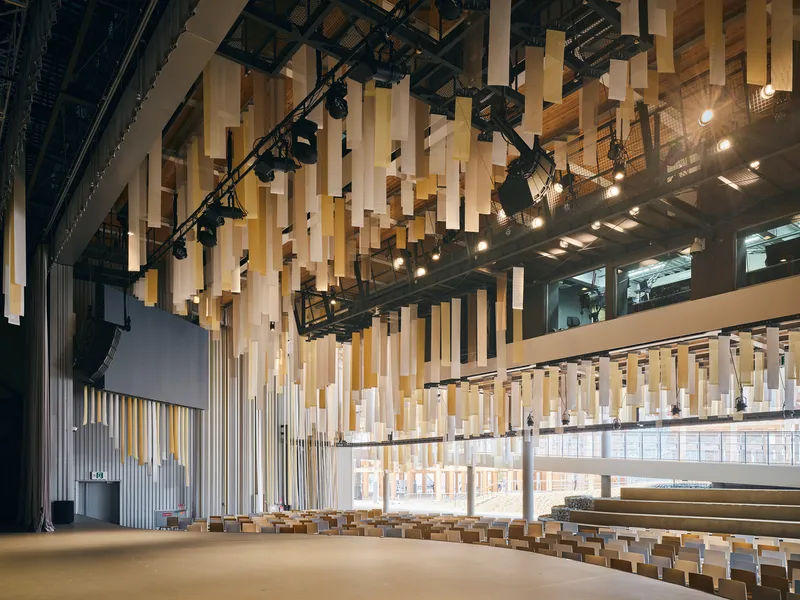
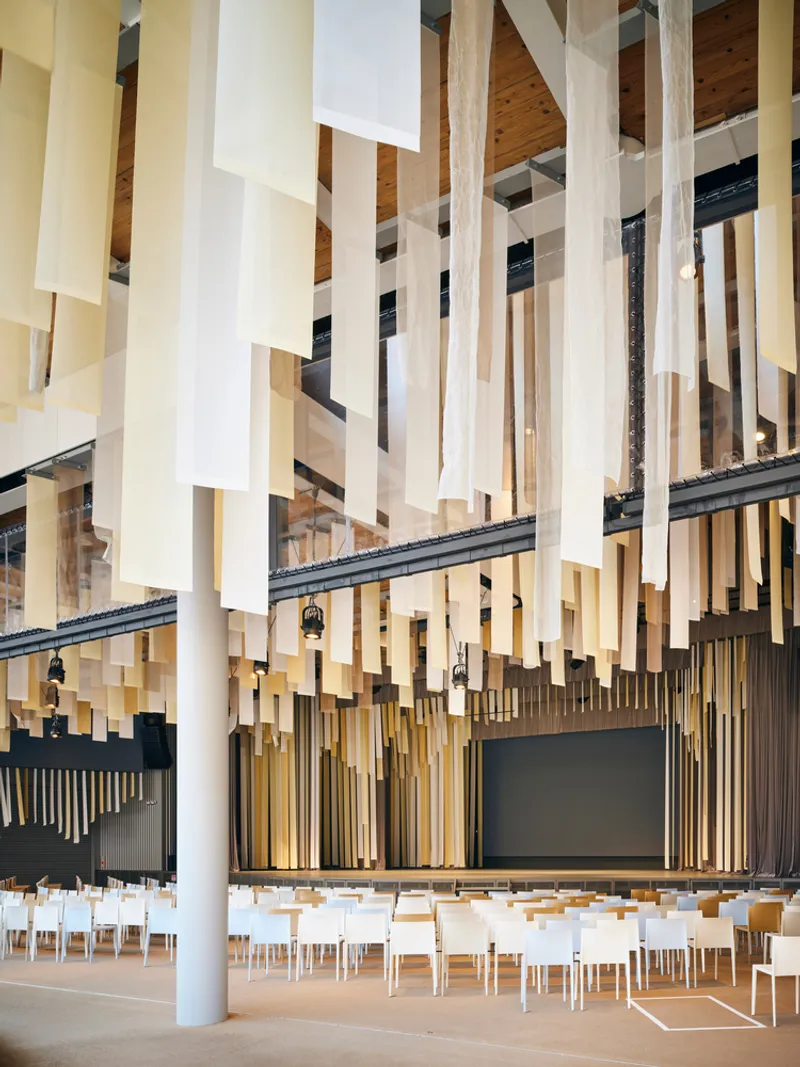
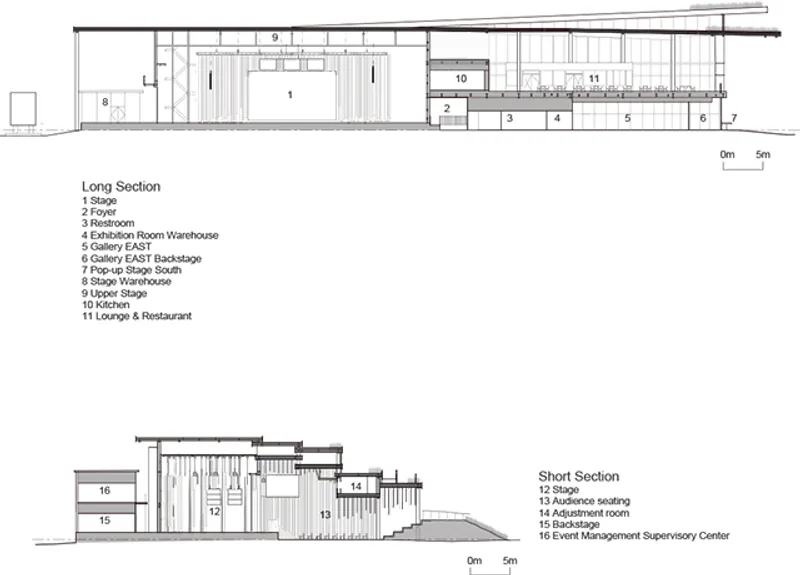
Within this sinuous architectural frame, the Ray Garden hosts a theater for national ceremonies, a space for exhibiting traditional Japanese crafts, and a lounge/restaurant area. These programs are housed under and around the open-air slabs, allowing events to unfold fluidly between interior and exterior conditions. Visitors experience shifting atmospheres as they move through shaded voids, sunlit terraces, and breezy platforms that echo the sensation of walking through a river delta or coastal garden.
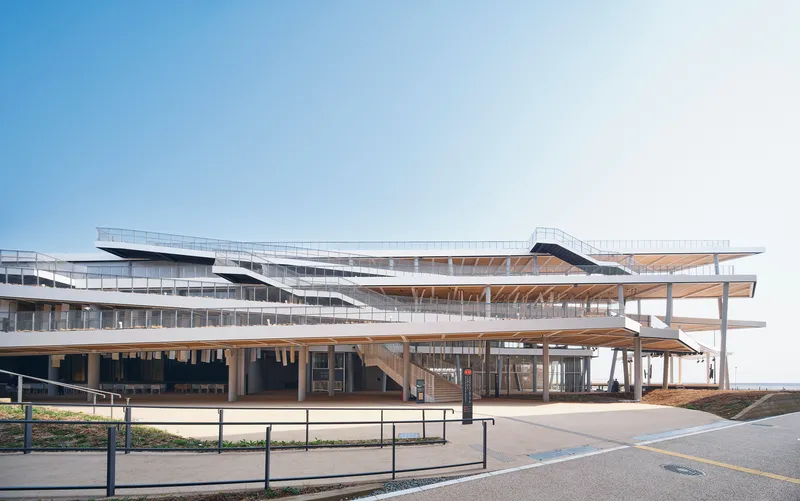

This layered openness supports biophilic principles — promoting human interaction with natural elements, offering views of sky and sea, and integrating vegetation into the architecture. The structure becomes a garden in itself, a place of performance and pause, exhibition and exchange, rooted in natural harmony.
Rooftop Ecology and Environmental Continuity
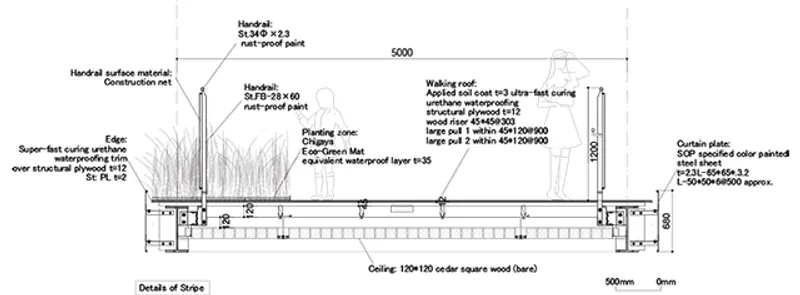
The rooftop of Ray Garden furthers its biophilic mission. Planted with bushy native grasses, the roofscape sways with the same breezes that shape the Yodo River’s banks. These plants, chosen for their ecological relevance, create a living skin that merges architecture with landscape. As they grow, shift, and regenerate over time, they express a temporal dimension aligned with the cycles of life and earth.
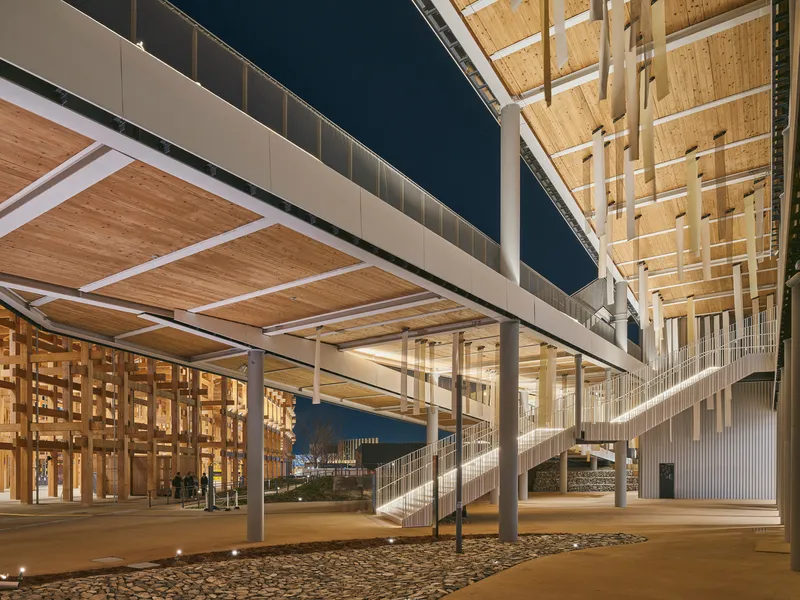
Ray Garden becomes not only a pavilion but a geographic life-form, as Hirata describes — a spatial and environmental link between past and future generations. Its architecture doesn't isolate or dominate nature but coexists and coevolves with it, offering a new model for pavilions that engage the environment as a collaborator.
A Timeless Symbol for Future Societies
By rooting its architecture in the cultural geography of the Kansai region and embracing a layered, adaptive spatial strategy, Ray Garden is more than an Expo pavilion. It is a symbol of coexistence, a prototype for how public architecture can reflect life’s multiplicity — climatic, ecological, and human.
Akihisa Hirata’s visionary approach challenges traditional notions of building, presenting biophilic pavilion architecture as a future-forward practice that blurs the line between structure and nature, memory and innovation. At Expo 2025, the Ray Garden will stand not just as a moment of architectural spectacle, but as a living legacy of how we might build with — rather than against — the world around us.
All Photographs are works of Kenya Chiba


Popular Articles
Popular articles from the community


ALGAL REALM: A Bio-Integrated Lunar Habitat Design for Life Beyond Earth
ALGAL REALM reimagines lunar habitat design with algae-powered life support, 3D-printed regolith, and vertical living for a lunar future.

The Musturak Paradise: Senior Living Architecture for a Connected Future in Temara, Morocco
The Musturak Paradise reimagines senior living architecture in Temara via private homes, social spaces, culture, community, and shared care.

Co-life: Sustainable Architecture for Age-Friendly Community Living
Co-life reimagines sustainable architecture for seniors through courtyards, rammed earth, shared gardens, and spaces designed for belonging.

Conexión: Biophilic Design Reimagines High-Rise Living in Hong Kong
Conexión reimagines high-rise living in Hong Kong through biophilic design, green facades, shared spaces, daylight, water and nature within.

Similar Reads
You might also enjoy these articles


FAMM Arquitectura Organizes Ten Villas Around Courtyards and Jungle in Nosara, Costa Rica
El Molino pairs two elongated volumes with deep overhangs and timber louvers to build a compact coastal community five minutes from the beach.
Oscar Niemeyer's Ibirapuera Park Pavilions Define São Paulo's Cultural Identity in Concrete and Curve
A constellation of modernist volumes set within São Paulo's most important urban park, conceived for the city's 400th anniversary in 1954.
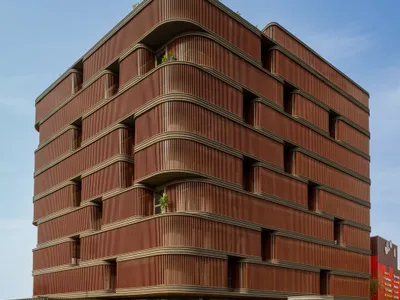
Sanjay Puri Architects Wraps a Jaipur Office Tower in Capsule-Shaped Green Buffers
A nine-level climate-responsive workplace near Jaipur Airport uses stacked planter terraces and aluminium screens to fight 40°C heat.
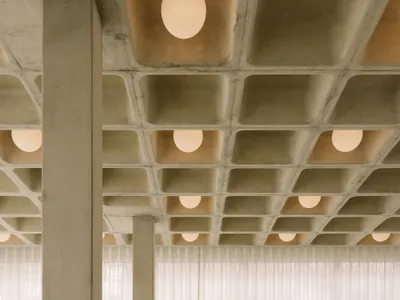
RHO Converts a Berlin Spree-Side Industrial Courtyard into Enkime's 1,000 m² Agency Headquarters
A social media agency's new home in Charlottenburg trades glossy branding for concrete waffle ceilings, glazed tile, and sheer curtains.

Explore Architecture Competitions
Discover active competitions in this discipline

Challenge to reimagine the Iron Throne

Photograph architecture without architects

Illustrate the lost glory of Angkor Wat - Render Challenge

Design challenge to reuse E-waste
Comments (0)
Please login or sign up to add comments
No comments yet. Be the first to comment!