
RDS House by Luiz Paulo Andrade Arquitetos – A Contemporary Reinvention of a Diplomatic Modernist Residence
A restored modernist residence blending Brutalist concrete, expanded open spaces, carbon-fiber engineering, and seamless indoor-outdoor living for contemporary family life.


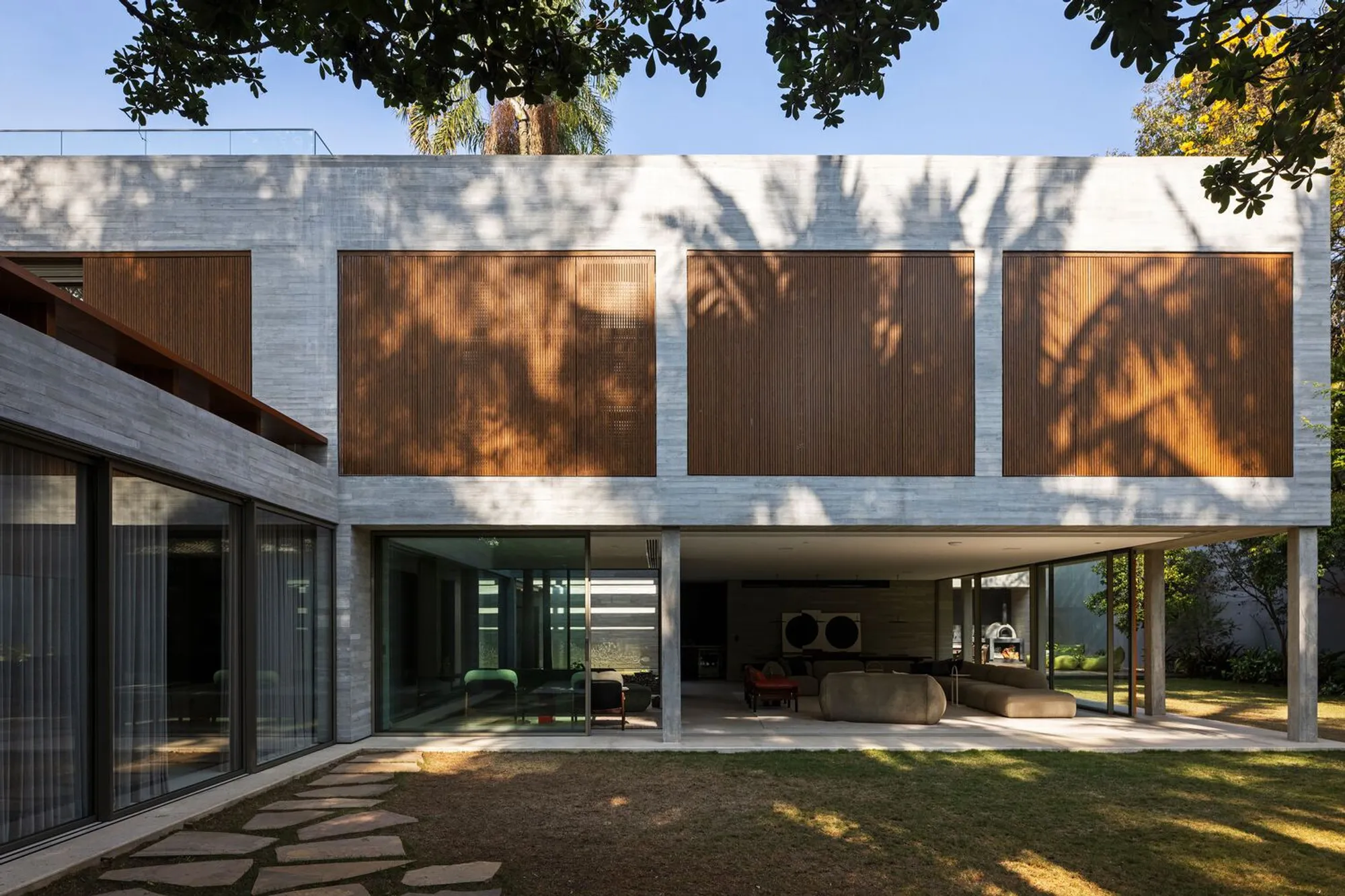
The RDS House in São Paulo stands as a powerful example of how thoughtful architecture can honor its historical essence while embracing contemporary family living. Originally designed in the 1960s by Américo R. Campello as the home of the British Consul, the residence later became the British Consulate in the 1980s—marking decades of diplomatic importance. Today, under the vision of Luiz Paulo Andrade Arquitetos, the building has undergone a transformative renovation that elevates its modernist character while adapting it to a new generation.


Restoring Modernist Identity While Expanding Spatial Possibilities
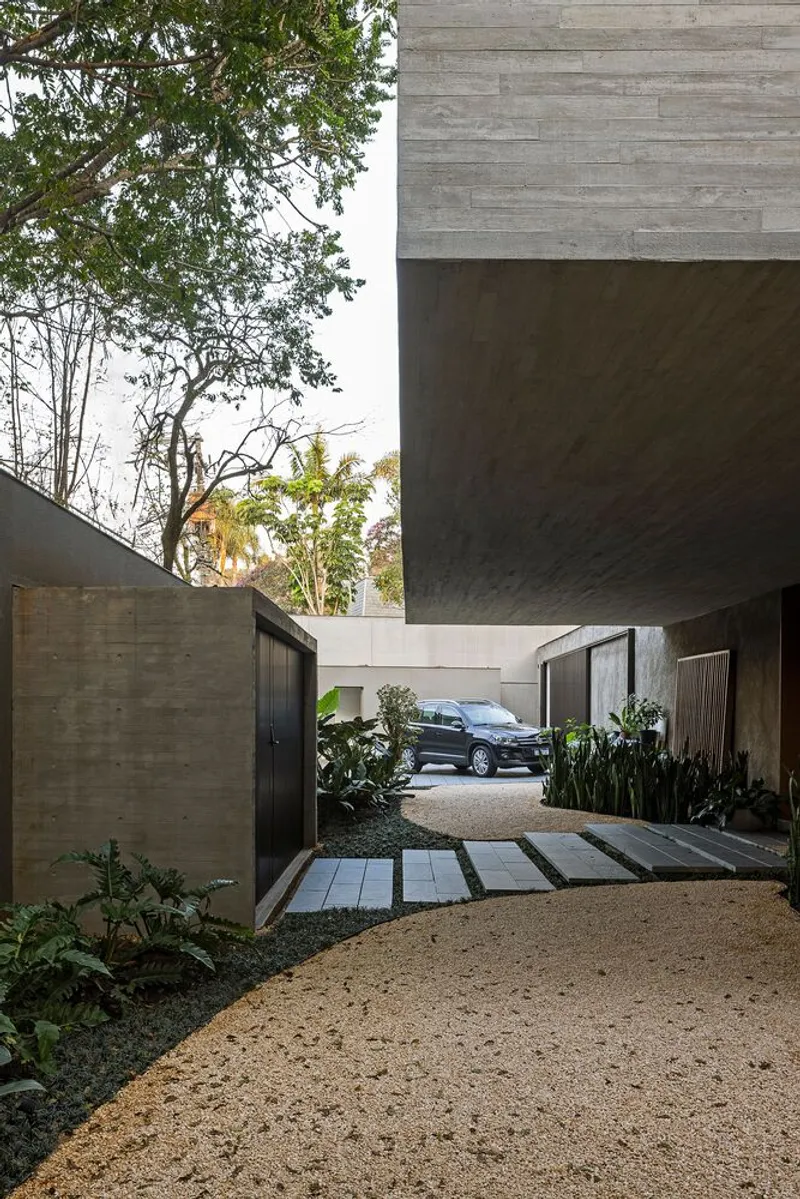
Campello’s original design was considered avant-garde for its era, featuring a bold concrete structure and wide cantilevers that expressed clarity and lightness. Over time, however, successive modifications compromised its architectural identity. The renovation aimed to revive the purity of the original volume, restore its expressive cantilevers, and expand internal areas to align with contemporary living.
A key focus was rebalancing the home’s modernist proportions. By peeling back years of alterations, the architects reintroduced coherence to the façade and reinforced the geometric presence that had defined the project in its early years.

Structural Innovation: Carbon Fiber Reinforcement for Large Spans
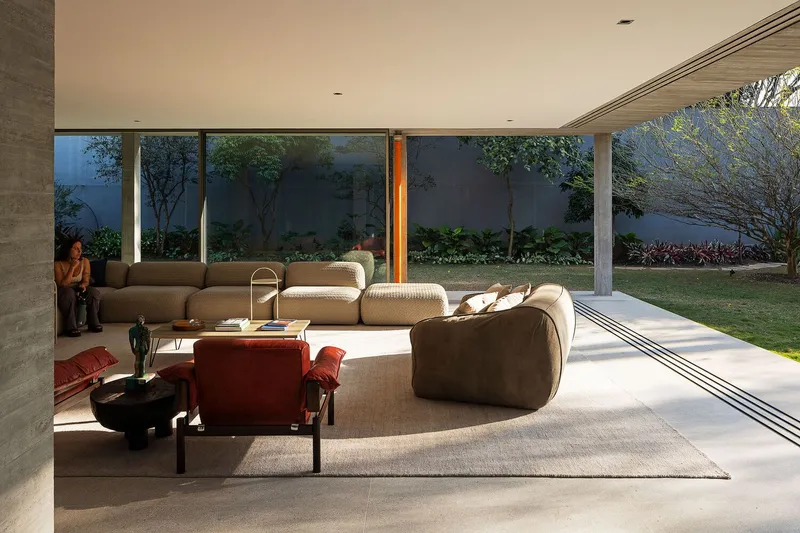
Transforming a mid-century diplomatic residence into a 21st-century family home required advanced engineering solutions. The existing concrete structure, though robust, limited spatial flexibility. To achieve generous open-plan interiors—an essential element of modern domestic life—the team introduced carbon fiber structural reinforcement.
This lightweight yet high-strength material allowed the creation of larger spans without compromising the structural integrity of the original framework. These modifications opened new possibilities for social spaces, circulation, and visual connections throughout the home.

A Dialogue Between Brutalism and Contemporary Minimalism
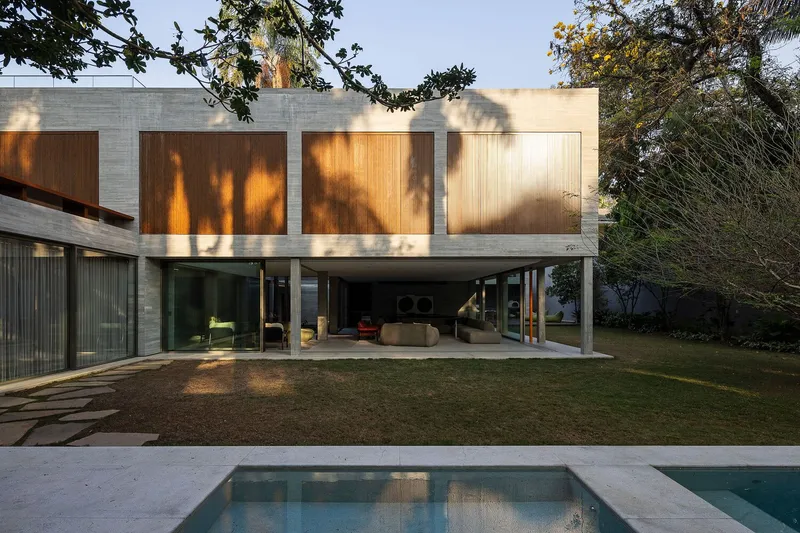
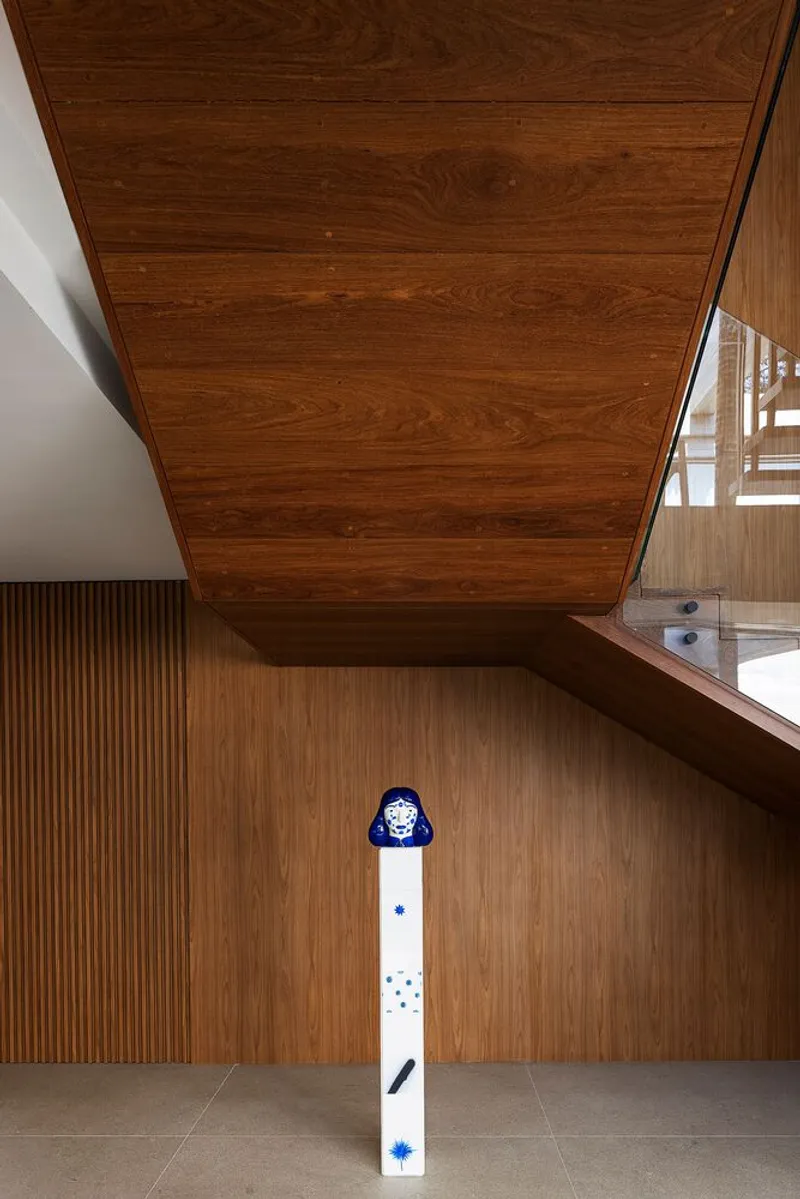
Materiality was central to reimagining the character of the RDS House. The exposed concrete surfaces, emblematic of Brutalist architecture, were meticulously restored to recover their texture and color. Complementing these surfaces, new interior and exterior walls were clad in precast concrete slats, creating tactile continuity between old and new elements.
This approach forms a cohesive architectural language—where restored historical textures meet contemporary precision. The palette emphasizes durability, authenticity, and visual harmony, ensuring the renovation respects its lineage while expressing a renewed identity.

Design Principles for Contemporary Family Living
The transformation of the RDS House aligns with the core architectural values of Luiz Paulo Andrade Arquitetos, reflected through three guiding principles:
1. Large, Fluid Spaces
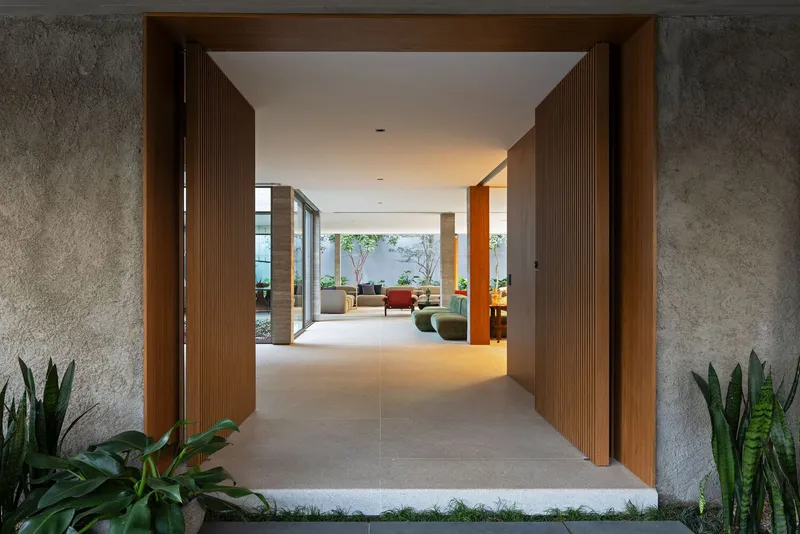
Expansive living areas foster interaction, social gatherings, and multifunctional uses. Open layouts support a seamless flow between daily family life and formal entertaining.
2. Integration Between Interior and Exterior
Floor-to-ceiling glazing, strategic openings, and direct access to green spaces bring natural light deep into the home. This strong indoor-outdoor connection enhances comfort and strengthens the relationship with the landscape.
3. Technology, Sustainability, and Comfort
Automation systems, energy-efficient solutions, and discreet technological integration align the residence with contemporary expectations for performance and convenience.
A Renovation That Honors Legacy While Embracing the Future
The RDS House exemplifies how architecture can evolve while preserving historical significance. By combining expressive structural restoration with modern engineering, refined materiality, and spatial generosity, the project successfully bridges past and present.

More than a sophisticated home, the renovated residence stands as a model for adaptive reuse—demonstrating how heritage buildings can be transformed to meet contemporary needs without sacrificing their architectural soul. The RDS House reaffirms the timeless potential of good design and the enduring value of respecting architectural legacy.
All photographs are works of Leonardo Finotti



Popular Articles
Popular articles from the community


Riyadh For All: Intergenerational Urban Design for Active Aging in Rabat
Riyadh For All reimagines urban design in Rabat with intergenerational co-living, adaptive courtyards, and Moroccan cultural exchange today.

Hill & Cross Opera: Sculptural Opera House Architecture Shaped by Tallinn’s Landscape and Identity
Hill & Cross Opera reimagines opera house architecture in Tallinn through its sculptural hill, civic plaza, glass wave and a luminous cross.

Co-life: Sustainable Architecture for Age-Friendly Community Living
Co-life reimagines sustainable architecture for seniors through courtyards, rammed earth, shared gardens, and spaces designed for belonging.

The Musturak Paradise: Senior Living Architecture for a Connected Future in Temara, Morocco
The Musturak Paradise reimagines senior living architecture in Temara via private homes, social spaces, culture, community, and shared care.

Similar Reads
You might also enjoy these articles


Hodi-Mandai Geram
Project Function: Preservation and revitalization of the Intangible heritage and socio-spatial identity of the Hodi by Housing, Cultural Memory Center, Sacred Grove, landscape, local tourism economy


Olio Towers: A Mid-Rise for Performers That Fuses Housing, Rehearsal, and Stage
Located blocks from Houston's Theater District, this modular tower stacks living units around a central performance atrium.

Oasis: Modular Green Housing Carved into Dhaka's Urban Fabric
A shortlisted Plugin Housing entry reclaims unauthorized settlements in Dhaka with stepped concrete volumes, green roofs, and ventilation-driven design.

Black Hole: A Floating Megastructure for the Post-Physical Era
Emiliano Mazzarotto envisions a spherical, self-scaling arena where e-sports, digital hotels, and holographic stadiums replace traditional public space.

Explore Housing Competitions
Discover active competitions in this discipline



Challenge to reimagine the Iron Throne


Photograph architecture without architects


Illustrate the lost glory of Angkor Wat - Render Challenge


Design challenge to reuse E-waste
Comments (0)
Please login or sign up to add comments
No comments yet. Be the first to comment!