

Reconstruction of Uspenska Square in Dnipro: A Contemporary Urban Renewal by Dmytro Volyk and Ksenia Donetska
Revitalized historic square with new pedestrian links, lush trees, play zones, terraces, and lighting, creating an inclusive, vibrant public space in Dnipro.


Uspenska Square in Dnipro, one of the city's oldest and most historically significant public spaces, has undergone a transformative reconstruction led by the architectural team of Dmytro Volyk and Ksenia Donetska. Originally designed in the early 19th century, the square once served as a civic heart: anchored by the Assumption Cathedral and its public garden: where cultural, social, and spiritual life intersected. Over time, particularly during the Soviet era, the cathedral lost both its architectural identity and ceremonial purpose, leaving the surrounding square neglected, underutilized, and reduced to a transit zone disconnected from public life.
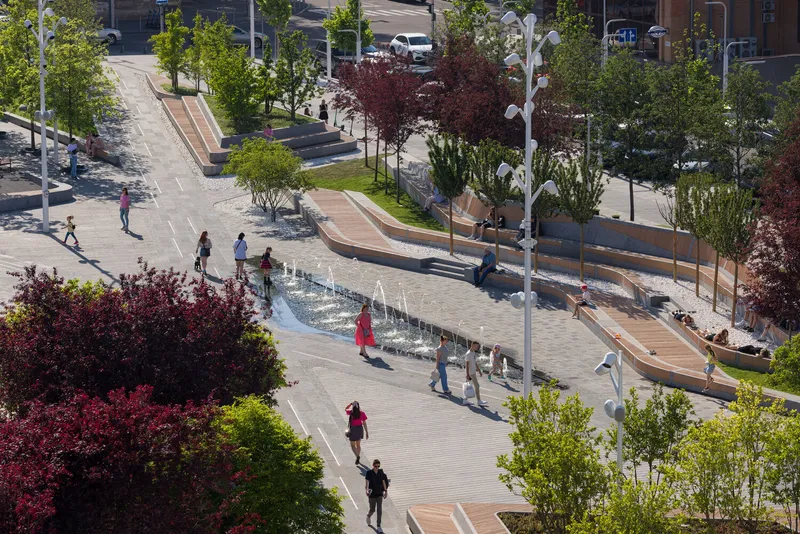
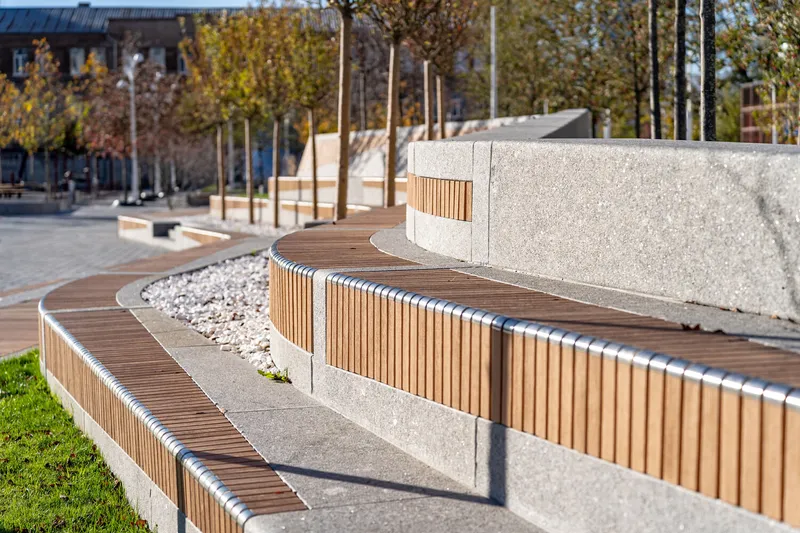
The architects approached the project as a fundamental urban renewal effort, aiming to reestablish Uspenska Square as a vibrant, inclusive, and accessible public space at the center of Dnipro’s historic district. The reconstruction reimagines the square as a pedestrian-first environment emphasizing connectivity, community engagement, ecological value, and contemporary urban comfort. Covering an area of 14,500 square meters, the new design revives the square’s urban significance through restored pathways, expanded greenery, multimodal mobility, and multifaceted recreational zones that cater to diverse age groups and social needs.
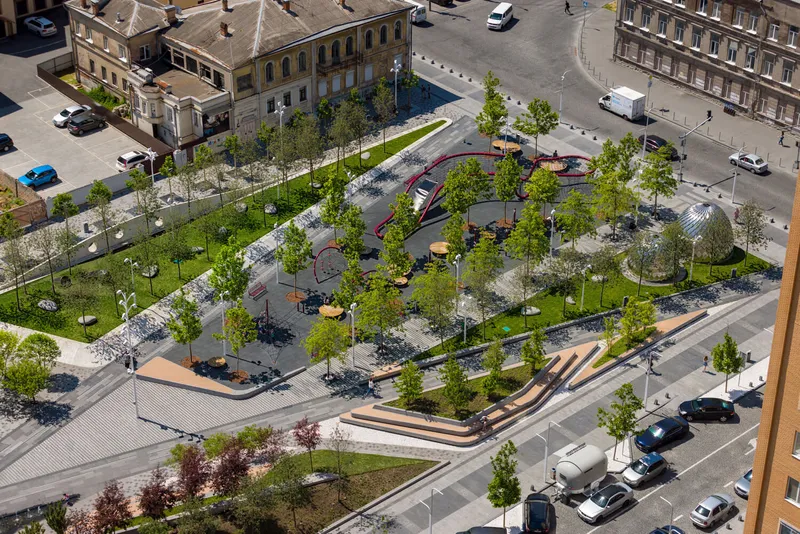
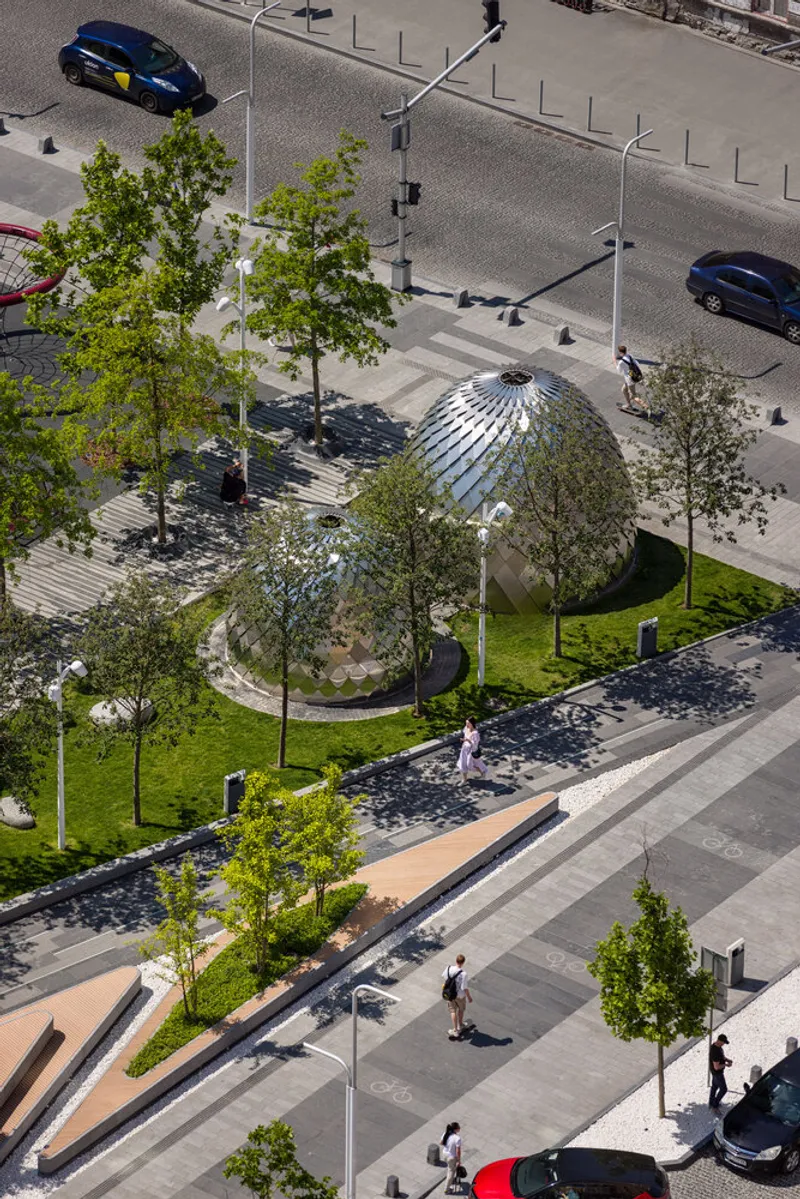
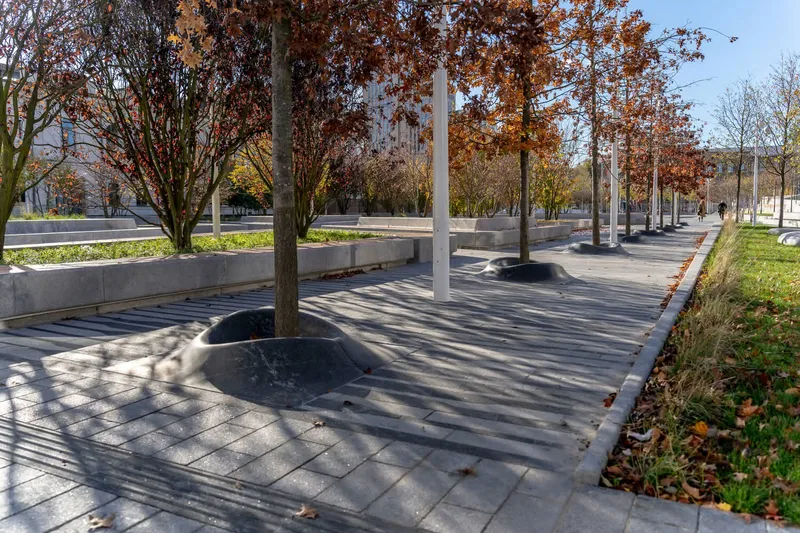
One of the central goals was reintroducing meaningful pedestrian connections, creating a logical and fluid movement system inspired by the site’s historical layout. Distinct paving materials highlight various routes, and nighttime illumination emphasizes circulation patterns with a subtle glow that guides users gently through the space. Accessibility played an essential role throughout the reconstruction. Crossings were raised to the level of sidewalks, tactile surfaces were integrated for visually impaired users, and a dedicated two-way bicycle lane was introduced to promote safe, sustainable mobility.
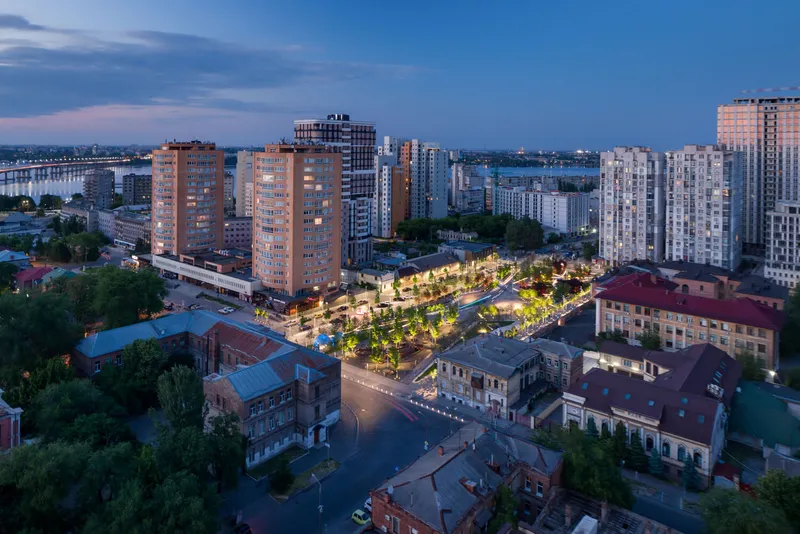
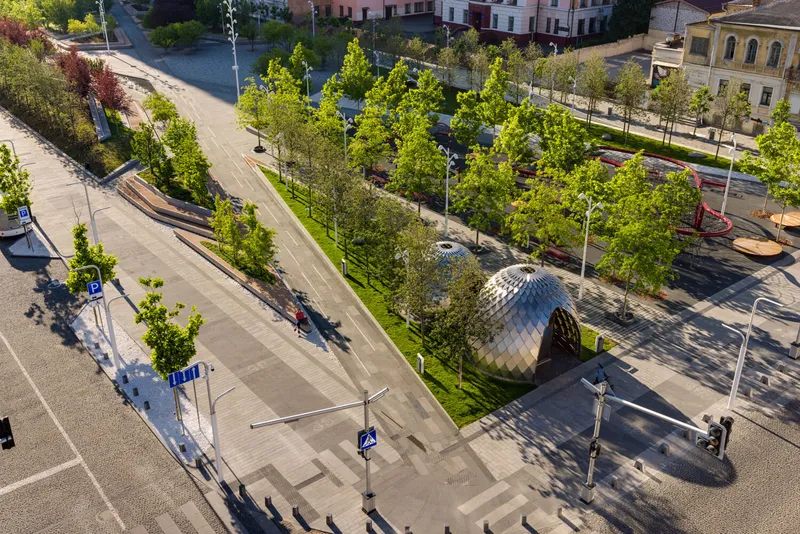
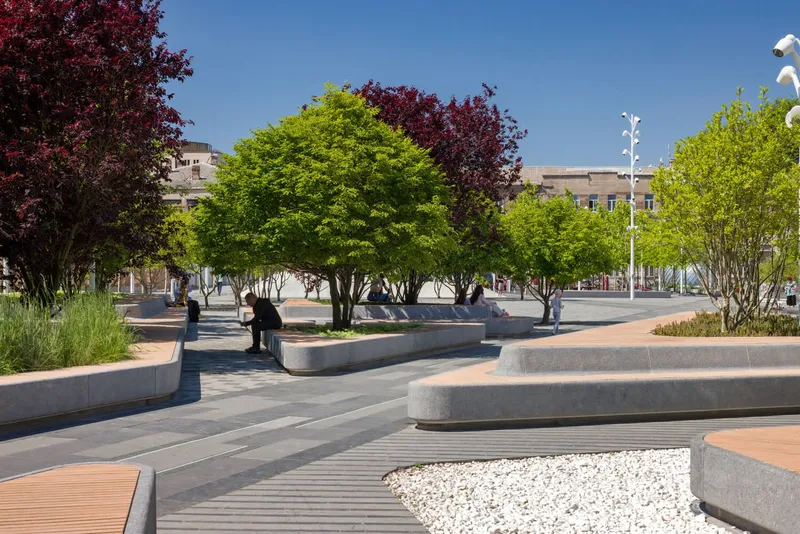
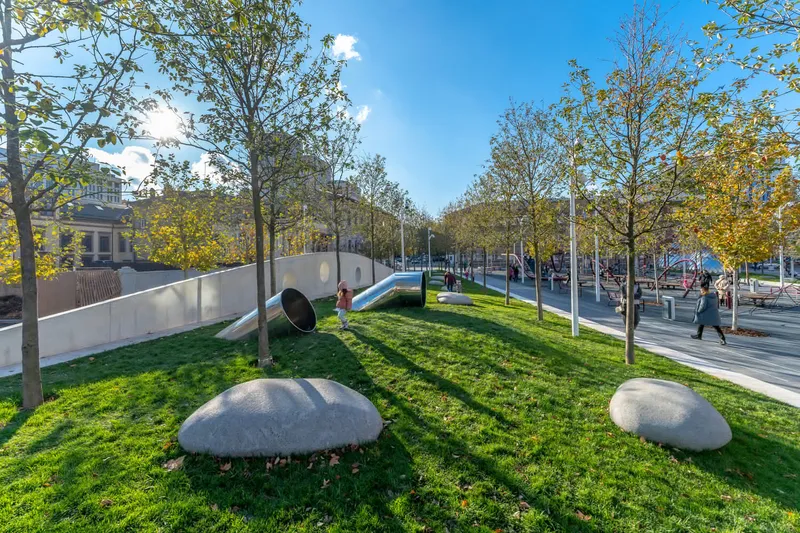
With a strong commitment to ecological restoration, the project includes the planting of 285 new trees, carefully selected for their seasonal interest, environmental performance, and visual harmony. Species such as ginkgo biloba, magnolia, sakura, Pissardi plum, Scandinavian mountain ash, red oak, ambergris, and multi-stemmed hornbeam create a biodiverse and climate-responsive landscape. Their staggered blooming cycles bring an evolving palette of colors throughout the year, while abundant summer shade contributes to a comfortable microclimate.
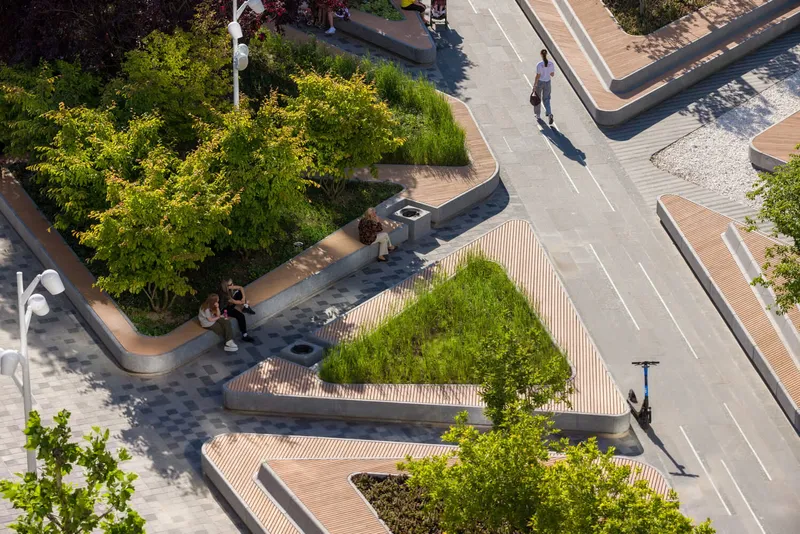
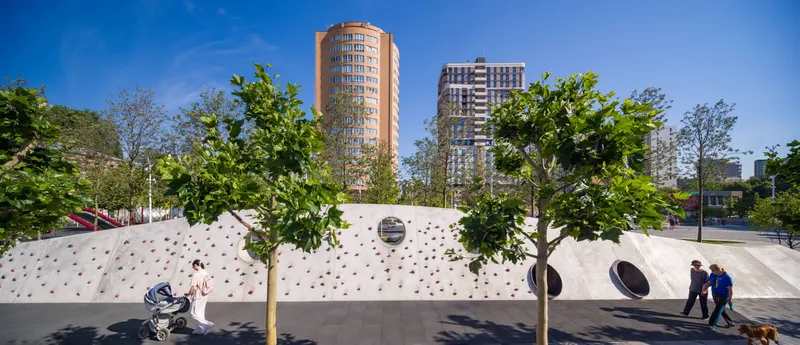
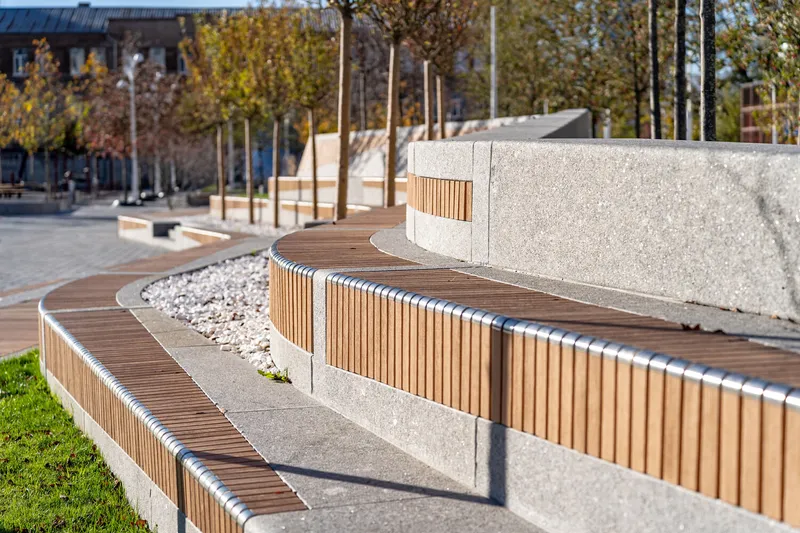
The design divides the square into several functional zones. A lively play area features a three-dimensional rope structure and climbing walls, encouraging active recreation and family interaction. In contrast, a quieter zone filled with ornamental trees and winding paths offers a secluded retreat for rest and contemplation. The central feature of the square is a 72-meter-long cascading terrace, which forms the core event and festival space. This three-level structure accommodates public gatherings, performances, and community celebrations, and integrates a fountain that becomes a lively social anchor.
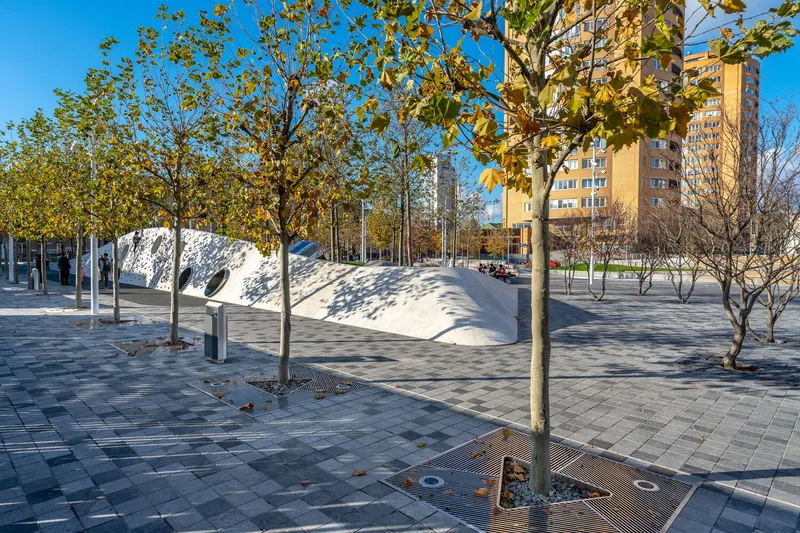
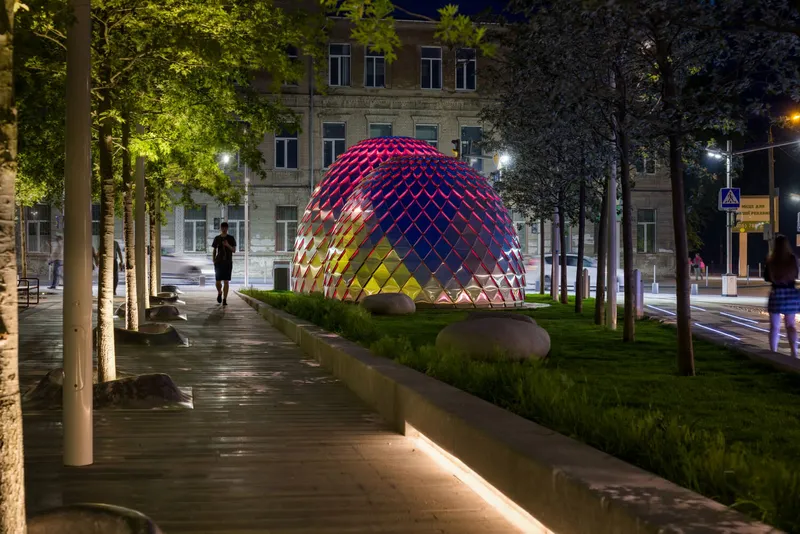
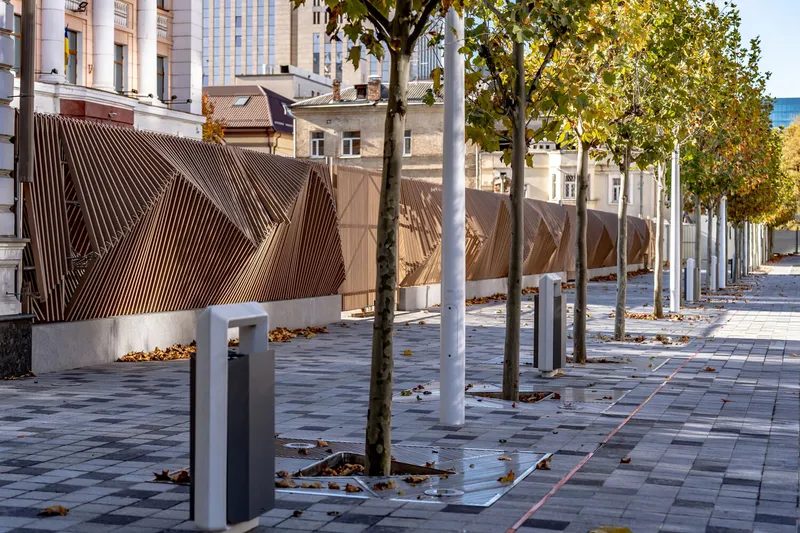
To enrich the architectural identity of the square, the team developed custom-designed urban furnishings and elements, including parametric fencing, sculptural trunk grilles, and public restrooms clad in shimmering steel scales. Evening lighting, designed by Expolight, transforms the square entirely. Specialized lenses in the luminaires cast elegant caustic patterns and intricate shadows from the tree canopies, creating a poetic nighttime atmosphere that enhances comfort while preserving a sense of intimacy.
All photographs are works of Andrey Avdeenko, Yevhen Savchenko and Oleg Melnikov


Popular Articles
Popular articles from the community


Manzana Morphosis: Stretching Barcelona's Grid into a Living Landscape for 2050
A radical reworking of the Eixample manzana turns density into a tool for generous public space, vertical ecology, and environmental performance.

Singing Woman: An Opera House That Performs Before the Curtain Rises
Ovidiu Cristian Pavel's conceptual opera house translates Estonia's choral identity into a sculpted waterfront landmark facing the Baltic Sea.


Cube Design Draws an Ecological Corridor Between Two Shenzhen Hills with the Nankai Building
Beside Shenzhen's container docks, the Nankai Building pairs stacked balconies with a climbing green screen to connect two hillsides across its height.

graciastudio Turns a Viewless Tijuana Lot Inward Around a Courtyard of Concrete, Timber and Trees
In Tijuana, Jorge Gracia's GA2 House stacks a timber-clad private floor over exposed concrete and replaces a missing view with a planted interior patio.

Similar Reads
You might also enjoy these articles


Hodi-Mandai Geram
Project Function: Preservation and revitalization of the Intangible heritage and socio-spatial identity of the Hodi by Housing, Cultural Memory Center, Sacred Grove, landscape, local tourism economy


Olio Towers: A Mid-Rise for Performers That Fuses Housing, Rehearsal, and Stage
Located blocks from Houston's Theater District, this modular tower stacks living units around a central performance atrium.

Oasis: Modular Green Housing Carved into Dhaka's Urban Fabric
A shortlisted Plugin Housing entry reclaims unauthorized settlements in Dhaka with stepped concrete volumes, green roofs, and ventilation-driven design.

Black Hole: A Floating Megastructure for the Post-Physical Era
Emiliano Mazzarotto envisions a spherical, self-scaling arena where e-sports, digital hotels, and holographic stadiums replace traditional public space.

Explore Public Square Competitions
Discover active competitions in this discipline

Challenge to reimagine the Iron Throne

Photograph architecture without architects

Illustrate the lost glory of Angkor Wat - Render Challenge

Design challenge to reuse E-waste
Comments (0)
Please login or sign up to add comments
No comments yet. Be the first to comment!