

Red Cabin by Wiki World + Advanced Architecture Lab
Elevated red timber cabin in Wuhan forest, prefabricated, off-grid retreat blending digital craftsmanship, ecological preservation, and immersive wilderness living.


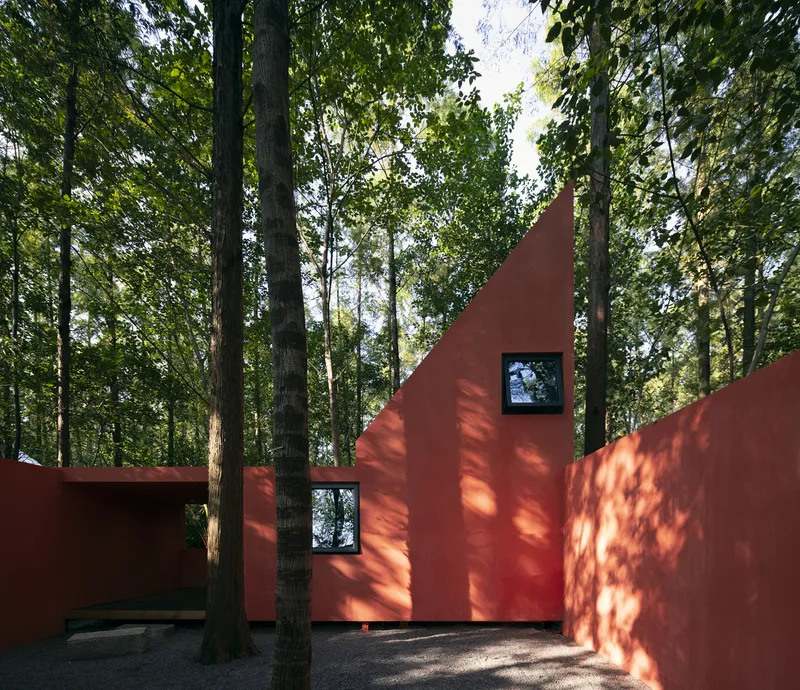
Red Cabin is a bold experiment in eco-friendly cabin design, nestled within a dense metasequoia forest in Wuhan, China. Designed by Wiki World in collaboration with Advanced Architecture Lab, the 60 m² retreat forms part of the “Merryda Wiki World • Secret Camp,” a woodland destination where treehouses are discreetly positioned among migratory bird habitats.
Commissioned by a dancer seeking solitude in nature, the project merges off-grid living, prefabricated timber construction, and environmentally sensitive architecture. Red Cabin is not merely a holiday home; it is a spatial artwork, a crimson intervention carefully embedded within an untouched ecological setting.
Architecture That Preserves Nature
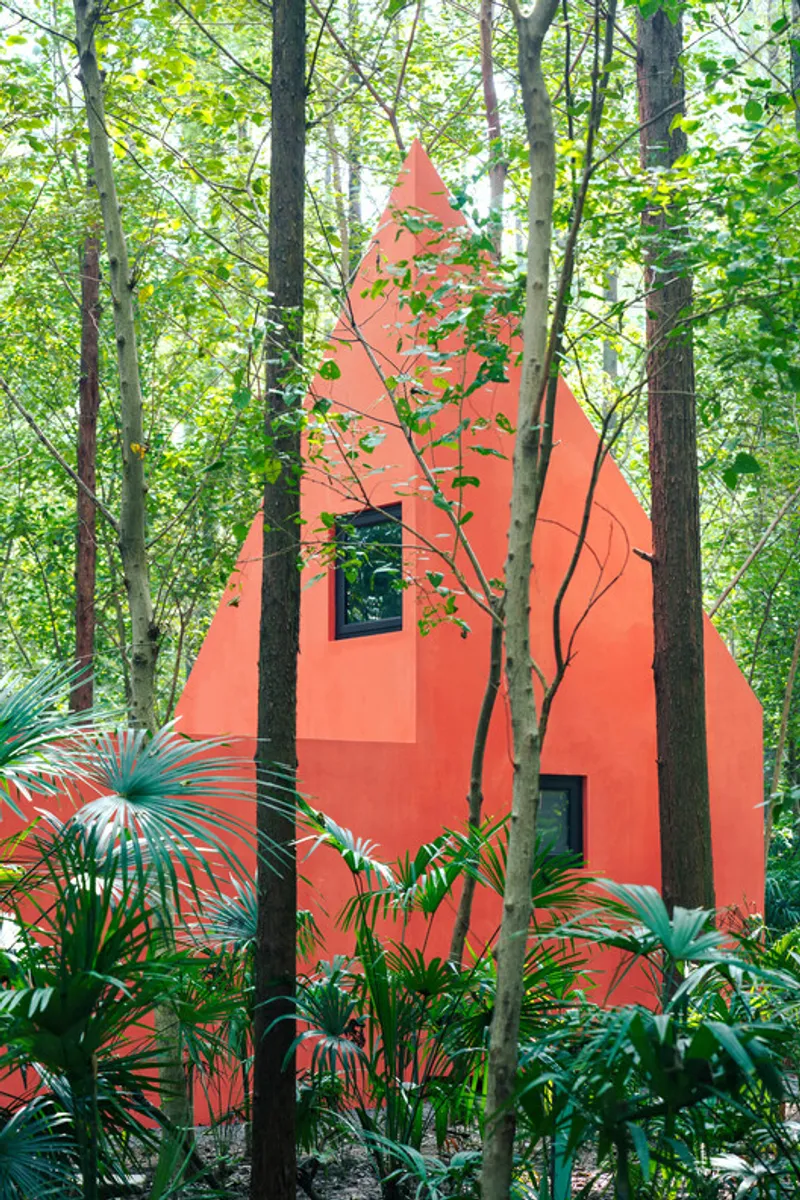
Set within a thriving metasequoia forest, the site is home to migratory birds and diverse plant life. The design team preserved every existing tree and bamboo cluster, positioning the cabin according to the natural landscape rather than reshaping it.
All structures are elevated above the ground using independently developed prefabricated timber systems. The forest floor remains unhardened and free of artificial landscaping, ensuring minimal environmental disturbance. This elevated strategy protects root systems, maintains drainage patterns, and preserves biodiversity.
The result is a compelling example of sustainable forest architecture in China, where construction and ecology coexist harmoniously.

A Crimson Form Inspired by Migratory Birds
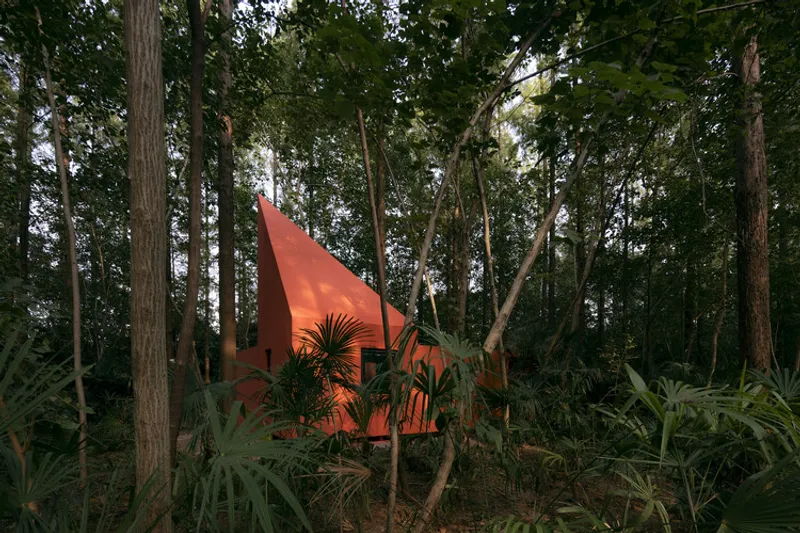
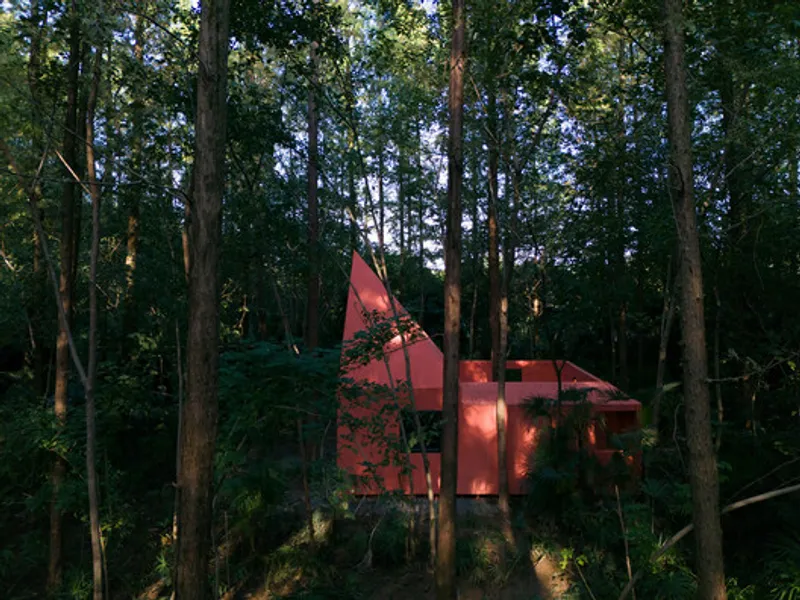
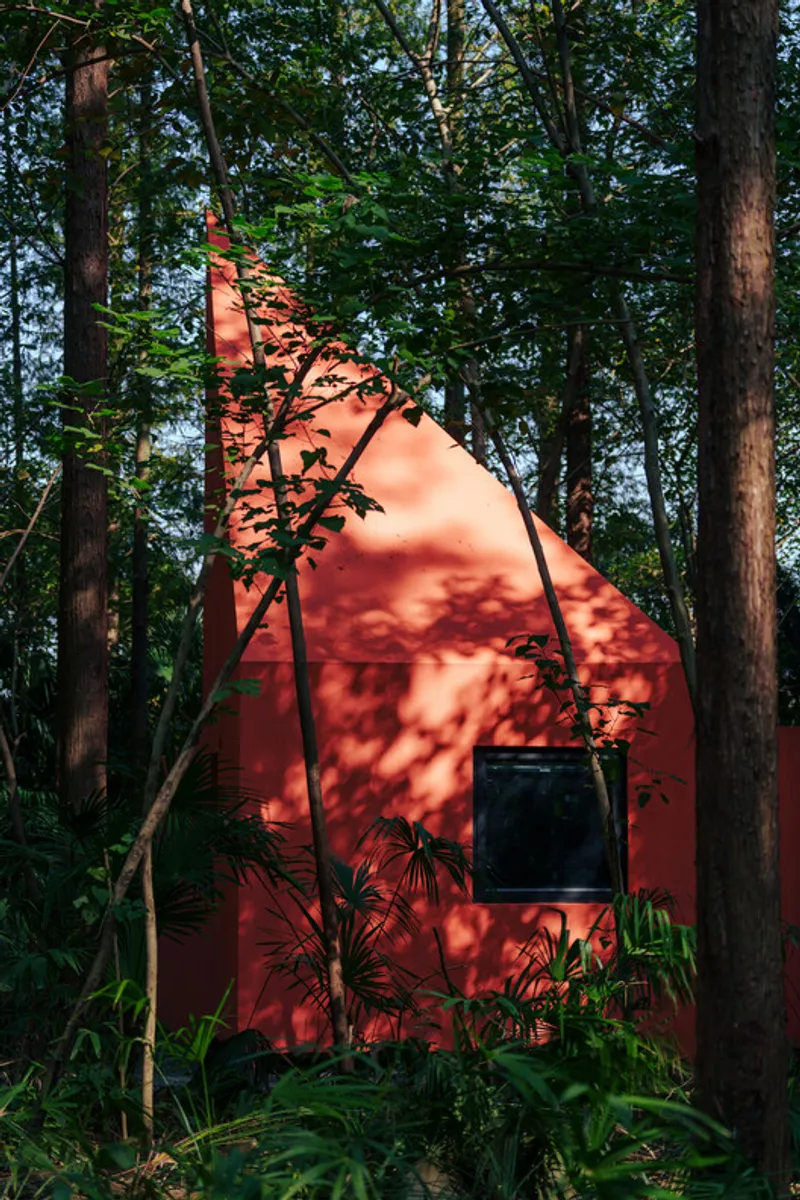
The cabin’s pure red exterior draws inspiration from the image of a migratory bird resting in the forest canopy. Against the green metasequoia backdrop, the cabin appears as a vivid sculptural presence, almost theatrical in character.
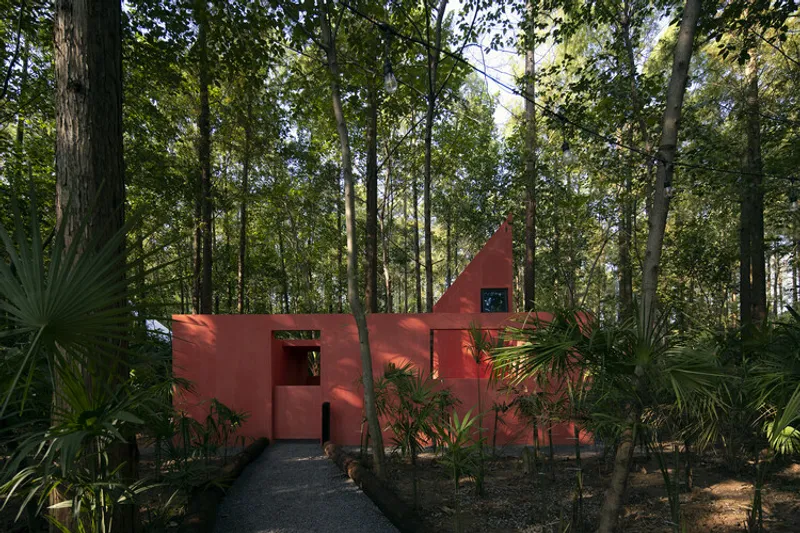
By day, the red volume contrasts strikingly with its natural surroundings; by night, subtle lighting transforms it into a mysterious lantern among the trees. The entrance façade is intentionally minimal, marked only by a round light and doorway glow. Each interior room opens through carefully framed windows toward the forest, ensuring uninterrupted connection to wind, birdsong, and shifting daylight.
The journey to the cabin is intentionally immersive and secluded, reinforcing the sense of retreat from urban life. Once inside, the experience is reduced to essentials: a warm fireplace, wooden surfaces under bare feet, and the sound of leaves underfoot on the terrace.

100% Prefabricated Timber Construction
Red Cabin is constructed entirely from laminated timber. Every irregular component and structural node was digitally designed and customized, achieving full prefabricated assembly. This precise digital fabrication minimizes on-site impact while allowing complex geometries.
Small reusable metal connectors link the wooden components, enabling modular assembly similar to building blocks. The façade features hand-fired carbonized wood boards, celebrating traditional craftsmanship while enhancing durability.
This integration of digital timber technology, modular cabin systems, and artisanal wood treatment positions Red Cabin at the forefront of experimental small-scale architecture.

“Build Small, Dream Big”: Rethinking Wilderness Living
Wiki World’s philosophy challenges conventional ideas about residential scale. The concept of a “2-meter-wide home” emphasizes intimacy and heightened sensory awareness. By reducing spatial excess, the cabin encourages deeper engagement with materials and environment.
Living becomes an experiential act: chopping wood, making fire, walking barefoot indoors and outdoors, listening to crushed leaves. The small footprint strengthens the bond between inhabitant and landscape.
Rather than offering a standardized model of comfort, Red Cabin proposes a personalized interpretation of dwelling, especially meaningful for its artist owner, who views the cabin as part of her creative expression. In this sense, the structure functions as both habitat and installation.

Eco-Cabin Innovation in China
Red Cabin demonstrates key principles of eco-cabin and off-grid architecture:
- Fully elevated timber system
- 100% digitally fabricated prefabrication
- Zero artificial landscaping
- Preservation of native forest ecology
- Modular, reusable structural components
- Strong indoor-outdoor sensory connection
By merging sustainability, digital precision, and artistic narrative, Wiki World and Advanced Architecture Lab redefine what a small forest retreat can be.


A Living Exhibit in Nature
Ultimately, Red Cabin is a meditation on solitude, scale, and the relationship between architecture and wilderness. Compact in size yet ambitious in concept, it stands as a testament to how thoughtful design can amplify both ecological respect and human imagination.
In the quiet of Wuhan’s forest, the red cabin rests lightly: bold in color, gentle in footprint, and profound in experience.

All the photographs are works of
Arch-Exist



Popular Articles
Popular articles from the community


Co-life: Sustainable Architecture for Age-Friendly Community Living
Co-life reimagines sustainable architecture for seniors through courtyards, rammed earth, shared gardens, and spaces designed for belonging.

The Ocean Hive: Sustainable Architecture for a Self-Sufficient Civilization at Sea
The Ocean Hive imagines sustainable architecture at sea, where modular habitats, algae, wave power and ocean waste sustain a growing colony.

The Musturak Paradise: Senior Living Architecture for a Connected Future in Temara, Morocco
The Musturak Paradise reimagines senior living architecture in Temara via private homes, social spaces, culture, community, and shared care.

Hill & Cross Opera: Sculptural Opera House Architecture Shaped by Tallinn’s Landscape and Identity
Hill & Cross Opera reimagines opera house architecture in Tallinn through its sculptural hill, civic plaza, glass wave and a luminous cross.

Similar Reads
You might also enjoy these articles


FAMM Arquitectura Organizes Ten Villas Around Courtyards and Jungle in Nosara, Costa Rica
El Molino pairs two elongated volumes with deep overhangs and timber louvers to build a compact coastal community five minutes from the beach.

Oscar Niemeyer's Ibirapuera Park Pavilions Define São Paulo's Cultural Identity in Concrete and Curve
A constellation of modernist volumes set within São Paulo's most important urban park, conceived for the city's 400th anniversary in 1954.
How Henri Picq's 1889 Paris Pavilion Traveled 11,000 Kilometers to Become Santiago's Artequín Museum
A prefabricated iron and glass pavilion built for the Paris Universal Exposition found a second life as a children's art museum in Chile.

Sanjay Puri Architects Wraps a Jaipur Office Tower in Capsule-Shaped Green Buffers
A nine-level climate-responsive workplace near Jaipur Airport uses stacked planter terraces and aluminium screens to fight 40°C heat.


Explore Blocs Competitions
Discover active competitions in this discipline



Challenge to reimagine the Iron Throne


Photograph architecture without architects


Illustrate the lost glory of Angkor Wat - Render Challenge


Design challenge to reuse E-waste
Comments (0)
Please login or sign up to add comments
No comments yet. Be the first to comment!