
STUDIO DLUX Converts a 1930s São Paulo Mansion into an Elementary School Without Losing Its Soul
A heritage residence built by the Jafet family in Ipiranga finds new life as Red House International School's second campus.


The Ipiranga neighborhood in São Paulo carries an outsized share of Brazilian history: it is the place where the country's independence was declared. So when STUDIO DLUX was tasked with turning a 1930s mansion on Rua Bom Pastor into a functioning elementary school, the question was never whether to preserve the building but how deeply the preservation could go while still producing classrooms, playgrounds, and a cafeteria. The result, completed in 2022, is a case study in adaptive reuse that treats the existing architecture as curriculum rather than obstacle.
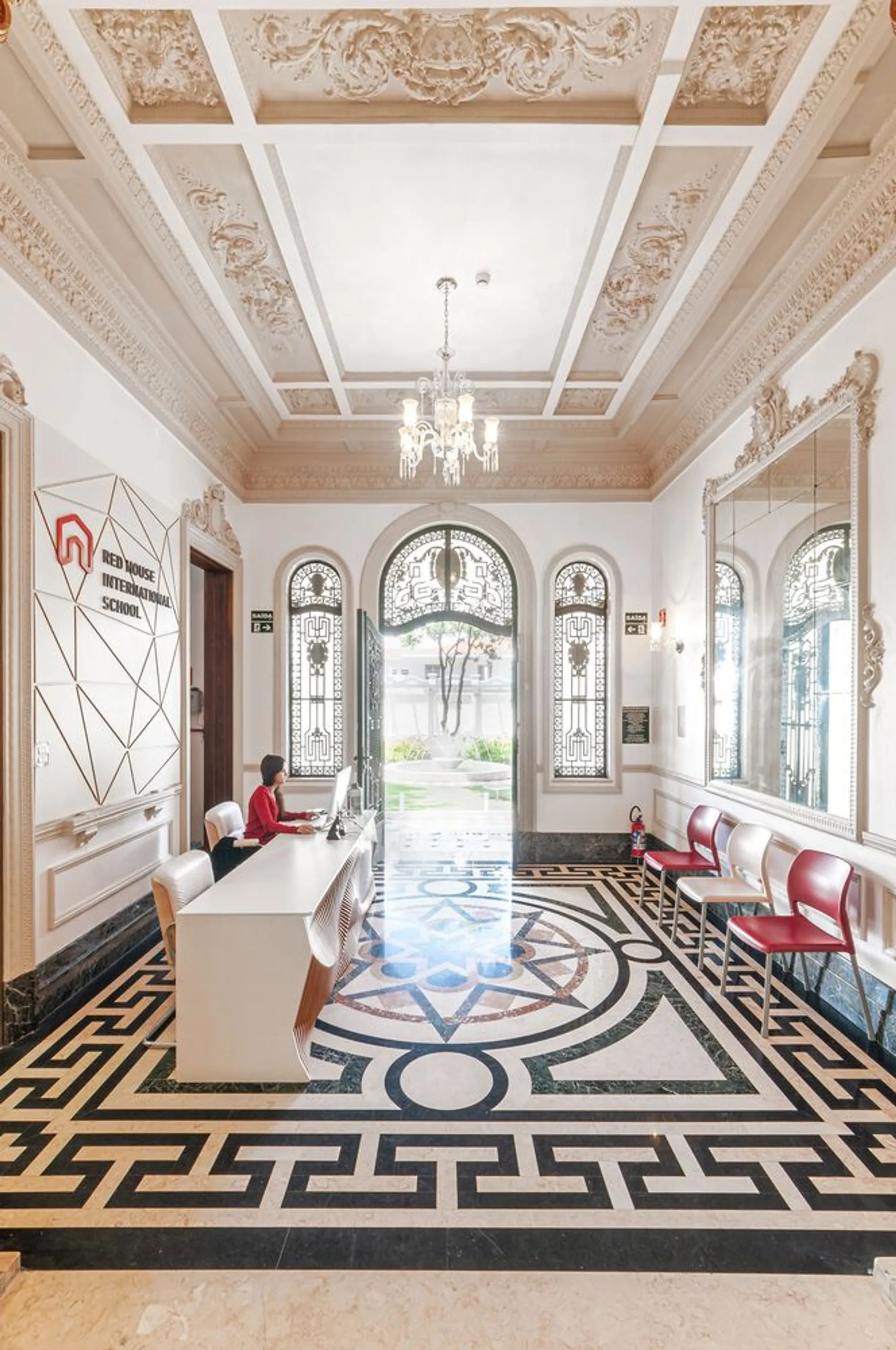
Built between 1933 and 1934 by the Jafet family, the house is one of only six remaining residences from a clan that was instrumental in urbanizing Ipiranga. Protected by CONPRESP, São Paulo's heritage preservation council, it had sat abandoned for years before Red House International School selected it as the site for its second campus. The conversion demanded conservation consultants, a landscape architect, and a willingness to let the building's ornamental plaster, herringbone floors, and arched windows set the tone for every new intervention.
A Facade That Teaches Before You Walk In
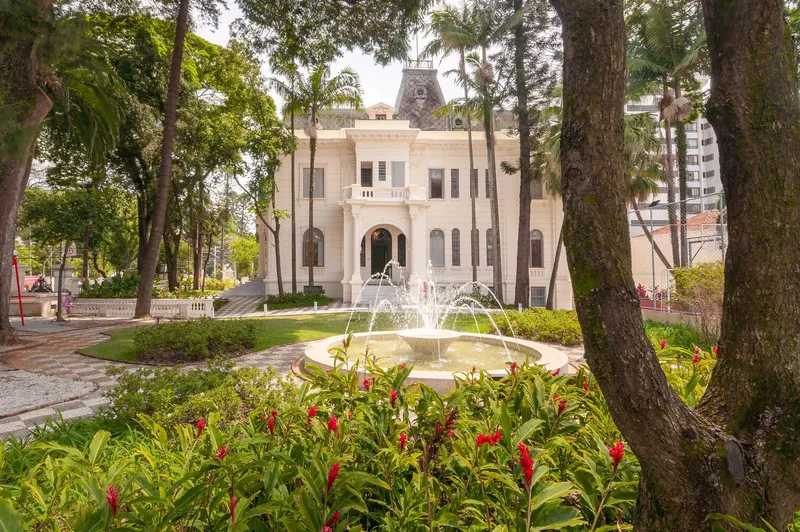
The symmetrical two-story facade, framed by mature trees and centered on a restored fountain, reads exactly as it did ninety years ago. That legibility is the point. Children arriving at school each morning encounter a building that predates the neighborhood's electrical grid, a fact that becomes its own lesson in local history. The central fountain, dormant for years, was revitalized as both a landscape anchor and a tangible link to the property's original character.
At the edges of the lot, tall Pinanga-de-coroa palms and Alpínias line the walls, providing privacy for the playgrounds while softening the boundary between school and city. Licuri Paisagismo handled the landscape, selecting species commonly planted around Ipiranga mansions of the era and combining them with child-safe, low-maintenance varieties that flower year-round. The result is a garden that feels historically calibrated yet practically resilient.
Ornament as Infrastructure
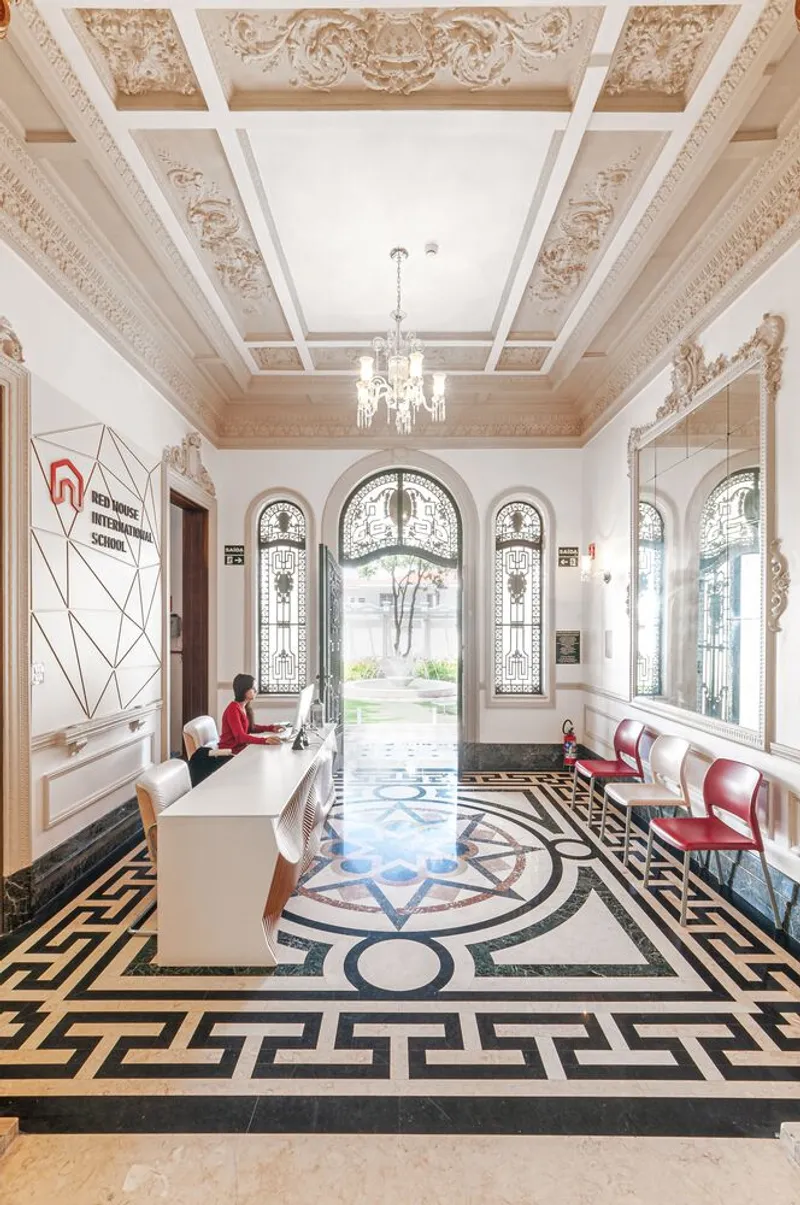
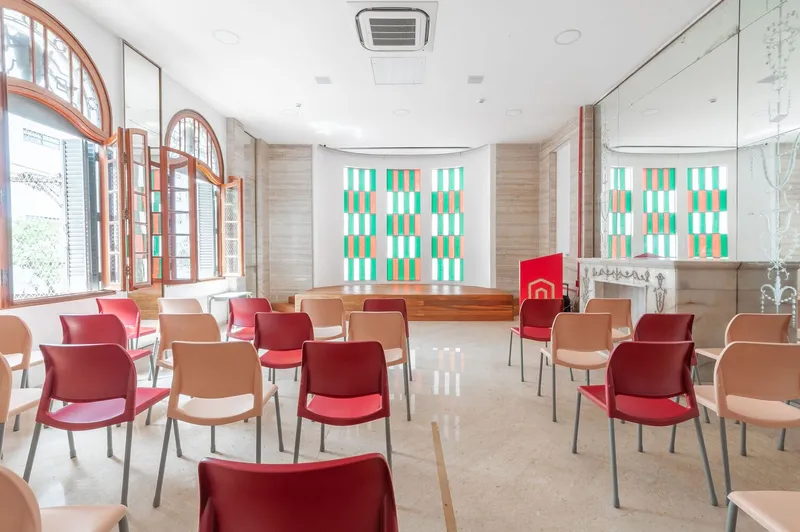
Step through the arched glazed doors into the entrance hall and the ornamental plaster ceiling, geometric floor tiles, and deep moldings make it clear that this is not a new building pretending to be old. Conservation consultants Nattalia Bom Conselho and Cristiane Py, both specialists in preservation, guided the team through selective room adaptations that respected the mansion's spatial logic. The generous proportions of the original bedrooms translated almost directly into classrooms: high ceilings encourage ventilation, tall windows flood rooms with natural light, and the existing layout minimized the need for demolition.
The meeting room, with its arched timber windows and checkered tile backdrop, demonstrates how little needed to change. Red and tan chairs replace drawing room furniture, but the room's civic formality remains intact. It could host a school assembly or a neighborhood event with equal ease, which is precisely the kind of dual use that keeps heritage buildings economically viable.
Classrooms Carved from Bedrooms
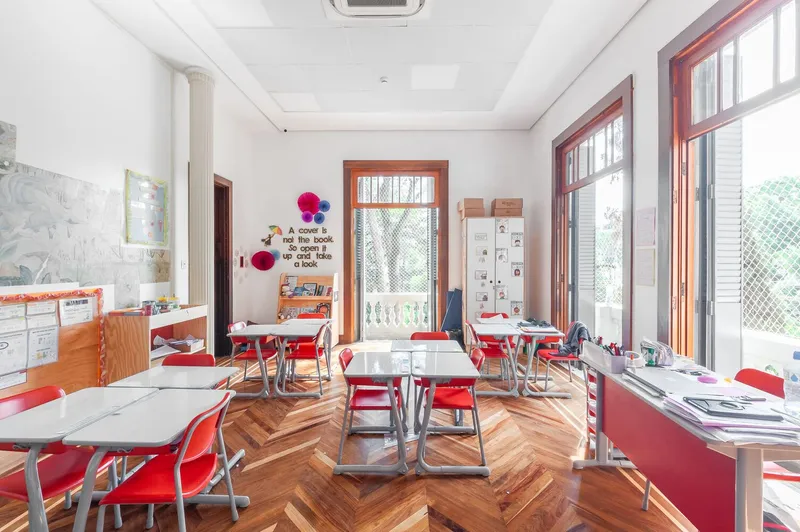
The classroom interiors reveal the project's restraint. Herringbone wood flooring, clearly original, runs beneath clusters of white work tables and red chairs. The furniture is modest: plywood pieces designed in 2020 that defer to the room's existing character rather than competing with it. Tall windows that once overlooked private gardens now illuminate group work and reading circles, and the scale of the rooms gives young students an unusual sense of spatial generosity.
Converting a residence into a school usually means punching through walls to create open plans. Here, STUDIO DLUX resisted that impulse. The mansion's room-by-room sequence provides natural acoustic separation between classes, and each threshold becomes a moment of transition that helps structure the school day. Domestic architecture, it turns out, already knows how to organize movement and rest.
Outdoor Learning on Every Side
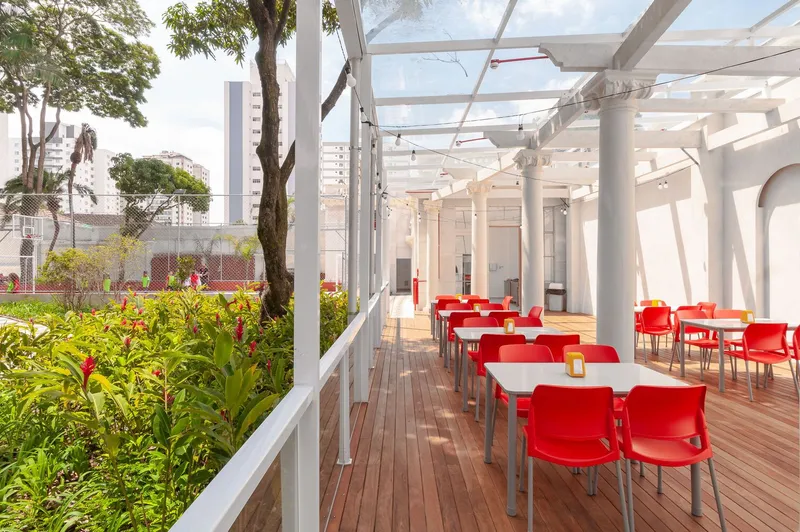
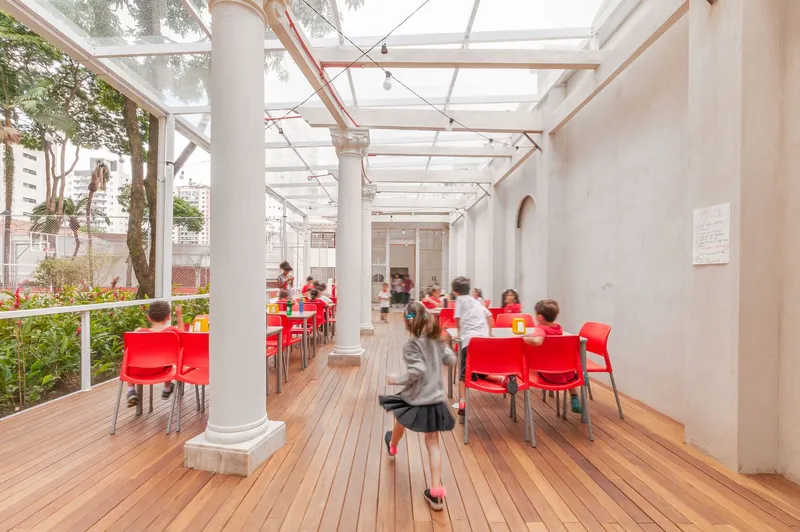
The lot's ample garden wraps the house in a ring of activity. Three internal plazas, two playgrounds calibrated for different age groups, lateral gardens, an outdoor theater positioned in front of the main staircase, and a custom multi-sport court fill the grounds. A covered terrace with timber decking and white columns serves as a transitional zone between interior and exterior, a place where children can gather during rain or shade themselves in summer.
The open-air dining area, sheltered by a white pergola and flanked by planted garden beds, functions as an extension of the cafeteria housed in an auxiliary structure at the rear of the lot. Red furniture ties it visually to the school's brand identity without overwhelming the landscape. The preexisting fountain and surrounding paving were remodeled for accessibility and comfort, ensuring that the historic grounds work for small bodies in constant motion.
Why This Project Matters
Adaptive reuse projects often promise to honor the past while serving the present, and just as often they sand down the very qualities that made the original building worth saving. Red House Ipiranga Bom Pastor avoids that trap by treating the mansion's proportions, materials, and ornament as design assets rather than constraints. The school did not need a blank slate; it needed rooms with history, gardens with character, and a front door that tells a story before the first lesson begins.
For São Paulo, a city that regularly loses early twentieth-century fabric to speculative development, the project offers a counter-argument grounded in economics as much as sentiment. A heritage building with a viable tenant and a maintenance plan has a future. A heritage building without one does not. By pairing a school's long-term occupancy with CONPRESP's preservation mandate, STUDIO DLUX has given one of the Jafet family's last surviving houses something rarer than a new coat of paint: a reason to keep standing.
Red House Ipiranga Bom Pastor, designed by STUDIO DLUX. Located in Ipiranga, São Paulo, Brazil. Completed 2022. Landscape design by Licuri Paisagismo. Conservation consulting by Nattalia Bom Conselho and Cristiane Py. Photography by Hugo Chinaglia.
About the Studio
Share Your Own Work on uni.xyz
If projects like this are the kind of work you want to make, uni.xyz is a place to publish your own, find collaborators, and enter design competitions.




Popular Articles
Popular articles from the community


The Earth Pod: 3D Printed Homes for Resilient Refugee Communities
The Earth Pod reimagines refugee housing through 3D printed homes made from clay, combining resilience, self-sufficiency, and rapid shelter.

Lunar Spiral: Space Architecture Shaped by the Mathematics of the Universe
Lunar Spiral reimagines space architecture through Fibonacci geometry, lunar regolith, levitating habitats, and self-sustaining Moon living.

The Musturak Paradise: Senior Living Architecture for a Connected Future in Temara, Morocco
The Musturak Paradise reimagines senior living architecture in Temara via private homes, social spaces, culture, community, and shared care.

Conexión: Biophilic Design Reimagines High-Rise Living in Hong Kong
Conexión reimagines high-rise living in Hong Kong through biophilic design, green facades, shared spaces, daylight, water and nature within.


Similar Reads
You might also enjoy these articles


Hodi-Mandai Geram
Project Function: Preservation and revitalization of the Intangible heritage and socio-spatial identity of the Hodi by Housing, Cultural Memory Center, Sacred Grove, landscape, local tourism economy


Olio Towers: A Mid-Rise for Performers That Fuses Housing, Rehearsal, and Stage
Located blocks from Houston's Theater District, this modular tower stacks living units around a central performance atrium.

Oasis: Modular Green Housing Carved into Dhaka's Urban Fabric
A shortlisted Plugin Housing entry reclaims unauthorized settlements in Dhaka with stepped concrete volumes, green roofs, and ventilation-driven design.

Black Hole: A Floating Megastructure for the Post-Physical Era
Emiliano Mazzarotto envisions a spherical, self-scaling arena where e-sports, digital hotels, and holographic stadiums replace traditional public space.
Explore Educational Building Competitions
Discover active competitions in this discipline



Challenge to design public laboratory


Challenge to reimagine the Iron Throne


Photograph architecture without architects


Illustrate the lost glory of Angkor Wat - Render Challenge
Comments (0)
Please login or sign up to add comments
No comments yet. Be the first to comment!