
Regeneration of Yumin Village by Ingameoffice: A Model for Human-Centered Urban Renewal in Shenzhen
Revitalization of Yumin Village blends heritage with modernity, enhancing public spaces through soft interventions, cultural preservation, and community engagement.


Reviving Shenzhen's Historical Urban Fabric
The Regeneration of Yumin Village by Ingameoffice is a landmark urban renewal project that redefines the connection between heritage preservation and contemporary living. Once home to Shenzhen’s earliest “ten-thousand yuan households,” Yumin Village is a key symbol of the city's rapid development and reform. As part of Shenzhen’s 40th anniversary celebration of its reform and opening-up policy, the Luohu District commissioned the revitalization of this historically significant community.
The project’s objective was to enhance livability, preserve cultural memory, and activate public life through minimal yet impactful architectural interventions.
Contextual Strategy: Soft Urban Intervention
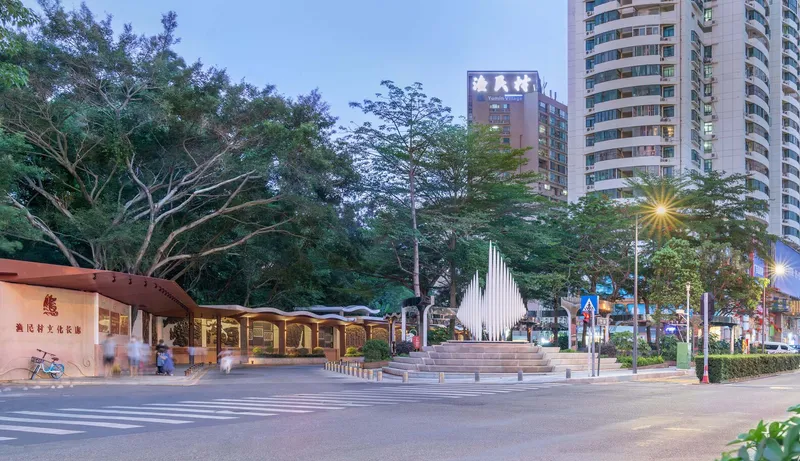
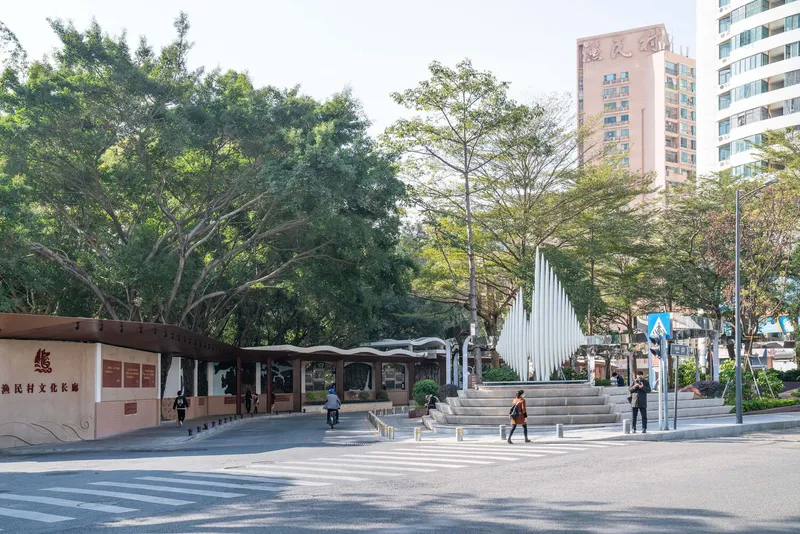
Situated adjacent to bustling Binhai Avenue, Yumin Village required a sensitive design approach to balance tradition and transformation. Ingameoffice focused on low-impact, soft interventions that preserved the village’s historical textures while introducing functional upgrades.
The design team emphasized:
- Retaining mature trees and existing vegetation
- Minimizing demolition and material waste
- Creating accessible, inclusive public spaces
- Introducing lightweight landscape features and reflective installations


Three Anchors of Urban Revitalization
1. Village Entrance Park
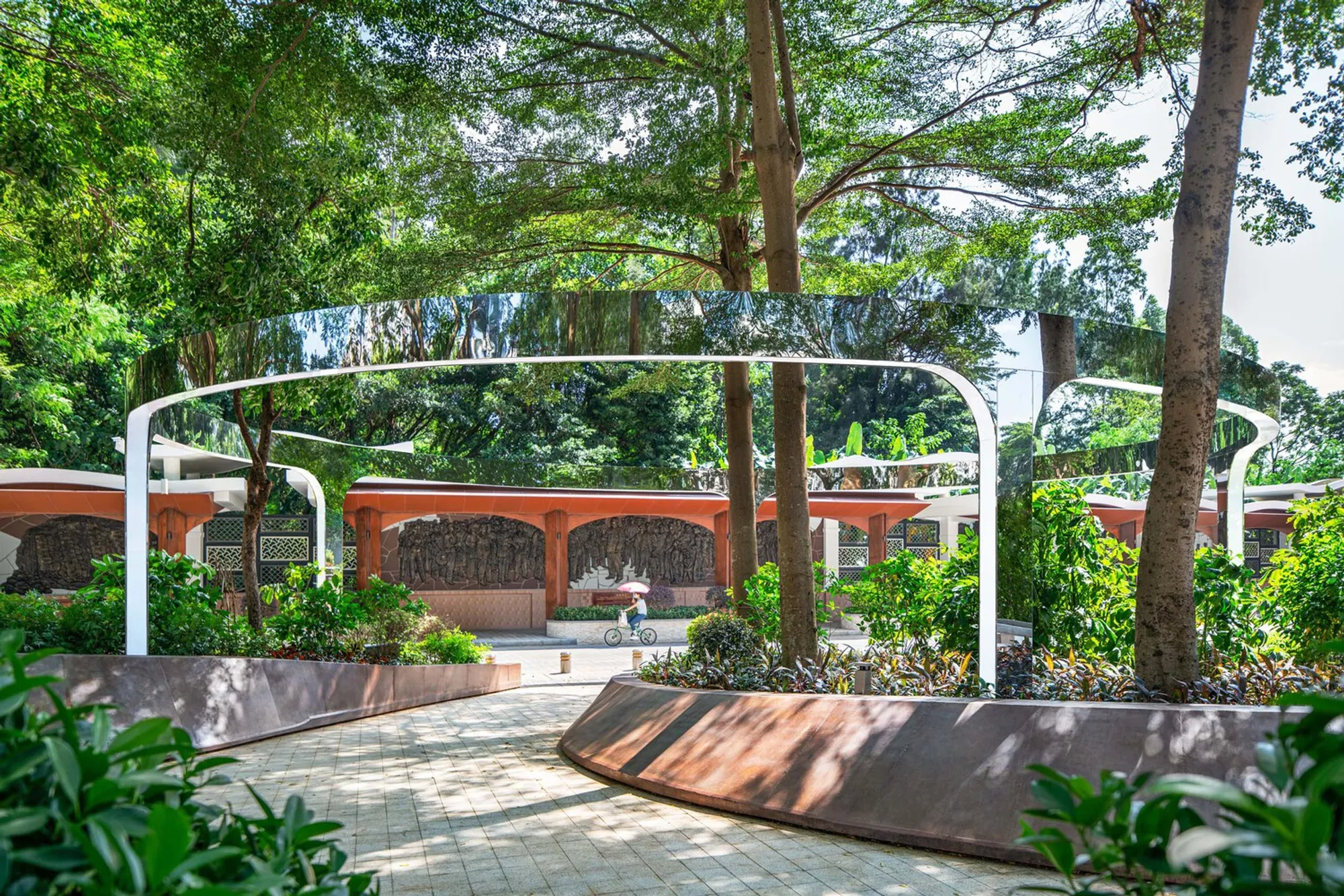
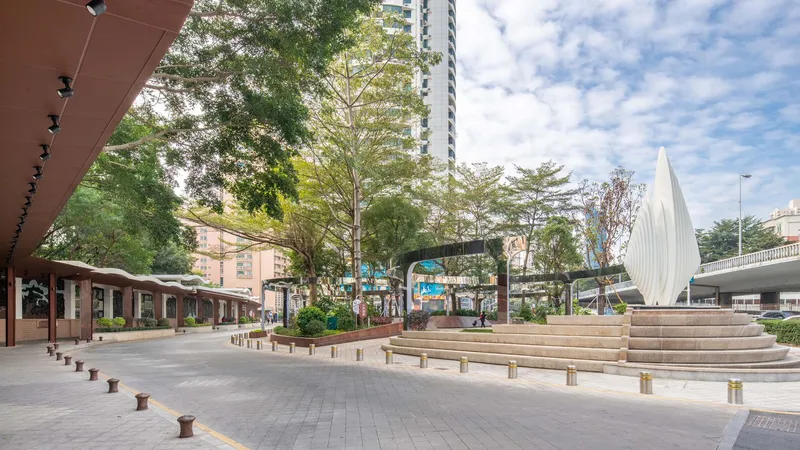
A once-neglected triangular lot at the village’s entrance was transformed into an inviting green gateway. With curved pathways, ribbon-like mirrored installations, and preserved tree canopies, the park now forms a seamless transition between urban activity and community calm. The design references “Turtle Back Stone” through undulating forms that create moments of pause and reflection.
2. Cultural Corridor & History Museum
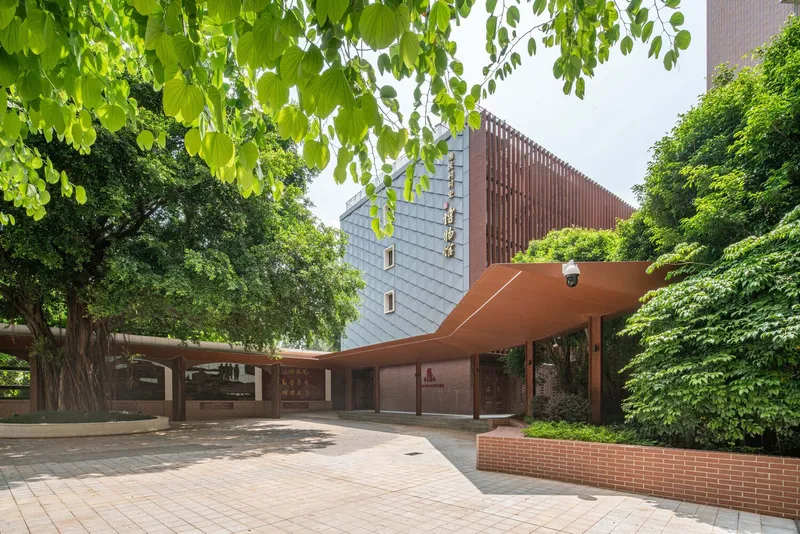
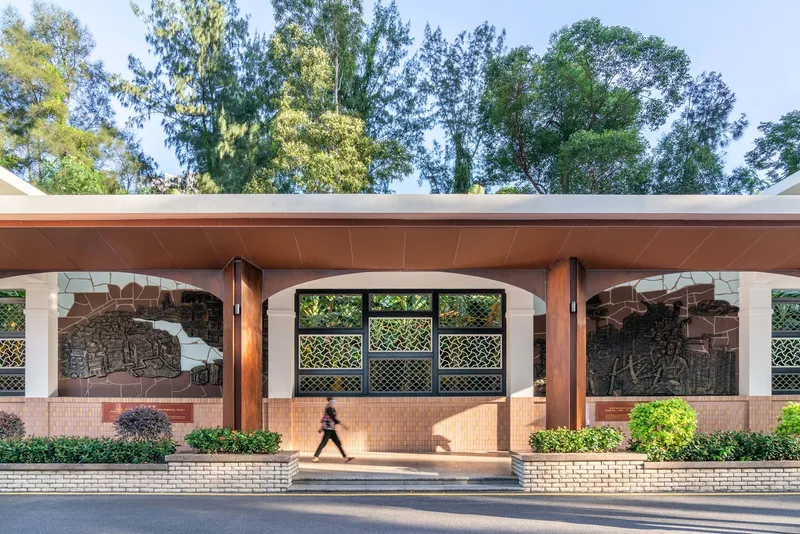
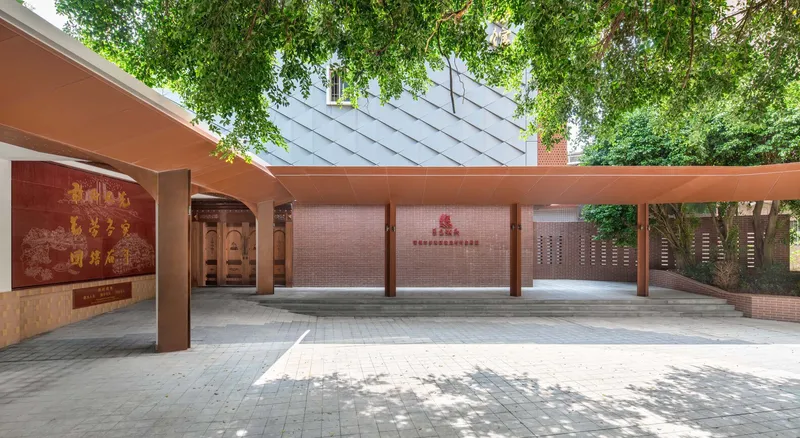
This public zone highlights Yumin Village’s socio-cultural legacy through an open-air Historical Corridor and the newly built Village History Museum. Tree rings inspired the architectural language, subtly indicating the layered passage of time. Materials and layouts were chosen to enhance pedestrian flow, with added recreational spaces like fitness zones and rest benches that invite resident interaction.
A standout feature is the museum’s paving ripple pattern, visually emphasizing a prominent tree while serving as a natural gathering point.
3. Community Service Complex
Located behind the village and adjacent to the Shenzhen River, the Party and Community Service Complex integrates four key functions:
- Community Library
- Health & Wellness Center
- Elderly Care Center
- Party & Community Service Center
Each space is designed with inclusivity in mind. The library offers a child-friendly reading zone, a stepped auditorium for community events, and multimedia resources. The health and care center features a calming atmosphere using wood and greenery, while maintaining river views and medical accessibility. The redesign encourages openness and transparency, turning a once bureaucratic facility into a warm, citizen-oriented hub.

Central Plaza: From Cultural Square to Social Heart
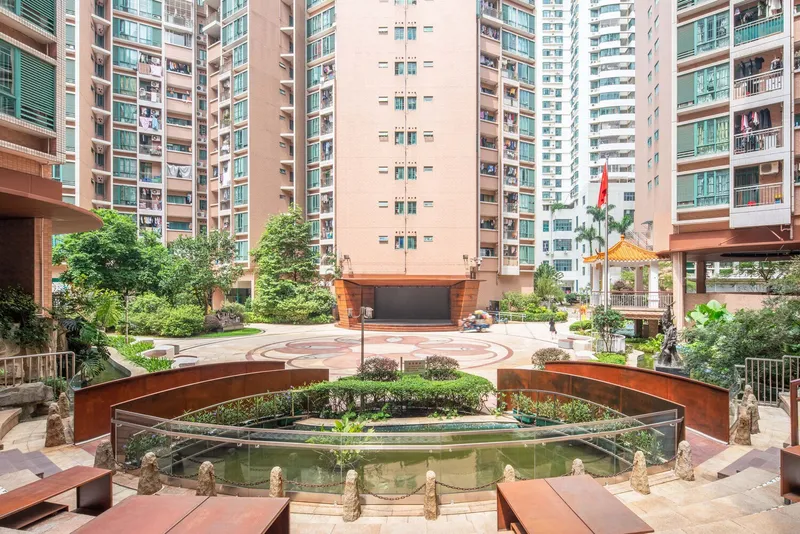
At the heart of the village, the Central Plaza was reimagined as a dynamic community nucleus. Renovations preserved its cultural functions while adding:
- Flowerbed benches
- Rain shelters and updated railings
- Redesigned outdoor stage with contemporary aesthetics
These upgrades enhance usability and transform the plaza into a multigenerational gathering space for events, play, and rest.
Community Engagement & Sustainable Aesthetics
Ingameoffice adopted a participatory design process, conducting surveys with over 400 residents to better align architectural solutions with community needs. The design utilizes weather-resistant steel, woodgrain finishes, and modular forms that reflect both modern sensibilities and practical resilience.
The firm’s approach was guided by:
- Environmental consciousness
- Cultural continuity
- Contemporary expression
This careful calibration of old and new turns Yumin Village into a living archive of Shenzhen’s past and a prototype for its future.
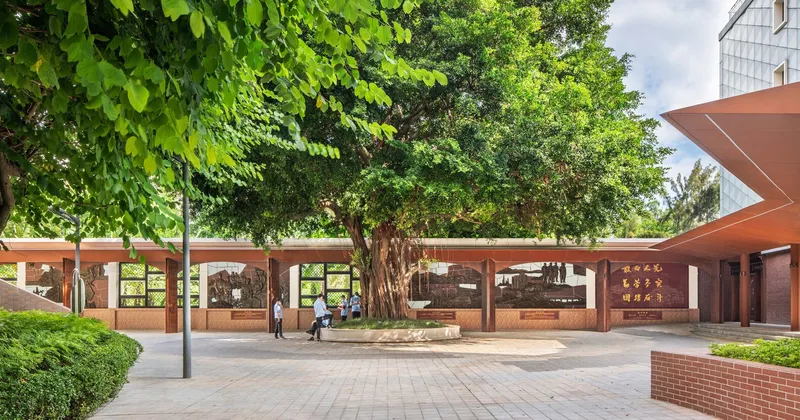

All Photographs are works of Yu Bai




Popular Articles
Popular articles from the community


Co-Life: Senior Housing Design That Reconnects Older Adults With the City
Co-Life reimagines senior housing design through healing gardens, shared streets, workshops, and a sustainable community across generations.

The Ocean Hive: Sustainable Architecture for a Self-Sufficient Civilization at Sea
The Ocean Hive imagines sustainable architecture at sea, where modular habitats, algae, wave power and ocean waste sustain a growing colony.

Riyadh For All: Intergenerational Urban Design for Active Aging in Rabat
Riyadh For All reimagines urban design in Rabat with intergenerational co-living, adaptive courtyards, and Moroccan cultural exchange today.

Conexión: Biophilic Design Reimagines High-Rise Living in Hong Kong
Conexión reimagines high-rise living in Hong Kong through biophilic design, green facades, shared spaces, daylight, water and nature within.


Similar Reads
You might also enjoy these articles


Hodi-Mandai Geram
Project Function: Preservation and revitalization of the Intangible heritage and socio-spatial identity of the Hodi by Housing, Cultural Memory Center, Sacred Grove, landscape, local tourism economy


Olio Towers: A Mid-Rise for Performers That Fuses Housing, Rehearsal, and Stage
Located blocks from Houston's Theater District, this modular tower stacks living units around a central performance atrium.

Oasis: Modular Green Housing Carved into Dhaka's Urban Fabric
A shortlisted Plugin Housing entry reclaims unauthorized settlements in Dhaka with stepped concrete volumes, green roofs, and ventilation-driven design.

Black Hole: A Floating Megastructure for the Post-Physical Era
Emiliano Mazzarotto envisions a spherical, self-scaling arena where e-sports, digital hotels, and holographic stadiums replace traditional public space.


Explore Revitalization Competitions
Discover active competitions in this discipline



Challenge to reimagine the Iron Throne


Photograph architecture without architects


Illustrate the lost glory of Angkor Wat - Render Challenge


Design challenge to reuse E-waste
Comments (0)
Please login or sign up to add comments
No comments yet. Be the first to comment!