
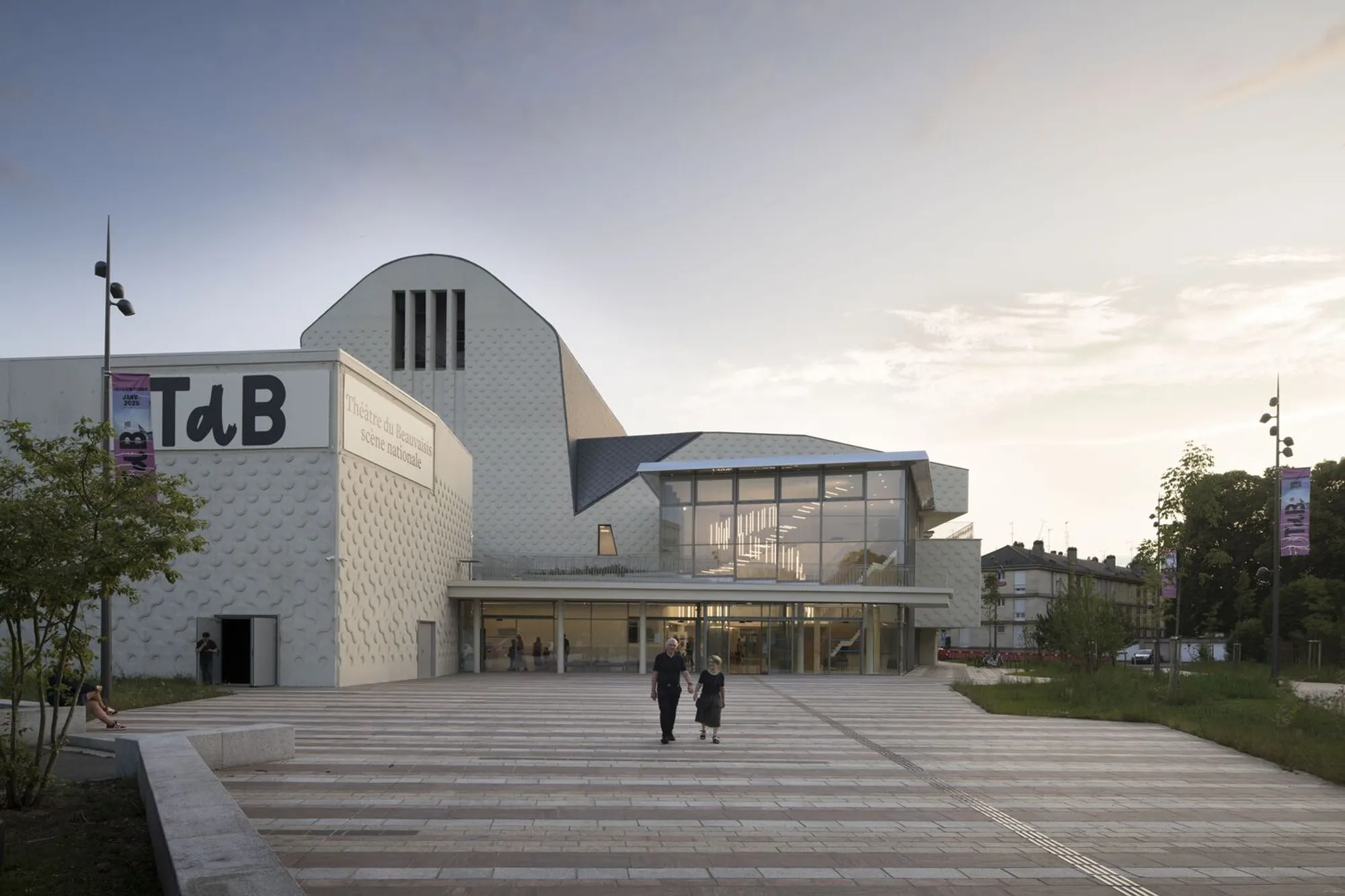
Regional Theater of Beauvaisis by atelier AJC – A Cultural Beacon in Beauvais, France
The Regional Theater of Beauvaisis by atelier AJC blends contemporary design with historical context, creating a dynamic, community-focused cultural landmark.


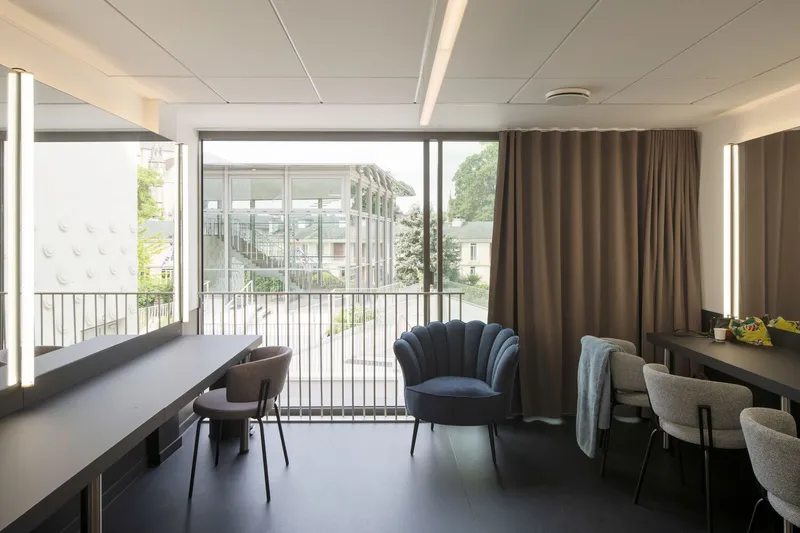
The Regional Theater of Beauvaisis, designed by atelier AJC (lead architects François Chochon, Laurent Pierre, and David Joulin), stands as a striking cultural landmark in Beauvais, France. Completed in 2025 and covering an area of 6,032 m², this theater reflects the city’s rich post-war architectural heritage while offering a contemporary addition to its urban fabric. Photographs by Nicolás Borel and Sergio Grazia capture its distinctive form, which rises gracefully from 10 to 27 meters, establishing a dialogue with nearby historic monuments, including Saint-Étienne Church and Saint-Pierre Cathedral.
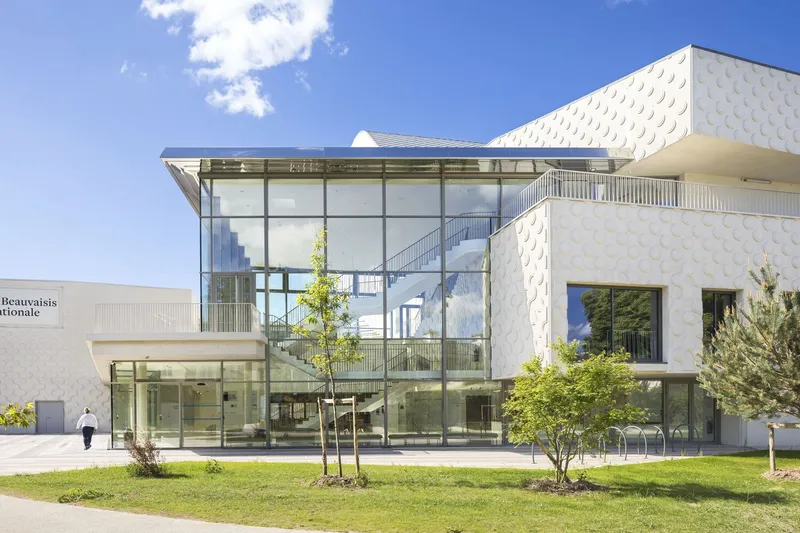
Conceived as a “secular nave,” the theater draws inspiration from Roman basilicas, evoking a sense of communal gathering and civic assembly. Its design balances modernity and historical context, minimizing overall height to respect the surrounding neighborhood while emphasizing the main volume for a bold yet harmonious presence. The interplay between proximity and distance with neighboring structures creates a cohesive urban continuity, reminiscent of the architectural enclosures in cities like Pisa, Italy, and Orléans, France.


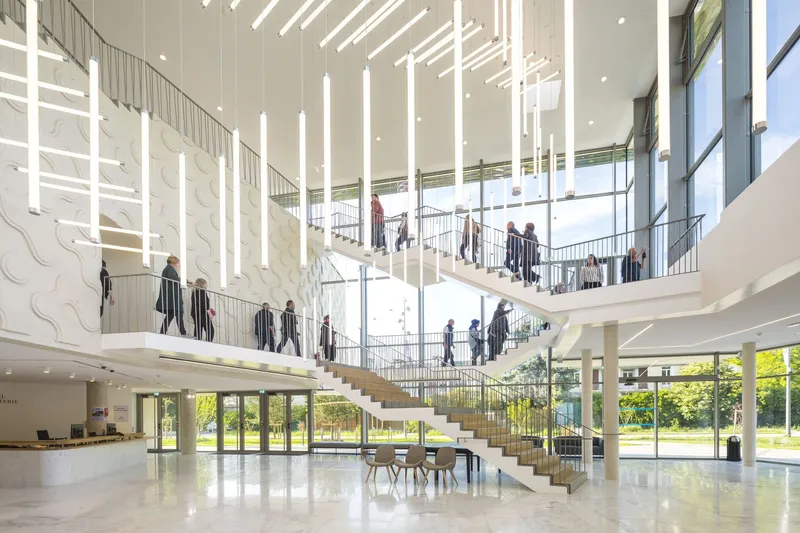
Guided by principles of integration and orientation, the theater’s strategic placement allows public spaces to flow around it, forming a new clos beauvaisien that enhances urban life. Inside, the foyer features Piranesian-inspired architecture, welcoming visitors with dynamic movement. The main hall incorporates light-diffusing wooden bas-reliefs inspired by Beauvais tapestry motifs, creating a forest-like ambiance where twilight-like Magrittean blue skies evoke serene summer evenings.

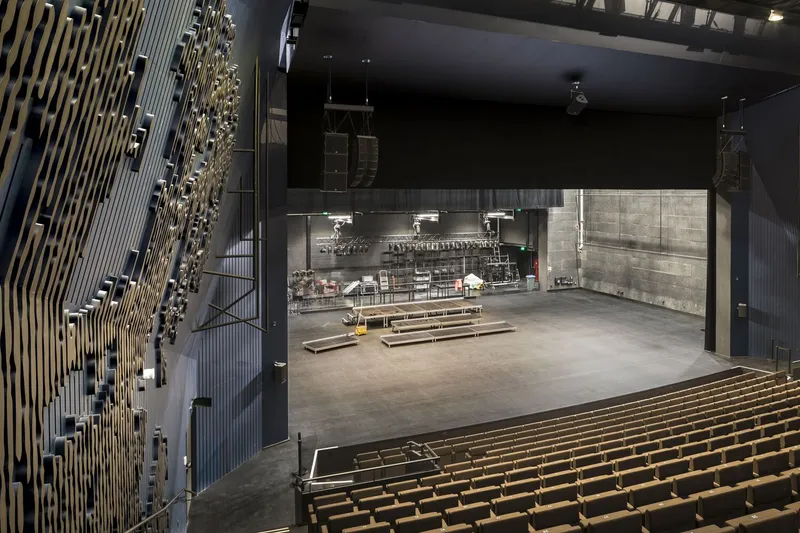
The design emphasizes connection between artists and audiences, with face-to-face positioning of boxes and lobbies, along fluid pathways reminiscent of the Italian corso. Accessible ramps, terraces, and intersection areas encourage interaction, reinforcing the theater’s role as a people’s palace—a true community hub where culture, architecture, and social engagement converge.

All Photographs are works of Nicolás Borel, Sergio Grazia




Popular Articles
Popular articles from the community


Co-life: Sustainable Architecture for Age-Friendly Community Living
Co-life reimagines sustainable architecture for seniors through courtyards, rammed earth, shared gardens, and spaces designed for belonging.

Hill & Cross Opera: Sculptural Opera House Architecture Shaped by Tallinn’s Landscape and Identity
Hill & Cross Opera reimagines opera house architecture in Tallinn through its sculptural hill, civic plaza, glass wave and a luminous cross.

The Musturak Paradise: Senior Living Architecture for a Connected Future in Temara, Morocco
The Musturak Paradise reimagines senior living architecture in Temara via private homes, social spaces, culture, community, and shared care.

AL-JANNAH: Sustainable Architecture and Permaculture for Afghan Widows
AL-JANNAH uses sustainable architecture and permaculture to create resilient oasis of housing, learning, work and renewal for Afghan widows.


Similar Reads
You might also enjoy these articles


Hodi-Mandai Geram
Project Function: Preservation and revitalization of the Intangible heritage and socio-spatial identity of the Hodi by Housing, Cultural Memory Center, Sacred Grove, landscape, local tourism economy


Olio Towers: A Mid-Rise for Performers That Fuses Housing, Rehearsal, and Stage
Located blocks from Houston's Theater District, this modular tower stacks living units around a central performance atrium.

Oasis: Modular Green Housing Carved into Dhaka's Urban Fabric
A shortlisted Plugin Housing entry reclaims unauthorized settlements in Dhaka with stepped concrete volumes, green roofs, and ventilation-driven design.

Black Hole: A Floating Megastructure for the Post-Physical Era
Emiliano Mazzarotto envisions a spherical, self-scaling arena where e-sports, digital hotels, and holographic stadiums replace traditional public space.


Explore Architecture Competitions
Discover active competitions in this discipline



Challenge to reimagine the Iron Throne


Photograph architecture without architects


Illustrate the lost glory of Angkor Wat - Render Challenge


Design challenge to reuse E-waste
Comments (0)
Please login or sign up to add comments
No comments yet. Be the first to comment!