

With growing demand, what will future parking spaces look like?
Reimagining Urban Parking


Progressing at light speed, our megacities don’t look anywhere close to what they are today. While cities grow in terms of infrastructure or development - mobility must keep up. Cities might have shaped mobility in the past, but today it's vice versa. In such times of technological advancement, these comfort boxes, have dominated for a very long period and evolved with society and its relevance to the same. Cars that were made to make our lives easier are slowly bleeding out the public life of the city and now poison to not only public spaces but human life at large. A substantial increase in the number of cars directly points towards a need for more space or parking. This is now putting a void in an already aggravating dense urban area, moving it into a nasty deadlock.
With no real alternative insight, there is an inextinguishable need for empty spaces which is paradoxical in an immense space crunch, the go-to solutions are parking towers that we see today. Architecture has the biggest design opportunity in this uncertainty. In spite of so many unsolvable problems with parking and traffic, which really works in favour of a designer is the average age of the buildings. Architecture can outlive these uncertainties of transportation and make a powerful negotiation in paving a better future of transportation and our public spaces.
The jury for the competition consisted of esteemed designers, professionals and academicians from around the world. The Lead Jurors for the competitions were as follows:
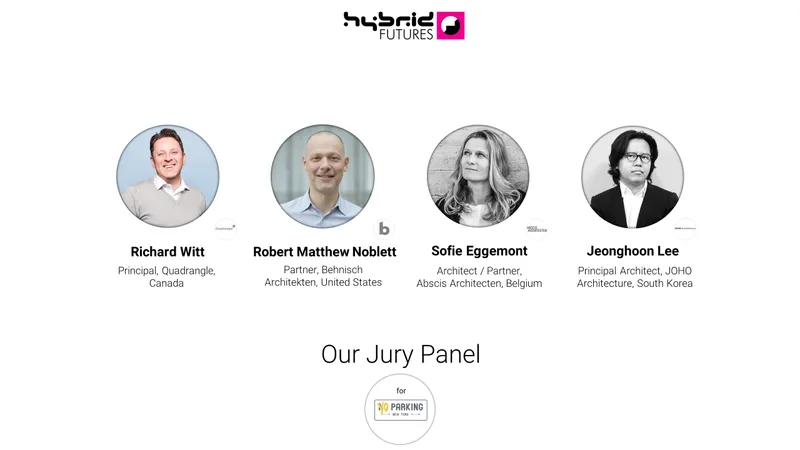
Richard Witt, Principal, Quadrangle, Canada | Robert Matthew Noblett, Partner, Behnisch Architekten, United States | Sofie Eggemont, Architect / Partner, Abscis Architecten, Belgium | Jeonghoon Lee, Principal Architect, JOHO Architecture, South Korea
Here are the best of competition projects as follows:
Jury Commendation: IPARCIadox
By: Karan Daisaria
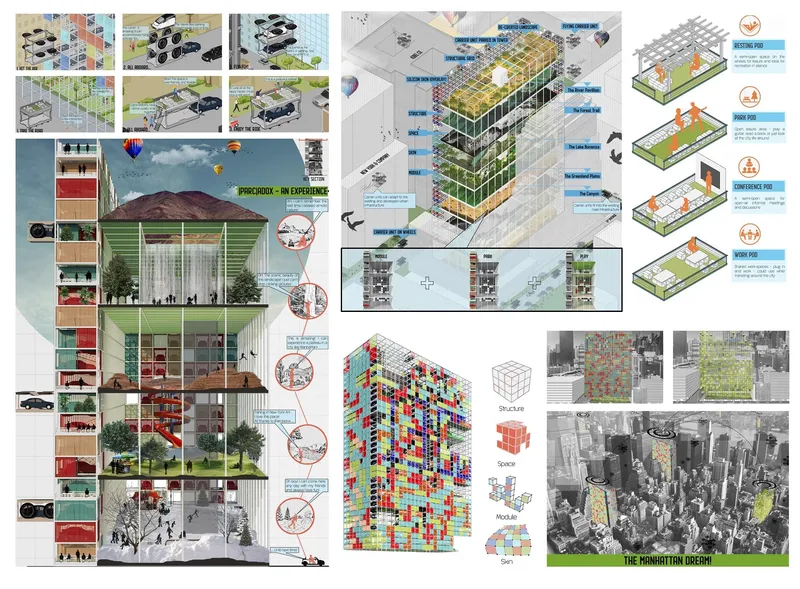
Description: What if, a parking lot is reimagined to be a tower that celebrates public life? What if, the system of parking itself changes dynamically to a park + play paradox that enables you to experience varied landscapes that are otherwise lost in an urban setup?
Let’s unzip the alternative realities of parking for Manhattan city, with a new metamorphic fabric.
Jury Commendation: Mass Timber Vertical Stacking
By: Yimeng Teng
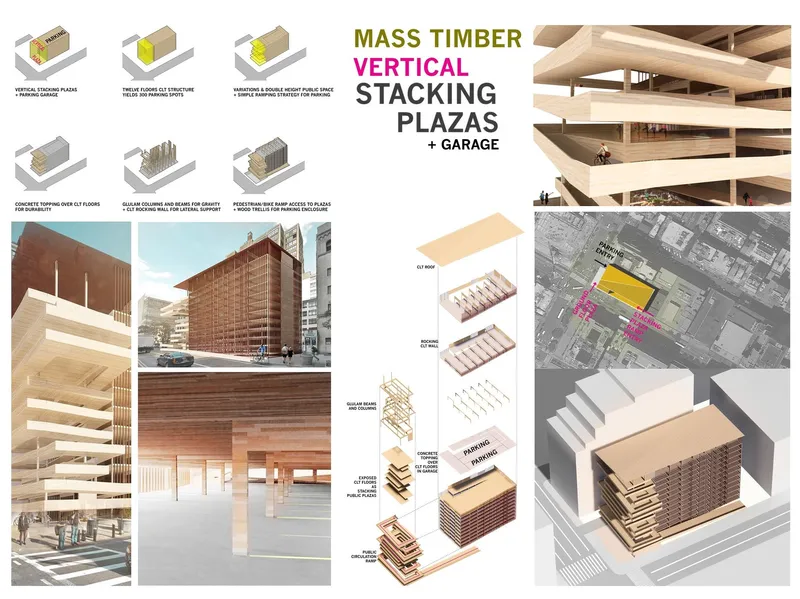
Description: This proposal aims to rethink contemporary parking garages in a more sustainable way. Making this mass+ timber tower 12 stories high allows a generous volume to be designated to urban plazas. Similarly, to the parking, those plazas stack on top of each other and are arrived by circulating ramps for both pedestrians and bikers.
Jury Commendation: Ver-Park
By: Shreejit
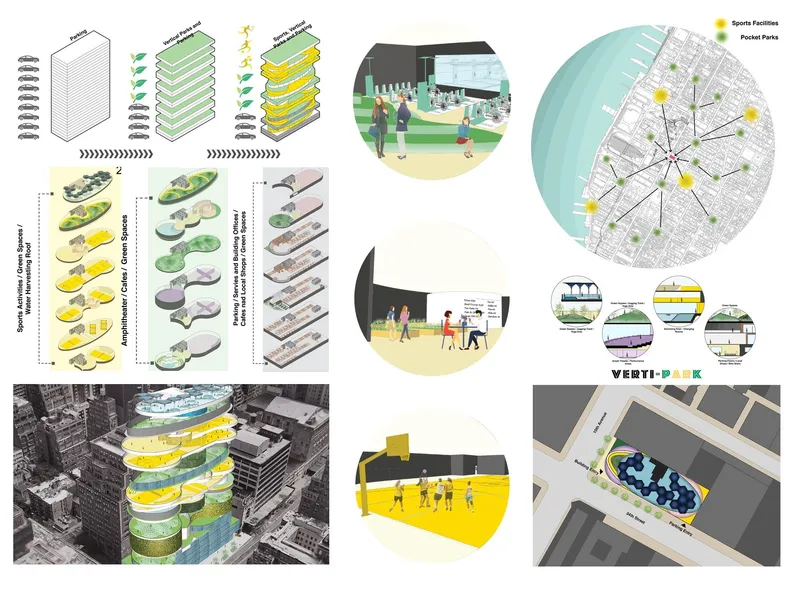
Description: The design intervenes to produce a combination of the three important facets the New Yorkers ask for - Parking, Sports and Green Spaces. Thus Verti-Park provides a combination of activities where every New Yorker can park his car and also come to enjoy the sports, sit or walk in the greens and lead a healthy lifestyle.
Jury Commendation: The Vertical Park
By: Omar El Halfawy, Omar Atef

Description: The idea was to redefine the city life by taking advantage of the function, number and location of stacked parking and turning them into Vertical Parks. The design tries to redefine people's life from being imprisoned by crowded and bulky towers that affect their mental health days to a more comfortable and environmentally friendly neighbourhood- accentuated by lightweight Vertical Parks.
Discover the full results here: https://uni.xyz/competitions/yo-parking/entries
Discover the design brief here: https://uni.xyz/competitions/yo-parking/info/about
Follow us on social media: Facebook | Instagram | LinkedIn | Twitter | Youtube
Discover other design competitions to participate here: https://uni.xyz/competitions


Popular Articles
Popular articles from the community

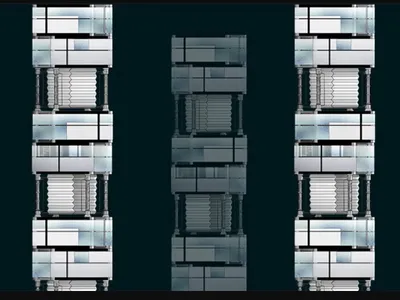
Tsunami Convergenics: Turning Catastrophic Ocean Forces into Underwater Housing Infrastructure
A speculative underwater settlement off the coast of Onagawa, Japan, treats tsunamis and typhoons as energy sources rather than threats.
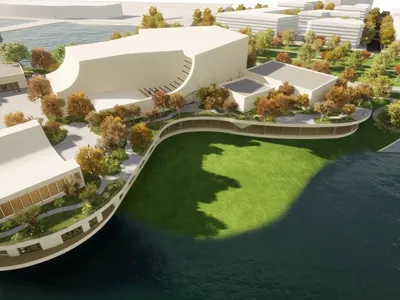
The Amber Palace Opera: A Geological Fiction Surfaces on Tallinn's Baltic Waterfront
Pierre Brillard reimagines a Baltic legend as a public landscape, opera house, and waterfront promenade rooted in Tallinn's coastal identity.
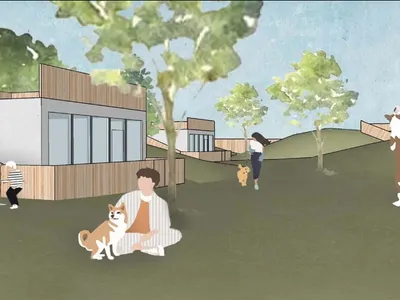
Temporary Home for Dogs: A Reversed Zoo Rethinks Animal Shelter Architecture
In Bucharest, a sinuous corridor and freed landscape flip the logic of containment, designing a shelter that works to make itself unnecessary.
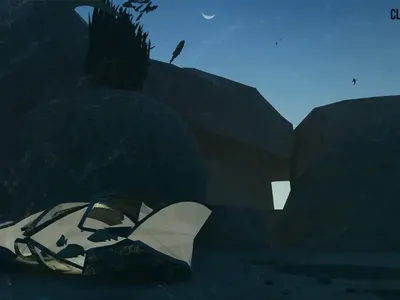
Cloaked Colonization: A Mobile Underwater Habitat That Moves Like a Fish
Micah Abaya's shortlisted EHC Pacific entry reimagines ocean settlement as a dispersed network of self-sustaining architectural organisms.

Similar Reads
You might also enjoy these articles

Play: Fragments of Their World: Remembered Architecture Rebuilt as a Modular Playground for Refugee Camps
Tom Gardner abstracts domes, arches and towers from the homelands of displaced families into a kit of child-scaled play parts for camp settlements.
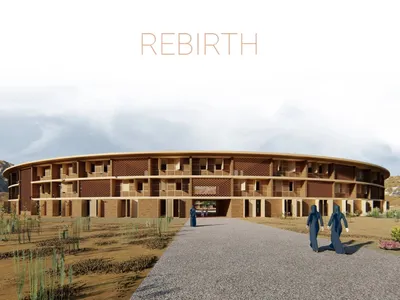
REBIRTH: A Circular Settlement Where Afghan Widows and Their Children Rebuild Life Together
A shortlisted Resile entry turns the circle into a protective ring of timber and brick, gathering homes, classrooms and gardens around a shared landscape.
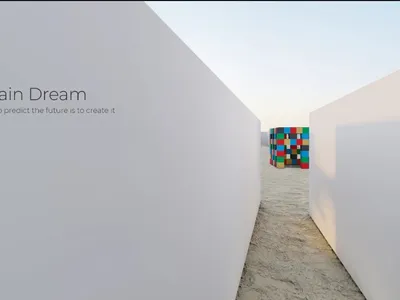
The Main Dream: A Recycled Plastic Kit That Lets Refugee Children Build Their Own Playground
Thirty-centimetre interlocking cubes that connect on three axes turn play into construction, letting children author the spaces they occupy.
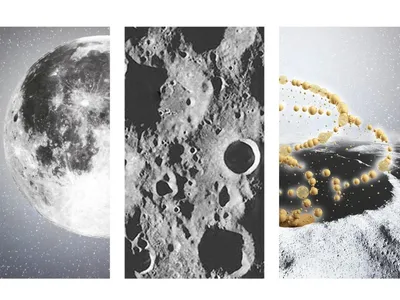
Lunar Spiral: A Fibonacci-Driven Moon Settlement Rising from Shackleton Crater
Golden-spiral geometry organises buried infrastructure and orbiting habitable spheres into a lunar base designed to grow as life on the Moon expands.

Comments (0)
Please login or sign up to add comments
No comments yet. Be the first to comment!