
Renovation of NJU Kindergarten by Atelier Jian-Jia: Harmonizing Safety, Functionality, and Playful Learning Spaces
NJU Kindergarten renovation by Atelier Jian-Jia enhances safety, circulation, and play, integrating nature, sheltered corridors, and flexible learning spaces in Nanjing.


The Renovation of NJU Kindergarten in Nanjing, China, designed byAtelier Jian-Jia, exemplifies a thoughtful transformation of a public educational space, blending structural modernization, functional reorganization, and playful architectural interventions. Originally founded in 1953, the kindergarten has expanded through multiple uncoordinated phases over decades. This incremental growth, while accommodating increasing enrollment, led to spatial disorder, circulation inefficiencies, and aging infrastructure. Structural assessments revealed that several areas no longer met current safety standards for educational buildings, making a comprehensive renovation necessary.
Strategic Campus Reorganization
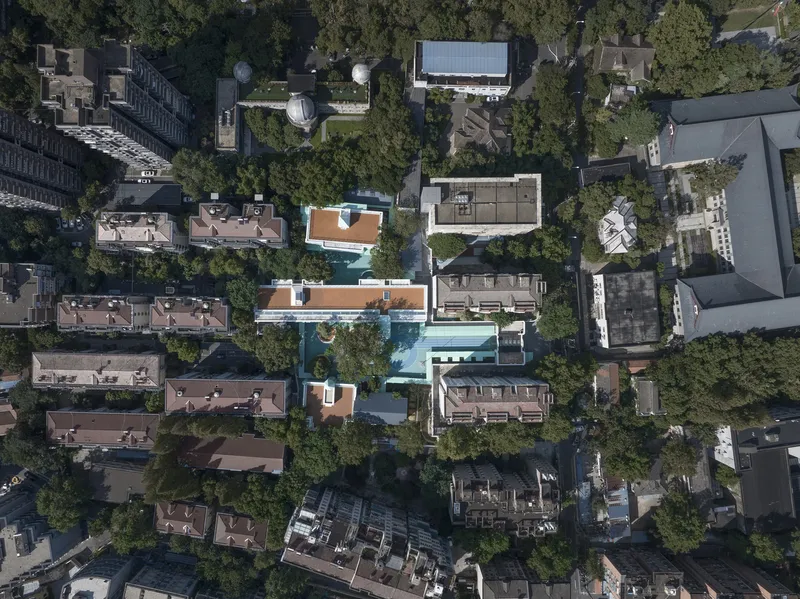
Before the renovation, critical service areas—including the kitchen and non-motorized parking—were positioned on the western edge, far from the main eastern entrance. This created logistical challenges, with delivery vehicles and staff bicycles traversing the full east–west campus axis, causing conflicts with children's circulation.
Atelier Jian-Jia’s design team addressed this by relocating the kitchen to the former "Constructive Activity Room" on the eastern side, directly connected to a new logistics entrance in the Gatehouse. This strategic adjustment separated service flows from children’s daily activities and allowed the introduction of a covered parking shed for staff, accessed along a dedicated service lane. This simple but impactful change triggered a campus-wide reorganization, improving efficiency, safety, and functionality.
Sheltered Corridors and Human-Scaled Outdoor Spaces
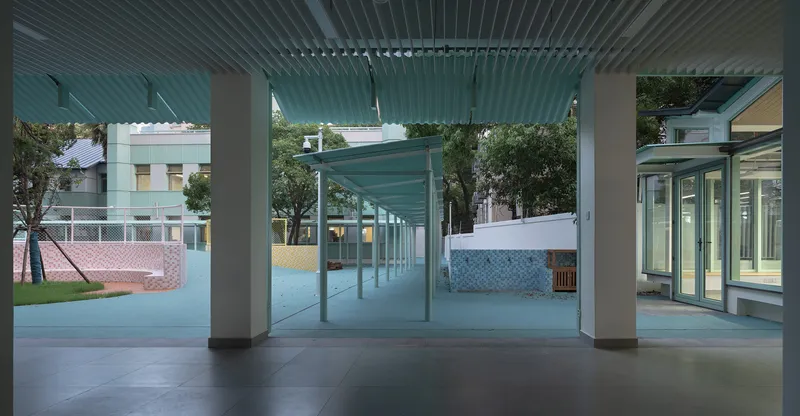
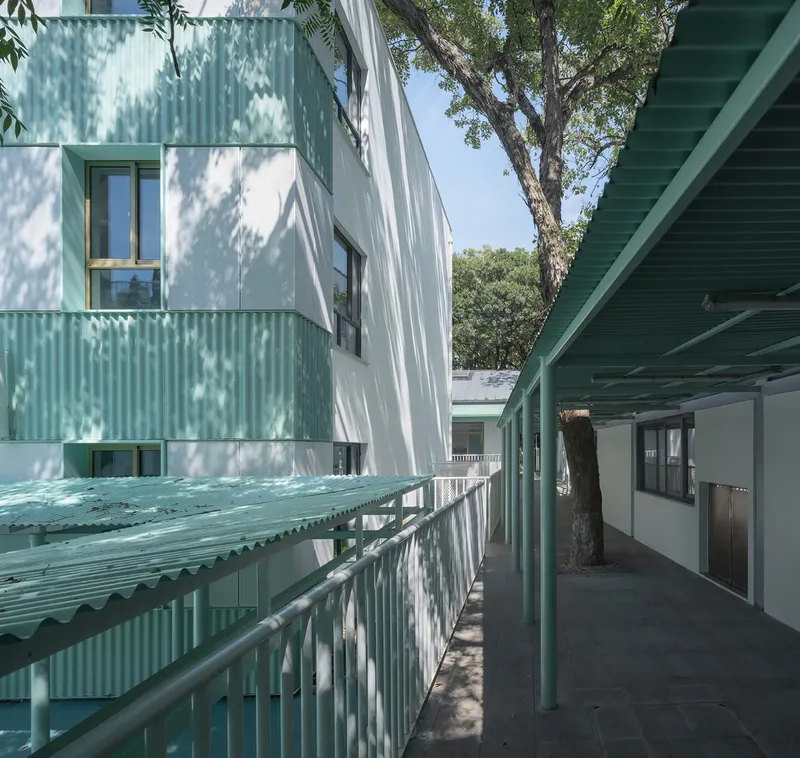
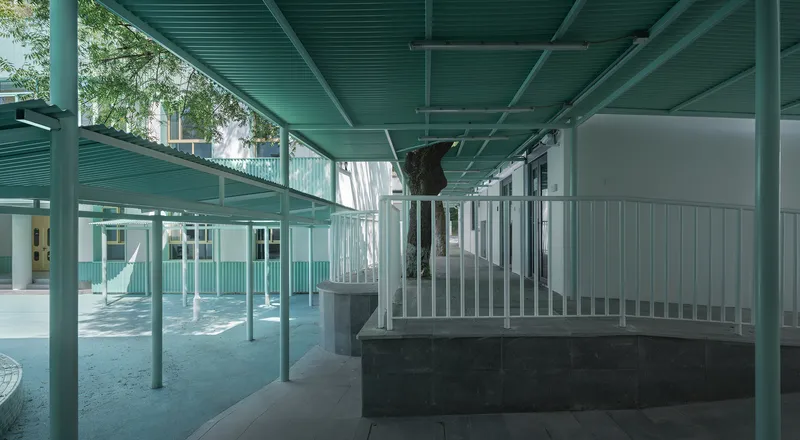
A network of sheltered corridors now interlinks all buildings and service areas, creating a cohesive campus layout. These corridors provide shade and shelter while redefining the scale of outdoor spaces, introducing human-scaled zones for movement and play. This architectural strategy enhances circulation clarity and contributes to the kindergarten's overall sense of order and openness.
Building 2: Structural Reinforcement and Spatial Expansion
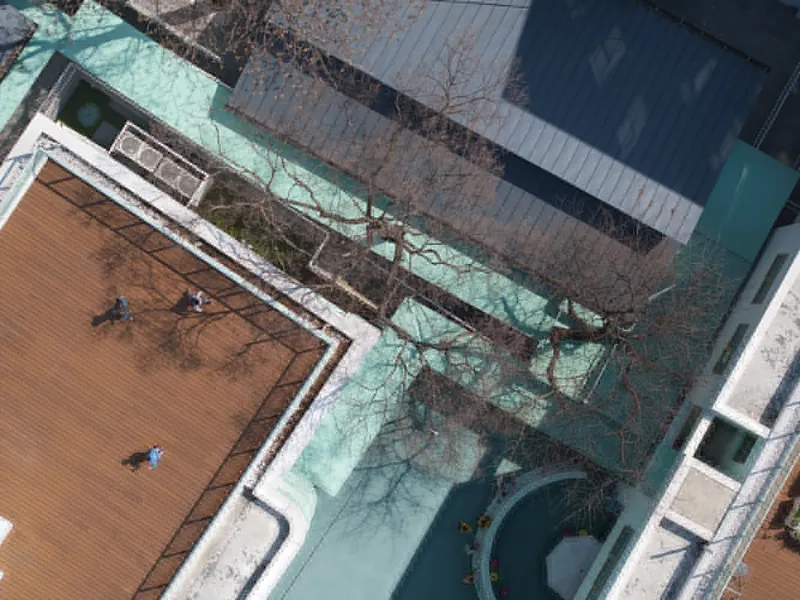
The most significant intervention focused on Building 2, constructed in the 1970s and serving as the primary educational hub. Due to its aging brick-and-concrete structure and underperforming spatial layout, the renovation involved retaining only portions of the original walls while completely replacing the structural system with a reinforced-concrete frame compliant with modern kindergarten safety codes. This approach enabled spatial expansion and flexibility, allowing classrooms, activity areas, and circulation spaces to better accommodate contemporary educational needs.
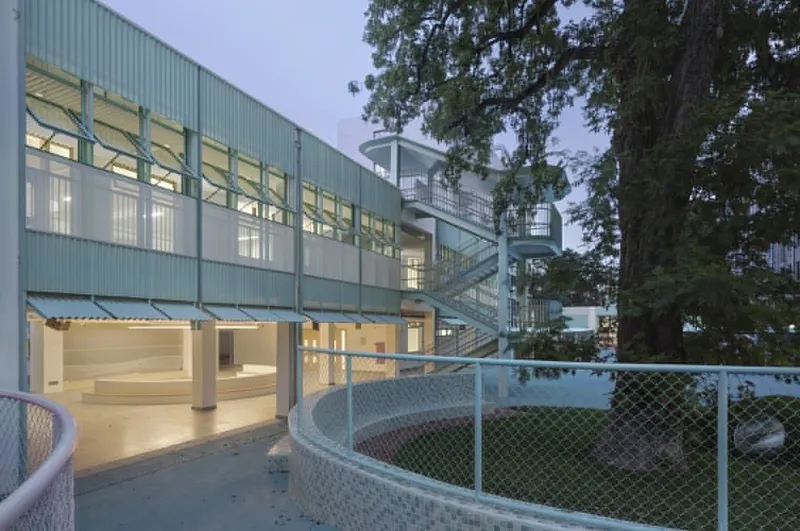
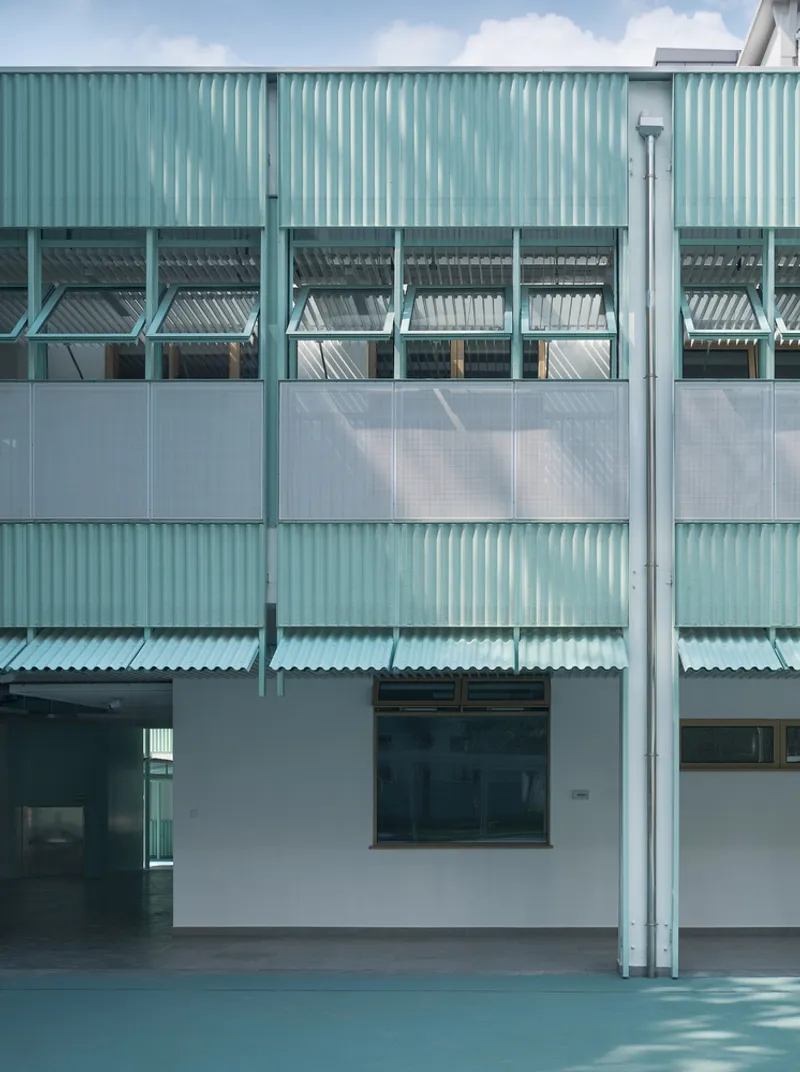
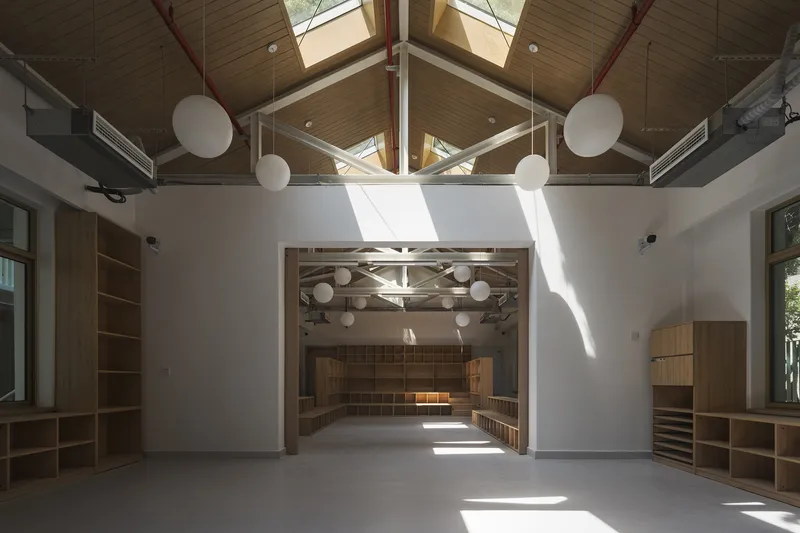
The 2nd-floor exterior corridor was widened from a 1.2 m cantilevered balcony to a 2.8–3.2 m colonnade, serving both as a safe evacuation route and as an extension of indoor activity zones. A semi-enclosed envelope, along with center-pivot windows and roof skylights, creates a micro-climate corridor, offering natural ventilation in summer and warmth in winter, while aluminum baffles soften daylight throughout the space.
Integrating Nature and Landscape
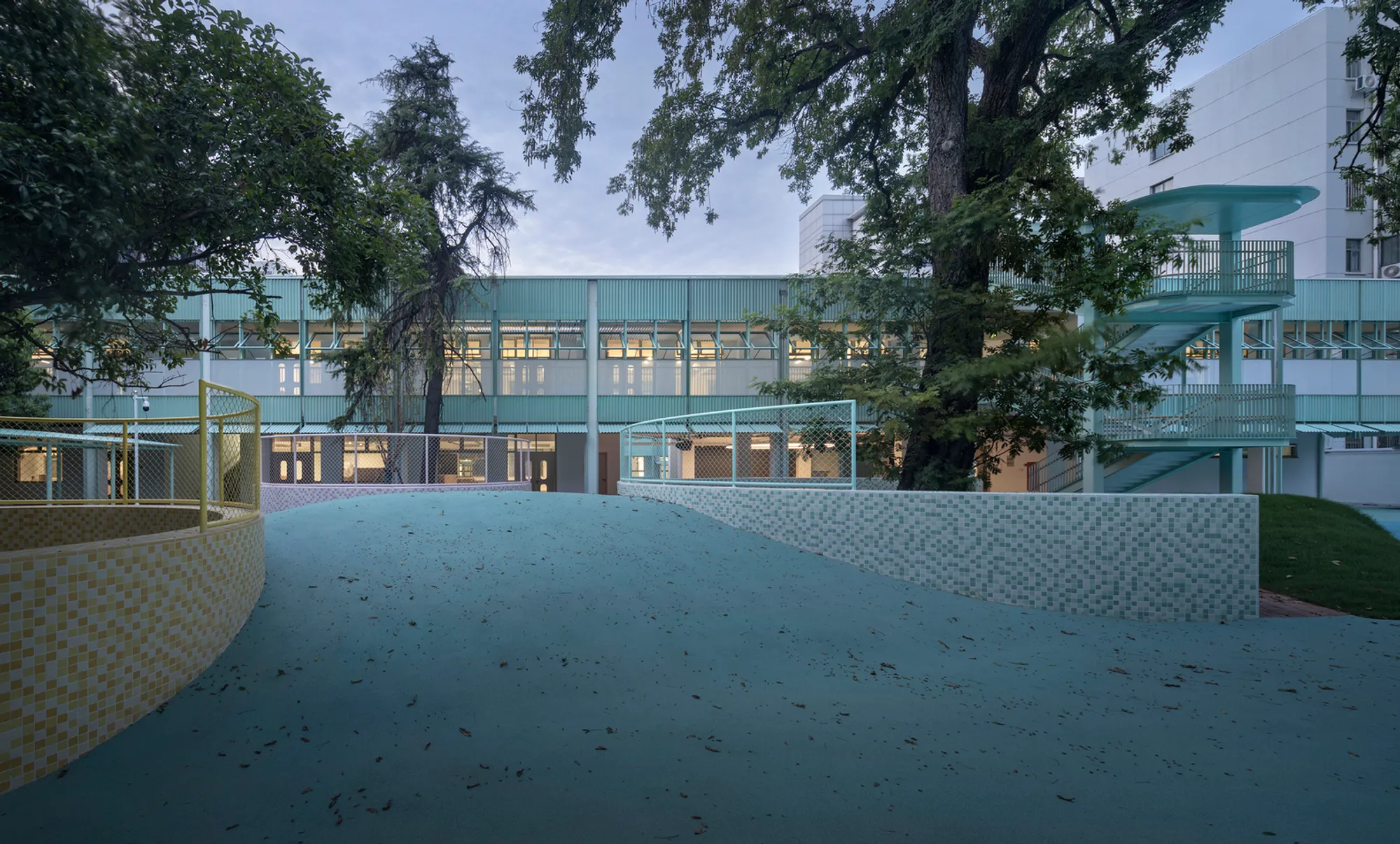
The renovation embraces the existing tall trees as key elements of the kindergarten’s landscape design. Curved low walls define a series of under-the-tree activity areas, providing shaded outdoor zones of varying scales. Excavated construction spoil was repurposed to form artificial topography in a hillside activity area, with curved perimeter walls doubling as retaining structures.
Inside Building 2, the open ground floor now hosts a sunken mini-theatre, a multi-functional room with a curved exhibition wall, and an outdoor craft area encircled by a curved doodle wall. These elements create a continuous architectural and landscape dialogue, harmonizing indoor and outdoor play spaces.
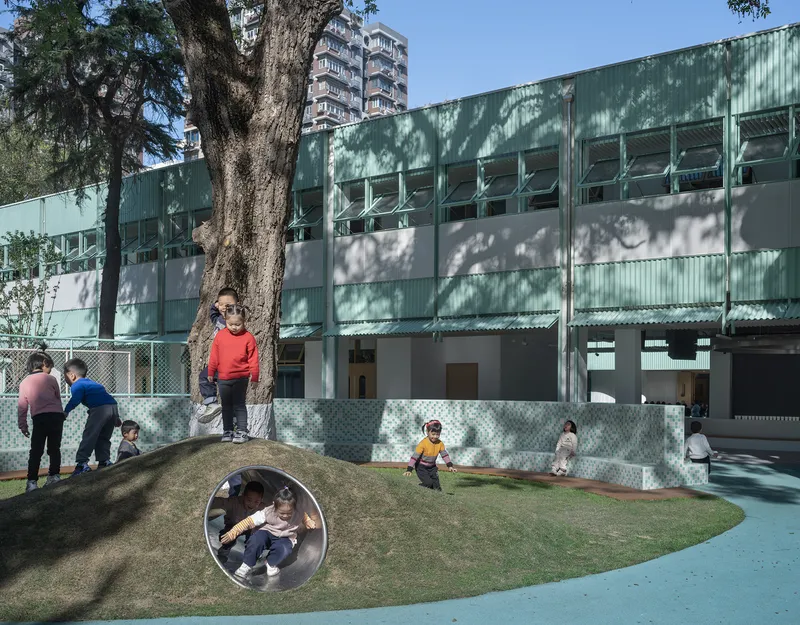
Monumental Trees and Spatial Sequence
A towering Chinese wingnut tree on the south side of Building 2 serves as a symbolic focal point, offering a ceremonial entry experience. Visitors are greeted by its majestic presence from the main entrance on Pingcang Lane. The renovation emphasizes spatial sequencing, moving from an open lobby, through symmetrically arranged sheltered corridors, to the directional flow of the running track, creating a dynamic and engaging journey through the campus.
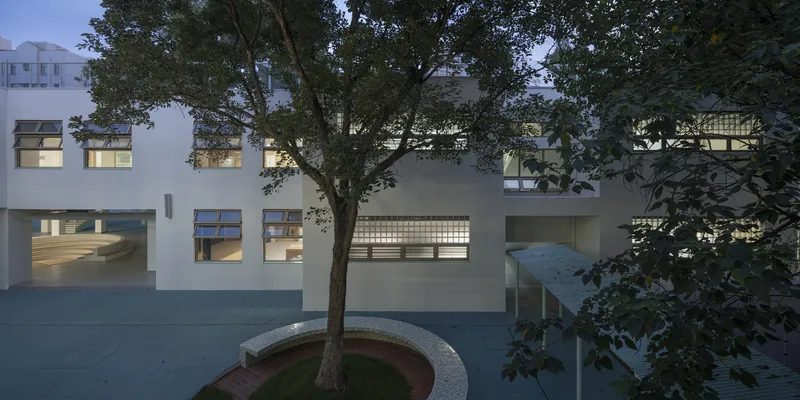
The Renovation of NJU Kindergarten is a successful synthesis of educational functionality, safety standards, and playful architecture. By addressing structural concerns, reorganizing campus circulation, and integrating natural and built elements, Atelier Jian-Jia has transformed the site into a safe, inspiring, and human-centered learning environment.
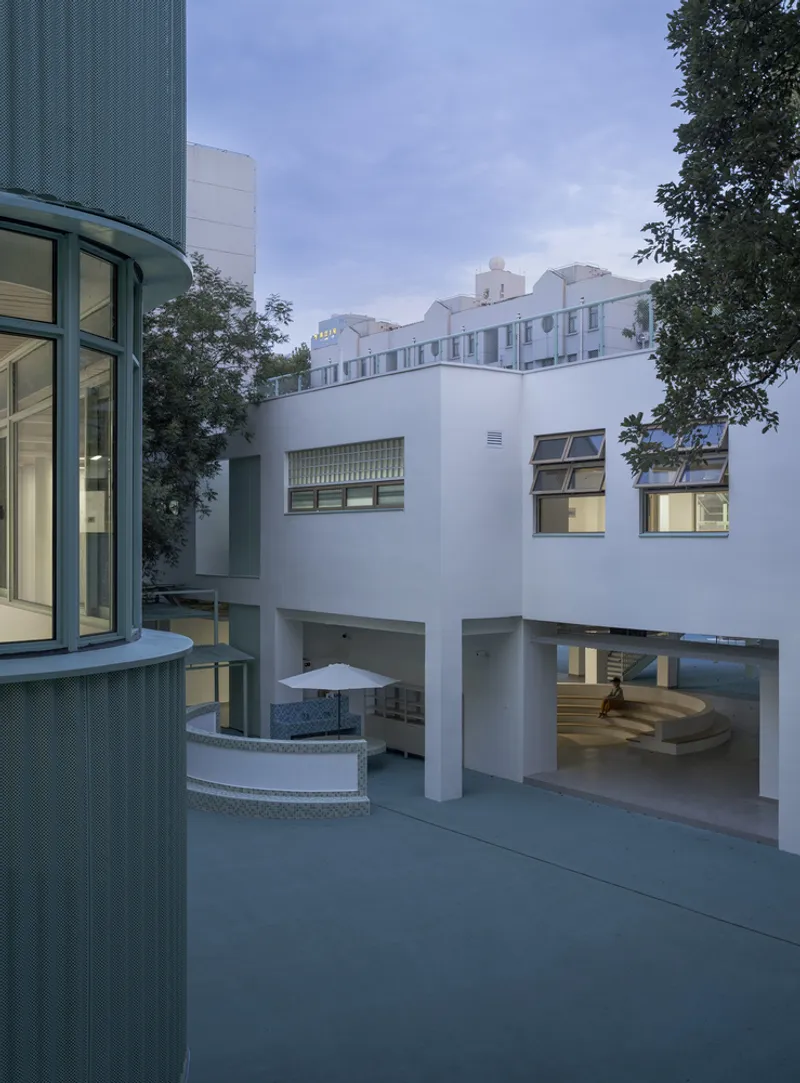
All photographs are works of Bowen Hou



Popular Articles
Popular articles from the community


Conexión: Biophilic Design Reimagines High-Rise Living in Hong Kong
Conexión reimagines high-rise living in Hong Kong through biophilic design, green facades, shared spaces, daylight, water and nature within.

Co-Life: Senior Housing Design That Reconnects Older Adults With the City
Co-Life reimagines senior housing design through healing gardens, shared streets, workshops, and a sustainable community across generations.

The Earth Pod: 3D Printed Homes for Resilient Refugee Communities
The Earth Pod reimagines refugee housing through 3D printed homes made from clay, combining resilience, self-sufficiency, and rapid shelter.

The Musturak Paradise: Senior Living Architecture for a Connected Future in Temara, Morocco
The Musturak Paradise reimagines senior living architecture in Temara via private homes, social spaces, culture, community, and shared care.

Similar Reads
You might also enjoy these articles


Hodi-Mandai Geram
Project Function: Preservation and revitalization of the Intangible heritage and socio-spatial identity of the Hodi by Housing, Cultural Memory Center, Sacred Grove, landscape, local tourism economy


Olio Towers: A Mid-Rise for Performers That Fuses Housing, Rehearsal, and Stage
Located blocks from Houston's Theater District, this modular tower stacks living units around a central performance atrium.

Oasis: Modular Green Housing Carved into Dhaka's Urban Fabric
A shortlisted Plugin Housing entry reclaims unauthorized settlements in Dhaka with stepped concrete volumes, green roofs, and ventilation-driven design.

Black Hole: A Floating Megastructure for the Post-Physical Era
Emiliano Mazzarotto envisions a spherical, self-scaling arena where e-sports, digital hotels, and holographic stadiums replace traditional public space.

Explore Sustainable Design Competitions
Discover active competitions in this discipline



Challenge to reimagine the Iron Throne


Photograph architecture without architects


Illustrate the lost glory of Angkor Wat - Render Challenge


Design challenge to reuse E-waste
Comments (0)
Please login or sign up to add comments
No comments yet. Be the first to comment!