
Residence 91 by Charged Voids: A Contemporary Courtyard Home for Multigenerational Living in Chandigarh
Residence 91 is a serene brick courtyard home designed for multigenerational living, offering privacy, natural light, and harmonious indoor-outdoor connections.


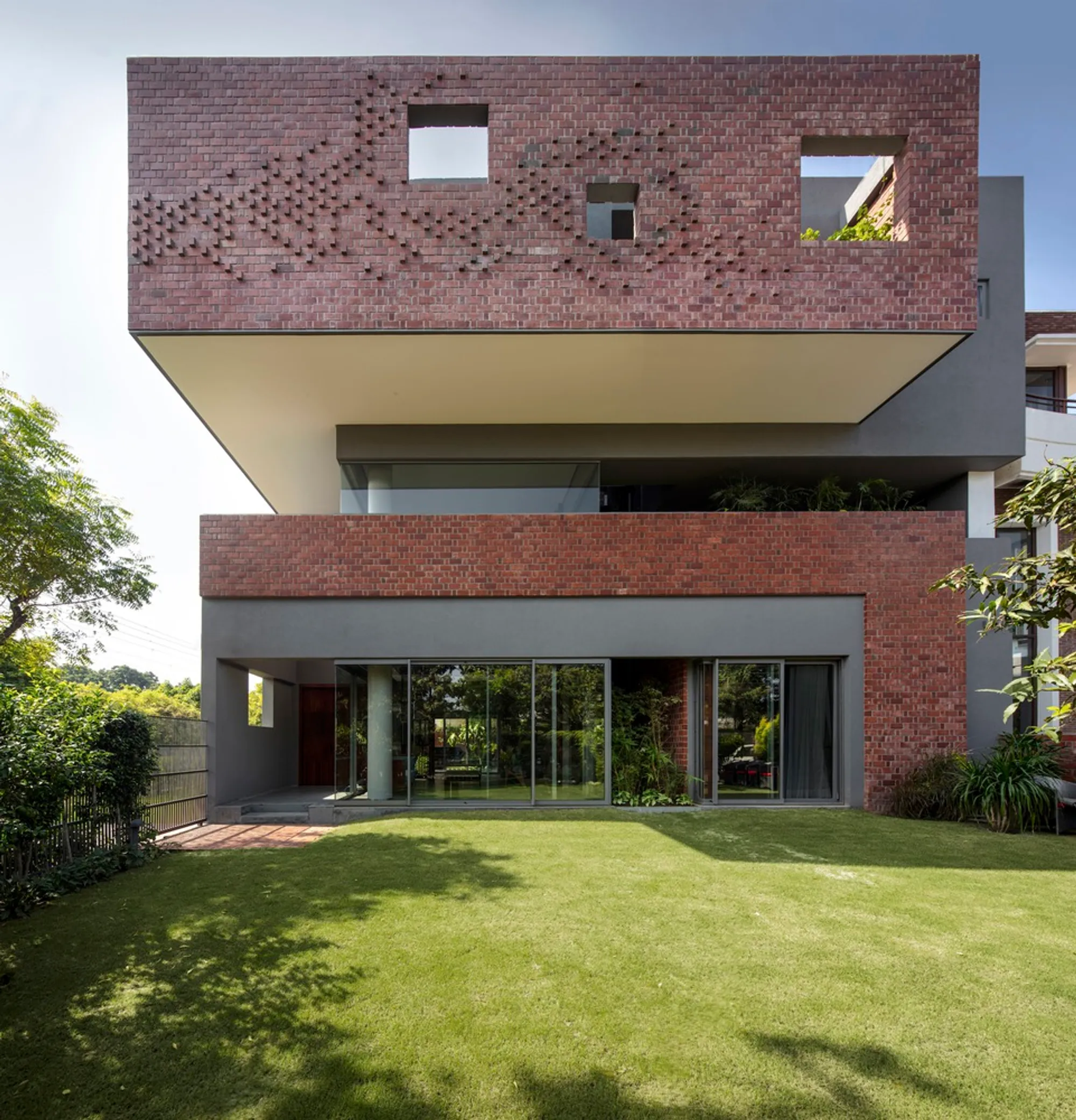
Residence 91 byCharged Voids redefines the meaning of a contemporary Indian family home. Designed for a nine-member multigenerational family, this 8,500-square-foot residence in Panchkula, near Chandigarh, creates a serene, inward-looking sanctuary amidst busy urban surroundings. Architect Aman Aggarwal and his team craft a retreat that emphasizes wellness, privacy, and familial connection, while celebrating natural materials, light, and traditional Indian spatial typologies.
A Peaceful Sanctuary Amidst Urban Chaos
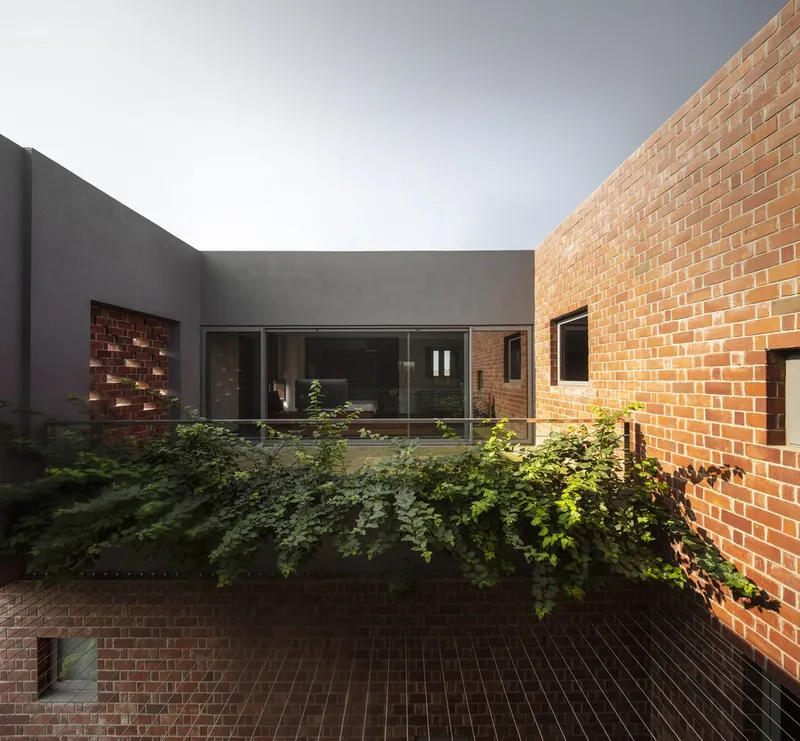
Situated between a bustling sector road and an arterial route, the home responds to its noisy context by embracing an inward-centered design. The clients sought a space that would feel humble, meditative, and restorative—qualities that shaped the architecture into a self-contained oasis. Patterned brick walls wrap the home in a protective shell, ensuring privacy while creating a tactile, timeless façade.
The design celebrates the Indian ethos of living close to nature and family. Strategically placed voids and interconnected volumes form a network of shared spaces that strengthen bonds between generations.

A Courtyard at the Heart of the Home
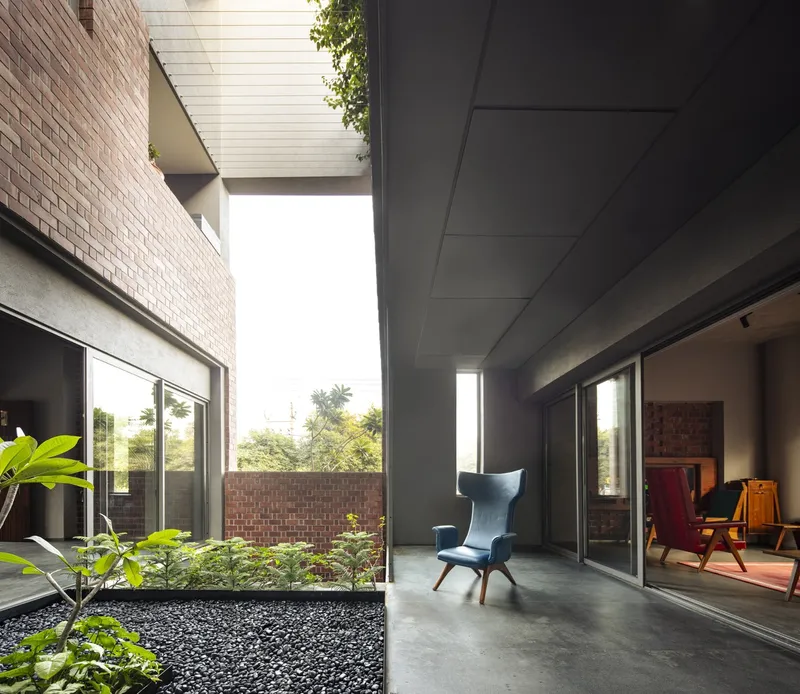
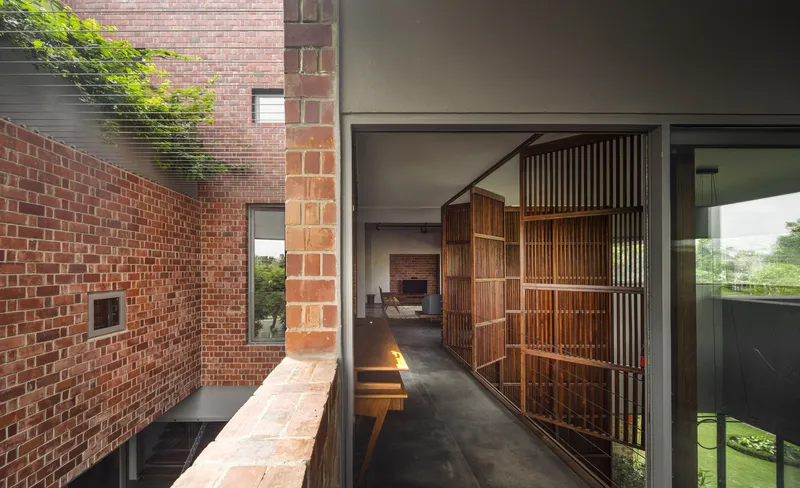
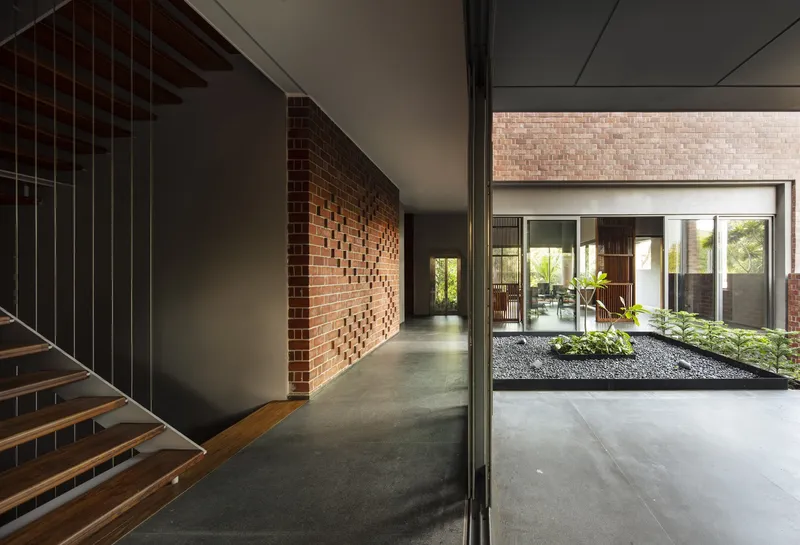
The residence is thoughtfully organized around a central courtyard, transforming traditional Indian aangan living into a contemporary spatial experience. Common areas across all floors open directly onto this courtyard, allowing light, air, and greenery to permeate the home.
Ground Floor: Public and Parental Spaces
The ground level contains the primary social zones, including:
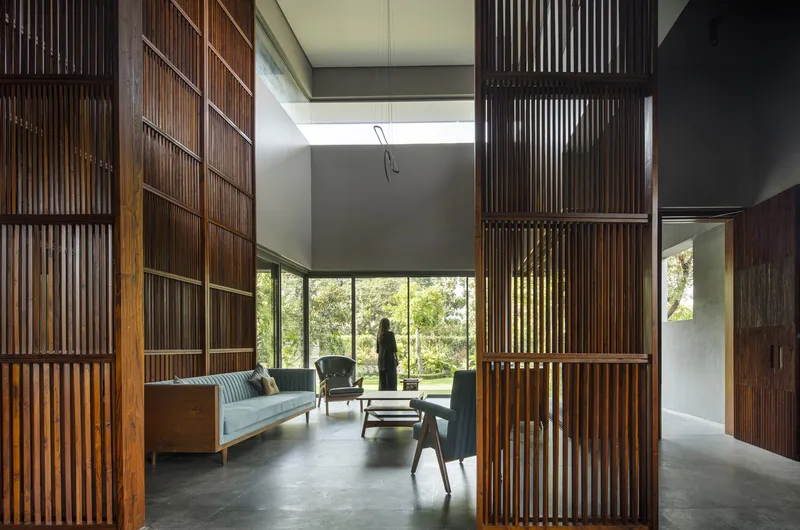
- A living and dining area oriented toward the semi-covered verandah
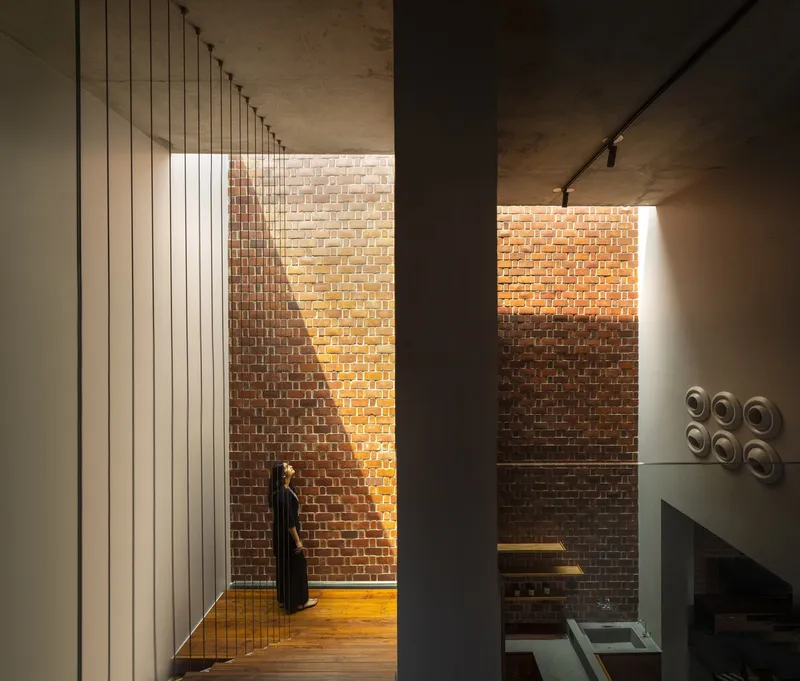
- A double-height kitchen with a skylit lightwell
- A dedicated spice kitchen for traditional cooking
- A bedroom for elderly parents with easy access to shared spaces
First Floor: Young Family Living
The first floor accommodates the younger couple’s bedroom suites, their child’s room, and an intimate family lounge with its own kitchenette.
Second Floor: Private Retreats
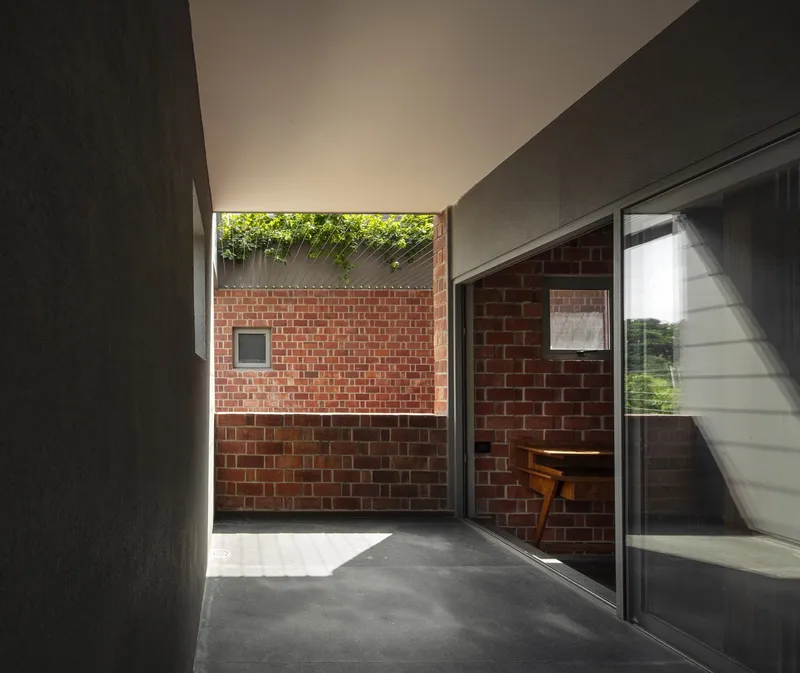
The top level contains three bedrooms, each paired with its own outdoor recreational terrace, offering individual pockets of privacy within the larger family ecosystem.
Basement: Social Hub
The basement is designed as an entertainment and gathering zone, featuring a lounge, an activity area, and a guest bedroom. Here, the courtyard transforms into a sunken court, visually connecting all levels of the house.
Volumetric Transformations Across Levels
The courtyard evolves as it rises through the home.
- In the basement, it forms a lush sunken garden.
- On the ground floor, it becomes a semi-open verandah with a tranquil water feature.
- On upper levels, the void expands into terraces, gardens, and even a private outdoor jacuzzi.
These shifts create dynamic transitional spaces that nurture interaction between generations while allowing moments of solitude.
Framed Views and Passive Cooling
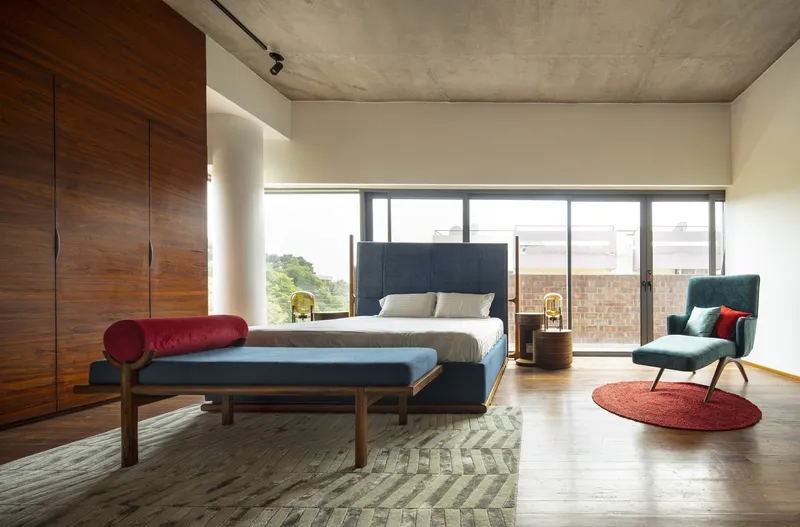
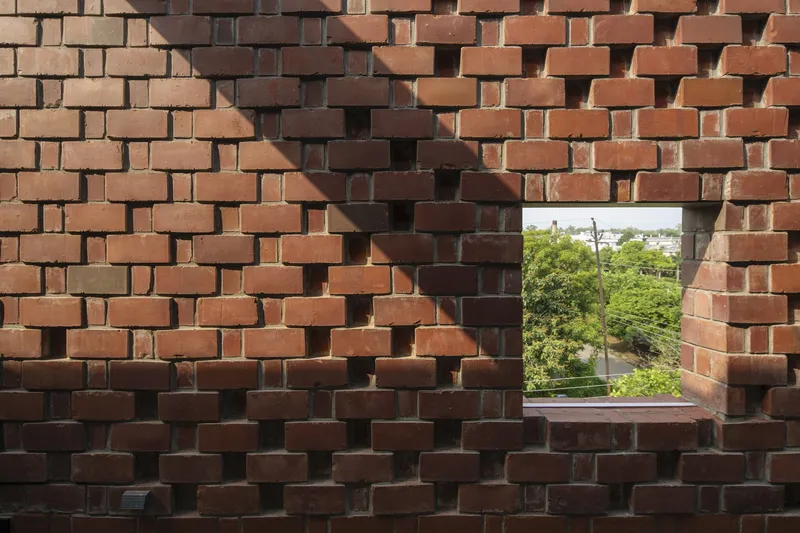
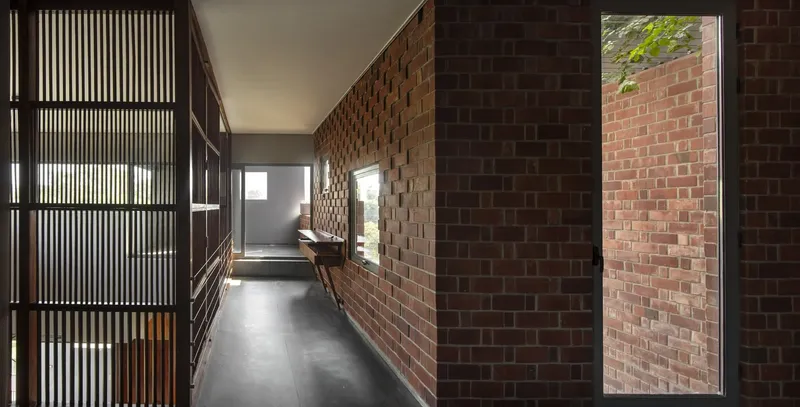
Openings on the upper floors punctuate the brick façade with intention and restraint. Each window frames curated vistas—the treetops, the nearby Gurudwara, and distant hills—turning the exterior world into a series of contemplative scenes. Larger openings face north to harness soft daylight, while smaller apertures reduce heat gain on the southern side.
Deep verandahs and shading elements work with these openings to lower cooling loads, reinforcing the home’s passive design strategy.
Brick as Craft and Climate Response
Residence 91 uses composite RCC and locally sourced brick, celebrating Chandigarh’s modernist heritage while rooting the home in regional craftsmanship. The exposed brick is laid using a modified rat-trap bond, creating insulated cavity walls that reduce heat transfer and buffer traffic noise.
By reorienting singular brick units, the architects create rhythmic, patterned façades that enhance both performance and visual richness.
A Modern Interpretation of the Courtyard House
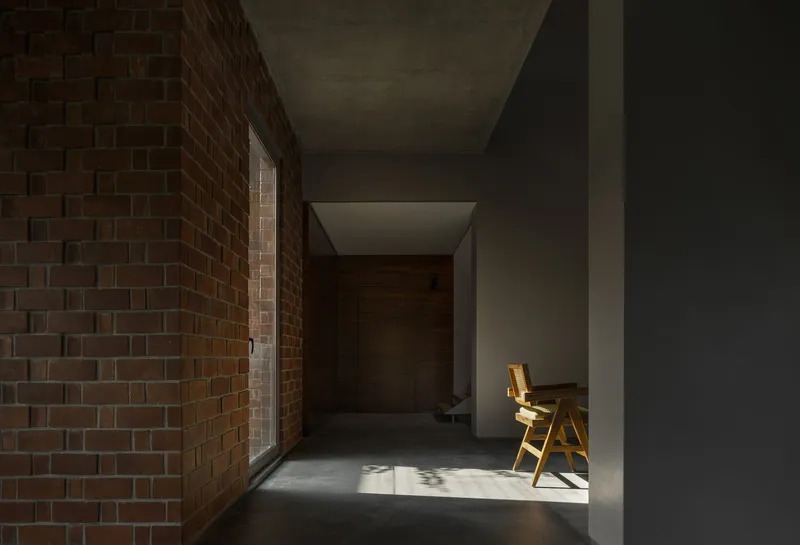
Through calibrated openings, generous internal voids, and the poetic use of brick, Residence 91 becomes more than a home—it becomes a harmonious environment for intergenerational living. Its inward-looking form not only shelters the family from the urban landscape but also cultivates deeper relationships, warmth, and a strong connection to the elements.
All photographs are works of Niveditaa Gupta



Popular Articles
Popular articles from the community


The Earth Pod: 3D Printed Homes for Resilient Refugee Communities
The Earth Pod reimagines refugee housing through 3D printed homes made from clay, combining resilience, self-sufficiency, and rapid shelter.

The Musturak Paradise: Senior Living Architecture for a Connected Future in Temara, Morocco
The Musturak Paradise reimagines senior living architecture in Temara via private homes, social spaces, culture, community, and shared care.

Co-Life: Senior Housing Design That Reconnects Older Adults With the City
Co-Life reimagines senior housing design through healing gardens, shared streets, workshops, and a sustainable community across generations.

EW PARK: Sustainable Architecture Reimagines the Future of Urban Parking
EW PARK reimagines city parking as a modular wooden tower combining automation, solar energy, electric mobility, and adaptable urban design.

Similar Reads
You might also enjoy these articles


Hodi-Mandai Geram
Project Function: Preservation and revitalization of the Intangible heritage and socio-spatial identity of the Hodi by Housing, Cultural Memory Center, Sacred Grove, landscape, local tourism economy


Olio Towers: A Mid-Rise for Performers That Fuses Housing, Rehearsal, and Stage
Located blocks from Houston's Theater District, this modular tower stacks living units around a central performance atrium.

Oasis: Modular Green Housing Carved into Dhaka's Urban Fabric
A shortlisted Plugin Housing entry reclaims unauthorized settlements in Dhaka with stepped concrete volumes, green roofs, and ventilation-driven design.

Black Hole: A Floating Megastructure for the Post-Physical Era
Emiliano Mazzarotto envisions a spherical, self-scaling arena where e-sports, digital hotels, and holographic stadiums replace traditional public space.


Explore Architecture Competitions
Discover active competitions in this discipline



Challenge to reimagine the Iron Throne


Photograph architecture without architects


Illustrate the lost glory of Angkor Wat - Render Challenge


Design challenge to reuse E-waste
Comments (0)
Please login or sign up to add comments
No comments yet. Be the first to comment!