
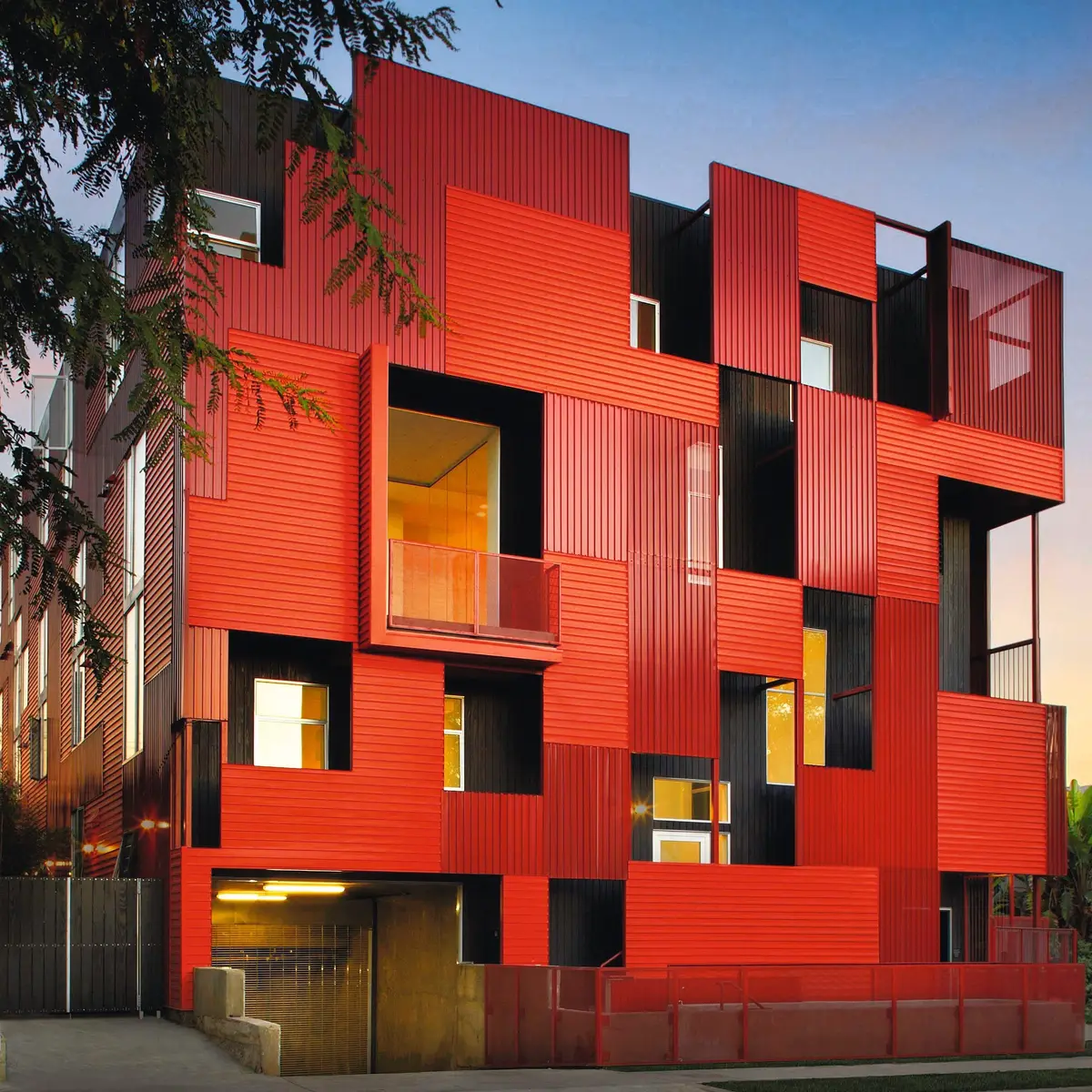
Resilient Riverfront
Multi-Use Recreation and Social Spaces

The history of cities is a story of ambition — of human societies gathering together, building
structures to house economies, cultures, and aspirations. Yet as we enter the 21st century,
it has become clear that the rigid systems upon which many of our cities were built are no
longer adequate to meet the challenges of today. Political instability, economic inequality,
environmental degradation, and social fragmentation are testing the very foundations of
urban life. Nowhere is this more visible than in waterfront districts like Manhattan’s East
River edge, where aging infrastructure, rising sea levels, and social divides converge.
Modern cities, though monumental in scale and ambition, often suffer from systemic
rigidity. Their networks of infrastructure, transportation, housing, and public services were
designed for a different era, making them resistant to the rapid changes demanded by
contemporary life. Retrofitting existing cities has proven difficult, costly, and sometimes
superficial. Critical issues like flooding, traffic congestion, social inequity, and
environmental degradation persist.
Concept: A New Model for Living
Rather than merely repairing broken systems, this project imagines a new type of city block
— a neighborhood built from scratch, designed to be flexible, inclusive, and sustainable
from its inception.
Social interaction is the foundation of the design, with public spaces that encourage
connection, collaboration, and celebration. Resilient infrastructure supports a changing
climate, while advanced technologies such as AI, robotics, and smart systems create a
responsive and efficient urban fabric. Natural landscapes are fully integrated into the urban
environment, restoring the human connection to the earth.
This is not a utopian fantasy but a speculative, grounded proposal: a fictional neighborhood
set in a real-world context, built upon the lessons of past urban failures and the aspirations
of future cities.
In coastal urban areas like the East River waterfront, climate change poses an especially
urgent threat. Hurricane Sandy made clear the dangers of aging seawalls, insufficient
stormwater systems, and disconnected communities. Meanwhile, the gap between luxury
developments and low-income public housing exacerbates social tensions, further
weakening urban resilience.
Cities are no longer just physical structures — they are ecosystems of social, cultural,
psychological, and environmental interactions. The next evolution of city-making must be
holistic, adaptable, and deeply human.
In response to these realities, this project proposes a radical reimagining: the creation of a
hypothetical, ideal neighborhood — a new city block built from scratch, integrating
advanced technologies, sustainable systems, and a human-centered design philosophy.
This essay outlines the vision, strategy, and objectives of the project, offering a blueprint for
a resilient and inclusive urban future.
The heart of the neighborhood is a flood-resilient recreational corridor. Terraced parks
double as stormwater buffers, absorbing runoff during heavy rains while serving as
gathering spaces for outdoor markets, performances, and play during fair weather.
Playgrounds, sports courts, amphitheaters, and gardens are woven into the topography,
promoting mental and physical well-being across generations.
Advanced environmental technologies are embedded throughout the site. Buildings are
designed for net-zero energy performance using solar, wind, and geothermal systems.
Smart grids manage energy flows efficiently, while AI-driven maintenance systems monitor
water levels, air quality, and structural health, ensuring resilience during disasters.
Stormwater management is decentralized through permeable pavements, bioswales,
green roofs, and underground retention tanks. Mobility hubs promote shared electric
vehicles, autonomous shuttles, bike highways, and ferry integration to reduce dependence
on private cars.
Housing is intentionally mixed-income, blending market-rate, affordable, and supportive
housing into cohesive communities rather than segregated pockets. Ground floors host
community centers, libraries, childcare facilities, and public kitchens to promote social
equity. Co-living and co-working models allow flexibility for changing household needs and
work patterns.
A circular economy framework underpins material and resource flows. Building materials
are recycled, biodegradable, or sourced locally. Community composting, zero-waste retail
hubs, and water reclamation systems reduce the neighborhood's ecological footprint.
Innovation labs support startups focused on green technologies and circular systems.
Natural habitats — wetlands, forests, gardens, and marine ecosystems — are incorporated
directly into the urban landscape. Green corridors connect people to the waterfront and
each other, creating ecological continuity across the site. Wildlife habitat restoration along
the riverbanks strengthens biodiversity, while urban farms and edible landscapes promote
local food security.
Recognizing the inevitability of future disruptions, the neighborhood is designed with
redundancy and flexibility at its core. Essential services such as power, water, and
communications have layered backups, including off-grid capabilities for critical facilities.
Buildings are elevated or flood-proofed, and public spaces are designed to transform into
evacuation and relief hubs during emergencies.
Mobility networks are diversified to ensure that evacuation routes remain operational even
if one mode of transport fails. Pedestrian bridges, water taxis, autonomous pods, and
emergency bike routes create a highly resilient mobility system. The project embodies a
future where urban environments are responsive, compassionate, and regenerative. It
leverages the best innovations of the 21st century: Artificial Intelligence and Robotics:
Enabling responsive city services and autonomous maintenance. Sustainable Energy:
Reducing carbon footprints and achieving energy independence. Advanced Mobility:
Promoting flexible, electric, shared, and autonomous transportation. Material Sciences:
Building with materials that are smart, recycled, and regenerative. Circular Economy:
Closing waste loops and promoting sustainable resource use. Technology is not the end
goal; it is the means to create a human-centered urban ecosystem that is adaptable,
inclusive, and vibrant. Conclusion: A Vision for a Livable Future This project envisions an
East River neighborhood where resilience is not just defensive, but generative — where
sustainability is not a constraint, but an opportunity for creativity and inclusion. It is a place
where social interaction, environmental stewardship, and technological advancement
work together to build not only a better city but a better way of living. By learning from the
failures of past cities and embracing the possibilities of today’s innovations, we can create
neighborhoods that are not only prepared for the future but actively shape it. The East River
project is a blueprint for this future — a testament to what cities can become when we dare

Popular Articles
Popular articles from the community


Juan García Correa, John González and Claudia Rueda Sink a Circular Amphitheater into a Manizales Engineering Building
On the La Nubia campus in Manizales, Colombia, the S1 Building folds labs and offices into a hillside of ramped lawns that double as a campus route.

LT2A and OPEN Architectes Thread a Brick and Glass High School Through a Wooded Belgian Campus
In Braine-l'Alleud, a 3,000 m² wing for Collège Cardinal Mercier pairs pale brick with a glazed colonnade, deferring to a small chapel and a dense wood.

Jaramillo Van Sluys Arquitectura and Urbanismo Turn a Demolished Registry Lot in Quito into an Orchard Plaza
In Quito's Centro Histórico, a 2,800 m² plaza exposes the San Agustín convent wall and redraws its lost Augustinian orchard in volcanic stone.

U.GA Architects Wraps an Oval Rooftop Pool in Curved Board-Formed Concrete on Busan's Jeollidan-gil
In Busan's Jeonpo-dong, a 454 m² mixed-use block stacks a neighborhood facility, guest rooms and an oval rooftop pool inside spiraling concrete walls.

Similar Reads
You might also enjoy these articles
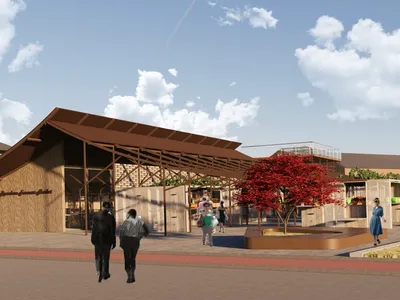
The Rhythm of Seasons
A Farmers' Market Connecting Nature and the City

More Than a Building-Designing a Living System
More Than a Building-Designing a Living System
Base Beyond
DESERT COMPOUND ARID: TOURISM OF ABSENCE AND ABUNDANCE

Explore Riverfront Development Competitions
Discover active competitions in this discipline


Challenge to reimagine the Iron Throne

Photograph architecture without architects

Illustrate the lost glory of Angkor Wat - Render Challenge

Design challenge to reuse E-waste
Comments (0)
Please login or sign up to add comments
No comments yet. Be the first to comment!