

Re:Teramoto House Refurbishment by Coil Kazuteru Matumura Architects
Re:Teramoto House in Itami blends traditional Japanese doma with modern design, featuring double-height foyer, natural light, tactile materials, and seamless spatial flow.


Architects: Coil Kazuteru Matumura Architects
Located just 10 kilometers from Osaka, Itami in Hyogo Prefecture is a city steeped in history. Nestled between the Ina and Muko Rivers, archaeological finds like stone tools and pottery fragments reveal its rich cultural past. In this context, Re:Teramoto House represents a sensitive architectural intervention that bridges historical domestic traditions with contemporary living standards.


The project reimagines a traditional 19th, early 20th-century Japanese home. Historically, the doma, or entrance foyer, functioned as a ground-level hub, integrating a wood-burning cooker and sink, and serving as a social nucleus for the family while connecting the interior with the neighborhood. Coil Kazuteru Matumura Architects drew inspiration from this concept, designing a modern entrance foyer that reconnects the home’s interior spaces while maintaining a subtle dialogue with its past.
Renovation Concept and Spatial Design
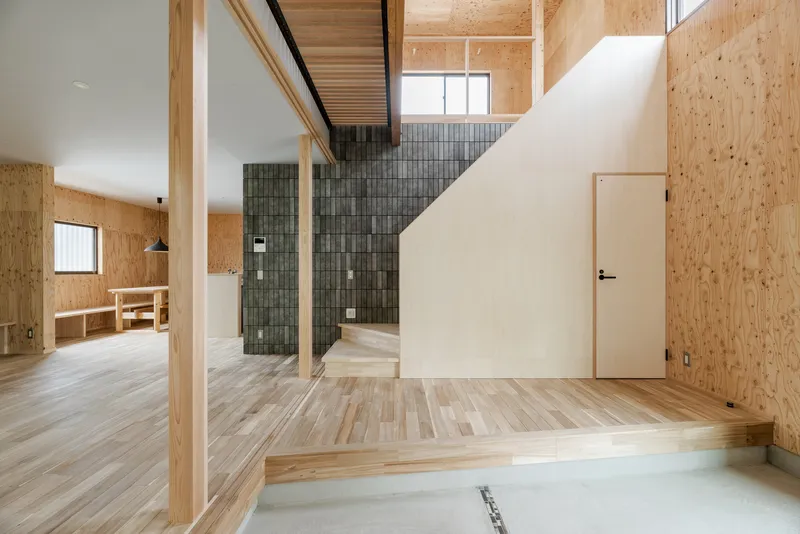
Positioned along a main road in a residential district, the home demanded a renovation that emphasized light, connectivity, and spatial flow. The centerpiece is a double-height entrance foyer that establishes a sense of openness while guiding movement through the house.
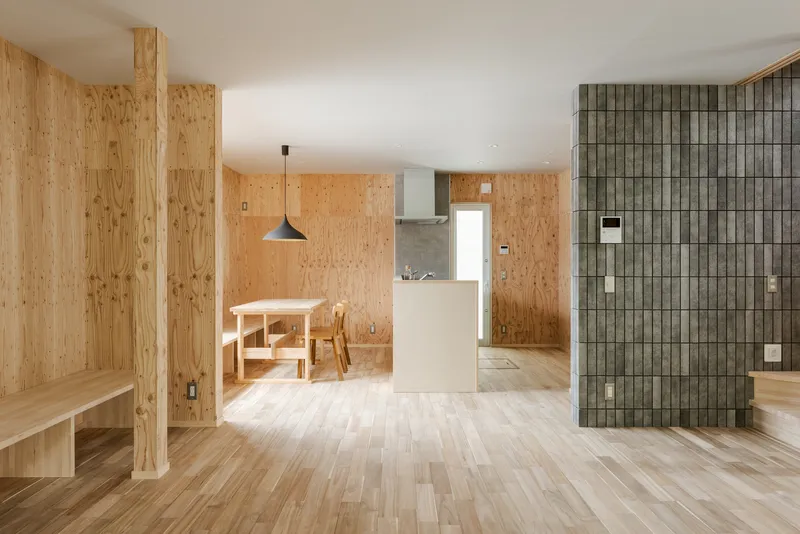
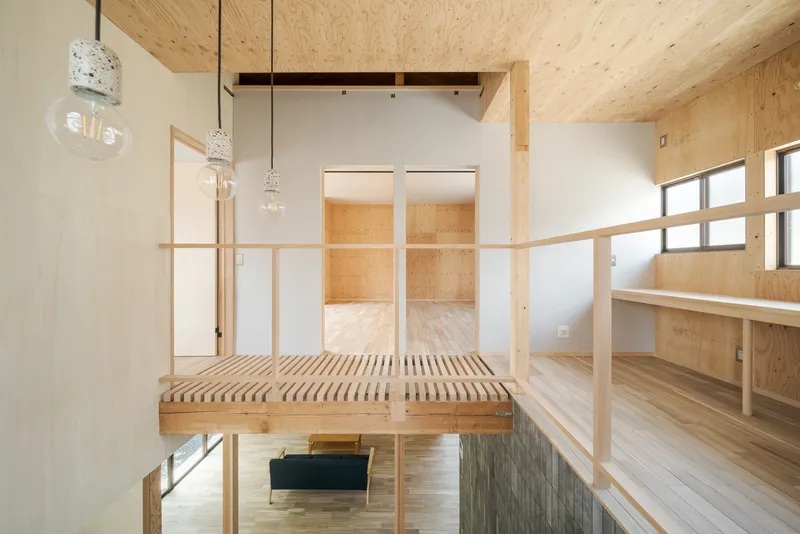
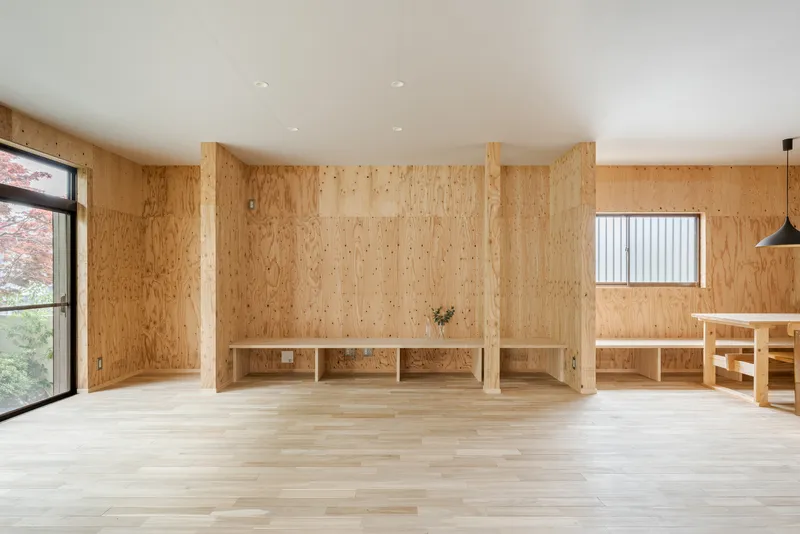
The renovation began with dismantling the interior to expose the underlying structure. Structural plywood was applied to walls and ceilings, both to reinforce the building seismically and to serve as an elegant final surface, blending utility with aesthetic refinement.
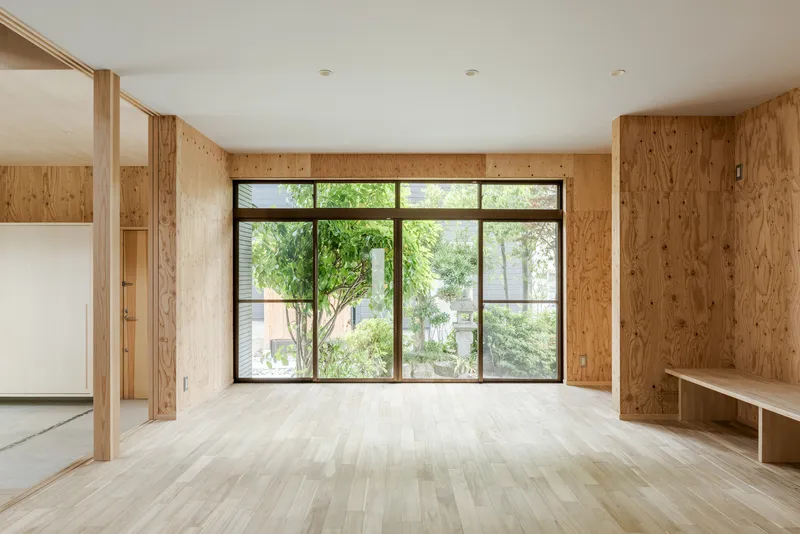
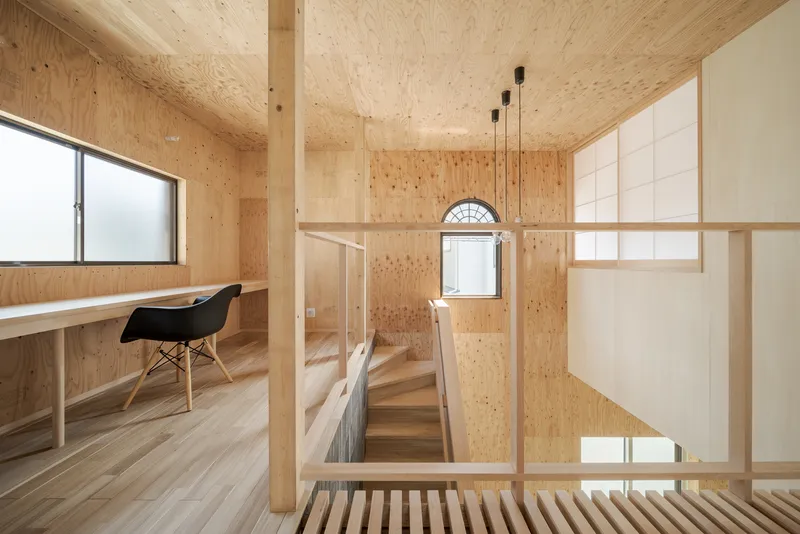
Natural light is a defining feature throughout the home. A large arched window floods the foyer with sunlight, complemented by a front-facing window with integrated seating. The main floor features four sliding partitions that allow the space to be opened up, creating a continuous, flexible living area reminiscent of traditional doma. Mosaic tile details embedded in the concrete floor enhance the sensory experience while highlighting craftsmanship.

Materials and Finishes
Every material choice balances tradition, functionality, and modern aesthetics:
- Feature wall: Gray tile in the foyer provides a bold yet refined backdrop for the staircase leading to the second floor.
- Bedroom: Tosa washi paper with white charcoal regulates humidity while offering a tactile, natural surface.
- Living room: Shina plywood complements shoji-style windows, creating a warm, minimalist atmosphere.
- Corridor: Slatted flooring generates a floating sensation, enhancing the connection between rooms.
The result is a home where each element, from the structural plywood to the tactile finishes, contributes to a cohesive modern Japanese interior that respects the heritage of domestic architecture.

Lifestyle and Experience
The Re:Teramoto House renovation transforms everyday living into a harmonious experience. The entrance foyer functions as a social nucleus, much like the traditional doma, but adapted for contemporary lifestyles. Spaces flow seamlessly, allowing residents to move freely while maintaining a connection with the outdoors.
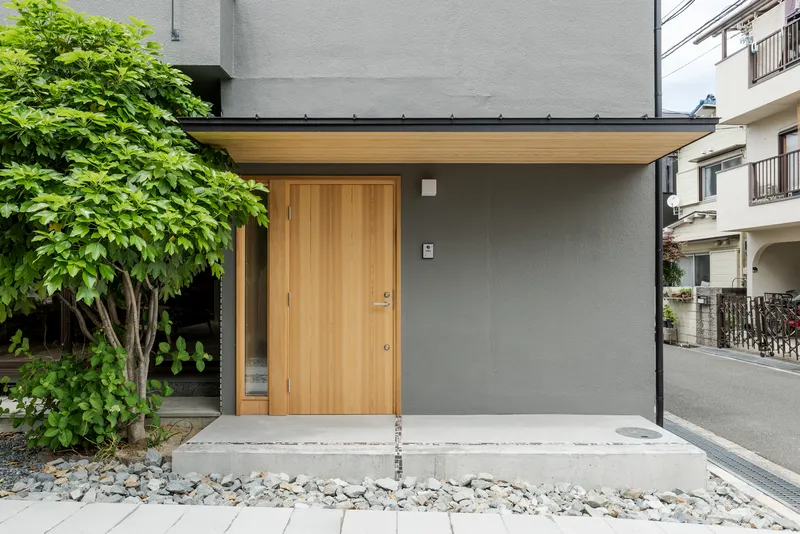
Through careful attention to light, materials, and spatial continuity, Coil Kazuteru Matumura Architects created a home that is both modern and culturally resonant, preserving historical context while enhancing comfort and functionality.
Select an Image


Popular Articles
Popular articles from the community


Cloaked Colonization: A Mobile Underwater Habitat That Moves Like a Fish
Micah Abaya's shortlisted EHC Pacific entry reimagines ocean settlement as a dispersed network of self-sustaining architectural organisms.

Manzana Morphosis: Stretching Barcelona's Grid into a Living Landscape for 2050
A radical reworking of the Eixample manzana turns density into a tool for generous public space, vertical ecology, and environmental performance.

Opera by the Sea Estonia: Three Shells Dissolving Architecture into Tallinn's Coastline
A winning opera house proposal replaces monumental form with interconnected shells that blur the boundary between building, park and Baltic Sea.

Tsunami Convergenics: Turning Catastrophic Ocean Forces into Underwater Housing Infrastructure
A speculative underwater settlement off the coast of Onagawa, Japan, treats tsunamis and typhoons as energy sources rather than threats.

Similar Reads
You might also enjoy these articles


Hodi-Mandai Geram
Project Function: Preservation and revitalization of the Intangible heritage and socio-spatial identity of the Hodi by Housing, Cultural Memory Center, Sacred Grove, landscape, local tourism economy


Olio Towers: A Mid-Rise for Performers That Fuses Housing, Rehearsal, and Stage
Located blocks from Houston's Theater District, this modular tower stacks living units around a central performance atrium.

Oasis: Modular Green Housing Carved into Dhaka's Urban Fabric
A shortlisted Plugin Housing entry reclaims unauthorized settlements in Dhaka with stepped concrete volumes, green roofs, and ventilation-driven design.

Black Hole: A Floating Megastructure for the Post-Physical Era
Emiliano Mazzarotto envisions a spherical, self-scaling arena where e-sports, digital hotels, and holographic stadiums replace traditional public space.

Explore Traditional Japanese Competitions
Discover active competitions in this discipline

Challenge to reimagine the Iron Throne

Photograph architecture without architects

Illustrate the lost glory of Angkor Wat - Render Challenge

Design challenge to reuse E-waste
Comments (0)
Please login or sign up to add comments
No comments yet. Be the first to comment!