

Retrospecting Genocide- Awakening the Existence of Zinzira Bazar
Three million people were ruthlessly killed in Bangladesh in 1971, however, the genocide is still unrecognized globally. The Pak militants and their collaborators systematically spirited people away, killed and dumped bodies in either the killing site or separate mass graves. These killing sites, mass graves, and torture cells are disseminated around the country. Unfortunately, there was little visual documentation of these atrocities. After independence, only a few major mass graves were conserved, protected, and recognized as historical sites. Through this research, one of the most significant killing sites from Zinzira is identified and found as a probable space of massacre to create a memorial journey balancing the existing functions of the site which is a large-scale bazar- thus creating harmony between the subsisting programs and the history.

The project ‘Retrospecting Genocide- Awakening the Existence of Zinzira Bazar’ gives a hint of the co-existence of two different major functions at the same time. A bazar that serves the neighborhood for a major time span also, became a prime shareholder of the history of our liberation war in 1971. On April 2nd, The Pak military vandalized the Zinzira bazar and killed almost 700 people who took shelter escaping from Dhaka during ‘Operation Searchlight’ took place on 25th March. The mass killing stretched in Zinzira, Kalindi, and Shubhadya union from Keraniganj. Reasons behind the site Zinzira was taken- being one of the most atrocious killing sites in the history of our liberation war, horrific storyline, and strategically important zone during the war. In this project, the task was to tie up this phenomenon with the existing function in a way that no single attribute deluges another one. The revival of the bazar comes as a part of the total thought process where neighborhood engagement would highly be encouraged. In order to express the rendezvous, it introduces a few new functions and withdraws its boundary to have access from all over the neighborhood, creating various types of facilities not only for the stakeholders of the project but also for the neighborhood and beyond. The additional functions along with the traditional bazar are- a mosque, madrasa hostel, library, confectionary-café, movie hall, marketplace, warehouse, wholesale dock and a boat terminal. The experiential journey starts from a -15’ plaza connecting the boat terminal which is also a part of Gallery 1. Gallery 1 is based on the idea of the prologue of our Liberation war. Gallery 1 leads to Gallery 2 which is placed under the traditional bazar respectively at -15’ and -25’ levels. This one is based solely on the Zinzira Massacre. A chair from one of the victim’s houses is placed there as an exhibit including other items. The third Gallery is a block of library and experiential pathway which connects the mosque and café terrace. The journey ends at a Banyan tree plaza that is a witness of the Zinzira Genocide of 1971. The third gallery is designed to express the story of our liberation war in 1971. The boat terminal is designed to replace all the three existing ‘ghaat’ nearby the site in a way that still operates at the same location; additionally, passenger waiting, toilet, and docking system is included to enhance the experience. Moreover, a part of the terminal works as Gallery 1 including the curatorial office. The mosque was re-zoned to make accessible road network uninterrupted, relocated and have a jenana floor that both can be accessed from the neighborhood aspect and the projected mass level. The traditional bazar is introduced with some facilities and divided into different zones which made the bazar more efficient. The wholesale setup and warehouse are shifted to the basement 1 level which will also house a loading-unloading dock for mass transportation. The marketplace is designed to house other rentable shops and a movie hall comes with a rooftop café and a terrace garden. A confectionery, café and super-shop block are there which is connected to the library block. The project is based on the idea of Neo-contextuality. The approach to the project can be defined in 2 ways. Large scale considerations in an urban context and the co-relationship among several functions.


Popular Articles
Popular articles from the community


Opera by the Sea Estonia: Three Shells Dissolving Architecture into Tallinn's Coastline
A winning opera house proposal replaces monumental form with interconnected shells that blur the boundary between building, park and Baltic Sea.
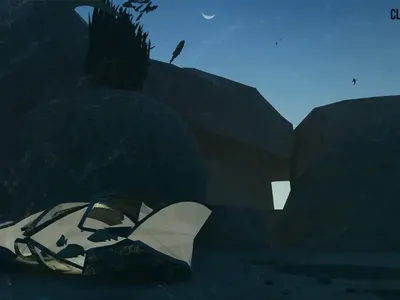
Cloaked Colonization: A Mobile Underwater Habitat That Moves Like a Fish
Micah Abaya's shortlisted EHC Pacific entry reimagines ocean settlement as a dispersed network of self-sustaining architectural organisms.

Faces of the Soviet Avant-Garde: Turning Moscow's Street Names into an Open-Air Museum
A network of sculptural installations across a Moscow residential district transforms forgotten architect names into spatial encounters with cultural memor

Opera on the Sea: Driftwood Logic Shapes a Timber Opera House on Estonia's Coast
Trevor Orgill's opera house translates the entangled drift of floating timber into a civic building where wood, water, and music converge.

Similar Reads
You might also enjoy these articles

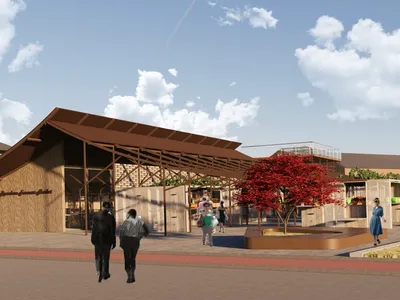
The Rhythm of Seasons
A Farmers' Market Connecting Nature and the City
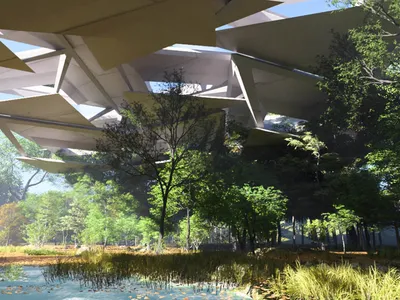

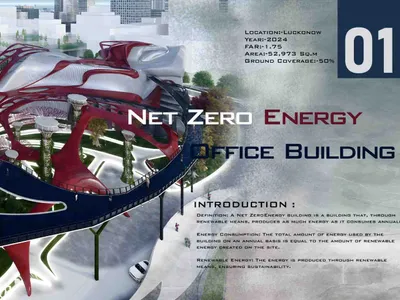
More Than a Building-Designing a Living System
More Than a Building-Designing a Living System
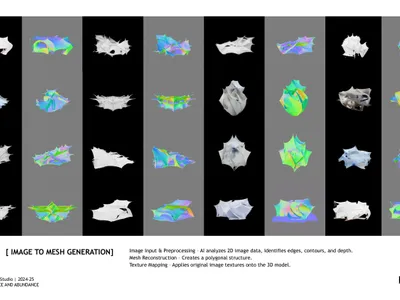
Base Beyond
DESERT COMPOUND ARID: TOURISM OF ABSENCE AND ABUNDANCE

Explore Research Competitions
Discover active competitions in this discipline


Challenge to reimagine the Iron Throne

Photograph architecture without architects

Illustrate the lost glory of Angkor Wat - Render Challenge

Design challenge to reuse E-waste
Comments (1)
Please login or sign up to add comments
10/10 !