
Revolutionizing Higher Education: Inside the Jaw-Dropping New Campus Transformation in Milan!
Discover the Futuristic Designs and Cutting-Edge Technologies that are Taking Learning to the Next Level!

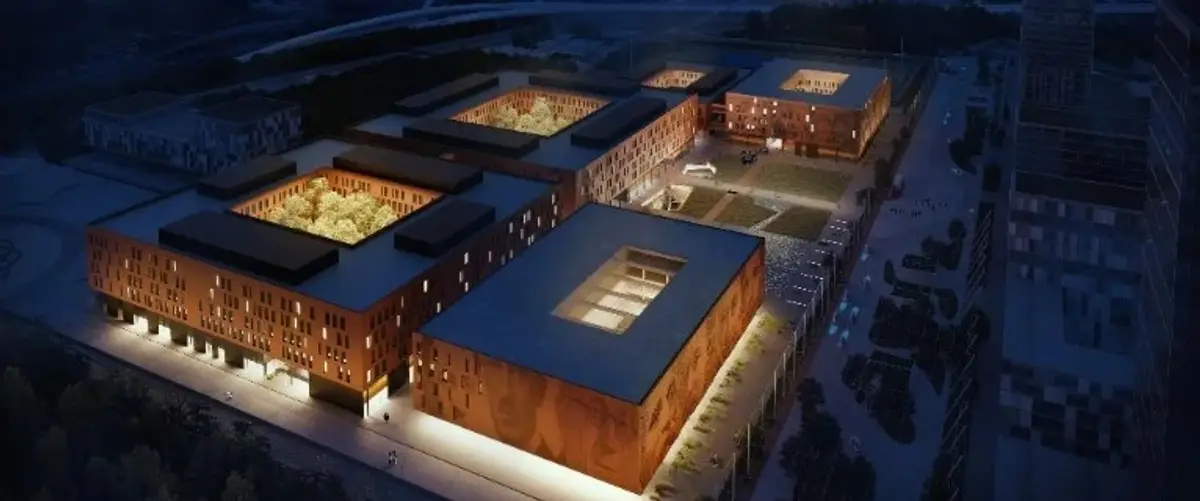
Carlo Ratti Associati, an international design and innovation practice, and Australian real estate group Lendlease have won the international competition to design the New Campus for the Science Faculties of the University of Milan. The campus is set to open in 2025 and will be located in the MIND-Milano Innovation District, a 1-million-square-meter (10 million square feet) innovation park whose master plan was also developed by CRA. This impressive new campus will extend over 190,000 square meters (2 million square feet) and will serve approximately 23,000 researchers and students specializing in natural and formal sciences at the University of Milan.
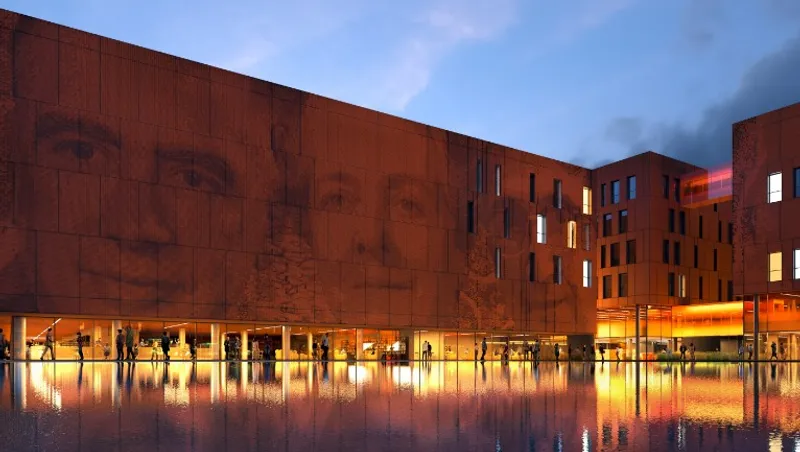
The design of this stunning new campus, developed by CRA in collaboration with architect Italo Rota, is centred around a network of green courtyards, a series of uninterrupted walking paths at different heights, and five brick buildings. The buildings pay tribute to the 15th-century brick building designed by the Renaissance architect Filarete, which today hosts the central seat of the University of Milan. The facades have been designed with an innovative construction technique, with each brick individually positioned by a robotic arm and treated as a pixel within a large-scale bas-relief. The result will be a three-dimensional tapestry with textual and visual content.

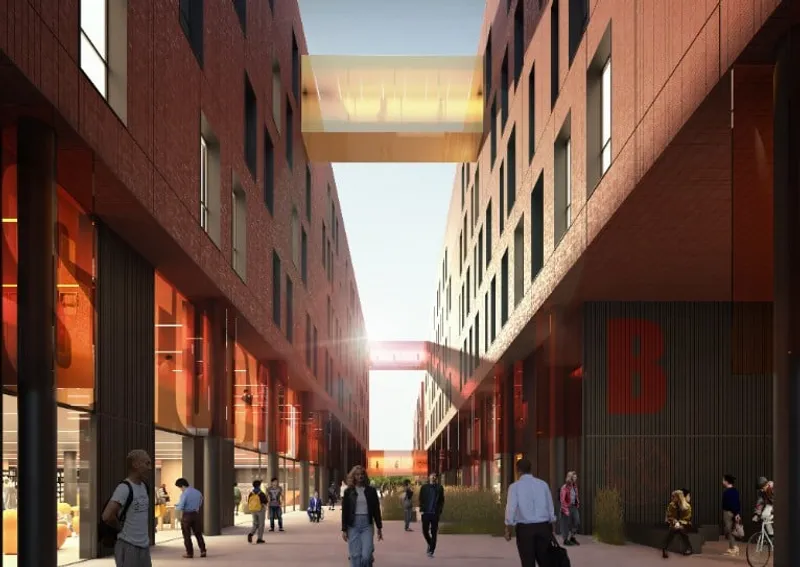
The project’s main typological features – the courtyards and the “common ground” – are also inspired by the Ca’ Granda, which was the closest realization of Filarete’s vision for a utopian city that he called Sforzinda. “Campus 2.0” reinterprets Filarete’s design principles, albeit with 21st-century digital technologies and new approaches to teaching and learning. One of the project’s defining features is the "Common Ground", a public space that winds its way across the Campus. This uninterrupted set of walkways and crossings connect the buildings and meanders across courtyards.
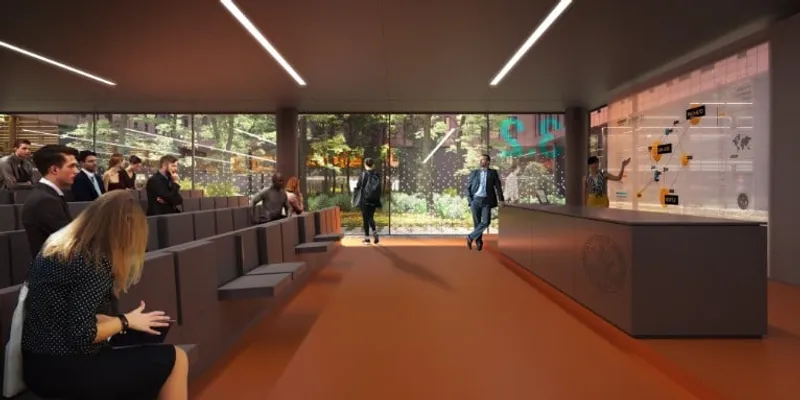
The “Common Ground” allows people to walk outdoors all year long – under a canopy or portico – over a length of more than 1,200 meters (4,000 feet). The path continues inside the buildings, with an additional 800 meters (2,700 feet) of accessible walkways at the mezzanine level. The “Common Ground” serves to reinforce the connection between the Campus and the surrounding MIND neighbourhood, fostering interaction between the academic community, and the companies and R&D centres that operate in the innovation district.
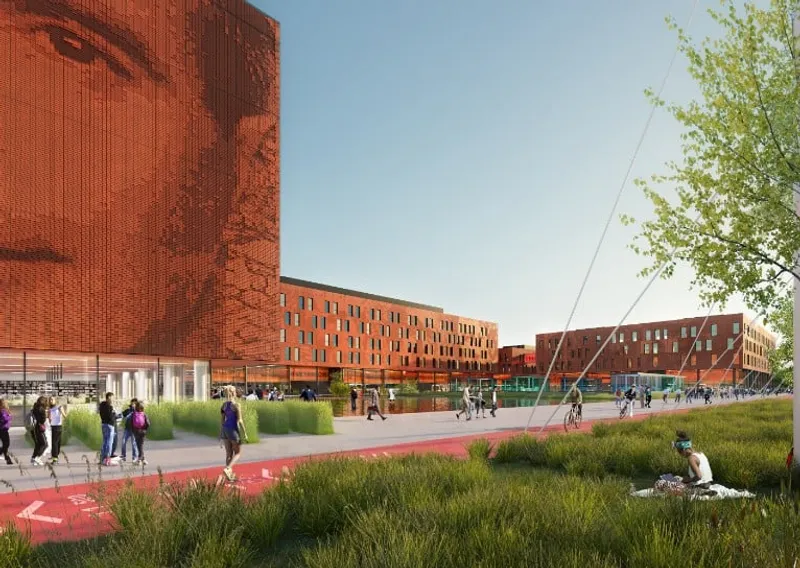
The campus also features almost 100,000 square meters (1 million square feet) of greenery, including terraces and hypogeum gardens located below the ground level. Each of the five courtyards will showcase a different landscape from Northern Italy, while the central square and lake can accommodate large events. According to Carlo Ratti, founding partner of CRA and director of the Senseable City Lab at the Massachusetts Institute of Technology, “Recent data analyses of human interaction on academic campuses have shown that there is a direct correlation between the physical proximity of researchers and scientific output. In other words, human interaction is an essential component of the discovery process. The recent pandemic, which forced scholars to live and work for months on end in isolation, only reinforced the importance of physical space. Our ‘Campus 2.0’ design elaborates on Filarete’s thinking from almost 500 years ago to create a testing ground that will promote interaction among diverse communities.”
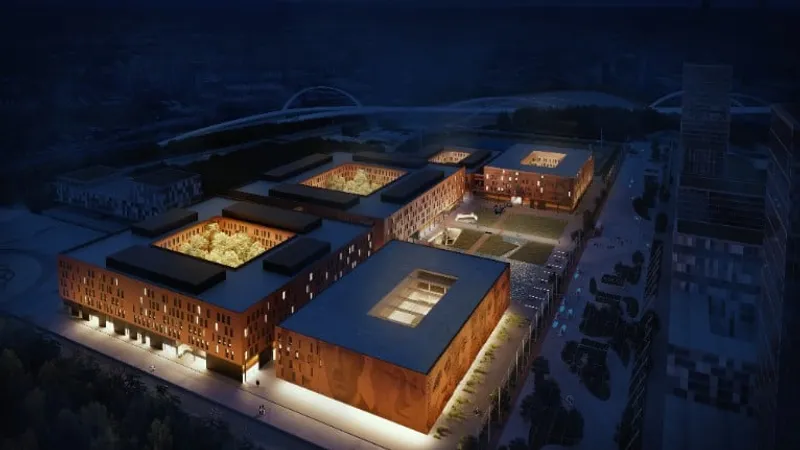
The project's creative consultant, Italo Rota, adds, “Filarete thought that architecture should focus on durability, simplicity, and affordable technical sophistication. He wanted his buildings to become the backdrop of a new humanism, blurring the boundaries between private and public spaces. At the new Campus in Milan.


Popular Articles
Popular articles from the community


ALGAL REALM: A Bio-Integrated Lunar Habitat Design for Life Beyond Earth
ALGAL REALM reimagines lunar habitat design with algae-powered life support, 3D-printed regolith, and vertical living for a lunar future.

The Musturak Paradise: Senior Living Architecture for a Connected Future in Temara, Morocco
The Musturak Paradise reimagines senior living architecture in Temara via private homes, social spaces, culture, community, and shared care.

Lunar Spiral: Space Architecture Shaped by the Mathematics of the Universe
Lunar Spiral reimagines space architecture through Fibonacci geometry, lunar regolith, levitating habitats, and self-sustaining Moon living.

Co-life: Sustainable Architecture for Age-Friendly Community Living
Co-life reimagines sustainable architecture for seniors through courtyards, rammed earth, shared gardens, and spaces designed for belonging.

Similar Reads
You might also enjoy these articles
116 Rokeby Building, Collingwood
Sustainable Collingwood office building featuring double-skin façade, natural ventilation, rooftop amenities, and carbon-neutral design focused on wellbeing and longevity.
Contemporary Apartment Renovation in Spain: RV House by BIAN Opens Up to the Sea
A minimalist 1930s apartment in Santander is transformed into a flexible, sea-facing home through contemporary Spanish renovation.
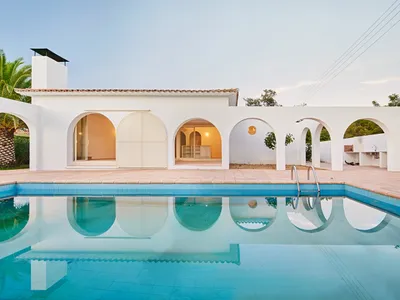
3 Marías House: A Contemporary Mediterranean Courtyard Retreat by Bajet Giramé + Burckhardt
Mediterranean courtyard home blending traditional architecture with modern design, terracotta flooring, flexible interiors, sustainable climate strategies, and garden integration.
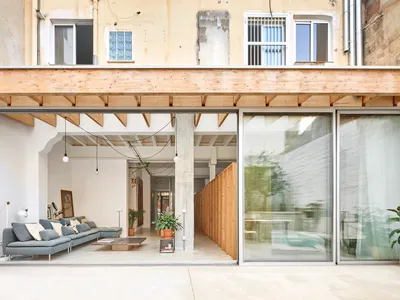
NZ10 Apartment by auba studio: Adaptive Reuse in Palma de Mallorca
Adaptive reuse apartment transforms bakery into light-filled home with patios, privacy layers, and wood interiors enhancing urban living experience.

Explore Domus Academy Milano Competitions
Discover active competitions in this discipline


Challenge to design public laboratory

Challenge to reimagine the Iron Throne

Photograph architecture without architects

Illustrate the lost glory of Angkor Wat - Render Challenge
Comments (0)
Please login or sign up to add comments
No comments yet. Be the first to comment!