
Rice Architecture Anderson Hall Renovation: A Landmark in University Architecture Renovation
Rice Architecture Anderson Hall Renovation by Kwong Von Glinow redefines university architecture renovation through history, transparency, and innovative learning spaces.


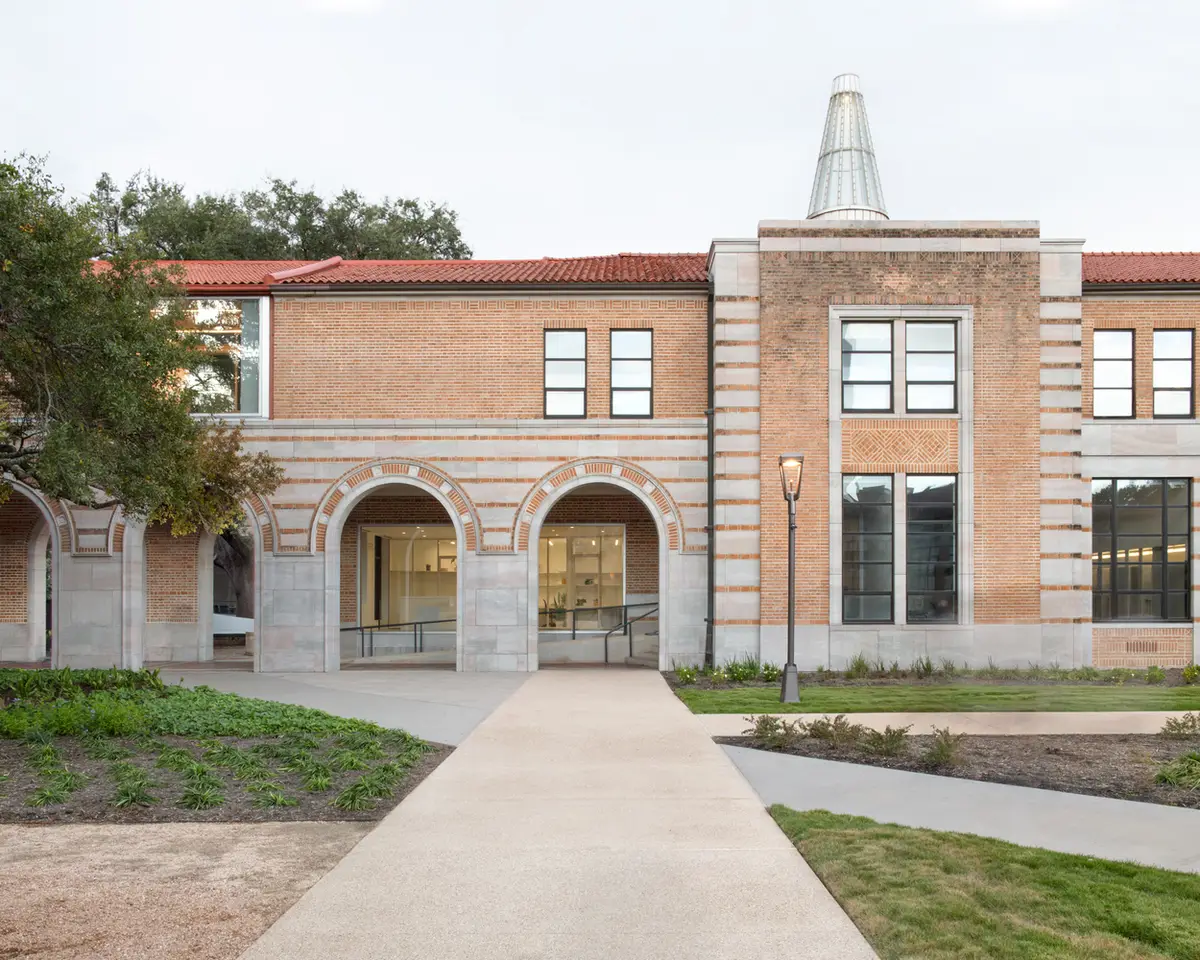
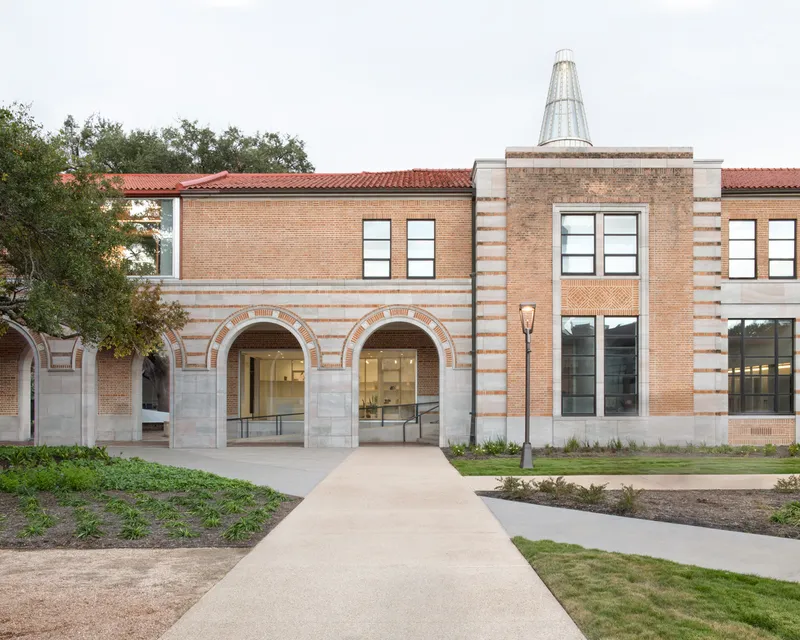
The Rice University Anderson Hall Renovation, designed by Kwong Von Glinow in 2024, stands as a leading example of university architecture renovation that both preserves and redefines institutional identity. Through a careful balance of restoration and reinvention, the project introduces three new spaces— a Welcome Center, a Student and Community Forum, and a Faculty & Staff Lounge—while respecting the building’s historical layers.
A Design Rooted in History
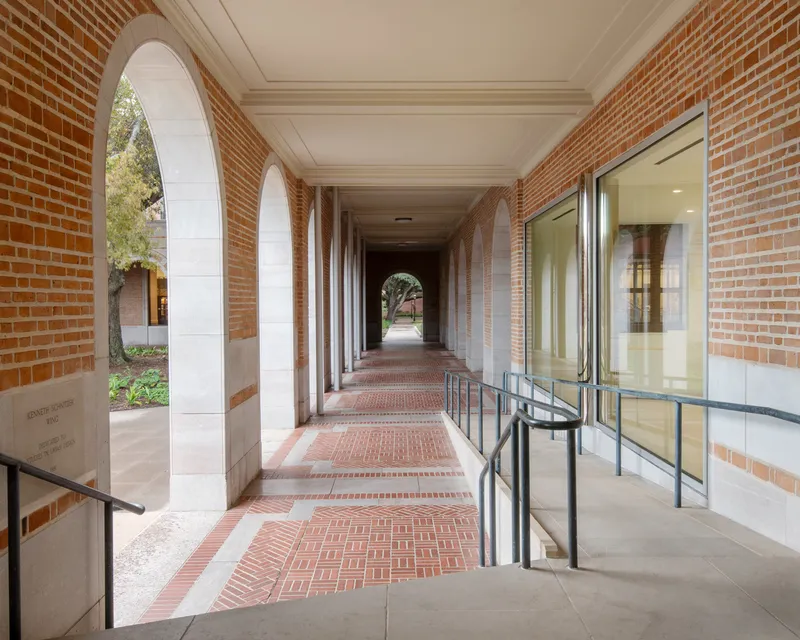
Originally built in 1947 by Staub and Rather, Anderson Hall was later expanded in 1981 by James Stirling and Michael Wilford. These two architectural legacies shaped the building into a unique hybrid of modernist geometry and postmodern interventions.
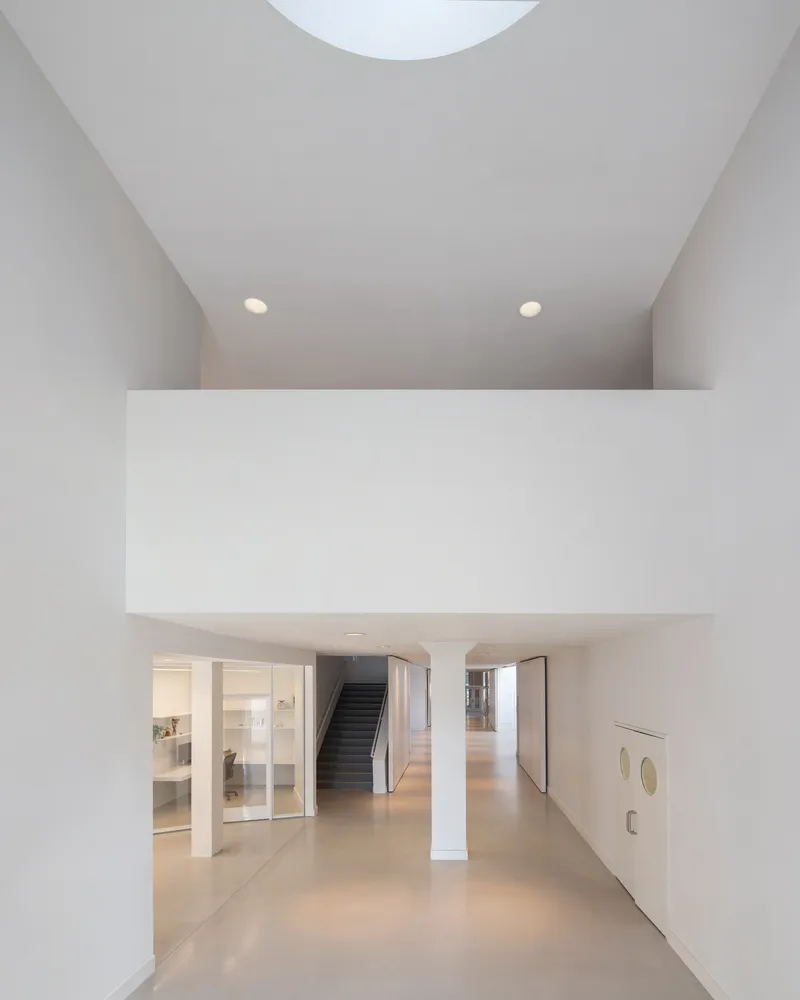
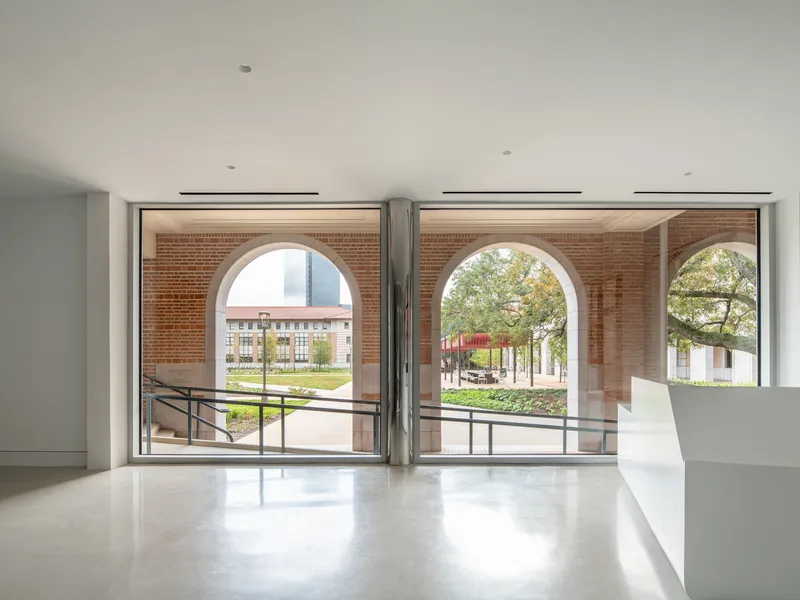
For the renovation, Kwong Von Glinow began by studying these historic elements in detail. The notion of “finding space,” inspired by Stirling’s deliberate gestures, became central to the design approach. Rather than masking historical contrasts, the renovation sought to expose and highlight the dialogue between past and present architecture.
The Welcome Center: Transparency and Connection
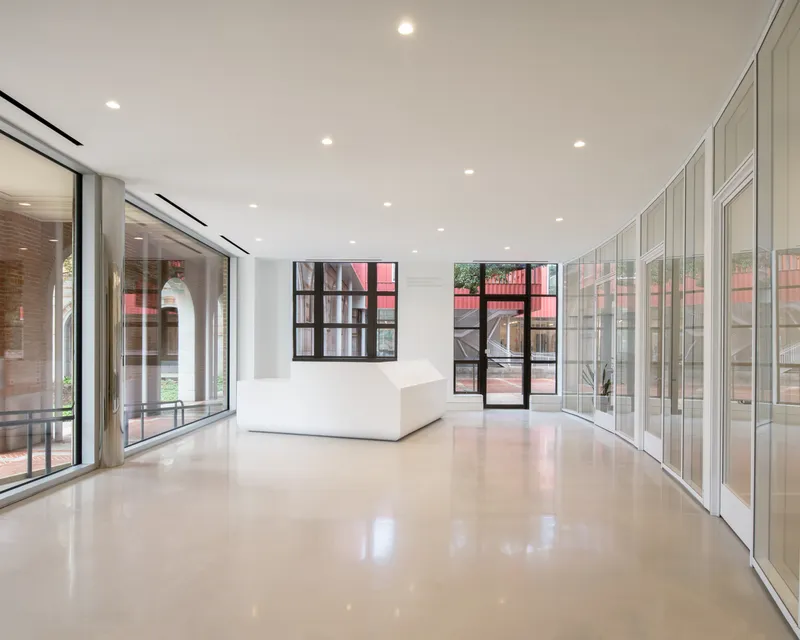
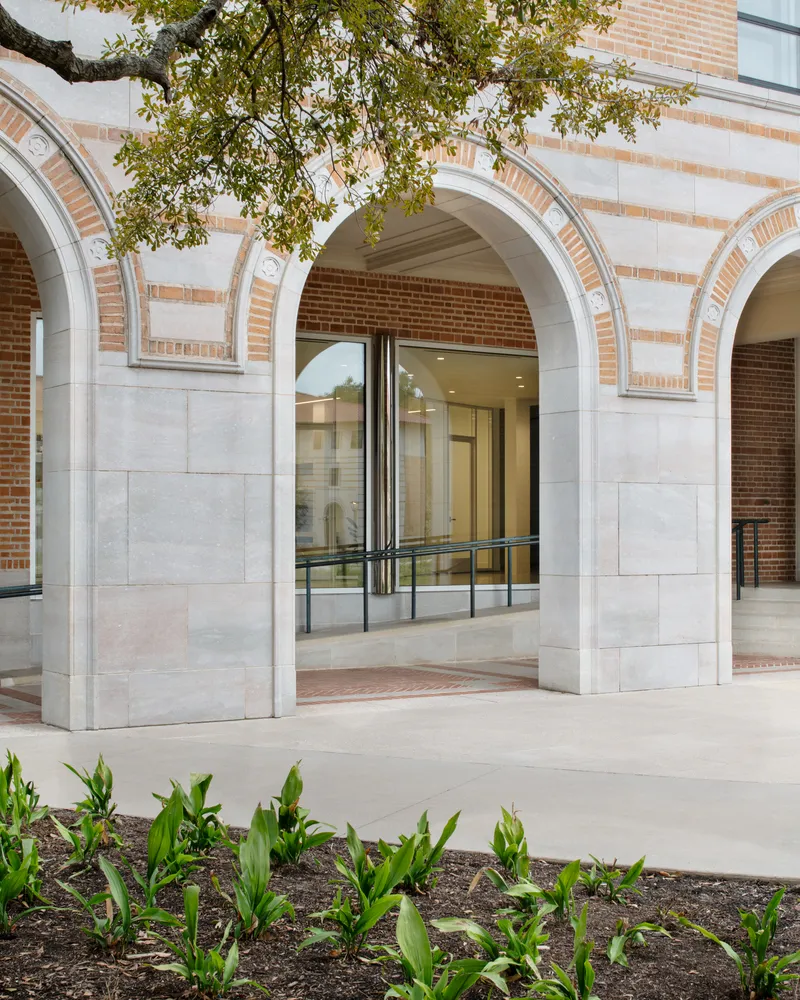
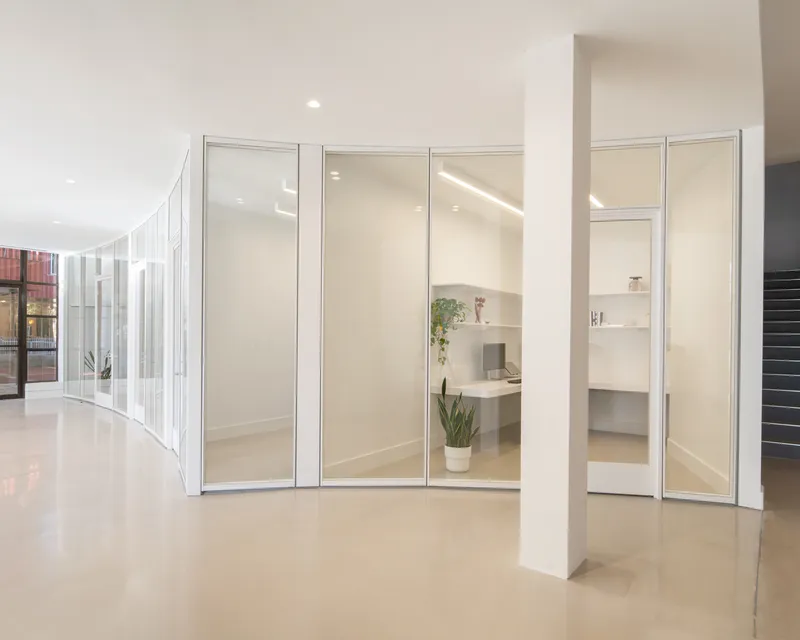
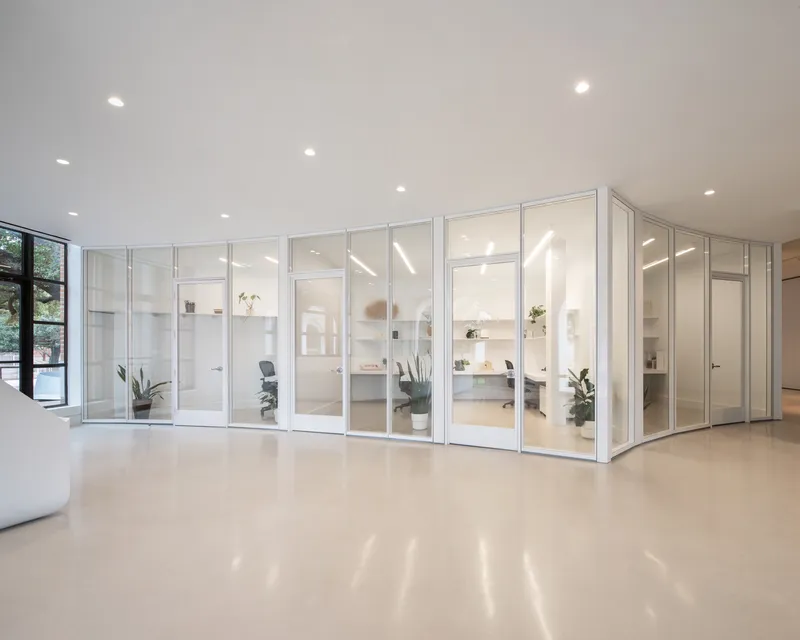
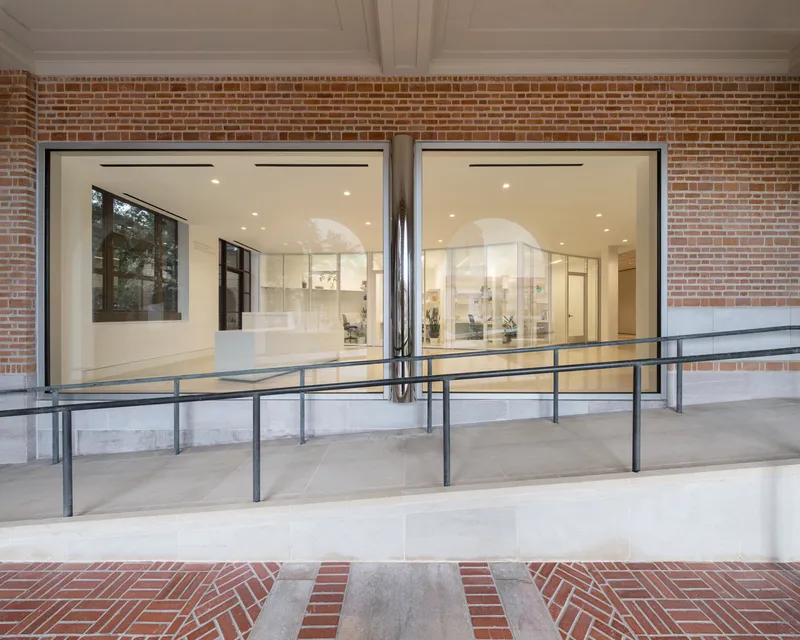
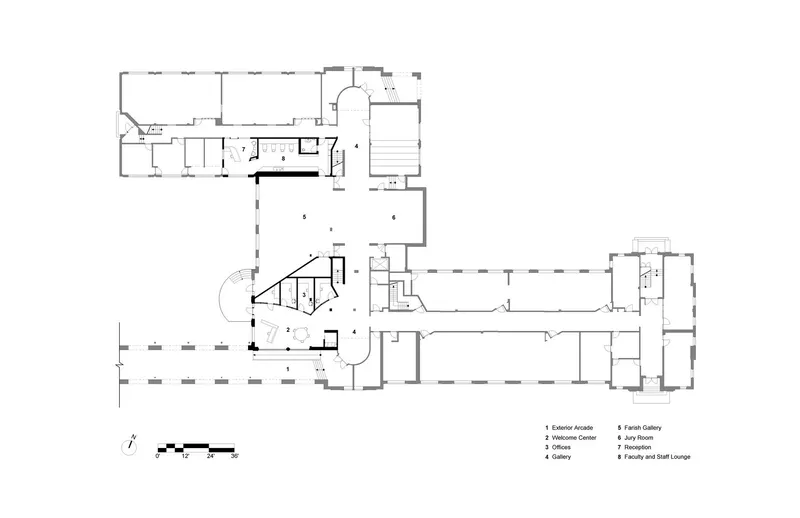
At the southeast corner, the Welcome Center replaces a formerly opaque brick wall with expansive glazing that opens the building to the campus quad. Inside, curving glass walls form four offices that invite students and visitors into the space.
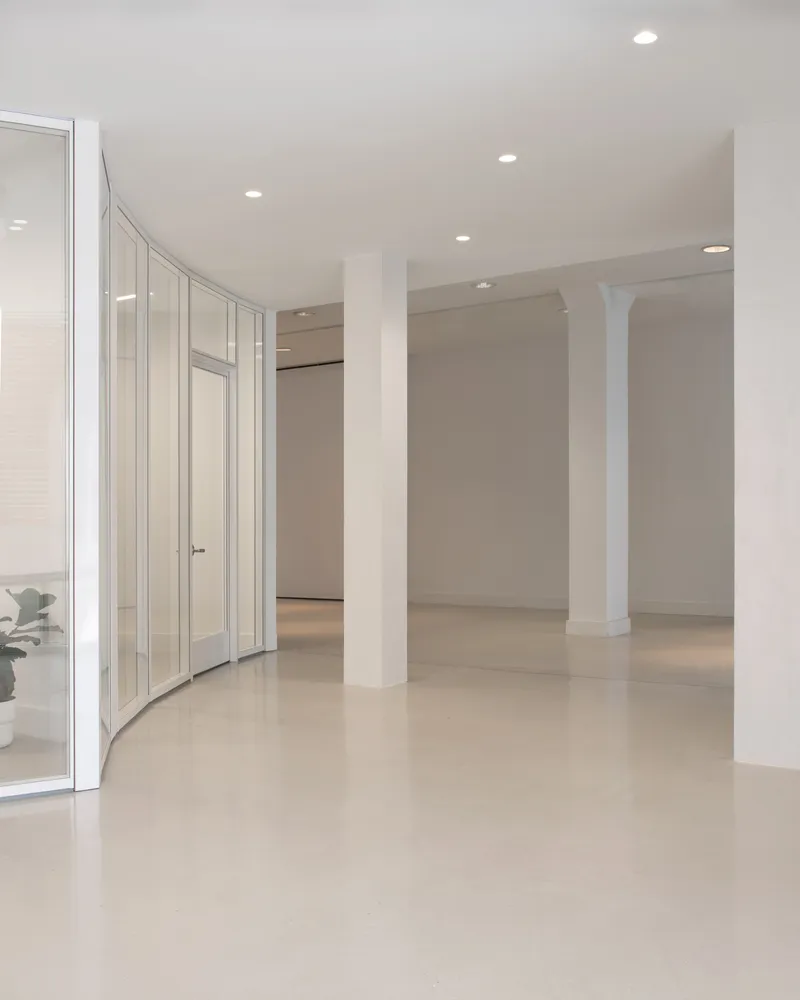
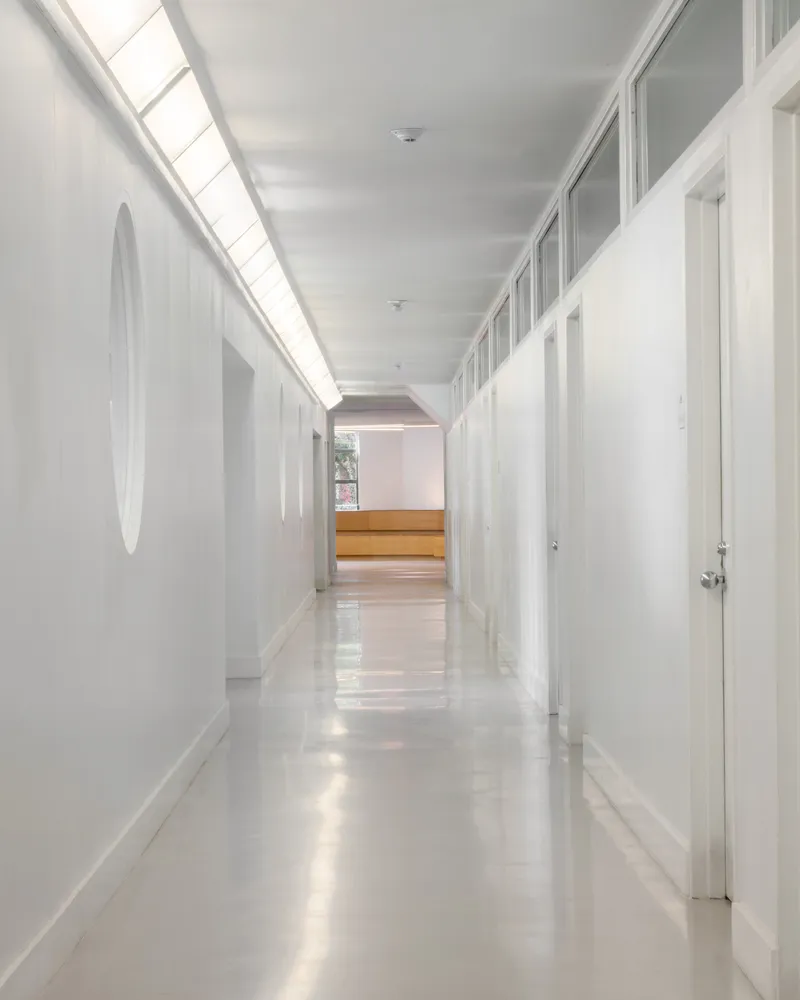
A mirror-clad structural column anchors the interior, referencing Stirling and Wilford’s original design vocabulary while reflecting the surroundings. This interplay between transparency and reflection creates a welcoming atmosphere that reinforces the hall’s role as a gateway to the school of architecture.
Student and Community Forum: Gathering Through Design
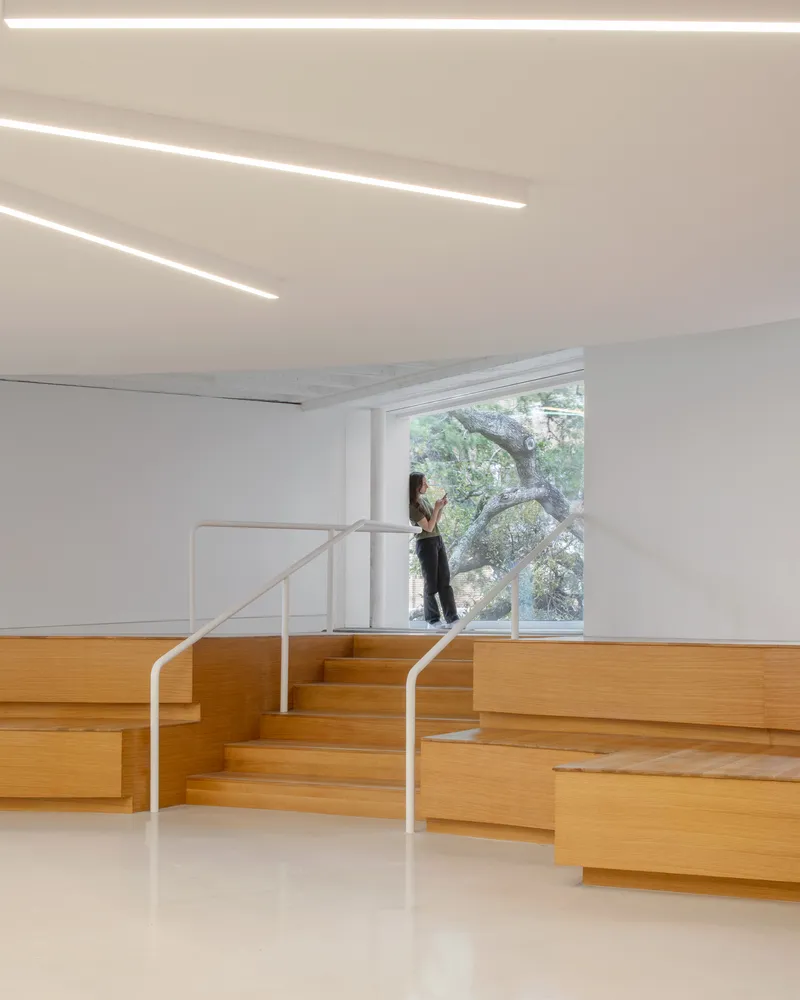
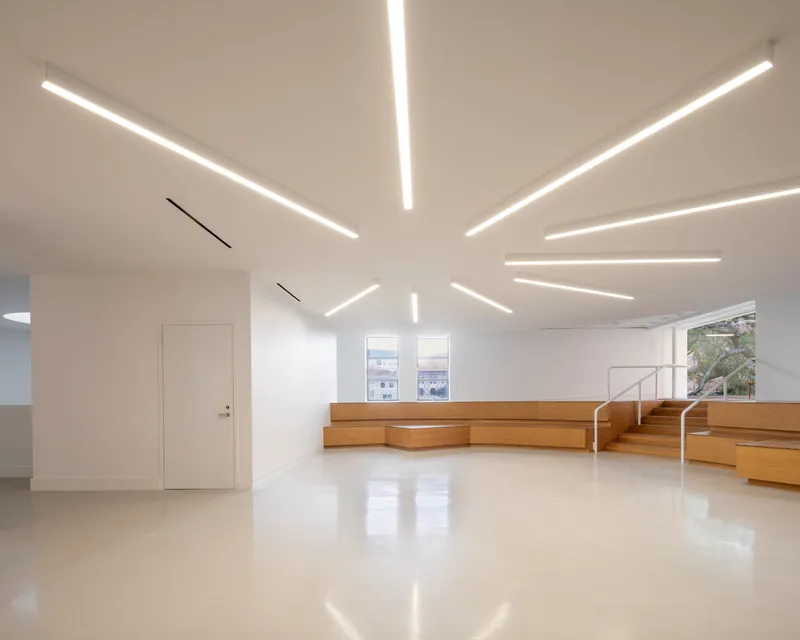
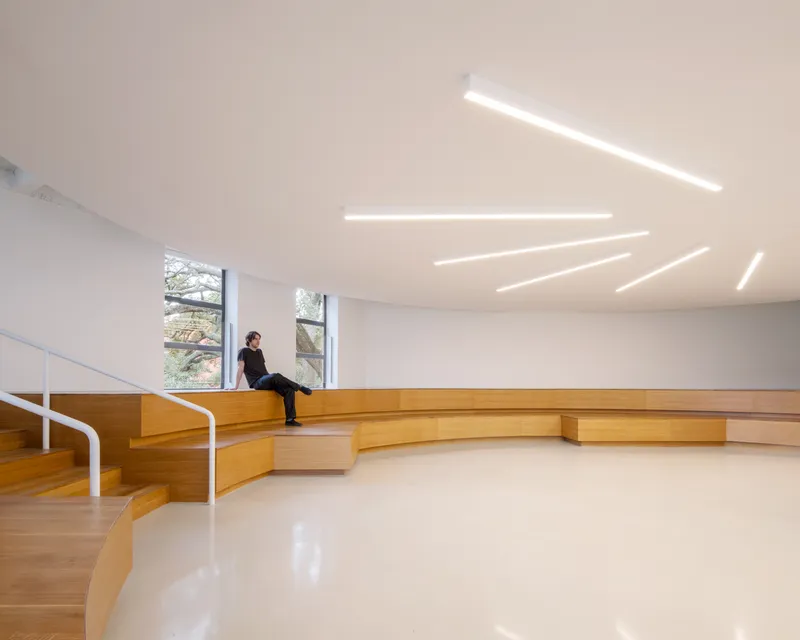
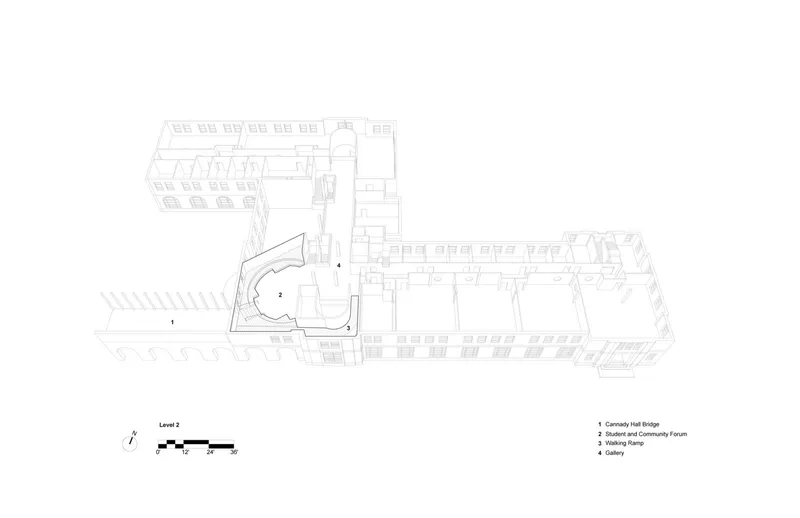
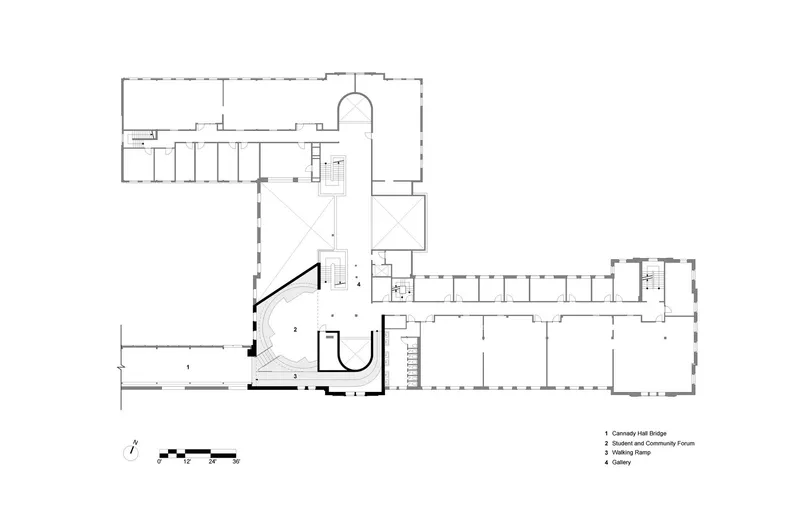
Directly above the Welcome Center, the Student and Community Forum establishes itself as the new heart of Anderson Hall. The space connects the hall to the newly built Cannady Hall through a ramp and stairway.
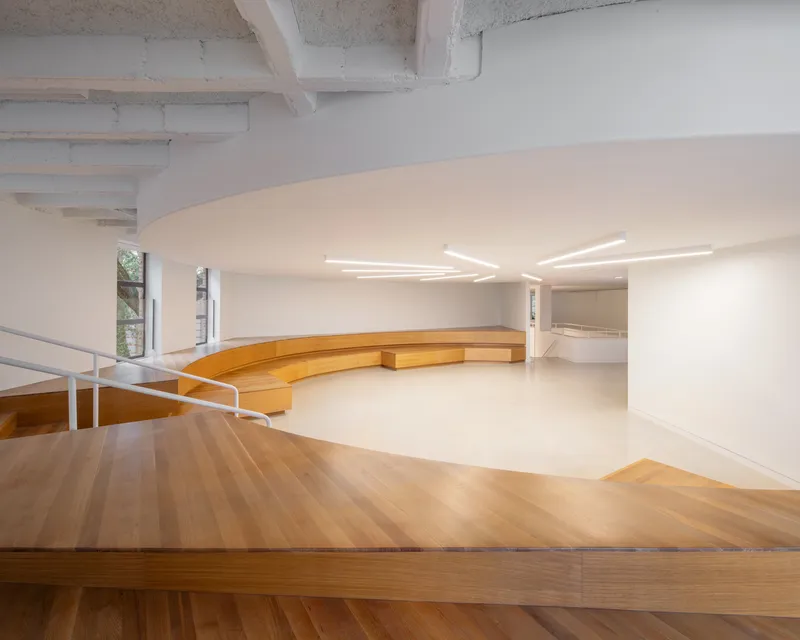
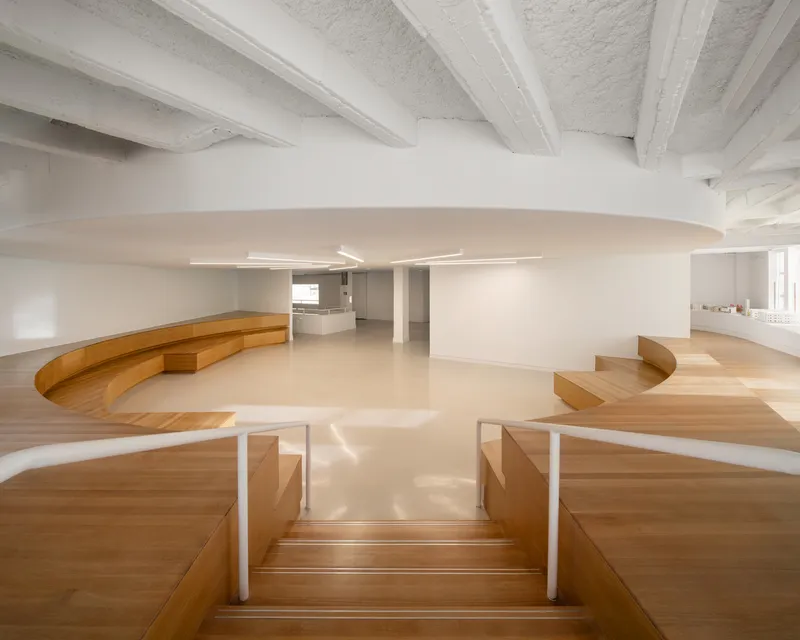
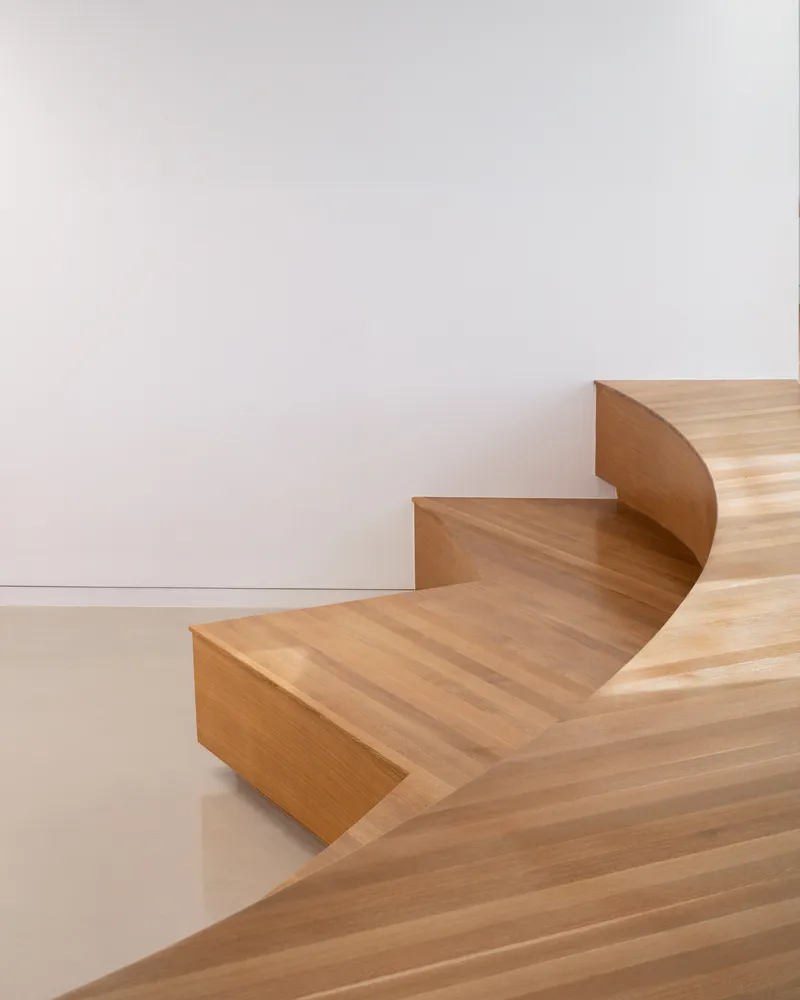
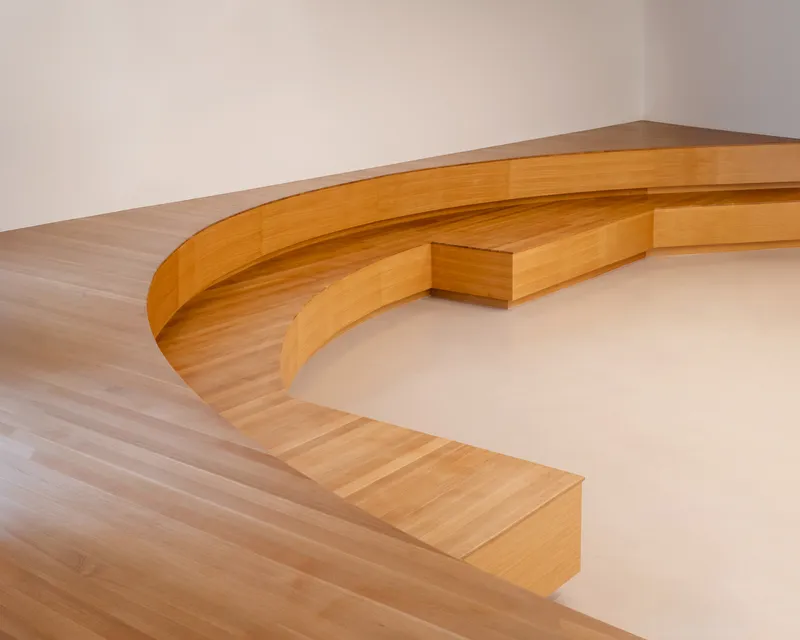
Circular built-in seating tiers foster informal student gatherings, while jutting piers and wood grain details recall the diagonal geometries of Stirling’s earlier addition. The forum embodies the essence of university architecture renovation by creating a multipurpose space that adapts to both academic and social functions.
Faculty and Staff Lounge: Redefining Workspaces
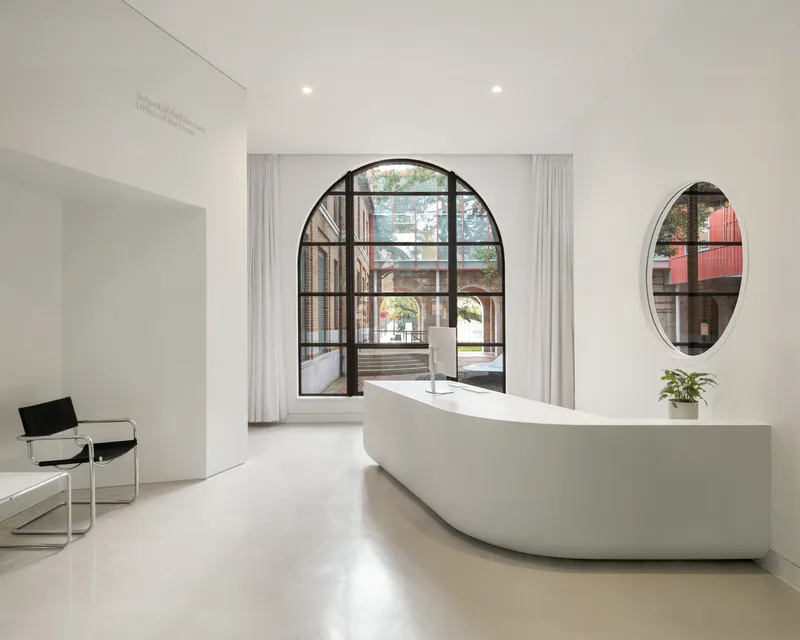
The renovation also reimagines the Dean’s Office reception area into a Faculty and Staff Lounge. A sculptural Corian desk mirrors Stirling’s design ethos, while a three-sided wedge structure separates public and private areas.
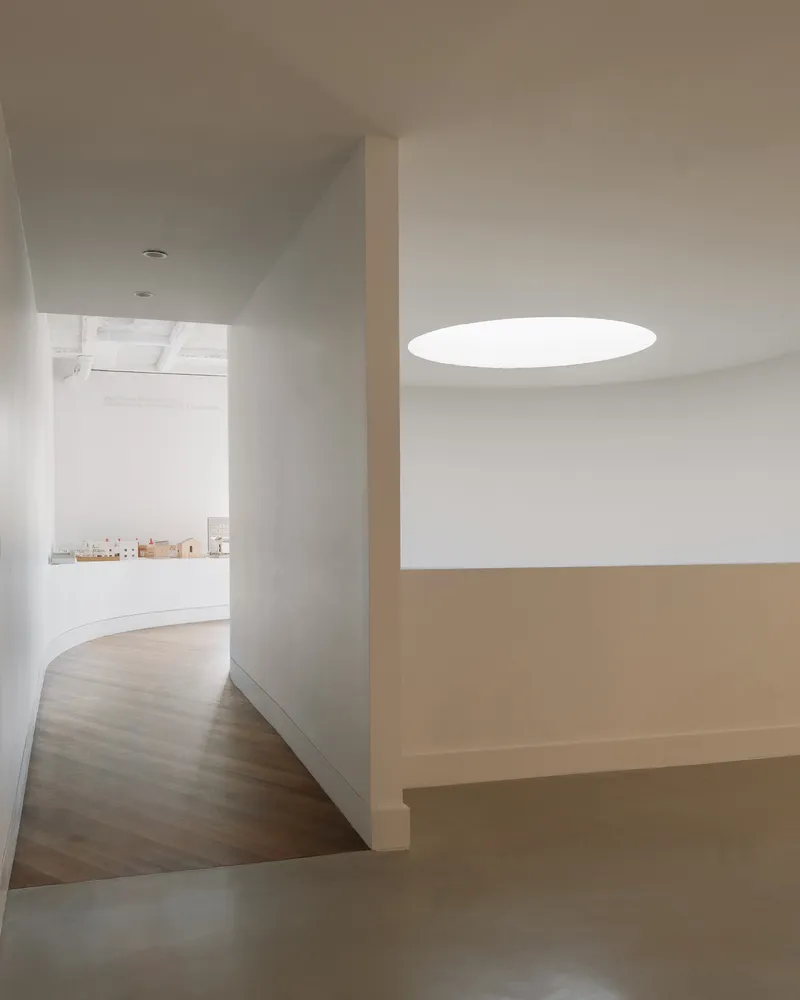
The angled geometry not only organizes the lounge but also directs natural light into what was previously a windowless zone. This transformation emphasizes comfort, accessibility, and community, reinforcing architecture’s role in shaping workplace culture within academic institutions.
A Dialogue Between Past and Present
What makes the Anderson Hall renovation exceptional is its sensitive approach to architectural heritage. Instead of erasing history, Kwong Von Glinow carefully inserted new interventions that echo the building’s layered past while serving contemporary needs.
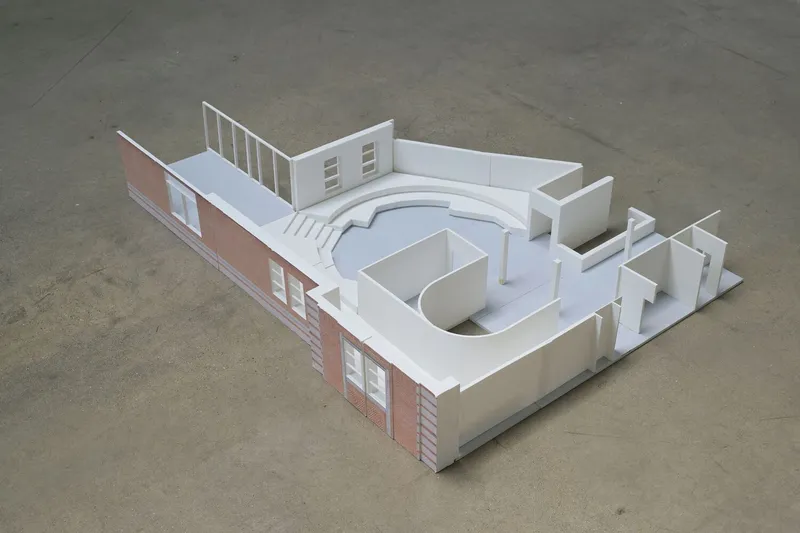
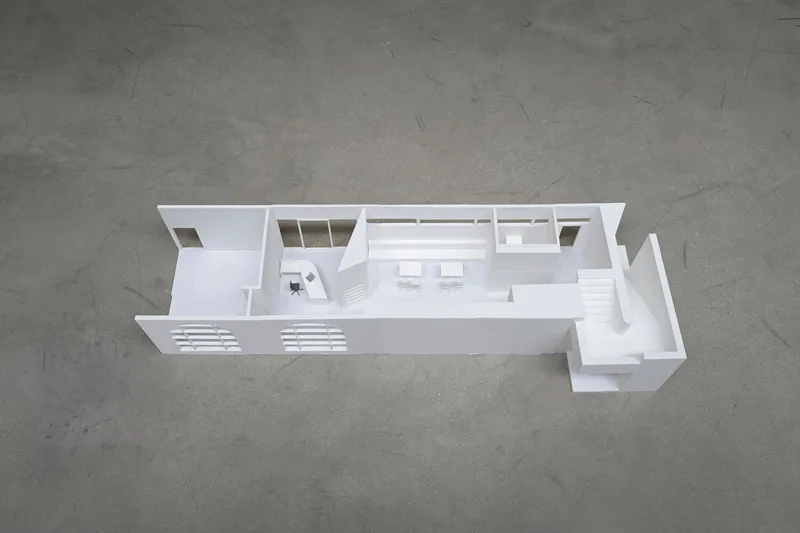
Each space—Welcome Center, Forum, and Lounge—operates as a “found” moment that enhances circulation, transparency, and engagement. The project demonstrates that university architecture renovation is not just about preservation, but about reinterpretation and reactivation of space.
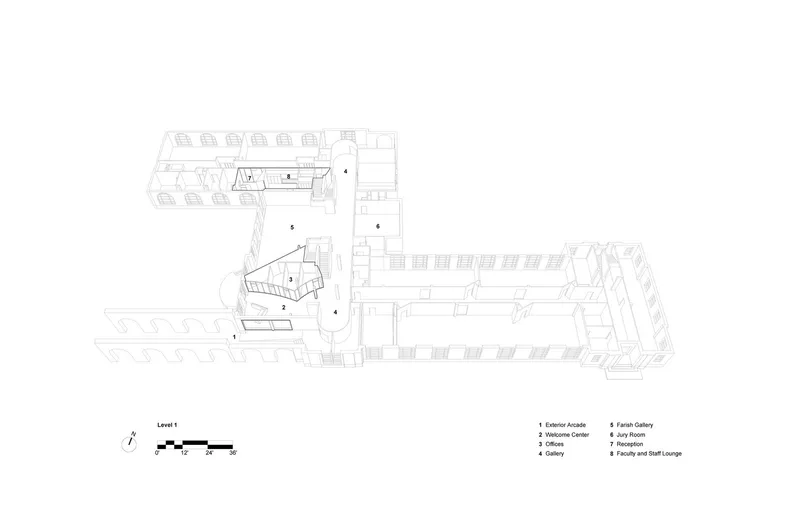
The Rice Architecture Anderson Hall Renovation showcases how thoughtful design can transform academic buildings into dynamic spaces of learning, gathering, and working. By blending history with innovation, Kwong Von Glinow sets a precedent for future university architecture renovation projects worldwide, proving that meaningful spaces are created through dialogue across time.
All Photographs are works of Mikael Olsson


Popular Articles
Popular articles from the community


ETEH Reworks the Shared Spaces of São Domingos School in Brazil Around Timber, Color and Hanging Plants
At São Domingos School in Brazil, 436 m² of hall, refectory and library are recast with timber joinery, a yellow and blue code and trailing greenery.

FCC Arquitectura Expands a Portuguese Granite House with a Board-Marked Concrete Wing
In Portugal, JV House pairs a cleaned-up whitewashed and granite dwelling with a timber-shuttered concrete extension, courtyards and a garden pool.


Singing Woman: An Opera House That Performs Before the Curtain Rises
Ovidiu Cristian Pavel's conceptual opera house translates Estonia's choral identity into a sculpted waterfront landmark facing the Baltic Sea.

Cube Design Draws an Ecological Corridor Between Two Shenzhen Hills with the Nankai Building
Beside Shenzhen's container docks, the Nankai Building pairs stacked balconies with a climbing green screen to connect two hillsides across its height.

Similar Reads
You might also enjoy these articles
Cube Design Draws an Ecological Corridor Between Two Shenzhen Hills with the Nankai Building
Beside Shenzhen's container docks, the Nankai Building pairs stacked balconies with a climbing green screen to connect two hillsides across its height.

Praksis A and Studio Sted Bend a Red Timber Cabin Across the Granite of Norway's Southern Coast
On the southern Norwegian coast, a 105 m² cabin follows the rock on slender posts, pairing red cladding outside with pine, brick and plywood within.

David Ortega Stacks a Two-Story Mexico City Penthouse Around a Steel Stair and a Pergola-Shaded Roof Terrace
In Colonia Roma, a 300 m² penthouse uses oak joinery, a planted steel stair and a slatted roof pergola to make a new-build apartment feel like a house.

PARALELA and LB2 Thread a Public Walkway Through the Base of a Las Condes Residential Tower
In Las Condes, Santiago, the Hamlet Building gives its fenceless ground floor to a 70-metre wooded passage linking two streets and the metro.

Explore Architecture Competitions
Discover active competitions in this discipline

Challenge to reimagine the Iron Throne

Photograph architecture without architects

Illustrate the lost glory of Angkor Wat - Render Challenge

Design challenge to reuse E-waste
Comments (0)
Please login or sign up to add comments
No comments yet. Be the first to comment!