
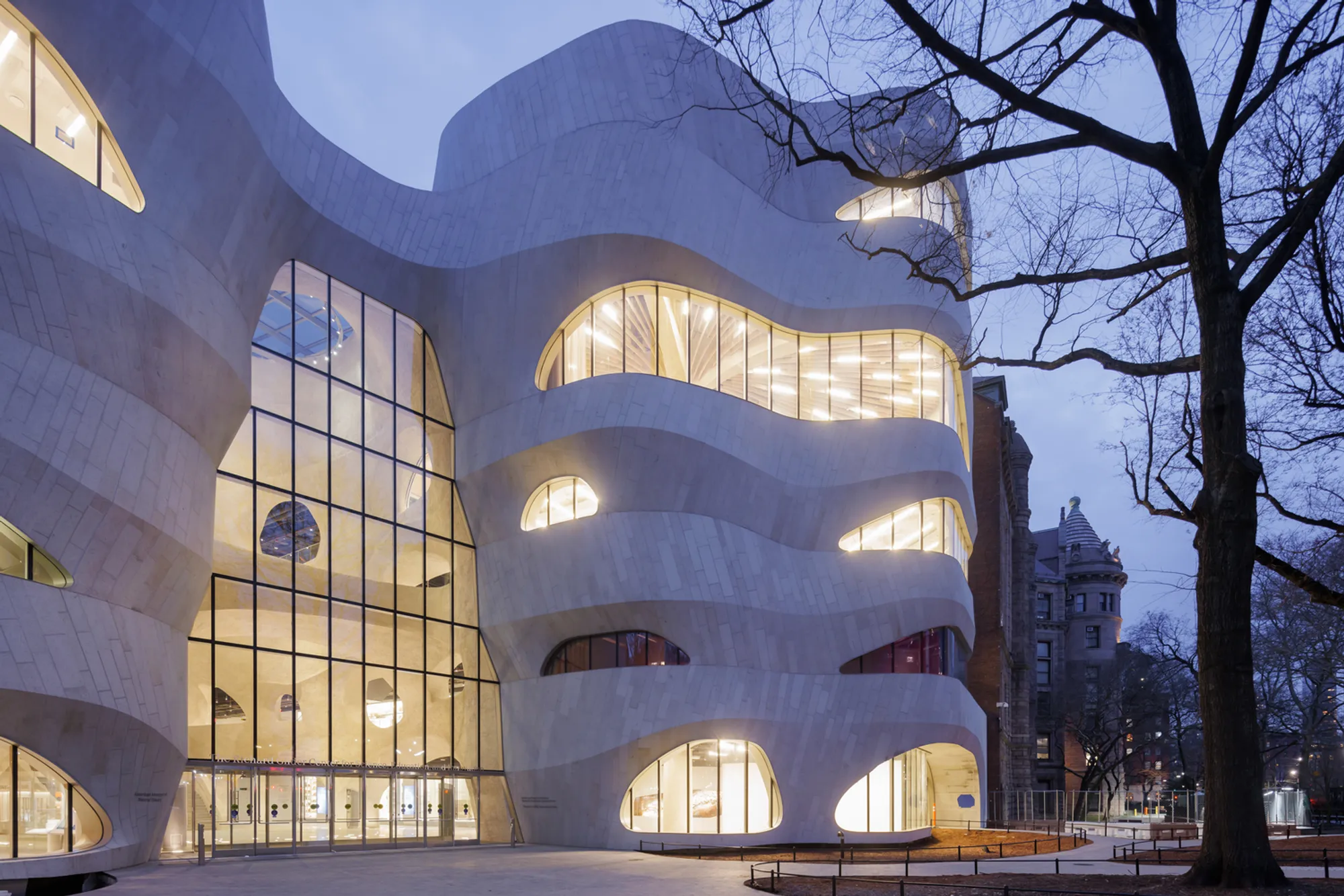
Richard Gilder Center at the American Museum of Natural History by Studio Gang
Organic, canyon-inspired museum expansion by Studio Gang featuring shotcrete interiors, bird-safe glass, and seamless connections across the AMNH campus.


Architect: Studio Gang Location: New York City, USA Year Completed: 2023 Project Type: Museum, Research Center Photography: Iwan Baan Total Area: 230,000 sq ft Manufacturers: Hofmann Naturstein, Kuraray Facade & Glazing: Milford pink granite, SentryGlas® & Trosifol® glazing
A Monumental Expansion Merging Nature, Science, and Architecture
The Richard Gilder Center for Science, Education, and Innovation, designed by Studio Gang, is a transformative addition to the American Museum of Natural History in New York. Opened in 2023, the 230,000-square-foot structure redefines how visitors experience science and nature in the heart of Manhattan. Seamlessly integrating with the Museum’s historic campus, the $465 million project strengthens physical and conceptual connections across the institution.
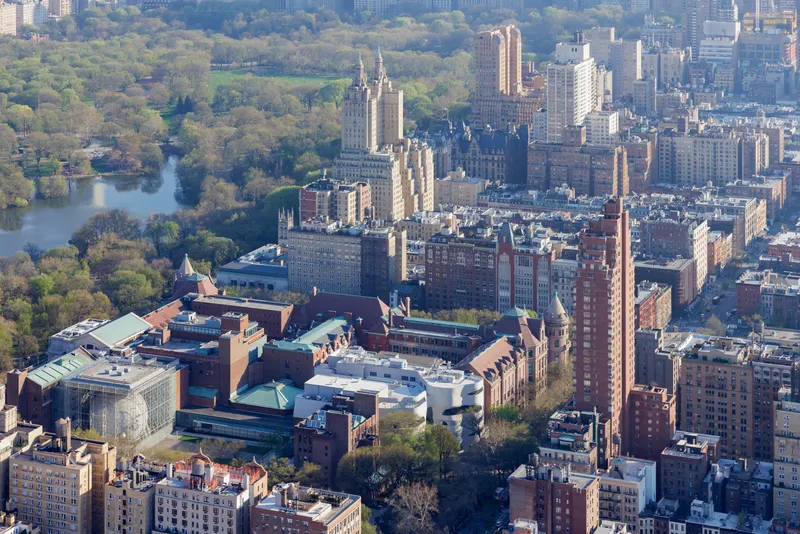
Located at Columbus Avenue and 79th Street, the Gilder Center introduces a sculptural new entrance on the Museum’s west side, nestled within Theodore Roosevelt Park. The design not only respects the scale of neighboring structures but also enhances adjacent green spaces with a revitalized landscape by Reed Hilderbrand, incorporating new paths, gathering areas, and native plantings.
Architecture Inspired by Natural Forces
Studio Gang’s architectural approach is rooted in natural phenomena. The Gilder Center’s exterior features an undulating stone façade of Milford pink granite, mirroring the stone used on the Museum’s Central Park West entrance. Large fritted glass openings provide transparency, daylight, and bird-safe features, while the diagonally patterned stonework evokes geological layering, enriching the visual dialogue between past and present.
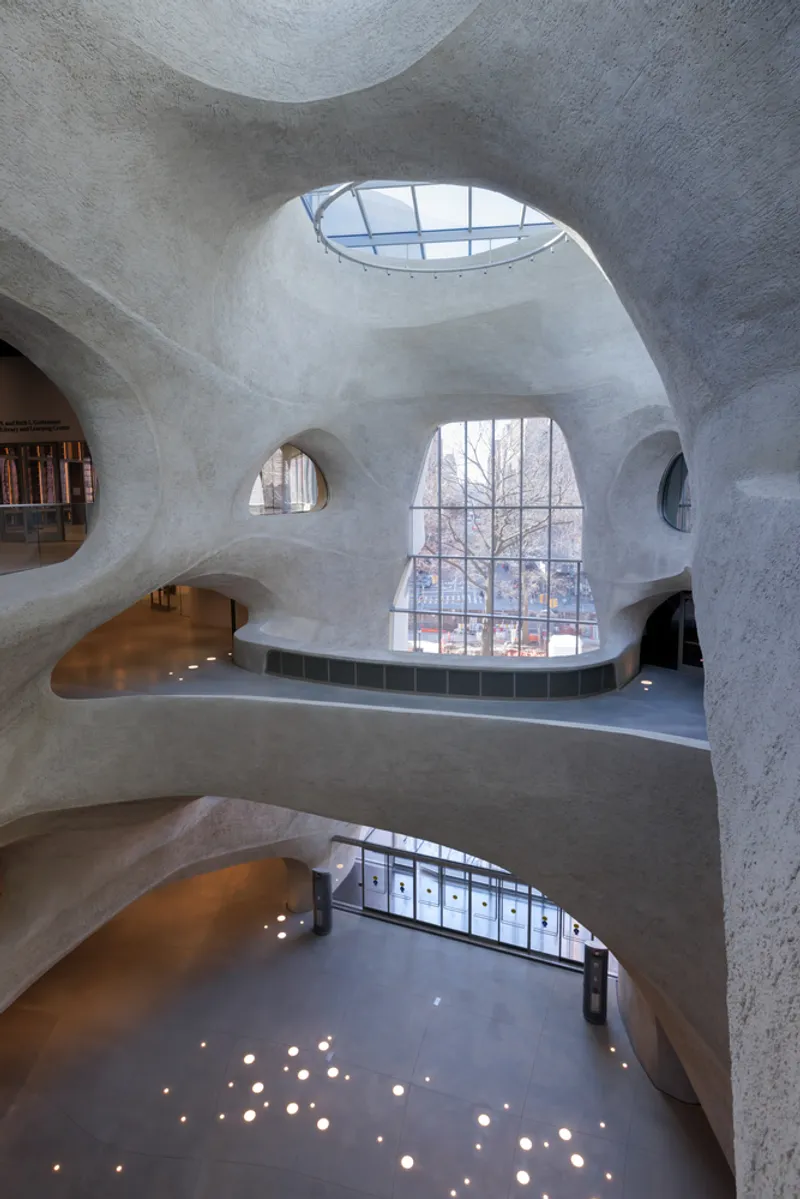
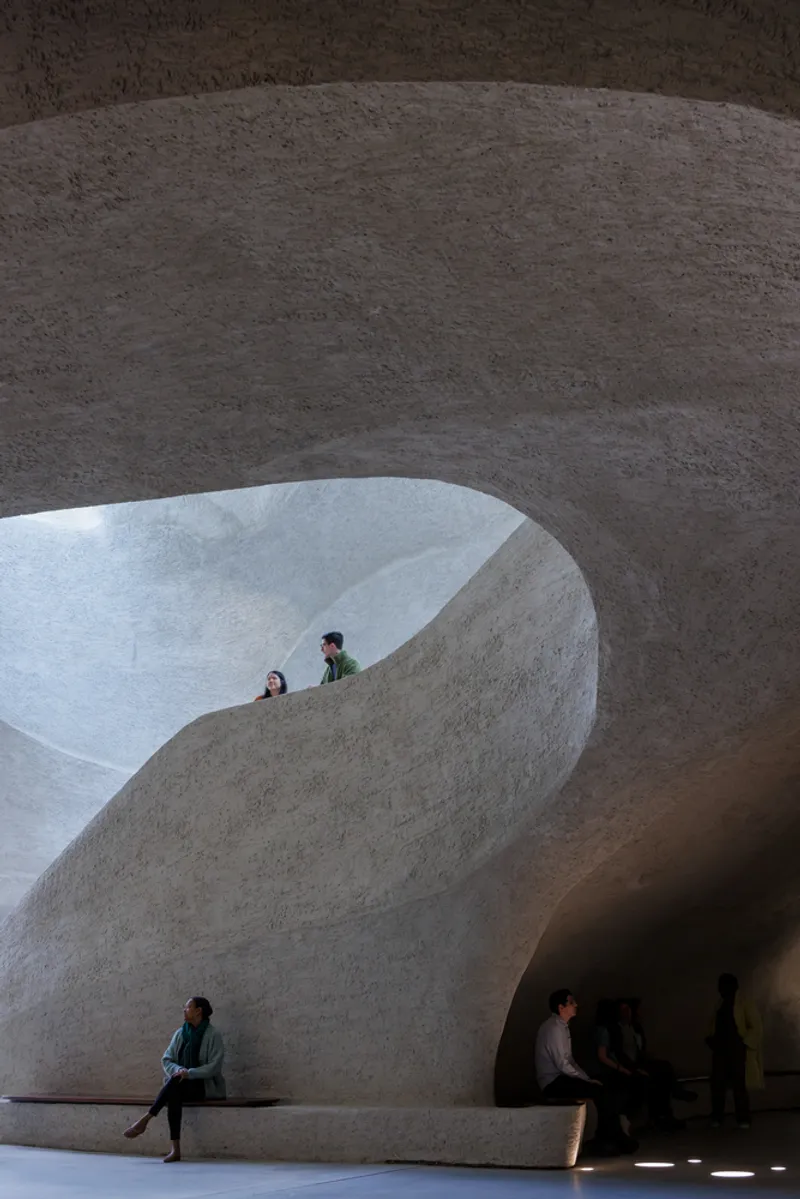
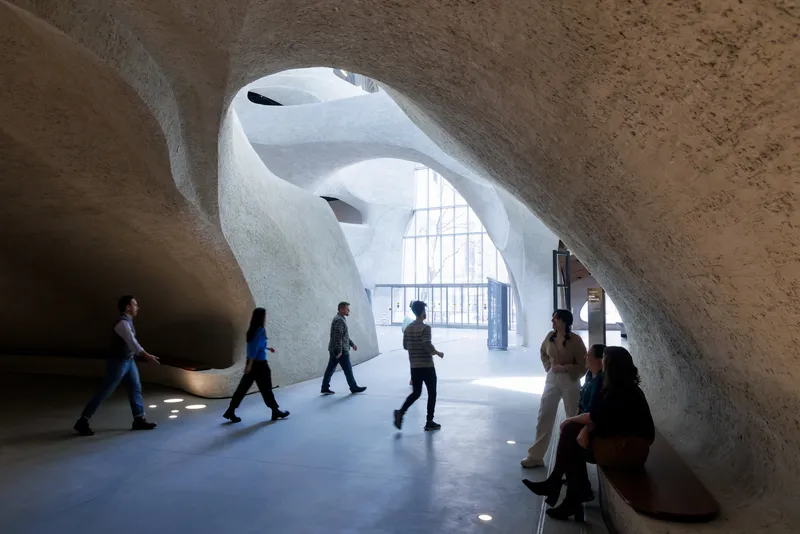
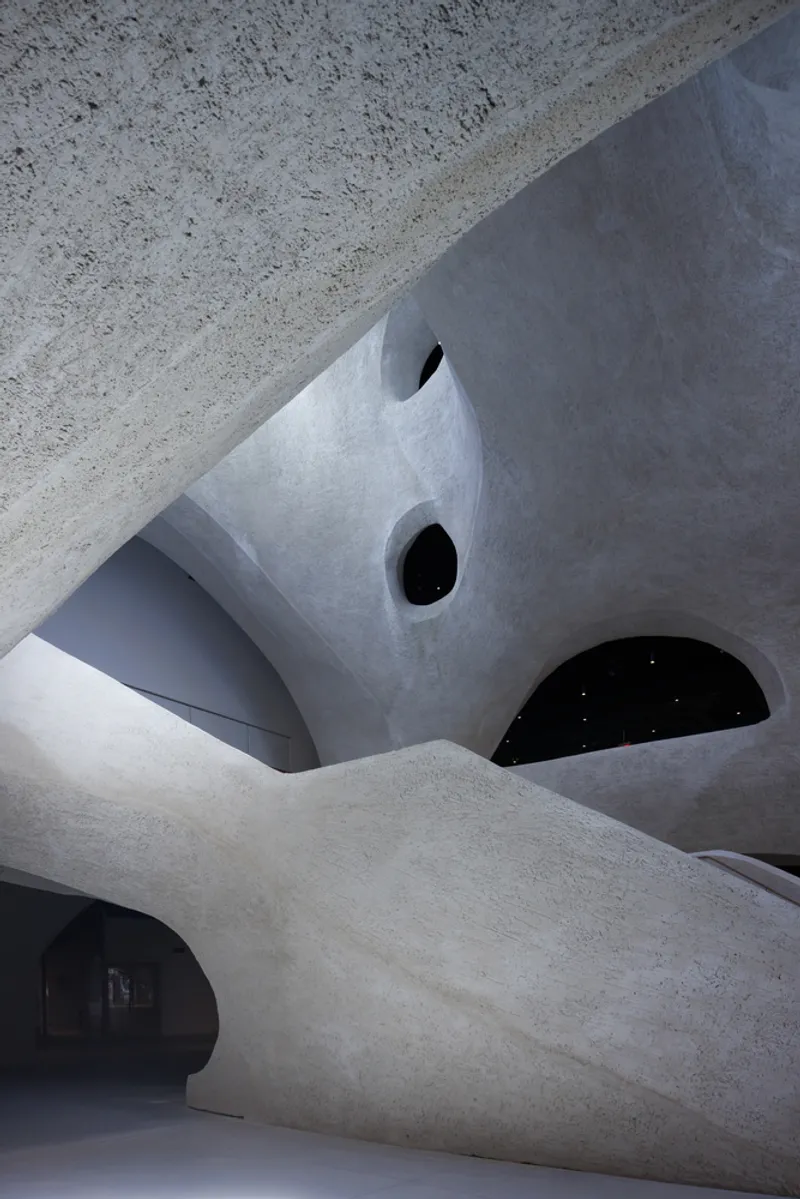
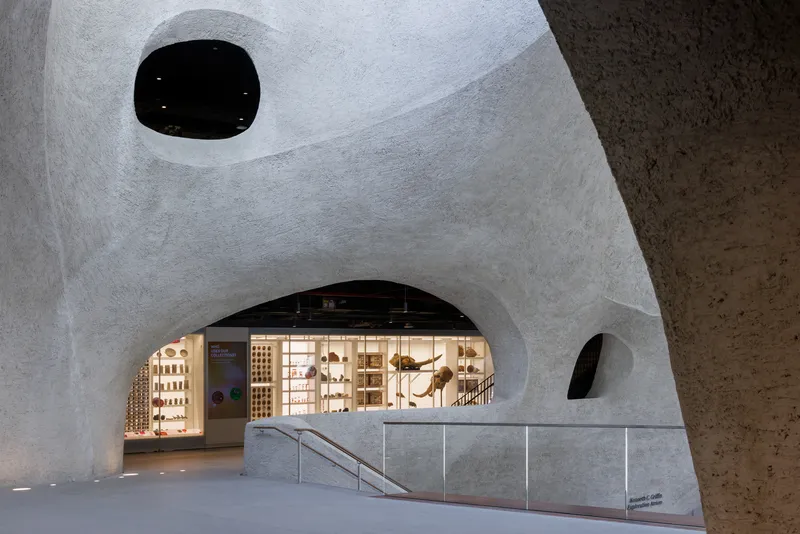
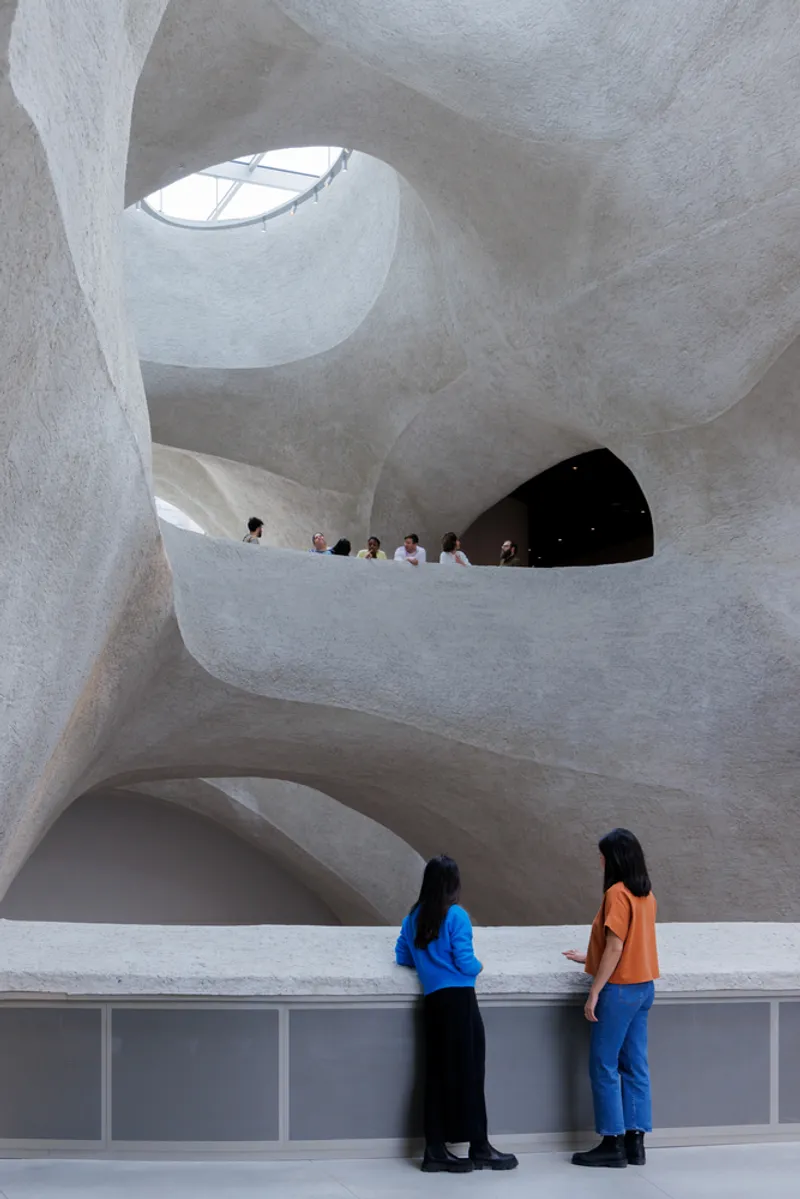
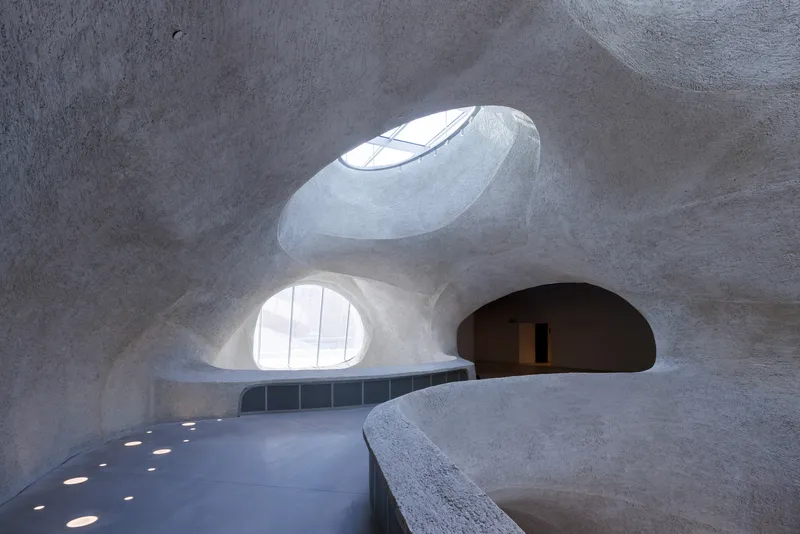
Visitors are welcomed into the dramatic Kenneth C. Griffin Exploration Atrium, a soaring five-story space infused with daylight from expansive skylights. The flowing forms of the atrium, inspired by slot canyons of the American Southwest, are created using shotcrete, a sprayed concrete technique innovated in the early 1900s by Museum naturalist Carl Akeley. This expressive, form-free construction method results in organic shapes that guide movement and spark curiosity.
Circulation, Connectivity, and Engagement
The Gilder Center acts as a connective spine within the Museum, establishing 33 new links across 10 existing buildings, enhancing visitor circulation and accessibility. Inside, the verticality of the Griffin Atrium enables natural ventilation and illuminates key public spaces, functioning as both an environmental and social core.
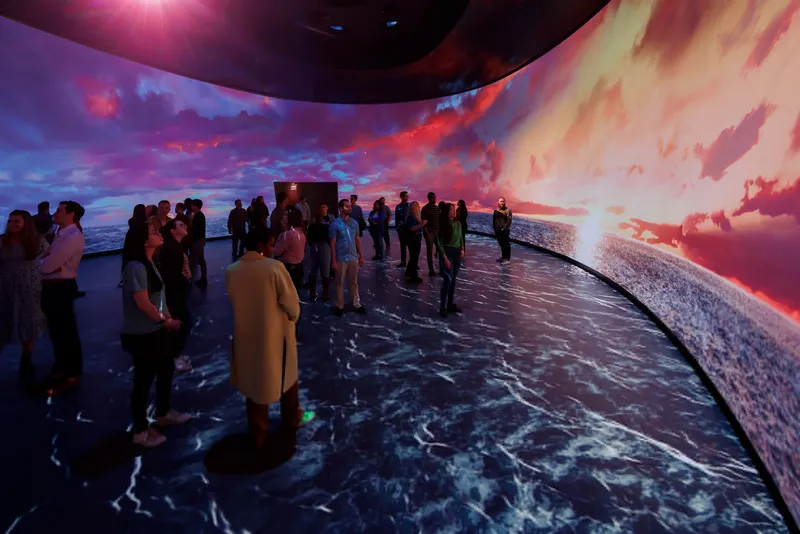
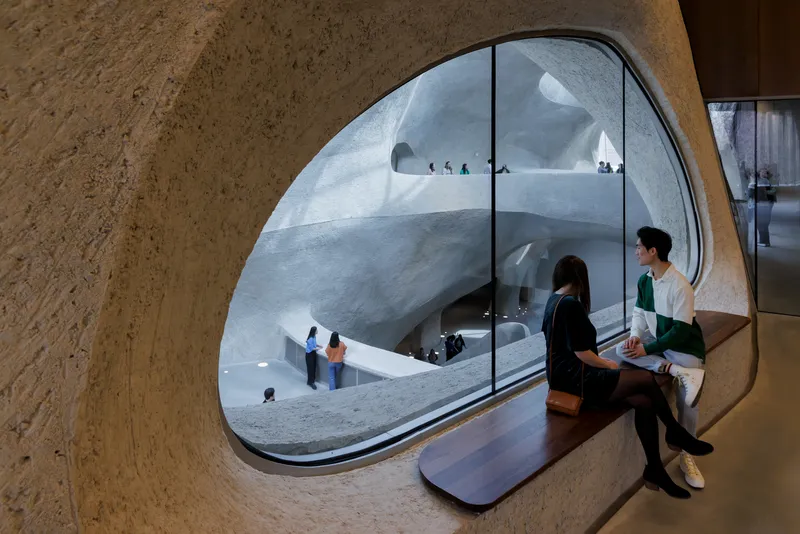
Bridges, balconies, and sculpted openings across multiple levels encourage intuitive exploration, visually connecting education spaces, research collections, and exhibition galleries curated by Ralph Appelbaum Associates. These connections turn the act of movement into an immersive architectural experience, reinforcing the Museum’s mission of discovery and wonder.
A Civic Landmark for Science and Public Life
At the heart of the Gilder Center’s design philosophy is a commitment to education, sustainability, and inclusivity. The sweeping staircase along the atrium’s east side doubles as both circulation and social gathering space, offering deep walnut seating where visitors can pause, interact, and participate in public programming. It aligns directly with the entrance, drawing visitors into the building’s light-filled core and offering sightlines across its vertical landscape.




Popular Articles
Popular articles from the community


Lunar Spiral: Space Architecture Shaped by the Mathematics of the Universe
Lunar Spiral reimagines space architecture through Fibonacci geometry, lunar regolith, levitating habitats, and self-sustaining Moon living.

Play: Fragments of Their World
Familiar architecture becomes modular playground design, creating safe spaces where displaced children can learn, connect, imagine and play.

The Ocean Hive: Sustainable Architecture for a Self-Sufficient Civilization at Sea
The Ocean Hive imagines sustainable architecture at sea, where modular habitats, algae, wave power and ocean waste sustain a growing colony.

Conexión: Biophilic Design Reimagines High-Rise Living in Hong Kong
Conexión reimagines high-rise living in Hong Kong through biophilic design, green facades, shared spaces, daylight, water and nature within.


Similar Reads
You might also enjoy these articles


Hodi-Mandai Geram
Project Function: Preservation and revitalization of the Intangible heritage and socio-spatial identity of the Hodi by Housing, Cultural Memory Center, Sacred Grove, landscape, local tourism economy


Olio Towers: A Mid-Rise for Performers That Fuses Housing, Rehearsal, and Stage
Located blocks from Houston's Theater District, this modular tower stacks living units around a central performance atrium.

Oasis: Modular Green Housing Carved into Dhaka's Urban Fabric
A shortlisted Plugin Housing entry reclaims unauthorized settlements in Dhaka with stepped concrete volumes, green roofs, and ventilation-driven design.

Black Hole: A Floating Megastructure for the Post-Physical Era
Emiliano Mazzarotto envisions a spherical, self-scaling arena where e-sports, digital hotels, and holographic stadiums replace traditional public space.


Explore Cultural Architecture Competitions
Discover active competitions in this discipline



Challenge to reimagine the Iron Throne


Photograph architecture without architects


Illustrate the lost glory of Angkor Wat - Render Challenge


Bring back Drive In's
Comments (0)
Please login or sign up to add comments
No comments yet. Be the first to comment!