

Ridare: Adaptive Architecture Reimagines a Decommissioned Oil Rig Into a Floating Cultural Destination
Adaptive architecture transforms a decommissioned oil rig into a floating cultural hub for art, ecology, and future ocean living.


The central architectural strategy behind Ridare is adaptive reuse. Rather than removing the existing rig from the sea, the proposal inserts a new spatial and experiential layer onto the industrial framework. The original structural skeleton becomes the foundation for a contemporary museum, cultural center, ecological sanctuary, and hospitality space.
The project Ridare views oil rigs as artificial islands already embedded within marine environments. These structures possess scale, permanence, and infrastructural capabilities that can support entirely new programs. Ridare transforms this industrial platform into a dynamic floating destination that merges architecture, art, environmental sensitivity, and future living.
The proposal also reflects a broader architectural conversation surrounding climate adaptation and the reuse of large-scale industrial systems. As sea levels rise and cities become increasingly constrained, offshore adaptive architecture may become an essential typology for future habitation.
A Floating Museum Designed Around Experience and Change
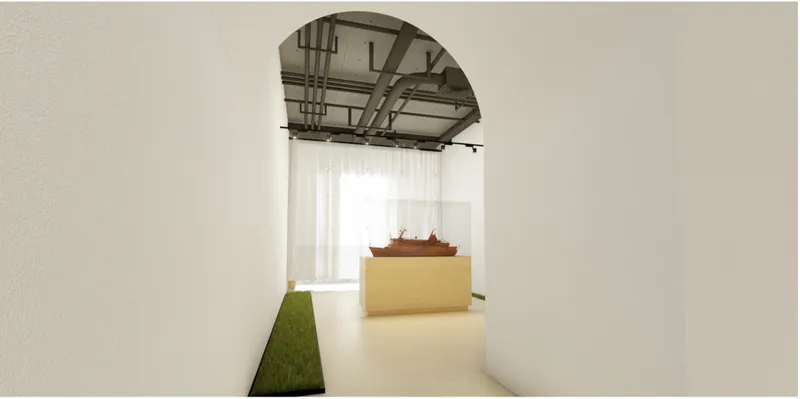
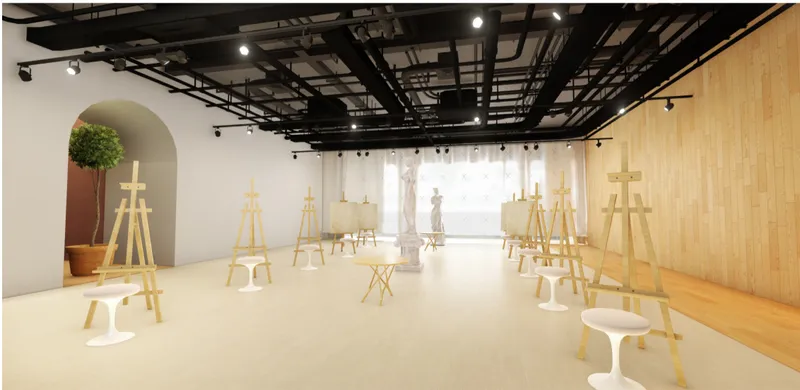
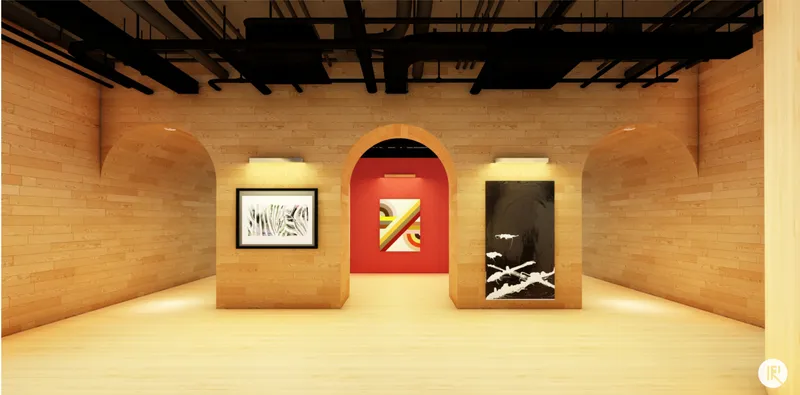
Ridare functions primarily as an art and science museum positioned above the Adriatic Sea. Unlike traditional museums defined by static collections and fixed circulation, the project introduces the concept of a “dynamic display.” The museum spaces are designed to continuously evolve through digital installations, rotating exhibitions, sculptural galleries, and immersive environments.
The architecture itself becomes part of the exhibition experience. Visitors move vertically through interconnected galleries, bridges, mezzanines, and open viewing platforms while remaining constantly aware of the surrounding ocean landscape.
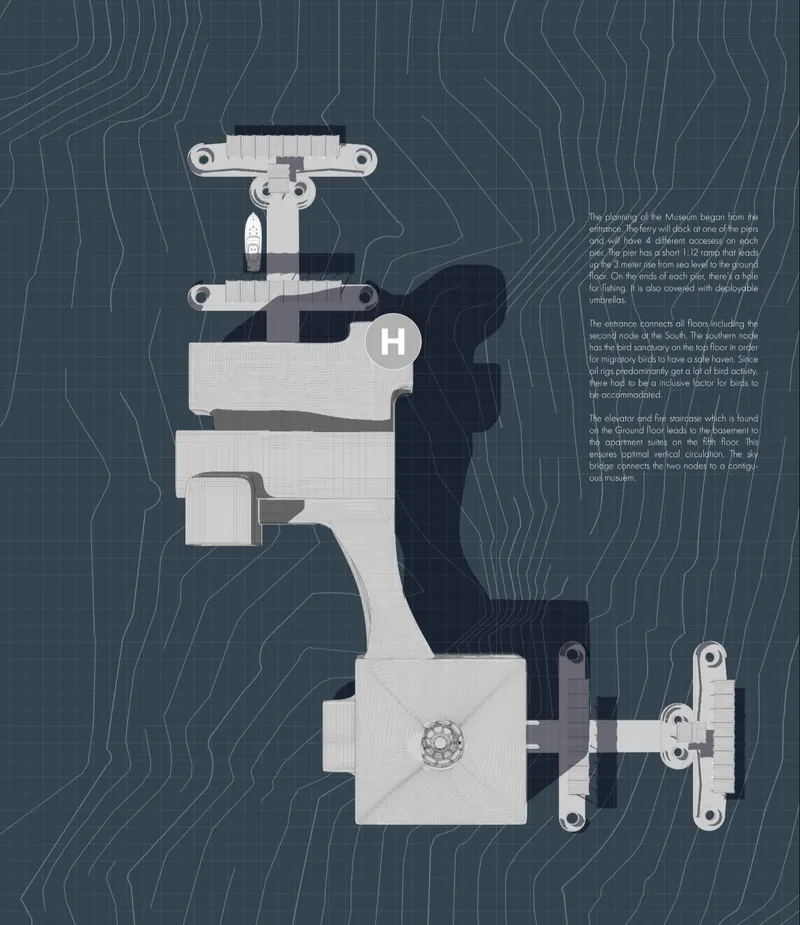
The spatial sequence begins at the pier, where ferries transport visitors from Porto Corsini to the offshore structure. The arrival experience creates a gradual transition from the urban environment into an isolated architectural world positioned within the sea.
Inside the museum, spaces range from intimate galleries and libraries to large experiential halls and conference rooms. The project integrates both physical and digital art displays, allowing exhibitions to transform over time without requiring major structural modifications.
Architecture Inspired by Fluidity and Marine Landscapes
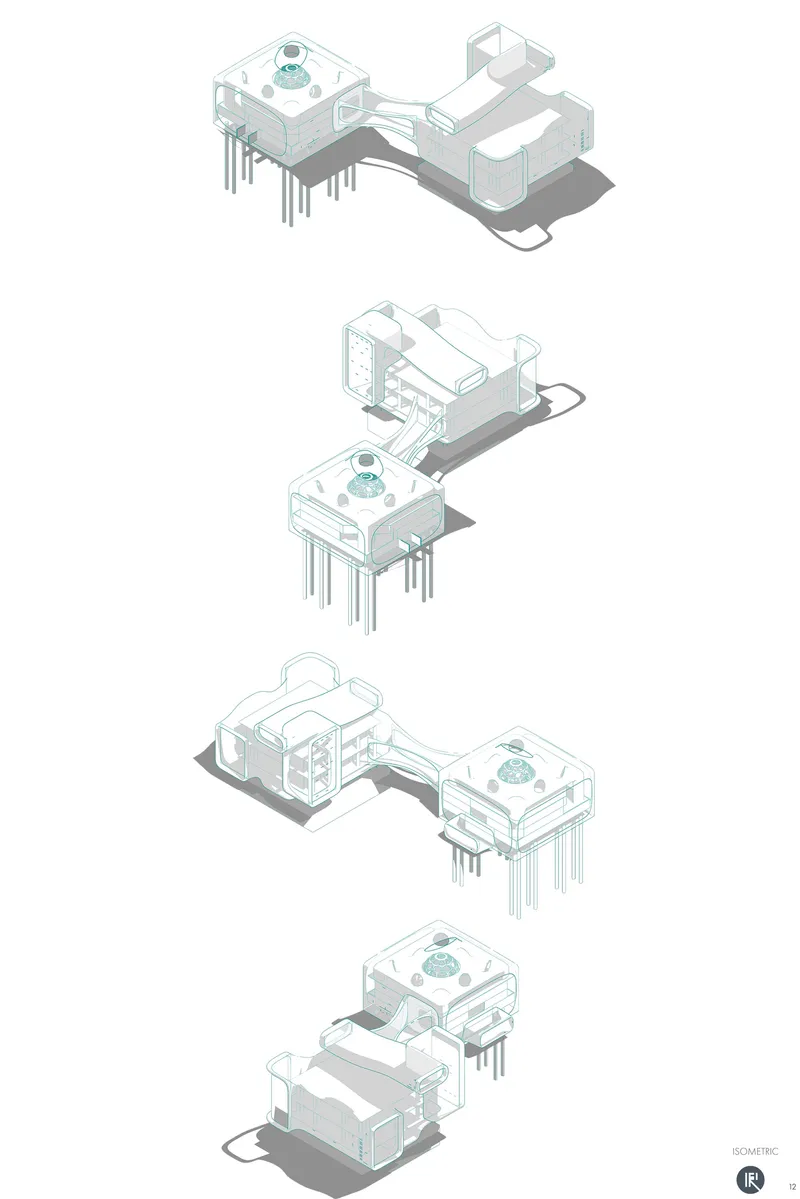
The formal language of Ridare departs from the rigid industrial geometry typically associated with offshore rigs. Instead, the design introduces flowing surfaces, curved transitions, and organic geometries inspired by sand dunes, marine currents, and fluid movement.
The architectural envelope softens the mechanical identity of the oil platform and creates a more human-centered environment. Cascading surfaces wrap around the structure, forming elevated galleries, sky bridges, and interconnected circulation paths.
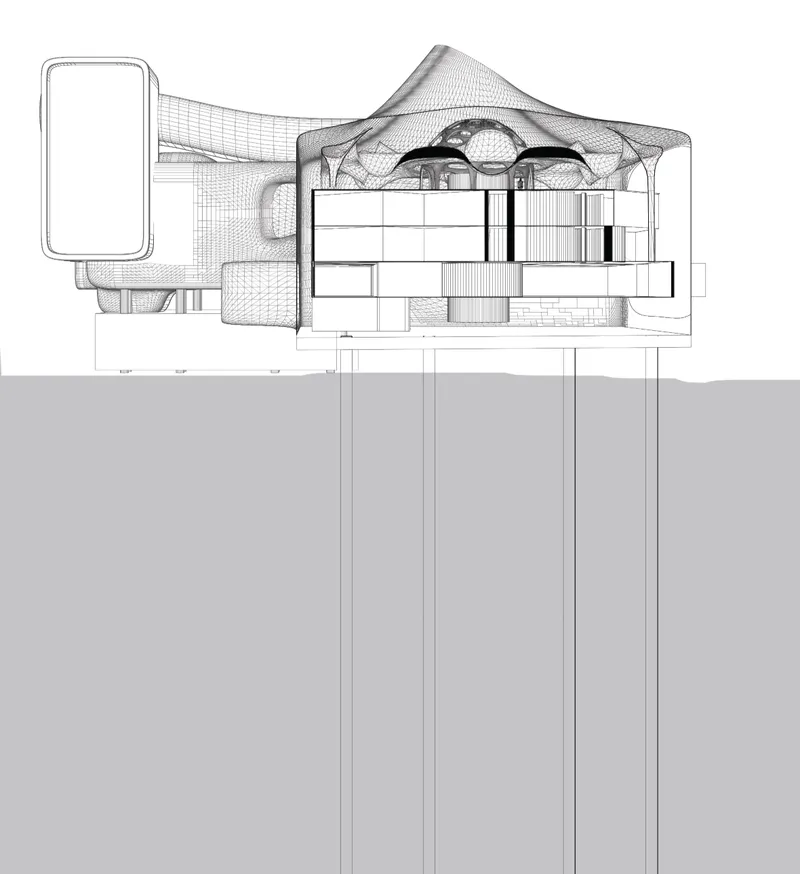
The project’s sectional composition reveals a layered architectural organization where each floor supports a distinct programmatic function. From public cultural areas to private residential suites, the spatial hierarchy creates a complete micro-community suspended above the sea.
The interior spaces continue this approach through soft arches, warm material palettes, open galleries, and carefully framed visual connections. Large exhibition halls are paired with intimate contemplative spaces, creating a balance between public engagement and personal reflection.
Programmatic Diversity Across Vertical Layers
Ridare organizes its architectural program vertically across multiple floors, maximizing the spatial potential of the existing rig infrastructure.
The basement level contains a chapel positioned partially below sea level, creating a unique underwater spiritual experience. The space symbolizes reflection, memory, and emotional immersion within the marine environment.
The ground floor functions as the public arrival zone and includes ferry docks, assembly areas, outdoor seating, and gathering spaces. Visitors enter the project through this expansive triple-height volume.
The mezzanine level introduces dining spaces, restaurants, and social gathering areas overlooking the sea. Higher levels contain art galleries, immersive museum experiences, theatres, libraries, offices, and conference rooms.
The uppermost levels transition into hospitality and residential programs, including suites, private accommodation, and outdoor terraces. This combination transforms Ridare from a single-purpose museum into a self-sustaining floating destination.
The project also incorporates an aquarium and bird sanctuary within the southern node of the structure. These ecological spaces recognize the relationship between offshore structures and marine ecosystems. Oil rigs often become habitats for migratory birds and aquatic species over time, and Ridare preserves and expands these environmental conditions.
Ecology, Preservation, and Future Ocean Living
One of the project’s strongest architectural arguments lies in its ecological sensitivity. Rather than treating nature as a secondary consideration, Ridare integrates environmental awareness directly into its architectural framework.
The bird sanctuary acknowledges how offshore rigs have unintentionally become ecological refuges within open water environments. The proposal preserves these habitats while creating protected spaces for migratory species.
Similarly, the aquarium and marine-focused programming establish a dialogue between architecture and underwater ecosystems. The project becomes both an observation platform and a participant within the marine environment.
Ridare also addresses the environmental cost of demolition. Removing large offshore rigs requires enormous energy expenditure and often disrupts marine habitats that have formed around these structures over decades. Adaptive architecture offers a more sustainable alternative by extending the life cycle of existing infrastructure.
This approach reflects an evolving architectural mindset focused on circular design, material conservation, and regenerative reuse. The project demonstrates how adaptive architecture can convert obsolete industrial systems into culturally and environmentally valuable spaces.
Spatial Circulation and Vertical Connectivity
The circulation system within Ridare is carefully designed to support both public movement and spatial discovery. Vertical circulation becomes a major experiential element throughout the project.
Elevators, fire staircases, ramps, and spiral staircases connect the different programmatic zones while maintaining clear organizational logic. A sky bridge links the northern and southern nodes of the structure, allowing uninterrupted movement across the museum.
The circulation routes encourage visitors to engage with the surrounding seascape at every level. Open terraces, framed views, and elevated observation points create a constant visual connection between architecture and ocean.
The vertical stacking of programs also allows the project to function as a compact floating city. Public spaces occupy the lower levels while more private and contemplative functions move upward through the structure.
A Vision for the Future of Offshore Architecture
Ridare ultimately proposes a speculative but highly relevant vision for future architecture. As fossil fuel industries decline, thousands of offshore structures may become abandoned across oceans worldwide. The project suggests that these industrial remnants can become platforms for culture, ecology, tourism, research, and habitation.
Rather than viewing decommissioned oil rigs as environmental liabilities, Ridare repositions them as opportunities for adaptive architecture and future urban experimentation.
The project also raises broader questions about how architecture will respond to changing environmental conditions in the coming decades. Rising sea levels, urban density, and ecological instability may require entirely new forms of ocean-based habitation and infrastructure.
Through its combination of adaptive reuse, cultural programming, ecological sensitivity, and futuristic spatial design, Ridare demonstrates how architecture can transform industrial relics into meaningful public environments.
The proposal stands as both a critique of demolition culture and an optimistic vision for sustainable architectural futures.
Project Details
Project Name: Ridare
Project By: Ishan Dsa
Recognition: Editor’s Choice entry, Proximity Island 2019
Project Type: Adaptive Architecture / Offshore Cultural Infrastructure
Program: Art & Science Museum, Cultural Hub, Hospitality, Ecological Sanctuary


Popular Articles
Popular articles from the community


Extended Shell: Retrofitting Kolkata's Balconies as Living Urban Thresholds
A modular retrofit system recovers the social and environmental intelligence of Kolkata's historic verandas for contemporary Park Street residents.

Faces of the Soviet Avant-Garde: Turning Moscow's Street Names into an Open-Air Museum
A network of sculptural installations across a Moscow residential district transforms forgotten architect names into spatial encounters with cultural memor

Manzana Morphosis: Stretching Barcelona's Grid into a Living Landscape for 2050
A radical reworking of the Eixample manzana turns density into a tool for generous public space, vertical ecology, and environmental performance.
Cloaked Colonization: A Mobile Underwater Habitat That Moves Like a Fish
Micah Abaya's shortlisted EHC Pacific entry reimagines ocean settlement as a dispersed network of self-sustaining architectural organisms.

Similar Reads
You might also enjoy these articles

Eco Chapel: A Green Architecture Pavilion Designed in Symbiosis with the Forest
Eco Chapel uses green architecture to weave prayer, learning and reuse into a forest pavilion shaped by modular hexagonal canopies for life.
Kaffeebühnen: Coffee Shop Architecture Designed as a Civic Stage Between Vienna’s City and Park
Kaffeebühnen turns coffee shop architecture into a civic stage, linking Vienna’s park edge, urban life, warm timber yards, and coffee craft.
Healing Façade: Sustainable Architecture for Reforestation, Community, and Sacred Ecology in Ethiopia
Healing Façade reimagines sustainable architecture as a living wall that restores soil, catches water and renews Ethiopia's forest churches.


Urban Forest: A Vertical Ecosystem for 5,000 Workers in Singapore's Changi Business Park
Radially stacked pods and layered green decks turn a 7-acre plot into 47 acres of ecological workspace projected for 2040.

Explore Blocs Competitions
Discover active competitions in this discipline

Challenge to reimagine the Iron Throne

Photograph architecture without architects

Illustrate the lost glory of Angkor Wat - Render Challenge

Design challenge to reuse E-waste
Comments (0)
Please login or sign up to add comments
No comments yet. Be the first to comment!